This site is supported by our readers. We may earn a commission, at no cost to you, if you purchase through links.

Something shifts when you spot your first red-winged blackbird and finally know its name. That small moment of recognition — bird, name, memory — does something good for the brain.
Research backs this up: nature-based activities like birding can slow cognitive decline and ease anxiety in older adults.
A well-designed journal makes that experience even richer, giving you a place to record what you saw, where you were, and how it felt. The right bird watching journal for seniors goes beyond blank pages — it works with your eyes, your hands, and your pace. The options ahead might surprise you.
Table Of Contents
- Key Takeaways
- Key Features of Bird Watching Journals for Seniors
- Benefits of Bird Watching Journals for Seniors
- Factors to Consider When Choosing a Journal
- Top Bird Watching Journals and Guides for Seniors
- 1. Bird Watching Journal Notebook
- 2. Picture Book of Birds
- 3. Bird Trivia Book
- 4. Backyard Bird Identification Guide Book
- 5. Backyard Birdwatcher Bible Book
- 6. Sibley Field Guide To Eastern Birds
- 7. Sibley Field Guide To Western Birds
- 8. National Geographic Bird Field Guide
- 9. Ornithology Textbook Guide
- 10. Bird Picture Book For Seniors
- Tips for Effective Bird Watching and Journaling
- Frequently Asked Questions (FAQs)
- Conclusion
Key Takeaways
- A journal built for seniors—large print, flat-lay binding, and weatherproof pages—removes physical barriers and makes every outing easier to document.
- Birding journals do quiet cognitive work: recording species names, behaviors, and locations exercises memory, focus, and neuroplasticity in genuinely meaningful ways.
- The best journals go beyond blank pages by including color-coded species guides, field mark charts, and visual ID tools that turn identification from frustration into satisfaction.
- Bird watching becomes even richer when it connects you to others—local Audubon chapters, senior birding clubs, and group walks turn a solo habit into real community.
Key Features of Bird Watching Journals for Seniors
Not every journal works well for every person, and that’s especially true in the case of bird watching. A good journal for seniors does a few specific things right — and those things matter more than you’d think.
The right fit comes down to a few thoughtful details — much like choosing bird watching journals designed for specific needs, where layout and simplicity can make all the difference.
Here’s what to look for before you pick one up.
Large Print and Simple Language

A good bird watching journal for seniors starts with text you can actually read. Large print fonts — usually 14 to 18 points — make a real difference when you’re outdoors in changing light.
Here’s what senior-friendly layouts get right:
- Clear, sans-serif fonts like Arial or Verdana
- High-contrast, dark text on light backgrounds
- Short lines under 60 characters for easy tracking
- Simple, plain-language prompts with helpful examples
High-Quality Illustrations and Photos

Once the print is easy to read, the next thing that really helps is what you’re actually looking at. Clear illustrations and crystal-clear photos make bird identification so much easier — especially when two species look almost identical.
| Feature | What It Does | Why It Matters |
|---|---|---|
| Color Accuracy | Matches real daylight plumage | Reduces misidentification |
| Illustration Details | Labels wing bars and eye rings | Speeds up field recognition |
| Photo Realism | Shows natural perched poses | Connects image to live birds |
| Image Clarity | 300 dpi+ printing standard | Stays sharp with reading glasses |
| Visual Aids | Comparison layouts side-by-side | Helps distinguish similar species |
A solid Bird Watching Journal or Bird Observation Journal uses these visual aids to do the heavy lifting for you. For effective birding, using a bird watching guide can greatly improve the experience.
Durable and Portable Formats

Beyond what you see on the page, how a journal holds up out there matters just as much. A good Bird Watching Journal uses waterproof covers and lightweight materials that don’t weigh you down. Compact designs and portable sizes tuck easily into a bag or pocket. Spiral notebook bindings lie flat for easy writing, and weatherproof, secure bindings keep your Bird Observation Journal intact through every outing.
When choosing a journal, consider the benefits of keeping a bird life list to track your birding progress.
Accessibility for Limited Mobility

Mobility challenges shouldn’t keep you from enjoying bird watching for seniors. The right journal makes all the difference. Look for these accessibility wins:
- Ergonomic design with spiral bindings that lay flat for one-handed use
- Large print prompts at 16–20-point font for easy reading
- Adaptive tools like 12mm checkboxes compatible with assistive technology styluses
- Accessible formats pairing with ergonomic pens for arthritic or tremor-affected hands
Easy-to-Use Reference Tools

The best birding journals for seniors turn bird identification into a quick, satisfying moment rather than a frustrating puzzle. Color codes, picture guides, and symbol systems do the heavy lifting for you.
| Tool | What It Does | Why Seniors Love It |
|---|---|---|
| Color Codes | Groups species lists by hue | Find birds faster |
| Field Marks Charts | Highlights key visual traits | Simplifies note taking |
| Symbol Systems | Logs sightings without writing | Perfect for journaling for beginners |
These features make bird watching for seniors genuinely enjoyable.
Benefits of Bird Watching Journals for Seniors

A good bird watching journal does more than track what you’ve seen — it quietly nurtures your whole well-being. Whether you’re stepping outside for fresh air or flipping back through old entries, the benefits add up fast.
A bird watching journal does more than record sightings — it quietly nurtures your whole well-being
Here’s a closer look at what journaling can do for you.
Cognitive Engagement and Memory Support
Keeping a bird journal is quiet brain stimulation hiding in plain sight. Each time you note a wing pattern or song, you’re practicing real cognitive training — no puzzles required. These nature journaling techniques foster memory recall, mental focus, and neuroplasticity through simple, enjoyable habits:
- Recording colors, sounds, and movements engages multiple brain areas at once
- Writing species names repeatedly strengthens memory retention over time
- Reviewing past entries gives your brain practical recall exercise
- Structured prompts build a cognitive stimulation routine that fosters cognitive health and wellness
Stress Reduction and Mental Wellness
Nature has always been one of the gentlest relaxation techniques we’ve. Mindful Birding through nature journaling gives you a calm activity that quietly fosters senior health and wellness — no gym required. Tracking birds reduces stress, sharpens mental clarity, and builds cognitive health and wellness through nature therapy you actually enjoy.
A weatherproof journal from a portable birding equipment kit keeps your notes safe through any outdoor session, rain or shine.
| Journal Habit | Mental Wellness Benefit | How Often |
|---|---|---|
| Rate stress 1–5 before/after | Shows calming effect clearly | Each session |
| Note one gratitude per entry | Lifts mood consistently | Daily |
| Describe bird movement slowly | Promotes cognitive stimulation | 3x weekly |
Support for Dementia and Memory Loss
A well-designed journal can be a quiet form of dementia care that actually works. Fixed prompts — date, time, weather, location — reduce confusion and make recording routine. Visual cues like bird photos support memory retention without pressure.
For seniors living with memory loss, that structure is real cognitive support. Bird watching for seniors becomes meaningful senior therapy when the tools meet them where they’re at.
Encouraging Physical Activity and Outdoor Exploration
Bird watching for seniors isn’t just a hobby — it’s gentle exercise wearing a fun disguise. A simple nature walk to spot a wren or robin counts as outdoor therapy.
Journals with walking prompts encourage 10–20 minutes of light movement daily. Green spaces boost mood, vitamin D, and balance practice on varied terrain.
These nature-based activities for seniors blend outdoor recreation and leisure with real physical benefits.
Social Interaction and Community Building
Your journal isn’t just a record — it’s your ticket into a whole community. Bird watching for seniors creates opportunities for genuine friendships through shared experiences outdoors and indoors alike.
- Group Sharing at bird log circles connects 6–10 seniors weekly
- Bird Clubs welcome beginners and organize seasonal social meetups
- Intergenerational Connections bloom when grandchildren sketch alongside you
- Community Events turn nature-based activities into lasting belonging
Factors to Consider When Choosing a Journal

Not every journal works for every birder, and that’s okay. The right one comes down to a few practical things worth thinking through before you buy. Here’s what to look for.
Size and Portability
Size matters more than you’d think when picking a birding journal. Journal size shapes how far you’ll actually carry it. A pocket-fit notebook around 145 x 97 mm slips into a coat pocket easily. A5 fits your tote. Carrying ease drops when binding style bulks it up — spiral notebook designs lay flat and fold back, saving space.
| Journal Size | Best Use |
|---|---|
| Pocket (145×97 mm) | Walking trails |
| A5 (148×210 mm) | Day bag or tote |
Weatherproof Capabilities
Rain doesn’t warn you before it arrives. That’s why weatherproof capabilities matter in your birding journal. Polydura or polypropylene covers resist water, mud, and stains — easy to wipe clean. Synthetic pages won’t turn to pulp in wet conditions.
Look for:
- Rust-resistant spiral notebook binding that won’t corrode
- Tear-resistant pages that hold up with cold or gloved hands
- Weather sealing that survives repeated wet-dry cycles across seasons
Page Layout and Design
A well-designed page does more for you than you’d think. Look for large print fonts — 14 to 16 point minimum — with strong color contrast so entries stay readable outdoors.
Good visual hierarchy means date, location, and species fields stand out instantly. Simplified layouts with generous margin settings reduce eye strain.
Your birding journal should feel easy to use, not like homework.
Cross-Referencing Features
Once your layout feels right, the next step is finding your way around it. Good cross-referencing features make a birding journal feel like a trusted field partner. Index systems link dated entries to locations instantly.
Life list and checklist pages cross-link to observation tracking notes by page references. Digital backups even hyperlink entries to photos, keeping your spiral notebook and journaling habit tightly connected.
Print Vs. Digital Options
Choosing between a printed birding journal and a digital option really comes down to how you like to work outdoors. Paper spiral notebooks need no setup — just open and write. Digital tools on portable devices pack thousands of species for bird identification and observation into one lightweight spot.
- Print offers large, adjustable font sizes and high-contrast pages
- Screen readers and accessibility features support seniors with vision challenges
- Digital storage protects years of nature journaling tips from being lost
- Bird watching for seniors benefits from whichever format feels most comfortable
Top Bird Watching Journals and Guides for Seniors
Finding the right journal or guide doesn’t have to feel overwhelming. There are options out there built with seniors in mind — from simple picture books to detailed field guides.
Here are ten worth knowing about.
1. Bird Watching Journal Notebook
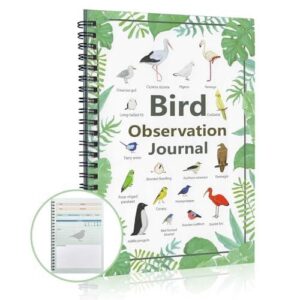
This spiral-bound notebook is a solid pick for seniors who want structure without fuss. It lays completely flat, so writing outdoors feels comfortable even with shaky hands.
You get 126 full-color pages in a compact A5 size — light enough to tuck in a bag without thinking twice. Each page has dedicated spaces for species, date, location, weather, behavior, and sketches.
One small caution: some users found the writing lines a bit narrow, so it’s worth checking before gifting.
| Best For | Birdwatching enthusiasts, nature lovers, biology students, and researchers — from total beginners to seasoned birders. |
|---|---|
| Format | Spiral-bound journal |
| Page Count | 126 pages |
| Color Content | Full-color pages |
| Target Audience | Birding enthusiasts |
| Primary Use | Observation recording |
| Gift Suitability | Yes |
| Additional Features |
|
- Lays completely flat thanks to the spiral binding, making it easy to write outdoors
- Covers all the bases with dedicated spaces for species, date, location, weather, behavior, and sketches
- Compact A5 size at just 6.7 ounces — light enough to carry anywhere without a second thought
- Soft cover means it can bend or get damaged if you’re not careful with it
- Writing lines are on the small side, which might be tricky for some users
- There have been reports of errors on the cover, including a misspelling of "Eagle
2. Picture Book of Birds
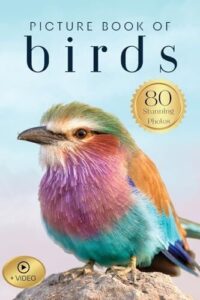
Sometimes the simplest thing brings the most peace. This picture book features 80 stunning full-color bird photos — one bird per page, no clutter, no dense text.
Captions stay short and easy to read, sharing just the bird’s name and a quick fact. It’s thoughtfully designed with dignity in mind, never mentioning dementia or Alzheimer’s.
A free companion video with real bird sounds comes with it via QR code. At $15.99, it’s a genuinely warm gift.
| Best For | Families and caregivers looking for a calm, dignified gift for seniors with dementia or Alzheimer’s — or anyone who simply loves birds. |
|---|---|
| Format | Paperback book |
| Page Count | 80 pages |
| Color Content | Full-color photos |
| Target Audience | Seniors with dementia |
| Primary Use | Engagement and calm |
| Gift Suitability | Yes |
| Additional Features |
|
- 80 gorgeous full-color photos with clean, easy-to-read captions make it approachable for almost anyone
- The free companion video with real bird sounds adds a lovely multisensory touch
- Thoughtfully designed with dignity in mind — no clinical labels or heavy-handed messaging
- Bird lovers wanting deep information will find it too light on detail
- The companion video needs an internet connection, which isn’t always available in care settings
- At $15.99 for 80 pages, some may feel it’s a little pricey for a paperback
3. Bird Trivia Book

Who says learning has to feel like homework? This bird trivia book by naturalist and wildlife photographer Stan Tekiela packs funny, strange, and genuinely surprising facts about North American birds into just 80 pages — paired with his acclaimed photography.
It’s light enough to tuck into a bag at 8 ounces, and easy to pick up for five minutes or an hour.
Great for sparking conversation at a senior center or keeping curious minds engaged at home.
| Best For | Bird lovers, curious kids, and anyone who enjoys light, fun reads — especially great as a gift for nature enthusiasts or a road trip companion. |
|---|---|
| Format | Paperback book |
| Page Count | 80 pages |
| Color Content | Full-color photography |
| Target Audience | Bird enthusiasts |
| Primary Use | Entertainment and education |
| Gift Suitability | Yes |
| Additional Features |
|
- Packed with funny and surprising bird facts that entertain without feeling like a study session
- Stan Tekiela’s wildlife photography makes every page worth flipping to
- Small and light enough to toss in a bag and read anywhere
- At 80 pages, it’s more of a fun sampler than a deep dive into ornithology
- Experienced birders might find the content a bit too surface-level
- A few readers noted the binding feels a little flimsy for the price
4. Backyard Bird Identification Guide Book
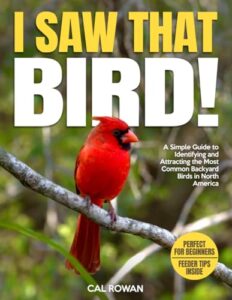
If you’re new to birding, this guide is a solid place to start. It covers 90+ common North American backyard birds with full-color photos and simple ID tips — no confusing jargon.
At 8.5 x 11 inches and just 7.4 ounces, it’s easy to rest on a table or lap. You also get practical feeder and food advice to actually bring birds to your yard.
Beginners and seniors especially appreciate how approachable the layout feels, page after page.
| Best For | Beginners, nature lovers, and backyard homeowners who want a simple, friendly way to identify and attract common North American birds. |
|---|---|
| Format | Paperback book |
| Page Count | 79 pages |
| Color Content | Full-color photographs |
| Target Audience | Beginner birders |
| Primary Use | Bird identification |
| Gift Suitability | Yes |
| Additional Features |
|
- Covers 90 backyard birds with full-color photos and easy ID tips — no confusing terminology
- Includes feeder and food advice so you can actually attract the birds you want
- Lightweight and large-format design makes it easy to flip through at the window or on the porch
- Only 79 pages, so advanced birders may find it too basic
- Doesn’t cover every bird species, so you might hit a dead end on a less common visitor
- Some readers felt it could use more photos throughout
5. Backyard Birdwatcher Bible Book
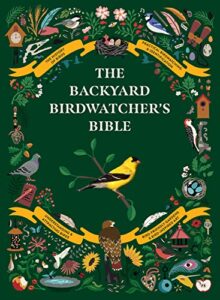
Think of this as the book you leave on the coffee table — and actually pick up every single day. The Backyard Birdwatcher’s Bible covers over 100 species profiles with full-color photos of both males and females, so you can spot the difference at your feeder without guessing.
Range maps, birdsong notes, and backyard habitat tips are all included. It’s a relaxed, coffee-table-style hardcover that’s easy to browse in pieces.
At $27.77, it’s a genuinely useful gift for any senior birder.
| Best For | Bird lovers who enjoy a beautiful, in-depth reference they can browse at home — great as a gift for beginners and seasoned birders alike. |
|---|---|
| Format | Hardcover book |
| Page Count | Not specified |
| Color Content | Full-color photography |
| Target Audience | Beginner and expert birders |
| Primary Use | Reference and inspiration |
| Gift Suitability | Yes |
| Additional Features |
|
- Covers 100 species with full-color photos of both males and females, so identification is actually easy
- Packed with range maps, birdsong notes, and tips for turning your backyard into a bird haven
- Stunning photography and a birds-in-art chapter make it genuinely enjoyable to flip through, not just reference
- It’s a hefty hardcover, so don’t plan on tucking it into a field bag
- Some buyers have received copies with cover damage or defects straight out of the box
- If you want something slim and portable, this isn’t it
6. Sibley Field Guide To Eastern Birds

Ready to step outside the backyard and into the wider world? The Sibley Field Guide to Birds of Eastern North America is a solid companion for that. It covers over 650 species east of the Rockies, with more than 4,600 illustrations showing seasonal plumage changes. Updated range maps tell you exactly when and where to expect a bird.
At 1.35 pounds and pocket-sized, it’s light enough for a morning walk without weighing you down.
| Best For | Beginner birdwatchers who want a compact, illustration-rich guide to birds east of the Rockies. |
|---|---|
| Format | Paperback book |
| Page Count | 464 pages |
| Color Content | Full-color illustrations |
| Target Audience | New birdwatchers |
| Primary Use | Field identification |
| Gift Suitability | Yes |
| Additional Features |
|
- Over 4,600 illustrations make it easy to spot what you’re looking at, even mid-hike
- Updated range maps show exactly when and where to expect each species
- Lightweight and pocket-sized, so it’s actually usable in the field
- The text runs small, which can be tough on the eyes outdoors
- Only covers eastern North America, so it won’t help if you head west of the Rockies
- Imperial measurements only, which may frustrate metric-minded readers
7. Sibley Field Guide To Western Birds

Head west and you’ll want a guide that keeps up. The Sibley Field Guide to Western North America covers 715 species found west of the Rockies, with over 5,046 illustrations showing plumage, posture, and flight views. That’s a lot of detail packed into a 4.7 x 7.7-inch book weighing just 1.45 pounds.
Each species page pairs illustrations with captions that name key field marks clearly. The 652 updated range maps — drawn from 110 regional experts — tell you what’s flying through your area and when.
| Best For | Birdwatchers of all skill levels who spend time exploring western North America and want a reliable, detail-rich field guide they can take into the field. |
|---|---|
| Format | Paperback book |
| Page Count | 504 pages |
| Color Content | Full-color illustrations |
| Target Audience | Beginner to serious birders |
| Primary Use | Field identification |
| Gift Suitability | Yes |
| Additional Features |
|
- Over 5,046 illustrations with captions that point out exactly what to look for — no guessing which wing stripe matters
- 652 range maps updated by 110 regional experts, so you know what’s actually in your area
- Compact enough to carry around at 1.45 pounds, with solid coverage of 715 species
- The font runs small, and some images can look a bit dark — not ideal if your eyes need a little extra help
- A few rare regional species don’t make the cut, which might frustrate birders in niche habitats
- Still a bit bulkier than ultra-slim competitors if you’re trying to travel as light as possible
8. National Geographic Bird Field Guide
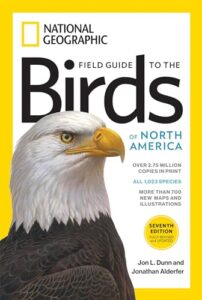
If the Sibley guides are your outdoor companions, the National Geographic Field Guide to the Birds of North America earns a spot on your nightstand. This fully revised 7th edition covers 1,023 species with hand-painted illustrations that make identification feel almost natural.
At 592 pages and under two pounds, it’s a solid home reference. The color-coded range maps and consistent plate layouts are easy to scan — especially when you’re cross-checking notes from a morning walk.
| Best For | Birders of all levels who want a thorough home reference for identifying and learning about North American species. |
|---|---|
| Format | Paperback book |
| Page Count | 592 pages |
| Color Content | Full-color illustrations |
| Target Audience | Beginning to advanced birders |
| Primary Use | Field identification |
| Gift Suitability | Yes |
| Additional Features |
|
- Covers 1,023 species with hand-painted illustrations that make it easy to identify birds at a glance
- Color-coded range maps and clean layouts let you find what you need fast
- Updated taxonomy and expert-vetted text keep the guide current and reliable
- The new taxonomic order takes some getting used to if you’re coming from an older edition
- At nearly two pounds, it’s better suited for the shelf than the trail
- Illustration-based only — not ideal if you prefer photos for identification
9. Ornithology Textbook Guide

Want to go deeper than a field guide? The Ornithology Textbook Guide is your behind-the-scenes look at why birds do what they do. With over 400 color photographs and 688 pages, it covers anatomy, behavior, migration, and conservation in plain, readable language.
It’s not a quick flip-through — think of it as your home reference after a morning outing. Chapter summaries and a detailed index make it easy to look something up without getting lost.
| Best For | Students, bird enthusiasts, and self-learners who want a serious, science-backed deep dive into ornithology beyond what a field guide offers. |
|---|---|
| Format | Paperback book |
| Page Count | 688 pages |
| Color Content | Full-color art |
| Target Audience | Students and laypeople |
| Primary Use | Academic study |
| Gift Suitability | Yes |
| Additional Features |
|
- Packed with over 400 color photos and 688 pages of up-to-date content on anatomy, behavior, migration, and more
- Written in readable language with chapter summaries and assessment questions — great for both courses and self-study
- Reflects current research with an evolutionary perspective, so the science actually feels relevant and alive
- It’s pricey, and some readers feel the cost is hard to justify
- Dense enough that instructors may need to pull in extra materials to round out a full course
- The online version skips page numbers, which makes citing or cross-referencing a real headache
10. Bird Picture Book For Seniors
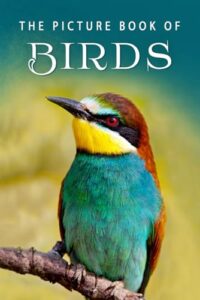
Sometimes simple is exactly right. The Bird Picture Book for Seniors skips the lengthy descriptions and just gives you beautiful, full-color photos paired with each bird’s name in large print. Its 40-page, 6" x 9" softcover is light enough to hold comfortably in one hand.
It’s especially calming for seniors living with dementia or Alzheimer’s, sparking quiet conversations without any overwhelm. Caregivers and family members find it easy to use together.
Packaging is discreet — no clinical labels, just a lovely book.
| Best For | Families, caregivers, and assisted living staff looking for a gentle, calming activity for seniors with dementia, Alzheimer’s, or Parkinson’s disease. |
|---|---|
| Format | Softcover book |
| Page Count | 40 pages |
| Color Content | Full-color photos |
| Target Audience | Seniors with dementia |
| Primary Use | Engagement and calm |
| Gift Suitability | Yes |
| Additional Features |
|
- Stunning full-color bird photos that spark memories and quiet conversation without overwhelming
- Lightweight and easy to hold, making it comfortable for seniors with limited strength or mobility
- Discreet packaging means it feels like a gift, not a medical tool
- At just 40 pages, some users may find it goes by too quickly
- Not a great fit for seniors who enjoy reading longer text or more detailed content
- Photo quality is mostly excellent, though a couple of images have been noted as slightly off
Tips for Effective Bird Watching and Journaling

Getting the most out of bird watching comes down to a few simple habits that make a real difference over time. Whether you’re just starting out or have been at it for years, the right approach can sharpen your skills and make every outing more rewarding.
Here are five practical tips to help you watch, record, and connect with more confidence.
Recording Observations and Species Sightings
Every good birding log book starts with the basics. Jot down the date, time, location, and weather — these core sighting details build patterns you’ll actually notice over time. Your visual ID notes and behavioral observations matter too. Here’s a simple structure to follow:
| What to Record | Why It Helps |
|---|---|
| Species, count, behavior | Tracks habitat context logging |
| Weather and time | Spots migration patterns |
| First impression summary | Builds memory-boosting summaries |
Seniors find this rhythm surprisingly satisfying.
Using Visual Aids and Reference Tools
Pairing your birding log book with the right visual tools makes identification feel less like guesswork. Color-coded charts and shape silhouette guides help you match what you saw in seconds.
Picture ID posters near your window feeder work like a cheat sheet.
Illustrated journal templates, pocket reference cards, and large print bird identification books with crystal-clear photos keep everything simple and within reach.
Incorporating Digital Apps and Technology
Your phone can be a surprisingly powerful birding partner. The Merlin Bird ID app listens in real time and names species instantly — no expertise needed. For Voice-Assisted Logging and Offline ID Tools, it works without Wi-Fi.
The eBird Mobile App tracks your Birding Journal sightings as Citizen Science Platforms data.
Short Birding App Tutorials get you started fast.
Planning Accessible Bird Watching Outings
A good outing starts long before you leave the house. Accessible Site Selection matters — the Birdability Map lists real spots with trail surface details so you’re never guessing. Here’s how to plan smart:
- Pick Senior-Friendly Trail Surfaces like boardwalks or paved paths
- Arrive early for Timing and Pacing with morning bird activity
- Choose Comfortable Observation Points with seating nearby
- Review Pre-Trip Information on restrooms and shade
- Log everything in your Birding Journal after
Joining Local Birding Groups
Bird watching for seniors becomes richer when you share it. Finding Local Clubs is easier than you’d think — Audubon chapters, Meetup, and community centers all list Beginner-Friendly Walks nearby.
| What You Get | Why It Matters |
|---|---|
| Gentle Group Outing Etiquette | Low pressure, welcoming pace |
| Staying Connected Online | Email lists keep you informed |
Bring your Birding Journal. Journaling after walks deepens every sighting.
Frequently Asked Questions (FAQs)
What birds are easiest for beginners to spot?
Ever wonder which birds are easiest to spot first? House Sparrows, Common Blackbirds, and Eurasian Robins offer easy ID markings and year-round sightings — perfect backyard birds for beginner-friendly species identification.
How often should seniors update their bird journal?
There’s no single right answer. A Daily Entry Routine works best for backyard feeders. Outing-Based Logging suits walkers. Weekly Reflection Sessions fit lighter schedules. The Memory-Friendly Schedule is simply the one you’ll actually keep.
Can bird watching help with anxiety and depression?
Yes — absolutely. Even a few minutes of mindful bird observation melts anxiety faster than most prescriptions. Nature therapy lowers cortisol, lifts depression, and sparks real neuroplasticity and resilience in seniors.
Are there bird watching clubs specifically for seniors?
Absolutely — Senior Birdwatching Clubs exist nationwide. Groups like Sarasota Audubon run weekly walks, while Birdability hosts Inclusive Senior Birding Events for those with mobility challenges.
Care-Home Birding Programs like Audubon’s Bird Tales serve dementia residents too.
What binoculars work best for seniors with shaky hands?
Shaky hands don’t have to ground your birding. Stabilized binoculars like the Canon 10×42 IS or lightweight designs under 420 grams with low-power magnification and ergonomic grip make outdoor gear for seniors genuinely steady and enjoyable.
Conclusion
Like a well-worn trail that leads you somewhere worth going, the right bird watching journals for seniors do more than hold your notes — they hold your attention, your curiosity, and your joy.
Each entry you make builds a quiet record of moments that matter. Start simple. Pick the journal that fits your hands and your pace.
Then step outside, look up, and let the birds do the rest.
- https://www.wildlifefaq.com/your-ultimate-guide-top-7-birdwatching-journals-to-enhance-your-experience/
- https://www.naplesgarden.org/diy-nature-journal-for-adults/
- https://bwdmagazine.com/tips-for-birders/getting-started/journal/
- https://www.aberdeenseniorliving.com/post/bird-watching-basics-for-seniors
- https://www.birdschoolproject.org/nature-journal