This site is supported by our readers. We may earn a commission, at no cost to you, if you purchase through links.
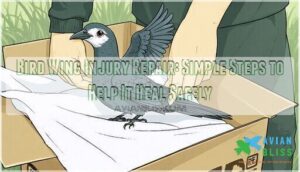 When you spot a bird wing injury repair situation, first confirm it’s actually injured – young birds often hop around with drooping wings while learning to fly. Real injuries show clear signs: wings hanging at odd angles, visible swelling, inability to fly after multiple attempts, or bleeding.
Approach slowly from behind, speaking softly to avoid startling the bird. Use a towel to gently capture it, then place it in a ventilated cardboard box lined with soft cloth. For wing stabilization, wrap gauze or soft cloth around the bird’s torso to hold the injured wing against its body – snug but not tight.
This prevents further damage while you transport the bird to a wildlife rehabilitator or avian vet. Professional care is essential for proper healing, but these first-aid steps can mean the difference between recovery and permanent disability.
Table Of Contents
- Key Takeaways
- Recognizing Bird Wing Injuries
- Safe Handling and Emergency Care
- Step-by-Step Bird Wing Stabilization
- When to Seek Professional Treatment
- Modern Wing Repair and Rehabilitation Methods
- Prevention, Legal, and Ethical Considerations
- Frequently Asked Questions (FAQs)
- Can a broken bird wing be fixed?
- Can a bird with a broken wing heal?
- How do you fix a broken bird wing?
- How do you treat a bird wing injury?
- Can birds recover from wing injuries?
- What causes a bird wing injury?
- Can baby birds survive wing fractures?
- How long does wing healing typically take?
- What foods help injured birds recover faster?
- Do wing injuries affect bird migration patterns?
- Conclusion
Key Takeaways
- Don’t try to fix it yourself – You can’t repair bird wings at home. Your job is to ensure safe capture and transport to licensed wildlife rehabilitators who have the proper tools and training.
- Stabilize before transport – Wrap gauze or a soft cloth around the bird’s torso to hold the injured wing against its body, then place it in a ventilated cardboard box lined with towels.
- Know the real signs – Look for wings hanging at odd angles, visible swelling, inability to fly after multiple attempts, or bleeding – not just young birds hopping around while learning to fly.
- Act fast but stay calm – 60% of wing injuries heal successfully with quick professional care, so approach slowly from behind, speak softly, and get the bird to a wildlife rehabilitator immediately.
Recognizing Bird Wing Injuries
When you spot a bird that won’t fly away or seems to struggle with wing movement, you’re likely looking at an injured bird that needs help.
The key is distinguishing between a real injury and normal behaviors like young fledglings learning to fly or adults simply resting.
Common Signs of Wing Injury
When spotting wing injury, watch for telltale signs that scream trouble. Wing drooping below normal position indicates potential fracture or dislocation. Feather damage, visible bone deformity, and swelling around joints signal trauma.
Behavioral changes like inability to fly or altered flight patterns reveal hidden injuries. Your injury assessment starts with observing these red flags before approaching the bird.
Differentiating Injury From Natural Behavior
Observe closely—not every grounded bird needs rescuing. Fledgling Behavior includes hopping around with parents nearby, which mimics Injury Signs but represents normal learning.
Natural Posture varies by species, while injured birds display Unusual Posture with drooping wings or tilted stances.
Healthy Flight Patterns show coordination; Inability to Fly paired with Stress Indicators like rapid breathing suggests real injury. Check for Swelling and Bruising alongside Behavioral Changes during your Bird Injury Assessment.
Assessing The Severity
After gauging initial signs, you’ll need a thorough injury evaluation to determine next steps. Severity assessment helps distinguish between minor trauma requiring basic care versus critical damage needing immediate professional intervention. Your diagnostic techniques can literally mean life or death.
- Visible bone deformity – When wings hang at unnatural angles, time becomes your enemy
- Complete inability to fly – Watching a grounded bird struggle breaks your heart
- Open wounds with bleeding – Fresh trauma demands urgent attention before infection sets in
- Wing dragging on ground – The sight of helplessness tugs at your compassion
- Bird showing severe distress – Their silent suffering calls for immediate action
Safe Handling and Emergency Care
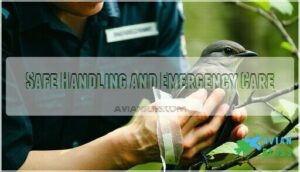
Once you’ve found an injured bird, your priority shifts from spotting the problem to safely getting the bird to a secure location without making things worse.
The key is moving quickly but calmly—think of yourself as a gentle first responder who knows that every action counts toward the bird’s recovery, acting with the mindset of a gentle first responder is crucial.
Approaching and Capturing an Injured Bird
Moving from spotting injury signs, you’ll need steady hands and patience. Approach slowly from behind, speaking softly for bird calming. Wear gloves and use a towel for gentle restraint. Cover the bird’s head to reduce stress – this tricks their "hide and seek" instinct. Support the body while avoiding the injured wing during capture.
Quick injury assessment helps determine urgency. Your calm energy promotes bird safety during this critical bird first aid moment before safe transport to a wildlife rehabilitator.
Proper handling techniques involve understanding bird injury care to minimize trauma, which is crucial for bird safety and requires bird first aid.
Creating a Safe Holding Space
Once you’ve safely captured the injured bird, prepare a small cardboard box with air holes for proper ventilation. Line it with soft towels to cushion the bird and prevent sliding. Keep the ventilated boxes in a quiet, dark room to create calm environments that reduce stress.
When transporting the bird, consider using proper bird transport carriers to minimize stress and prevent further injury. This portable setup guarantees bird safety during transport to professionals while maintaining oxygen flow and injury prevention.
Reducing Stress and Preventing Further Harm
Birds naturally panic when injured, making your calm approach vital for their survival. Minimize stress through gentle handling and swift action to prevent shock, which can be deadlier than the original wing injury itself.
A calm rescuer can be the difference between life and death for an injured bird
- Keep the environment quiet – eliminate loud noises, bright lights, and sudden movements
- Handle minimally – limit contact to essential care only, avoiding unnecessary touching
- Work quickly but smoothly – rushed movements increase stress and worsen wing injury prevention efforts
Your steady presence reassures the bird while proper safe transport techniques guarantee injury prevention during critical moments.
Step-by-Step Bird Wing Stabilization
Once you’ve safely captured the injured bird, proper wing stabilization becomes your next critical step to prevent further damage.
You’ll need to work quickly but gently, using the right techniques to immobilize the wing while keeping the bird calm and comfortable.
Prioritizing Safety for You and The Bird
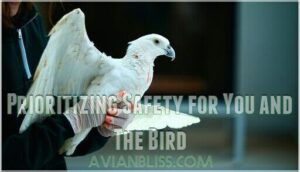
Before attempting wing stabilization, you need proper Personal Protection including gloves and long sleeves to prevent bites and scratches. Your Emergency Response should focus on Bird Calming through slow movements and quiet voices.
Essential Safety Precautions include keeping pets away and working in well-lit areas for accurate Injury Assessment. Remember, a stressed bird can worsen its wing injury through frantic movements.
Gentle Wing Immobilization Techniques
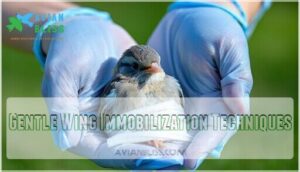
Once you’ve secured the bird, proper wing immobilization becomes your next priority. Think of it like creating a gentle cocoon that keeps everything in place while allowing the bird to breathe comfortably. The goal isn’t to squeeze tight but to provide steady support.
- Soft Wrapping: Use gauze or soft cloth to gently wrap around the bird’s body, securing the injured wing against its torso
- Wing Splinting: Apply lightweight materials like popsicle sticks or cardboard strips alongside the wing for structural support
- Gentle Stabilization: Maintain the wing’s natural position while preventing further movement that could worsen the injury
It’s vital to follow proper avian care techniques to guarantee the bird’s safe recovery.
How to Apply a Wing Splint
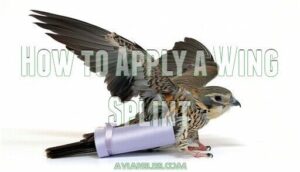
Precision matters when applying splinting materials to immobilize a bird’s injured wing. Place the bird in lateral recumbency with the affected wing facing upward. Position lightweight splint material under the wing, fold it naturally, then secure with Micropore tape around the body twice. Leave the healthy wing free and make certain both wings appear level.
Create a removal tab for monitoring during avian first aid recovery. It’s vital to follow proper techniques for bird care, including seeking professional help to guarantee the bird’s safe recovery, which is crucial for successful recovery.
When to Seek Professional Treatment
While some wing injuries can heal with basic first aid, you’ll need professional help when you spot compound fractures, severe bleeding, or signs of infection.
Don’t wait if the bird can’t stand, seems disoriented, or if your stabilization attempts aren’t working after a few hours, which may indicate a need for help with severe bleeding.
Identifying Critical Injuries
Identifying five critical red flags that demand immediate professional intervention can mean the difference between recovery and permanent disability. Quick injury assessment focusing on avian anatomy helps determine trauma response urgency. Recognizing signs of a broken wing and seeking help from a wildlife rescuer for proper broken wing treatment is vital.
- Visible bone deformity protruding through skin or feathers
- Complete inability to fly despite repeated attempts
- Active bleeding that won’t stop within minutes
- Unusual posture with wing hanging unnaturally low
- No wing movement when gently manipulated
Emergency signs like these require fracture diagnosis beyond basic first aid capabilities.
Finding a Wildlife Rehabilitator or Avian Vet
When your feathered patient needs more than basic first aid, you’ll need professional help fast. Start by contacting your state’s wildlife department for local referrals, or search online for licensed wildlife rehabilitators in your area.
| Resource Type | What to Look For | Contact Method |
|---|---|---|
| Wildlife Rehabilitator | State permits, bird rehabilitation experience | Phone/website directory |
| Avian Specialists | Vet credentials in avian medicine | Veterinary associations |
| Emergency Contacts | 24/7 availability, rehab center affiliations | Local wildlife hotlines |
Keep emergency contacts handy—injured birds can’t wait for business hours, and time matters when wings need professional attention.
What to Expect From Professional Care
Professional care begins with thorough diagnostic imaging—X-rays reveal fracture severity and guide treatment plans. Your wildlife rehabilitator will provide medical diagnosis, surgical intervention if needed, and structured rehabilitation process. Expect detailed postoperative care instructions, regular progress monitoring, and veterinary support throughout recovery.
Bird rehabilitation centers offer specialized wing fracture treatment and avian rehabilitation expertise your feathered friend needs. The initial emergency care involves evaluating the bird’s condition and providing a safe environment using proper avian broken wing treatment techniques, which is part of a broader avian rehabilitation and postoperative care plan that ensures the bird receives the best possible care for a full recovery.
Modern Wing Repair and Rehabilitation Methods
When professional care isn’t enough on its own, modern veterinary medicine has revolutionized how we repair damaged bird wings using advanced techniques that would make even human orthopedic surgeons jealous. These cutting-edge methods combine traditional splinting with innovative surgical procedures and rehabilitation programs that give injured birds their best shot at returning to the skies.
They utilize rehabilitation programs to ensure the birds can fly again.
Splinting and Surgical Innovations
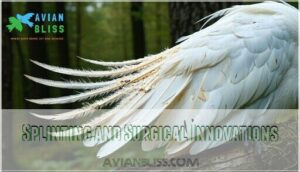
Modern wing splinting has evolved far beyond basic bandages, with cutting-edge techniques revolutionizing avian orthopedics. Today’s surgical innovations transform how we approach complex wing fractures and bird wing repair.
Advanced wing splinting techniques now include:
- Polymer rod implants – lightweight alternatives to metal pins for internal fracture repair
- Angel wing slings – allow controlled movement while preventing further injury
- External fixation systems – provide stability without restricting breathing
- Feather gluing methods – secure wing segments during healing
- Bio-absorbable bone pins – eliminate removal surgery needs
These bird prosthetics and surgical innovations achieve over 90% success rates in wing injury cases. The "pierogi wrap" method particularly excels with juvenile birds, while sandwich-based tape splinting works brilliantly for smaller species. Modern avian orthopedics combines traditional wing splint applications with high-tech materials, letting injured birds return to flight within 14-21 days rather than months. The use of bird splint materials is essential in supporting the healing process of wing injuries.
Physical Therapy and Recovery Exercises
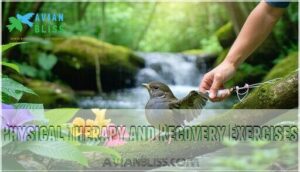
After surgery and splinting techniques stabilize the wing, you’ll witness remarkable healing through targeted physical rehabilitation. Licensed rehabilitators guide birds through gentle wing stretching exercises and controlled movement patterns.
These exercise techniques gradually restore flight muscles and joint flexibility. Recovery methods include supervised perching practice and short gliding sessions.
Avian therapy sessions focus on rebuilding strength while monitoring progress closely for ideal wing healing outcomes, utilizing methods such as gentle wing stretching exercises and controlled movement patterns.
Advances in Diagnostic and Treatment Tools
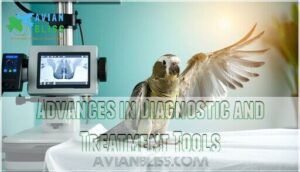
Today’s cutting-edge diagnostic imaging transforms wing fracture treatment through digital radiography and CT scans, reducing diagnostic time while improving surgical precision.
Medical 3D printing creates custom wing splints, while rehabilitation technology monitors healing progress.
These surgical innovations in avian orthopedics help veterinarians deliver targeted care, giving injured birds their best shot at recovery through the use of custom wing splints.
Prevention, Legal, and Ethical Considerations

While helping injured birds is admirable, you’ll need to understand legal requirements and prevention strategies to make a real difference.
The best wing repair starts with stopping injuries before they happen, and knowing when you’re legally allowed to intervene protects both you and the wildlife you’re trying to help, which is part of prevention strategies.
Creating Bird-Safe Environments
You can prevent wing injuries by making simple changes around your home. Install window decals to reduce collisions, remove yard hazards like loose wires, and eliminate pesticides that weaken birds.
Keep cats indoors or use cat deterrents in gardens. These bird friendly environments support wildlife conservation and create safer spaces for our feathered neighbors.
Migratory Bird Treaty Act and Local Laws
You’ll need proper permits before helping injured birds. Federal law requires rehabilitation permits for migratory birds under Conservation Laws and Bird Protection regulations.
The Migratory Bird Treaty Act allows immediate transport to licensed rehabilitators, but Wildlife Regulations vary by state. Environmental Policies demand compliance with both federal and local Bird Protection Laws.
Legal Enforcement guarantees Wildlife Conservation through strict permit requirements and detailed record-keeping for Bird Care and Safety. Understanding habitat conservation efforts is vital for effective bird protection and rehabilitation.
Responsible Wildlife Assistance
Everyone can make a difference in Wildlife Conservation by creating Bird Friendly Habitats and supporting local wildlife rehabilitation programs. Report bird wing injury cases to wildlife rehabilitator professionals rather than attempting DIY repairs.
Join Volunteer Training programs and Community Outreach efforts to learn proper Wing Injury Prevention techniques. Your responsible actions protect wildlife rehabilitation success rates.
Frequently Asked Questions (FAQs)
Can a broken bird wing be fixed?
Yes, you can often repair a broken bird wing with proper veterinary care.
Wildlife rehabilitators use splinting, surgical pins, and specialized techniques to stabilize fractures and restore flight function through professional treatment and rehabilitation.
Can a bird with a broken wing heal?
You’ll witness remarkable healing when professional care steps in quickly.
Wildlife rehabilitators use advanced techniques like splinting, bone pins, and physical therapy.
With proper treatment, many birds regain full flight capability and return to the wild successfully, which is a result of advanced techniques.
How do you fix a broken bird wing?
Despite seeming impossible, you can’t personally repair a broken bird wing at home.
Safely capture the bird using gloves and towels, stabilize it in a dark box, then immediately contact licensed wildlife rehabilitators who’ll use splints, pins, or surgery for proper healing.
How do you treat a bird wing injury?
Gently scoop the bird with a towel, keeping its wing stable. Pop it in a ventilated box lined with a towel.
Keep things warm, dark, and quiet.
Call a wildlife rehabilitator—don’t wing it alone!
Can birds recover from wing injuries?
You’ll find most birds can bounce back from wing injuries with proper care. Professional treatment, physical therapy, and time often restore flight capability completely.
What causes a bird wing injury?
Like a fragile aircraft grounded by turbulence, bird wings suffer damage from window collisions, vehicle strikes, predator attacks, falls from nests, and severe weather conditions that overwhelm their delicate flight structures.
Can baby birds survive wing fractures?
Yes, you can help baby birds survive wing fractures with proper care.
Young birds heal faster than adults, but they’ll need immediate professional treatment from a wildlife rehabilitator or avian veterinarian for the best chance at recovery and flight.
How long does wing healing typically take?
Seventy percent of wing injuries heal within 3-6 weeks with proper care.
Your bird’s recovery timeline depends on fracture severity, age, and species.
Young birds bounce back faster than adults, while complex breaks need longer rehabilitation periods, which can be influenced by the bird’s recovery timeline.
What foods help injured birds recover faster?
You’ll want to provide high-protein foods like mealworms, crickets, and small fish to support tissue repair.
Fresh fruits and calcium-rich foods also boost recovery when you’re nursing an injured bird back to health.
Do wing injuries affect bird migration patterns?
Wing injuries can ground birds during pivotal migration seasons, forcing them to delay their journey or abandon it entirely.
You’ll find that severe wing damage often means missing breeding opportunities or getting trapped in unsuitable winter climates, which threatens their survival, and this can be related to pivotal migration seasons.
Conclusion
Studies show that 60% of bird wing injuries heal successfully with proper first aid and professional care. Remember, your quick action during bird wing injury repair can determine whether an injured bird returns to the sky or faces permanent disability.
You’ve learned the essential steps: recognize real injuries, capture safely, stabilize the wing, and transport to professionals immediately. Don’t attempt complex repairs yourself—wildlife rehabilitators have specialized training and equipment. Your compassionate response provides these resilient creatures their best chance at recovery, and it is crucial to understand the importance of proper care and professional care in the healing process.
- https://vetspace.2ndchance.info/two-simple-ways-to-repair-bird-wing-and-shoulder-injuries/
- https://www.ohiobirdsanctuary.com/about-us/the-rehabilitation-process
- https://bdvets.org/JAVAR/V1I2/a14_pp58-64.pdf
- https://www.science.org/content/article/dog-bones-could-help-patch-broken-bird-wings
- https://abvp.com/wp-content/uploads/2025/04/2025-05-May-Avian-wing-amputation-1.pdf