This site is supported by our readers. We may earn a commission, at no cost to you, if you purchase through links.
 Recognizing bird wound healing signs can save your feathered friend’s life.
Healthy healing shows clean, dry edges that gradually close together.
You’ll notice pink tissue forming and reduced swelling day by day.
Watch for trouble signs: bright red inflammation, yellow or green discharge, foul odors, or wounds that won’t stop bleeding.
Your bird’s behavior tells a story too – decreased appetite, lethargy, or excessive preening around the injury signals problems.
Fresh wounds need immediate attention, while older injuries should show steady improvement within 48-72 hours.
Temperature matters – infected areas feel warmer than surrounding skin.
The healing timeline varies dramatically based on factors you might not expect, including clean, dry edges and steady improvement within a certain timeframe, which can be influenced by the presence of foul odors or excessive preening.
Table Of Contents
- Key Takeaways
- Bird Wound Healing
- Wound Healing Process
- Bird Injury Types
- Healing Time Factors
- Monitoring Healing Progress
- Frequently Asked Questions (FAQs)
- What are the 4 stages of wound healing in animals?
- How long does it take for birds to heal?
- How do you know if a bird’s wound is infected?
- Can birds heal wounds without veterinary intervention?
- What environmental factors affect bird wound healing?
- How do wild birds self-treat their wounds?
- When should bird wound healing be considered emergency?
- Do different bird breeds heal at different rates?
- Conclusion
Key Takeaways
- Watch for healthy healing signs – You’ll see clean, dry wound edges gradually closing together with pink tissue forming and reduced swelling within 48-72 hours.
- Recognize infection warning signs immediately – Look for bright red inflammation, yellow or green discharge, foul odors, excessive warmth, or wounds that won’t stop bleeding.
- Monitor your bird’s behavior closely – Decreased appetite, lethargy, or excessive preening around the injury signals serious problems requiring immediate attention.
- Track healing progress daily – Document changes with photos, check temperature and activity levels, and don’t hesitate to adjust care or seek veterinary help if improvement stalls.
Bird Wound Healing
When your bird gets injured, you’re facing a race against time to prevent serious complications.
Recognizing the early warning signs of proper healing versus dangerous infection can mean the difference between a quick recovery and a life-threatening emergency.
Signs of Infection
When dealing with bird wound infection, you’ll spot several red flags that demand immediate attention.
Your bird’s body sends urgent distress signals when infection takes hold.
Your feathered friend’s body sends clear distress signals when harmful bacteria invade injured tissue.
Watch for these critical bird wound infection warning signs:
- Pus Formation with thick, yellow-green discharge and foul odor around the injury site
- Excessive Redness and swelling that spreads beyond the original wound boundaries
- Delayed Healing where wounds refuse to close after 7-10 days despite proper care.
Fever signs in birds include fluffed feathers, lethargy, and rapid breathing.
These bird health issues indicate systemic infection requiring veterinary intervention.
Don’t wait—infected wounds worsen rapidly without treatment.
Proper bird wound treatment is essential to prevent infection and promote healing.
Wound Care Basics
Clean wounds with sterile saline or warm water to remove debris. Apply gentle pressure with clean gauze to stop bleeding.
Use proper wound dressing to protect the injury site. Maintain strict avian hygiene by washing your hands before and after bird first aid.
Create a healing environment that’s warm, quiet, and stress-free for ideal bird injury recovery. Proper wound care involves using effective wound care products to promote healing and prevent infection.
Nutrition for Healing
Ideal nutrition acts as your bird’s internal repair crew during recovery.
Increase protein intake to 18-20% of their diet—think cooked eggs or high-quality pellets.
Vitamin A and C supplements boost immune function while proper mineral balance supports tissue regeneration.
Monitor caloric needs carefully since healing birds require 20-30% more energy.
Enhanced nutrient absorption through smaller, frequent meals accelerates recovery substantially.
Wound Healing Process
Your bird’s body kicks off wound healing through three distinct healing phases.
The inflammation stage arrives first, bringing swelling and redness as blood vessels dilate to deliver nutrients. During this cellular regeneration period, specialized cells multiply rapidly to rebuild damaged tissue repair.
The scarring process follows, creating stronger replacement tissue that may look different from original skin.
This avian wound treatment timeline typically spans 7-21 days, depending on injury severity, and watch for steady improvement in bird wound healing signs like reduced swelling and fresh tissue growth throughout the wound healing process. The key to successful healing is monitoring the inflammation stage, the scarring process, and overall tissue growth to ensure a healthy recovery with minimal injury severity.
Bird Injury Types
Your bird can suffer from different types of injuries that require specific attention and care approaches. Understanding these common wound categories helps you respond quickly and effectively when accidents happen.
Cut Wounds
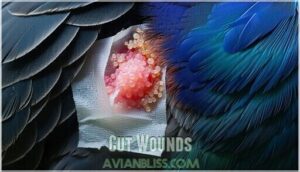
Sharp cuts need immediate attention. Clean wound edges suggest better healing than jagged tears.
Watch for pink granulation tissue forming within days – this signals healthy recovery. Daily saline flushing removes debris while preventing infection.
Apply non-adhesive dressing to protect healing tissue. Small feathers typically regrow near minor cuts within two to three weeks, indicating proper wound closure and successful scar management.
Proper wound care involves using effective wound care products to promote healing and prevent infection, which is crucial for healthy recovery.
Puncture Wounds
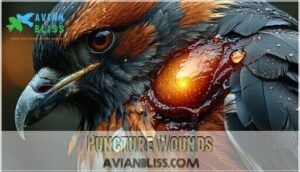
Unlike surface cuts, puncture wounds from predator attacks or cage wires create deeper channels that trap bacteria and debris. These narrow injuries require immediate Bird First Aid and careful Injury Assessment since they’re deceptive – looking minor while causing serious internal damage.
Here’s what makes puncture wounds particularly dangerous:
- Hidden infection brewing beneath seemingly small surface openings
- Debris forced deep into tissue during the initial trauma
- Limited drainage allowing bacterial growth in dark, warm spaces
- Delayed healing signs that mask progressive tissue death
Proper Wound Cleaning involves flushing with saline solution, not just surface wiping. Your Puncture Care approach needs gentle irrigation to remove hidden contaminants. Apply Wound Dressing after thorough cleaning, monitoring for swelling or discharge that signals complications developing below the surface.
Effective bird wound treatment at home requires understanding of proper wound care techniques to promote healing and prevent infection.
Avian Fractures

When fractures occur, you’re facing your bird’s most serious injury type.
Wing injuries and beak fractures require immediate veterinary attention for proper bone repair.
Watch for drooping wings, inability to fly, or visible deformity.
Avian surgery may be necessary depending on fracture types.
Look for healing signs birds display: reduced swelling, improved mobility, and appetite return.
Proper bird wound care includes immobilization and pain management.
Never attempt home treatment for suspected breaks – professional diagnosis prevents complications and guarantees successful bird wound healing.
Healing Time Factors
Your bird’s healing timeline depends on three key factors that you can’t ignore.
The wound’s size and location, your bird’s species and age, plus the quality of care you provide will determine whether recovery takes days or months, considering the overall quality of care.
Size and Location
Wound Size and Location Factors dramatically impact your bird’s recovery timeline.
Deeper Injury Depth creates more Tissue Damage, while certain Healing Zones pose unique challenges.
Critical factors affecting healing time:
- Wing wounds – restrict movement, heal slower
- Chest injuries – near essential organs, need intensive monitoring
- Leg cuts – constant pressure delays progress
- Head trauma – affects eating, drinking behaviors
- Tail damage – interferes with balance, flight preparation
Large wounds require weeks versus days for smaller cuts.
Bird wound care intensifies with size increases.
Bird Species and Age
Your bird’s Species Variation and Age Factors substantially impact Bird Development and healing bird wounds.
Young birds heal faster due to active cell division, while older birds show slower Bird Recovery Time.
Different species exhibit unique healing patterns – parrots heal slower than songbirds, raptors face delayed recovery.
| Age Group | Healing Speed | Special Considerations |
|---|---|---|
| Juvenile | 40% faster | Higher infection risk |
| Adult | Standard rate | Territorial aggression delays healing |
| Senior | 60% slower | Reduced collagen synthesis |
Understanding these Maturity Stages helps you recognize normal healing signs birds display and adjust your bird wound dressing expectations accordingly.
Quality of Care
Proper veterinary support makes the difference between quick recovery and prolonged suffering.
Your care standards directly impact healing bird wounds – clean bird wound dressing, consistent wound healing stages monitoring, and sterile healing environment accelerate recovery.
Quality medical attention means following treatment options precisely, not cutting corners, and professional healing signs birds assessment beats guesswork every time, especially with bird wound cleaning protocols.
Understanding the bird wound healing process is essential for providing superior care and support during the recovery period, which involves consistent wound healing stages monitoring and a sterile healing environment.
Monitoring Healing Progress
Monitoring your bird’s healing progress requires careful attention to both positive changes and warning signs that need immediate action.
You’ll need to track specific indicators daily while staying ready to adjust your care approach based on what you observe, focusing on complete concepts and being prepared for immediate action.
Watching for Complications
You’ll spot infection signs and complications by monitoring three key areas daily.
Early detection prevents serious tissue damage and speeds recovery for your feathered friend.
Watch these critical warning signs:
- Infection Signs – Look for wound swelling, increased redness, or unusual discharge around the injured area
- Fever Monitoring – Check for lethargy, loss of appetite, or behavioral changes indicating systemic illness
- Scab Formation Issues – Monitor abnormal scab color, excessive bleeding, or delayed healing progression
Proper bird wound management means checking these indicators twice daily during wound healing stages.
Regular checks can help identify fungal skin issues that may complicate the healing process.
Tracking Improvement
Positive changes indicate your feathered friend’s healing signs are kicking in.
Document recovery rates by photographing wounds daily at the same time and lighting conditions.
Track temperature, appetite, and activity levels for thorough progress monitoring.
Proper bird wound care involves understanding the importance of wound healing products.
| Day | Wound Appearance | Bird Behavior | Notes |
|---|---|---|---|
| Day 1 | Red, swollen edges | Lethargic, hiding | Initial injury assessment |
| Day 3 | Pink tissue forming | Eating small amounts | Early healing signs visible |
| Day 7 | Scab development | Preening nearby areas | Good progress monitoring |
| Day 14 | New feather growth | Normal vocalizations | Recovery rates improving |
Watch for consistent improvement in bird wound management.
Healthy tissue appears pink, not angry red.
Your bird should show increased interest in food and social interaction as healing progresses.
Adjusting Care Plans
Don’t panic if your bird’s healing hits a snag—smart adjustments can turn things around quickly.
When standard care strategies aren’t cutting it, you’ll need to pivot your approach based on what you’re seeing. Recovery methods that worked yesterday mightn’t fit today’s situation.
- Switch from topical treatments to medical interventions if infection signs appear
- Modify therapy approaches when wound care birds show slower healing than expected
- Increase monitoring frequency if bird injury signs worsen or change unexpectedly
- Consult your vet about alternative treatment plans when progress stalls completely
- Adjust environmental factors like humidity or temperature that affect bird health tips outcomes
This approach allows for flexible care and ensures that you’re providing the best possible support for your bird’s healing process. By being proactive and making informed decisions, you can help your bird recover more efficiently.
Frequently Asked Questions (FAQs)
What are the 4 stages of wound healing in animals?
Looking for clarity on animal wound repair? The four stages are hemostasis (blood clotting), inflammation (immune response), proliferation (tissue rebuilding), and remodeling (scar maturation). Each phase’s critical for proper healing.
How long does it take for birds to heal?
Birds heal at different speeds depending on their size and injury type.
Broken wings typically take 3-6 weeks to heal, while bird bones generally heal faster than mammals.
Simple leg fractures heal in 1-3 weeks with splints removed after 2-3 weeks.
You’ll notice progress as they start bearing weight again.
Understanding bird injury care is essential for their recovery and well-being.
How do you know if a bird’s wound is infected?
Veterinary studies show 40% of untreated bird wounds develop infections within 72 hours.
You’ll notice foul-smelling discharge, increased swelling, red streaking around the wound, or your bird acting lethargic and refusing food—clear red flags.
Can birds heal wounds without veterinary intervention?
Small wounds like minor cuts can heal naturally, but you’ll need to watch for infection signs.
Clean wounds with good blood supply heal best.
However, deep cuts, punctures, or wounds showing swelling, discharge, or foul odor require immediate veterinary care for proper healing.
What environmental factors affect bird wound healing?
Research shows birds heal 40% slower in suboptimal conditions.
You’ll find temperature extremes, humidity levels, air quality, and stress from noise or predators substantially impact recovery.
Clean environments with stable conditions help wounds heal faster naturally, and this is crucial for their overall health, as suboptimal conditions can significantly hinder the healing process.
How do wild birds self-treat their wounds?
You’ll notice preening helps wounded wild birds clean and protect their injuries.
The aromatic compounds emitted by these plants boost immune systems of chicks and reduce their bacterial loads.
They also seek medicinal plants for nests.
When should bird wound healing be considered emergency?
You’ll need immediate veterinary care if there’s uncontrolled bleeding, difficulty breathing, open wounds, or signs of infection. Don’t wait—birds hide pain well and deteriorate quickly.
Do different bird breeds heal at different rates?
Yes, different bird breeds heal at varying rates.
Smaller species like finches recover faster than larger birds like raptors.
You’ll notice breed size, metabolism, and genetics all influence healing speed in your feathered friend.
Conclusion
Picture a wounded bird transforming from fragile patient to vibrant flyer – that’s successful healing in action.
Recognizing bird wound healing signs empowers you to provide life-saving care when your feathered companion needs it most.
Trust your observations: clean edges, reduced swelling, and improved behavior signal recovery.
Watch for infection warning signs like discharge, odors, or increased warmth, and take quick action with careful monitoring to make the difference between full recovery and serious complications.
Your vigilance saves lives.
- https://pmc.ncbi.nlm.nih.gov/articles/PMC4663678/
- https://extension.psu.edu/wounds-in-poultry/
- https://www.cabidigitallibrary.org/doi/pdf/10.5555/20093018939
- https://www.google.com/maps?s=web&lqi=ChRjaXR5YmlyZCBhbWVsaWEgb2hpbyIDiAEBWhYiFGNpdHliaXJkIGFtZWxpYSBvaGlvkgESY2hpY2tlbl9yZXN0YXVyYW50qgFLEAEqDCIIY2l0eWJpcmQoADIfEAEiGyQ2s650UlzacpxuwUz8qAoUnUgS7JZcmXkBSDIYEAIiFGNpdHliaXJkIGFtZWxpYSBvaGlv4AEA&vet=12ahUKEwiFseekppiHAxXgg4kEHdO8A7cQ1YkKegQIHhAB..i&cs=0&um=1&ie=UTF-8&fb=1&gl=us&sa=X&geocode=KXfp8CCXB0GIMQBhRtvr7y2C&daddr=1301+Ohio+Pike+Suite+1,+Amelia,+OH+45102
- https://order.incentivio.com/c/citybird/