This site is supported by our readers. We may earn a commission, at no cost to you, if you purchase through links.
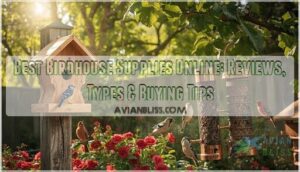
Your backyard birds won’t wait for the perfect setup to arrive. They’re scouting nesting spots right now, and the difference between a thriving feather family and an empty yard often comes down to what you offer them.
Shopping for birdhouse supplies online puts premium cedar houses, predator-resistant feeders, and squirrel-proof solutions at your fingertips without the guesswork of big-box stores. You’ll find species-specific designs that actually work—bluebird houses with proper ventilation, hummingbird feeders that don’t drip, and tube feeders engineered to outlast your neighbor’s flimsy hardware store version.
The right supplies transform your space into a bird sanctuary, and choosing wisely means you’re investing in gear that protects vulnerable nests while standing up to weather, predators, and time.
Table Of Contents
- Key Takeaways
- Best Birdhouse Supplies to Buy Online
- Types of Birdhouses and Feeders Available
- Choosing Quality Birdhouse Materials
- Essential Birdhouse Accessories and Food
- Tips for Shopping Birdhouse Supplies Online
- Frequently Asked Questions (FAQs)
- How often should I clean my birdhouse?
- What size entrance hole works for most birds?
- Are decorative birdhouses suitable for actual nesting birds?
- Which direction should my birdhouse face for protection?
- Should birdhouses be placed near bird feeders?
- Whats the best birdhouse placement in my yard?
- When is peak nesting season for birds?
- Can I leave birdhouses up year-round?
- Conclusion
Key Takeaways
- Quality birdhouse supplies purchased online—like species-specific designs with proper ventilation, predator guards, and weather-resistant cedar or recycled plastic—create safer nesting environments that outlast big-box store alternatives by years.
- Functional features matter more than decoration: look for 1.5-inch entrance holes for bluebirds, drainage slots to prevent waterlogging, metal predator guards to block raccoons, and squirrel-proof feeders with weight-sensitive perches that close under heavy animals.
- Different feeder types serve distinct purposes—tube feeders attract finches with precise seed dispensing, mesh designs welcome multiple clinging species, and window feeders reduce fatal collisions while bringing birds within inches of your view.
- Strategic placement and accessories make the difference between empty boxes and thriving bird families: mount houses 5-15 feet high facing east, install pole baffles at least 8×24 inches to stop climbing predators, and clean nest boxes once yearly or between broods to reduce parasites.
Best Birdhouse Supplies to Buy Online
You want birdhouse supplies that actually work—not pretty decorations that fall apart after one season. The right feeder or house keeps birds safe, makes maintenance easy, and stands up to weather and pests.
Choose birdhouse supplies that actually work—durability, function, and weather resistance matter more than decoration
Here are seven top picks that deliver on durability, function, and real results for backyard birding.
1. Audubon Swirl Glass Hummingbird Feeder
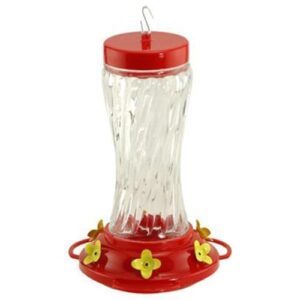
The Audubon Swirl Glass Hummingbird Feeder combines beauty with function for serious bird watching enthusiasts. This 16-ounce feeder features decorative swirl optic glass that catches sunlight while you monitor nectar levels.
You’ll find six feeding stations and three perches that welcome multiple hummingbirds at once. The red plastic components drive hummingbird attraction, while the small ports keep honey bees out—essential for bird safety.
Feeder maintenance stays simple with dishwasher-safe glass and a wide-mouth twist-off base. It’s ready to hang straight from the box, bringing wildlife accessories convenience to your garden.
Best For: Birding enthusiasts who want an attractive feeder that accommodates multiple hummingbirds while keeping nectar levels visible and maintenance simple.
- Six feeding ports and three perches let multiple hummingbirds feed together without competing for space
- Swirl glass design creates a pretty light effect in the sun while letting you check nectar levels at a glance
- Dishwasher-safe glass and wide-mouth opening make refilling and cleaning quick and easy
- Some users report leaking issues that waste nectar and create mess
- Plastic components may fade or become brittle after a season of outdoor exposure
- Durability complaints suggest the feeder might not hold up for multiple years of use
2. Audubon Mesh Combo Bird Feeder Beige
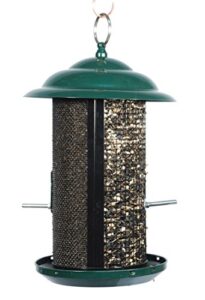
For backyard birding that welcomes variety, the Audubon Mesh Combo Bird Feeder Beige accommodates both Nyjer and mixed seed in one sturdy unit. You’ll attract goldfinches on the fine-mesh side while chickadees and nuthatches work the larger-screen compartment—no need for multiple wild bird feeders cluttering your space.
This 3-pound capacity bird feeder uses powder-coated metal construction for outdoor durability that outlasts plastic alternatives. The hunter green and black mesh materials resist weather and squirrels. At $43, it’s ready to hang and delivers serious bird species attraction through smart bird feeder designs.
Best For: Birders who want to attract multiple species without hanging several feeders and prefer a durable metal design that holds up outdoors.
- Dual compartments let you serve Nyjer and mixed seed in one feeder, bringing goldfinches, chickadees, cardinals, and other songbirds to the same spot.
- Powder-coated metal construction resists weather, rust, and squirrel damage better than plastic tube feeders.
- Comes fully assembled and ready to hang with an easy-open top for quick refills and cleaning.
- Mesh openings can be tricky to fill without spilling seed everywhere, especially the fine Nyjer side.
- Small drainage holes tend to clog, causing seed to collect in the tray and mildew after rain.
- Keeping the feeder clean takes effort since seed debris and moisture can build up in the mesh and tray.
3. Clear Window Bird Seed Feeder
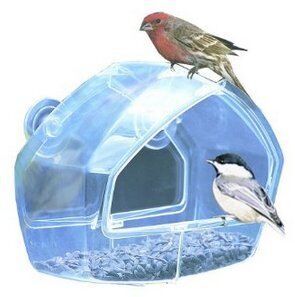
If you’re chasing close-up bird viewing tips without leaving your couch, a clear window bird seed feeder brings the action to eye level. This 1-cup window feeder safety design mounts with suction cups right on your glass—birds won’t strike at high speed, reducing bird collision prevention worries.
You’ll watch chickadees and finches work the seed tube feeder compartment inches away. At $20.85, it’s your shortcut to serious bird feeding without yard space.
Just swap in fresh seed every few days for smart feeder maintenance tips and consistent wild bird feeders attraction.
Best For: Anyone who wants to watch birds up close from inside their home without needing yard space or dealing with complicated setup.
- Mounts directly on your window so birds don’t build up speed before hitting glass, which cuts collision risk
- Lets you see chickadees, finches, and other songbirds feeding just inches away while you’re drinking coffee or working
- Easy to pop off and rinse clean, plus at $20.85 it’s cheaper than most yard feeders
- Only holds 1 cup of seed, so you’ll refill it every couple days if birds find it
- Bigger or heavier birds won’t use it—you’re mostly getting finches and chickadees
- Suction cups can fail in extreme heat or cold, and not every window works for mounting
4. Bluebird House Predator Guard Metal
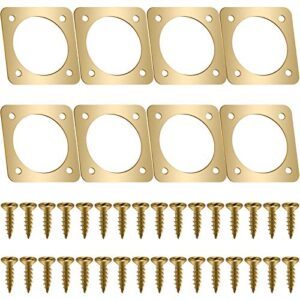
Once bluebirds start nesting, you need real predator control—and a metal guard delivers that safety bluebirds deserve. The Ripeng metal guard types slip over your 1.5-inch entrance hole, blocking raccoons and cats from reaching inside.
At 2×2 inches, this birdhouse accessory stops squirrels from chewing through wood. Guard installation takes minutes with included screws, though you might grab better hardware from your toolbox.
Metal durability means seasons of wildlife conservation without rust or replacement. It’s your shortcut to bluebird safety without constant worry about nighttime raids.
Best For: Bluebird enthusiasts who want proven protection against raccoons, squirrels, and cats without constant maintenance or replacement.
- Galvanized metal construction resists rust and chewing far better than wood alone, giving you seasons of reliable predator defense
- Research shows metal guards boost nest success by 3-15% depending on species, which means more fledglings make it safely out of your boxes
- Quick installation over existing 1.5-inch entrance holes means you can upgrade protection on multiple houses in one afternoon
- Included screws often need replacing with better hardware since reviewers report they’re flimsy or the wrong type for clean installation
- Sharp edges on some units require light sanding before mounting to avoid cuts during handling
- You’ll still need a pole baffle for full protection since entrance guards alone don’t stop climbing predators from below
5. Natural Wooden Birdhouse Outdoor Home
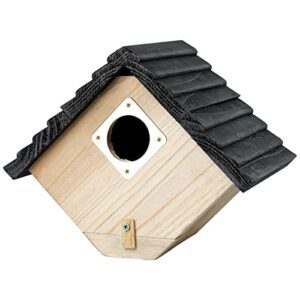
You want freedom from plastic and chemicals—natural wood birdhouses deliver that safety your birds deserve. Cedar or untreated pine designs resist insects and rot for 5 to 10 years without toxic treatments.
Look for 1.5-inch entrance holes that welcome wrens and chickadees while blocking larger intruders. Ventilation holes near the roof prevent overheating, and drainage slots keep nests dry.
These eco-friendly materials breathe better than plastic, keeping fledglings comfortable. Clean-out doors make seasonal maintenance quick, supporting multiple breeding cycles in one outdoor bird safety investment.
Best For: Bird lovers who want a chemical-free, eco-friendly nesting option that attracts small songbirds like wrens and chickadees while lasting multiple seasons outdoors.
- Natural cedar or untreated wood resists rot and insects for 5-10 years without toxic chemicals that could harm nesting birds
- Proper ventilation and drainage features keep fledglings comfortable and dry, with studies showing higher occupancy and fledging success than plastic alternatives
- Easy-access cleaning doors make seasonal maintenance simple, supporting healthy birds across multiple breeding cycles
- Entrance hole at 1.5 inches may be too large for some smaller species like wrens (which prefer closer to 1-1.25 inches) and won’t exclude all competitors
- Hanging hardware durability issues reported by customers, potentially requiring replacement cables or mounting solutions
- Actual dimensions (8.6 x 7 x 5.9 inches) may feel smaller than expected, and product descriptions haven’t always matched what arrives
6. Bluebird Houses With Copper Guard
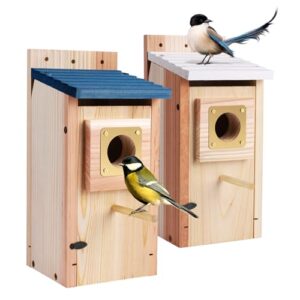
A copper portal shifts predator protection from guesswork to certainty—squirrels and woodpeckers can’t chew through that 1.5-inch metal opening. The copper guard benefits extend your entrance tunnel depth by about an inch, keeping raccoons from reaching nests. Cedar bluebird house models with copper portal sizes of 1.5 inches welcome eastern bluebirds while blocking invasive species, giving you functional birdhouse materials that last.
These bluebird house designs pair cedar or recycled materials with copper roof birdhouse accents that resist rust for years. Look for birdhouse accessories and decor like pre-drilled mounting holes.
Best For: Bluebird enthusiasts who want a nest box that keeps predators out while attracting eastern bluebirds without constant maintenance or replacements.
- The 1.5-inch copper portal stops squirrels and woodpeckers from chewing through the entrance, and the extra inch of depth keeps raccoons from reaching inside.
- Cedar or recycled materials paired with rust-resistant copper last longer than plain wood houses, so you won’t need to replace them every few seasons.
- Pre-drilled holes and easy assembly make installation quick whether you’re mounting on a pole, fence, or tree.
- Build quality can be inconsistent—some customers report the wooden sides split or don’t hold up past five years.
- The wood itself is fair quality, not premium, so it might not handle harsh weather as well as higher-end options.
- Durability concerns mean you may still need repairs or replacements sooner than expected, even with the copper guard.
7. Edible Birdhouse Holiday Feeder Gift
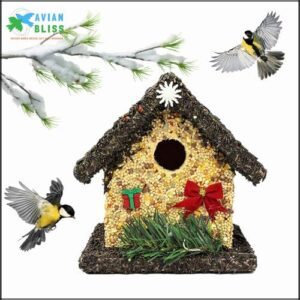
A seed-crusted cottage transforms your winter feeding routine into a gift that functions twice—first as food, then as shelter. The Edible Birdhouses Holiday Feeder Gift from Wild Birds Unlimited packs sunflower hearts, millet, and cranberries over a reusable wooden frame, attracting cardinals and chickadees when they need fat-rich Bird Nutrition most.
Once birds strip the seeds, you’ve got a functional nest box with a five-year guarantee. This dual-purpose design makes Bird Feeding and Conservation practical for gift-givers who want Holiday Feeding that lasts beyond December.
Best For: Bird lovers who want a festive gift that feeds winter visitors now and provides a nesting spot for seasons to come.
- Seeds packed with sunflower hearts and millet give cardinals and chickadees the fat they need during cold months, then the wooden frame underneath becomes a reusable birdhouse with a five-year guarantee.
- The surface can be re-coated with peanut butter and fresh seed, so you’re not tossing it after one use—it keeps working winter after winter.
- Includes natural Spanish moss so nesting birds have material ready when spring arrives, making it more than just a feeder.
- Some buyers say the house is smaller than photos suggest, so check the 10.25 × 5.75 × 5.5 inch dimensions before you buy.
- Seeds can fall off during shipping or handling, leaving a mess in the box and reducing how much food is actually left for the birds.
- You may need to reapply peanut butter and seed right away to make it work as advertised, which adds an extra step before hanging it outside.
Types of Birdhouses and Feeders Available
Not all birdhouses and feeders serve the same purpose. Some give birds a safe place to nest, while others make it easy to watch them eat without stepping outside.
Here’s a quick look at the main types you’ll find online and what makes each one worth considering.
Functional Vs. Decorative Birdhouses
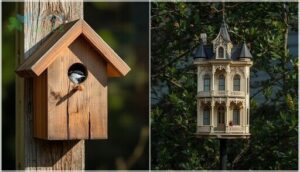
Not all birdhouses work the same—decorative models might catch your eye, but functional nest box design makes the difference for nesting success. You’ll want wooden materials with proper birdhouse ventilation, species specificity in entrance size, and weatherproof construction.
Audubon birdhouses and similar functional designs support real backyard birding and conservation, while unique birdhouses without drainage or airflow often sit empty despite their charm. Functional birdhouses are preferred due to their natural material benefits.
Tube Feeders, Mesh Feeders, and Window Feeders
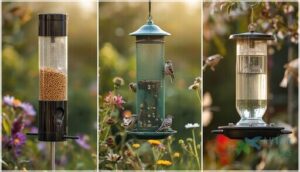
You’ve got three solid options—each with its own perks. Tube feeders like the Thistle Seed Tube Feeder offer precise seed dispensing and squirrel resistance when paired with caged designs. Green Mesh Combo Feeders boost bird attraction with clinging access for multiple species. Window feeders let you watch up close while reducing fatal collisions. All three prioritize feeder durability and easy feeder maintenance for reliable backyard birding.
The growing demand for outdoor bird feeders is driven by increasing interest in bird watching activities.
Specialty Birdhouses for Hummingbirds and Bluebirds
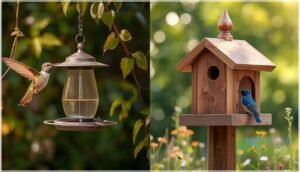
Regarding species-specific housing, you’ll find that hummingbird platforms and bluebird nesting boxes demand different birdhouse designs. Hummingbirds prefer open platforms near dense cover—not enclosed boxes—while bluebirds thrive in cedar or recycled plastic structures with 1.5-inch entrance holes.
Unique birdhouses like wren cedar birdhouse models and copper roof birdhouse options use specialty materials that support bird health and wellness through proper ventilation and weather protection.
Squirrel-Proof and Predator-Resistant Designs
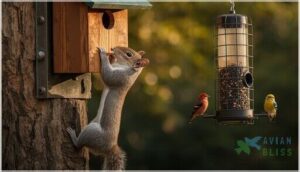
Beyond choosing the right species design, you’ll want protection from raiders. Pole mounting with squirrel baffles blocks climbing predators when installed at least 5.5 feet high. Metal entrance hole plates prevent squirrels from chewing wider openings.
For feeders, try the Squirrel Resistant Caged Tube Feeder or Dragonfly Design Squirrel-Resistant Tube Feeder—both use weight-sensitive perches that close when heavier animals land, keeping your seed safe.
Choosing Quality Birdhouse Materials
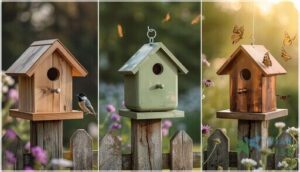
The material you choose for your birdhouse affects how long it lasts and how safe your birds feel. Wood, plastic, and metal all work differently in weather and need different levels of care.
Let’s look at the most popular materials and what makes each one worth considering.
Wooden, Cedar, and Recycled Plastic Birdhouses
Your material choice shapes birdhouse durability and the health of your backyard birding setup. Consider these wildlife-friendly products:
- Cedar birdhouses last 15–20 years and resist rot naturally—double the lifespan of pine.
- Untreated wood (cedar, poplar) protects eggs from harmful chemicals.
- Recycled plastic alternatives won’t crack or fade for decades.
- Copper roof birdhouse designs add decorative flair.
- Eco-friendly materials support bird watching while reducing waste.
Wood treatment matters—skip creosote or arsenic coatings that harm nestlings.
Weatherproof and Maintenance-Free Options
You’ll love poly lumber and recycled plastic birdhouses if you’re done with annual painting. These weatherproof materials feature built-in UV stabilizers that deliver 20+ years outdoors—no rot, no termites, no peeling paint.
Just soap-and-water cleanup keeps your copper roof birdhouse looking sharp. Vinyl and HDPE options resist moisture and mold naturally, making them sustainable options for low maintenance backyard birding essentials that protect wildlife friendly products season after season.
Design Features for Bird Safety and Comfort
Safety starts with entrance hole size—aim for 1.5 inches on bluebird houses to keep predators out while welcoming cavity nesters. Add nest box ventilation near the roofline (four 5/8-inch holes work great) for thermal regulation that prevents overheating. Install a predator guard below the entrance and skip exterior perches that give cats leverage.
These birdhouse materials choices support avian conservation by creating secure bird feeding and shelter zones alongside your bird-friendly plants.
Essential Birdhouse Accessories and Food

You’ve picked your birdhouse, but the real work starts when you set it up for success. The right feeders, protective accessories, and quality food keep birds coming back and predators at bay.
Here’s what you need to make your backyard a true haven.
Bird Feeder Types and Seed Varieties
You’ll find tube feeders attract finches with Nyjer, while mesh designs work well for mixed seed blends. Sunflower seed draws the most visitors—about half of all households stock feeders in winter. Diverse seed mixes bring larger flocks than single varieties.
Choose feeder designs that match your seed preferences: tubes for small seeds, platform styles for millet and sunflower. The right combination turns your yard into a bird haven.
Predator Guards and Squirrel-Proof Solutions
Guards make the difference between thriving nests and empty shells. You need pole-mounted baffles—at least 8 by 24 inches—to block climbing raccoons and snakes. Add a Noel guard or metal entrance portal for extra nest protection. Mount everything 5 feet high and 10 feet from trees.
Squirrel-resistant tube feeders and proper wildlife deterrents turn birdhouse security from hope into reality, giving your backyard birds the wildlife conservation advantage they deserve.
Decorative and Functional Accessories
You’ll find Birdhouse Decor that blends Bird Safety with style—think Copper Roof Birdhouse designs or artistic glass Feeder Designs that double as Garden Accents. Surveys show 68% of enthusiasts choose colorful, carved Bird Houses specifically for Outdoor Decor.
Eco Friendly Options like recycled-plastic Garden Accessories and Decor cut maintenance while protecting birds. Add a Birdie Bell or decorative bath to turn function into freedom for your flock.
Tips for Shopping Birdhouse Supplies Online

Shopping for birdhouse supplies online gives you the freedom to explore options you won’t find at your local store. You can compare features, check reviews, and find eco-friendly products that match your backyard birds’ needs.
Here’s what to keep in mind when you’re ready to make the best choice for your feathered friends.
Benefits of Buying Birdhouse Supplies Online
Shopping for birdhouse supplies online opens up a world of freedom you won’t find at local stores. You gain access to four key advantages:
- Convenience Options that let you browse at 3 a.m. in your pajamas
- Time Savings from skipping store trips and heavy lifting
- Online Reviews showing real bird lovers’ experiences
- Digital Guidance with species-specific recommendations and installation tutorials
Plus, you’ll discover specialty wildlife products that rarely make it to store shelves.
How to Compare Features and Prices
Comparing birdhouse supplies online means looking past the sticker price. Start by lining up features side by side—smart feeders with AI recognition can jump from $85 to $270, but some lock key wildlife observation tools behind $4 monthly subscriptions. Online reviews reveal which bird baths crack after one winter and which predator guards actually work.
Here’s how three popular bird feeders stack up:
| Feature | Basic Tube Feeder | Mesh Combo Feeder | Smart AI Feeder |
|---|---|---|---|
| Price Range | $15–$30 | $25–$45 | $85–$270 |
| Durability | Wood/plastic mix | Weather-resistant mesh | Recycled plastic |
| Special Function | Holds 2 lbs seed | Squirrel-proof cage | App + species ID |
| Ongoing Cost | Seed only | Seed only | +$48/year subscription |
Check total cost evaluation over two seasons—that budget cedar birdhouse at $14 might outlast a $9 craft kit that warps by spring. Price analysis tools let you filter by material, capacity, and warranty length so you’re comparing apples to apples. Real bird-watching enthusiasts often share which models attract the most species, turning feature comparison into a treasure map for your backyard.
Ensuring Sustainable and Eco-Friendly Choices
Your buying decisions can protect forests and wildlife at the same time. Look for birdhouses with FSC-certified wood—these labels prove the timber came from responsibly managed forests covering over 160 million hectares worldwide.
Recycled plastic feeders cut landfill waste and last five times longer than wood.
Over 65% of shoppers now choose eco-friendly materials, proving sustainable practices work when you vote with your wallet.
Frequently Asked Questions (FAQs)
How often should I clean my birdhouse?
You should clean your birdhouse at least once per year—ideally in fall after nesting ends.
For species raising multiple broods, clean between each brood to reduce parasites and maintain healthy nesting conditions.
What size entrance hole works for most birds?
A 5-inch entrance hole works best for most backyard birds. This size welcomes bluebirds, chickadees, and wrens while keeping out starlings and predators—perfect for cavity nester preferences in your nest box design.
Are decorative birdhouses suitable for actual nesting birds?
Most decorative birdhouses fall short—they’re eye candy, not safe havens. Look for proper ventilation, drainage holes, untreated wood, and predator guards.
Wildlife-friendly designs with eco-friendly materials support real backyard birding and nesting safety.
Which direction should my birdhouse face for protection?
Face your birdhouse east or northeast for ideal orientation. This protects against prevailing winds while providing gentle morning sun exposure.
It keeps nest temperature stable and shields birds from afternoon heat during backyard birding activities.
Should birdhouses be placed near bird feeders?
Should you keep feeders close to nest boxes? It’s risky. Nesting success drops when feeders attract predators and constant traffic. For habitat design that accommodates bird behavior and wildlife observation, aim for twenty feet of separation minimum.
Whats the best birdhouse placement in my yard?
You’ll want your birdhouse about 5 to 15 feet high, facing east or southeast for morning warmth.
Keep it several meters from feeders and structures for predator avoidance, supporting backyard bird conservation and wildlife observation.
When is peak nesting season for birds?
Peak nesting season runs from March through August in temperate regions, with most activity in April and May. Regional patterns vary—tropical birds nest year-round, while climate impact shifts timing as temperatures rise.
Can I leave birdhouses up year-round?
Yes, you can leave birdhouses up year-round. Many birds use nest boxes for winter roosting and shelter.
Clean them at least once after nesting season ends to support bird health and prevent disease risks.
Conclusion
Empty feeders gather dust while thriving yards hum with wings and song. The difference lies in what you choose.
Quality birdhouse supplies online deliver species-specific designs, predator guards, and weather-resistant materials that generic stores can’t match. Your investment protects nesting families and creates a sanctuary worth returning to season after season.
Start with one well-chosen house or feeder, watch your first residents arrive, and you’ll understand why the right gear changes everything.
- https://growthmarketreports.com/report/bird-house-market-global-industry-analysis
- https://dataintelo.com/report/bird-house-market
- https://deepmarketinsights.com/report/birdhouses-market-research-report
- https://www.futuremarketinsights.com/reports/wild-birds-products-market
- https://www.factmr.com/report/bird-feeder-market