This site is supported by our readers. We may earn a commission, at no cost to you, if you purchase through links.
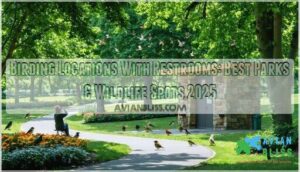 You’ll discover excellent birding locations with restrooms at national parks like Yellowstone and Acadia, state wildlife refuges, and well-maintained city parks.
These spots combine diverse bird populations with clean facilities, letting you enjoy extended morning watches without bathroom anxiety.
Popular destinations include Point Pelee National Park, Central Park in NYC, and local Audubon sanctuaries that prioritize visitor comfort.
Most premier locations position restrooms within a five-minute walk of prime viewing areas, so you won’t miss that rare warbler while nature calls.
Smart birders know that comfortable facilities mean longer, more rewarding observations and better wildlife photography opportunities.
Table Of Contents
- Key Takeaways
- Birding Locations Basics
- Essential Birding Gear
- Birding Spots Near Restrooms
- Safe Birding Practices
- Frequently Asked Questions (FAQs)
- What are the 5 S’s of birding?
- What is the birding capital of the United States?
- Is birding an expensive hobby?
- What is the best month for bird watching?
- Are restrooms available during early morning birding hours?
- How far are restrooms from popular birding trails?
- Do birding locations have accessible restrooms for disabilities?
- Are portable restrooms provided at remote birding sites?
- What backup options exist when restrooms are closed?
- Conclusion
Key Takeaways
- National parks and wildlife refuges offer the best combination – You’ll find diverse bird species alongside clean, strategically placed restroom facilities within five minutes of prime viewing areas.
- Plan for early morning challenges – Most park restrooms don’t open until 7-8 AM, potentially missing peak dawn birding hours when birds are most active.
- Urban parks provide surprising diversity – City parks offer convenient birding with nearby restroom access, though you’ll need to manage traffic noise while listening for bird calls.
- Comfortable facilities extend your field time – You’ll spend more time observing and less time worrying about bathroom breaks, leading to better wildlife photography opportunities and longer, more rewarding birding sessions.
Birding Locations Basics
When you’re planning a birding adventure, choosing locations with restroom facilities guarantees you can spend more time watching birds and less time worrying about comfort breaks.
National parks, wildlife refuges, and local parks typically offer the best combination of diverse bird species and convenient amenities for extended outdoor sessions.
National Parks Facilities
Over 300 national parks offer excellent birding locations, restrooms, and visitor centers with essential amenities.
You’ll find restroom availability strategically placed near high-traffic birding spots, making your wildlife adventures more comfortable and accessible.
Accessibility improvements at national parks guarantee more visitors can enjoy the outdoors.
Top National Parks Facilities:
- Visitor Centers – Feature accessible restrooms, trail maps, and birding guides with staff expertise on local species and trail conditions
- Picnic Areas – Provide restroom access near prime birding habitats where forest edges meet open spaces for ideal bird observation
- Park Accessibility – Offer ADA-compliant facilities, paved approaches, and wheelchair-accessible parking at major birding trails facilities
Wildlife Refuges Amenities
Wildlife refuges roll out the red carpet for birders with exceptional amenities that make your day comfortable and educational.
Wildlife refuges welcome birders with top-tier facilities that enhance your outdoor experience.
You’ll find clean restrooms at visitor centers, accessible trails with boardwalks, and knowledgeable staff offering identification help.
Many refuges provide binocular loans, interactive exhibits, and educational programs that’ll turn your birding adventure into a learning experience you won’t forget.
Before exploring, visitors can stop by the center for wildlife viewing tips to get the most out of their visit and have a truly memorable time.
Local Park Restrooms
Local parks offer convenient bird watching restrooms that make your birding adventures more comfortable.
Over 75% of large parks provide permanent or portable facilities, with many featuring ADA-compliant units for accessibility.
You’ll find flush toilets, vault toilets, or portable restrooms depending on park infrastructure.
Restroom cleanliness signals good maintenance schedules and public safety measures, while vandalism prevention guarantees reliable access during your birding trips.
Essential Birding Gear
You’ll need three core pieces of gear to make your birding adventures both successful and comfortable at parks with restroom facilities.
Quality binoculars let you observe distant birds clearly, while a reliable field guide helps you identify species on the spot.
A spotting scope provides detailed views when you’re stationed at prime viewing areas near visitor centers, and a reliable field guide is essential for identifying species.
Binoculars for Observation
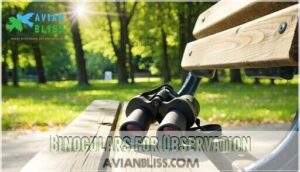
Quality binoculars transform your birding experience at birding locations with amenities.
**Premium optics unlock hidden bird behaviors that transform casual park visits into unforgettable wildlife encounters.
Look for 8×42 specifications—eight times magnification power with 42mm lens size provides excellent image quality and comfortable field of view.
Consider ergonomics for extended use, especially at birding sites with restrooms where you’ll spend more time observing.
Many birders purchase binoculars for birding online.
Lightweight models reduce neck strain during long sessions at birding destinations, providing a more comfortable experience.
Field Guides for Identification

Once you’ve got your binoculars ready, you’ll need reliable field guides for bird identification at birding locations with amenities.
Guide comparison reveals that beginner guides like Kaufman’s cost $19, while digital guides offer real-time updates through apps.
Here’s what makes field guides your birding companion:
- Regional guides pinpoint species you’ll actually encounter at local birding areas with bathrooms
- Advanced guides provide detailed behavioral notes for challenging identifications
- Digital guides work offline when you’re miles from birding destinations with restrooms
- Beginner guides use simple illustrations that won’t overwhelm new birders
Choose guides matching your skill level and local birding spots for best results.
Many birders also find it helpful to join local birding clubs to learn from experienced enthusiasts.
Spotting Scopes for Detail
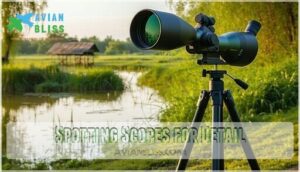
Spotting scopes bring distant birds into crystal-clear focus with magnification strengths reaching 20-60x power.
You’ll appreciate superior image quality and scope stability when watching waterfowl from birding locations with restrooms nearby.
Weather resistance protects your investment during unpredictable conditions.
Find quality options for your birding needs.
While portability options vary, these powerful birdwatching tools excel at birding locations amenities where stationary observation works best.
Birding Spots Near Restrooms
You’ll find excellent birding opportunities at parks and wildlife refuges that combine rich bird habitats with convenient restroom facilities.
These locations let you focus on spotting species without worrying about basic comfort needs during longer birding sessions.
Forest Edge Birding

Forest edges create perfect birding hotspots where habitat diversity meets convenience.
These boundary zones between woodland and open areas attract exceptional bird abundance with edge species thriving in varied sunlight exposure and abundant nesting sites.
You can improve birding by focusing on habitat and guides.
- Birding locations restrooms at Bles Park (VA) and Magee Marsh (OH) offer convenient access to productive edge habitats
- Birding areas bathrooms are seasonally installed at Edison Woods and select nature centers near forest margins
- Birding sites restrooms at interpretive centers maintain public access during operating hours for structured walks
- Birding destinations restrooms in urban forest edge parks like Forest Park (Queens) integrate amenities with natural birding zones
Shoreline Bird Watching
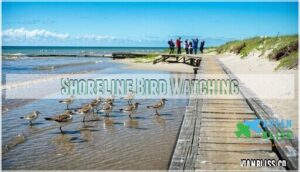
Coastal habitats offer unmatched birding opportunities where restroom facilities enhance your watching experience.
You’ll discover diverse seabird ID challenges along shorelines, from sandpipers probing tidal pools to gulls riding migration patterns.
| Location | Key Species | Restroom Access |
|---|---|---|
| Shoreline Lake, CA | Surf Scoters, Eared Grebes | Restaurant facilities |
| Marine Park Preserve, NY | Forster’s Tern, Clapper Rail | Adjacent recreational areas |
| Matheson Hammock Park, FL | Sandpipers, Plovers | Picnic area restrooms |
These birding destinations with restrooms support shorebird conservation while providing comfort during extended observations at birding sites with reliable amenities.
Urban Park Birding
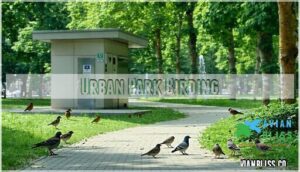
While shorelines offer waterfowl spectacles, city parks provide surprisingly diverse City Park Birds right in your backyard.
These Urban Migration Routes create Concrete Jungle Habitats where robins mingle with ravens.
Public Birding Areas feature Accessible Birding Spots with bird watching restrooms nearby, though Noisy Birding Challenges from traffic test your listening skills.
Quality binoculars are essential for clear views. Most birding parks toilets and birding spots facilities make these birding locations accessible for comfortable, extended observations.
Safe Birding Practices
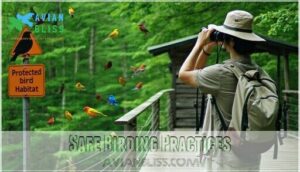
Safe birding protects both you and the wildlife you’re observing. Following ethical guidelines and staying prepared guarantees enjoyable outings while preserving bird habitats for future generations.
Respecting Bird Habitats
When you’re exploring birding locations accessible to the public, your responsibility extends beyond personal enjoyment to habitat protection.
Practice ethical birding by staying on designated trails at birding parks toilets and facilities.
Don’t touch vegetation or disturb natural areas around birding hotspots toilets.
Remember to minimize impact by packing out all trash from birding spots facilities, and never feed wildlife despite their curious nature.
Avoiding Disturbances
Beyond respecting habitats, you’ll want to minimize your impact on wildlife behavior.
Ethical birding means keeping your distance and avoiding actions that stress birds or alter their natural routines.
Here are five key disturbance-prevention practices for birding hotspots with toilets:
- Maintain 15-foot minimum distance from nesting birds – closer approaches can cause abandonment
- Keep voices low and movements slow – sudden sounds startle feeding flocks
- Never use call playback near breeding areas – excessive call usage disrupts territorial behaviors
- Avoid feeding wildlife completely – it creates dependency and alters natural foraging patterns
- Stay on designated trails – wandering damages sensitive habitat areas
When visiting birding reserves with restrooms, birding sanctuaries with restrooms, or birding preserves with restrooms, remember that convenient facilities don’t excuse poor etiquette.
Your restraint guarantees these birding locations with amenities remain productive for both wildlife and future visitors.
Staying Hydrated
While avoiding disturbances protects birds, protecting yourself matters equally.
Pack extra water sources beyond what you think you’ll need for birding locations with restrooms. Your thirst awareness can lag behind actual dehydration, especially during early morning outings when you’re focused on spotting species.
Hydration packs work well for longer excursions to birding spots with restrooms, maintaining electrolyte balance and preventing heat exhaustion.
It’s also important to practice optimal bird hygiene to prevent the spread of zoonotic diseases, and this is crucial for overall birding safety.
Frequently Asked Questions (FAQs)
What are the 5 S’s of birding?
The 5 S’s of birding aren’t a standard framework in birding literature. You might be thinking of general birdwatching principles like being still, silent, slow-moving, and scanning systematically while staying safe.
What is the birding capital of the United States?
As the saying goes, "A rising tide lifts all boats," and Texas’s Rio Grande Valley region stands as America’s premier birding destination.
You’ll discover "some of the grandest assortment of birds found in North America" when visiting this remarkable area.
Is birding an expensive hobby?
You’ll need binoculars ($120-180) and a field guide ($19), but after that initial investment, birding becomes incredibly affordable since you can observe birds anywhere without ongoing costs.
What is the best month for bird watching?
May offers peak spring migration when you’ll spot the most diverse species. Dawn and dusk provide ideal viewing as birds actively feed and sing during cooler temperatures.
Are restrooms available during early morning birding hours?
Restroom availability varies substantially by location and time of day.
Most parks, nature centers, and wildlife refuges don’t open facilities until 7-8 AM, potentially missing peak dawn birding hours when birds are most active.
How far are restrooms from popular birding trails?
Restroom distances at birding locations vary widely, from trailheads with immediate facilities to remote spots requiring mile-long hikes back.
You’ll find most popular trails position restrooms near parking areas or visitor centers for convenience.
Do birding locations have accessible restrooms for disabilities?
Many popular birding locations, especially national parks and wildlife refuges, offer ADA-compliant restrooms with wheelchair access.
You’ll find accessible facilities at visitor centers and major trailheads, though remote spots may lack these amenities, including ADA-compliant restrooms.
Are portable restrooms provided at remote birding sites?
Like finding an oasis in the desert, remote birding sites rarely offer portable restrooms. You’ll need to plan ahead and scout locations beforehand, as most wilderness areas lack facilities entirely.
What backup options exist when restrooms are closed?
When nature calls but facilities don’t cooperate, you’ll need clever alternatives.
Pack a portable camping toilet, scout nearby businesses like gas stations, or use your car strategically positioned for privacy with emergency supplies.
Conclusion
Ironically, you’ve spent years worrying about finding convenient birding locations with restrooms, only to discover they’re everywhere once you know where to look.
These prime spots prove you don’t need to sacrifice comfort for exceptional bird watching experiences.
From national parks to urban sanctuaries, thoughtfully designed facilities enhance rather than detract from your wildlife observations.
You’ll find that birding locations with restrooms actually extend your field time, letting you focus on identifying species instead of planning bathroom breaks.
- https://birdersguidemddc.org/site/centennial-lake-and-park/
- https://www.fxva.com/explore/outdoors/birding-bird-watching/
- https://www.calvertcountymd.gov/3303/Birding
- https://www.biggestweekinamericanbirding.com/birding-locations.html
- https://www.dcr.virginia.gov/state-parks/blog/top-5-virginia-state-parks-for-birding