This site is supported by our readers. We may earn a commission, at no cost to you, if you purchase through links.

Every autumn, billions of birds vanish from backyards and forests—then reappear thousands of miles away as if answering some invisible summons. This epic journey isn’t wanderlust or chance. Birds changing habitats seasonally follow ancient patterns wired into their DNA, trading familiar territories for distant landscapes that offer what they desperately need: food, safety, and places to raise their young.
The mechanics behind these mass movements reveal nature’s most complex navigation systems—celestial compasses, magnetic sensors, and mental maps that would impress any cartographer. Understanding why and how birds make these seasonal swaps unlocks secrets about survival, adaptation, and the delicate threads connecting ecosystems across continents.
Table Of Contents
- Key Takeaways
- What Drives Birds to Change Habitats?
- How Birds Navigate Seasonal Movements
- Migration Patterns Across Bird Species
- Seasonal Changes in Bird Diets
- Breeding and Nesting in New Habitats
- Environmental Factors Impacting Migration
- The Role of Stopover Sites in Migration
- Effects of Climate Change on Habitat Shifts
- Social Behaviors During Habitat Changes
- Conservation Strategies for Migratory Birds
- Frequently Asked Questions (FAQs)
- Conclusion
Key Takeaways
- Birds migrate seasonally using a sophisticated navigation toolkit combining celestial star patterns, Earth’s magnetic fields, and memorized landmarks to travel thousands of miles between breeding and wintering grounds driven by food availability, breeding requirements, and climate conditions.
- Climate change is disrupting migration patterns by shifting timing (birds arriving weeks earlier than decades ago), altering food availability mismatches at breeding sites, and forcing range expansions into new territories while contracting habitat in drought-stressed regions.
- Stopover sites function as critical refueling stations during migration, but 28 percent of Yellow Sea tidal flats have vanished since the 1980s due to development and pollution, threatening birds’ ability to complete their journeys successfully.
- Protecting migratory birds requires international collaboration across borders to preserve seasonal habitats, restore native vegetation at stopover sites, and coordinate conservation efforts along entire migration corridors that span continents.
What Drives Birds to Change Habitats?
Birds don’t just wander aimlessly across continents—they’re on a mission, driven by powerful forces that shape their survival.
Understanding the types of birds and their unique facts reveals how evolution has fine-tuned each species for its specific migratory journey.
Every spring and fall, millions of birds abandon their current homes and fly thousands of miles to completely different habitats.
Let’s break down the three main reasons behind these epic seasonal moves.
Seasonal Food Availability
Hunger, you might say, is the supreme compass. Birds track seasonal food availability like expert farmers following crop rotation—spring delivers insects and fresh greens, summer brings berries and seeds, fall offers nuts and late harvests, and winter? That’s when food scarcity kicks in.
These harvest seasons drive epic migration patterns, especially as climate change shuffles the menu and timing birds depend on. Scientists often assess migration drivers by consulting seasonal food availability calendars to understand how shifting resources impact bird movements.
Breeding Requirements
Food alone won’t cut it—you need the perfect nursery, too. Birds shift habitats during breeding season to find safe nesting spots with low predators and abundant resources for raising young.
Timing matters: spring arrivals sync with peak insect hatches, fueling hungry chicks. Mating rituals and flock dynamics play out in these carefully chosen locations, ensuring reproductive health and the survival of their offspring.
Climate and Weather Influences
Temperature effects and climate shifts reshape the entire game. Cold snaps push you and your feathered neighbors into dense cover, while heat waves force midday siestas to dodge dehydration.
Rainfall patterns determine insect booms—your chicks’ lifeline—and drought can trigger emergency relocations. Climate change impact? Unseasonal weather creates brutal mismatches between food peaks and hungry mouths, making atmospheric conditions literal survival triggers.
These changes are closely related to dynamic global climate patterns, which influence seasonal resources for migrating birds.
How Birds Navigate Seasonal Movements

You’ve probably wondered how birds travel thousands of miles without getting lost—well, they’ve got navigation superpowers that put our GPS to shame. These feathered explorers rely on a toolkit of remarkable techniques, from reading the stars to sensing Earth’s invisible magnetic fields.
Birds navigate thousands of miles using superpowers like star reading and magnetic field sensing that surpass our GPS technology
Let’s break down the two main ways birds find their way across continents during their epic seasonal journeys.
Celestial and Magnetic Orientation
Ever wonder how birds find their way across thousands of miles without GPS? They’ve cracked nature’s code using celestial navigation and magnetic fields! Young birds lock onto star patterns for orientation cues, while the Earth’s magnetic field acts like a built-in compass.
Through bird magnetoreception, they integrate sunset signals and geomagnetic readings—creating a multi-source navigation system that guides their epic migratory behavior across continents.
Landmark and Memory Use
Beyond stars and magnetic fields, birds rely on geographic feature recognition to fine-tune their migratory patterns. You’ll find them remembering specific mountains, rivers, and coastlines—building a mental map through memory formation that sharpens with each journey.
These navigation cues work like spatial mapping checkpoints, helping refine routes during avian migration. It’s bird behavior at its smartest, turning landscapes into reliable guideposts for epic seasonal travels!
Yet as new climate patterns disrupt familiar landmarks and seasonal cues, many species struggle to adapt their navigation strategies quickly enough.
Migration Patterns Across Bird Species
Not all birds treat migration the same way—some wing it thousands of miles across oceans, while others barely leave the neighborhood.
The strategy each species chooses depends on factors like body size, wing shape, and what they eat.
Let’s break down the main differences you’ll see out there.
Long-Distance Vs. Short-Distance Migration

When you watch birds changing habitats seasonally, you’re seeing two epic strategies unfold—long-distance migration covers thousands of kilometers across continents, while short-distance migration keeps travelers within a few hundred kilometers of home.
These distance thresholds split avian migration into dramatic categories: some species chase resources across the globe, others relocate just enough to dodge winter’s bite and find fresh feeding grounds.
Species-Specific Routes and Strategies

Each species flies its own signature path—you’ll discover shorebirds sticking to coastal networks while forest songbirds trace riparian corridors, and waterfowl zero in on freshwater systems that fuel their journeys.
- Flyway patterns follow inherited routes shaped by wind and stopover abundance
- Route flexibility lets birds exploit tailwinds and adjust for unfamiliar terrain
- Migration timing hinges on wing loading and fuel capacity across species
- Habitat preferences determine whether birds choose wetlands, grasslands, or woodland edges for refueling
Seasonal Changes in Bird Diets

When birds switch habitats with the seasons, their menus change too—sometimes dramatically.
What they eat in their summer breeding grounds can be completely different from what they hunt down during winter, and this shift isn’t random.
Let’s look at how birds adjust their diets and foraging tactics to make the most of each season’s bounty.
Shifts in Food Sources
Think of bird diets as nature’s supreme buffet—seasonal changes dictate what’s on the menu! As migration patterns shift with climate change and food availability fluctuates, you’ll see epic avian diet shifts driven by food web dynamics.
Insect-eating songbirds swap bugs for berries when temperatures drop, while coastal migrants chase fish runs during seasonal foraging windows. Migration nutrition demands flexibility—birds switch protein sources to fuel those remarkable journeys across continents.
Foraging Behavior Adaptations
Foraging strategies in birds reveal stunning ecological adaptation—you’ll witness species switching foraging techniques as habitats shift seasonally. Food patch selection drives bird behavior during migration, with birds evaluating energy returns before committing effort.
Learning strategies help juveniles master new diet and foraging strategies through observation, while energetics management balances calorie intake against predator risk. Habitat exploitation becomes an adaptive art, perfecting bird diet flexibility across changing landscapes.
Breeding and Nesting in New Habitats

Once birds arrive at their new seasonal habitat, the real work begins—raising the next brood. Timing is everything, and choosing the right spot to build a nest can make or break their breeding success.
Let’s explore how birds sync up their breeding schedules with habitat shifts and what they look for when selecting the perfect nest site.
Timing Breeding With Habitat Shifts
When birds arrive at new breeding grounds, their internal clocks sync with local food peaks—a process called phenology coordination. You’ll see this habitat synchronization when warblers time their nests to match caterpillar booms, or wetland ducks adjust egg-laying as marshes green up.
These nesting strategies rely on climate adaptation and breeding cues like temperature sums, ensuring chicks hatch when insects explode across seasonal changes!
Nest Site Selection
Once breeding cues align, your feathered travelers scout for the perfect nursery—and nest site selection is anything but random! Birds evaluate tree species, shelter types, and microclimate factors with surgical precision. Here’s what drives nesting and breeding habits during habitat selection:
- Nest height (5–20 meters) keeps eggs safe from ground predators
- Overhead cover shields against storms and prying eyes
- Food proximity shortens foraging trips during chick-rearing
Territorial behavior kicks in fast—prime real estate goes quick!
Environmental Factors Impacting Migration

When birds set out on their epic journeys, they face all kinds of challenges from the world around them.
Everything from shifting weather to disappearing forests can shape the way they travel.
Let’s look at a few of the biggest environmental hurdles that impact migration.
Temperature and Precipitation Changes
Over the last century, temperature effects have nudged birds into a new reality—warmer springs shift insect peaks, causing timing mismatches with migration patterns. You’ll notice climate shifts alter precipitation trends too, creating droughts or floods that reshape seasonal variations and weather impact on stopovers.
| Climate Change Effect | Impact on Birds | Migration Consequence |
|---|---|---|
| Rising temperatures | Earlier insect emergence | Mistimed breeding windows |
| Altered weather patterns | Unpredictable storms | Disrupted flight routes |
| Shifting precipitation trends | Wetland expansion/contraction | Changed stopover availability |
| Heat waves | Stress during flight | Lower survival rates |
| Modified seasonal changes | Food source timing shifts | Energy depletion risks |
Temperature tracking shows snowpack declines reduce spring water—critical for the habitats you care about protecting.
Habitat Loss and Fragmentation
Beyond temperature swings, habitat destruction carves up migration routes—you’ll see fragmentation effects slice once-vast forests into isolated patch sizes.
Edge habitat expands where core zones vanish, raising predation risks and exposure risks.
Conservation planning must tackle habitat fragmentation head-on, or you’ll watch corridors disappear.
Habitat preservation and biodiversity hinge on connecting landscapes so bird migration thrives across seasons.
The Role of Stopover Sites in Migration

Think of stopover sites as rest stops on a marathon flight—birds can’t complete epic migrations on a single tank of fuel. These critical patches of habitat give tired travelers a chance to rest, refuel, and recharge before continuing their journey.
But not all stopover sites are safe anymore, and that’s creating some serious problems for our feathered friends.
Importance for Rest and Refueling
Think of stopover sites as pit stops on an epic cross-country road trip—you simply can’t make it without them! During bird migration, these safe stopover habitats offer vital Rest Stop Benefits where feathered travelers rebuild energy reserves through smart Refueling Strategies.
Migration Optimization depends on Habitat Selection that balances food availability with Energy Conservation, letting birds gain fat reserves and recover before continuing their journey.
Threats to Critical Stopover Habitats
Along coastal wetlands where birds rest, you’ll find Human Disturbance from recreation and development disrupting critical refueling periods.
Habitat Destruction through land reclamation has wiped out 28 percent of Yellow Sea tidal flats since the 1980s, while Wetland Degradation from pollution and water management shrinks feeding surfaces.
Climate Impacts—rising seas, droughts, extreme weather—erode marsh margins and desynchronize food availability, threatening bird migration routes worldwide.
Effects of Climate Change on Habitat Shifts
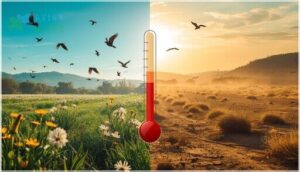
Climate change isn’t just warming the planet—it’s rewriting the rulebook for bird migration. You’ll see species arriving weeks earlier than they did decades ago, while others are pushing into territories they’ve never called home.
Let’s look at two major ways shifting temperatures are transforming when and where birds travel.
Altered Migration Timing
You might think birds are clockwork travelers, but climate change is totally rewriting their schedules. When spring arrives earlier in breeding areas due to warmer temperatures, many species advance their spring departures by several days—it’s one of the clearest migration shifts we’re seeing.
Here’s how climate cues are driving timing adaptations in bird migration:
- Temperature swings from the previous week can shift departure dates by 2–7 days in many songbirds
- Early insect flushes in spring trigger earlier migratory movements for insectivores chasing seasonal changes
- Autumn departures occur earlier when cooler conditions arrive sooner, shortening the pre-migratory window
- Snow cover duration correlates with delayed spring departures in high-latitude populations
- Drought conditions reduce fattening rates, causing seasonal delays of several days in species relying on quick refueling
These habitat responses show how migration patterns are adapting—sometimes successfully, sometimes not—to our rapidly changing climate. Migration timing isn’t just shifting; it’s becoming unpredictable, and that’s a major turning point for survival.
Range Expansions and Contractions
As warming accelerates, you’re watching habitat shifts play out in real time—species dispersal into new zones while others retreat from stress zones. Range dynamics now flip faster than ever, with climate change driving both dramatic wins and crushing losses across migration patterns.
| Range Change | Primary Driver | Example Impact |
|---|---|---|
| Poleward Expansion | Temperature Increase | Colonization of higher latitudes |
| Elevation Gain | Warming Valleys | Movement to cooler mountain zones |
| Drought Contraction | Precipitation Loss | Abandonment of arid regions |
| Fragmentation Loss | Habitat Destruction | Isolated population fluctuations.” |
Ecological adaptation separates survivors from casualties—generalists with flexible diets expand rapidly, while specialists lose ground. Seasonal changes now dictate who thrives and who vanishes, making habitat preservation absolutely critical for migration patterns to survive our warming world.
Social Behaviors During Habitat Changes
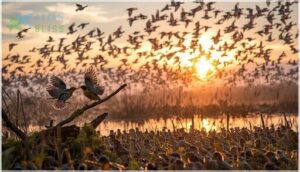
When birds shift habitats with the seasons, they don’t just pack up and fly solo—they’re constantly reading social cues, joining flocks, and even battling for space in brand-new territories. Flock dynamics shape everything from takeoff timing to landing zones, and these social behaviors aren’t random—they’re survival tactics honed over generations. Through social learning, younger birds pick up migration routes by following seasoned travelers, while flocking behavior helps them spot predators and locate food faster than they could alone. Habitat selection often hinges on where the crowd goes, because safety in numbers isn’t just a saying—it’s a lifeline.
Here’s what you’ll witness during group migration and behavioral adaptation:
- Territorial skirmishes flare up when newcomers arrive at already-claimed breeding or feeding sites
- Flocking and social behavior creates real-time info networks about danger and resources
- Dominance hierarchies determine who gets premium nesting spots in the new habitat
- Cooperative roosting at stopover sites conserves warmth and builds group cohesion for the next leg
Conservation Strategies for Migratory Birds

Now that you’ve seen how birds adapt on the fly, it’s time to talk about keeping their epic journeys possible.
Protecting migratory birds isn’t a solo mission—it takes smart habitat management and teamwork across entire continents. Let’s look at two key strategies that conservation experts use to safeguard these remarkable travelers.
Protecting Seasonal Habitats
You can’t protect migrating birds without safeguarding their seasonal homes—that’s why protected zones and buffer zones around critical breeding and wintering areas are essential for wildlife habitat preservation and biodiversity.
Habitat restoration brings back native plants, while access rules minimize disturbance during peak use. Regular monitoring health surveys track food resources and predators, ensuring safe stopover habitats and conservation success for bird migration and seasonal behavioral changes.
International Collaboration for Migration Routes
Migration patterns don’t respect borders—that’s why route coordination and data sharing between countries keep seasonal bird migration safe across continents. Border management agreements let researchers track epic journeys, while habitat protection at every stop fuels conservation efforts against climate change impact.
- Joint satellite tracking maps real-time flyway shifts
- Shared stopover site funding restores critical wetlands
- Cross-border rescue teams respond to habitat emergencies
Frequently Asked Questions (FAQs)
How do urban environments affect bird migration?
Cities disrupt migration patterns through light pollution effects and urban noise pollution—but they’re not all bad.
Urban stopover ecology reveals that parks and greenways offer critical refueling stations, even as city habitat fragmentation alters traditional routes.
Can birds learn new migration routes over time?
Yes—young birds experiment with shorter paths, then straighten routes over years using spatial memory and learned stopovers.
Species adapt migration patterns and timing through navigation cues, building route flexibility that enhances habitat resilience across generations.
Do juvenile birds migrate differently than adults?
Think young birds have it all figured out on their first trip south? Think again—juveniles take longer routes south, make extra stops, and face higher mortality rates while learning navigation skills that adults already mastered.
How does artificial light pollution impact migration?
Artificial light disrupts nocturnal navigation by disorienting migrants—urban lighting draws birds off course, delays timing, and increases collision risk.
Conservation strategies like timed restrictions during peak seasons protect migration corridors and improve survival rates.
What role do ocean currents play in migration?
You might think ocean currents matter only for marine life—but pelagic seabirds ride these ocean highways too, using current-driven upwellings and wind patterns to extend their range and find prey-rich feeding zones.
Conclusion
Nature’s most mind-blowing spectacle—birds changing habitats seasonally—proves evolution crafted travelers far more capable than we imagined. These feathered nomads don’t just move; they conquer continents using tools we’re only beginning to decode.
But their ancient routes now face modern threats: vanishing stopover sites, shifting climates, fractured landscapes. Protecting migration corridors isn’t just conservation—it’s preserving the living proof that freedom, adaptation, and survival are woven into the very fabric of life on Earth.