This site is supported by our readers. We may earn a commission, at no cost to you, if you purchase through links.
 Yes, birds can eat bananas and many species absolutely love them! This potassium-rich fruit provides essential nutrients like vitamin C, fiber, and antioxidants that support your feathered friend’s health.
You’ll want to offer ripe bananas with the peel removed, cut into appropriately sized pieces for your bird’s species. Parrots, crows, tanagers, and starlings are particularly fond of this sweet treat.
While bananas are safe, they’re high in sugar, so moderation is key – think of them as nature’s candy for birds. Most experts recommend limiting banana portions to prevent nutritional imbalances.
The preparation method and feeding frequency can make all the difference in keeping your bird healthy while satisfying their sweet tooth.
Table Of Contents
- Key Takeaways
- Can Birds Eat Bananas?
- Nutritional Benefits of Bananas for Birds
- How to Safely Offer Bananas to Birds
- Which Birds Love Bananas
- Are Banana Peels Safe for Birds?
- Can Wild Birds Eat Bananas?
- Can Birds Eat Mashed Bananas?
- Can Birds Eat Bananas and Apples?
- Risks of Eating Bananas for Birds
- Frequently Asked Questions (FAQs)
- Are bananas good for birds?
- Can birds eat banana peels?
- Can pet birds eat bananas?
- Can wild birds eat ripe bananas?
- Can birds eat mashed bananas?
- Can birds eat banana chips?
- Are any fruits poisonous to birds?
- Can birds and squirrels eat ripe bananas?
- What are you not supposed to feed birds?
- Can you put bananas out for the birds?
- Conclusion
Key Takeaways
- You can safely feed birds bananas – they’re packed with potassium, vitamin C, and fiber that support heart health, immunity, and digestion in many species, including parrots, crows, and starlings.
- Always remove the peel and cut into small pieces – banana peels contain harmful pesticides and are indigestible, while proper sizing prevents choking and makes eating easier for your feathered friends.
- Feed bananas in moderation as treats only – their high sugar content means you should limit portions to 2-3 times weekly to prevent obesity, nutritional imbalances, and digestive upset.
- Choose ripe, fresh bananas over processed alternatives – avoid banana chips, dried bananas with preservatives, and spoiled fruit that can attract pests and cause serious health problems in birds.
Can Birds Eat Bananas?
You’ll be happy to know that birds eat bananas safely and enthusiastically.
Birds safely enjoy bananas as nutritious, energy-packed treats that boost their health naturally.
Many species, from backyard songbirds to exotic parrots, find bananas irresistible.
The fruit’s soft texture guarantees banana digestion ease for most birds, making it an excellent treat option.
**Are bananas good for birds?
Absolutely.
Banana nutrition for birds includes essential potassium, vitamin C, and fiber that support their health.
However, you’ll want to avoid banana bread risks – the added sugars and ingredients aren’t bird-friendly.
Dried banana safety depends on avoiding preservatives, while fresh fruit remains your best choice.
**Can wild birds eat bananas?
Yes, though banana portion sizes matter.
Watch for banana allergy signs like unusual behavior or swelling.
When offering this bird diet fruits option, always remove peels and cut into manageable pieces for safe consumption.
Parakeets, for instance, benefit from bananas, which provide a natural energy boost.
Nutritional Benefits of Bananas for Birds
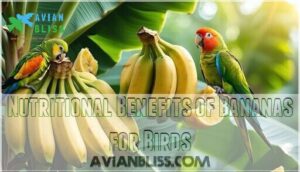
Bananas offer significant nutritional value for birds through their rich content of essential vitamins and minerals.
Bananas pack essential vitamins and minerals that naturally boost your bird’s health and energy levels.
You’ll find that these tropical fruits provide key nutrients like potassium for heart function, vitamin C for immune support, fiber for healthy digestion, and antioxidants that protect against cellular damage.
Potassium
Bananas pack a powerful potassium punch that’s perfect for your feathered friends.
This essential mineral supports muscle function, fluid balance, and heart health while promoting energy production and nerve health.
With approximately 420mg per medium banana, banana nutrition for birds delivers essential electrolytes that keep your pet’s body functioning properly.
The potassium in banana nutrition helps prevent heart issues and maintains proper hydration—key banana benefits for birds without banana toxicity birds concerns when fed appropriately.
However, it’s best to offer bananas without the peel, as birds can’t digest the cellulose content.
Vitamin C
While potassium keeps hearts beating strong, vitamin C acts as your bird’s personal bodyguard.
This powerful antioxidant in bananas supports immune support and tissue repair, protecting cells from damage. Most birds produce their own C synthesis in their liver, but extra vitamin C helps during stress or liver health issues.
Watch for deficiency signs like poor feather quality. Bananas are suitable for most birds, but suitability varies by species.
When birds eat bananas, they get natural vitamin C alongside other banana benefits for birds, making this fruit a smart addition to balanced bird nutrition. Always remove peels before serving these fruits.
Fiber
Your bird’s digestive system works like a well-oiled machine, and dietary fiber from bananas keeps it running smoothly.
This essential nutrient promotes healthy digestion by preventing constipation and supporting gut bacteria.
Fiber benefits extend beyond digestive health – it helps regulate blood sugar levels too.
Both pet bird diets and wild bird diets benefit from these natural fiber sources, making bananas an excellent supplement for ideal digestion health.
Antioxidants
Powerful antioxidants in bananas combat free radicals that damage your bird’s cells.
These flavonoid benefits support immune boost and cellular health, protecting against oxidation while promoting bird nutrition.
You’ll enhance your feathered friend’s well-being when birds eat bananas rich in vitamins and minerals for ideal bird health.
- Flavonoids neutralize harmful compounds that cause cellular damage and aging
- Vitamin C strengthens immune defenses against infections and disease
- Polyphenolic compounds reduce inflammation throughout your bird’s body systems
How to Safely Offer Bananas to Birds
When you’re ready to offer bananas to your feathered friends, proper preparation guarantees both safety and nutritional benefits.
You’ll need to choose ripe bananas, remove the peel completely, cut them into bird-appropriate pieces, and serve them in moderation as part of a balanced diet.
Choosing Ripe Bananas
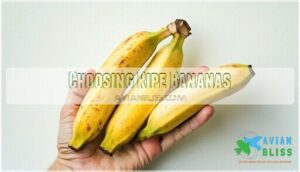
Perfect ripeness transforms bananas into bird-friendly treats.
Look for bright yellow skin with small brown spots—these visual indicators signal ideal ripeness and optimal sugar content.
Texture matters more than appearance; ripe fruit yields slightly to gentle pressure while maintaining firmness.
- Golden yellow with specks: Brown spots indicate peak sweetness levels without compromising nutritional value
- Gentle give test: Properly ripe bananas feel soft but not mushy when lightly squeezed
- Storage effects awareness: Room temperature ripening preserves natural sugar development better than refrigeration
Bananas are safe, providing potassium, but offer varied fruits for balanced nutrition.
Removing The Peel
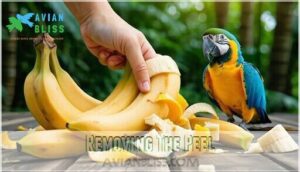
Always peel the banana before feeding birds bananas – banana peels contain harmful pesticides and are difficult for birds to digest.
Peel toxicity from pesticide exposure makes serving without the skin the only safe preparation method. This simple step transforms banana bird food from risky to nutritious.
| Safety Factor | With Peel | Without Peel | Why Remove |
|---|---|---|---|
| Pesticide exposure | High risk | No risk | Chemicals concentrated in skin |
| Peel digestion | Impossible | N/A | Birds can’t process cellulose |
| Toxicity level | Dangerous | Safe | Peel contains harmful residues |
| Preparation ease | Poor choice | Simple | Just peel and serve |
The decision to remove the peel is crucial for the birds’ health, as it directly affects their exposure to pesticide exposure and ability to digest the food safely.
Cutting Into Small Pieces

Once you’ve removed the peel, cut into small pieces to help small birds eat bananas safely.
Slice bananas into manageable pieces about ½-inch wide to prevent choking.
You can also mash bananas for smaller species, creating an interactive feeding experience.
Using a specialized food processor can help prepare the bananas quickly.
This banana preparation makes it easier for birds to digest while maintaining the fruit variety they need for ideal health.
Feeding in Moderation

Moderation is key when feeding birds bananas due to their high sugar content. Like offering candy to children, too many bananas can disrupt your bird’s balanced diet and create nutritional imbalance.
Feeding birds bananas requires careful portion control to prevent obesity risks while meeting their nutritional needs.
- Limit banana treats to 2-3 times weekly for ideal bird feeding
- Offer small pieces equivalent to 10% of daily food intake
- Monitor your bird’s weight and behavior for health changes
- Rotate with other fruits to maintain dietary variety and frequency limits
Which Birds Love Bananas
You’ll find that many bird species enthusiastically accept bananas as a nutritious treat when offered properly.
Both wild birds like starlings and robins, as well as pet birds such as parrots and cockatiels, readily consume this potassium-rich fruit.
Parrots
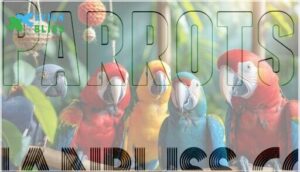
Parrots, including African Grey Parrots, love bananas for their sweet flavor and soft texture.
Bananas are among the fruits safe for pet birds, offering key nutrients that support Parrot Health and Parrot Nutrition.
When you add bananas to your parrot’s diet, peel and slice them first.
For Parrot Enrichment or Parrot Training, use small banana pieces as healthy, enticing treats.
Many owners also buy parrot food containing bananas.
Crows
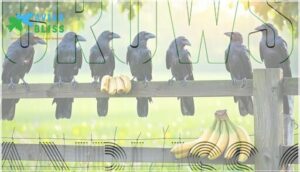
Crows demonstrate remarkable Crow Intelligence in regards to Feeding Crows with bananas.
These adaptable birds quickly recognize the fruit’s nutritional value and energy benefits.
Their opportunistic Crow Behavior means they’ll readily accept banana pieces as supplemental bird food.
This Crow Diet addition supports Crow Health while providing bird nutrition through potassium and natural sugars for sustained energy.
You can find many resources about crow banana feeding.
Tanagers
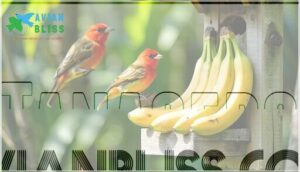
Tanagers light up your backyard with their brilliant colors, and these vibrant and vividly colored birds absolutely love bananas. Scarlet Tanager species are particularly drawn to the sweet taste and bright appearance of ripe fruits.
Picture tanagers enjoying bananas in these ways:
- Perching delicately on feeding platforms while pecking at banana pieces
- Flashing their red plumage against yellow banana chunks in your garden
- Returning regularly to reliable banana feeding stations you’ve established
Tanagers with black and red plumage, such as Crimson Collared Tanagers, also enjoy fruits and insects. Feeding Tanagers small banana pieces supports their Tanager Diets and encourages frequent visits to your Tanager Habitats, benefiting Tanager Conservation efforts.
Starlings
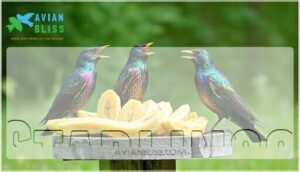
Starlings readily consume bananas in your backyard, drawn by their opportunistic feeding habits. These adaptable birds prefer overripe bananas with higher sugar content.
Place small banana pieces on platform feeders to attract these vocal bird species. Their gregarious Starling Behavior means multiple birds will visit together.
Remove uneaten fruits quickly to maintain feeder hygiene and support Starling Conservation efforts through responsible feeding practices.
Are Banana Peels Safe for Birds?
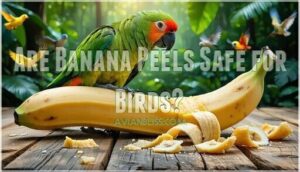
Now that you know which birds love bananas, you might wonder about feeding them banana peels. The short answer is no – banana peels aren’t safe for birds.
Here’s why peel toxicity matters for bird safety. Pesticide exposure poses the biggest risk. Commercial banana peels often contain chemical residues that can harm birds, even after washing.
Additionally, peels contain indigestible cellulose that birds can’t process effectively, potentially causing digestive issues.
Safe alternatives for peel preparation include:
- Remove all peel completely before serving bananas
- Wash your hands after handling peels to avoid contamination
- Choose organic bananas to reduce pesticide concerns
- Stick to the fruit flesh only for maximum safety
While some backyard birds might peck at discarded peels, this doesn’t mean they’re safe. The toxicity risk simply isn’t worth it when the nutritious banana flesh provides all the benefits your feathered friends need.
Can Wild Birds Eat Bananas?
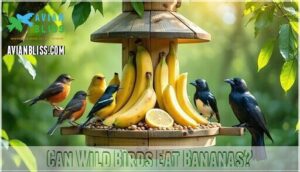
While banana peels aren’t recommended for birds, wild birds can absolutely enjoy bananas as part of their Natural Foraging behaviors. Many species have adapted their Wild Bird Diets to include soft fruits when available.
Banana Availability in Urban Bird Feeding situations attracts various species throughout Seasonal Consumption periods. You’ll find that bird nutrition improves when fruits like bananas supplement their natural bird diet.
| Bird Species | Feeding Preference | Best Serving Method |
|---|---|---|
| Starlings | Small pieces | Platform feeders |
| Robins | Mashed portions | Ground feeding |
| Crows | Larger chunks | Tree branches |
| Tanagers | Soft slices | Hanging feeders |
| Orioles | Sweet pieces | Fruit spikes |
wild birds benefit from bananas’ potassium and vitamins, but moderation matters. Place small pieces in feeders or on platforms, allowing birds to discover them naturally. This approach supports healthy foraging while providing nutritional variety that complements their existing diet patterns.
Can Birds Eat Mashed Bananas?
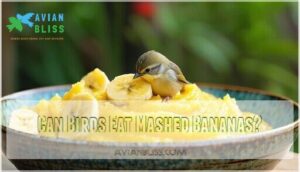
If you’re looking to add variety to your bird feeding routine, mashed bananas are a great option. Their soft texture makes them ideal for small birds or those with tender beaks, and they’re especially helpful for Baby Bird Feeding.
Mashed Banana Prep is simple—just use a ripe fruit, mash it, and serve in small amounts. This method supports Texture Preferences and makes Interactive Feeding easy and fun.
- Mashed bananas are rich in potassium, vitamin C, and fiber, boosting bird nutrition.
- Always remove the peel to avoid digestion issues.
- Store leftovers in an airtight container to prevent spoilage.
- Offer only fresh mashed banana, and clean feeding spots regularly.
This treat fits right into a balanced bird diet.
Can Birds Eat Bananas and Apples?
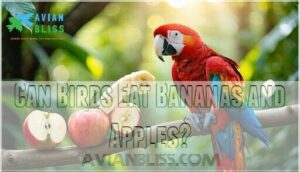
Yes, you can safely offer both bananas and apples to your feathered friends.
These fruits complement each other perfectly in bird nutrition, with bananas providing potassium and quick energy while apples deliver fiber and vitamins.
Here’s how to create the perfect fruit mix:
- Remove apple seeds and cores – they contain cyanide compounds toxic to birds
- Peel bananas completely – skins may harbor pesticides and are hard to digest
- Cut both fruits into small pieces – prevents choking and makes eating easier
- Offer fresh portions only – spoiled fruit can cause serious digestive issues
Popular species like parrots, crows, and starlings enthusiastically accept this fruit combination, making it an excellent way to diversify their diet naturally.
Risks of Eating Bananas for Birds
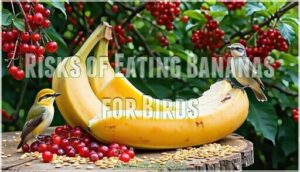
Despite bananas’ nutritional benefits, feeding them to birds carries several risks.
Pesticide Exposure from unwashed peels poses toxicity concerns, while Sugar Overload can cause obesity and digestive upset in sensitive species.
The high sugar content may trigger blood sugar spikes, and low calcium levels contribute to Calcium Deficiency.
Spoiled Bananas attract pests and worsen Digestive Upset.
Always remove peels and feed fresh fruit sparingly to avoid these bird toxins.
Other fruits like berries offer rich antioxidant benefits.
Frequently Asked Questions (FAQs)
Are bananas good for birds?
You’ll find that birds benefit from eating bananas—they’re packed with potassium, vitamin B6, and fiber, which support energy and digestion.
Just peel and slice them, offer in moderation, and avoid feeding the peel to birds.
Can birds eat banana peels?
Like toxic candy wrapped in bright yellow paper, banana peels shouldn’t be fed to birds.
The peels contain harmful pesticide residues and indigestible cellulose that can cause digestive problems, even though their bright color might attract birds.
Can pet birds eat bananas?
Pet birds can safely enjoy bananas as a nutritious treat when you peel and cut them into small pieces.
Offer bananas 2-3 times weekly to prevent overfeeding and maintain balanced nutrition.
Can wild birds eat ripe bananas?
Imagine a robin hopping onto your feeder for a banana slice—yes, wild birds like robins, starlings, and blue jays can eat ripe bananas.
Just peel, slice, and offer small pieces for safe, nutritious snacking.
Can birds eat mashed bananas?
Yes, birds can safely eat mashed bananas.
You’ll find mashed bananas particularly helpful for smaller birds since they’re easier to consume.
Baby birds often benefit from this preparation method, making the nutritious fruit more manageable for their tiny beaks, and it is especially useful for smaller birds.
Can birds eat banana chips?
Like a sweet trap waiting to spring, banana chips pose hidden dangers you should avoid feeding birds.
Commercial banana chips contain harmful preservatives, excess sugar, and additives that can cause digestive upset and health problems in birds.
Are any fruits poisonous to birds?
Several fruits can poison birds.
Avocado contains persin, which causes respiratory issues and death.
Chocolate has theobromine, causing heart problems and seizures.
Always wash and core fruits thoroughly before sharing with your feathered friends.
Can birds and squirrels eat ripe bananas?
Both birds and squirrels can safely eat ripe bananas.
You’ll want to peel them first and cut into small pieces.
The fruit provides beneficial nutrients like potassium and vitamin B6, but offer sparingly as treats.
What are you not supposed to feed birds?
Never play with fire when feeding birds.
Avoid avocado, caffeine, chocolate, onions, garlic, and fruit seeds containing cyanide.
Skip moldy grains and limit dairy products to keep feathered friends healthy and thriving.
Can you put bananas out for the birds?
You can safely offer peeled, fresh bananas to wild birds.
Cut them into small pieces and place on platform feeders.
Remove banana peels since they contain harmful pesticides and are indigestible for birds.
Conclusion
Some believe all fruits are off-limits for birds, but science shows that’s not true—can birds eat bananas?
Yes, and they’re a nutritious treat when served correctly.
Bananas offer vitamins, fiber, and antioxidants, but remember to remove the peel and serve in moderation.
Many pet and wild birds enjoy them, but always watch for sugar content.
By following safe feeding tips, you can add variety to your bird’s diet and keep them healthy and happy.
- https://www.tandfonline.com/doi/abs/10.1080/87559129.2020.1725890
- https://www.jstage.jst.go.jp/article/analsci/17/5/17_5_599/_article/-char/ja/
- https://www.quora.com/Can-birds-eat-bananas
- https://www.birdforum.net/threads/can-backyard-birds-eat-bananas.363894/
- https://www.mayoclinic.org/healthy-lifestyle/nutrition-and-healthy-eating/in-depth/fiber/art-20043983