This site is supported by our readers. We may earn a commission, at no cost to you, if you purchase through links.
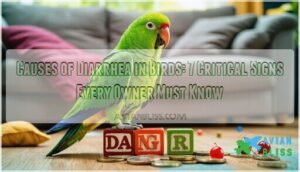 Diarrhea in birds has many causes, and catching it early is key.
Common triggers include sudden diet changes—think too much fruit or an unfamiliar treat—infections like bacteria, viruses, or fungi, and pesky parasites.
Stress from a new cage setup, loud noises, or travel can upset their system too.
Sometimes, it’s a sign of deeper issues like organ disease or poisoning (yes, curious beaks nibble on dangerous things!).
Look for loose, watery droppings, odd colors, or a foul smell.
It’s not always dire, but ignoring it?
That’s playing with fire.
Keep reading for simple ways to help your feathered friend bounce back.
Table Of Contents
- Key Takeaways
- Normal Bird Droppings
- Abnormal Droppings Signs
- Causes of Diarrhea
- Diagnostic Approaches
- Treatment Options
- Avian Diseases and Conditions
- Seeking Veterinary Attention
- Frequently Asked Questions (FAQs)
- Why do birds have diarrhea?
- What causes avian diarrhea?
- Is diarrhea a common clinical presentation in birds?
- Why does my parrot have diarrhea?
- What causes diarrhea in cockatiels?
- Do birds have digestive disorders?
- How do you treat diarrhea in birds?
- Why does my bird have runny poop?
- What to feed birds with diarrhea?
- What are the symptoms of psittacosis in birds?
- Conclusion
Key Takeaways
- Keep your bird’s diet consistent; sudden changes or high-sugar treats can upset their digestion and cause diarrhea.
- Watch for stress triggers like new environments, loud noises, or temperature shifts, as they can lead to digestive issues.
- Monitor droppings for changes in color, consistency, or odor—these are early signs of infections, parasites, or organ problems.
- Act fast if diarrhea persists; consult a vet to diagnose the cause and prevent serious health complications.
Normal Bird Droppings
Normal bird droppings have three key parts: a solid fecal portion, white urates, and clear urine, each reflecting different aspects of your bird’s health.
Healthy bird droppings are nature’s health report, balancing solid feces, white urates, and clear urine—providing vital insights into your bird’s wellness.
Learning what’s typical for your feathered friend helps you catch early signs of trouble before they escalate, which is crucial for maintaining your bird’s overall wellness.
Components of Droppings
Bird droppings are like little health checklists. They include:
- Fecal composition—solid, green or brown, shaped by diet.
- Urate formation—a white or beige part, made in the kidneys.
- Urine production—a clear liquid from the cloaca.
By monitoring these components and dropping frequency, you’ll notice fecal changes and catch issues early.
A change in color can indicate serious health issues. Who knew poop was so informative?
Color and Consistency
Healthy avian droppings balance the three components: green or brown feces, white urates, and clear urine.
Fecal color can change with diet—think blueberry snacks bringing dark surprises. Watch for watery droppings or a bubbly appearance; they hint at problems. Undigested food particles signal digestive trouble.
Here’s a helpful breakdown:
| Fecal Color | Consistency | Possible Cause |
|---|---|---|
| Green | Soft/formed | Normal (diet) |
| Dark Green | Watery/bubbly | Infection/parasitic issue |
| Brown | Firm | Typical |
| Red/Black | Clumpy | Blood/toxin exposure |
| Yellow/Orange | Grainy | Liver issues |
Urine Volume and Urate Appearance
The urate component in avian droppings offers essential clues about kidney function and hydration.
Urates should appear white or beige, with minimal liquid urine present unless diet affects it.
Changes signal possible issues, such as dehydration or other health problems, which can be indicated by various signs.
- Watery urine can suggest dehydration.
- Yellowish urates hint at dietary impact.
- Thickened urates may show stress.
- Bright colors could reflect toxins.
- Unusual consistency warrants a vet visit.
Abnormal Droppings Signs
When your bird’s droppings suddenly look strange, it’s often the first sign something’s off.
Changes in color, consistency, or smell can reveal underlying health issues that need your attention.
Changes in Consistency
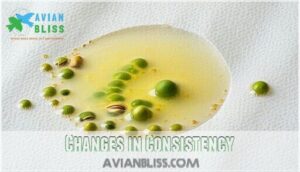
Sometimes droppings take on a strange look—like watery stools with diffuse edges or a bubbly appearance.
Pea soup consistency or undigested food signals trouble, often linked to avian diarrhea causes like stress or diet mishaps.
Analyzing bird droppings helps spot abnormal droppings early.
Observing the droppings’ urate component color can also provide insights into kidney health.
Remember, these changes aren’t cosmetic; they’re clues to deeper health issues needing quick attention.
Unusual Colors

Unhealthy poop’s color can reveal avian diarrhea causes.
Monitor your bird’s poop color to catch diarrhea causes early
Green droppings could signal bile issues or dietary influence, while lime-green suggests liver disease.
Blood presence may appear as red or black, hinting at serious problems.
Watch for:
- Grayish tones from toxin exposure.
- Yellow, linked to infections.
- Orange, tied to liver disease.
- Blue, often dietary.
Monitoring hues keeps your bird safe.
Stronger Odor
A stronger odor in bird droppings isn’t just unpleasant—it’s a red flag.
Odor causes often link to bacterial overgrowth, parasitic infections, or fungal diarrhea in birds.
Poor hygiene practices or diet impact may spark digestive issues.
If the smell shifts suddenly, it’s time to investigate bird diarrhea causes and consult a vet.
Catching bacterial diarrhea early can save your feathered friend, as it allows for timely intervention to address the underlying digestive issues.
Causes of Diarrhea
Diarrhea in birds can stem from something as simple as a sudden diet change or as serious as an infection.
Identifying the cause early helps you prevent small issues from turning into big problems.
Dietary Changes
Your bird’s droppings tell a story, and sudden changes in diet can spark bird diarrhea.
High sugar treats or a poorly balanced diet might upset their system, causing dietary diarrhea in birds.
Nutritional imbalances affect nutrient absorption, while dietary toxins—like spoiled food—wreak havoc.
Stick to a steady, bird-friendly menu to keep their digestion flying smoothly.
Infections and Parasites
Infectious diarrhea in birds is often caused by bacterial, viral, fungal infections, or parasitic diseases.
Giardia and Cryptosporidium can lead to parasitic diarrhea, while bacterial diarrhea in birds stems from colibacillosis.
Viral and fungal diarrhea may bring zoonotic risks. A common cause can also be dietary issues.
Keep an eye out for symptoms like weight loss or undigested food, and consult a vet promptly to guarantee effective treatment.
Environmental Stressors
Sudden habitat changes, temperature extremes, or poor air quality can cause stress diarrhea in birds.
Toxin exposure, like certain cleaning products, adds to the chaos.
Even social stressors—new pets or people—can upset your bird’s routine.
Birds thrive on consistency, so keep their environment calm and predictable.
Avoid drastic temperature changes and make certain clean, toxin-free spaces to reduce avian stress.
Diagnostic Approaches
If your bird has diarrhea, figuring out the cause starts with accurate testing and observation.
From fecal exams to blood work and imaging, these tools help pinpoint the issue quickly so you can take action.
Fecal Tests
When spotting parasitic diarrhea in birds, fecal tests are your go-to diagnostic tool.
Microscopic analysis helps detect parasites, while culture methods pinpoint bacterial diarrhea or fungal screening targets fungal causes.
These tests uncover hidden culprits like Giardia or bacterial infections.
For necessary supplies, consider purchasing bird tests.
Quick action with fecal tests guarantees early intervention, saving your feathered friend from severe viral, fungal, or bacterial diarrhea complications, which can be achieved through necessary supplies.
Blood Work
After fecal tests, blood work becomes just as telling.
It checks for infections and immune response through CBC Analysis, while Biochemistry Profiles assess organ function.
Electrolyte Balance can reveal hydration issues caused by diarrhea, and these diagnostic tests guide your avian veterinarian to the right treatment.
It’s like giving your bird a health report card—let the pros interpret those numbers!
Imaging Studies
Imaging studies, like radiography and abdominal ultrasound, help uncover hidden causes of a bird’s diarrhea.
Contrast radiographs highlight blockages, while fluoroscopy is great for real-time digestive tracking.
Endoscopic imaging offers close-up views of internal organs, aiding precise diagnosis. These tools are like peeking inside a bird’s mechanics—vital for spotting issues veterinarians can’t see with the naked eye, using techniques like fluoroscopy.
Treatment Options
When your bird shows signs of diarrhea, taking quick and focused action is essential.
From medications to hydration and diet tweaks, you’ve got more control over their recovery than you might think, with complete concepts like these being crucial for their well-being.
Antibiotics and Medications
Veterinary-prescribed antibiotics can treat infections causing diarrhea, but proper medication dosage is key.
Overdosing risks severe medication side-effects, while underdosing fuels resistance prevention struggles.
Watch for antibiotic diarrhea in birds, a common issue, and always avoid risky drug interactions.
Pair treatments with probiotics for gut support, but don’t guess—you’ll need professional advice for safe, effective antibiotic use every time.
Dietary Adjustments
After medications, focus on diet. Sudden dietary changes often cause dietary diarrhea in birds, so opt for gradual changes.
Increase dietary fiber with leafy greens or cooked grains.
Probiotic supplementation supports gut health, while toxin avoidance—like skipping avocado or chocolate—prevents harm.
Consider gut flora enhancement for superior digestion.
Always guarantee nutritional balance by offering species-specific food blends to meet your bird’s dietary needs, keeping their system steady and happy.
Hydration and Stress Reduction
To combat stress diarrhea in birds, focus on hydration and stress reduction.
Offer electrolyte solutions and fresh water to maintain electrolyte balance and prevent dehydration.
Minimize changes in their environment, reinforcing security.
Add environmental enrichment like toys or perches to reduce anxiety.
You can find bird electrolyte products online to help with hydration.
Using gentle handling techniques helps build trust and stability, keeping your bird healthy and stress-free.
Avian Diseases and Conditions
When your bird’s droppings change, avian diseases like gastric yeast, intestinal infections, or kidney disease could be the cause.
Understanding these conditions helps you act quickly, protecting your feathered friend’s health.
Avian Gastric Yeast
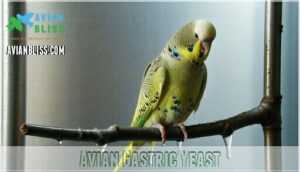
If your bird shows constant weight loss, abnormal droppings, or regurgitates often, it might’ve Avian Gastric Yeast (Macrorhabdus Ornithogaster).
Species susceptibility varies, but immunity impact plays a huge role.
AGY prevention focuses on nutrition and reducing stress.
Macrorhabdus treatment includes antifungal medications like Amphotericin B, plus dropping analysis.
Ignoring fungal diarrhea in birds may worsen this yeast infection.
Intestinal Infections
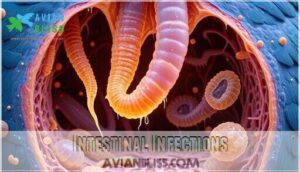
Intestinal infections can wreak havoc on your bird’s health, causing bacterial diarrhea, fungal diarrhea, viral enteritis, or parasitic diarrhea.
Bacterial overgrowth affects nutrient absorption, while fungi like Candida thrive after antibiotic use.
Protozoal diarrhea and parasitic worms upset digestion, leading to weight loss and wet droppings.
Spot changes fast—avian infections worsen quickly! Early signs? Seek a vet immediately for help.
Kidney Disease
Kidney disease can sneak up on birds, silently impacting their urinary system and overall health. It disrupts kidney function, leading to issues like electrolyte imbalances or polyuria (excessive urine).
Watch for these signs:
- Irregular urate formation or discolored droppings.
- Toxin exposure causing unusual behaviors.
- Increased nitrogenous waste in droppings.
- Swollen abdomen in advanced cases.
- Chronic weight loss or lethargy.
To prevent such issues, make certain fresh water is available daily, and be aware of polyuria (excessive urine) as a potential sign of kidney disease, which can lead to overall health problems.
Seeking Veterinary Attention
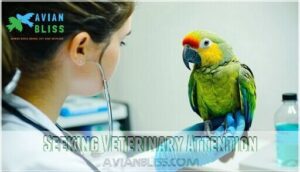
If your bird’s diarrhea doesn’t improve or is paired with other warning signs like lethargy or weight loss, don’t wait—reach out to a vet immediately.
Acting early can make all the difference in pinpointing the issue and getting your feathered friend back on track.
When to Consult a Vet
If your bird shows lethargy signs, appetite changes, weight loss, or worsening symptoms, it’s time to call a vet.
Dehydration risks from persistent bird diarrhea symptoms can escalate quickly, and it’s crucial not to delay seeking bird diarrhea veterinary care.
| Symptom | Possible Cause | Action Needed | Urgency Level |
|---|---|---|---|
| Lethargy Signs | Infection | Avian veterinary care | High |
| Appetite Changes | Stress or Illness | Veterinary attention | Medium-High |
| Weight Loss | Intestinal Issues | Vet visit required | High |
| Diarrhea Persists | Digestive Problems | Immediate care | Very High |
Importance of Early Diagnosis
You’ll minimize damage by recognizing these 3 early warning signs:
- Changes in droppings
- Lethargy
- Loss of appetite, which can improve prognosis and lead to faster recovery, preventing the spread of avian diarrhea symptoms.
This approach can help improve the recovery process.
Treatment and Recovery Process
Staying consistent with medication adherence is key for effective diarrhea treatment in birds.
Pair prescribed meds with probiotic benefits to support gut health, and focus on stress reduction by creating a calm environment.
Hygiene practices, like cleaning cages often, prevent infections.
Monitor droppings daily for changes, and consult your vet if needed to ensure smooth recovery and provide supportive care that guarantees a smoother bird recovery journey.
Frequently Asked Questions (FAQs)
Why do birds have diarrhea?
Imagine this: your bird leaves an unexpected watery mess.
Diarrhea happens from diet changes, infections, stress, or parasites.
It’s like their gut’s red flag, warning you something’s off.
Quick vet visits can save the day!
What causes avian diarrhea?
Avian diarrhea often stems from dietary changes, infections, stress, or toxins.
Parasites, high-sugar foods, or even sudden environmental shifts can upset their system.
Keep an eye on droppings—they’re like your bird’s health diary!
Avian diarrhea can be caused by various factors, but monitoring droppings is crucial for understanding the bird’s condition.
Is diarrhea a common clinical presentation in birds?
Imagine spotting a puddle-like dropping in your bird’s cage—it’s a red flag.
Diarrhea isn’t uncommon in birds and often signals stress, diet changes, or illness.
Regular monitoring helps catch issues early.
Why does my parrot have diarrhea?
Your parrot’s diarrhea could stem from diet changes, infections, stress, or even toxins.
Check for unusual droppings, make certain clean water is available, and consult a vet if it persists.
Birds hide illness, so act quickly!
What causes diarrhea in cockatiels?
Think of cockatiel droppings as their health diary—diarrhea often stems from stress, dietary changes, infections, or parasites like Giardia.
High-sugar foods, toxins, or sudden environment shifts can upset their digestive balance.
Do birds have digestive disorders?
Yes, birds can have digestive disorders.
These include infections, parasites, or diet-related issues.
Watch for symptoms like diarrhea, undigested food in droppings, or weight loss.
Regular vet checkups and proper nutrition help prevent problems.
How do you treat diarrhea in birds?
When your bird’s droppings turn watery, act fast.
Offer fresh water, simplify their diet, and consider probiotics.
Keep their environment stress-free, monitor closely, and don’t skip a vet visit if symptoms persist or worsen.
Why does my bird have runny poop?
Runny poop in birds often signals dietary changes, stress, or infections.
High-sugar foods, sudden environment shifts, or parasites can upset digestion.
Monitor droppings closely, and if it persists, consult a vet to guarantee proper care.
What to feed birds with diarrhea?
When droppings get watery, switch to plain, cooked rice or oatmeal, offering small portions.
Skip fruits and veggies temporarily, and add probiotics to their water.
Keep it simple—your bird’s tummy will thank you!
What are the symptoms of psittacosis in birds?
Psittacosis symptoms include lethargy, breathing trouble, nasal discharge, greenish diarrhea, and weight loss.
You might also notice ruffled feathers or eye swelling.
If your bird seems off, don’t wait—reach out to a vet quickly!
Conclusion
Ever wonder how small changes can have big impacts on your bird’s health?
Understanding the causes of diarrhea in birds helps you act fast and protect your pet. Whether it’s diet, stress, or an underlying illness, recognizing abnormal droppings and seeking timely care can make all the difference.
Keep their environment calm, food consistent, and water clean. If symptoms persist, don’t hesitate—call your vet.
A healthy bird is a happy bird, and prevention is always easier than treatment.