This site is supported by our readers. We may earn a commission, at no cost to you, if you purchase through links.

Your parakeet’s respiratory system absorbs over 90% of every molecule it inhales—which means that bottle of all-purpose cleaner you’re spraying near the cage could be sending toxic fumes directly into your bird’s bloodstream. Most conventional household cleaners contain ammonia, chlorine bleach, or quaternary ammonium compounds that cause immediate respiratory distress in birds, even when the scent seems mild to you.
What’s worse, absorbed toxins stress your bird’s liver and kidneys, and contaminated cage dust can trigger dermatitis and behavioral changes you might not connect to your cleaning routine.
The good news is that effective cleaning products safe for birds do exist—both commercial formulas designed specifically for avian environments and simple DIY recipes using ingredients you probably already own. Switching to bird-safe alternatives protects your feathered companion without sacrificing the cleanliness your bird needs to stay healthy.
Table Of Contents
- Key Takeaways
- Why Bird-Safe Cleaning Matters
- Natural Cleaning Ingredients Safe for Birds
- DIY Bird-Safe Cleaning Recipes
- Safe Cleaning Practices for Bird Owners
- Bird-Safe Cleaners for Cages and Accessories
- Top 6 Bird-Safe Cleaning Products
- Cleaning Bird Feeders, Houses, and Baths
- Harmful Cleaning Agents to Avoid
- Frequently Asked Questions (FAQs)
- What cleaners are safe around birds?
- What is a safe disinfectant for wild birds?
- What is the safest cleaner for a bird cage?
- Is Dawn soap safe for birds?
- Can I use regular paper towels for cleaning?
- How often should I replace bird cage liners?
- Are microfiber cloths safe around pet birds?
- What temperature water is safest for cleaning?
- Can birds stay nearby during cleaning sessions?
- Can I use steam cleaners around my bird?
- Conclusion
Key Takeaways
- Birds absorb over 90% of inhaled molecules through their unique respiratory system, making common household cleaners containing ammonia, bleach, or quaternary ammonium compounds potentially lethal even at concentrations that seem harmless to humans.
- Effective bird-safe alternatives include diluted white vinegar (1:10 ratio), 3% hydrogen peroxide, baking soda pastes, and grapefruit seed extract, all of which disinfect without releasing toxic fumes that damage avian respiratory tissues.
- Proper cleaning technique requires thorough rinsing to remove all residue, complete air drying (preferably in sunlight for 48 hours), and removing birds from the area during cleaning to prevent exposure to airborne particles.
- Daily spot cleaning combined with weekly full cage sanitization prevents bacterial buildup while monthly deep disinfection with veterinary-approved products like F10 eliminates persistent pathogens that routine washing misses.
Why Bird-Safe Cleaning Matters
Your bird’s respiratory system works differently than yours, and that difference puts them at serious risk from everyday cleaning products. Birds absorb over 90% of the molecules they breathe in, which means chemicals that seem harmless to you can cause respiratory distress or worse in your feathered companion.
That’s why choosing safe bird house cleaning supplies designed specifically for avian environments is essential to protect their delicate respiratory system.
Birds absorb over 90% of inhaled molecules, making everyday cleaning products potentially lethal to your feathered companion
Understanding why bird-safe cleaning matters starts with three key factors that make conventional cleaners dangerous.
Many household products contain fumes and chemicals that can damage your bird’s delicate respiratory system, so choosing safe, non-toxic cage cleaning products is essential for their health.
Bird Respiratory System Sensitivity
Your bird’s respiratory system works differently than yours. Air sacs throughout their body connect to rigid lungs, creating unidirectional airflow that absorbs over 90% of inhaled molecules.
This unique design makes birds incredibly efficient breathers, but also means respiratory infections can quickly become serious if left untreated.
This avian anatomy makes them extremely vulnerable to airborne toxins. Even brief toxic exposure to household cleaning aerosols can trigger breathing difficulties like coughing or open-mouth breathing within minutes, putting bird health at serious respiratory risks.
Common household items like scented candles, non-stick cookware, and air fresheners pose hidden dangers that many new owners don’t realize until it’s too late—avoiding these common bird care mistakes can literally save your bird’s life.
Dangers of Toxic Cleaning Agents
Common household cleaners contain harsh chemicals like ammonia, chlorine bleach, and quaternary ammonium compounds—all serious respiratory risks for your feathered friend. Even small amounts of these toxic cleaning agents release airborne toxins that cause acute coughing, wheezing, and nasal discharge in birds.
Consider these three dangers from chemical exposure:
Switching to a non-toxic bird cage disinfectant eliminates harmful fumes while keeping your feathered friend’s environment spotless.
- Volatile fumes irritate and inflame delicate respiratory tissues within minutes
- Absorbed toxins stress the liver and kidneys, threatening essential organ function
- Contaminated cage dust triggers dermatitis, sneezing, and behavioral changes
Your bird’s small body mass and efficient respiratory exchange make even low concentrations of toxic fumes potentially lethal. That’s why switching to bird-safe cleaning products and non-toxic cleaners isn’t optional—it’s critical for preventing bird poisoning.
Health Risks From Chemical Exposure
Chemical exposure risks go beyond immediate respiratory distress. Toxic air pollution from harsh chemicals can trigger feather chewing, eye irritation, and swollen legs in your bird.
Long-term airborne toxin effects stress the liver and kidneys, weakening immunity and inviting bird diseases.
Avian toxicology research confirms that chemical-free, toxic-free living protects avian health far better than risking sublethal exposures.
Natural Cleaning Ingredients Safe for Birds
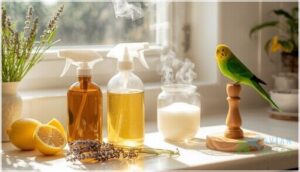
You don’t need harsh chemicals to keep your bird’s environment clean and safe. Several natural ingredients work just as effectively without putting your bird’s respiratory system at risk.
Here’s a look at the most reliable natural cleaning options that won’t compromise your bird’s health.
Grapefruit Seed Extract and Essential Oil
Grapefruit seed extract works as a natural disinfectant you can trust around your birds. You’ll want to dilute it properly—usually 10–15 drops per cup of water for cleaning surfaces.
While grapefruit essential oil offers some antimicrobial benefits, it’s critical to use minimal amounts and rinse thoroughly.
These bird-friendly cleaning products provide non-toxic alternatives without harsh chemical residues that threaten avian respiratory health.
Organic Apple Cider Vinegar Solutions
A splash of organic apple cider vinegar mixed with water creates one of the most reliable bird-safe cleaning products available. Its acidic properties cut through grime while acting as a natural disinfectant without harsh fumes.
Mix a 1:1 vinegar dilution for gentle cleaning that’s safe and effective. These natural cleaners offer apple cider benefits your feathered companions deserve.
White Vinegar and Baking Soda
Two pantry staples—white vinegar and baking soda—form the backbone of effective natural disinfectants and gentle scrubbers. White vinegar removes grease naturally, while baking soda deodorizes without volatile organic compounds. Together, these non-toxic cleaners create eco-friendly alternatives perfect for bird-friendly environments.
Why These Homemade Recipes Work:
- Vinegar’s acidity cuts through mineral deposits
- Baking soda acts as a mild abrasive
- Both decompose into harmless residues
- No respiratory irritants released
- DIY recipes save money while protecting your bird
Lemon Juice and Hydrogen Peroxide
Acidic cleaners like lemon juice break down mineral buildup while offering antibacterial benefits in natural disinfectants. You can pair citrus acidity with 3% hydrogen peroxide—peroxide uses include killing bacteria and mold before decomposing into water and oxygen.
These gentle scrubbers provide lemon benefits without harsh residues, making them excellent bird-friendly cleaning products. DIY cleaning recipes for birds combine these natural and non-toxic cleaners effectively.
DIY Bird-Safe Cleaning Recipes
You don’t need to buy expensive commercial cleaners to keep your bird’s environment safe and spotless. Simple household ingredients like vinegar, baking soda, and hydrogen peroxide can tackle everything from daily cage maintenance to stubborn buildup.
Here are four effective recipes you can mix up at home in minutes.
All-purpose Cleaner Recipes
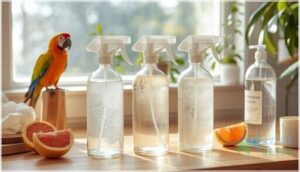
You don’t need a cabinet full of specialty products to keep your bird’s space fresh and safe. Three simple all-purpose formulas work for nearly every cleaning task:
- Vinegar Solutions: Mix one part white vinegar with nine parts water for a mild natural disinfectant that removes grease without toxic fumes.
- Grapefruit Cleaners: Add seven drops of grapefruit seed extract per quart of water for antimicrobial action.
- Hydrogen Peroxide Mix: Combine equal parts 3% hydrogen peroxide and water for effective, chemical-free cleaning.
These homemade and non-toxic cleaners leave no harmful residues when properly rinsed. For more information on safe cleaning methods, consider using bird safe cleaners to keep your bird’s environment clean.
Cage Cleaning Solution Formulas
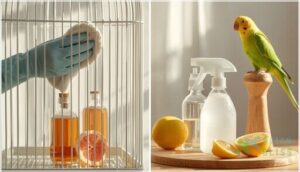
When cleaning your bird’s cage, specific formulas deliver effective sanitation without harm. Here are proven bird-safe cleaning products and natural, non-toxic cleaners:
| Solution Type | Formula | Use |
|---|---|---|
| Mild Detergents | Dish soap + warm water | Initial debris removal |
| Vinegar Solutions | 1 part vinegar: 10 parts water | Weekly sanitizing |
| Hydrogen Peroxide | 1:1 dilution with water | Routine disinfection |
| F10 Disinfectant | 4ml per liter (1:250) | Pathogen control |
| Grapefruit Cleaners | 7 drops extract per quart | Antimicrobial cleaning |
Always rinse thoroughly after applying any bird cage cleaning solution.
Regular cage cleaning hacks are essential for maintaining a healthy environment for your bird.
Homemade Disinfectant Blends
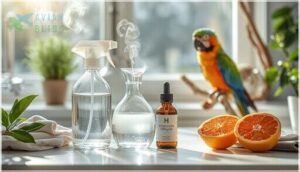
When you make your own natural disinfectants, you gain reliable pathogen control without the fumes that threaten your bird’s air sacs.
Here are proven homemade cleaning solutions combining acidic cleaners and oxidizers:
- Vinegar Solutions: Apply 5% acetic acid (white vinegar) to hard surfaces for 5+ minutes, then rinse thoroughly
- Hydrogen Peroxide: Spray 3% solution on toys and perches, allowing 6-8 minute contact time
- Grapefruit Extract: Mix 7-10 drops per quart water for anti-biofilm action
- Two-Step Method: Apply hydrogen peroxide first, rinse, then follow with diluted vinegar for synergistic microbial reduction
These bird-friendly cleaning products and non-toxic cleaners provide effective sanitation when you remove birds during application and verify complete drying before their return.
Scrubbing Pastes for Tough Stains
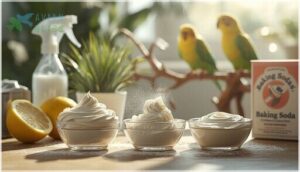
Baked-on droppings and mineral buildup require an abrasive force that liquids can’t provide, so you’ll need a paste thick enough to cling to vertical bars while scrubbing.
| Paste Type | Formula |
|---|---|
| Baking Soda Scrub | 3 parts baking soda + 1 part water |
| Gentle Exfoliants | Baking soda + lemon juice until thick |
| Mineral Removers | White vinegar + baking soda (fizzing paste) |
| Enzyme Cleaners | Hydrogen peroxide + baking soda mixture |
These homemade and chemical-free cleaners provide eco-friendly cleaning power without harming your bird’s respiratory system.
Safe Cleaning Practices for Bird Owners
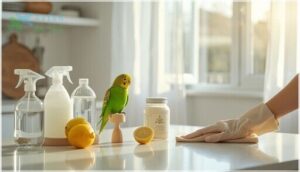
Even the safest cleaning products can pose risks if you don’t use them correctly. Your cleaning routine matters just as much as the products you choose, from how thoroughly you rinse to how often you tackle different areas.
These practices will help you maintain a healthy environment while protecting your bird’s delicate respiratory system.
Proper Rinsing Techniques
Residue left behind after cleaning can pose just as much danger to your bird as the original contaminants you worked to remove. Multiple rinse cycles with clean water are essential when using detergent-free soap or any bird-safe cleaning products.
Water quality matters greatly during residue removal. Run accessories under hot water for at least 30 seconds, then inspect surfaces to verify all natural and non-toxic cleaners have been completely eliminated.
Frequency of Cleaning Routines
You’ll protect your bird’s health best when you follow consistent daily schedules, weekly routines, and monthly disinfection cycles. Daily spot cleaning—removing droppings and refilling dishes—prevents bacterial buildup in your bird cage cleaning routine. Full scrubs every 3-7 days keep surfaces sanitary using bird-safe cleaning products and natural and non-toxic cleaners.
Cleaning frequencies adjusted to your bird’s needs:
- Small parakeets thrive with weekly cage washes, while large parrots demand scrubs every 3-4 days
- Multiple birds in one space accelerate soiling, requiring twice-daily spot checks and more frequent sanitation tips
- Humid environments or molting periods call for shortened intervals to combat fungal growth
- Monthly deep disinfection with bird-friendly cleaning solutions eliminates persistent pathogens routine washing misses
Sun Drying and Air Purification
After scrubbing your bird’s items, set them outdoors for 48 hours. Direct sunlight delivers ultraviolet radiation that inactivates microorganisms while reducing moisture.
Pair this natural purification with HEPA filtration systems running constantly to capture 99.97% of airborne particles, including dust and dander.
Open windows during cleaning to boost ventilation and dilute volatile organic compounds, protecting your bird’s delicate respiratory system from lingering chemical residues.
Handling and Storage Tips
Always store bird-safe cleaning products in their original containers, tightly sealed in a cool, dry spot away from your bird’s cage. Read every label closely and dilute solutions exactly as directed—never eyeball measurements. Keep concentrated formulas out of reach from pets and children.
When handling non-toxic cleaners, maintain adequate ventilation by opening windows, and wash your hands thoroughly before touching your bird or its accessories.
Bird-Safe Cleaners for Cages and Accessories
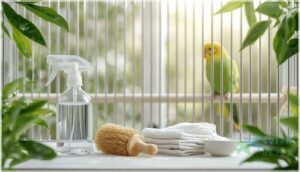
Cages and accessories require specific cleaning methods to maintain your bird’s health without exposing them to harmful residues. Different surfaces—from metal bars to fabric toys—need different approaches to guarantee thorough disinfection.
Here’s how to safely clean each component of your bird’s environment.
Cleaning Cages and Perches
Your bird’s cage is their entire world, so keeping it clean isn’t just about hygiene—it’s about creating a safe haven they can breathe easy in. Daily cage sanitizing with bird-friendly cleaning solutions removes droppings and food debris. For perch maintenance, scrub with white vinegar or baking soda paste using non-abrasive cleaning tools.
- Fresh air means your bird wakes up energized, not wheezing
- Natural and non-toxic cleaners protect those delicate air sacs from harm
- Consistent avian hygiene prevents infections that could cut their life short
Safe Disinfectants for Toys and Fabrics
Disinfecting toys and fabrics requires carefully selected avian disinfectants that won’t harm your bird’s respiratory system. Diluted bleach—one cup per gallon of water—effectively kills pathogens on hard toys when you rinse thoroughly afterward.
For fabric sanitizers, machine-wash items with mild, unscented detergent, then tumble dry.
Natural disinfectants like hydrogen peroxide work on non-porous surfaces, but porous materials like wood can’t be truly sterilized and need replacement every two to six months.
Cleaning Bowls and Dishes
Food and water bowls demand daily sanitizing because bacteria multiply rapidly in moist environments. Hot water with dish soap—detergent-free or bird-safe cleaning products—removes biofilm and organic debris effectively.
For bowl disinfection and improved water quality:
- Wash bowls with hot soapy water each morning, scrubbing all surfaces thoroughly
- Rinse multiple times to eliminate residue from bird-friendly cleaning solutions
- Consider dishwasher cycles for non-toxic cleaners when materials allow
Increase cleaning frequency if bowls become visibly soiled between daily routines.
Deep Cleaning Monthly Routines
Monthly deep cleaning keeps your bird’s environment free from disease-causing pathogens and buildup that daily routines miss.
Complete cage sanitizing requires full disassembly—remove tray, grate, bowls, and perches for thorough washing with bird-safe cleaning products like diluted vinegar. Perch cleaning demands hot water scrubbing to eliminate embedded bacteria.
Toy disinfection involves inspecting and washing all enrichment items, replacing worn pieces immediately.
Top 6 Bird-Safe Cleaning Products
If you’d rather skip the DIY route, several commercial products are formulated specifically for bird safety. These cleaners eliminate harmful chemicals while still providing effective disinfection and odor control.
Below are six vetted options that meet avian health standards without compromising your bird’s respiratory system.
1. Bird Feeder And Bird Bath Cleaner
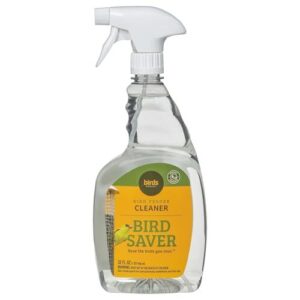
Hypochlorous acid cleaners rank among the most effective bird-friendly cleaning solutions for outdoor feeder sanitation and bath disinfectant needs. You’ll find commercial formulas at 0.01 percent concentration in electrolyzed saltwater—a composition that’s noncorrosive yet capable of breaking down biofilm and organic residue.
These eco-safe solutions work on wood, metal, and plastic without harsh solvents. Spray the surface, wait briefly, rinse thoroughly, and air dry.
It’s critical to note that while these natural and non-toxic cleaners excel at pathogen control, they may occasionally discolor wood or leave faint marks on clear plastics.
| Best For | Bird lovers who want a safe, effective way to keep feeders and baths clean without harsh chemicals that could harm their feathered visitors. |
|---|---|
| Item Form | Liquid |
| Scent | Not specified |
| Safe for Birds | Yes |
| Biodegradable | Not specified |
| Price | $7.97 |
| Size | 32 oz |
| Additional Features |
|
- Works on all common feeder materials—wood, metal, plastic—using just saltwater and electricity to create the cleaning agent
- Simple spray-wait-rinse routine removes stuck-on grime and biofilm while helping prevent diseases like Salmonella
- No harsh solvents or synthetic fragrances, making it safer for birds and the environment compared to conventional cleaners
- Can discolor wood surfaces over time with repeated use
- May leave white spots on clear plastic feeders or baths
- Requires thorough rinsing and air drying after each cleaning, adding a bit more time to the process
2. Microbe Lift Bird Feeder Cleaner Spray
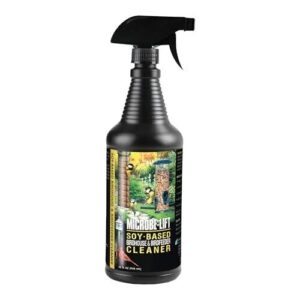
Soy-based cleaners like Microbe Lift’s thirty-two-ounce formula offer bird-friendly cleaning solutions without harsh solvents or phenols. This product targets organic matter, mineral deposits, and droppings on plastic, metal, vinyl, and fiberglass surfaces.
The pH sits near neutral—6.5 to 8.0—making it gentle enough for routine bird feeder maintenance yet effective against biofilm. You’ll find it won’t scratch delicate materials, though some users report it doesn’t prevent algae regrowth.
Rinse thoroughly after application, then air dry in sunlight for best results with these eco-friendly products and non-toxic formulas.
| Best For | Bird enthusiasts who want a gentle, non-toxic way to clean feeders and birdhouses without risking harm to birds or the environment. |
|---|---|
| Item Form | Liquid |
| Scent | Natural |
| Safe for Birds | Yes |
| Biodegradable | Yes |
| Price | Not specified |
| Size | 32 oz |
| Additional Features |
|
- Soy-based formula is safe for birds, pets, and plants with a near-neutral pH that won’t damage plastic, metal, or vinyl surfaces
- Effectively removes organic buildup, mineral deposits, and droppings without harsh chemicals or scratching delicate materials
- Biodegradable and easy to rinse, making it a low-impact choice for regular feeder maintenance
- Doesn’t prevent algae or slime from growing back, so you’ll need repeat cleanings or additional products
- Price point runs higher than conventional cleaners, which may add up for frequent users
- Some users report mixed results and find they need to combine it with other methods for thorough cleaning
3. Aloe Vera Bird Spray
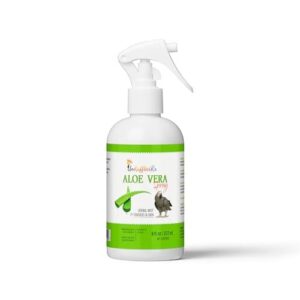
While feeder sprays remove external debris, aloe vera sprays from UnRuffledRx and Morning Bird address bird skin health directly. These plant-based, non-toxic cleaners condition feathers during molting and soothe itching without harsh chemicals. Spray applications deliver aloe vera benefits—moisture, anti-inflammatory action—to dry skin and plumage.
You’ll pay around twenty-five dollars for eight ounces, so cost adds up with daily use. It’s critical to choose bird-friendly cleaning solutions free of alcohol or synthetic fragrances, as avian hydration needs and respiratory sensitivity demand truly natural and non-toxic cleaners for safe feather conditioning.
| Best For | Bird owners dealing with feather plucking, molting discomfort, or dry skin who want a gentle, chemical-free spray to soothe and condition their bird’s plumage. |
|---|---|
| Item Form | Spray |
| Scent | Unscented |
| Safe for Birds | Yes |
| Biodegradable | Not specified |
| Price | $24.99 |
| Size | 8 oz |
| Additional Features |
|
- Safe, plant-based formula with aloe vera that won’t harm birds if ingested during preening
- Helps moisturize dry skin and reduce itching that can lead to plucking behavior
- Multi-purpose spray works on feathers, skin, and nails for all-over conditioning
- Expensive at $24.99 for just 8 ounces, especially with daily use recommended
- Results vary between birds—some owners see little improvement in skin or plucking issues
- May require weeks of consistent application before you notice real changes in feather health
4. Water Fountain Cleaner Solution
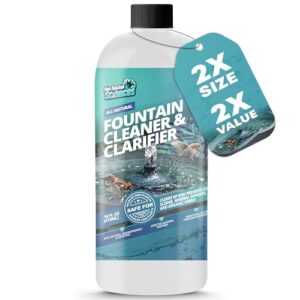
Beyond spray bottles and feather care, your outdoor bird baths and fountains need bird-safe cleaning products to prevent algae and mineral buildup. Natural purifiers using food-grade enzymes—like Not Rocket Sciences’ sixteen-ounce formula treating eighty gallons—maintain water clarification without harming visiting wildlife.
These non-toxic cleaners break down organic contaminants and prevent clogs during fountain maintenance. For stubborn deposits, scrub with diluted vinegar, then rinse thoroughly.
Enzyme cleaners offer bird-friendly cleaning solutions that keep water features sparkling without chemical risks, though deep scrubbing remains necessary for complete fountain safety.
| Best For | Bird lovers and fountain owners who want to keep their water features clean and safe for wildlife without using harsh chemicals. |
|---|---|
| Item Form | Liquid |
| Scent | Unscented |
| Safe for Birds | Yes |
| Biodegradable | Not specified |
| Price | $13.97 |
| Size | 16 oz |
| Additional Features |
|
- Natural enzyme formula treats up to 80 gallons and is completely safe for birds, fish, pets, and other wildlife
- Prevents algae, mineral deposits, and organic buildup in fountains and bird baths without scrubbing
- Works on multiple materials like stone, ceramic, glass, and plastic without staining or damaging surfaces
- Won’t completely eliminate all algae or cloudy water issues on its own
- Still requires occasional deep cleaning and scrubbing for stubborn buildup
- Some users report mixed results depending on their fountain type and water conditions
5. Bird Barrier Enzyme Cleaner
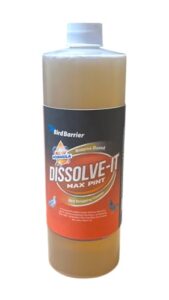
When bird droppings cake onto surfaces and create health hazards, Bird Barrier’s enzyme cleaner offers a powerful yet eco-friendly solution. This non-toxic, biodegradable formula uses Bacillus microbes at a 1:1 dilution ratio to break down bird waste and neutralize odors that attract birds back to contaminated areas.
It’s critical to saturate droppings for fifteen minutes before rinsing. While designed for outdoor structures rather than cage interiors, this bird-friendly cleaner provides effective enzyme action without harsh chemicals, making it USDA-accepted for natural and non-toxic cleaning where wildlife safety matters.
| Best For | Property managers and bird control professionals dealing with heavy, dried-on bird droppings on outdoor structures like building facades, ledges, and roofing materials. |
|---|---|
| Item Form | Liquid |
| Scent | Unscented |
| Safe for Birds | Yes |
| Biodegradable | Yes |
| Price | $19.99 |
| Size | Pint concentrate |
| Additional Features |
|
- Uses natural Bacillus enzymes instead of harsh chemicals, making it USDA-accepted and safe for environments where wildlife, pets, or children are present
- Breaks down both the physical waste and pheromone residues that attract birds back to the same spots, supporting long-term bird management
- Concentrated 1:1 formula is cost-effective and versatile for various outdoor cleaning tasks including drains, sewers, and large-scale commercial applications
- Requires a 15-minute contact time and often needs follow-up pressure washing or scrubbing, so it’s not a quick spray-and-wipe solution
- Mixed user reviews suggest it may struggle with extremely old or cement-hard droppings without significant elbow grease
- Limited coverage per bottle means larger projects may need multiple applications and additional product purchases at $19.99 per pint concentrate
6. Bird Bath Enzyme Maintenance Formula
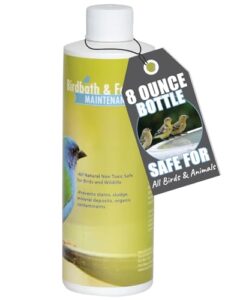
Preventing algae blooms in outdoor water features requires consistent enzyme action without compromising avian health and safety. This eight-ounce, bird-safe cleaning product uses a bacteria-free enzyme system at $9.99, breaking down organic debris like droppings and leaves while maintaining water clarity.
You’ll add one capful weekly to birdbaths holding two gallons or less. These bird-friendly cleaning solutions work on ceramic, marble, and stone surfaces as eco-friendly options that extend feature lifespan.
It’s critical to start with a clean bath for maximum enzyme benefits and outdoor maintenance effectiveness.
| Best For | Bird lovers who want a low-maintenance way to keep their outdoor birdbaths and small water features clean and clear without using harsh chemicals that could harm visiting wildlife. |
|---|---|
| Item Form | Liquid |
| Scent | Not specified |
| Safe for Birds | Yes |
| Biodegradable | Not specified |
| Price | $9.99 |
| Size | 8 oz |
| Additional Features |
|
- Fast-acting enzymes break down organic waste like droppings and leaves naturally, keeping water clearer between cleanings
- Completely safe for birds, animals, and pets with a non-toxic, biodegradable formula
- Simple weekly application (one capful) works on multiple surfaces including ceramic, stone, and marble
- Won’t completely eliminate algae on its own—you’ll still need to do manual cleaning periodically
- Some users report it creates unwanted bubbles in certain fountains or doesn’t work as well as expected
- May need more product than the label suggests for heavily soiled baths or larger features
Cleaning Bird Feeders, Houses, and Baths
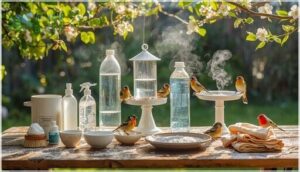
Outdoor bird equipment requires regular cleaning to prevent mold, bacteria, and disease transmission to wild birds. You’ll need specific techniques for feeders, houses, and baths since each presents unique cleaning challenges.
The following guidelines help you maintain these areas safely without exposing birds to harmful residues.
Bird Feeder Cleaning Guidelines
Dirty feeders pose serious threats to bird health—contamination breeds salmonella and trichomoniasis. You’ll want to establish a solid cleaning frequency to protect your backyard visitors:
- Clean every 1-2 weeks using bird-safe cleaning products (9 parts water to 1 part bleach works as effective disinfectant solutions)
- Soak for 10 minutes with non-toxic cleaners or natural alternatives like vinegar
- Rinse thoroughly for at least 10 seconds
- Air-dry completely before refilling
Safe Solutions for Bird Houses
Nest box disinfection requires careful product selection to protect future tenants. Bird-safe materials like vinegar solutions or three percent hydrogen peroxide offer eco-friendly products that break down safely. Enzyme-based avian-friendly cleaners provide non-toxic alternatives without harsh chemicals—critical for bird house sanitation.
You can use diluted bleach (1 part to 9 parts water) after removing debris, but rinse thoroughly and dry completely in sunlight.
Maintaining Clean Bird Baths
Stagnant water becomes a breeding ground for mosquitoes and disease-causing bacteria within 48 hours. Change your bird bath water every two to three days—daily during summer heat—to protect bird health and prevent West Nile virus transmission.
Scrub basins weekly with diluted bleach (one part to nine parts water) for proper bath sanitation, then rinse thoroughly.
Algae control requires positioning baths away from heavy leaf litter and using bird-safe cleaning products for water quality maintenance.
Harmful Cleaning Agents to Avoid
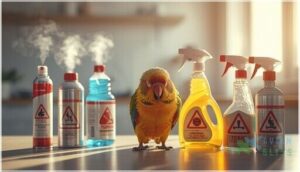
Many household cleaners contain chemicals that pose serious health risks to birds, even at low concentrations. Knowing which ingredients to avoid can prevent respiratory distress, neurological damage, and other life-threatening conditions in your feathered companion.
Here’s what you need to watch out for and how to recognize the warning signs of chemical exposure.
Common Toxic Chemicals for Birds
Many household cleaners that seem harmless to us contain ingredients that can kill your bird within minutes of exposure. Chemical exposure risks are real and immediate. The most hazardous cleaning agents include:
- Bleach and ammonia products that release volatile organic compounds
- Aerosol sprays containing toxic air pollutants
- Scented cleaners with quaternary ammonium compounds
Avian toxicology research confirms these substances cause irreversible respiratory damage.
Symptoms of Chemical Exposure
When your bird breathes toxic fumes, you’ll notice respiratory issues like wheezing, open-mouth breathing, or tail bobbing within minutes. Neurological signs such as tremors, ataxia, or seizures may follow. Gastrointestinal problems, including vomiting and diarrhea, signal systemic damage. Mucosal irritation around the eyes, beak, or skin demands immediate action.
Using nontoxic cleaners and air purifiers for birds protects avian health and wellness through proper avian disease prevention.
Choosing Non-toxic Alternatives
Now that you recognize the warning signs, switching to non-toxic alternatives becomes your first line of defense against future exposure. Choose natural disinfectants like white vinegar or hydrogen peroxide instead of bleach. Opt for eco-friendly cleaners with gentle formulas that list all ingredients.
Bird-friendly cleaning products and birdsafe options protect your flock while maintaining sanitation. Non-toxic cleaners support eco-friendly and sustainable living without compromising effectiveness.
Frequently Asked Questions (FAQs)
What cleaners are safe around birds?
Your feathered friend’s lungs work like magnets for airborne molecules.
You’ll want diluted white vinegar, mild dish soap, baking soda, or 3% hydrogen peroxide—all non-toxic cleaners that won’t compromise their delicate respiratory system.
What is a safe disinfectant for wild birds?
A 10 percent bleach solution—one part bleach to nine parts water—effectively disinfects wild bird feeders and baths. Soak for ten minutes, rinse thoroughly, and air dry completely before refilling.
What is the safest cleaner for a bird cage?
Diluted white vinegar solutions stand as your benchmark—one part vinegar to two parts water cuts through droppings and mineral deposits without toxic fumes.
For deeper disinfection, veterinary-approved products like F10 offer safe, effective germ control.
Is Dawn soap safe for birds?
Dawn dish soap isn’t formulated as a bird-safe cleaning product. Undiluted use poses respiratory risks from soap residue.
If you must use detergent-free soap, choose mild, unscented options and rinse thoroughly to protect avian health.
Can I use regular paper towels for cleaning?
You can use plain, unscented paper towels safely for cleaning around birds. Avoid scented, lotion-treated, or antibacterial varieties—those airborne toxins harm delicate respiratory systems.
Stick with bird-safe cleaning products and non-toxic wipes instead.
How often should I replace bird cage liners?
An ounce of prevention beats a pound of cure. Replace cage liners daily or every one to two days when soiled.
Proper waste management tips prevent ammonia buildup, safeguarding bird health risks through consistent cleaning schedules.
Are microfiber cloths safe around pet birds?
Microfiber cloths carry fiber ingestion and respiratory risks when birds chew or breathe airborne particles.
Keep your pet separated during cleaning, use tightly woven cloths, and combine with bird-safe cleaning products and air purification for maximum bird safety.
What temperature water is safest for cleaning?
Room temperature water strikes the perfect balance—it won’t warp cage bars or trigger thermal shock while keeping your hands comfortable.
For stubborn grime, warm water boosts cleaning efficacy without compromising bird safety.
Can birds stay nearby during cleaning sessions?
No, you shouldn’t keep birds nearby during cleaning sessions. Their respiratory systems absorb over 90% of airborne molecules, making even brief exposure to cleaning fumes dangerous despite ventilation systems or air purifiers for birds.
Can I use steam cleaners around my bird?
Steam cleaning is safe if you relocate your bird first. High-temperature vapor kills pathogens without chemicals, but proper ventilation and cooling periods are critical before your bird returns to the cleaned area.
Conclusion
The cleanest cage won’t protect your bird if the cleaning process itself introduces toxins. Your choice of cleaning products safe for birds directly impacts respiratory health, liver function, and long-term survival.
Whether you select commercial formulas or prepare vinegar-based solutions at home, thorough rinsing and proper ventilation remain non-negotiable.
Your bird depends on you to recognize that what seems harmless to humans can be lethal to avian physiology—make every cleaning decision with that responsibility in mind.