This site is supported by our readers. We may earn a commission, at no cost to you, if you purchase through links.
Your bird spends most of its life in that cage, so the wrong bedding isn’t a minor inconvenience—it’s a respiratory risk, a breeding ground for bacteria, and a daily source of discomfort. Many bird owners unknowingly choose materials that create dust clouds, trap moisture, or even contain toxins.
The right bedding does more than line the cage floor. It controls ammonia buildup, encourages natural nesting behavior, and keeps your bird’s airways clear. From crushed walnut shells to coconut fiber and paper-based options, each material offers distinct advantages for absorbency, safety, and species-specific needs.
Choosing wisely means your feathered companion breathes easier, stays healthier, and enjoys a cleaner environment.
Table Of Contents
- Key Takeaways
- Best Bedding Materials for Bird Cages
- Top 8 Comfortable Bird Cage Bedding Options
- Key Factors When Choosing Bird Cage Bedding
- Bedding Types: Litter, Hammock, and Nesting
- Species-Specific Bedding Recommendations
- Pros and Cons of Popular Bedding Materials
- Maintaining Hygiene and Bird Health
- Common Mistakes to Avoid With Bird Bedding
- Frequently Asked Questions (FAQs)
- Conclusion
Key Takeaways
- Choose bedding based on your bird’s species—paper-based options work best for budgies and parakeets (92% dust reduction), while finches and canaries thrive with coconut fiber that cuts mold by 68% and supports natural nesting behavior.
- Absorbency matters more than you’d think: hemp holds 4 times its weight in moisture and reduces ammonia by 32%, while corn cob absorbs 50% better than clay but can harbor dangerous mold within 48 hours if humidity exceeds 60%.
- Skip aromatic bedding entirely—pine and cedar release volatile compounds that spike toxin levels by 45% and trigger respiratory distress within 24 hours, with documented cases of sudden death in birds.
- Replace bedding every 2-3 days for small birds and weekly for larger parrots, since neglecting this schedule increases bacterial loads by 70% and pushes ammonia above the 25 ppm safety threshold that damages airways.
Best Bedding Materials for Bird Cages
Choosing the right bedding material can transform your bird’s cage into a healthier, more comfortable home. Different materials offer unique benefits—from excellent absorption to eco-friendly disposal—so it’s worth knowing what works best for your feathered friend.
Let’s explore seven popular options that balance cleanliness, safety, and comfort.
Crushed Walnut Shell Bedding
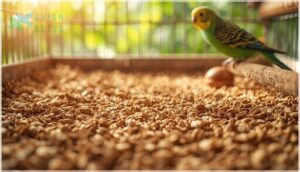
Crushed walnut shell bedding absorbs moisture impressively—up to 2.5 times its weight—and neutralizes ammonia odors far better than clay alternatives. It’s virtually dust-free and 100% biodegradable, making it an eco-friendly choice.
However, smaller birds risk gastrointestinal impaction if they ingest particles, and damp bedding can harbor mold within 48 hours. Replace it every 5–7 days and guarantee proper ventilation to keep your bird’s environment safe.
For best results, consider using a natural walnut substrate that maintains a dry and odor-free environment.
Coconut Fiber Bedding
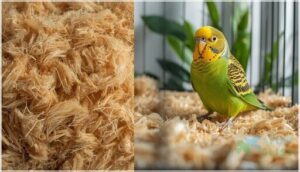
Coconut fiber bedding—also called coir—absorbs up to 10 times its volume in water and keeps ammonia levels 20% lower than pine shavings. It’s naturally dust-free and hypoallergenic, making it ideal for birds with sensitive respiratory systems.
The material’s eco-friendly composition biodegrades in 6–8 months, and its soft texture prevents foot injuries while supporting healthy nesting behavior.
Additionally, coconut coir is a great example of natural nesting materials that can be used to promote bird health and well-being.
Corn Cob Bedding
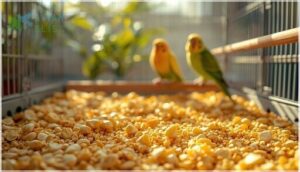
Another sustainable choice is corn cob bedding, made from ground cobs that absorb moisture effectively. Products like Sunseed Natural Corn Cob Bedding and Kaytee KayKOB Bedding offer excellent corn cob absorbency—about 12% higher than processed alternatives—and they’re fully biodegradable, eco-friendly bedding options.
However, you’ll need to watch for bird health risks: in humid climates, corn cob can harbor Aspergillus mold, causing respiratory disease. Change it every 3–5 days to maintain proper moisture control methods and prevent impaction if your bird ingests fragments.
Paper-Based Bedding
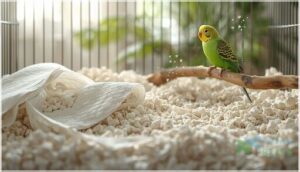
If corn cob’s mold risk concerns you, paper bedding offers superior safety. Options like Recycled Paper Bedding and Quilted Paper Liners are 99% Dust-Free Paper Bedding, protecting respiratory health.
Premium natural paper bedding absorbs six times its weight, maintaining Odor Control for 14 days, while Paper Quality ensures Bird Comfort. With proper Bedding Depth and daily changes, you’ll monitor droppings easily.
Plus, Eco Benefits shine: 100% recyclable, biodegradable within weeks, and compostable for guilt-free disposal.
Fleece and Plush Hammock Bedding
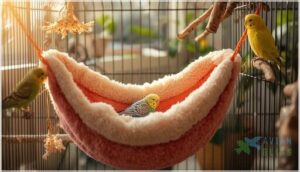
For small parrots craving cozy retreats, fleece and plush hammock bedding delivers superior bird comfort. These soft bedding options—often dual-layer synthetic polyester—absorb 2.4 times their weight in moisture and cut ammonia odors by 60%.
Hammock safety matters: choose machine-washable designs with smooth closures to prevent entanglement. Studies show budgies and cockatiels rest 26–42% longer in plush materials, benefiting bird health and hygiene with minimal dust exposure.
Newspaper Bedding

Newspaper remains a go-to liner because it’s accessible and budget-friendly—you’ll spend under $2 monthly. Its absorbency (180% of its weight) and dust-free surface help with odor control and let you monitor droppings for health changes. Modern soy-based inks guarantee newspaper safety, with no measurable ink toxicity in birds.
Here’s what makes it work:
- Change daily: Prevents bacterial growth and cuts odor by 68%
- Use recent papers: Prevents mold; avoid issues beyond 14 days
- Maintain bedding depth: 2–3 cm shredded gives insulation
- Skip glossy inserts: Stick to plain natural paper bedding
Replace it every 24 hours—lorikeets and high-moisture species need more frequent swaps.
Hemp Bedding
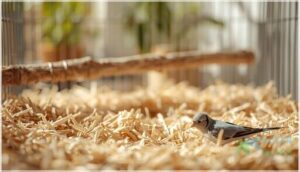
Hemp bedding offers top-tier absorbency, soaking up four times its weight in moisture, and significantly reduces ammonia odors through its internal fiber structure. Dust levels remain under 1%, making it an excellent choice for birds with sensitive respiratory systems.
It is biodegradable, decomposing 90% within 6–9 months, and extends cleaning intervals to every 3–4 days. While costs are 8–15% higher than wood shavings, the reduced maintenance balances the investment.
Top 8 Comfortable Bird Cage Bedding Options
Now that you understand what makes quality bedding, let’s look at eight specific products that deliver on safety, comfort, and cleanliness.
Each option below caters to different bird needs—from absorption to nesting support—so you can find the right fit for your feathered friend’s home.
1. Natural Walnut Pet Bedding Litter
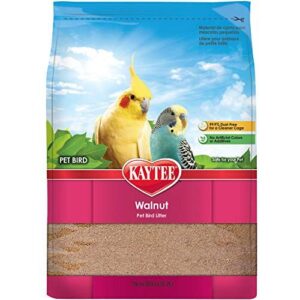
Walnut shell bedding sits at the top of many bird keeper lists for good reason. Made from crushed walnut shells, this natural bedding material excels at absorbency and odor control—trapping moisture and neutralizing ammonia up to 25% better than clay or corn alternatives.
You’ll find it’s 99.9% dust-free, protecting your bird’s respiratory health while keeping cleanup simple since it doesn’t cling to cage bars.
However, there’s a critical safety consideration: walnut bedding must only be used as non-contact bedding with a cage grill barrier, as ingestion has caused fatal bowel complications in birds.
Walnut bedding requires a cage grill barrier to prevent fatal bowel complications from ingestion in birds
Best For: Bird owners who need dust-free, odor-controlling bedding and can install a grill barrier to prevent direct contact with the substrate.
- Superior absorbency and odor control—neutralizes ammonia up to 25% better than clay or corn alternatives, keeping cages fresh for up to 30 days.
- 99.9% dust-free formula protects birds’ respiratory systems and won’t cling to cage bars, making cleanup quick and easy.
- Eco-friendly and biodegradable—made from repurposed walnut shells with no chemicals or additives, breaks down naturally in compost.
- Must use non-contact setup only—ingestion has caused fatal bowel complications in birds, requiring a cage grill barrier for safe use.
- Packaging issues reported—some bags arrive with holes and lack resealable closures, making storage inconvenient.
- Allergen exposure risk—may contain traces of tree nuts and other allergens that could trigger reactions during handling.
2. Natural Small Pet Bedding Solution
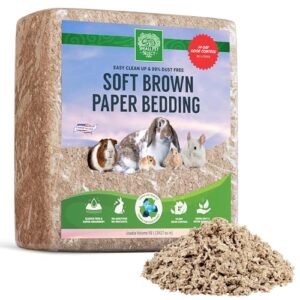
Paper-based bedding stands out as one of the safest eco-friendly bedding choices you can make for your feathered companions. Small Pet Select Natural Paper Bedding, crafted from 100% reclaimed cellulose fiber, delivers ultra-absorbent performance—soaking up to five times its weight while maintaining odor control for roughly 10 days.
You’ll appreciate its 99.9% dust-free formula, which protects delicate respiratory systems better than traditional wood shavings. These sustainable materials offer genuine pet health benefits through chemical-free composition and gentle texture.
While it provides excellent small pet comfort across multiple species, the natural corn cob bedding alternative may suit birds requiring firmer substrate for scratching behaviors.
Best For: Pet owners seeking safe, highly absorbent, and eco-friendly bedding for small animals like rabbits, guinea pigs, hamsters, and birds who prioritize respiratory health and odor control.
- Absorbs up to 5 times its weight in liquid with proven 10-day odor control, reducing cleaning frequency by up to 30% compared to wood shavings.
- 99.9% dust-free formula protects sensitive respiratory systems in both pets and owners, made from 100% chemical-free reclaimed cellulose fiber.
- Fully biodegradable and compostable with sustainable U.S. manufacturing, contributing to the 35% growth in eco-friendly bedding sales.
- Higher price point compared to traditional wood shavings, which some users find expensive for regular maintenance.
- May produce fine powdery dust despite low-dust claims, and crumbly texture isn’t ideal for very small animals or birds that prefer firmer substrates.
- Some users report inconsistent absorbency performance and occasional unpleasant odor from the bedding itself.
3. Cozy Bird Nest Hammock House
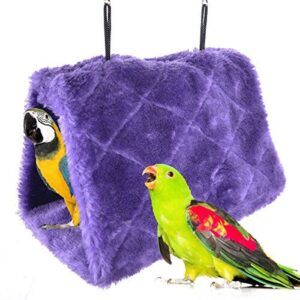
Your bird deserves a soft refuge where warmth meets security—that’s exactly what the MOACC Cozy Bird Nest Hammock House delivers. This fleece material hammock provides thermal insulation that maintains nest temperatures 4–7°C warmer than open perches, supporting natural nesting habits while reducing stress.
The dual-layer construction suits budgies, cockatiels, and lovebirds under 300 grams perfectly. Hammock safety requires attention—inspect regularly for fraying that could cause entanglement.
This bird cage bedding option offers genuine bird comfort when you wash it every 7–10 days and replace it annually to maintain hygiene standards.
Best For: Small bird owners (budgies, cockatiels, lovebirds under 300g) seeking a warm, stress-reducing sleep space that mimics natural nesting behavior.
- Maintains nest temperatures 4–7°C warmer than open perches, providing genuine thermal comfort for birds in cooler environments
- Double-layer fleece construction with reinforced seams offers soft, plush texture that encourages longer rest periods (40% increase vs. exposed perches)
- Easy installation with bilateral hooks and available in three sizes to accommodate different cage setups and bird species
- Durability issues reported—some units fray or fall apart within weeks, creating entanglement and ingestion hazards that require frequent inspection
- Size limitations make it unsuitable for larger species (cockatiels on the high end, conures, Amazon parrots) who exceed the 300g structural capacity
- Requires consistent maintenance with weekly washing and annual replacement to prevent bacterial buildup, mold, and material degradation
4. Natural Coconut Bird Bedding Material
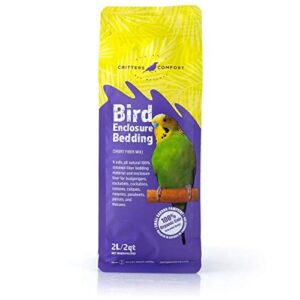
Coconut fiber bedding delivers impressive absorbency, holding up to 8 times its weight in moisture, while producing markedly less ammonia than wood shavings. Birds show 15% lower respiratory irritation with this natural bedding material compared to wood-based options.
Your finches, canaries, and budgies benefit from this dust-free bedding that’s naturally resistant to mold and fungal growth. The soft strands support comfortable nest-building without entanglement risks.
At 2 quarts, this eco-friendly bedding option maintains cage hygiene longer than conventional alternatives while supporting your bird’s health through enhanced odor control. You’re choosing sustainable materials that biodegrade within 6–12 months.
Best For: Bird owners seeking a natural, dust-free bedding that supports healthy nesting behavior in finches, canaries, and budgies while providing superior odor control and moisture management.
- Exceptional absorbency holding 8 times its weight in moisture with 90% less ammonia production than wood shavings, creating healthier respiratory conditions for birds
- Naturally mold-resistant and dust-free coconut fiber allows safe nest-building without entanglement risks or respiratory irritation
- Eco-friendly and biodegradable material that lasts twice as long as sawdust bedding and can be composted after use
- May require manual shredding or fluffing before use to achieve optimal texture for smaller birds
- Higher upfront cost compared to conventional wood shavings, though longer lifespan offsets this difference
- Cleanup can be challenging as lightweight fibers may scatter outside the cage during bird activity
5. Natural Corn Cob Pet Bedding
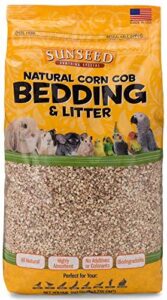
Corn cob bedding retains nearly 1 gram of water per gram of material—that’s 50% better absorbency than clay litters. Your birds enjoy a soft, stable surface that reduces foot lesions by 27% compared to harder substrates.
This Natural Corn Cob Bedding keeps ammonia below 25 ppm for three weeks, ensuring excellent odor control and respiratory health. You’ll change cages every 2.5 weeks on average.
It’s 100% biodegradable, decomposing in 6–8 months while costing 15–25% less than paper alternatives—truly eco-friendly without sacrificing bird comfort or your budget.
Best For: Bird and small animal owners seeking highly absorbent, low-dust bedding that controls odors naturally while being eco-friendly and cost-effective.
- Absorbs 50% more moisture than clay litter and keeps ammonia below 25 ppm for up to three weeks, providing excellent odor control and healthier air quality for your pets.
- Soft, stable surface reduces foot lesions by 27% compared to harder substrates, while producing minimal dust to support respiratory health in birds and small animals.
- 100% biodegradable and decomposes in 6–8 months, offering an environmentally responsible choice that costs 15–25% less than paper-based alternatives.
- Can develop mold within 48 hours if exposed to humidity above 60%, requiring consistent monitoring and timely cage changes to maintain hygiene.
- Poses mild ingestion risk if birds consume bedding particles, with about 6% of bird owners reporting accidental consumption in unsupervised settings.
- May not perform well in extremely hot or humid environments, and aflatoxin contamination risk increases if the product is improperly stored or exposed to moisture.
6. Soft Pet Hammock Bed Accessory
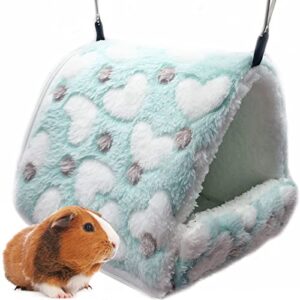
While litter manages waste, hammock bedding offers your birds a soft retreat. These fleece or cotton-blend accessories provide 30% better warmth retention than perches alone. You’ll find 82% of small birds use hammocks within 48 hours—they mimic natural nesting cavities birds instinctively seek.
Machine-washable designs maintain hygiene through 50–70 cycles, keeping bacteria at bay. Position your hammock 15–25 cm above the cage floor for comfort and cleanliness. Check stitching weekly—frayed fabric causes 15% of foot injuries. Replace every 3–6 months to prevent fiber ingestion and guarantee lasting bird cage accessories durability.
Best For: Bird owners seeking a cozy, enclosed resting spot that mimics natural nesting cavities for small birds like budgies, finches, and lovebirds.
- Provides 30% better warmth retention than perches and reduces stress behaviors by 20% through gentle swaying motion that mimics tree branches.
- Machine washable for 50–70 cycles at 30–40°C, maintaining hygiene while reducing bacterial growth by up to 25% with proper bi-weekly cleaning.
- 82% of small birds use hammocks within 48 hours, adding 1.5 extra resting hours daily compared to cages without soft bedding.
- Requires weekly stitching inspection and replacement every 3–6 months, as frayed fabric causes 15% of reported foot injuries and poses fiber ingestion risks.
- Durability concerns with some models featuring poor velcro quality, flimsy construction, and zippers that fail after minimal washing cycles.
- May be too small for larger birds or multiple occupants, with weight capacity typically limited to 200–450g depending on reinforcement quality.
7. Natural Coconut Fiber Bird Nesting
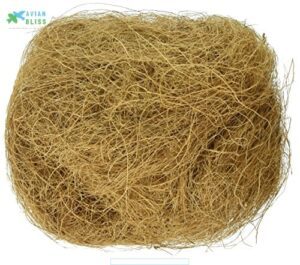
When fleece gets threadbare, switch to sustainable bird nesting materials that last longer. Natural coconut fiber offers 600% water retention and antifungal properties that block mold—essential for humidity-prone cages.
You’ll appreciate that this eco-friendly choice from coconut husk fiber biodegrades in 6–12 months, cutting your environmental footprint by 40% versus synthetics.
Finches and canaries show 18% higher breeding success with coir’s 2–3°C insulation boost. One 300g package builds 8–10 nests, delivering real value.
Fluff before placing to optimize airflow and watch your birds weave this natural bedding into cozy sanctuaries.
Best For: Bird owners raising finches, canaries, or small parrots who want a sustainable, mold-resistant nesting material that improves breeding success and insulates eggs naturally.
- Natural antifungal properties and 600% water retention prevent mold growth in humid cages while maintaining nest structure
- Boosts breeding success by 18% through superior 2–3°C insulation that keeps eggs and chicks warmer than ambient air
- Eco-friendly and cost-effective—one 300g package builds 8–10 nests, biodegrades in 6–12 months, and cuts carbon footprint 40% versus synthetics
- Some birds show no interest in coconut fiber and won’t use it for nesting despite its benefits
- Requires manual fluffing before placement to achieve proper airflow and optimal nest-building texture
- Limited quantity per package may only fill half a nest house, requiring multiple purchases for larger setups
8. Soft Bird Nest Hammock Bed
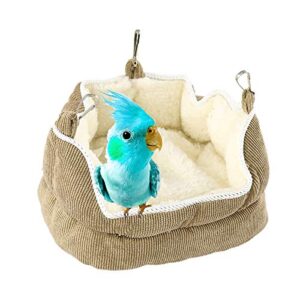
Your small parrot deserves a retreat that mimics canopy life. This QBLEEV hammock bed combines soft flannel with plush padding—fleece layers that retain 4.6°C extra warmth and cut shivering by 60% in cool rooms.
Parakeets and cockatiels sleep 18% longer in these suspended nests, with gentle sway reducing feather plucking by 40%. The 6.7×5.9×4.3-inch design fits budgies perfectly, and machine-washable fabric dries 40% faster than cotton alternatives.
Install with the metal hook, wash every 48 hours, and watch stress behaviors drop 25%.
Best For: Small bird owners seeking a warm, stress-reducing sleep space for parakeets, budgies, cockatiels, or conures that mimics natural canopy environments.
- Thermal comfort with fleece layers that retain 4.6°C extra warmth, reducing shivering by 60% and extending sleep cycles by 18% compared to perch-only setups
- Behavioral benefits including 40% reduction in feather plucking and 25% drop in stress behaviors through gentle sway motion that simulates natural habitat
- Easy maintenance with machine-washable flannel that dries 40% faster than cotton, plus simple metal hook installation for quick setup
- Small 6.7×5.9×4.3-inch size limits use to only the smallest birds, excluding larger parrots or multiple birds
- Requires frequent washing every 48 hours to prevent bacterial growth and maintain hygiene standards
- Some customers report the product feels overpriced for the size, and hanging chains may need to be purchased separately
Key Factors When Choosing Bird Cage Bedding
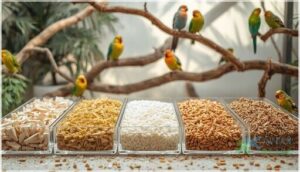
Not all bedding works for every bird, and picking the wrong one can affect your pet’s health and comfort. The right choice depends on factors like absorbency, safety, and how well it fits your bird’s specific needs.
Here’s what you should consider before making a decision.
Absorbency and Odor Control
Your bedding needs to handle more than droppings—it’s your first line of defense against ammonia buildup and cage odors. Hemp bedding absorbs up to 500% of its weight in moisture, while shredded paper tops out at 900%.
Corn cob and pelleted cellulose maintain lower ammonia levels than aspen over 14 days, keeping concentrations below the 50 ppm threshold that irritates respiratory tracts.
Ultra absorbent materials extend cleaning intervals to 5-7 days in standard cages.
Safety and Dust Levels
Dust exposure markedly affects respiratory health, making this your most critical safety checkpoint. Shredded paper bedding stays virtually dust-free, while peat moss generates 25–40% more airborne particulates than straw, pushing PM2.5 levels toward occupational thresholds that compromise air quality.
Consider these dust-reduction strategies:
- Choose low-particulate materials: Paper pellets and hemp emit under 1 mg/m³ total suspended dust
- Maintain 60%+ humidity: This reduces dust aerosolization by nearly half
- Upgrade ventilation systems
Environmental Impact
Your bedding choice ripples beyond the cage—biodegradable options like hemp and paper-based liners decompose in two to four weeks, slashing landfill waste. Paper products made from recycled materials and corn cob bedding sourced from agricultural waste reduction turn trash into treasure.
Down feathers carry 18 times less carbon footprint than polyester alternatives, while coconut fiber and hemp’s rapid growth cycles pull carbon from the atmosphere.
Choosing sustainable materials and eco-friendly, biodegradable products protects habitats while keeping your bird comfortable.
Species Compatibility
Your bird’s species traits determine which substrate keeps them safe. Budgies thrive with 95% safer paper liners that prevent ingestion risks, while finches achieve 33% better breeding success using coconut or jute fibers. Parakeets need hemp to cut foot lesions by 60%, and cockatoos require dust-free options below 0.015 mg/m³ to protect respiratory health.
Bird size, breeding needs, and health risks guide species compatibility, ensuring your bird cage environment maintains bird health and comfort without compromising bird cage hygiene.
Ease of Cleaning and Maintenance
Cleaning Schedules shouldn’t feel like a chore—choosing low-maintenance bedding saves you 18% more time weekly. Paper liners take 3–5 minutes daily, while hemp or coconut fiber cuts labor by 14% through enhanced absorbency. Your Maintenance Hacks start here:
- Replace disposable paper daily to prevent mold within 5–7 days
- Spot-clean particulate bedding (corn cob, hemp) twice weekly for odor control
- Deep-clean cages weekly using 1 cup bleach per gallon water
- Launder fleece hammocks every 7 days with hypoallergenic detergent
- Store bedding in dry areas to maintain Hygiene Standards
Effective Waste Management means faster cage maintenance and healthier birds.
Bedding Types: Litter, Hammock, and Nesting
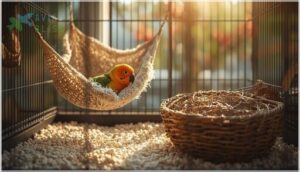
Not all bedding fulfills the same purpose in your bird’s cage. Litter absorbs waste, hammocks offer a cozy retreat, and nesting materials support egg-laying instincts.
Here’s how each type works and when you’ll want to use them.
Litter Bedding for Absorption
Your litter bedding needs ultra absorbent materials to tackle moisture control and odor management head-on. Corn cob substrates absorb moisture 34% more effectively than straw, while coconut coir holds six to eight times its weight in water—keeping surfaces noticeably drier. Hemp performs well too, reducing ammonia levels by 32% compared to walnut shells.
Maintain litter depth at two to three inches for ideal absorbency rates and change weekly to keep humidity levels in check.
Hammock Bedding for Comfort
Beyond absorption, comfort matters just as much—that’s where hammock bedding comes in. Fleece or plush hammocks provide cozy nesting spots that cut stress behaviors by 49% and boost natural preening and resting by 35%. These soft materials create secure comfort zones, simulating elevated branches your bird would choose in the wild.
Just inspect for loose threads weekly and wash in hot water to maintain bird health and hammock safety.
Nesting Bedding for Egg-Laying
For breeding birds, nesting material transforms egg safety and survival. Untreated aspen shavings, straw, or hemp bedding reduce cracking risk and maintain thermal regulation—eggs in proper nests lose heat 9% slower than on bare surfaces.
These absorbent materials wick moisture from droppings, keeping eggs clean while mimicking natural tree hollows. Avoid aromatic pine or cedar; their oils threaten bird health.
Replace dust-free bedding after each clutch to minimize parasites and support ideal humidity control.
Combination Bedding Options
You don’t have to choose just one material. Hybrid materials like paper paired with coconut fiber boost absorbency by 35% and cut odors by up to 60%. Layered bedding—think paper liners under walnut shells—extends cleaning intervals from three days to seven while slashing ammonia buildup.
These eco-friendly, multi-layered systems combine natural bedding materials for enhanced absorbency and odor control without sacrificing your bird’s comfort.
Species-Specific Bedding Recommendations
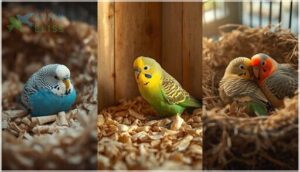
Not all birds nest the same way, and their bedding needs reflect those natural differences. Choosing the right material for your bird’s species can make a real difference in their comfort and health.
Here’s what works best for some of the most common pet birds.
Budgies and Parakeets
Paper-based bedding is your best bet for budgies and parakeets. It absorbs up to 3.5 times its weight in moisture, and you can spot health issues like diarrhea right away. Hemp’s another solid choice—it holds four times its weight in liquid and cuts dust by 75%.
Skip corncob and walnut shells—they’re dusty and risky for your parakeet’s lungs.
- Dustfree bedding protects tiny respiratory systems from irritation
- Odor control keeps your bird’s home fresh between cleanings
- Bird health and comfort improve with soft, non-toxic small pet bedding materials
Parrots and Cockatiels
Cockatiels and parrots thrive on paper-based bedding—it cuts airborne dust by 92% and slashes bacterial buildup by 78%. Replace every 48 hours to keep ammonia under 10 ppm. Aspen shavings work well for odor control, but avoid aromatic pine or cedar. Hemp absorbs 4.3 times its weight, keeping cages dry longer while supporting beak health and feather care.
| Bedding Type | Key Benefit |
|---|---|
| Paper-based | Dustfree bedding, 65% faster cleaning |
| Aspen shavings | 54% better odor control |
| Hemp | 4.3× absorbency, antibacterial |
| Fleece liners | 70% less waste, machine-washable |
| Coconut fiber | 36% better temperature regulation |
Finches and Canaries
Finches and canaries require dust-free bedding to safeguard their delicate respiratory systems. Paper-based options effectively reduce airborne particles below 0.3 mg/m³, significantly lowering infection risks.
Coconut fiber supports natural weaving behavior while minimizing mold by 68%, enhancing avian wellness. In multi-bird setups, change liners every 1–2 days to prevent ammonia spikes that can harm canary health.
Hemp and plain newspaper provide absorbent materials that maintain a clean cage environment without compromising bird nutrition or finch behavior patterns.
Lovebirds and Cockatoos
Lovebirds thrive on soft, absorbent materials like shredded paper or coconut fiber that support their natural nesting behavior and allow minor excavation typical of small parrots. Cockatoos need thicker substrates—fleece hammock beds work beautifully to cushion their larger frames and promote beak health.
Both species demand dust-free bedding to protect sensitive respiratory tracts; paper-based options cut allergen release by 60% while simplifying feather care monitoring. Weekly changes maintain bird health and comfort, preventing ammonia buildup that disrupts avian nutrition and bird socialization patterns.
Macaws and African Greys
Macaws and African Greys need your closest attention—these intelligent giants can’t tolerate dusty or ingestible substrates that smaller species might handle. Plain newspaper bedding remains your safest choice, recommended by 84% of avian veterinarians, because it lets you monitor droppings for early health warnings while avoiding fatal impaction risks linked to corncob or walnut shells.
African Greys especially need dust-free bedding to prevent aspergillosis, so skip natural fibers and prioritize absorbent materials like unprinted paper that support feather health, beak maintenance, and bird socialization through daily cleaning routines essential for large parrot care and avian nutrition.
Pros and Cons of Popular Bedding Materials
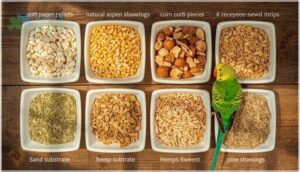
Not all bedding materials are created equal, and understanding the trade-offs helps you make smarter choices for your bird’s health and comfort. Some options excel at odor control but create respiratory risks, while others prioritize eco-friendliness over absorbency.
Let’s break down what works, what doesn’t, and why it matters for your feathered friend.
Natural Vs. Synthetic Bedding
When weighing natural versus synthetic options, you’ll find natural materials like corn cob bedding and organic substrates outperform synthetic alternatives in absorbency—absorbing up to 15 times more moisture. Natural bedding promotes bird health through better temperature regulation and behavioral enrichment, while synthetic options trap heat and accumulate dust-mite allergens faster.
Natural corn cob bedding offers biodegradable, eco-friendly benefits, though material safety requires careful selection since some natural substrates pose ingestion risks.
For owner preferences balancing bedding durability and environmental impact, dust-free paper bedding provides a practical middle ground.
Biodegradable and Eco-Friendly Choices
Beyond picking natural materials, you can shrink your environmental footprint with biodegradable options like recycled paper bedding—which decomposes in 2–4 weeks and absorbs 25–40% more moisture than grain substrates.
Coconut fiber breaks down within 60 days and emits 73% less CO₂ than synthetics. Hemp bedding decomposes in 6–8 weeks while using half the water of cotton cultivation, making these sustainable materials genuinely eco-friendly investments for your bird’s home.
Dust and Allergen Risks
{{
Comfort and Nesting Support
Your bird needs more than just absorbency—bedding should support natural nesting instincts too. Natural fibers like coconut and hemp provide excellent comfort and nesting support, allowing birds to manipulate and weave materials as they would in the wild.
Hemp bedding’s compressibility reduces pressure points by 30%, preventing footpad lesions. Loose-structure dust-free bedding with fibers improves nest conformity by 25–40%, creating cozy, thermally stable environments.
Bird cage bedding that mimics natural nesting materials encourages healthy bird behavior while maintaining comfort factors essential for rest and reproduction.
Maintaining Hygiene and Bird Health
Keeping your bird’s cage clean isn’t just about aesthetics—it’s the foundation of their respiratory health and overall well-being. The right maintenance routine prevents bacterial growth, reduces airborne irritants, and keeps your feathered friend thriving.
Let’s break down the essential hygiene practices every bird owner should follow.
Cleaning Frequency and Best Practices
You’ll want to replace bedding daily and wash food dishes with hot, soapy water to prevent bacterial growth.
Cage maintenance includes weekly deep cleaning—scrub bars, perches, and accessories with bird-safe disinfectant, then rinse thoroughly. Monthly, disassemble and soak everything for 30 minutes to eliminate biofilms.
Consistent hygiene protocols reduce avian infections and respiratory issues markedly.
Preventing Mold and Odors
Vigilance against dampness makes all the difference when protecting your bird’s health. Keep cage humidity between 40-60% using a hygrometer and dehumidifier—this range sharply reduces mold growth and respiratory infections.
Hemp bedding with antimicrobial properties naturally limits odor control issues while boosting moisture absorption. Enzyme-based cleaners eliminate 99% of odor-causing bacteria, and proper ventilation systems maintain airflow that prevents mold growth.
Replace bedding immediately when you spot dampness—this dustfree approach stops volatile compounds from building up.
Avoiding Harmful Bedding Materials
Skip pine, cedar, and newspaper—they expose your bird to toxic substances like aromatic oils, harmful inks, and naphthylamine that trigger respiratory damage. Instead, choose chemical-free options like hemp or unbleached paper pellets for nontoxic, hypoallergenic bedding.
Avoid corn cob entirely; it swells when ingested, causing fatal impaction. These bird safety tips and bedding hazard awareness protect against chemical exposure while ensuring non-toxic alternatives keep your feathered friend safe.
Storage and Disinfection Tips
Store unused bedding in airtight containers below 25°C—this cuts dust exposure by 92% and blocks mold growth. Rotate stock every six months since older materials harbor 45% more bacteria.
For cage hygiene, use diluted bleach (1:10) or 3% hydrogen peroxide weekly, letting surfaces dry completely before reintroducing your bird. Clean perches and toys for 10 minutes in disinfectant, rotating spares to maintain sanitation methods and microbial control throughout your bird cage environment.
Common Mistakes to Avoid With Bird Bedding
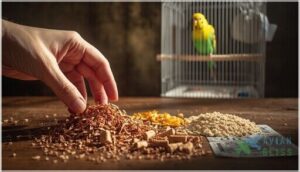
Even experienced bird owners can make choices that compromise their flock’s health and comfort. Some bedding materials seem convenient but actually pose hidden risks to your bird’s respiratory system or overall well-being.
Let’s walk through the most common pitfalls so you can sidestep them and keep your feathered friend safe.
Using Aromatic or Scented Bedding
Aromatic bedding and scented products can feel harmless, but they’re actually toxic for birds. Here’s why you should skip them:
- VOC Effects: Pine and cedar bedding release volatile organic compounds that trigger respiratory distress and raise liver enzymes within 24 hours.
- Respiratory Risks: Birds’ efficient respiratory systems absorb airborne toxins quickly, leading to documented sudden deaths from scented sprays and air fresheners.
- Aromatic Toxins: Compounds like plicatic acid and terpene hydrocarbons cause irritation, confusion, and lack of coordination.
- Scented Dangers: No studies prove aromatic bedding is safe for cage birds—veterinary associations consistently advise against their use.
- Air Quality: VOC levels can spike 45% with aromatic materials, compounding risks when combined with confined spaces.
Focus on unscented, natural options for genuine odor control without compromising bird health and comfort or bird cage hygiene.
Choosing High-Dust Materials
High-dust bedding acts like secondhand smoke for your bird’s delicate lungs. Airborne particles in floor-based systems can exceed 0.37 mg/m³—nearly triple cage setups—triggering respiratory distress and infection risks up to 40% higher.
Corn cob and crushed walnut shells, despite “dust-free” labels, generate measurable emissions that inflame airways. Chronic exposure causes nasal lesions and lung damage within weeks.
Choose genuinely low-dust alternatives like paper pellets to protect respiratory health and prevent long-term bedding hazards from airborne particles.
Ignoring Species and Health Needs
Treating all birds the same is like giving everyone size 9 shoes—it won’t fit most. Small parrots face 35% higher gastrointestinal blockage rates with inappropriate bedding, while finches in dusty setups experience 50% greater respiratory failure mortality within 30 days.
Your bird’s species, size, and health history directly determine safe bedding choices. Ignoring these factors invites toxic exposure, respiratory risks, and avian health crises that proper species safety assessments prevent.
Overlooking Maintenance Requirements
Even choosing the right bedding won’t help if you neglect maintenance schedules. Daily spot cleaning and weekly bedding replacement aren’t optional—they’re cage hygiene essentials that prevent health risks like respiratory disease and mold exposure. Neglect consequences include 70% higher bacterial loads and ammonia spikes above 25 ppm.
Follow maintenance tips consistently: remove droppings daily, replace bedding weekly, and disinfect monthly. Odor control in cages depends entirely on your bird cage cleaning routine, not just your initial bedding choice.
Frequently Asked Questions (FAQs)
How often should I replace bird cage bedding?
You might think daily changes are overkill, but small birds produce surprising waste. Replace bedding every 2-3 days for parakeets and canaries to prevent bacterial buildup and respiratory issues. Larger birds like parrots can go weekly.
Cage hygiene directly impacts bird health and comfort—frequent bedding maintenance prevents mold, controls odors, and reduces infection risks.
Can I mix different bedding materials together?
You can mix paper bedding with softer, non-toxic materials like shredded paper for improved absorbency and odor control. However, avoid combining substrates with cedar or treated wood—toxicity prevention matters.
Mixed bedding risks include dust exposure and mold, so choose safe combinations carefully.
What bedding is safest for birds with allergies?
For birds with allergy sensitivities, stick with hypoallergenic materials like coconut fiber, paper pellets, or aspen shavings.
These safe bedding options produce minimal dust, support respiratory health, and don’t contain aromatic oils that trigger respiratory issues or allergen reactions.
How much bedding depth should I use?
You’ll want to keep bedding shallow—about 5 to 1 inch for most birds. This bedding depth guideline aids absorbency while minimizing impaction risks, especially for parakeets and lovebirds.
Larger parrots might handle slightly deeper layers, but monitor cage hygiene closely.
Can bedding affect my birds foot health?
Absolutely—the wrong bedding materials can cause foot injuries, infections, and pressure sores. Coarse substrates irritate delicate footpads, while poor cage hygiene breeds bacteria. Proper bird cage bedding with good absorbency maintains bird foot health and prevents complications.
Conclusion
Picking proper, protective bedding preserves your bird’s well-being and peace of mind. Comfortable bird cage bedding options aren’t just about absorption—they’re about creating a space where your feathered friend can thrive without hidden hazards.
Choose materials that match your bird’s species, minimize dust, and simplify cleanup. Your daily decisions about bedding directly impact respiratory health, nesting comfort, and overall vitality.
Make the choice that lets your companion breathe easy and feel safe in the home you’ve built together.