This site is supported by our readers. We may earn a commission, at no cost to you, if you purchase through links.

Your parrot’s sudden labored breathing or your canary’s unexplained weight loss might stem from an invisible threat lurking in their environment: fungal spores. Aspergillus fumigatus alone accounts for nearly 60% of avian respiratory mycoses, yet most bird owners don’t recognize the early signs until infection has progressed severely.
These opportunistic pathogens exploit compromised immune systems, transforming routine stress or minor nutritional deficiencies into life-threatening conditions like aspergillosis, candidiasis, or cryptococcosis.
Understanding the clinical presentation, predisposing factors, and species-specific vulnerabilities allows you to implement evidence-based preventive strategies and recognize when your bird requires immediate veterinary intervention.
Table Of Contents
- Key Takeaways
- Most Common Fungal Infections in Pet Birds
- Causes and Risk Factors for Fungal Infections
- Signs and Symptoms of Fungal Infections
- Diagnosing Fungal Infections in Pet Birds
- Treatment and Prevention Strategies
- Frequently Asked Questions (FAQs)
- What are three common fungal infections?
- What fungal infection can be transmitted through bird dropping?
- Can fungal infections spread between multiple pet birds?
- How long does antifungal treatment typically last?
- Are certain bird species more susceptible to fungi?
- What humidity levels help prevent fungal growth?
- Can humans contract fungal infections from pet birds?
- Conclusion
Key Takeaways
- Aspergillus fumigatus causes nearly 60% of respiratory fungal infections in pet birds, with aspergillosis, candidiasis, and cryptococcosis representing the three most common mycoses that exploit compromised immune systems from stress, malnutrition, or concurrent illness.
- Poor cage hygiene combined with humidity levels exceeding 60% creates optimal conditions for fungal spore proliferation, making daily substrate changes, weekly disinfection, and proper ventilation (6-12 air changes per hour) essential preventive measures.
- Early recognition of clinical signs—labored breathing, white crop plaques, unexplained weight loss, or neurological symptoms like head tilt—enables timely intervention, as fungal infections require weeks to months of targeted antifungal therapy (fluconazole, itraconazole, or amphotericin B) depending on infection severity and location.
- Treatment success depends on combining antifungal medications with comprehensive supportive care including nutritional supplementation, environmental decontamination, and regular veterinary monitoring, since prevention through proactive husbandry remains exponentially more effective than managing established systemic infections.
Most Common Fungal Infections in Pet Birds
When your bird develops a fungal infection, you’re likely dealing with one of a handful of common culprits that veterinarians encounter regularly in avian practice.
These infections often require targeted antifungal treatments and environmental changes to fully resolve and prevent recurrence.
Each fungal pathogen has distinct target tissues, clinical presentations, and treatment protocols that you’ll need to understand.
Let’s examine the most frequently diagnosed mycotic infections affecting companion birds, starting with the respiratory and gastrointestinal systems where these opportunistic organisms most often establish themselves.
Aspergillosis (Respiratory Infection)
Aspergillosis, the most prevalent respiratory fungal disease in pet birds, occurs when your bird inhales Aspergillus fumigatus spores that invade the airways, lungs, and air sacs.
You’ll see progressive breathing difficulty as hyphal growth produces granulomas and inflammatory exudates that obstruct bronchi and parabronchi, potentially leading to respiratory failure if your immunocompromised or chronically ill bird isn’t treated promptly.
Emerging knowledge about antifungal resistance patterns highlights the importance of early diagnosis and selecting appropriate treatment options for aspergillosis.
Candidiasis (Digestive Tract Infection)
While respiratory aspergillosis captures headlines, Candida spp quietly wreaks havoc in your bird’s GI tract, especially when stress or antibiotics disrupt gut health. You’ll notice white plaques coating the crop, pasty droppings, and weight loss as fungal overgrowth displaces beneficial microbes.
Digestive issues from candidiasis demand prompt antifungal treatments and nutritional support to restore balance, preventing secondary complications that compromise your bird’s recovery. Learning about the balance of healthy bacteria can help bird owners understand why these infections develop.
Cryptococcosis (Systemic and Neurological Infection)
Unlike candidiasis, cryptococcosis—caused by encapsulated yeasts Cryptococcus neoformans—spreads systemically after fungal spore transmission from contaminated droppings or soil, targeting your bird’s lungs and central nervous system.
You’ll recognize neurological symptoms like head tilt, ataxia, and circling behavior as capsule formation helps the organism evade immune defenses.
Diagnosis relies on cryptococcal antigen testing and imaging, while antifungal treatments avian veterinarians prescribe—fluconazole or amphotericin B—require months of therapy for systemic infection resolution.
Other Notable Fungal Infections (Macrorhabdus, Dermatophytes)
Beyond systemic threats like cryptococcosis, avian yeast diseases such as Macrorhabdus ornithogaster—also called Macrorhabdosis or Avian Gastric Yeast—cause chronic gastritis at the proventriculus-ventriculus junction in budgerigars and cockatiels. Meanwhile, dermatophyte transmission through contaminated perches spreads Trichophyton and Microsporum species, creating scaly skin lesions.
- Macrorhabdus infection presents with regurgitation, weight loss, and abnormal crop contents
- Dermatophytes cause circumscribed crusty patches with alopecia on non-feathered surfaces
- Fungal carrier birds shed organisms intermittently even after clinical recovery
Causes and Risk Factors for Fungal Infections
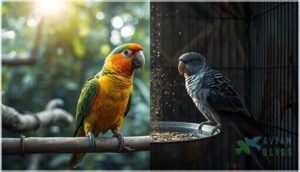
Understanding what puts your bird at risk for fungal infections can make all the difference in keeping them healthy. These infections don’t just appear out of nowhere—they’re almost always tied to specific conditions in your bird’s environment or health status.
Learning to spot the early warning signs is crucial, which is why following a comprehensive bird fungal infection diagnosis guide can help you catch problems before they become serious.
Fungal infections in birds don’t appear randomly—they’re almost always linked to specific environmental or health conditions you can control
Let’s look at the most common factors that can leave your feathered companion vulnerable to fungal disease.
Weakened Immune System
Your bird’s immune system acts as its frontline defense against opportunistic fungal infections, but when compromised, even common environmental fungi become dangerous invaders.
Immune System Dysfunction arises from multiple sources: HIV-like viral diseases, cancer treatments, Nutritional Deficiencies depleting essential vitamins and minerals, chronic illnesses like diabetes, Age Related Decline reducing T-cell production, Environmental Toxins suppressing white blood cell efficacy, and inadequate Stress Management elevating cortisol levels that weaken immunity in your immunocompromised bird.
Poor Cage Hygiene and Ventilation
In damp, stagnant enclosures, fungal spores multiply uncontrolled, transforming your bird’s habitat into an incubator for respiratory fungal diseases and avian mycoses. Poor cage air quality, inadequate ventilation systems, and elevated humidity create the perfect storm for opportunistic fungal infections.
- Daily spot-cleaning removes droppings harboring Aspergillus and Candida spores, while weekly disassembly with bird-safe disinfectants eliminates biofilm accumulation on perches and feeders.
- Airflow management through 6–12 air changes per hour prevents carbon dioxide buildup and moisture condensation that promote fungal diseases without creating drafts.
- Humidity control between 40–60 percent, monitored via hygrometer, inhibits mold proliferation on cage surfaces, substrate, and toys where fungal spore concentrations thrive.
Stress and Underlying Illness
Chronic stress profoundly undermines your bird’s immune system, elevating cortisol levels that suppress natural defenses against aspergillosis, candidiasis, and other opportunistic fungal infections. Underlying conditions—malnutrition, viral infections, parasitism—compound immunosuppression, creating vulnerability to respiratory fungal diseases.
Health monitoring through bird behavior observation—lethargy, appetite changes, respiratory effort—facilitates early detection before fungal diseases establish systemic infection, when stress management and veterinary intervention achieve the best outcomes.
| Stressor/Illness | Impact on Immune System Suppression |
|---|---|
| Chronic social stress | Persistent cortisol elevation, impaired lymphocyte function, increased fungal infection susceptibility |
| Malnutrition (vitamin A deficiency) | Compromised mucosal barriers, reduced antibody production, enhanced Aspergillosis risk |
| Concurrent viral infections (PBFD, polyomavirus) | T-cell depletion, weakened cellular immunity, opportunistic Candidiasis development |
| Sleep disruption/poor photoperiod | Dysregulated circadian immune responses, delayed pathogen clearance, chronic infection progression |
Environmental Exposure to Fungal Spores
Your bird’s respiratory system encounters airborne spores constantly—Aspergillus spp. concentrations spike when humidity exceeds 60 percent, transforming damp basements and poorly ventilated rooms into high-risk zones for respiratory fungal diseases.
Fungal ecology demonstrates that spore distribution intensifies near moldy substrates, contaminated food stores, and HVAC systems with dirty filters, making environmental factors and humidity control essential components of avian fungal diagnosis and prevention strategies.
Signs and Symptoms of Fungal Infections
Recognizing fungal infections in your bird early can make all the difference in treatment outcomes. The clinical signs vary depending on which organ system the fungus has colonized, ranging from subtle behavioral changes to obvious physical symptoms.
Let’s examine the key warning signs you should watch for in each affected body system.
Respiratory Distress and Breathing Changes
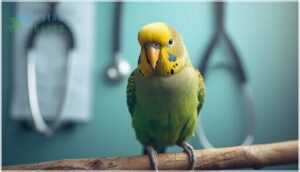
When Aspergillosis or other respiratory tract infections take hold, you’ll notice your bird struggling with dyspnea, air sacculitis, and tracheal infection signs that shouldn’t be ignored.
The respiratory system reveals distress through:
- Open-mouth breathing and visible tail bobbing with each labored breath
- Breathing difficulty exceeding 60 breaths per minute in smaller species
- Audible wheezing, crackles, or stridor indicating airway obstruction
- Cyanotic mucous membranes signaling impending respiratory failure requiring immediate veterinary intervention
Digestive Issues and Crop Problems
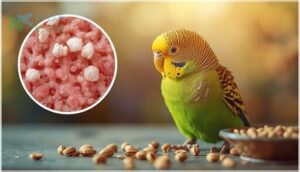
Candidiasis and other GI tract infections caused by Candida spp create visible trouble you can spot early. You’ll see white patches lining the crop, persistent regurgitation with foul-smelling discharge, and crop stasis where food just sits there refusing to move.
Fungal overgrowth disrupts gut flora, causing weight loss and appetite decline, while the crop anatomy reveals thickened mucosa signaling digestive health has gone off track.
Skin and Feather Abnormalities
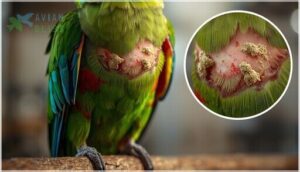
Fungal infections in birds can disturb skin health and feather integrity, manifesting as feather loss in localized patches, skin lesions with crusting or ulceration, and beak problems including crusty overgrowth around the cere.
You might notice feather plucking driven by irritation, molting issues with prolonged or patchy cycles, and abnormal feather coloration signaling systemic involvement.
These avian fungal infections reflect compromised integumentary function, requiring prompt bird fungal disease management to address underlying fungal pathogens avian practitioners routinely encounter.
Neurological Signs
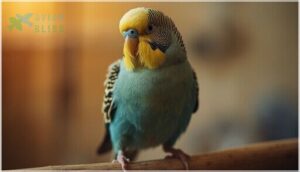
When respiratory system infection spreads beyond air sacs, you may observe neurological symptoms like ataxia, head tilt, tremors, or asymmetrical weakness in wings or legs, indicating brain infection or nerve dysfunction.
Vestibular issues present as nystagmus, loss of equilibrium, or persistent head tilting.
Motor control deteriorates with clumsy feeding movements, abnormal vocalizations, or postural tremor, signaling an urgent need for diagnostic imaging and antifungal intervention.
Diagnosing Fungal Infections in Pet Birds
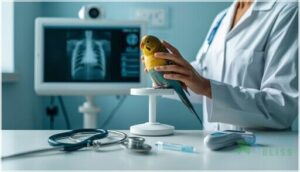
Diagnosing a fungal infection in your bird isn’t always straightforward, since the symptoms can mirror other illnesses and the infections themselves often develop quietly.
Your avian veterinarian will use a combination of hands-on examination, your bird’s medical history, and diagnostic imaging to piece together what’s happening inside your feathered companion’s body.
Here’s how veterinarians approach the diagnostic process to confirm fungal disease and determine the best treatment path.
Physical Examination and Clinical History
Your veterinarian begins with a thorough clinical history, asking when you first noticed labored breathing, nasal discharge, or tail bobbing—subtle respiratory fungal diseases in birds often start quietly.
During the physical assessment, they’ll inspect your bird’s nares, tongue, and beak for ulcers or discharge, palpate the crop for distention, and auscultate the air sacs for abnormal sounds.
Examination methods include observing posture, checking droppings for consistency changes, and evaluating overall body condition.
These diagnostic techniques, combined with medical history about cage setup and recent stressors, help identify fungal infections in companion birds before they progress.
Imaging (X-rays, CT Scans)
When physical findings raise concern, your veterinarian will recommend imaging to visualize internal structures and detect fungal lesions that can’t be palpated. X-ray imaging captures two-dimensional projections of the lungs, air sacs, and abdominal organs, revealing radiodense nodules, airway thickening, or fluid accumulation characteristic of avian respiratory health issues.
For complex cases requiring respiratory disease management, CT scan techniques provide cross-sectional views in axial, coronal, and sagittal planes, enabling volumetric assessment of lesion distribution. Avian radiology using high-resolution CT detects small granulomas invisible on standard films, guiding antifungal treatment options by showing the extent of bird respiratory fungal disease before therapy begins.
Treatment and Prevention Strategies

Once your veterinarian confirms a fungal infection, you’ll need a thorough approach that tackles both treatment and long-term prevention. Recovery isn’t just about medication—it requires environmental changes, nutritional support, and ongoing monitoring to keep your bird healthy.
Let’s look at the key strategies that work together to eliminate infection and prevent recurrence.
Antifungal Medications and Therapies
Treatment outcomes improve dramatically when you select the right antifungal medications for your bird’s specific infection, considering both efficacy and medication safety. Azoles like fluconazole and itraconazole inhibit ergosterol synthesis, disrupting fungal membranes, while polyenes such as Amphotericin B create membrane pores, causing cellular leakage. Drug interactions and antifungal resistance require careful monitoring throughout fungal therapy.
- Nystatin provides topical treatment for localized candidiasis affecting the crop and digestive mucosa
- Voriconazole offers high oral bioavailability for systemic aspergillosis requiring weeks to months of therapy
- Liposomal amphotericin B reduces nephrotoxicity while maintaining efficacy against invasive fungal infections
- Therapeutic drug monitoring ensures adequate exposure without toxicity in susceptible avian patients
- Combination strategies help prevent resistance development during prolonged treatment courses
Supportive Care and Nutrition
Recovery hinges on thorough nutritional support that tackles the increased metabolic demands imposed by fungal infections in pet birds. Dietary management includes balanced pellets, fresh produce, and supplemental vitamins to counteract weight loss, while hydration techniques maintain electrolyte balance during illness. Nutrient therapy combined with omega-3 fatty acids and probiotics bolsters immune function, and food safety protocols prevent reintroduction of fungal spores.
| Nutritional Component | Purpose | Implementation |
|---|---|---|
| Fresh water and electrolytes | Maintain hydration and restore losses | Provide clean water daily; offer electrolyte solutions after vomiting |
| High-quality pellets with fruits and vegetables | Cover vitamin and mineral requirements | Feed balanced diet with calcium and vitamin D for bone health |
| Probiotics and omega-3 supplements | Restore gut flora and bolster immune function | Administer with meals under veterinary guidance |
Cage Cleaning and Environmental Management
Beyond medication and nutrition, cage sanitation forms the foundation of fungal prevention in pet birds. Daily substrate replacement, weekly disinfection with bird-safe cleaners, and complete drying of all surfaces reduce spore loads that trigger avian fungal infections.
Install ventilation systems paired with HEPA air purification, maintain humidity control between 40–60 percent, and you’ll create an inhospitable environment for Aspergillus, Candida, and other opportunistic fungi threatening bird health.
Regular Veterinary Check-ups and Early Detection
Routine veterinary exams catch avian fungal infections before clinical signs emerge, making regular checkups importance clear for all pet birds. Your veterinarian uses bird health monitoring protocols—physical assessments, diagnostic imaging, and laboratory screening—combined with early detection methods to identify subclinical disease.
Preventive care plans customized to species-specific risks, alongside owner education on warning signs, form the cornerstone of effective diagnosis and treatment of avian mycoses and antifungal therapies for pet birds.
Frequently Asked Questions (FAQs)
What are three common fungal infections?
Like rust creeping through metal, fungal infections in birds often go unnoticed until significant damage occurs. The three most common are aspergillosis (respiratory), candidiasis (digestive), and cryptococcosis (systemic/neurological).
What fungal infection can be transmitted through bird dropping?
Cryptococcosis Risk and Histoplasmosis Spread occur through inhalation of contaminated droppings, while Candidiasis Occurrence involves ingestion from contaminated surfaces.
Psittacosis Transmission, though bacterial, similarly spreads via dried fecal matter and respiratory secretions.
Can fungal infections spread between multiple pet birds?
While fungal infections don’t usually hop from bird to bird like a contagious cold, spore contamination in shared environments creates cross-infection risks.
Proper avian biosecurity, including bird quarantine protocols and thorough cage disinfection, prevents aspergillosis transmission among your pet birds.
How long does antifungal treatment typically last?
Antifungal treatment duration varies by infection type: Candidiasis usually requires two to four weeks of therapy, while Aspergillosis demands six to twelve weeks with itraconazole or fluconazole, adjusted based on your bird’s clinical response.
Are certain bird species more susceptible to fungi?
Yes, certain pet birds show heightened species susceptibility to avian fungal infections. Parrots face greater aspergillosis risk from Aspergillus spp due to airway anatomy. Genetic predisposition, bird immunity, and environmental factors shape fungal resistance across species.
What humidity levels help prevent fungal growth?
You’ll want to keep relative humidity between 40 and 50 percent in your bird’s environment—levels above 60 percent encourage Aspergillus spp and other fungal spore control challenges, while proper ventilation systems maintain ideal air quality management.
Can humans contract fungal infections from pet birds?
While zoonotic diseases from avian species are uncommon, you can contract fungal infections like Aspergillus from environmental exposure—especially if you’re immunocompromised.
Bird handlers face elevated human risk through inhalation of spores during cage cleaning.
Conclusion
Think of your bird’s respiratory system as a delicate frontier—one that thrives on vigilance, not reaction. Recognizing common fungal infections in pet birds early, maintaining spotless environmental hygiene, and scheduling biannual veterinary examinations transforms outcomes from guarded to favorable.
Your parrot’s labored breathing or your finch’s declining appetite won’t resolve spontaneously; these clinical signs demand immediate professional intervention. Prevention remains exponentially more effective than treatment, and your attentiveness determines whether fungal pathogens remain environmental contaminants or become systemic threats.
- https://www.merckvetmanual.com/exotic-and-laboratory-animals/pet-birds/mycotic-diseases-of-pet-birds
- https://www.msdvetmanual.com/bird-owners/disorders-and-diseases-of-birds/lung-and-airway-disorders-of-pet-birds
- https://www.dvm360.com/view/fungal-diseases-pet-birds-recognize-infection-early
- https://vcahospitals.com/know-your-pet/aspergillosis-in-birds
- https://mixlab.com/blog/aspergillosis-in-birds