This site is supported by our readers. We may earn a commission, at no cost to you, if you purchase through links.
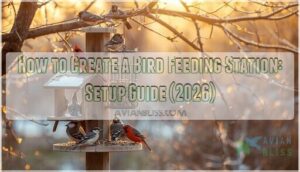
Last winter, a cardinal showed up at my window every morning at 7:15 sharp. No feeder, no food—just hope. That bird taught me something: if you build it right, they will come.
Creating a bird feeding station isn’t about tossing up a feeder and calling it done. You need the right spot, the right setup, and a plan to keep things clean and safe. Get these pieces working together, and you’ll have cardinals, chickadees, and woodpeckers turning your yard into their favorite breakfast spot.
This guide walks you through every step—from picking where to place your station to choosing feeders that work.
Table Of Contents
- Key Takeaways
- Choosing The Best Location for Your Station
- Selecting Feeders and Accessories
- Picking The Right Bird Food and Water
- Maintaining a Clean and Healthy Feeding Station
- Top 4 Products for Building a Bird Feeding Station
- Frequently Asked Questions (FAQs)
- How to make a bird feeding station?
- How can I attract specific bird species?
- What are the environmental impacts of bird feeding?
- How do I keep squirrels away from feeders?
- Can bird feeding harm local bird populations?
- How much does it cost to maintain a feeding station?
- How do I attract specific bird species?
- What plants complement a bird feeding station?
- How can I keep squirrels away naturally?
- When is the best time to start feeding?
- Conclusion
Key Takeaways
- Feeder placement matters more than most people realize—keep feeders either within 3 feet of windows or beyond 30 feet to prevent deadly collisions, and position them 10–15 feet from shrubs so birds can dart to safety in seconds.
- Different bird species need different feeder styles and foods—tube feeders with nyjer seed attract finches, platform feeders with black oil sunflower seeds draw cardinals, and suet cages bring in woodpeckers, especially during winter when calories matter most.
- Regular cleaning every two weeks with a 1:9 bleach-to-water mix prevents disease outbreaks like salmonella, and spacing feeders 3–6 feet apart stops illness from spreading through crowded feeding areas.
- Quality seed beats cheap filler every time—discount mixes pack in 70 percent waste like red milo that birds toss aside, creating moldy piles that breed disease and attract rodents instead of the birds you actually want.
Choosing The Best Location for Your Station
Where you put your feeding station matters more than most people think.
If you’re dealing with unwanted visitors, protecting your feeder from ants starts with choosing the right spot.
The right spot keeps birds comfortable, safe, and coming back every single day.
Here’s what to think about before you drive a single post into the ground.
Factors for Safe and Accessible Placement
Before you hammer in a single post, get your bird feeder placement right — it makes everything easier.
Keep feeders either within 3 feet of windows or beyond 30 feet. That middle zone? It’s a danger zone for backyard birds.
For squirrel proof success, stay at least 10 feet from trees and fences.
Feeder height and ground clearance matter too — aim for 18 inches to 4 feet so you can refill without a ladder.
Visibility matters for you and the birds. Consider learning more about predator prevention and cleanup to help protect and maintain your feeding station.
Importance of Nearby Shelter and Perches
Safe placement gets you started, but shelter and perches are what keep backyard birds coming back.
Think of it as wildlife gardening — you’re not just feeding birds, you’re building a bird habitat they actually trust. When your bird feeder station sits within 10 to 15 feet of native shrubs or trees, birds can dart to safety in seconds. That security changes everything.
A bird feeder station within 10 to 15 feet of native shrubs becomes a trusted habitat, not just a feeding spot
Here’s why shelter placement matters so much for bird safety:
- Evergreen shrubs block winter wind and cut energy loss
- Nearby perches reduce crowding and aggressive jostling at feeders
- Layered vegetation aids bird conservation and species diversity
- Sheltered stations retain 36% more food during storms
Good perch design isn’t decorative — it’s wildlife conservation in action. Many gardeners use to create safer, more attractive bird feeding stations.
Avoiding Predators and Window Collisions
Shelter helps birds feel safe, but predator control and window safety are just as important for backyard birding. Cats alone kill billions of birds each year — and window collisions claim hundreds of millions more.
Smart feeder placement and design cuts that risk dramatically. Keep feeders either within 3 feet of windows or beyond 30 feet — anything between is a danger zone.
For squirrel deterrents, mount feeders on metal poles with dome baffles, and invest in squirrel proof feeders to stop food theft. Good bird feeder placement and design is real bird conservation in action.
Seasonal Considerations for Placement
Predator-proofing your feeders is a solid win — but seasonal bird feeder placement and design takes that protection even further. Where a feeder thrives in January might fail completely by July.
Smart seasonal rotation keeps your bird feeding station working year-round:
- Winter Placement: Tuck feeders on the east side of your house for wind protection from northwest winds
- Shade Management: Shift to afternoon shade in summer — suet spoils fast in full sun
- Climate Adaptation: Under eaves keeps seed dry during rain and sleet
- Seasonal Bird Feeding Strategies: Watch your yard’s microclimates — backyard birding rewards the observant
Selecting Feeders and Accessories
The right feeder makes all the difference between a yard full of birds and an empty pole.
Different species have different needs, so your setup really does matter. Here’s what to keep in mind when picking your feeders and accessories.
Types of Bird Feeders for Different Species
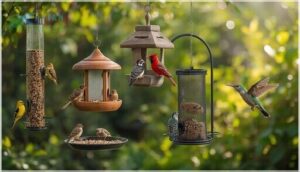
Think of bird feeders like an open invitation — different guests need different doors. Tube Feeders work perfectly for finches and chickadees that cling and pick at Nyjer seed.
Hopper Designs give cardinals and jays a sturdy ledge to land on. Platform Feeders welcome ground-foraging doves and sparrows.
Suet Feeders draw woodpeckers straight to your yard. And Nectar Dispensers? Hummingbirds can’t resist them.
Using Poles, Hangers, and Baffles
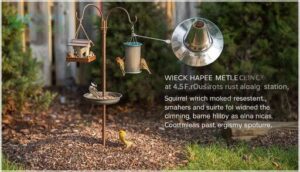
Your feeder poles are the backbone of your whole bird feeding station. Go with rust-resistant metal, sunk at least 12 inches deep so it won’t wobble in wind. Pole height matters — aim for 60 to 80 inches tall.
- Hanger styles like multi-arm setups let you mix hopper feeders and suet feeders without crowding
- Baffle types — cone or barrel — are your best squirrel protection
- Proper bird safety means keeping that baffle top around 4.5 feet off the ground for squirrel proof feeders
Adding Seed Catchers and Trays
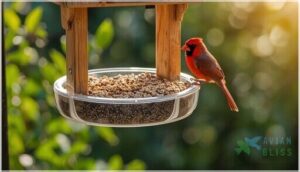
A simple seed tray might be the smartest feeder accessory you add this year. These catcher designs — round plastic trays, mesh hoops, or rigid metal platforms — snap right onto tube feeders and hopper feeders.
They handle seed spill prevention beautifully, cutting waste and keeping rodents away. Tray materials matter too; mesh bottoms drain fast, so mold doesn’t get a foothold at your bird feeding station.
Incorporating Water Sources Like Bird Baths
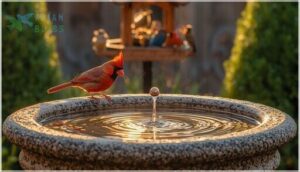
A bird bath turns your bird feeding station into a full backyard wildlife destination. Birds need water for drinking and feather care just as much as food.
Here’s what makes a bird bath work:
- Keep water 1–2 inches deep for safe bird hydration
- Practice strong water quality habits — rinse every 1–3 days
- Mind bath placement: 10–15 feet from shrubs, away from feeders
- Add a dripper for bird watching magic — movement attracts more species
Picking The Right Bird Food and Water
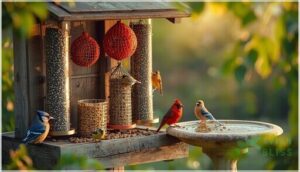
What you put in your feeders matters just as much as where you put them. The wrong food can attract the wrong crowd — or worse, leave your feeders empty all season.
Here’s what to stock up on to keep wild birds coming back.
Best Seeds and Ingredients for Wild Birds
Seed Selection starts with black oil sunflower seeds—their 40 percent oil content fuels birds through cold snaps. Add nyjer for finches and safflower for cardinals while squirrels turn away from the bitter taste.
Unsalted peanuts and suet blocks give woodpeckers concentrated calories. Mix in white millet for ground feeders. Smart Bird Nutrition means matching Wild Bird Diet needs with high-fat Energy Sources year-round.
Avoiding Low-Quality Seed Mixes
You wouldn’t feed your family expired groceries, so why give birds moldy seed? Discount blends often pack in 70 percent filler like red milo and wheat that most birds toss aside, creating waste piles that breed salmonella and aspergillosis.
Smart Seed Quality Control starts with reading labels—premium mixes list sunflower seeds, nyjer, and safflower up front. Here’s your Bird Seed Selection checklist:
- Check for recent packing dates
- Sniff for musty or sour odors
- Look for clean, dust-free kernels
- Store in airtight containers
Healthy Feeding Practices begin with Filler Ingredient Risks awareness and proper Seed Storage Tips.
Offering Fresh Water Year-Round
Once you’ve nailed down quality seed, Water Source Management becomes your next priority. Year Round Hydration keeps birds coming back, and a simple bird bath does the job.
Position it near your bird feeders so visitors don’t waste energy flying around. In summer, fresh water beats food—small birds dehydrate fast during heat waves.
Winter Water Solutions like heated bird baths prevent freezing, while daily Bird Bath Maintenance stops algae and disease.
Providing Seasonal Food Options
Just as water needs shift throughout the year, Smart Feeding strategies keep your bird feeding station buzzing.
Winter Foods like suet and black oil sunflower seed pack over 500 calories per serving, fueling birds through freezing nights.
Spring Migration brings hungry travelers needing mealworms and nectar.
Summer Feeding means no-melt suet and fresh fruit.
Autumn Seeds—especially peanuts and nut mixes—help birds double their weight before long flights.
Seasonal Variety in bird feeders beats any single approach.
Maintaining a Clean and Healthy Feeding Station
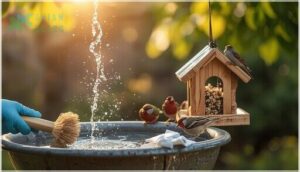
Your feeding station won’t stay bird-friendly for long without regular upkeep. Birds depend on clean feeders and fresh water to avoid illness, and neglecting basic maintenance can actually do more harm than good.
Here’s what you need to do to keep your station safe and welcoming all year long.
Cleaning Feeders and Bird Baths
Every two weeks, roll up your sleeves and scrub your feeders with a 1:9 bleach-to-water mix — it’s serious feeder sanitation that keeps disease prevention working. For bird baths, swap water every few days in summer and scrub away droppings weekly.
Here’s your maintenance rhythm:
- Disassemble feeders completely and brush all crevices
- Soak in cleaning solutions for 10 minutes, then rinse thoroughly
- Let everything air-dry before refilling
Preventing Disease and Mold
Good cleaning is step one, but disease prevention needs smart daily habits. Store seed in sealed containers — mold control starts before food hits the feeder. Space feeders six feet apart so birds aren’t shoulder-to-shoulder spreading illness.
| Disease Risk | Prevention Move |
|---|---|
| Salmonella spread | Space feeders 3–6 feet apart |
| Mold in damp seed | Use drainage holes, roofed designs |
| Wet surface bacteria | Hang in sunny, airy spots |
| Spoiled food buildup | Offer only 1–2 days’ worth |
| Ground contamination | Place over grass, not bare dirt |
Toss clumped or musty seed immediately — bird health depends on it.
Managing Seed Waste and Fallen Debris
Debris management under your bird feeding station keeps pests away and protects your yard. Seed catchers mounted under tube feeders trap hulls before they hit the ground, while low mess seeds like hulled sunflower chips eliminate shells entirely.
Ground cleanup twice weekly prevents rodent visitors:
- Rake fallen bird seed and hulls into compost or trash
- Sweep decks with a hand vacuum for quick debris removal
- Place feeders over gravel for easier hull collection
Tidy stations attract birds, not unwanted wildlife.
Regularly Replenishing Food and Water
Fresh bird food and clean water are your best tools for attracting healthy flocks. Most bird feeders need topping up every three to five days, though platform feeders and tube feeders may run low faster during busy seasons. Check daily for spoiled or clumped seed — black oil sunflower seeds last longer than cracked mixes but still need rotation. Your bird bath water should be changed every day or two to prevent bacteria buildup that threatens bird health.
Follow these Refill Schedules to keep your station thriving:
- Offer only two days’ worth of seed to guarantee freshness
- Empty wet food immediately to stop mold
- Adjust Feeder Cleaning and Water Quality checks during migration peaks
Good Seed Storage plus consistency equals trust.
Top 4 Products for Building a Bird Feeding Station
Building your own feeding station lets you customize everything to fit your yard and budget. You’ll need a few solid tools and materials to get started—especially if you’re working with wood.
Here are four standout products that make the build easier and set your station up for long-term success.
1. Bright Creations Reclaimed Wood Craft Boards
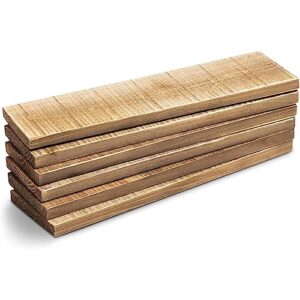
Building a bird feeding station from scratch means finding wood that holds up outside without falling apart. Bright Creations Reclaimed Wood Craft Boards give you six weathered planks—each 3.5 x 12 x 0.5 inches—that work perfectly for small platforms, seed trays, or decorative backboards.
The reclaimed wood brings natural character with visible grain and knots, so your station looks like it belongs in the garden from day one. You can drill, screw, or glue these boards without stress, and the half-inch thickness accommodates light structural jobs like mounting hooks or brackets.
Since they’re unfinished, you’ll want to seal them with an outdoor-safe coating. Once protected, they stand up to rain and sun for multiple seasons. The rustic gray tone pairs beautifully with metal feeders and natural rope.
| Best For | DIYers building small outdoor bird feeding stations who want weathered wood that adds rustic charm without needing to source salvaged materials. |
|---|---|
| Primary Material | Reclaimed Wood |
| Weather Resistance | Requires Sealing |
| Assembly Required | Yes |
| Outdoor Use | Yes |
| Tool-Free Setup | No |
| Target Users | DIY Builders |
| Additional Features |
|
- Six pre-weathered planks give you instant rustic character with visible grain and natural aging
- Half-inch thickness handles light structural work like mounting brackets and drilling for hooks
- Unfinished surface accepts outdoor sealant easily so you can weatherproof them for multiple seasons
- Wood quality varies and some planks split when nailed, so glue joints work better for assembly
- Small 3.5 x 12 inch size limits you to platforms and accent pieces rather than larger structural frames
- Price point feels high for what several users describe as thin craft-grade lumber
2. Kreg K4 Pocket Hole Joinery Jig
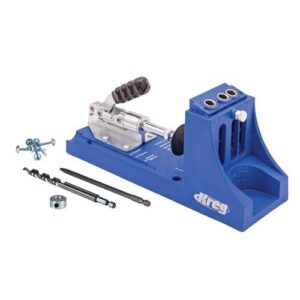
When two boards meet at the wrong angle, your entire bird station can sag or fall apart after a few months.
The Kreg K4 Pocket Hole Jig locks pieces together with joints strong enough to hold 99 to 111 pounds—more than enough for posts, platforms, and feeder frames.
Its three-hole hardened steel drill guide accommodates lumber from 1/2 inch to 1-1/2 inches thick, which covers most cedar or pine boards you’ll use outdoors.
The built-in setup gauge shows you exactly where to set the stop collar on your drill bit, so pocket holes line up perfectly every time.
You can clamp it to your bench or work portable, and onboard storage keeps bits and wrenches from wandering off mid-project.
| Best For | DIYers and woodworkers building outdoor furniture or bird stations who need strong, reliable joints that can hold heavy weight without complicated setup. |
|---|---|
| Primary Material | Hardened Steel |
| Weather Resistance | Rust Resistant |
| Assembly Required | Yes |
| Outdoor Use | Yes |
| Tool-Free Setup | No |
| Target Users | Woodworkers |
| Additional Features |
|
- Handles lumber from 1/2″ to 1-1/2″ thick, covering most common outdoor project materials like cedar and pine boards
- Creates joints strong enough to support 99–111 pounds, so your platforms and feeder frames stay solid season after season
- Built-in setup gauge takes the guesswork out of drilling—pocket holes line up right every time
- Tough to drive screws in tight spaces on smaller projects, so you might need extra tools like a pneumatic ratchet
- Vacuum attachment doesn’t always stay locked in place during use
- Price can add up quickly if you’re buying multiple units for commercial or large-scale work
3. C&S Suet Basket Wild Bird Feeder
High-energy suet cakes draw woodpeckers, nuthatches, and chickadees straight to your station, especially during winter when calories matter most. The C&S Suet Basket‘s vinyl-coated wire grid resists rust while protecting delicate feet from freezing metal or overheating.
You can swing open the side door, slide in a standard suet cake, and latch it shut in under 30 seconds—no tools required. The dark green coating blends into trees instead of glaring like bare metal.
Multiple birds can cling and feed at once thanks to the one-inch wire spacing, and the snug cage holds everything in place even when busy visitors peck from all angles.
| Best For | Backyard birders who want to attract woodpeckers, nuthatches, and chickadees with high-energy suet, especially during cold months when birds need extra calories. |
|---|---|
| Primary Material | Vinyl-Coated Wire |
| Weather Resistance | Rust Resistant |
| Assembly Required | No |
| Outdoor Use | Yes |
| Tool-Free Setup | Yes |
| Target Users | Backyard Birders |
| Additional Features |
|
- Vinyl-coated wire protects bird feet from freezing in winter and overheating in summer
- Quick setup with a side door that opens and closes in seconds without tools
- Holds multiple feeding birds at once thanks to the roomy wire spacing
- No latch on the lid means it can swing open while hanging
- Suet cakes get eaten fast by hungry birds, which adds up cost-wise
- Some birds may ignore suet altogether depending on species in your area
4. Perky Pet Squirrel Stumper Bird Feeder
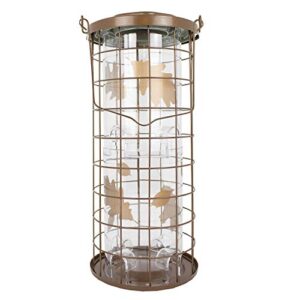
Think of the Perky-Pet Squirrel Stumper as your station’s workhorse feeder—a powder-coated metal cage wraps around a clear 3-pound seed tube, keeping bushy-tailed raiders at bay while songbirds slip right through. Eight feeding ports mean finches, chickadees, and cardinals can crowd in together without squabbling. The twist-lock lid won’t pop open when a squirrel tries its luck from above.
You’ll spot seed levels through the clear reservoir and refill in seconds. Clean it every two weeks with mild soap to stop mold before it starts.
Hang it on a pole 10 feet from any tree branch—even crafty squirrels struggle to leap that gap. It’s not foolproof, but pair it with a baffle and you’ve built a solid defense.
| Best For | Backyard birders who want multiple songbirds feeding at once without constant squirrel raids, especially when paired with a pole-mounted baffle. |
|---|---|
| Primary Material | Powder-Coated Metal |
| Weather Resistance | Rust Resistant |
| Assembly Required | No |
| Outdoor Use | Yes |
| Tool-Free Setup | Yes |
| Target Users | Backyard Birders |
| Additional Features |
|
- Eight feeding ports let several birds eat together without territorial fights
- Powder-coated metal cage holds up to weather and squirrel teeth while letting small birds through
- Twist-lock lid and 3-pound capacity mean fewer refills and no surprise spills from raiding critters
- Determined squirrels can still shake seed loose or hang from the cage to reach ports
- Plastic seed tube may crack over time, especially in freezing temperatures
- No bottom tray to catch dropped seed, so you’ll get mess and waste underneath
Frequently Asked Questions (FAQs)
How to make a bird feeding station?
Picture your backyard buzzing with life every morning. Start by choosing a spot about 10 feet from trees, mount sturdy poles, hang different feeders, and add fresh water nearby.
How can I attract specific bird species?
You can draw goldfinches with nyjer seed in mesh feeders, cardinals with black oil sunflower on platform trays, and woodpeckers with suet cages—each species prefers specific foods and feeder styles.
What are the environmental impacts of bird feeding?
Bird feeding can shift local nutrient cycles and spread disease when feeders aren’t cleaned weekly. It may also favor aggressive nonnative species over native birds, changing your yard’s natural balance.
How do I keep squirrels away from feeders?
Squirrels jump onto feeders from nearby branches, so place your station at least 10 feet from nearby trees.
Add a cone baffle on the pole and use weight-sensitive feeders that close under heavy visitors.
Can bird feeding harm local bird populations?
Feeding stations can ruffle a few feathers—yes, they increase disease transmission and attract predators. They also create dependency, disrupt natural foraging, and shift local bird communities toward feeder-loving species.
How much does it cost to maintain a feeding station?
Expect to spend $70 to $150 annually on seed, suet, and supplies. Monthly costs usually run $10 to $30 for modest setups, though multi-feeder stations can hit $50 to $100 with premium blends.
How do I attract specific bird species?
Tailoring your setup to each species changes everything.
Match seed type to beak shape—sunflower for cardinals, nyjer for goldfinches, suet for woodpeckers.
Then position feeders at heights each bird naturally forages.
What plants complement a bird feeding station?
The right native plants turn your yard into a full-service habitat. Berry shrubs, evergreens, and tall grasses give birds natural food, shelter, and perching spots year-round.
How can I keep squirrels away naturally?
You can stop squirrels naturally by using hot pepper-treated seed, placing feeders at least 10 feet from jumping points, and installing smooth metal baffles that block climbing routes.
When is the best time to start feeding?
Wondering when to hang your first feeder? Late fall works best in most areas—usually late October through November—when natural food grows scarce and birds need reliable fuel before winter hits hard.
Conclusion
Don’t put all your eggs in one basket—creating a bird feeding station is about more than just a feeder. It’s a mix of smart choices, steady upkeep, and a dash of patience.
When you get the setup right, your yard turns into a gathering place for feathered friends. Even on quiet mornings, you’ll notice the small joys: fluttering wings, bright colors, and a sense that you’re part of something wild and welcoming. That’s worth every effort.
- https://www.natureswaybirds.com/blogs/news/how-to-create-a-bird-feeding-station
- https://nature-niche.com/blogs/news/bird-feeding-stations-how-to-design-the-perfect-backyard-habitat
- https://www.pennington.com/all-products/wild-bird/resources/choosing-the-best-type-of-bird-feeder
- https://www.kalmbachfeeds.com/blogs/wild-birds/the-best-bird-seed-for-attracting-more-birds-what-to-feed-for-maximum-color-activity
- https://joliet.wbu.com/how-to-create-a-backyard-bird-feeding-station