This site is supported by our readers. We may earn a commission, at no cost to you, if you purchase through links.

A bird bath can turn your garden into a wildlife hotspot, but the wrong bowl sends visitors packing. The best decorative bird bath bowls balance beauty with function—they’re shallow enough for safe wading, textured to prevent slips, and built to survive years of sun and storms.
Ceramic, glass, metal, and fiber clay each bring distinct advantages, from freeze resistance to mosaic artistry. What matters most is matching depth to your feathered guests: songbirds won’t touch water deeper than two inches, and smooth surfaces become slip hazards.
The right bowl transforms your outdoor space into a magnet for cardinals, finches, and warblers while complementing your landscape design.
Table Of Contents
- Key Takeaways
- Best Decorative Bird Bath Bowls for Gardens
- Popular Materials for Bird Bath Bowls
- Design Features That Attract Birds
- Choosing The Right Bird Bath Bowl
- Placement and Accessories for Bird Bath Bowls
- Frequently Asked Questions (FAQs)
- Why put pennies in bird bath?
- Why put marbles in bird bath?
- How can I make my bird bath more attractive?
- Should you put rocks in your birdbath?
- How do I clean my glass bird bath?
- Can bird baths attract unwanted wildlife?
- What prevents algae growth in bird baths?
- Do decorative bird baths harm wild birds?
- How often should I change bird bath water?
- How often should I clean my bird bath?
- Conclusion
Key Takeaways
- The best decorative bird bath bowls balance shallow depth (1-2 inches for songbirds), textured surfaces for secure footing, and durable materials like ceramic, metal, or fiber clay that survive weather extremes while complementing your garden’s design.
- Material choice directly impacts maintenance and longevity—ceramic offers classic appeal but cracks in freezing temps, metal provides 15-25 year durability with rust-resistant coatings, and fiber clay delivers pottery aesthetics at a fraction of the weight without the backache.
- Placement determines visitor traffic more than bowl beauty—elevate baths 3+ feet to protect birds from ground predators, position near cover for quick escape routes, and add moving water features like fountains to boost visits by 50-75%.
- Daily maintenance isn’t optional—change water every 1-2 days in warm weather, scrub weekly with vinegar solution to prevent disease transmission, and bring non-freeze-resistant bowls indoors during winter to avoid costly cracks.
Best Decorative Bird Bath Bowls for Gardens
Your garden deserves a bird bath bowl that works as hard as it looks good. The right choice depends on your style, the birds you want to attract, and how much maintenance you’re willing to do.
Here are eight solid options that blend function with serious curb appeal.
1. Ceramic Bird Bath For Garden
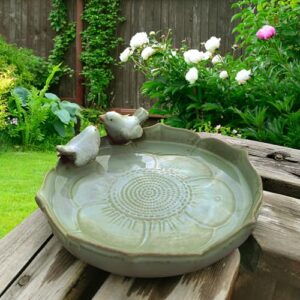
You’ll love how ceramic bird bath bowls combine charm and function in your garden. Their durability stands up to sun and rain, while painted finishes add personality to any corner.
Choose a bowl around 2 inches deep—ideal water depth for small songbirds like finches. Place your birdbath bowl near shrubs for cover, and you’ll boost bird attraction fast.
Ceramic maintenance is simple: a quick weekly scrub keeps water fresh and your feathered visitors healthy. It’s garden bird care that looks as good as it works.
Best For: Gardeners who want an attractive, easy-to-maintain birdbath that blends naturally into their outdoor space while attracting a variety of small birds and pollinators.
- Durable ceramic construction with weather-resistant glazes holds up well through sun and rain while adding decorative appeal to gardens, patios, or balconies.
- Shallow 2-inch depth is perfect for small songbirds like finches and sparrows, making it safer and more inviting than deeper alternatives.
- Simple weekly cleaning keeps water fresh, and the lightweight design makes it easy to move around your yard as needed.
- Some users report the water depth is too deep for very small birds, despite the 2-inch specification.
- Mixed feedback on overall size—while many find it perfect, others feel it’s too small for larger birds or multiple visitors at once.
- May crack in freezing temperatures if water is left in the bowl during winter, requiring seasonal care in colder climates.
2. Outdoor Bird Feeder And Bath
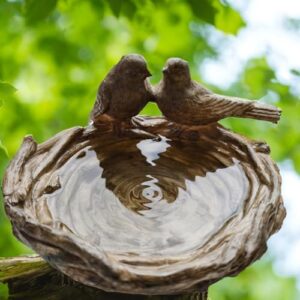
Dual-purpose bowls blend bird watching with garden bird care, but here’s the catch: hygiene matters more than ever. When you mix feeding and bathing in one spot, water quality drops fast—droppings and seed debris invite disease.
UK surveys show 64% of households prefer these combo units, yet wildlife orgs stress daily cleaning to protect bird health. If you’re using outdoor bird feeders as baths, swap water morning and evening. Add bird bath accessories like perches to limit mess.
Smart feeder safety and bath maintenance equal real wildlife conservation in your backyard.
Best For: Anyone who wants to attract more birds to a compact outdoor space without cluttering their patio or balcony with multiple setups.
- Brings more variety to your yard—dual-purpose stations can boost bird species visits by around 18% compared to feeders alone.
- Saves space and looks cleaner than separate units, especially nice for small balconies or courtyards.
- Cuts down on ground exposure time for birds, which helps keep them safer from predators.
- Needs daily water changes and weekly scrubbing to prevent disease spread—combo units get dirty faster than separate feeders and baths.
- At under 2 pounds, this resin bowl can tip over or blow away in strong winds without extra weight or anchoring.
- Resin may give off a chemical smell initially, and the material isn’t fully sealed, so water can soak in and create hygiene issues over time.
3. Bird Feeder Garden Decor Bowl
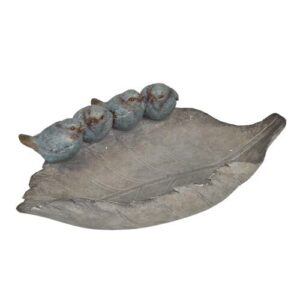
Decorative feeder bowls work as garden ornaments that pull double duty—they’re bird feeders and eye-catching outdoor decor rolled into one. You’ll spot hand-painted designs and eco materials like recycled glass that fit bird-friendly standards while anchoring your landscape design. North America’s 38% market share proves these garden decoration pieces resonate with homeowners who want feeder designs that don’t scream “hardware store.”
Position yours near perches to boost bird attraction. Just remember: artful bowls still need the same cleaning routine as any bird bath accessories to keep your feathered visitors healthy.
Best For: Homeowners who want a functional bird feeder that doubles as a decorative garden accent, especially those with limited outdoor space like balconies or small patios.
- Dual-purpose design serves as both a bird feeder and water bath while adding visual appeal to gardens, balconies, or porches
- Hand-painted antique gray stone finish with cheerful bird family design fits multiple garden styles without looking purely utilitarian
- Lightweight polyresin construction (1.65 lbs) makes it easy to move and reposition near perches or shelter areas
- Paint may chip or peel over time when exposed to outdoor weather, requiring touch-ups or replacement
- Compact size (12.4″L x 7.5″W x 4.1″H) may be too small for larger bird species or households expecting heavy bird traffic
- Durability varies across units, with some customers reporting quality issues that shorten the product’s lifespan
4. Metal Garden Bird Bath Bowl
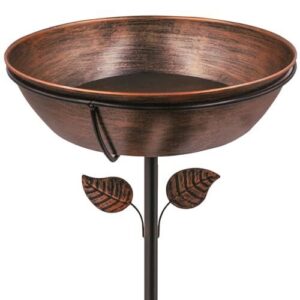
Metal bird baths bring industrial-chic appeal to your garden while outlasting most alternatives—powder-coated finishes resist rust for 15 to 25 years when you maintain them properly. You’ll find aluminum and copper bowls in 10- to 15-inch diameters, often paired with stakes or pedestals that anchor securely in soil.
Metal amplifies water sounds that draw birds in, and rust prevention coatings keep these garden accessories functioning through humid summers. Position yours about three feet high and check water levels daily—metal heats fast, so frequent refills boost bird attraction during peak season.
Best For: Gardeners who want a durable, decorative bird bath with a contemporary look and don’t mind daily maintenance to keep the water fresh and the metal in good shape.
- Powder-coated finishes resist rust and corrosion for 15 to 25 years with proper care, outlasting plastic alternatives.
- Metal amplifies the sound of dripping water, which attracts more birds to your yard.
- Available in various sizes (10- to 15-inch diameters) and mounting styles, from stakes to pedestals, so you can fit them into different garden spaces.
- Requires daily cleaning during hot weather to prevent bacterial growth and algae buildup, especially since shallow bowls evaporate quickly.
- Metal heats up fast in direct sun, which means you’ll need to refill the water more often to keep it cool and usable for birds.
- Lighter stake-mounted models can tip over in high winds or rough weather unless you anchor them securely with additional support.
5. Ceramic Outdoor Bird Bath Bowl
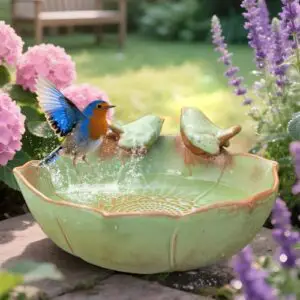
Ceramic outdoor bird bath bowls pair garden accessories appeal with bird safety. Non-toxic glazes keep water quality high, while ceramic durability withstands moderate weather for five to eight years in mild climates. You’ll see 9.4- to 10-inch diameters with 2- to 3-inch depths, perfect for songbirds that prefer shallow basins.
Bowl maintenance stays simple: scrub weekly with a brush and vinegar solution to prevent algae. Store yours indoors during freeze–thaw cycles to avoid cracks, and you’ll protect this eco-friendly choice while giving backyard birds clean drinking and bathing water year-round.
Best For: Homeowners with mild-climate gardens who want an attractive, bird-safe water feature that’s easy to clean and won’t leach toxins into drinking water.
- Non-toxic glazes protect bird health by preventing lead and other heavy metals from contaminating bath water
- Compact 9- to 10-inch bowls fit decks, balconies, and small garden spaces while providing ideal 1- to 2-inch depths for songbirds
- Simple weekly maintenance with basic scrubbing keeps water clean and algae-free without harsh chemicals
- Ceramic cracks easily during freeze–thaw cycles, requiring indoor storage in cold climates to prevent damage
- Some bowls arrive smaller than expected or with colors that don’t match product photos
- Needs a completely flat surface to prevent tilting, and may not work with all solar fountain attachments
6. Ceramic Blue Bird Bath Bowl
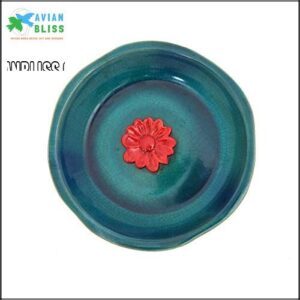
A bold cerulean finish turns your ceramic blue bird bath bowl into a garden focal point that draws bluebirds and songbirds. You’ll get frost-resistant durability with a 14.5-inch diameter and 2-inch depth—perfect for bird bathing solutions that keep water quality high.
The high-gloss glaze simplifies ceramic care: scrub weekly, rinse thoroughly, and place near shelter for bird safety.
This glass bird bath alternative offers striking blue glass birdbath appeal while complementing hydrangeas and enhancing garden aesthetics with bird bath designs that blend function and bowl placement artistry across varied bird bath styles.
Best For: Bird lovers who want a striking garden centerpiece that attracts songbirds while adding a pop of color to their outdoor space.
- Frost- and UV-resistant ceramic construction withstands year-round weather with a durable high-gloss glaze that resists algae growth
- Shallow 2-inch depth and textured lip provide safe bathing conditions for small and medium songbirds
- Vibrant blue finish acts as a natural attractant for bluebirds and other species while complementing garden plants
- Some customers report the size feels smaller than expected, which may limit use for larger birds
- Durability feedback is mixed, with concerns about mold formation under the glaze and potential cracking in freezing temperatures
- Requires weekly cleaning and maintenance to keep water quality high and prevent bacterial buildup
7. Ceramic Wild Bird Feeder Bowl
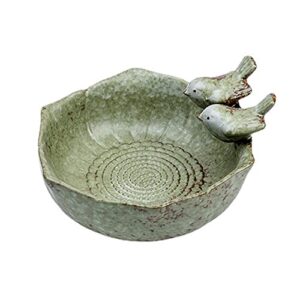
You’ll appreciate how this dual-purpose bowl combines feeding and bird bathing solutions in one compact 5.9-inch ceramic design. Ceramic durability withstands garden weather while the non-porous glaze protects water quality and bird health—bacteria can’t penetrate the surface when you maintain proper feeder maintenance.
Clean it daily with warm, soapy water and disinfect weekly using a 1:9 bleach solution to support wildlife conservation.
The lifelike bird motifs transform practical birdbaths into garden accessories that enhance your landscape, though smaller species will benefit most from this intimate bird bath scale.
Best For: Homeowners who want a compact, easy-to-clean feeding station that attracts small songbirds while adding decorative charm to gardens, patios, or balconies.
- Non-porous ceramic surface resists bacteria and mold, making it safer for birds and simpler to sanitize with regular soap-and-water cleaning or occasional bleach disinfection.
- Dual-function design works as both a feeder and a birdbath, giving you flexibility to provide food or fresh water depending on seasonal needs and local bird activity.
- Weather-resistant ceramic construction holds up to outdoor moisture and temperature swings without rusting or deteriorating, while the decorative bird motifs complement existing garden décor.
- Small 5.9-inch size limits use to one or two birds at a time and may not accommodate larger species like jays or doves comfortably.
- Ceramic material can crack or shatter if dropped or knocked over, requiring careful placement on stable surfaces away from high-traffic areas or strong winds.
- Requires frequent cleaning—ideally daily rinsing and weekly disinfection—to prevent algae buildup and pathogen transmission, which demands more upkeep than some low-maintenance feeder styles.
8. Metal Outdoor Bird Bath Fountain

Water in motion draws more birds than still pools ever will. This heavy-duty metal bird bath fountain combines a 12-inch antique bronze basin with a 5-pronged base designed for outdoor living stability.
Metal durability and rust prevention coatings help fountain designs withstand weather, while water movement discourages mosquitoes and attracts songbirds through sound and ripples.
The detachable bowl simplifies cleaning—essential for healthy birdbaths—and you can add a solar fountain pump to create lively water features that improve patio decor and boost bird attraction in any garden setting.
Best For: Bird lovers who want a decorative, stable bird bath that attracts more feathered visitors with moving water while keeping mosquitoes away.
- Heavy-duty metal construction with a 5-pronged base provides excellent stability and weather resistance for year-round outdoor use.
- Moving water feature discourages mosquito breeding while attracting a wider variety of birds through sound and ripples.
- Detachable 12-inch bowl makes cleaning and refilling quick and easy, helping maintain healthy water for visiting birds.
- Some units have shown mixed durability with reports of breaking easily or rusting quickly despite protective coatings.
- The 12-inch diameter may feel too small for larger birds or households wanting to accommodate multiple birds at once.
- Assembly can be tricky, and lighter units may require additional weighting or support to prevent tipping in windy conditions.
Popular Materials for Bird Bath Bowls
The material you choose for your bird bath bowl impacts everything from durability to how often you’ll need to clean it. Each option has its own strengths—some handle harsh weather better, while others bring more visual appeal to your garden.
Here’s a look at the most popular materials and what makes each one worth considering.
Glass Bird Bath Bowls
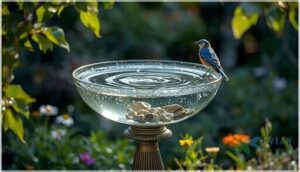
Glass bird bath bowls offer crystal-clear water visibility that helps you monitor freshness at a glance. Most quality birdbaths use tempered glass for better impact resistance, though you’ll want to add stones or pebbles for safer footing since smooth surfaces can be slippery.
Keep in mind that glass birdbaths crack easily in freezing temps, so plan to bring them indoors during winter or choose frost-resistant alternatives.
For ideal bird bath placement, consider the importance of bird bath safety.
Ceramic Bird Bath Bowls
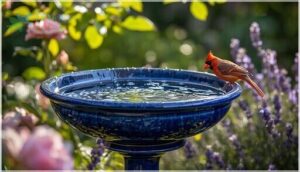
Ceramic bird bath designs deliver a classic garden look with glazed, non-porous surfaces that make cleaning a breeze. You’ll appreciate the extra weight for bowl stability, especially on windy days—though that same heft can make moving them tricky.
Bird safety matters here: ceramic splits easily when water freezes, so plan for freeze protection by draining your birdbaths before winter arrives or storing them indoors.
For ideal bird comfort, consider using bird bath features that promote safe and healthy environments.
Metal Bird Bath Bowls
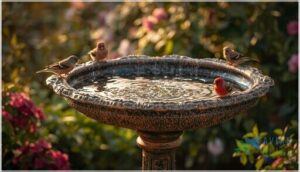
Cast iron and stainless steel birdbaths bring serious staying power to your garden—they’ll hold up for years with proper rust prevention. Metal durability means they won’t tip in wind, and most bird bath designs drain well for winterization.
You’ll want to empty them before freezing temps hit, though, since trapped water can damage finishes. Bonus: these bird bath styles work beautifully with water circulation features like fountains.
Fiber Clay Bird Bath Bowls
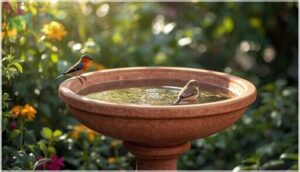
Looking for pottery vibes without the backache? Fiber clay birdbath bowls blend about 60% clay with plastic and fiber for that stone-look finish at a fraction of the weight—one 19-inch model tips the scale at just 7.75 pounds.
Here’s why gardeners love this clay fiber mix for gardening for birds:
- Easy repositioning when you’re tweaking garden placement
- Impact-resistant bowl durability that beats traditional ceramic
- Weather resistance that manages most climates beautifully
- Pottery-style bird bath features without the hefty price tag
Just bring them in during hard freezes to prevent cracks.
Recycled Plastic Bird Bath Bowls
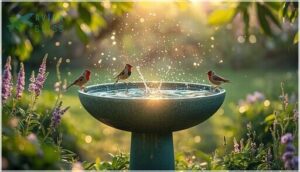
While fiber clay offers charm, recycled plastic bird baths deliver unbeatable winter toughness. You won’t see cracks when water freezes, and repositioning your bowl for better sun or shade takes seconds—not a crew.
| Feature | Benefit |
|---|---|
| Freeze-resistant material | No winter cracking worries |
| Lightweight design | Easy garden repositioning |
| Budget-friendly pricing | Accessible wildlife-friendly gardens |
Perfect for sustainable gardens prioritizing bird wellbeing without breaking the bank.
Design Features That Attract Birds
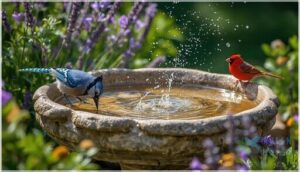
Birds won’t visit just any bowl. The right design features make all the difference between an empty basin and a lively gathering spot.
Here’s what actually works to bring songbirds, finches, and other feathered visitors to your garden.
Songbird-Friendly Designs
You want birdbaths that actually work for the small songbirds in your garden. Basin geometry matters—aim for 2–5 cm depth at the center with gently sloping sides, so chickadees and finches can wade safely.
Water movement through drippers or bubblers draws more species by broadcasting sound across your yard.
Proper placement near cover enhances bird safety and feather maintenance, making your bowl a true songbird magnet.
Textured and Non-Slip Bottoms
Traction Designs prevent tragedy. Smooth glass or glazed ceramic birdbaths can send small birds slipping into deeper zones—rough stone, molded textures, or pebbles offer the grip sparrows and finches need when their feathers are soaked.
Textured Materials in your shallow basin boost Bird Safety by letting every visitor wade confidently. Drop a few stones into slick bowls for instant Slip Resistance, providing water for birds without the risk.
Weather-Resistant Finishes
A quality finish guards your standalone bird bath against sun, rain, and ice. Powder-coated metals resist rust and keep their color through storms, while UV-stabilized resin birdbaths stay vibrant for seasons without chalking. Glass bird baths with proper sealing handle moisture beautifully, and fiber clay options tolerate freeze-thaw shifts that crack unsealed ceramic.
- UV protection locks in color, stopping fades before they start.
- Water-repellent coatings prevent corrosion and cracking.
- Thermal durability keeps bowls intact through winter freezes.
Colorful and Artistic Motifs
Blues and silvers top bird color preferences in UK field trials—cool tones mimic sky and foliage, drawing finches and tits to your glass bird bath. Mosaic patterns and reflective surfaces heighten visual cues, catching light to signal water from across the yard.
Artistic designs in fiber clay birdbath options blend garden design with home decor, while style selections featuring greens and earth tones reassure cautious species.
Choosing The Right Bird Bath Bowl
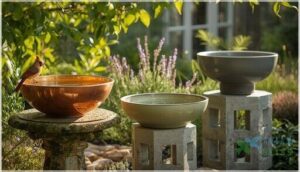
Picking the right bird bath bowl isn’t just about what looks good in your garden. You need to think about which birds you want to attract, how much time you can spend on upkeep, and whether the bowl will actually last through your local weather.
Let’s break down what matters most when you’re making your choice.
Matching Bird Bath Size to Bird Species
Different bird species need different water depths, and that’s key to attracting wild birds. Small songbirds like finches thrive in 1–2 inches, while robins and jays handle 2–3 inches comfortably. Larger birds such as doves prefer wider, slightly deeper bowls.
Providing water for birds means understanding bird behavior and species diversity. Install multiple bird baths at varying heights to accommodate everyone—you’ll see your garden come alive.
Evaluating Bowl Depth and Diameter
A shallow basin with the right proportions transforms bird safety and usage. Water depth between 1–2 inches works for most backyard species, while bowl profiles with gentle depth gradients let small and large birds bathe comfortably.
Basins 14–24 inches wide support multiple visitors and reduce drowning risk. Whether you’re choosing hanging bird baths or a replacement bird bath, proper basin size and textured bottoms make all the difference.
Durability and Maintenance Needs
Material longevity matters. Cracked ceramic after one freeze or paint that peels in three summers? Concrete and ceramic bird baths need winter storage to avoid freeze damage, while metal and resin tolerate frost cycles. UV resistance keeps finishes vibrant for years.
Water quality depends on cleaning schedules—scrub every 1–3 days in heat with nontoxic cleaning solutions. Maintaining bird baths protects bird health and hygiene while preserving your investment.
Coordinating With Garden Decor
Your bird bath should feel at home in your space, not stuck on like an afterthought. Match materials and form to your garden style—stone bowls anchor cottage borders dense with perennials, while sleek metal suits minimalist patios where hardscape dominates.
Keep safety in mind:
- Avoid reflective surfaces near glass to prevent bird collisions
- Position bowls as focal points in gravel courtyards or open lawn areas
- Pair native plantings around water features to boost habitat value
Coordinated landscape design turns a simple accessory into a backyard centerpiece.
Placement and Accessories for Bird Bath Bowls
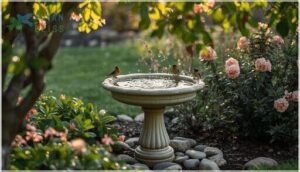
Where you put your bird bath bowl matters just as much as which one you choose. The right spot can mean the difference between a busy watering hole and an empty basin that birds ignore.
Let’s look at placement options and helpful accessories that’ll turn your bird bath into a backyard hotspot.
Ground Vs. Elevated Placement
Your choice between ground and standing bird baths shapes both predator safety and bird accessibility. Ground-level bowls feel like natural puddles, drawing ground-feeding species and small wildlife, yet they sit closer to stalking cats. Pedestal-style bird baths and freestanding birdbaths lift water three feet up, letting waterlogged birds escape more easily while keeping raccoons from tipping your basin at midnight.
| Placement Type | Safety Advantage | Best For |
|---|---|---|
| Ground-level (10–15 ft from cover) | Reduces predator ambush risk | Ground-feeders, natural garden integration |
| Elevated (3+ ft pedestals) | Improves escape from ground threats | Small songbirds, ornamental focal points |
| Multiple heights in one yard | Attracts diverse species, lowers window collisions | Maximum bird activity, flexible placement strategies |
| Partial shade (any height) | Prevents overheating, controls algae | Summer water depth stability, year-round use |
Deck and Tabletop Options
When you’re tight on square footage, deck mounting changes the game. Clamp-style brackets turn your rail into space-efficient real estate, freeing up 35% more patio room compared to traditional pedestal-style bird baths. Tabletop designs sit right on your café table, letting you watch finches up close while sipping coffee.
Elevated safety kicks in at three feet—high enough to discourage prowling cats while giving songbirds clear sightlines.
Glass bird bath bowls and fiber clay birdbath options winterize easily; just bring lightweight models indoors during ice storms or switch to 150-watt heated versions that keep water liquid when ground bird baths freeze solid.
Adding Fountains or Misters
Moving water transforms your bird bath into a magnet—studies show fountain types like bubblers or misters can boost visits by 50–75%. Solar power pumps circulate 1–2 liters per minute without wiring, perfect for backyard birding experience upgrades.
Moving water—fountains or misters—can boost bird bath visits by 50–75%, turning your garden into a true avian hotspot
Keep water flow rates gentle so small songbirds aren’t spooked. Pump maintenance means daily topping-up in heat and weekly scrubbing to prevent biofilm, ensuring your water features stay disease-free.
Seasonal Considerations and Heated Bowls
When winter freezes your garden’s water sources, heated bird baths become lifelines for small songbirds—overwinter survival can jump 10–15% where open water stays available.
Choose 50–60 watt models with thermostats for energy efficiency; they cost just pennies daily. Plug into GFCI outlets, position in sunny spots near shelter, and clean every 2–3 days during frozen water solutions season.
Hot dry months demand daily refills instead.
Frequently Asked Questions (FAQs)
Why put pennies in bird bath?
Copper from pre-1982 pennies releases ions that naturally discourage algae growth in your water source. This keeps the fresh water cleaner longer between changes, supporting bird health while maintaining better water quality for drinking and bathing.
Why put marbles in bird bath?
Marbles in your bird bath create safe footing for tiny feet and prevent drowning by reducing water depth.
They give birds the traction control they need while making your water source safer for smaller species.
How can I make my bird bath more attractive?
The sound of dripping water pulls birds from blocks away—Cornell Lab research proves it.
Add a solar fountain or dripper, place your bath near shrubs for safety, and choose textured surfaces with artistic designs for visual appeal.
Should you put rocks in your birdbath?
Yes, you should add rocks to your birdbath—they create shallow perching zones that improve bird safety and prevent drowning.
Flat, stable stones give wild birds secure footing while bathing and help maintain fresh water through easier maintenance.
How do I clean my glass bird bath?
You’ll want to scrub your glass bird bath every 2–3 days with a vinegar solution—one part white vinegar to nine parts water—then rinse thoroughly to keep algae, biofilm, and harmful bacteria away from visiting birds.
Can bird baths attract unwanted wildlife?
Your bird bath can draw mosquitoes, raccoons, and cats if neglected. Regular water changes support mosquito control and disease prevention.
Strategic placement with predator deterrents protects visiting birds while maintaining wildlife-friendly gardens.
What prevents algae growth in bird baths?
Fresh water management is key—change water every 2–3 days, place your bath in partial shade, and add a fountain or mister to keep things moving.
Regular cleaning schedules stop algae before it starts.
Do decorative bird baths harm wild birds?
Even the prettiest bird baths can turn into danger zones—think disease transmission, chemical hazards, or drowning risks if they’re too deep or slick.
Smart design and regular cleaning keep your garden wildlife friendly, supporting bird safety and health.
How often should I change bird bath water?
You’ll need to refresh your bird bath every one to two days during warm months to protect bird health and prevent mosquito breeding.
Disease prevention strategies depend on consistent water quality maintenance and fresh water importance year-round.
How often should I clean my bird bath?
You’ll want to scrub your bath every 1–2 days in summer heat and at least weekly in cooler months.
Regular cleaning prevents disease transmission, keeps water quality high, and promotes healthy feather maintenance for visiting birds.
Conclusion
There’s a myth that any basin will do—yet cardinals ignore smooth glass, and finches abandon water too deep for safe footing. Your choice in decorative bird bath bowls dictates which species visit and how often they return.
Pair the right material with thoughtful placement, and you’ll create a space where beauty meets biology. The difference between an empty ornament and a thriving oasis comes down to understanding what birds actually need, not just what looks good.
- https://www.marketintelreports.com/report/CPS5454/global-bird-bath-market
- https://www.globalgrowthinsights.com/market-reports/outdoor-decor-market-108329
- https://www.linkedin.com/pulse/outdoor-decor-market-size-2026-2033-segmentation-scope-trends-maaee
- https://www.futuremarketinsights.com/reports/bird-feeding-and-watering-suppliers-market
- https://www.fws.gov/story/2024-12/birdwatching-america