This site is supported by our readers. We may earn a commission, at no cost to you, if you purchase through links.

Your bird’s cage isn’t just a container—it’s their entire world, and choosing the wrong type can lead to feather plucking, obesity, or even skeletal deformities. Most pet owners don’t realize that a budgie trapped in a rounded cage may develop balance problems, while a cockatiel in a cage with improper bar spacing risks life-threatening injuries.
The difference between bird cage types goes far beyond aesthetics or price tags. Each design—from standard rectangular models to sprawling flight aviaries—affects your bird’s physical health, mental stimulation, and natural behaviors in specific ways. Understanding these distinctions helps you match the right cage material, size, and configuration to your bird’s species, personality, and daily needs.
Table Of Contents
- Key Takeaways
- Key Differences Between Bird Cage Types
- Standard Rectangular Bird Cages
- Dometop and Round Bird Cages
- Flight Cages and Aviaries
- Breeding and Nursery Bird Cages
- Comparing Bird Cage Materials
- Cage Size and Bar Spacing Differences
- Essential Accessories by Cage Type
- Safety and Maintenance Across Cage Types
- Top Bird Cages for Different Needs
- Frequently Asked Questions (FAQs)
- Conclusion
Key Takeaways
- Cage design directly impacts your bird’s physical health and mental wellbeing—wrong bar spacing causes injuries, inadequate width restricts flight capability and raises stress hormones, while poor material choices like chipped powder coating expose toxic metals that threaten respiratory function.
- Match cage type to your bird’s species-specific needs: small birds like budgies require bar spacing under half an inch in compact rectangular setups, medium species like cockatiels thrive with horizontal perches in 24″x18″x18″ cages, and large parrots demand stainless steel structures with 1-2″ spacing to prevent escape and accommodate powerful beaks.
- Flight cages and aviaries provide horizontal space that standard cages can’t offer—enabling sustained aerial movement that strengthens wing muscles and reduces isolation stress through flock dynamics—but they demand 15-30 minutes of daily spot-cleaning plus weekly deep sanitization to maintain safe living conditions.
- Stainless steel cages outlast powder-coated alternatives by 5-10 years while eliminating toxicity risks from chipping paint, and proper cage dimensions should measure at least twice your bird’s wingspan in width to support natural flight patterns rather than prioritizing vertical height.
Key Differences Between Bird Cage Types
Not all bird cages are created equal, and choosing the right one starts with understanding how design and materials affect your bird’s daily life.
Factors like bar spacing, cage dimensions, and overall construction play a major role in comfort and security—here’s what size cage your bird actually needs.
Different cage types serve distinct purposes—some prioritize flight space, others focus on breeding safety or travel convenience. Let’s break down what sets each option apart so you can match the right cage to your bird’s specific needs.
Purpose and Design Features
Your bird’s cage isn’t just a pretty box—it’s their sanctuary. When you’re choosing one, focus on secure latches that resist clever beaks, proper cage ventilation to keep air fresh, and easy access doors for stress-free cleaning.
Corrosion resistance matters for longevity, while thoughtful cage design with correct bar spacing prevents escapes and injuries, keeping bird safety a top priority in every decision.
Suitability for Different Bird Species
Each species has specific needs that drive bird cage selection. Small feathered friends like budgerigars need bar spacing under half an inch, while cockatiels thrive in medium setups with horizontal perches.
Large parrots demand tall, strong structures to facilitate avian behavior and prevent feather plucking. Matching cage size and bar spacing to your bird species protects beak safety and promotes long-term bird health through proper species compatibility.
For an in-depth look at how environmental changes and habitat suitability models impact bird well-being, recent studies provide valuable insights.
Impact on Bird Health and Behavior
Your cage setup directly shapes bird stress and overall bird wellbeing. Restrictive cage size raises resting heart rate and stress hormones, while inadequate bar spacing can trigger behavioral disorders like feather plucking.
Proper cage enrichment matters for bird behavior:
- Limited vertical space weakens flight capability and physical conditioning
- Infrequent toy rotation accelerates boredom and feather picking
- Poor perch selection causes foot sores and reduced activity
- Restricted feeding areas compromise avian nutrition and fresh produce access
- Cramped quarters increase respiratory infections and mite transmission
Thoughtful design protects feather health and immune function.
Standard Rectangular Bird Cages
Standard rectangular cages are the workhorses of bird housing—you’ll see them everywhere from pet stores to experienced breeders’ homes. They’re built with straight lines and practical layouts that make sense for both you and your bird.
Let’s break down what goes into these cages, where they shine, and when you might want to choose something else.
Common Materials and Construction
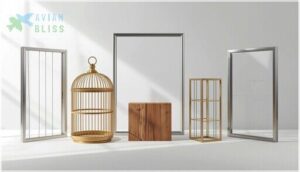
Most rectangular cages rely on metal bird cages—stainless steel resists corrosion and won’t rust, while powder-coated steel offers affordability but chips under scratching. Wooden bird cages need sealing to prevent warping, and plastic options like acrylic scratch easily.
Understanding cage materials and durability helps you choose safe cage frame materials with proper metal coatings and non-toxic finishes meeting safety standards.
| Cage Material | Key Characteristics |
|---|---|
| Stainless Steel | Corrosion resistant, long-lasting, easy to clean |
| Powder-Coated Metal | Affordable, protective finish, chips when scratched |
| Wood (Sealed) | Natural appearance, requires water-resistant treatments |
| Acrylic/Plastic | Lightweight, clear visibility, scratches over time |
| Aluminum | Corrosion resistant, softer metal, dents easily |
Pros and Cons for Pet Owners
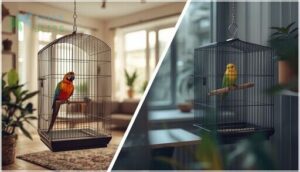
You’ll find these designs keep Pet Care Costs manageable since most frames are affordable and readily available. Cage Materials like powder-coated metal simplify Bird Cage Maintenance with quick wipe-downs, and Cage Size and Bar Spacing options suit many species.
However, limited horizontal space can restrict Bird Socialization and flight, and Owner Lifestyle factors in—larger models demand more room, affecting Family Dynamics and Space Considerations for Pet Bird Care and Maintenance.
Best Use Cases
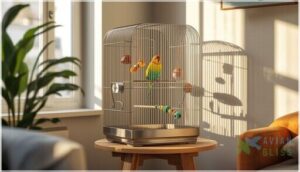
Usually, you’ll turn to this style of Bird Cage when your Daily Routine demands minimal upkeep and your Avian Housing Options must fit compact spaces.
It works best for:
- Small to medium Bird Species that don’t require extensive horizontal flight zones
- Owner Lifestyle scenarios where Cage Placement near living areas encourages Bird Socialization
- Budgets prioritizing Cage Materials and Durability over premium features
- Situations where Bird Enrichment comes from toys rather than vertical exploration
Dometop and Round Bird Cages

Dometop and round cages offer a distinctive silhouette that catches your eye, but their curved design creates real challenges for your bird’s wellbeing.
The sloped bars and narrowing vertical space can limit climbing opportunities and make your bird feel insecure without flat, stable areas to perch. Here’s what you need to know about these popular cage styles before making your choice.
Unique Shape Advantages
A dome top shape gives your bird vertical clearance to spread wings without collision, while circular cages eliminate corners that can trap droppings or cause injury.
Crescent arch framing creates unobstructed circulation paths between perches, and polygonal shapes optimize usable interior volume. Custom ladders integrated into cage design and accessories promote climbing exercise while maintaining structural integrity across various avian housing and enclosures.
Space and Enrichment Considerations
Round cages reduce your usable cage layout by up to 40 percent because curved bars block accessory mounts and complicate perch placement. You’ll need creative toy rotation strategies to maintain bird enrichment without overcrowding vertical space.
Bar spacing on circular frames can create uneven gaps that don’t meet safety standards, limiting environmental stimulation while increasing risk of entrapment or escape.
Species Compatibility
Choosing bird species for dometop cages requires careful genetic matching and behavioral analysis to prevent stress and injury. Curved bars limit cage setup and placement options, complicating habitat sharing for birds with different social bonding needs.
Consider these compatibility factors for avian health and wellness:
- Genetic matching ensures similar size birds won’t injure each other through bars
- Behavioral analysis identifies species that tolerate close proximity without aggression
- Dietary needs must overlap to share feeding stations effectively
- Habitat sharing works best when perching preferences align vertically
- Social bonding requirements differ—solitary species struggle with gregarious cage mates
Most veterinarians recommend single-species housing in dometop bird cages to improve bird behavior and socialization.
Flight Cages and Aviaries

Flight cages and aviaries give your bird something standard cages can’t—real room to spread their wings and move the way nature intended.
These larger setups work especially well if you have multiple birds or species that need serious exercise space. Let’s look at what makes them different and whether one might be right for your flock.
Space for Exercise and Flight
Think of flight cages and aviaries as your bird’s personal gym—they need the space to really stretch those wings. Large flight cages provide multiple corridors that encourage sustained aerial maneuvers, which directly promotes exercise needs and wing space development.
You’ll want bar spacing that prevents escape while allowing excellent air quality circulation. These setups dramatically improve bird mobility compared to standard rectangular cages, giving your feathered friend room to actually fly instead of just hopping between perches.
Socialization Benefits
Flight cages and aviaries foster powerful social bonding when you house compatible bird species together. Your pet bird benefits from flock dynamics that reduce isolation stress—social learning kicks in as birds mimic vocalizations and foraging behaviors from cage mates.
This bird interaction provides behavioral enrichment that standard setups can’t match, strengthening avian enrichment and stimulation through cooperative play and preening that directly facilitates bird behavior modification and overall well-being.
Maintenance Challenges
While those social perks are outstanding, larger setups demand serious commitment to cage sanitation.
Your daily cleaning routine expands considerably—spot-cleaning droppings and waste management across multiple levels can take 15 to 30 minutes.
You’ll need to plan weekly deep cleaning sessions that include toy rotation and bar spacing inspections, plus monthly checks for rust or loose fasteners to guarantee ongoing bird safety.
Breeding and Nursery Bird Cages

Breeding cages aren’t your everyday bird home—they’re built with new parents and vulnerable chicks in mind. These specialized setups include features like removable dividers, nest box attachments, and easier access points that make monitoring and care less stressful for everyone involved.
If you’re planning to breed birds or support a nesting pair, you’ll want a cage designed specifically for these critical early weeks.
Specialized Features for Breeding
Success in breeding starts with the right tools. Breeding cages incorporate internal breeding locks that prevent accidental access during sensitive cycles, while dedicated nest box design includes ventilation and removable liners for quick sanitation.
Egg incubation features like built-in temperature sensors and automatic turning guarantee even embryo growth, and chick monitoring systems with weight scales and cameras track development without disturbing parental care.
Safety for Chicks and Parents
Beyond equipment, protecting vulnerable birds means creating a fortress against both visible and invisible threats. Chick predators like raccoons and snakes can’t breach predator-proof hardware, and brooder security starts with a sturdy lid and child-proof latches. Nesting safety depends on solid flooring to prevent foot injuries, while parental stress decreases when you keep the environment calm and limit handling during the first 48 hours.
Fledgling care requires:
- Temperature consistency at 95°F initially, reducing 5°F weekly to prevent thermal shock
- Elevating feeders and waterers to minimize contamination and drowning hazards
- Daily health inspections for lethargy or splayed legs with immediate isolation protocols
- Quarantining new birds for 10-14 days before introduction to prevent disease spread
- Separating aggressive individuals to reduce pecking injuries among chicks and parents
Your vigilance determines their survival—pet bird safety and security aren’t optional when fragile lives depend on your choices.
When fragile lives depend on your choices, pet bird safety isn’t optional—your vigilance determines their survival
Cleaning and Monitoring Needs
During breeding season, your Sanitation Protocols must intensify—compromised Cage Hygiene directly threatens delicate chicks. Daily Cleaning and Cage Maintenance include changing liners, scrubbing food bowls, and logging droppings color for Bird Health monitoring.
Weekly deep Cage Maintenance and Cleaning with bird-safe disinfectants prevent pathogen buildup, while monthly inspections catch rust or sharp edges. Waste Management gets more demanding with multiple birds, so invest in removable trays.
| Cleaning Task | Frequency |
|---|---|
| Food/water dishes, spot droppings | Daily |
| Full cage disinfection, perch inspection | Weekly |
| Hardware check, health log review | Monthly |
| Cross-contamination tool rotation | Per cleaning session |
Comparing Bird Cage Materials

Your bird’s cage material isn’t just about looks—it directly affects their safety, health, and how much time you’ll spend cleaning.
Each material has its own strengths and weaknesses, from toxicity risks to durability under constant beak abuse.
Let’s compare the most common options so you can choose what works best for your bird and your lifestyle.
Stainless Steel Vs. Powder-Coated Metal
When comparing metal bird cages, you face a material comparison that affects your bird’s safety for years. Stainless steel cages offer unparalleled corrosion resistance and pass durability tests in harsh conditions, while powder-coated cages provide finish options at lower upfront costs.
Your cost analysis should weigh:
- Longevity: Stainless steel lasts decades without rust or repainting
- Maintenance: Powder-coated metal requires gentle cleaning to prevent coating damage
- Safety: Stainless steel eliminates toxicity risks from chipping paint
For more details on, see this comparison guide.
Wood and Acrylic/Plastic Options
If you’re drawn to natural aesthetics, wooden bird cages offer warmth, but timber finishes require diligent upkeep in humid conditions. Acrylic safety wins for moisture resistance and easy cleaning, while plastic alternatives provide lightweight portability.
Here’s how cage materials stack up for bird cage selection and maintenance:
| Feature | Wood | Acrylic/Plastic |
|---|---|---|
| Wood Durability | Requires sealing; prone to mold | Excellent moisture resistance |
| Cleaning Ease | Difficult to disinfect | Wipe clean with mild soap |
| Weight | Heavier, sturdy | Lightweight, relocatable |
| Visibility | Limited | Clear viewing panels |
| Maintenance | Regular sealing needed | Minimal upkeep |
Choose wisely—your bird’s health depends on it.
Safety and Durability Factors
Toxicity Risks vanish when you choose stainless steel over painted coatings—powder coated finishes chip after 5 to 7 years, exposing harmful metals.
Bar Strength prevents bending under pressure, while reinforced welds maintain Cage Stability through years of cleaning.
Material Durability directly impacts Bird Safety and Welfare, so inspect for corrosion resistant hardware and nonporous surfaces that simplify Cage Cleaning and Maintenance while ensuring reliable Escape Prevention.
Cage Size and Bar Spacing Differences

Getting the cage size and bar spacing right isn’t just about picking what looks good—it’s about keeping your bird safe and comfortable. A cage that’s too small restricts movement and causes stress, while improper bar spacing can lead to injuries or escapes.
Here’s what you need to know for small, medium, and large birds to prevent those problems.
Guidelines for Small, Medium, and Large Birds
Your bird’s wingspan is nature’s ruler for cage selection. Small birds like parakeets need cages at least 18″x18″x18″ with 1/2″ bar spacing to prevent escapes. Medium species require 24″x18″x18″ with 1″ spacing, while large parrots demand 30″x20″x36″ or more with 1-2″ bars.
These bird size guidelines aren’t suggestions—they’re health requirements that directly impact your bird’s well-being.
Preventing Injury and Escape
Safe cage design starts with eliminating injury risks at every touchpoint. Rounded edges prevent cuts on beaks and feet, while smooth door openings protect delicate wings during entry.
Secure latches with multiple locking points are your first line of escape proofing—gravity or spring-loaded mechanisms keep doors closed during active play. Inspect all gaps weekly for pet bird safety and security.
Bar Strength and Layout
Beyond spacing, bar material and wire thickness determine structural integrity. Your bird cage needs reinforced corners and cross-bracing between uprights to resist daily wear from active flapping and climbing.
Here’s what proper frame design delivers:
- Stainless steel or powder-coated bars prevent bending under weight
- Welded joints reduce flex during cleaning and feeding
- Wide-base floor mounts improve cage stability on smooth surfaces
- Horizontal bars spaced 1 to 1.25 inches support enrichment toys safely
Inspect for bent bars every month.
Essential Accessories by Cage Type
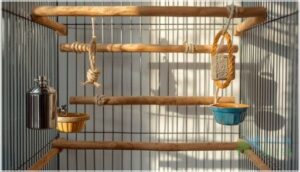
Your bird’s cage isn’t just about bars and space—it’s about creating a safe environment with the right gear inside. Different cage types call for different accessories, from sturdy perches that keep your bird’s feet healthy to water stations that prevent spills in smaller setups.
Let’s look at the essentials you’ll need to outfit your bird’s home properly.
Perches and Levels for Enrichment
Your bird’s physical and mental health depends on the right mix of perch materials and level designs. Natural wood like pine or maple fosters stronger feet than plastic, while rope perches build toe dexterity. Add foraging stations on multiple levels to stimulate bird climbing and problem-solving behavior.
Here’s a quick guide for avian enrichment and stimulation:
| Accessory Type | Key Benefit |
|---|---|
| Natural wood perches (0.6–1.5 cm diameter) | Promotes grip strength and foot health |
| Rope perches (1.5–3.0 mm fiber) | Enhances toe dexterity and preening |
| Elevated platforms (8–12 cm apart) | Reduces stress through vertical exploration |
Feeders, Water Stations, and Baths
Clean water and consistent meals anchor your bird’s daily routine. Automatic food dispensers deliver preset portions to prevent overfeeding, while elevated water stations reduce contamination from droppings.
Provide a shallow bath with smooth rims for feather conditioning—stainless steel options resist rust and simplify weekly disinfection. These cage accessories protect avian health and keep hydration systems running smoothly.
Toys and Rotation Strategies
Rotate toys every one to two weeks to prevent bird boredom and maintain bird enrichment. Use at least four to six types—chewing toys, foraging toys, puzzles, and motion toys—to support sensory stimulation and natural behaviors.
Inspect cage accessories weekly for wear, removing damaged parts immediately for bird safety. Store unused bird cage accessories and toys in labeled bins, then swap them on a rotation schedule to keep your companion mentally engaged.
Safety and Maintenance Across Cage Types

Keeping your bird safe isn’t a one-size-fits-all job—what works for a stainless steel flight cage won’t cut it for a wooden aviary or acrylic travel carrier.
Each material and cage type demands its own cleaning rhythm, safety inspections, and strategic placement in your home.
Here’s how to protect your bird’s health and wellbeing, no matter which cage style you choose.
Cleaning Requirements by Material
Your cage material dictates how you’ll maintain a healthy environment for your bird. Stainless steel cages respond well to warm water and mild dish soap, but skip abrasive pads to protect the finish.
Powder-coated metal needs gentle wiping with damp cloths—never use solvent-based cleaners that strip the coating. Wooden cages require careful attention; wipe with vinegar-water solutions to sanitize without degrading the wood, and always air-dry completely to prevent mold in porous surfaces.
Monthly Safety Checks
Every month, you’ll want to run a systematic review to catch problems before they threaten your bird’s safety. This routine keeps escape prevention top of mind and promotes long-term bird wellness through proactive hazard mitigation.
- Cage inspection: Check frames, bars, and door latches for rust, cracks, or gaps
- Safety protocols: Test feeder stations and perches for stability and wear
- Bird cage maintenance: Sanitize surfaces and verify substrate is fresh
- Bird health and safety: Document findings and schedule follow-ups for critical issues
Placement for Optimal Bird Health
Beyond your monthly safety checks, cage positioning shapes bird health and wellbeing more than most owners realize.
Place your bird cage in areas with stable air quality, natural visual stimulation, and noise reduction to minimize bird stress.
Keep it at eye level in living spaces—never near kitchens or drafty windows—so cage materials and durability work alongside smart avian care to support respiratory function and emotional security.
Top Bird Cages for Different Needs
After learning about cage types, materials, and safety requirements, you’re ready to see what works in the real world.
The following cages meet the health standards we’ve discussed while addressing specific needs like travel, space constraints, and visibility. Each option balances bird welfare with practical considerations you’ll face as an owner.
1. Capuca Small Bird Travel Cage
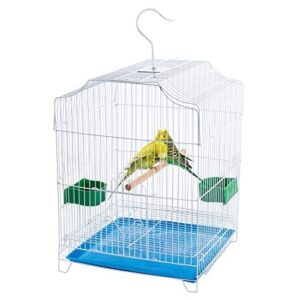
When you’re heading to the vet or taking a quick road trip, the Capuca Small Bird Travel Cage gives your parakeet, finch, or lovebird a secure ride. This compact 17.7 x 13 x 11.8-inch cage weighs just under 4 pounds, making it easy to carry with its built-in top handle.
The slide-out tray simplifies cleanup between trips, while the premium metal wire construction prevents escape attempts. You’ll get two plastic cups, a perch, and mesh panels that detach for fast maintenance—essential features when your bird’s comfort matters most.
| Best For | Bird owners who need a lightweight, portable cage for vet visits or short trips with small birds like parakeets, finches, or lovebirds. |
|---|---|
| Dimensions | 17.7 x 13 x 11.8 inches |
| Material | Metal |
| Cleaning Method | Slide-out tray, detachable mesh |
| Included Accessories | 2 plastic cups, 1 perch |
| Portability | Handle for hanging or carrying |
| Best For | Parakeets, lovebirds, finches, canaries |
| Additional Features |
|
- Easy to carry at under 4 pounds with a built-in handle that works for hanging or transport
- Slide-out tray and detachable mesh panels make cleanup quick between uses
- Includes everything you need right out of the box—two cups, a perch, and assembly tools
- Assembly instructions can be confusing and require some patience
- Food and water dishes sometimes fall into the cage if not secured properly
- Build quality varies—some users report the construction feels flimsy or cheap
2. Prevue Parakeet Bird Cage
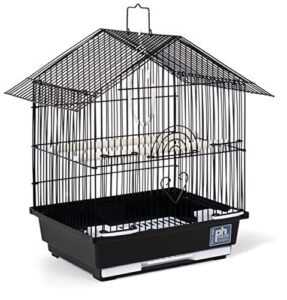
If you’re looking for a budget-friendly starter home for your parakeet or canary, the Prevue Parakeet Bird Cage offers decent basics without breaking the bank. Measuring 12″L x 9″W x 16″H with 3/8″ wire spacing, it includes a pullout tray, two plastic cups, and two perches—everything you need for temporary housing or travel.
Just don’t expect this cage to be your bird’s forever home; the flimsy construction and tight quarters make it better suited for quarantine periods or vet trips than full-time living.
| Best For | Bird owners who need a temporary cage for travel, vet visits, or quarantine rather than a permanent home for their parakeet or canary. |
|---|---|
| Dimensions | 12 x 9 x 16 inches |
| Material | Metal, Plastic |
| Cleaning Method | Pull-out tray |
| Included Accessories | 2 plastic cups, 2 perches |
| Portability | Handle for carrying |
| Best For | Parakeets, canaries, small birds |
| Additional Features |
|
- Affordable starter option that includes all the basics like cups, perches, and a pull-out tray
- Easy to clean and assemble, making it practical for short-term use
- Portable with a carrying handle, perfect for transporting your bird
- Too small and flimsy for long-term or full-time housing
- Food and water doors can be difficult to open and close
- Wire spacing and overall size limit it to very small bird species only
3. AideeGrowth Portable Bird Cage
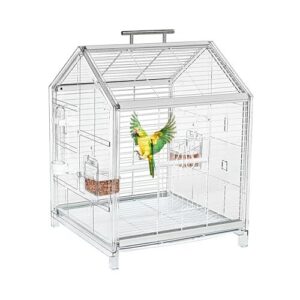
When travel or vet visits loom, the AideeGrowth Portable Bird Cage delivers a lightweight solution at just 5 pounds. Its 15.5″x12.5″x20.5″ frame includes two feeders, a water bottle, and a slide-out tray for quick cleanup on the go.
The aluminum alloy construction withstands bumps during transport, while transparent side panels let you monitor your lovebird or canary without constant handling. Assembly can frustrate you with unlabeled parts, and the small food holders won’t sustain long trips—but for short outings, it’s a solid travel companion.
| Best For | Bird owners who need a lightweight, temporary carrier for vet appointments or short trips with small birds like canaries or lovebirds. |
|---|---|
| Dimensions | 15.5 x 12.5 x 20.5 inches |
| Material | Aluminum alloy, iron, plastic |
| Cleaning Method | Slide-out tray |
| Included Accessories | 2 feeders, 1 water bottle |
| Portability | Handle on top |
| Best For | Love birds, canaries, parrots |
| Additional Features |
|
- Weighs only 5 pounds with a top handle, making it easy to carry to the vet or on outings
- Transparent panels and panoramic design let you keep an eye on your bird without opening the cage
- Slide-out tray and included feeders make basic care convenient during travel
- Assembly instructions are unclear and parts aren’t labeled, which can make setup frustrating
- Food and water containers are small, so they won’t last through longer trips
- The 15.5″x12.5″x20.5″ size works for travel but may feel cramped as a primary cage
4. Prevue Glass Bird Cage
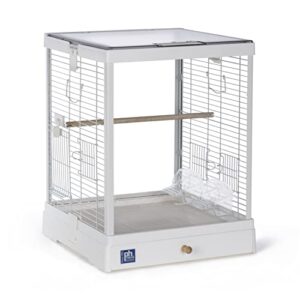
For birds that thrive on visual stimulation, the Prevue Glass Bird Cage’s transparent design offers unobstructed viewing through its 15.75x16x20 frame. You’ll appreciate the pull-out tray and grille that simplify daily cleaning, while the side-panel door grants easy access without top-reaching gymnastics.
This white-framed unit suits parakeets, finches, and canaries beautifully, though some users report finicky feed doors and lightweight metal prone to bending. At this compact size, it works best as a tabletop sanctuary or night cage rather than a full-time home for active fliers.
| Best For | Bird owners with parakeets, finches, or canaries who want a sleek tabletop cage that offers crystal-clear viewing and easy maintenance. |
|---|---|
| Dimensions | 15.75 x 16 x 20 inches |
| Material | Glass, Metal |
| Cleaning Method | Pull-out grille and debris tray |
| Included Accessories | 2 water/food cups, top perch |
| Portability | Tabletop use |
| Best For | Parakeets, finches, canaries |
| Additional Features |
|
- Glass sides give you an unobstructed view of your birds while keeping mess contained
- Pull-out tray and grille make daily cleaning quick and simple
- Side-panel door lets you access your birds without awkward top reaching
- Too small for larger birds or those that need serious flight space
- Feed doors can be stiff and tricky to close properly
- Lightweight metal frame may bend easily with regular use
Frequently Asked Questions (FAQs)
Can I use outdoor cages for indoor birds?
Technically yes, but most outdoor cages pose serious health risks: galvanized wire releases toxic zinc when chewed, bar spacing may trap small birds, and rust harbors bacteria that threaten respiratory health.
How often should I replace my bird cage?
Replace your cage when you spot rust that won’t clean off, bent bars, or chipped coating that exposes sharp metal.
High-quality stainless steel lasts 15+ years, while powder-coated options need replacement every 5–10 years.
Are second-hand bird cages safe to use?
Sure, you can use a secondhand cage—if you’re ready to play detective.
Inspect for rust, check for chipped paint hiding cracks, disinfect thoroughly, and confirm bar spacing matches your bird’s size to prevent escapes or injuries.
Do birds prefer tall or wide cages?
Your bird thrives with width over height. Horizontal space lets wings stretch fully, fosters natural flight patterns, and reduces stress.
Aim for a cage at least twice your bird’s wingspan wide.
What cage colors are best for birds?
Ironically, the best cage color is the one you’ll notice getting dirty.
Light finishes like white or cream reveal droppings fast, prompting timely cleaning that keeps your bird healthier than any trendy shade ever could.
Conclusion
Your bird’s home shapes their life, so measure twice and buy once. The difference between bird cage types isn’t about trends—it’s about matching materials, bar spacing, and layout to your bird’s wingspan, beak strength, and natural behaviors.
A parakeet thrives in narrow-bar rectangles, while macaws demand stainless steel fortresses. Choose deliberately, inspect monthly, and watch your bird spread their wings with confidence instead of cowering in corners.
- https://www.msdvetmanual.com/bird-owners/disorders-and-diseases-of-birds/injuries-and-accidents-of-pet-birds
- https://www.ftbrescue.com/post/2017/05/29/the-science-of-galvanized-material
- https://www.omlet.us/guide/parrots/parrot_cages/
- https://www.littlebeaks.org/whats-up-flock/tips-for-housing-birds-indoors
- https://www.rspca.org.uk/adviceandwelfare/pets/birds/environment