This site is supported by our readers. We may earn a commission, at no cost to you, if you purchase through links.

You toss a handful of sunflower seeds into your backyard feeder, and within minutes, a parade of finches and cardinals swoops in for breakfast. But hang a suet cake nearby, and suddenly woodpeckers and nuthatches appear like they’ve been waiting for an invitation. The difference between seed and suet for birds isn’t just about what you’re offering—it’s about who shows up and why.
Seeds deliver steady carbohydrate energy that keeps small, active birds fueled throughout the day, while suet packs concentrated fat that helps larger species survive brutal cold snaps. Understanding these distinctions transforms your feeding station from a one-note snack bar into a thriving hub that meets the unique needs of dozens of species year-round.
Table Of Contents
Key Takeaways
- Seeds deliver steady carbohydrate energy that attracts smaller, active birds like finches and cardinals, while suet packs concentrated fat that helps larger species like woodpeckers and nuthatches survive cold weather when they need rapid fuel.
- The nutritional gap between these foods is significant—suet provides 8-9 kcal/g of pure fat-based energy compared to seed’s 4-5 kcal/g, making suet essential during winter months when birds burn calories fast to maintain body heat.
- Offering both seed and suet at separate feeding stations reduces competition and creates a thriving backyard hub that meets diverse dietary needs, attracting a wider range of species throughout the year instead of limiting visits to one type of bird.
- Proper storage and maintenance matter just as much as food choice—keeping seed in airtight containers prevents mold and aflatoxin poisoning, while refrigerating suet before hanging stops spoilage in warm weather and protects bird health year-round.
What is Bird Seed Vs. Suet?
If you’re new to backyard birding, you might wonder what the difference is between seed and suet—and why it matters. Both offer birds essential nutrition, but they’re made from completely different ingredients and serve unique purposes in your feeding station.
Suet is widely available at major retailers, and you can also find suet bird food online at stores like Walmart and Lowe’s for convenient home delivery.
Let’s break down what each one is, how they’re composed, and why birds need both to thrive.
Understanding these nutritional building blocks also helps you spot deficiencies early, which is key to preventing stress-related behaviors like feather plucking.
Definition and Composition of Bird Seed
Bird seed is your go-to mix of small, oil-rich kernels—sunflower, millet, safflower, and nyjer—designed to draw seed-eating birds right to your yard. Commercial seed mixtures vary in quality, and you’ll notice some blends include filler grains that certain species ignore.
If you’re just starting out, this guide to choosing quality bird seed for backyard birds breaks down which seeds actually work and which ones you can skip.
Check the table below to see how seed types differ in nutrient content and bird preferences:
Regular maintenance helps keep your feeding station safe, and our bird sanctuary creation guide covers complete setup and care strategies for healthier backyard habitats.
| Seed Type | Key Nutrients | Attracted Birds |
|---|---|---|
| Black Oil Sunflower | High fat, protein | Cardinals, chickadees, finches |
| White Proso Millet | Minerals, protein | Sparrows, doves, juncos |
| Nyjer (Thistle) | High oil content | Goldfinches, siskins |
Store your seed mix in cool, dry spots—mold produces aflatoxins that harm wild bird health.
Definition and Composition of Suet
Suet is rendered animal fat—usually beef or pork—that’s been melted down and often mixed with seeds, grains, or dried insects to boost flavor and bird nutrition. This fat base delivers concentrated energy, especially during cold snaps when birds burn calories fast. Commercial suet cakes come in bars or blocks designed for suet feeders, and quality products stay free from mold, rancid smells, or odd discoloration.
Suet is rendered animal fat—usually beef or pork—mixed with seeds or insects to deliver concentrated energy when birds need it most
| Ingredient Type | Purpose | Common Additions |
|---|---|---|
| Rendered Fat | Energy source | Lard, beef tallow |
| Seeds/Grains | Texture, flavor | Sunflower, corn, oats |
| Insects | Protein boost | Mealworms, crickets |
| Binding Agents | Structure | Gelatin, cornmeal |
| Supplements | Palatability | Berries, peanut butter |
Key Nutritional Differences
Now that you know what goes into suet, let’s look at how bird seed and suet actually stack up nutritionally. Fat content is the biggest difference—suet delivers a concentrated energy source that’s especially helpful in cold weather, while seed blends vary widely depending on what’s included.
Here’s how they compare:
| Nutrient | Bird Seed | Suet |
|---|---|---|
| Fat | Moderate (varies by mix) | High (rapid energy) |
| Protein | Lower (mix-dependent) | Higher (with nuts, insects) |
| Energy | Carbohydrate-based | Fat-based fuel |
Understanding these differences helps you meet the dietary needs of wild birds and choose the right wild bird nutrition strategy for your backyard.
Types of Birds Attracted by Seed and Suet
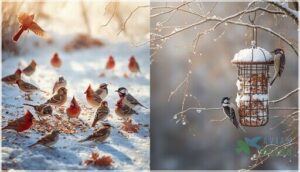
Different birds have different tastes, and that’s where the fun begins. Seeds bring in one crowd—think finches, cardinals, and sparrows—while suet draws a totally different lineup of woodpeckers, nuthatches, and insect-lovers.
Let’s look at who shows up for what, and how their preferences shift with the seasons.
Species Commonly Attracted by Seed
If you’re wondering which wild birds will visit your seed feeder, you’ll love the variety. Chickadees, finches, and sparrows frequently show up—especially during spring and fall bird migration. Mourning doves and jays prefer heavier seed types like sunflower and safflower, while house sparrows reliably consume Nyjer.
Smart feeder placement and understanding foraging habits help you attract more backyard birds with diverse seed preferences.
Keeping your feeders clean through regular bird feeder maintenance ensures visiting species stay healthy and return season after season.
Species Commonly Attracted by Suet
When high-fat energy is on the menu, you’ll see woodpeckers, nuthatches, and chickadees flocking to your yard. Suet attraction works because these insect-eaters need concentrated fuel, especially during winter. Here’s who you can expect:
- Woodpeckers (downy, hairy, and northern flickers) cling easily to suet cages
- Chickadees visit year-round, often in mixed flocks
- Nuthatches feed upside-down, storing extra bits for later
- Wrens, titmice, and jays round out your suet-loving visitors
Seasonal Preferences Among Birds
Throughout the year, your backyard birds shift their feeding habits—and understanding these seasonal diet changes helps you plan smarter bird feeding strategies. Many songbirds load up on bird seed during late summer and fall, building fat reserves for migration patterns, while woodpeckers and chickadees lean heavily on your suet feeder when cold weather adaptations kick in.
Here’s what different bird species need by season:
| Season | Preferred Food & Bird Behavior |
|---|---|
| Spring | Hummingbirds switch to nectar and insects for breeding; seed intake drops as natural food becomes abundant |
| Summer | Songbirds increase seed consumption in late summer, preparing for migration with extra fat reserves |
| Fall | Ground-foraging jays broaden their diet, grabbing varied seed mixes to fuel longer, harsher winters ahead |
| Winter | Goldfinches and chickadees hit the suet feeder hard—high-fat energy is vital when natural food disappears |
Backyard birding gets easier when you match your offerings to these rhythms, supporting bird species exactly when they need it most.
Nutritional Benefits for Wild Birds
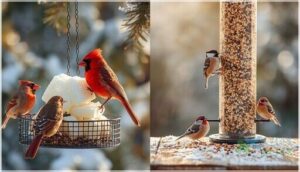
When you’re deciding between seed and suet, understanding what each brings to the table nutritionally can help you make the best choice for your feathered visitors. Different birds have different needs—some thrive on the quick energy burst from fat-rich suet, while others depend on the protein and carbohydrates found in quality seeds.
Let’s break down how these foods support your backyard birds, which species benefit most from each option, and what it all means for their overall health and vitality.
Protein, Fat, and Energy Content
Bird seed and suet serve different nutritional roles in wild bird nutrition. Most seeds offer 10-30% protein and 4-50% fat by weight—black oil sunflower seeds pack about 40-50% fat, delivering 4-5 kcal/g. Suet, nearly pure fat, provides 8-9 kcal/g, making it an outstanding energy source.
This nutrient balance matters for bird feeding strategies, especially when considering protein requirements and fat metabolism during cold months.
Suitability for Different Bird Species
Not every bird at your feeder wants the same meal—preferences split along dietary lines. Here’s how species match up with food types:
- Seed lovers: Cardinals, goldfinches, and jays favor nutrient-rich sunflower or nyjer seeds for energy.
- Suet specialists: Woodpeckers and nuthatches target high-fat suet during cold snaps.
- Flexible feeders: Chickadees enjoy both, adapting to seasonal variations.
- Summer surprises: Insect-eaters like warblers appreciate suet’s protein boost year-round.
Impact on Bird Health and Wellness
Think of feeding birds like managing a balanced diet—too much of one thing can backfire. High-fat suet aids winter endurance, but excess can overwhelm small birds with fat intolerance and contribute to bird obesity in non-migratory species.
Seed mold from improper storage produces harmful aflatoxins, threatening avian health and feather health.
Plain, unsalted suet and fresh birdseed stored properly safeguard avian nutrition, while regular bird feeder maintenance prevents toxicity and keeps your backyard flock thriving year-round.
Feeder Types and Maintenance Needs
Choosing the right feeder makes all the difference in how well you attract birds and how much time you spend maintaining your backyard setup. Seed feeders and suet feeders each come with their own designs, cleanup routines, and quirks you’ll want to know about.
Let’s look at what works best for each type and how to keep waste and spoilage to a minimum.
Seed Feeder Varieties and Upkeep
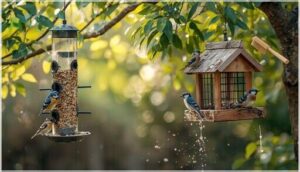
You’ll find several seed feeder types designed to meet different bird feeding tips and wild bird feeders needs. Tube feeders with multiple ports minimize waste, while hopper-style designs need regular cleaning methods to prevent mold. Squirrel proofing uses weight-activated mechanisms that protect your bird seed.
For proper bird feeder maintenance, clean cylinders quarterly and replace perches to keep weather seals intact—your feathered friends deserve fresh, accessible food year-round.
Suet Feeder Designs and Cleaning

Just as seed feeders need attention, your suet feeder benefits from smart design choices and regular care. Hinged metal suet cage designs allow easy refills and airflow, while wooden or wire-basket styles offer stable mounting options. For feeder maintenance, disassemble into parts for thorough hot-water scrubbing—weekly in humid weather prevents mold.
- Choose hinged or screw-top feeder materials for quick access
- Opt for cages that promote ventilation and reduce spoilage
- Clean thoroughly with hot, soapy water between refills
- Consider vertical mounting options for clinging bird species
Preventing Waste and Spoilage

Beyond smart feeder designs, Fresh Storage habits make or break Feeder Maintenance—and bird health and wellness. Store seed and suet in airtight containers to block moisture and Seed Mold.
Clean feeders with hot, soapy water weekly to prevent Suet Spoilage and disease spread.
Time your feeding from September through February to align with peak activity, reducing Waste Reduction challenges while maximizing suet feeder benefits over traditional suet vs birdseed debates.
Best Uses and Feeding Strategies
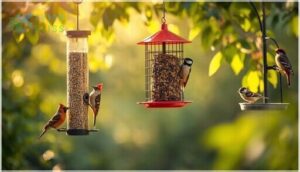
Now that you’ve got the right feeders in place, it’s time to think about how to use them wisely. Knowing when to offer seed versus suet—and how to combine both—can make all the difference in who shows up at your backyard buffet.
Let’s look at a few smart strategies that’ll help you attract more species and keep your feathered friends well-fed year-round.
When to Offer Seed Vs. Suet
When should you fill your suet feeder versus your bird seed feeder? Timing matters for seasonal feeding and bird migration. Offer seed during daylight hours when smaller birds are naturally foraging.
Suet becomes essential during winter nutrition months—cold weather depletes energy reserves, and high-fat suet helps maintain body heat. In winter, suet feeders attract insectivores, while seed draws a broader range throughout the year.
Combining Seed and Suet for Diversity
You’ll create a richer bird feeding experience when you pair seed with suet—together, they boost visit frequency and offer Dietary Balance for more species.
Place your suet feeder and bird seed station separately to reduce competition, and consider sun exposure to prevent spoilage.
This Nutrition Mixing approach fosters diverse Foraging Strategies, drawing seed-lovers like finches alongside insect-eaters such as woodpeckers and nuthatches.
Attracting a Wider Range of Birds
Variety is the secret to drawing more species—offer seed varieties like nyjer and black oil sunflower alongside suet recipes that target insect-eaters. Smart feeder placement at different heights and near cover fosters bird diversity, especially during bird migration when energy demands spike.
By mixing bird feeder types and replenishing your suet feeder and bird seed regularly, you’ll keep attracting birds to your yard season after season.
Environmental and Practical Considerations
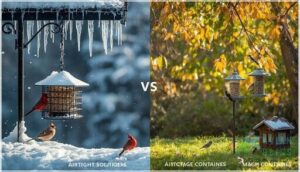
Feeding birds isn’t just about picking the right food—it’s also about understanding how weather, storage, and your own habits play into the bigger picture. The choices you make can affect bird health, reduce waste, and even support healthier ecosystems in your backyard.
Let’s look at a few practical considerations that’ll help you feed birds responsibly, no matter the season.
Seasonal Suitability and Weather Impact
Winter feeding drives your birds toward suet feeders when temperatures drop—fat fuels their thermoregulation during cold snaps.
As seasonal shifts bring spring warmth, bird seed becomes essential, supporting protein needs as insects return.
Weather patterns like humidity and heat accelerate spoilage in summer, so you’ll need to refresh both suet and seed more often to keep your feathered friends safe and well-fed.
Storage, Handling, and Safety Tips
Proper storage keeps your bird food fresh and safe—you’ll want a cool, dry spot where mold and pests can’t sneak in. Freezing or refrigerating suet before hanging prevents suet spoilage in warm weather. Store bird seed in airtight containers to block moisture and critters.
Clean your bird feeders every two weeks with a mild bleach solution—this simple step protects bird safety and stops mold prevention issues before they start.
Supporting Sustainable Bird Feeding Practices
Smart bird feeding goes hand in hand with conservation efforts—when you choose sustainable sources for your suet and bird seed, you’re protecting the bird population while creating a wildlife-friendly gardening space. Eco-friendly feeders and waste reduction strategies make a real difference.
- Select seed mixes with minimal filler to cut down on ground waste
- Choose reusable feeders made from recycled materials or natural wood
- Buy from local suppliers who source ethically and sustainably
- Adjust feeding amounts seasonally to match natural food availability
Frequently Asked Questions (FAQs)
Can homemade suet replace store-bought options?
Yes—homemade suet using lard, peanut butter, and seeds works beautifully. You’ll control the ingredients, avoid fillers, and save money. Just refrigerate it before hanging to prevent melting in your suet feeder.
For best results, consider using natural peanut butter in your recipe.
Do squirrels prefer seed or suet feeders?
Squirrels love suet feeders—they’re drawn to the rich fat content that fuels their high-energy lifestyle. You’ll often see them raiding suet cakes over seed mix, especially when cold weather hits.
How often should I rotate feeding locations?
Like rearranging furniture to refresh your space, rotate feeding locations every one to two weeks during peak months. This simple bird feeding strategy prevents seed spoilage, aids disease prevention, and keeps your backyard birding stations healthier for returning visitors.
Are there birds that avoid both options?
Absolutely—many insectivorous species and nectar feeders skip both entirely. Hummingbirds stick to nectar feeders, while ground-foraging sparrows prefer fruit offerings scattered low.
Bird watching reveals how diverse bird feeding strategies truly are.
What time of day do birds feed most?
Most birds follow daily cycles with peak hours at dawn and dusk—their morning feeding frenzy captures nearly 40% of daily activity.
Understanding these feeding patterns enhances your backyard birding success and bird watching experiences year-round.
Conclusion
Your backyard doesn’t need a telegraph to send the message that dinner’s ready—birds figure it out fast. The difference between seed and suet for birds boils down to who needs what: seeds fuel quick-moving finches and sparrows, while suet sustains woodpeckers and nuthatches through harsh weather.
Stock both, and you’ll create a year-round sanctuary where every species finds exactly what they need to thrive, not just survive.
- https://suetstore.com/collections/wild-bird-suet
- https://www.wildbirdsuets.com/suet-treats/
- https://www.sciencedirect.com/science/article/pii/S0749208123000268
- https://pmc.ncbi.nlm.nih.gov/articles/instance/9553038/bin/pone.0275964.s005.docx
- https://www.scribd.com/document/356795007/Research-Methods-Knowledge-Base