This site is supported by our readers. We may earn a commission, at no cost to you, if you purchase through links.
Your bird’s feet spend every waking moment gripping, balancing, and exploring their world—yet most perches force them into the same static position for hours, creating pressure points that lead to painful bumblefoot ulcers, arthritis, and even permanent deformities.
The solution isn’t complicated, but it does require understanding how different perch materials, diameters, and textures work together to support healthy foot anatomy. Natural wood branches offer irregular surfaces that exercise tendons and prevent sores, while rope perches provide soft landings but demand careful monitoring for fraying fibers that trap toes.
Cement perches trim nails naturally but can abrade delicate foot pads if positioned incorrectly, and heated options deliver therapeutic warmth for arthritic birds during cold months. Selecting the right combination means matching your bird’s species, activity level, and specific health needs to perches that promote movement, comfort, and long-term wellness.
Table Of Contents
Key Takeaways
- Static perching positions create pressure points that lead to bumblefoot ulcers, arthritis, and permanent foot deformities, making perch variety essential for distributing weight across different pad surfaces and preventing repetitive stress injuries.
- Natural wood branches with irregular diameters exercise foot muscles and prevent sores, while rope perches offer cushioning but require weekly inspections for fraying fibers that can trap toes or cause ingestion hazards.
- Cement and sand-coated perches naturally trim nails through abrasive action during normal gripping, but you’ll need to position them away from food bowls and rotate them with softer perches to avoid abrading delicate foot pads.
- Proper perch diameter should allow your bird’s toes to wrap three-quarters around without touching—typically 12-20mm for small parrots and 30-40mm for larger species—while strategic placement at staggered heights encourages climbing that strengthens cardiovascular health and prevents joint deterioration.
Why Choosing The Right Bird Perch Matters
Your bird’s perch isn’t just a place to rest—it’s the foundation of their physical and mental health.
Understanding why bird perches are important for health can help you choose options that support proper grip strength and prevent common foot problems.
Your bird’s perch is the foundation of their physical and mental health, not just a place to rest
The right perch setup can prevent painful foot conditions, support natural behaviors, and keep your feathered friend engaged throughout the day. Let’s explore why perch selection matters more than you might think.
Impact on Avian Foot Health
Your bird’s feet bear its full weight every waking hour, making perch selection a cornerstone of foot care and avian orthopedics. The right perch material and diameter directly influence foot health through:
- Distributing pressure evenly across pads to prevent ulcers
- Strengthening muscles with varied grip placements
- Supporting natural nail trimming and beak health
- Reducing bacterial irritation through proper cleaning
Studies of zoo species highlight how essential natural substrate access for foot health is to prevent lesions and promote avian welfare.
Prevention of Pressure Sores and Arthritis
Rotating perch materials every week prevents identical pressure points from forming on your bird’s pads, cutting pressure sore risk within the first 24 hours of exposure.
Varied diameters encourage gentle joint movement that lubricates hips and knees, slowing arthritis progression while promoting foot comfort.
Orthopedic perches with gradual slopes reduce abrupt loading, protecting vulnerable joints and supporting long-term avian foot health through smart bird ergonomics.
Role in Natural Behavior and Enrichment
Beyond protecting joints, you’ll find that thoughtful perch placement fosters foraging behaviors and natural exploration your bird instinctively craves.
Perch diversity with varied wood textures encourages pecking and grasping similar to wild tree climbing, while tactile enrichment from bark and knots engages senses during daily movement.
Strategic spacing between natural wood perches creates climbing exercises that strengthen legs, turning your aviary into a vibrant landscape for genuine avian enrichment and species-appropriate bird behavior. For more on the benefits of enrichment strategies for birds, consider how varied environments promote both physical and mental health.
Importance for Mental Stimulation
Just as varied textures build foot strength, cognitive development through perch selection sharpens your bird’s mind through environmental stimulation and problem solving opportunities. Mental enrichment follows naturally when you offer:
- Novel perch placements that spark bird curiosity and spatial learning
- Multi-texture surfaces requiring grip adjustments during navigation
- Puzzle elements near perches encouraging beak coordination
- Height variation promoting observational learning from cage mates
Strategic avian enrichment through thoughtful bird perch selection sustains engagement, reduces boredom-related behaviors, and promotes overall avian health and wellness alongside essential pet bird care and maintenance routines.
Types of Bird Perches Explained
Selecting the right perch requires understanding what’s available and how each type promotes your bird’s health. From natural wood branches that mimic outdoor habitats to specialized surfaces designed for nail care, each perch material fulfills a distinct purpose in your bird’s daily routine.
Let’s examine the main perch categories so you can build a setup that keeps your bird’s feet healthy and engaged.
Natural Wood and Branch Perches
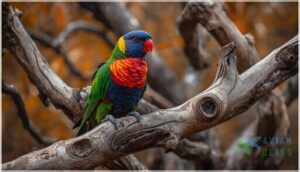
Your bird’s feet deserve the same freedom you seek—gripping nature with every step. Natural Wood Perches like manzanita deliver unparalleled Wood Perch Benefits through irregular diameters that exercise foot muscles and prevent pressure sores, supporting Avian Health.
Branch Selection matters: choose pesticide-free hardwoods for Wood Durability. Proper Perch Sanitizing with vinegar solutions maintains Foot Health without toxic residues, while varied Natural Grip surfaces encourage foraging behaviors.
| Feature | Wood Perch Benefits | Maintenance Need |
|---|---|---|
| Diameter variety | Exercises diverse foot grips | Weekly cleaning required |
| Natural texture | Prevents pressure sores | Monthly inspections |
| Chewing surface | Encourages beak enrichment | Replace when damaged |
Plastic and Resin Perches
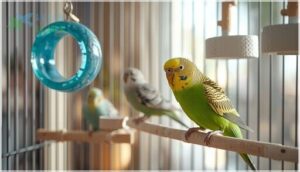
You’ll find Plastic Perches offering convenient Perch Cleaning Tips, yet Plastic Perch Safety remains critical for Bird Health. Veterinary-grade resin formulations reduce ingestion risks while textured surfaces improve Bird Grip Options, though Foot Health suffers on slippery models.
- Resin Material Benefits: BPA-free acrylic blends resist cage cleaners effectively
- Resin Durability Tests: Rigid PVC withstands daily wear for medium birds
- Perch Material caution: Monitor smooth surfaces causing foot strain
Rope and Fabric Perches
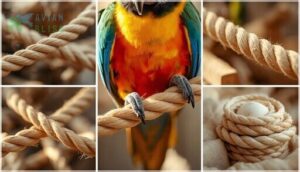
You’ll discover Rope Perches provide soft, irregular surfaces that improve Bird Foot Exercise while reducing pressure points, yet Rope Perch Safety demands vigilant monitoring for fraying fibers.
Fabric Durability varies with chewing intensity, making sisal and jute better options within Perch Material Variety. Rope Texture Benefits include gentle foot pad massage, though consistent inspection prevents ingestion hazards that compromise Foot Health.
Cement, Stone, and Sand-Coated Perches
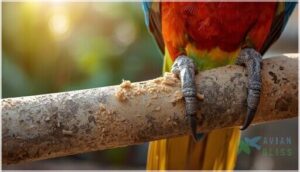
You’ll notice cement, stone, and sand-coated perches function as self-care stations, using abrasive coating materials to trim nails naturally during gripping, exercising foot muscles, and promoting circulation.
These perch materials improve avian comfort through textured surfaces while supporting foot health, though bird safety demands inert finishes free of toxic dyes, regular inspection for loose coatings, and placement alongside softer perches to prevent pressure sores.
Combination and Specialty Perches
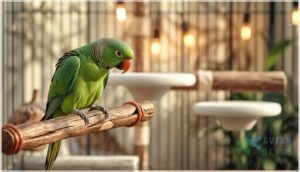
When perch customization meets specialty materials, you reveal targeted wellness tools that standard options can’t match. These innovations expand your bird perch selection guide beyond basic perch variety:
- Combination perch fusion blends natural wood with synthetic inserts, offering adjustable diameters and non-skid bases for enhanced bird safety.
- Heated perches maintain stable warmth (75–85°F) through low-watt thermistors, ideal for parrots in cooler climates.
- Calcium infusion delivers gradual mineral release, supporting beak health without splintering.
- Rope textures with variable thickness stimulate grip dexterity and include anti-mold coatings.
- Suction and clip-on designs enable multi-angle placement on smooth or wire cages, holding up to 2 pounds.
Strategic perch design transforms cage environments into active exercise zones while addressing specific health requirements.
Key Materials Used in Bird Perches
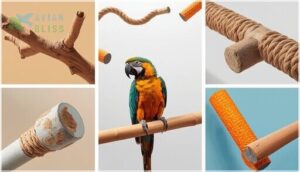
The material you choose for your bird’s perch setup directly affects foot health, comfort, and long-term joint integrity. Each option—from natural wood to concrete—offers distinct advantages and specific risks you need to weigh carefully.
Understanding these differences helps you build a perch setup that prevents pressure sores while supporting your bird’s physical and behavioral needs.
Benefits of Natural Wood
Natural wood perches offer unparalleled bird comfort because their organic texture promotes foot health through gentle, variable grip surfaces. Unlike rigid synthetics, wood durability combines with natural aesthetics to create a warm, engaging environment that promotes bird health and happiness.
The perch material flexes slightly under weight, exercising foot muscles while preventing pressure sores—making wood perches your bird’s best ally for lifelong wellness.
Pros and Cons of Plastic
While wood texture shines, plastic perches offer undeniable advantages—especially for pet bird care routines. Plastic durability means they won’t crack or warp easily, and cleaning becomes a breeze since bacteria can’t hide in smooth surfaces.
However, consider the trade-offs: some birds prefer natural perch material over synthetic, and the environmental impact of non-recyclable plastics may push you toward plastic alternatives that support both bird health and happiness.
Safety of Rope and Fabric
Soft surfaces feel comforting, yet rope and fabric demand vigilance to protect foot health. Regular rope inspection tips include checking for fraying weekly, since loose threads create ingestion hazards and fabric toxicity risks when dyes leach during chewing.
Follow these perch material safety steps for rope perches:
- Inspect surfaces daily for sharp edges or splinters
- Replace frayed rope immediately to prevent entanglement
- Choose non-toxic, natural fiber options over synthetic blends
- Conduct fabric durability tests by tugging seams before installation
- Clean weekly to eliminate bacteria and degradation
Proper rope fray prevention safeguards your bird’s well-being.
Uses for Concrete and Stone
Hard surfaces serve a completely different role than soft ones, targeting nail conditioning and beak conditioning instead of comfort. Concrete perches and stone textures provide abrasive action that naturally files overgrown nails, reducing vet trips for trimming.
When choosing mineral perches for avian footcare, select sand-coated options strategically, placing them away from food bowls to prevent grit contamination in your bird cage setup.
Sizing and Placement for Healthy Birds
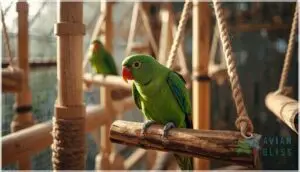
Getting the perch size right isn’t just about comfort—it’s about protecting your bird’s feet from pressure sores, strain, and long-term joint damage.
Where you place those perches matters just as much, since smart positioning encourages natural movement, prevents falls, and keeps your bird mentally engaged. Let’s walk through how to measure correctly, avoid the most common mistakes, and set up your cage for real foot health.
Measuring Foot Width and Perch Diameter
Choosing the right perch diameter starts with measuring your bird’s foot width at its widest point while standing naturally. Ideally, your bird’s toes should wrap around three-quarters of the perch without touching, promoting foot health and preventing pressure sores.
For small parrots, aim for 12 to 20 millimeters; larger species need 30 to 40 millimeters for proper toe comfort and beak alignment.
Proper Perch Length and Shape
The right perch length allows your bird to turn around comfortably, stretch its wings, and maintain stable avian posture support without crowding.
Natural branch shapes with gentle curves promote ideal foot grip analysis by distributing weight across varied contact points, reducing strain on tendons. Irregular diameters along the perch curve design encourage beak trimming and healthy foot health through natural wear patterns.
Placement for Exercise and Safety
Position perches at staggered heights to encourage climbing and stretching, strengthening your bird’s cardiovascular system while promoting avian enrichment through varied movement.
Exercise spaces should include at least six feet of clearance around active areas, preventing collisions that compromise bird safety.
Strategic cage layout places primary perches away from high-traffic zones, while perch material options like stable, broad-based natural wood support secure landings during play, maintaining both bird behavior and welfare through thoughtful perch placement.
Avoiding Common Sizing Mistakes
Many bird owners select perch sizes based on convenience rather than biomechanics, jeopardizing foot health through preventable sizing mistakes that compromise avian safety tips.
- Avoid perches allowing toes to completely encircle, causing muscle fatigue and pressure points
- Don’t use uniform diameters throughout your bird cage, limiting natural grip variation
- Reject perches too thick for toe articulation, forcing unnatural stance and joint strain
- Skip thin perches that hyperextend digits, creating long-term tendon damage
- Never overlook species-specific bird perch guidelines when matching perch size to foot anatomy
Top Bird Perches for Your Aviary
After understanding the importance of proper sizing and placement, you’re ready to explore specific perch options that prioritize your bird’s health and comfort.
The following perches represent different categories of materials, textures, and functional designs that address the key principles we’ve discussed. Each option offers unique benefits, from natural wood varieties that exercise foot muscles to specialty perches that serve specific wellness purposes.
1. Penn Plax Wooden Bird Perch
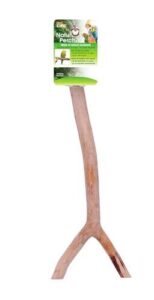
The Penn Plax wooden perch offers a natural grip for small to medium birds, including parakeets, budgies, and cockatiels, with a diameter around 3/8 to 1/2 inch that lets your bird’s foot wrap comfortably without strain.
Made from natural hardwood, it features metal or plastic end caps for secure mounting to standard cage bars, requiring no tools for installation.
However, aggressive chewers may damage the wood over time, and you’ll need to inspect the screw periodically to make certain it stays tight and safe.
| Best For | Small to medium birds like parakeets, budgies, and cockatiels that need a natural hardwood perch with easy, tool-free cage installation. |
|---|---|
| Material | Wood |
| Mounting Type | Bolt-on |
| Size Category | Small-Medium |
| Cleaning Method | Hand wash |
| Primary Use | Perching |
| Installation Difficulty | Easy |
| Additional Features |
|
- Natural hardwood provides a comfortable, foot-friendly grip that promotes healthy perching
- Installs quickly without tools thanks to simple metal or plastic end caps
- Durable construction that’s easy to clean and maintain with regular hand washing
- Not ideal for aggressive chewers who can damage the wood over time
- Mounting screw may loosen and needs periodic checking to stay secure
- Wood thickness might be too thin for birds that constantly gnaw on perches
2. Jw Pet Comfy Bird Perch
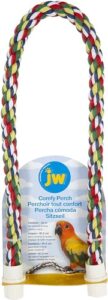
The JW Pet Comfy Bird Perch offers a bendable multicolor rope design that you can twist into curves, loops, or zigzags to exercise different foot muscles and combat cage stress.
With lengths ranging from 21 to 36 inches, it fits small to large birds and attaches securely to standard wire cages without exposed metal stiffeners.
The cotton-blend rope is non-toxic and gentle on feet, though you’ll need to inspect it regularly for fraying and replace it when wear becomes evident.
| Best For | Bird owners looking for an affordable, adjustable perch that encourages natural foot movement and adds enrichment to their pet’s cage. |
|---|---|
| Material | Plastic/Rope |
| Mounting Type | Twist-on |
| Size Category | All sizes |
| Cleaning Method | Hand wash |
| Primary Use | Exercise/Play |
| Installation Difficulty | Easy |
| Additional Features |
|
- Bendable design lets you create custom shapes that exercise different foot muscles and reduce boredom
- Available in multiple lengths to fit various cage sizes and bird species from cockatiels to larger parrots
- Easy twist-on attachments make installation and repositioning quick without tools
- Rope can fray over time, especially with heavy chewers, requiring regular inspection and replacement
- Difficult to clean thoroughly once soiled, and some owners recommend wrapping it in vet tape for easier maintenance
- Quality control issues have been reported, including missing attachment pieces in some orders
3. Natural Wood Bird Perch Stand
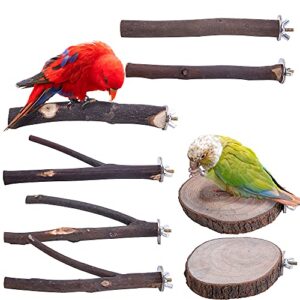
When your bird craves the feel of a real tree branch underfoot, a natural wood perch stand delivers that instinctual experience right inside the cage.
The Deloky 8-piece set features untreated hardwood branches with varied diameters from 1.0 to 2.5 centimeters, promoting foot arch development and preventing pressure sores through textured grip surfaces that mimic outdoor environments. You’ll secure each piece with built-in bolts and wing nuts, though some users note you may need additional hardware for stability, and the chemical smell upon opening usually fades after airing.
| Best For | Bird owners with parakeets, cockatiels, or other small to medium parrots who want to give their pets a more natural perching experience that exercises their feet and keeps beaks healthy. |
|---|---|
| Material | Wood |
| Mounting Type | Bolt-on |
| Size Category | Small-Medium |
| Cleaning Method | Hand wash |
| Primary Use | Perching/Chewing |
| Installation Difficulty | Easy |
| Additional Features |
|
- Natural hardwood branches with varying diameters help prevent foot problems and mimic what birds would encounter in the wild
- Eight-piece set gives you plenty of options to create an interesting setup in your bird’s cage
- Easy installation with included bolts and wing nuts means you can rearrange perches whenever you want
- Some users found the perches wobbly because the washers don’t always fit properly, so you might need extra hardware
- The wood can have a chemical odor when you first open the package that takes time to air out
- Not suitable for larger parrots or birds with balance issues since the branches may be too thin or unstable
4. Borangs Wood Bird Perch Platform
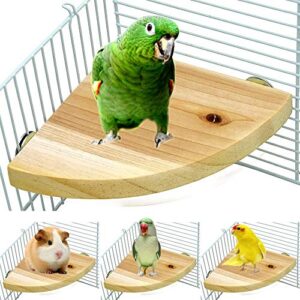
For birds who need a stable landing strip and chewing outlet all in one, the Borangs Wood Platform combines function with enrichment.
You’ll find a 12- to 14-inch surface crafted from natural fir with embedded chew blocks along the edge, encouraging beak conditioning while your bird rests its feet in a flat, natural posture.
The stainless steel hardware resists corrosion, though you’ll want to air out the wood smell first and check screws regularly after enthusiastic gnawing sessions.
| Best For | Bird owners looking for a multifunctional perch that doubles as a play platform and satisfies their pet’s natural chewing instincts. |
|---|---|
| Material | Wood |
| Mounting Type | Screw-in |
| Size Category | Small |
| Cleaning Method | Wipe clean |
| Primary Use | Play/Rest |
| Installation Difficulty | Moderate |
| Additional Features |
|
- Natural fir wood with built-in chew blocks keeps beaks healthy and birds entertained
- Flat surface promotes better foot health compared to round perches
- Stainless steel mounting hardware won’t rust or corrode over time
- Strong wood odor out of the box requires airing before use
- Needs regular screw checks since birds will chew the mounting area
- Porous wood surface demands frequent cleaning to prevent bacteria buildup
5. Penn Plax Natural Wood Bird Perch
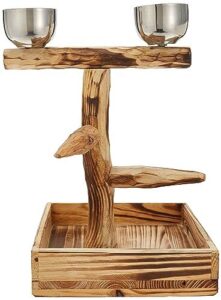
If you’re looking for variety-in-one simplicity, Penn Plax offers a natural wood stand with two stainless steel cups and a drop tray—perfect for parakeets, cockatiels, or conures who need mealtime and playtime in one spot.
The 10.5-inch-wide perch tapers from 1 inch down to a quarter-inch, so your bird’s feet exercise across multiple diameters while climbing. You may need to sand rough edges if splinters arrive, but the stainless hardware and wipe-clean tray keep maintenance straightforward.
| Best For | Bird owners seeking an all-in-one natural wood perch for small to medium birds like parakeets, cockatiels, or conures that combines feeding, resting, and play areas. |
|---|---|
| Material | Wood |
| Mounting Type | Tabletop |
| Size Category | Small-Medium |
| Cleaning Method | Hand wash |
| Primary Use | Feeding/Play |
| Installation Difficulty | Easy |
| Additional Features |
|
- Tapered branches (1″ to 0.25″ diameter) exercise your bird’s feet and naturally trim nails while they climb and perch
- Two stainless steel cups and a drop tray make feeding and cleanup simple—no seeds scattered across your floor
- Real wood design creates a textured, comfortable surface that birds instinctively prefer over plastic alternatives
- Natural wood can hold onto droppings more than smooth surfaces, requiring extra scrubbing during cleaning
- Some units arrive with splinters or excess wood stain that need sanding before your bird can safely use them
- Size and branch spacing won’t work for larger parrots like cockatoos or macaws—strictly a small-to-medium bird product
6. KandH Heated Bird Perch
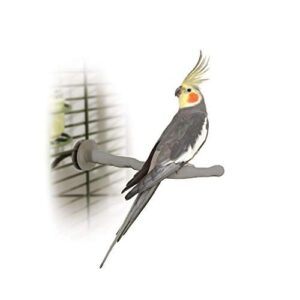
When drafts or air conditioning make your cage feel like an icebox, K&H’s heated perch warms your bird’s feet with gentle 12V current controlled by internal thermostats.
Available in three diameters—1 inch for small species up to 2 inches for larger parrots—this bite-resistant plastic perch varies temperature end to end, so your bird picks the warmth level it prefers.
You’ll want to check it daily to confirm safe heat output and avoid wrapping it in fabric, which can trigger overheating.
| Best For | Bird owners who need to keep their feathered friends warm during cold drafts, air conditioning, or when caring for sick or injured birds. |
|---|---|
| Material | Plastic |
| Mounting Type | Electrical |
| Size Category | Small-Large |
| Cleaning Method | Wipe clean |
| Primary Use | Warmth/Rest |
| Installation Difficulty | Easy |
| Additional Features |
|
- Gentle 12V heating system with built-in thermostats keeps feet warm without risk of electric shock
- Variable temperature from end to end lets your bird choose its preferred comfort level
- Ergonomic shape reduces foot cramping and pressure sores compared to standard perches
- Requires daily monitoring to ensure it’s not overheating and potentially burning your bird
- Plastic mounting threads can break over time, requiring replacement
- Some birds may refuse to use it initially or need time to adjust to the new perch
7. Polly’s Window And Shower Bird Perch
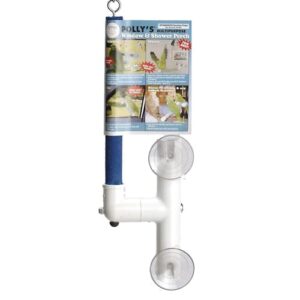
Suction cups lock Polly’s perch onto smooth glass or tile, turning your window into an observation deck and your shower into a steam bath for feather conditioning. The sandy coating grips wet feet and gently files nails when your bird shifts weight, while the 1- to 1.25-inch diameter suits cockatiels through African greys.
Press the oversized cups firmly to a clean, dry surface, then check weekly for cracks—loose suction can drop your bird mid-perch, especially under the weight of larger parrots.
| Best For | Bird owners who want a versatile perch that works in both showers and on windows for small to medium-sized parrots like cockatiels and conures. |
|---|---|
| Material | Plastic |
| Mounting Type | Suction cup |
| Size Category | Small-Medium |
| Cleaning Method | Wipe clean |
| Primary Use | Bathing/Viewing |
| Installation Difficulty | Easy |
| Additional Features |
|
- Strong oversized suction cups mount securely to any smooth surface like glass or tile
- Sandy textured surface helps grip wet feet and naturally trims nails as birds move
- Folds away when not in use, saving space in your shower or on your window
- Some users report suction cups lose their grip over time and need frequent checking
- The perch can get slippery when wet, making it harder for birds to stand comfortably
- The sandpaper texture may be too abrasive for birds with sensitive feet
Frequently Asked Questions (FAQs)
How many kinds of perch are there?
Think of perch varieties like a bird’s footwear wardrobe—you’ll find over a dozen distinct kinds when you count by material and function, including wood, rope, cement, plastic, platforms, and specialty designs.
What are the different types of bird cages?
Bird cages vary in design, including flight cages for horizontal movement, dome top models with vertical space, corner cages that optimize room efficiency, and portable travel enclosures for safe transport.
How often should I rotate my birds perches?
Rotate perches every one to two weeks for most small to medium parrots to maintain novelty and encourage exploration, but increase intervals to three to four weeks for senior birds who prefer stable routines.
Can birds sleep comfortably on all perch types?
Imagine waking every morning with numb feet—that’s reality for birds stuck on one perch type.
You’ll need varied textures like natural wood or rope to prevent pressure sores and support comfortable, restful sleep.
What perch materials are toxic to birds?
Painted or treated wood can leach lead and zinc when chewed, while cement perches may release metal ions that irritate your bird’s delicate feet and cause long-term toxicity.
How do I introduce new perches to my bird?
Place a new perch in the cage without removing old ones, allowing your bird to explore at its own pace over several days before gradually adjusting placement or removing less-used options.
Conclusion
Your bird’s feet will make over a million gripping motions this year—each one either strengthening healthy joints or deepening painful ulcers.
Understanding different types of bird perches explained here transforms that repetitive cycle from a liability into therapeutic exercise. The right combination of wood, rope, and textured surfaces doesn’t just prevent bumblefoot; it actively reverses early arthritic changes while satisfying instinctive climbing behaviors.
Invest in variety now, or pay veterinary bills later.