This site is supported by our readers. We may earn a commission, at no cost to you, if you purchase through links.
Most people pack away their birdbaths when the first frost hits—assuming birds won’t bother. That assumption leaves winter birds without one of their most critical survival tools.
When ponds freeze and streams lock up under ice, liquid water becomes scarcer than food.
Birds need water every day, even in January, and dehydration in freezing temperatures isn’t just uncomfortable—it slows circulation and raises frostbite risk in their feet and legs.
A birdbath that stays ice-free can draw more feathered visitors in February than a full feeder in July.
Here’s everything you need to know about keeping birds hydrated through winter.
Table Of Contents
- Key Takeaways
- Why Winter Water Matters
- Yes, Birds Use Birdbaths in Winter
- Which Birds Visit Winter Birdbaths
- Why Birds Bathe in Cold Weather
- When Birds Avoid Winter Birdbaths
- How to Keep Water Unfrozen
- Safe Winter Birdbath Temperature Range
- Where to Place Winter Birdbaths
- How to Clean Winter Birdbaths
- Are Heated Birdbaths Worth It
- Frequently Asked Questions (FAQs)
- Do birds need a bird bath in winter?
- Why should you keep a birdbath in winter?
- Should bird bath water be hot or cold?
- Can birds drink in a heated bird bath?
- Why put a tennis ball in a bird bath?
- Can multiple birds share one bath safely?
- Do birdbaths attract unwanted wildlife in winter?
- What materials hold up best in freezing temperatures?
- How deep should a winter birdbath be?
- Should birdbaths be removed during heavy snowstorms?
- Conclusion
Key Takeaways
- Birds need liquid water every day in winter — not just food — because dehydration slows circulation and raises frostbite risk in their feet and legs.
- A heated birdbath becomes one of the most valuable spots in your yard once natural water sources freeze, drawing more visitors than a full feeder in warmer months.
- Clean feathers aren’t just cosmetic — they trap warm air for insulation and support flight speed, so regular bathing is a genuine survival behavior even in freezing temperatures.
- Keep water between 40–50°F, change it every 2–3 days, and place the bath in a sunny spot with open sightlines so birds feel safe enough to actually use it.
Why Winter Water Matters
Winter is harder on birds than most people realize, and water is a big part of why. When ponds and puddles freeze solid, finding something to drink becomes a daily struggle that takes real energy.
Setting up a heated birdbath for winter birds can make a genuine difference when every other water source has turned to ice.
open water available makes such a difference for the birds in your yard.
Frozen Natural Water Sources
When temperatures plummet, Lake Ice Formation seals off ponds from the top down, River Border Ice creeps inward from the banks, and fast-moving Stream Polynyas shrink to almost nothing. Natural Ice Edge Habitat disappears quickly.
Birds that relied on those spots suddenly have nowhere to drink or bathe — making your ice-free birdbath one of the few reliable water sources left.
Providing liquid water in winter helps feather maintenance and energy balance.
Drinking Water During Food Scarcity
Water scarcity for wildlife hits hardest when food is already scarce. Birds burn more energy foraging through snow, so bird hydration becomes a genuine survival priority — not just a comfort.
Think of it like emergency rations: your birdbath becomes their community water source when everything else is locked up.
Clean, liquid water aids digestion and helps birds process the seeds they do find.
Hydration and Winter Survival
Dehydration is just as deadly as starvation for birds in winter. Without proper bird hydration, blood circulation slows, raising frostbite risk in tiny feet and wings. Metabolic rate drops, and energy balance collapses fast.
In winter, dehydration kills birds as surely as starvation, collapsing circulation, warmth, and energy at once
Dehydration mortality is a real threat — water keeps digestion running and body temperature stable. A heated birdbath offering consistent water temperature control genuinely helps bird survival in cold.
In winter, indoor heating lowers humidity can increase moisture loss from breathing, making extra water necessary for birds.
Why Snow is Not Enough
Snow looks like a water source, but it’s not reliable enough. Snow melt insufficiency is a real problem — crusty, compacted snow won’t melt during cold snaps, and temperature variability impact means refreezing can happen fast.
That’s where liquid water necessity kicks in. A heated birdbath closes those habitat water gaps, giving birds steady bird hydration in winter without the energy expenditure risks of foraging frozen ground.
Yes, Birds Use Birdbaths in Winter
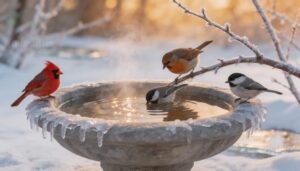
Yes, birds absolutely do visit birdbaths in winter — and more often than most people expect. When ponds and puddles freeze over, a birdbath with open water becomes one of the most valuable spots in your yard.
what’s really driving birds to the bath when temperatures drop.
Why Birds Visit Baths in Freezing Weather
Even in bitter cold, birds are drawn to your birdbath like a lifeline. When ponds and puddles freeze solid, a heated bath becomes the only reliable water source nearby — and birds know it.
Here’s why they keep coming back:
- Thermal Comfort — Warm water reduces the energy birds burn just staying alive.
- Energy Conservation — A nearby water source means less exhausting travel across frozen terrain.
- Feather Maintenance — Clean plumage traps warm air, acting like a built-in winter coat.
- Predator Vigilance — Open, familiar spots let birds watch for threats while they drink.
- Social Interaction — Reliable baths draw mixed flocks, creating safety in numbers.
Drinking Versus Bathing Behavior
Birds don’t visit your bath for just one reason. Some come purely to drink — quick sips that restore hydration energy balance without much exposure risk. Others commit to a full dip, gaining bathing thermal benefits through preening oil distribution across their feathers.
That predation exposure tradeoff shapes each choice. Understanding this water source preference reveals just how purposeful winter bird behavior and hydration needs truly are.
How Visitation Changes After Snowfall
After a fresh snowfall, something shifts fast. Within one to two hours of skies clearing, birds flock back to open water — post-snowfall peaks hit hardest in that first six-hour window.
Snow-drift impact is real too: deep drifts cut accessible bath area by nearly 40 percent.
But microclimate hotspots near walls or fences keep drawing visitors, especially chickadees, whose species-specific surge jumps roughly 20 percent when feeders sit nearby.
Why Open Water Attracts More Birds
Open water is a magnet in winter—rarer than food, and birds know it. When ponds and puddles freeze, your birdbath becomes a reliable pit stop for rapid drinking and quick metabolic boosts without wasting energy melting snow. That kind of energy conservation matters.
It also draws social congregation, pulling in species that skip feeders entirely, while predator vigilance stays sharp in clear, open sightlines.
Which Birds Visit Winter Birdbaths
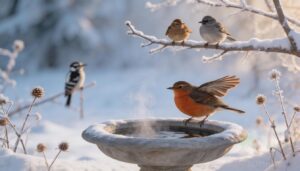
Not every bird heads south for winter — plenty stick around, and they all need water just as much as they need food. Once you set out a birdbath with open water, you might be surprised by who shows up.
Here’s a look at the most common winter visitors you can expect to see.
Chickadees and Other Small Songbirds
Chickadees are the regulars you’ll spot first at an ice-free birdbath. These small birds visit every 10–15 minutes, making quick, purposeful stops that support both energy conservation, bird health, and feather preservation.
Their foraging strategies bring them near winter bird feeding stations already, so a heated bird bath nearby fits naturally into their routine. Clean feathers mean better insulation — and better survival.
Cardinals, Finches, and Sparrows
Cardinals, finches, and sparrows each bring distinct plumage coloration and winter vocalizations to your yard — and all three rely on open water when snow covers natural puddles.
Their feeding strategies overlap at the bath: seed preference drives them to nearby feeders, then they stop to drink.
Winter use of birdbaths helps bird health and feather preservation, keeping insulation intact through the coldest weeks.
Jays and Woodpeckers
Blue jays and woodpeckers round out your winter visitor list — and they bring some personality with them.
Jays are bold. They’ll dominate the bath through sheer volume, using territory defense and even mimicking hawk calls to clear the space. Woodpeckers stop by between drumming sessions, pausing cache retrieval runs to drink.
Both benefit from winter use of birdbaths, supporting bird health and feather preservation during cold snaps.
- Feeding competition at the bath is real — jays often arrive first and linger longest.
- Acorn storage runs keep jays moving all day, making water stops a regular part of their routine.
- Woodpeckers need water too — cold weather bird care isn’t just for small songbirds.
How Local Species Affect Usage
Your local mix of species shapes everything.
Small birds stay close to cover — within 10 to 20 meters — because cover proximity preference directly affects how long they linger. Predator visibility impact shortens visits when raptors perch nearby.
Inter-species competition follows seasonal arrival timing, with larger birds often edging out smaller ones. Understanding territory overlap effects helps you place baths where everyone gets a turn.
Why Birds Bathe in Cold Weather
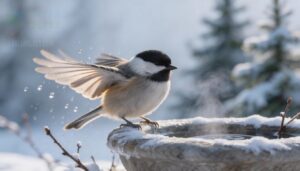
It might seem strange that birds bother bathing when it’s freezing outside, but there’s real science behind it. Clean feathers aren’t just about looking good — they’re survival tools.
cold-weather bathing matters more than most people realize.
Cleaning Mud and Debris From Feathers
Even in winter, birds need to clean their wings and remove grime that builds up from foraging. Gentle handling starts at the water’s edge — a quick dip, a shake, done.
Clean water helps feather integrity by flushing mud before it settles into the vane. Think of it as basic feather preservation: birds instinctively use preening techniques right after bathing, restoring alignment and protective oils.
Maintaining Feather Insulation
Clean feathers aren’t just about looks — they’re survival gear. Each feather lofts when dry, creating air pocket retention that keeps a bird warm like a tiny down jacket.
Barbule interlock holds that structure together. When mud or debris breaks it down, feather integrity suffers quickly.
After bathing, molt replacement and regular preening restore feather condition, giving birds the metabolic heat support they need to outlast the cold.
Supporting Preening and Waterproofing Oils
Bathing in clean water does more than rinse away dirt — it activates the preen gland, which produces specialized oils. These oils vary in Oil Composition and Seasonal Wax Variation, adjusting feather hydrophobicity as temperatures drop.
That waxy coating helps Microbial Defense, protects feather integrity, and keeps feather waterproofing intact.
Without regular access to clean water at a safe water temperature, feather condition declines quickly.
Flight Efficiency and Predator Escape
Dirty feathers don’t just look bad — they cost birds their lives. Poor bird feather condition affects Wing Aspect Ratio, reducing lift and Tail Maneuverability when a hawk strikes.
Clean feathers allow Glide Bursts and Quick Decision‑making mid-flight.
Alarm Calls only help if birds can actually escape.
That’s why avian thermoregulation, temperature regulation for birds, and water temperature management through habitat enrichment directly support survival.
When Birds Avoid Winter Birdbaths
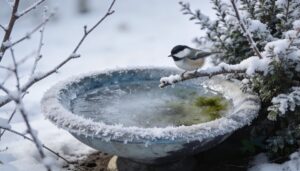
Birds don’t always use a birdbath just because it’s there — a few things can quietly turn them away. Even in winter, small details like temperature, water depth, cleanliness, and placement make a real difference in whether birds feel safe enough to stop.
Here’s what often keeps birds away from winter birdbaths.
Extreme Cold and Reduced Bathing
When temperatures plunge past -10°C, most birds quietly pull back from the bath. That’s Metabolic Energy Tradeoffs in action — spending energy getting wet isn’t worth it when Winter Forage Scarcity already stretches their reserves thin.
Watch for these shifts in behavior:
- Behavioral Freeze Response — birds swap full baths for quick sips
- Feather Hydration Loss becomes secondary to staying warm and fed
- Thermal Stress Impact shortens visits to under 30 seconds
Deep Water and Icy Edges
Even a beautiful birdbath becomes a trap when water is too deep or edges are icing over. Birds have clear water depth preferences by bird size — small finches and chickadees need just 1–2 inches.
Deeper water creates ice formation on bird baths along the edges, forming brine pockets that make footing slippery and dangerous.
Add a few pebbles to give smaller birds safe, confident footing.
Dirty Water and Algae Buildup
Birds won’t touch a bath that looks — or smells — wrong. Algae buildup is a real deterrent, and it builds fast.
Nutrient runoff from grass clippings or pet waste feeds green and filamentous algae types, while sediment buildup creates murky, stagnant pockets. Poor water circulation makes it worse.
Algae control in birdbaths starts with changing water every 2–3 days and scrubbing weekly — even in winter.
Unsafe Locations With Predator Cover
Location matters more than you’d think. Dense vegetation traps birds between cover and water, giving stalking predators an easy advantage.
Hidden shrub ambush spots, balcony cat hideouts, rooftop perches, and cliff edge exposure all create dangerous blind spots.
For safe placement of birdbaths, keep sightlines open — predator deterrents start with positioning.
Clear surroundings are your best bird habitat enhancement and bird bath winter care strategy combined.
How to Keep Water Unfrozen
Frozen water helps no one — not you, and definitely not the birds counting on your bath.
The good news is there are a few practical ways to keep things liquid even when temperatures drop below freezing. Here’s what actually works.
Heated Birdbath Basins
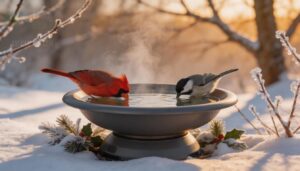
Getting a heated birdbath basin is the simplest path to an ice-free birdbath all winter. These heated birdbath solutions use a built-in thermostat that kicks on around 35°F and shuts off once water reaches a safe temperature — so you’re not wasting energy.
Options with UV-resistant coating last longer outdoors, and models with smart app control let you monitor water conditions remotely without stepping outside.
Submersible Heaters and De-icers
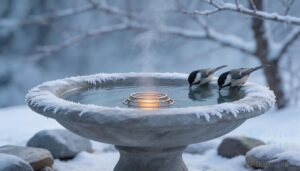
If a heated basin isn’t your style, a submersible heater or bird bath deicer works just as well.
Drop one into your existing bath, and it manages ice prevention automatically.
These units feature corrosion-resistant elements and thermostatic control — activating around 35°F, then shutting off.
Energy consumption stays low, and most carry safety certifications.
Follow basic installation guidelines: keep it fully submerged and plugged into a GFCI outlet.
Moving Water With Drippers or Pumps
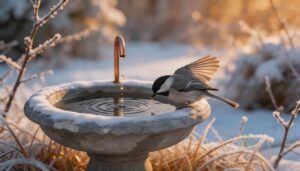
Another option worth knowing: moving water resists freezing far better than still water. A simple dripper or small pump keeps things circulating — and that constant motion is often enough to prevent ice from forming overnight.
Good Dripper Flow Control and Pump Pressure Management keep flow steady without wasting energy.
Solar Drip Systems work beautifully off-grid, and basic Filtration for Birdbaths prevents clogs that kill circulation fast.
Sunlight, Insulation, and Warm Refills
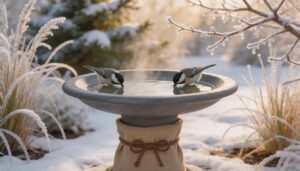
Sunlit placement does a lot of quiet work.
Solar gain through a dark metal basin can delay freezing by several hours on a bright day.
Wrap the base with insulation wraps — foam or burlap works well — to hold that warmth longer.
Thermal basin covers help overnight.
Warm water top-ups throughout the day keep things liquid without shocking the birds.
Safe Winter Birdbath Temperature Range
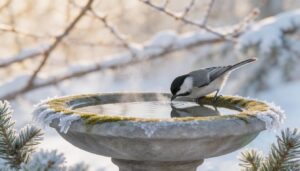
Getting the water temperature right matters more than most people realize. Too cold and it freezes over; too warm and it becomes a breeding ground for bacteria.
Here’s what you need to know about keeping your birdbath in the safe zone all winter long.
Best Temperature for Liquid Water
The ideal thermal range for a winter birdbath sits between 40–50°F (4–10°C) — warm enough to stay liquid, cool enough to stay safe. Think of it as the metabolic efficiency zone where birds drink comfortably without bacterial risk.
Here’s what that means practically:
- Below 40°F — surface ice begins forming, reducing accessibility.
- 40–50°F — ideal feather comfort level; birds drink freely.
- 50–68°F — still safe, but watch for algae.
- Above 70°F — bacterial growth accelerates rapidly.
Risks of Partially Frozen Water
Partially frozen water looks harmless, but it’s one of the sneakiest hazards your birdbath can present.
Ice slip hazards form where thin patches break underfoot, while edge ice receding unpredictably shrinks safe drinking space.
Birds face cold shock risk from near-freezing liquid, and debris choking danger increases as ice gaps trap particles.
Sudden surge water beneath melting ice can throw off footing entirely, risking hypothermia and dehydration fast.
Why Overly Warm Water is Harmful
Because birds need stable winter water, overly warm baths can do real harm. Excess heat speeds Bacterial growth, Parasite proliferation, and algae, which hurts bacterial growth prevention, algae prevention, and mosquito control.
It also raises Dehydration risk, causes Oil stripping and Feather damage, and disrupts thermal regulation in birds.
Follow water temperature guidelines for avian health in cold backyard baths.
Thermostats and Steady Heating
A thermostat is your birdbath’s quiet guardian.
Built-in heater thermostat settings activate submersible heaters only when temperatures dip below 35°F — smart, energy efficient heating that cuts waste.
Thermostat placement away from direct wind ensures accurate sensor calibration.
Some models even support programmable schedules with smart energy saving modes and safety cutoffs, keeping your heated bird bath in the ideal temperature regulation range automatically.
Where to Place Winter Birdbaths
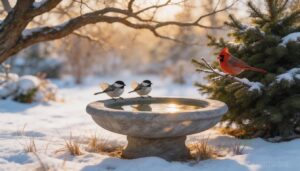
Where you put your birdbath matters just as much as what’s in it. The right spot keeps water from freezing too fast, gives birds a safe place to land, and actually gets used.
Here are four placement tips that make a real difference.
Sunny Spots With Wind Protection
A sheltered spot with good sun exposure is your best starting point. Aim for southwest sun exposure to catch morning warmth and limit harsh afternoon wind.
Windbreak materials like evergreen hedges cut incoming gusts by 30–50%, helping sunlight utilization for thawing water do its job longer. Nearby stone or concrete adds thermal mass placement, storing heat and releasing it slowly through colder hours.
Nearby Shrubs for Quick Shelter
Think of nearby shrubs as a rest stop between flights.
Dense windbreak shrubs planted 4–6 feet apart give birds an instant refuge after visiting your bath. Fast-growing evergreens like arborvitae or juniper establish quickly and hold cover all winter.
Layered shrub planting — mixing heights — creates the kind of bird-friendly habitat that keeps nervous visitors coming back.
Open Sightlines for Predator Safety
Shrubs offer refuge — but don’t place your bath right beside them. Predator Visibility drops quickly when a cat can crouch two feet away undetected. Aim for Escape Route Distance of 10–15 feet between basin and cover, creating Clear Flight Lanes and Open Approach Angles from multiple directions.
Three placement wins for bird safety:
- Open sightlines in all directions
- Strategic Perch Placement nearby but not adjacent
- Unobstructed takeoff paths
Stable, Level Placement in The Yard
Once you’ve nailed the sightlines, the next step is making sure your bath actually stays put.
A solid Foundation Base starts with compacted gravel — it resists settling and keeps the basin steady through freeze-thaw cycles.
Use a Leveling Technique like a simple bubble level after heavy rain.
A gentle Drainage Slope away from structures prevents pooling, and a basic Anchoring System — ground stakes or decorative stones — keeps things stable on windy days.
How to Clean Winter Birdbaths
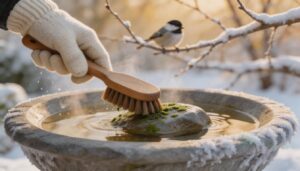
A heated birdbath does a lot of good — but only if it’s clean. Cold weather doesn’t stop bacteria and algae from building up, and dirty water can actually harm the birds you’re trying to help.
Here’s what you need to know to keep things fresh all winter long.
How Often to Change Water
Change water every 2–3 days during winter — that’s your baseline for solid bird bath maintenance during winter. During cold snaps with heavy bird traffic, bump that change interval to every 5–7 days with a partial refill of 10–25%.
Stick to your seasonal schedule and keep water quality checks consistent.
Algae prevention starts with clean water and regular cleaning — your birds depend on it.
Weekly Scrubbing and Debris Removal
Once your water’s fresh, keep the basin itself clean. Every week, grab a non-abrasive sponge and scrub the interior, rim, and waterline — that’s where mineral buildup and algae quietly take hold. Clear out leaves and debris first, then wipe down the edges.
Use dedicated winter tools (tool segregation matters) and wear gloves. Small habits like these make a real difference in water quality all season.
Vinegar Rinse and Safe Cleaning Methods
For deep cleaning, a vinegar ratio of 1 part white vinegar to 9 parts water does the job safely. Soak time matters — let it sit 10–15 minutes to loosen algae and mineral film. Then scrub with a soft bristle brush and rinse thoroughly until the smell disappears.
Bird bath hygiene essentials:
- Wear gloves when scrubbing old droppings or mineral crust
- Skip soap — it strips feather-waterproofing oils
- Refill only after rinsing completely
Preventing Bacteria in Cold Weather
Cold weather doesn’t kill bacteria — it just slows it down. That’s why ensuring water quality for winter birds still takes real effort.
Check your edge inspection routine for cracks where grime hides, monitor water depth daily, and swap in antimicrobial floating objects to reduce buildup. Connect heaters to GFCI-protected outlets and use seasonal disinfectant periodically.
| Warning Sign | What to Do |
|---|---|
| Cloudy water | Replace immediately |
| Foul odor | Drain, scrub, refill |
| Algae patches | Vinegar rinse + scrub |
| Bird avoidance | Full clean, relocate bath |
Algae control in outdoor bird baths and preventing dehydration and disease in winter birds go hand in hand — clean water is survival water.
Are Heated Birdbaths Worth It
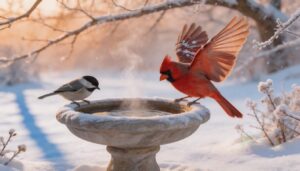
If you’ve ever watched birds crowd around the only open water on a freezing morning, you already know the answer. A heated birdbath does more than keep water liquid — it can genuinely change how many birds survive the winter in your yard.
Here’s what’s worth knowing before you decide.
Benefits for Winter Bird Activity
A heated birdbath does more than keep water liquid — it quietly promotes avian health all season long.
Benefits of water for birds in winter include better foraging efficiency, since birds spend less energy hunting for liquid sources. Clean, open water also boosts immune support, encourages social interaction at shared baths, and lowers predation risk by keeping feathers flight-ready.
Energy Use and Running Costs
Running a heated birdbath costs less than you might think. Most heaters draw 40–150 watts, and with thermostat cycling, they don’t run continuously — cutting energy use substantially.
At $0.12/kWh, expect roughly $1–$10 monthly, depending on wattage and hours. Heater efficiency ratings and pump energy consumption (just 2–6 watts for small circulators) both influence your operational cost breakdown.
Small investment, big return for the birds.
Safety Features to Look For
Not all heaters are built equal — and the wrong one can be a real hazard. Before you buy, look for these four non-negotiables:
- GFCI Outlet compatibility — electrical safety outdoors starts here; a GFCI circuit cuts power instantly if moisture intrudes
- Thermostat Shutoff — prevents overheating automatically
- Weatherproof Housing — weather-resistant casing keeps components dry
- Insulated Cords with an Anti-Tip Stand — essential safety precautions for heated bird baths
When a Heated Bath is The Best Option
If temperatures in your area regularly drop below freezing for days at a time, a heated birdbath stops being a luxury and starts being the practical choice.
Heated birdbath solutions with automated temperature control and low-voltage heaters run quietly, use eco-friendly materials, and cost as little as $1–$10 monthly — making keeping birdbaths ice-free straightforward, safe, and genuinely worth it.
Frequently Asked Questions (FAQs)
Do birds need a bird bath in winter?
Yes, birds absolutely need water in winter. Natural sources freeze over, leaving them struggling to drink and bathe.
A birdbath gives them reliable access to clean water when survival depends on it.
Why should you keep a birdbath in winter?
Keeping a birdbath in winter gives birds a lifeline.
When ponds and puddles freeze, open water provides thermoregulation, immune support, and feather health — making your yard a hub for species diversity and seasonal behavior.
Should bird bath water be hot or cold?
Neither hot nor cold — birds prefer lukewarm water. Aim for 35–40°F to support feather integrity without heat stress.
This sweet spot satisfies their thermal preference, lowers metabolic cost, and keeps your heated bird bath inviting all winter.
Can birds drink in a heated bird bath?
Absolutely — birds drink from heated birdbaths regularly.
A heated bird bath keeps water liquid when everything else has frozen, meeting species hydration needs without the guesswork of cracked ice or dirty puddles.
Why put a tennis ball in a bird bath?
Drop a tennis ball in your birdbath, and it acts as a low-cost anti-freeze.
Wind pushes it around, creating surface agitation that stops water from icing over — plus its bright color works as a visual cue for birds.
Can multiple birds share one bath safely?
Yes — multiple birds can share one bath safely.
Clean water sources, a shallow depth, and a wide rim design lower the disease risk, and suit water depth preferences by bird size.
Do birdbaths attract unwanted wildlife in winter?
Birdbaths can attract raccoons, squirrels, and feral cats — real concerns for wildlife gardening.
Smart placement and regular cleaning handle most wildlife competition, keeping your winter bird feeding station safer for birds.
What materials hold up best in freezing temperatures?
For freeze-proof birdbaths, metal and resin hold up best. Stainless steel strength resists cracking through repeated freeze-thaw cycles, while HDPE durability keeps plastic basins intact even in brutal cold.
How deep should a winter birdbath be?
Keep the water depth between 1 and 2 inches.
Shallow containers suit small birds’ water depth preferences by bird size, while ideal edge depth of 1 inch meets depth safety margin needs for all species.
Should birdbaths be removed during heavy snowstorms?
It depends on your bath’s material. Ceramic and concrete crack under heavy snow loads, so storing them prevents costly damage.
Durable plastic or metal can stay out if heated.
Winterizing your bird bath is a simple freeze protection that saves money long-term.
Conclusion
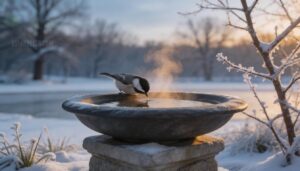
Picture a frosted morning—steam rising from a heated birdbath as chickadees dart in, feathers ruffled against the cold. This isn’t just a pretty scene; it’s survival.
Do birds use birdbaths in winter? Absolutely.
When ice locks up rivers, your birdbath becomes their lifeline for drinking, bathing, and staying frostbite‑free.
A simple heated basin, placed safely with shelter nearby, turns your yard into a sanctuary.
Keep water fresh, edges ice‑free, and watch as sparrows, cardinals, and jays flock to this gift.
Small acts, big impact—you’re helping them weather winter, one sip at a time.