This site is supported by our readers. We may earn a commission, at no cost to you, if you purchase through links.

A flash of red catches your eye in the backyard, and just like that, it’s gone. You grab your phone, scroll through hundreds of bird photos, and still can’t figure out what you saw. That moment of confusion is where most birdwatching journeys begin—and where many people give up.
But here’s the thing: you don’t need to memorize every species or become an expert overnight. Easy methods for bird identification break down into just a few simple skills that anyone can learn. Once you know what to look for—size, shape, markings, sounds, and behavior—those mystery birds start revealing their identities.
You’ll move from guessing to knowing, and that red flash? You’ll recognize it before it even flies away.
Table Of Contents
Key Takeaways
- Bird identification becomes manageable when you focus on a few key features—size compared to familiar species, distinctive body shapes and silhouettes, field marks like eye rings and wing bars, and behavior patterns like flight style and feeding techniques.
- Sound identification matters just as much as visual cues since over 70% of birds are detected by their calls and songs, making apps like Merlin Bird ID valuable tools for matching recorded sounds to known species.
- Seasonal changes dramatically affect bird appearance through molting patterns and breeding plumage, so accounting for these variations prevents misidentification and helps you recognize the same species year-round.
- Combining the right tools—smartphone apps for instant field IDs, regional field guides for detailed reference, and 8×42 binoculars for clear observation—transforms guesswork into confident species recognition with practice.
Start With Size, Shape, and Silhouette
When you spot a bird, the first thing that jumps out is usually its overall look—how big it’s, what shape it takes, and the way it carries itself. These features stay the same no matter the lighting or angle, which makes them your most reliable starting point.
Here’s how to use size, shape, and silhouette to narrow down what you’re seeing.
Compare Birds to Familiar Reference Sizes

Why guess exact measurements when you can use birds you already know? Compare your mystery bird to familiar yardstick species like sparrows, robins, or crows. This relational comparison works because size perception sharpens when you’ve got a reference point, and digital tools like Merlin Bird ID use these same categories to filter thousands of possibilities. One such tool uses reported eBird sightings to predict likely species at a given location.
Practice these calibration skills:
- Think “smaller than a robin” or “bigger than a crow” instead of centimeters
- Watch two birds together to judge relative size more accurately
- Pick urban yardstick species you see daily as your go-to size anchors
Recognize Distinctive Body Proportions and Postures
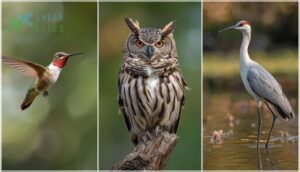
Beyond size, pay attention to physical characteristics like body proportions. A hummingbird’s vertical hovering posture, an owl’s upright stance, or a crane’s one-legged vigilance instantly reveals what you’re observing. Wing length, tarsus length, and body mass create unique overall bird shapes. Shape modeling research shows that even subtle differences in neck-to-tail ratios help distinguish species—recognizing bird shapes becomes second nature with practice. Knowing the displayed bird posture can also aid in identification.
| Body Part | What to Notice | Example Species |
|---|---|---|
| Neck | Short vs. long | Hawks vs. herons |
| Legs | Tarsus length, positioning | Waders vs. perchers |
| Wings | Proportion to body | Swifts vs. sparrows |
| Tail | Length, shape, angle | Peacocks vs. wrens |
Identify Birds by Their Perched and Flying Silhouettes

Silhouette accuracy improves dramatically once you recognize birds in different poses. Perched silhouettes reveal bill shapes, tail lengths, and body angles—think of how a flycatcher sits upright while finches lean forward.
Flying silhouettes expose wing shape and tail proportions. Silhouette guides show that pointed wings mean swallows, while broad wings signal raptors.
Even when plumage and behavior aren’t visible, these shapes and sizes narrow your options fast.
Look for Key Field Marks and Colors

Once you’ve narrowed down a bird’s basic shape and size, it’s time to zoom in on the details that really matter. Field marks are the standout features that separate one species from another—like nature’s own cheat codes.
Here’s what to watch for on every bird you spot.
Spot Eye Rings, Wing Bars, and Facial Patterns
Eye rings, wing bars, and facial markings are like fingerprints for birds—they help you identify species at a glance. These field marks remain consistent within species, making them reliable for quick recognition even during migration or molting.
- Look for complete or broken eye rings around the eye to separate similar sparrows
- Count one or two wing bars on folded wings in warblers and flycatchers
- Notice facial stripes like the supercilium or malar stripe in songbirds
- Check if patterns are bold or subtle to narrow your ID
- Use field guides to match these markings with local species
Note Color Patches and Plumage Variations
When you study a bird’s plumage patterns, you’re decoding signals shaped by genetics and evolution. Color patches—those ornamental reds, blues, and yellows—often appear on throats, crowns, and wings where they matter most for communication.
Structural coloration produces iridescent hues in hummingbirds, while melanized patches signal dominance in some species. Notice where colors sit on the body and how vivid they appear—these field marks guide your identification.
Account for Seasonal Changes and Molting Patterns
Throughout the year, you’ll notice birds don’t always look the same. Molting—when feathers shed and regrow—changes plumage patterns dramatically. Spring might show males in bright breeding colors, while fall reveals duller tones.
These plumage variations create misidentification risks, especially during molt timing windows. Young birds add another layer of complexity for age identification. Watch for retained juvenile feathers or incomplete transitions, and remember that seasonal migration shifts when you’ll see different avian plumage altogether.
Listen to Bird Calls and Songs

Bird sounds can be just as helpful as field marks when you’re learning to identify species. Once you tune your ear to the songs and calls around you, you’ll start recognizing birds even when they’re hidden in the trees.
Here are three ways to build your listening skills and use sound to your advantage.
Learn Common Vocalizations in Your Area
Over 70% of birds you’ll detect in the field are recognized by sound alone, making local call learning essential. Start with the most common species in your area—these vocalizations will account for the majority of what you hear during walks.
Most birds you’ll encounter are identified by sound alone, so start learning the common calls in your area
- Focus on five to ten abundant local species first
- Listen during dawn when bird songs peak
- Note which calls repeat most frequently in your neighborhood
- Practice distinguishing between songs and calls for each species
Learning regional song variations takes repeated exposure, but your accuracy improves dramatically with targeted practice.
Use Audio Recording Apps for Playback Comparison
The Merlin Bird ID app gives you 100% accuracy in controlled tests and makes playback comparison straightforward. Record a song, then compare it against known samples using the app’s digital spectrograms. You’ll find playback features especially helpful for confirming rare species, though background noise can reduce detection rates.
Most apps now offer offline audio recordings and confidence ratings to support your auditory recognition skills in the field.
Distinguish Between Calls, Songs, and Alarm Notes
You’ll sharpen your auditory recognition once you understand what different vocalizations mean. Bird songs are longer and more complex, often running over 2–3 seconds, while bird calls last under a second. Alarm notes sit higher than 5 kHz, making them tough for predators to pinpoint.
Here’s how to tell them apart:
- Songs attract mates and defend territory with elaborate patterns
- Calls keep flocks connected during flight and foraging
- Alarm notes signal immediate danger, prompting quick escape behaviors
- Recruitment calls gather other birds to mob predators together
Song complexity varies by species, with some parid species using over 10 note types. You’ll notice acoustic properties differ too—alarm function requires sharp, high-pitched tones, while songs feature broader frequency ranges. Species overlap happens when different birds share similar alarm calls for the same threats. Watch behavioral responses during playback: scanning means danger assessment, while approach behavior shows recruitment.
Watch Behavior and Habitat Preferences

Sometimes the way a bird moves tells you more than its colors ever could. A woodpecker hitching up a tree trunk or a hawk circling overhead can give you an instant ID, even from a distance.
Let’s look at three behavior and habitat clues that make identification easier.
Observe Feeding Habits and Foraging Techniques
How a bird feeds can tell you a lot about its identity. Watch for distinctive foraging techniques like woodpeckers hammering bark or warblers gleaning insects from leaves.
Dietary preferences vary widely—seed-eaters have thick bills, while insect-hunters sport thin, pointed beaks.
In urban areas, you’ll notice certain species dominate feeders, adapting their feeding efficiency to reliable food sources. These behavioral clues make bird identification much easier.
Note Flight Patterns and Movement Styles
Beyond feeding techniques, you can identify bird species by watching how they move through the air. Wing flapping frequency varies widely—some birds flutter rapidly while others glide smoothly. Notice flight altitude and speed patterns during migration, when maneuverability shifts become obvious.
Hawks soar in circles, woodpeckers bound in waves, and swallows dart erratically. These flight patterns and migration styles reveal a bird’s identity instantly.
Match Birds to Their Preferred Habitats
Where you see a bird tells you a lot about what it’s. Forest-loving species like thrushes need dense cover, while wetland birds such as egrets hunt in shallow water. Urban habitats support adaptable sparrows and pigeons.
Habitat loss threatens many bird species, making conservation efforts critical. By learning which habitat types attract specific birds, you’ll sharpen your avian habitat identification skills and protect important food sources.
Use Apps, Field Guides, and Binoculars

Once you’ve learned what to look for, the right tools can make bird identification so much easier. Apps give you instant answers in the field, field guides offer detailed references you can study at home, and good binoculars bring distant birds into clear view.
Here’s how to choose and use each one effectively.
Get Started With Merlin Bird ID App
Why wait to identify that mystery bird when the Merlin Bird ID app can help you do it right now? This free smartphone download works with sound identification, photo accuracy that hits 92% for common species, and offline use once you’ve grabbed your regional pack. You’re joining over 1.2 million users in community science efforts while building your personal life list.
- Snap a quick photo and let the app match it against 67 million images
- Record a song and compare it instantly to archived bird calls
- Download regional packs to identify birds without cell service
- Track your sightings and watch your life list grow
- Contribute observations that help researchers study migration patterns
Choose The Right Field Guide for Your Region
Apps are great for quick IDs, but field guides still earn a spot in your pack. Regional guide differences matter—eastern guides cover over 800 species, while targeted state guides focus on 325 local birds you’ll actually see.
Data-driven improvements now include eBird range maps showing real-time abundance. Digital versions update continuously, but print guides work anywhere without draining your phone battery.
Select Binoculars for Clear Bird Observation
For serious identification work, binoculars transform distant specks into recognizable species. Most birders choose 8×42 models—the first number represents magnification power, while the lens diameter (42 mm) determines brightness and optical clarity.
- Field of view matters more than maximum zoom; 8x magnification offers 390–430 feet at 1,000 yards
- Weather resistance through nitrogen purging prevents fogging during morning outings
- Close focus under 12 feet reveals feather details on nearby birds
- Roof prism designs stay lightweight at 22–30 oz for all-day comfort
Frequently Asked Questions (FAQs)
How do juveniles differ from adult birds?
Juvenile birds bear briefer wings and bolder, brighter plumage than adults. They forage closer to home, produce less polished songs, and show smaller body sizes—all shapes and colors signaling their youth and inexperience.
Can weather conditions affect bird identification accuracy?
Yes, weather dramatically impacts identification accuracy. Fog visibility drops by 38%, wind noise masks calls by 43%, and rain increases misidentification rates by 46%.
Temperature effects and weather interaction alter bird behavior, making visual observation techniques and habitat recognition more challenging.
What time of day are birds most active?
The dawn chorus symbolizes nature’s alarm clock—birds burst into song at sunrise, reaching peak activity in that golden hour. Midday brings a decline, then an afternoon resurgence appears before nocturnal activity begins.
Seasonal variation affects these patterns throughout the year.
How do I identify birds in poor lighting?
When lighting is dim, focus on silhouette recognition and behavioral cues instead of field marks.
Low-light binoculars help reveal shapes, while nocturnal vocalizations and habitat mapping improve your bird identification techniques considerably.
Do male and female birds always look different?
Not always. About 60% of bird species are monomorphic, meaning males and females look nearly identical in plumage patterns and body size, requiring genetic sexing or careful behavioral observation for accurate identification.
Conclusion
Practice makes perfect, and that applies to birding as much as anything else. The more time you spend watching, listening, and comparing, the sharper your skills become.
Easy methods for bird identification aren’t about memorizing facts—they’re about training your eyes and ears to notice what matters. Soon, you’ll spot that cardinal before it even moves.
The mystery fades, the confidence builds, and every outing becomes a chance to see something new.
- https://www.birdwatchingdaily.com/birds/field-guides-and-apps/best-field-guide-and-listing-apps-for-birders/
- https://www.facebook.com/groups/288737854555183/posts/7310056835756548/
- https://pmc.ncbi.nlm.nih.gov/articles/PMC9495150/
- https://ceur-ws.org/Vol-2936/paper-123.pdf
- https://www.pnas.org/doi/10.1073/pnas.0406386101