This site is supported by our readers. We may earn a commission, at no cost to you, if you purchase through links.
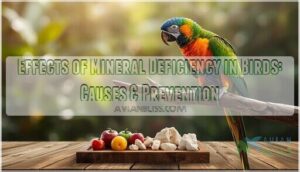
Your cockatiel’s sudden fractures, your parrot’s brittle eggshells, or your finch’s lackluster plumage aren’t random misfortunes—they’re often silent signals of mineral deficiencies quietly compromising your bird’s skeletal integrity, reproductive capacity, and immune resilience.
Calcium, phosphorus, magnesium, zinc, and manganese function as fundamental building blocks within avian physiology, driving everything from bone mineralization and neuromuscular transmission to enzyme activation and cellular repair mechanisms.
When seed-heavy diets, inadequate supplementation, or improper calcium-to-phosphorus ratios create nutritional gaps, the effects of mineral deficiency in birds manifest through weakened bones, impaired feather development, egg binding complications, and heightened susceptibility to infectious disease.
Understanding the physiological mechanisms behind these deficiencies, recognizing their clinical presentations, and implementing evidence-based dietary interventions can prevent irreversible skeletal deformities and restore peak health in both companion and aviary birds.
Table Of Contents
Key Takeaways
- Mineral deficiencies in birds—particularly calcium, phosphorus, magnesium, zinc, and manganese—manifest through weakened bones, impaired feather development, egg binding complications, and compromised immune function, often resulting from seed-heavy diets that lack proper calcium-to-phosphorus ratios of 1.5:1 to 2:1.
- Your bird’s skeletal integrity depends on maintaining precise mineral balance through high-quality pellets (60-80% of diet), fresh vegetables and fruits (15-25%), and limited seed consumption, as over-supplementation or mineral imbalances can cause toxicity and disrupt absorption pathways.
- Clinical signs requiring immediate veterinary intervention include visible bone deformities, recurrent fractures with minimal trauma, egg binding in breeding females, abnormal feather structure during molting, and behavioral changes like lethargy or altered preening patterns.
- Prevention requires monthly body condition scoring, routine blood tests measuring calcium and phosphorus levels, and collaborative diet planning with avian veterinarians who can identify species-specific mineral requirements before deficiencies progress to irreversible skeletal damage or reproductive failure.
Why Minerals Matter for Bird Health
Your bird’s body depends on minerals to function properly, from building strong bones to supporting nerve transmission and energy production. Without adequate mineral intake, even the most well-intentioned diet can fall short, leading to deficiencies that compromise your bird’s skeletal integrity, reproductive capacity, and overall vitality.
Understanding wild bird food nutrition helps you identify which seeds, supplements, and mineral sources best support your flock’s long-term health.
Understanding which minerals matter most and how they work together will help you recognize potential gaps in your bird’s nutrition.
A quality avian vitamin supplements guide can show you exactly which combinations work best and what signs to watch for in deficiencies.
Essential Minerals in Avian Nutrition
Your bird’s body depends on a precise blend of minerals to function properly, and understanding avian nutrition means recognizing which nutrients matter most. Mineral bioavailability determines how effectively your companion absorbs these essential elements, which include:
Understanding bird nutrition and diet advice helps you create meal plans that deliver these minerals in forms your bird can actually use.
- Macrominerals like calcium, phosphorus, and magnesium for structural integrity
- Trace elements including zinc, manganese, and iodine for metabolic processes
- Mineral balance between paired nutrients to prevent deficiencies
Proper mineral supplementation through calcium supplements or mineral blocks ensures your bird maintains peak health.
Offering mineral blocks designed for birds gives them the freedom to meet their nutritional needs on their own terms.
Roles of Calcium, Phosphorus, and Magnesium
Calcium balance drives eggshell formation and skeletal strength in your bird, working synergistically with phosphorus metabolism to maintain bone mineralization when the calcium-to-phosphorus ratio reaches approximately 1.5:1 to 2:1.
Magnesium deficiency disrupts over 300 enzymatic reactions, affecting neuromuscular function and protein synthesis, while mineral interactions between these three elements determine your companion’s ability to absorb and utilize each nutrient effectively within avian nutrition frameworks.
Importance of Balanced Mineral Intake
While a proper calcium-phosphorus ratio around 1.5:1 to 2:1 optimizes bone strength, maintaining balanced mineral intake across all dietary components prevents secondary deficiencies that compromise feather health and immune function in your avian companion.
Over-supplementation of single minerals disrupts absorption pathways, causing toxicity and metabolic dysfunction, whereas species-specific dietary needs determine ideal mineral intake for growth, reproduction, and disease resistance through:
- Trace mineral provision supporting enzymatic activity and cellular metabolism
- Calcium supplementation balanced against phosphorus levels to prevent skeletal demineralization
- Magnesium cofactor availability enabling protein synthesis and neuromuscular coordination
- Regular monitoring of feather quality, bone density, and reproductive performance indicators
Common Causes of Mineral Deficiency in Birds

Understanding what causes mineral deficiencies in your bird is the first step toward preventing serious health problems. Dietary mistakes show up repeatedly in avian medicine, particularly among pet birds whose owners unknowingly provide nutritionally incomplete diets.
Many owners don’t realize how common nutrient gaps in pet birds actually are, especially when relying on seed-only diets that lack essential minerals.
While some factors affect wild birds differently than captive ones, let’s examine the primary causes that put birds at risk for developing mineral imbalances.
Seed-Heavy Diets and Nutritional Imbalances
Many parrot species you care for thrive on high-fat, low-calcium seeds, yet these diets pose serious mineral imbalance and calcium deficiency risks. Seed diets usually contain inadequate calcium-to-phosphorus ratios, compounding nutritional disorders when paired with vitamin D deficiency.
Dietary reformulation that incorporates fortified pellets, calcium-rich greens, and mineral supplements improves avian nutrition by mitigating skeletal fragility and reproductive dysfunction associated with seed-heavy regimens.
Poor Diet Choices in Pet Birds
You may unknowingly fuel mineral deficiencies in your pet birds by allowing selective feeding from seed mixes, a practice that triggers avian malnutrition through nutrient imbalance.
Seed diet risks extend beyond calcium deficiency, contributing to pet bird obesity when high-fat kernels dominate intake, while nutritional disorders emerge as your companion selectively consumes sunflower or safflower seeds, systematically excluding calcium-rich pellets and vegetables essential for skeletal integrity.
Risk Factors for Wild and Captive Birds
Both wild and captive birds face distinct, sometimes overlapping mineral deficiency pathways shaped by environmental degradation, husbandry failures, and species-specific vulnerabilities that challenge avian nutrition optimization.
Consider these risk amplifiers:
- Habitat pollution introduces environmental toxins that disrupt mineral absorption, compounding calcium deficiency and trace element imbalances
- Seed-heavy diets lacking dietary variety perpetuate vitamin D deficiency, impairing calcium metabolism
- Inconsistent mineral blocks or cuttlebone access reduces reliable supplementation
- Breeding seasons intensify calcium demands, especially in egg-laying females
- Habitat fragmentation limits mineral-rich foraging, elevating nutritional deficiencies across populations
Physical and Behavioral Effects of Mineral Deficiency
When your bird’s body doesn’t get the minerals it needs, the consequences show up in ways that are both visible and hidden, affecting everything from bone structure to immune response. You’ll notice some changes right away—brittle feathers, lethargy, or trouble laying eggs—while others develop quietly over time, weakening your bird’s body from the inside out.
Mineral deficiency affects your bird both visibly and invisibly, weakening bones, feathers, and immunity while some damage develops silently over time
Let’s look at the specific physical and behavioral effects you should watch for.
Bone Weakness and Skeletal Disorders
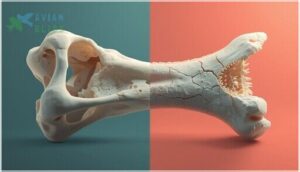
Calcium deficiency disrupts skeletal development by weakening mineral density, leading to avian osteoporosis, cortical thinning, and increased susceptibility to bone fractures. You’ll notice skeletal deformities in growing birds, particularly when calcium imbalance persists during critical growth phases.
Mineral deficiencies compromise bone health by reducing hydroxyapatite deposition in cortical and trabecular bone structures, resulting in radiographically evident porosity and structural fragility that predisposes your bird to pathological fractures.
Poor Feather Quality and Molting Issues
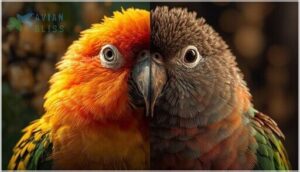
Your bird’s feathers often reveal underlying mineral deficiencies before clinical signs become apparent, as calcium deficiency, trace mineral insufficiencies, and vitamin D imbalance alter keratin synthesis, molt cycles, and preening behavior. Feather plucking, structural abnormalities, and delayed molting cycles indicate compromised nutritional health:
- Reduced feather sheen reflects iron and zinc deficiencies affecting structural integrity.
- Irregular molting cycles signal broader trace mineral deficits disrupting feather growth rate.
- Beak health deteriorates alongside feather structure when calcium-phosphorus ratios remain unbalanced.
- Abnormal preening behavior develops secondary to mineral-associated discomfort in growing plumage.
Reproductive Problems and Egg Binding

When your hen struggles to pass an egg, you’re witnessing egg binding—a life-threatening emergency tied directly to calcium deficiency and mineral imbalances that weaken eggshells, reduce muscular contractions in the oviduct, and compromise reproductive health.
Obesity, poor body condition, and calcium-phosphorus imbalances exacerbate avian obstetrics complications, increasing fertility issues and reproductive problems that demand immediate veterinary intervention, supportive care, fluid therapy, and potential surgical egg retrieval.
Immune System Suppression and Illness

Mineral deficiencies compromise immune function by reducing phagocytic activity, impairing lymphocyte function, and diminishing antibody production in your bird’s immune response.
Zinc and selenium deficits, combined with calcium-phosphorus imbalances, weaken disease resistance and infection control mechanisms, increasing susceptibility to pathogens.
Correcting nutritional deficiencies through mineral balance restoration improves avian wellness metrics and strengthens overall avian health, protecting your bird from opportunistic infections and chronic illness.
Preventing and Correcting Mineral Deficiencies
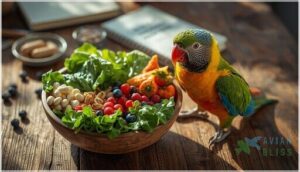
You can turn the tide on mineral deficiency by making deliberate changes to your bird’s diet and care routine, which requires understanding the balance between whole foods, fortified diets, and strategic supplementation. Correcting existing deficiencies involves immediate dietary intervention alongside careful monitoring of your bird’s response to nutritional adjustments, which may include working with your avian veterinarian to address severe cases.
The following approaches will help you establish a preventive framework that supports ideal mineral intake and long-term health in your feathered companion.
Dietary Recommendations for Optimal Mineral Intake
You’ll prevent mineral deficiencies by offering high-quality commercial avian pellets as 60-80% of your bird’s total dietary intake, ensuring balanced calcium-to-phosphorus ratios near 2:1, which maintains skeletal integrity and eggshell formation in breeding individuals.
Complement this foundation with 15-25% fresh mineral-rich vegetables and fruits, while limiting seed consumption due to nutritional inadequacies that disrupt mineral balance and compromise avian nutrition through hidden deficiencies.
Safe Use of Mineral Supplements
You’ll address confirmed mineral deficiencies through targeted mineral supplementation only after consulting your avian veterinarian, who will determine precise supplement dosage based on species-specific requirements and existing dietary balance, preventing mineral toxicity that occurs when calcium, phosphorus, or trace elements exceed therapeutic thresholds.
Consider these critical safeguards for avian nutrition:
- Avoid over-supplementation that disrupts mineral interactions between competing nutrients
- Match commercial supplements to your bird’s pelleted or seed-based diet composition
- Monitor mineral intake through clinical observation and laboratory testing when available
Monitoring Bird Health and Diet
You’ll track nutritional status through structured health checks that document body weight, feather condition, and beak wear—all objective markers of mineral balance. Coordinate with your avian veterinarian to implement dietary assessments that identify nutrient deficiencies before clinical signs emerge, using blood testing and daily diet logs to guide nutrition planning.
| Assessment Type | What You’ll Monitor | Why It Matters |
|---|---|---|
| Physical Examination | Weight, posture, gait changes | Detects early mineral deficiencies affecting skeletal integrity |
| Feather Analysis | Color, texture, molting patterns | Reveals calcium-phosphorus imbalances impacting feather quality |
| Beak Inspection | Overgrowth, flaking, abnormal wear | Indicates inadequate dietary supplements or trace mineral depletion |
When to Seek Veterinary Guidance

Even when you’re doing everything right with your bird’s diet, certain signs tell you it’s time to call in a professional. Avian veterinarians bring specialized knowledge that can catch subtle deficiencies before they become serious problems, and they’ll work with you to fine-tune your bird’s nutrition plan.
Knowing when to reach out can make all the difference in keeping your feathered companion healthy for years to come.
Warning Signs of Severe Deficiency
When your bird’s body screams for help, you’ll see dramatic red flags that demand immediate veterinary intervention. Severe mineral deficiencies manifest as marked bone deformity, visible wing paralysis, recurrent fractures with minimal trauma, and profound emaciation.
Calcium deficiency and vitamin D deficiency often trigger skeletal fragility, while severe nutrient deficiencies cause pale mucous membranes, severe anemia, and lameness that signal your bird’s mineral reserves are critically depleted.
Routine Nutritional Assessments
Proactively, you’ll want monthly Body Condition Scoring performed by your avian veterinarian to detect subtle shifts in weight, muscle mass, and keel prominence before nutritional deficiencies become clinical emergencies.
Thorough evaluations include Nutrient Blood Tests measuring calcium, phosphorus, and protein levels, Diet History Analysis documenting recent dietary changes, Feather Quality Checks examining plumage integrity, and Beak Health Evaluations identifying mineral-related structural abnormalities that signal inadequate bird nutrition requiring targeted mineral supplementation.
Partnering With Avian Vets for Diet Planning
Partnering with an experienced avian veterinarian transforms guesswork into precision through Veterinary Guidance that tailors Avian Nutrition Plans to your bird’s species, age, and health status.
Diet Consultations interpret clinical signs and dietary history to identify nutrient deficiencies, while ongoing Health Monitoring tracks weight, feather condition, and lab indicators.
This collaboration ensures accurate Mineral Balancing and mineral supplementation, preventing dangerous imbalances. Bird nutrition research confirms that requirements vary widely across species.
Frequently Asked Questions (FAQs)
Can tap water provide sufficient minerals for birds?
While municipal sources offer some calcium and magnesium, Tap Water Variability and filtration processes often reduce critical minerals, making standalone reliance inadequate.
Mineral Supplements and Water Quality Tests guarantee your bird’s Avian Mineral Needs are met.
How does age affect mineral absorption in birds?
Age-related changes in mineral absorption rates are significant. Juvenile birds absorb calcium and phosphorus more efficiently to support rapid skeletal development, while adult and senior birds show declining absorption efficiency, requiring dietary age adjustments.
Are organic foods better for avian mineral intake?
Organic foods don’t guarantee higher mineral intake for your bird—evidence remains mixed on bioavailability and content differences.
Focus instead on dietary variation, calcium balance, and supplement safety to truly meet avian nutrition research standards and prevent mineral deficiencies.
Can stress or illness increase mineral requirements?
Yes, stress and illness markedly increase your bird’s mineral requirements through altered avian physiology and nutrient interactions. Elevated cortisol disrupts calcium deficiency risk, while inflammation hastens mineral absorption needs, demanding careful attention to mineral intake during illness recovery.
Conclusion
Your bird’s skeleton isn’t a fortress—it’s a living mineral vault that must be continuously replenished or it crumbles from within.
Recognizing the effects of mineral deficiency in birds before fractures, egg binding, or immune collapse occur requires vigilant dietary assessment, strategic supplementation, and collaboration with avian veterinarians.
By prioritizing calcium-phosphorus ratios, diverse nutrient sources, and proactive health monitoring, you’ll transform fragile nutritional foundations into resilient physiological systems that sustain flight, reproduction, and longevity across your bird’s entire lifespan.