This site is supported by our readers. We may earn a commission, at no cost to you, if you purchase through links.
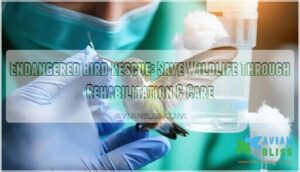 Endangered bird rescue involves saving threatened species through rehabilitation centers that treat injured, sick, or orphaned birds.
You’ll find organizations like BirdLife International and American Bird Conservancy leading global conservation efforts, while local facilities provide hands-on care.
These centers handle everything from broken wings to oil spill victims, using specialized techniques to nurse birds back to health.
Licensed rehabilitators work with veterinarians and volunteers to give each bird the best chance at survival, and the process requires permits, proper training, and careful monitoring before releasing birds back to their natural habitats.
Success stories reveal surprising recovery methods.
Table Of Contents
- Key Takeaways
- Endangered Bird Rescue
- Bird Rescue Techniques
- Wildlife Rehabilitation Services
- Bird Conservation Laws
- Supporting Endangered Bird Rescue
- Frequently Asked Questions (FAQs)
- Who do I call for an injured bird in Texas?
- Can I keep a rescued bird?
- What climate changes affect bird migration patterns?
- How do you identify endangered bird species?
- Can rescued birds survive habitat restoration projects?
- What equipment do professional rescuers typically use?
- Do urban environments help or harm rescue?
- Conclusion
Key Takeaways
- You’ll need to contact licensed wildlife rehabilitators immediately when you find injured birds – don’t attempt treatment yourself, as improper handling causes fatal stress in over 60% of rescued birds.
- You can directly support endangered bird rescue through donations, volunteering at rehabilitation centers, or purchasing supplies from facility wish lists – these centers depend entirely on community backing to operate.
- You must obtain proper state and federal permits before rehabilitating any birds legally, as keeping rescued birds without licenses violates wildlife protection laws and harms their survival skills.
- You’re witnessing a critical conservation battle where over 1,400 bird species face extinction, but rehabilitation centers achieve 40% higher reintroduction success rates through coordinated rescue efforts.
Endangered Bird Rescue
You’re witnessing one of conservation’s most critical battles as over 1,400 bird species face extinction worldwide.
Every rescued bird represents hope in a fight where habitat loss threatens 70% of critically endangered species populations.
Global Conservation Efforts
Across vast continents, you’ll find conservation efforts fighting extinction risk through dedicated monitoring programs.
The Convention on Migratory Species protects over 650 bird species, while CITES trade regulations control trafficking of 1,000+ threatened species.
Despite habitat loss affecting 70% of critically endangered birds, collaborative networks increase reintroduction success by 40%, though funding needs remain critically unmet.
Threats to Bird Populations
Bird populations face unprecedented threats that you can help address through conservation action.
Habitat Loss destroys nesting grounds as forests shrink by 70% globally.
Climate Change disrupts migration patterns, affecting 40% of North American species.
Invasive Species like feral cats kill 2.4 billion birds annually in the US alone.
The three major threats creating this crisis include:
- Pollution Impact – Plastic kills over 1 million seabirds yearly through ingestion and entanglement
- Illegal Trade – Over 5 million birds are trapped illegally each year in Mediterranean regions
- Habitat preservation loss – Tropical deforestation eliminates breeding grounds for 500+ migratory species annually
These endangered birds need immediate protection through targeted bird conservation efforts and coordinated threatened species recovery programs.
Importance of Rehabilitation Centers
When you’re facing a wildlife emergency, rehabilitation centers become your lifeline for endangered bird rescue. These specialized bird hospitals provide critical medical care, proper nutrition, and safe environments that dramatically improve rehabilitation success rates compared to well-meaning but untrained attempts.
The services provided by these centers are crucial for the recovery of birds. The following table highlights the key services and their impact on bird recovery:
| Center Service | Impact on Bird Recovery |
|---|---|
| Medical Treatment | Professional veterinary care addresses injuries, infections, and trauma that require specialized knowledge |
| Skill Development | Birds learn essential survival behaviors like hunting, flying, and predator avoidance through structured programs |
| Ethical Considerations | Licensed facilities follow strict protocols ensuring birds maintain wild instincts rather than becoming dependent |
| Species-Specific Care | Different bird species receive customized rehabilitation based on their unique biological and behavioral needs |
| Public Education | Centers teach communities proper wildlife handling, reducing future injuries and supporting conservation efforts |
Rehabilitation centers bridge the gap between rescue and successful release. Their expertise in avian rescue transforms injured birds into thriving wildlife, making them essential partners in saving endangered birds. It’s important to assess bird injuries quickly and safely.
Bird Rescue Techniques
When you encounter an injured bird, quick assessment and proper handling techniques can mean the difference between life and death.
These proven rescue methods help you safely assist birds while maximizing their chances of successful rehabilitation and return to the wild.
Handling Injured Birds
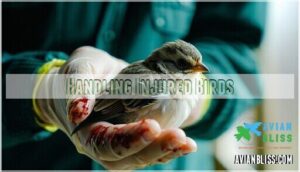
When you encounter an injured bird, your immediate response can mean the difference between life and death.
Every second counts when a bird’s life hangs in the balance.
Improper handling causes fatal stress in over 60% of rescued birds, so gentle techniques matter. Use towels for safe capture methods, avoiding direct contact while evaluating bird injuries for visible fractures or bleeding. For added protection, consider using specialized bird gloves during handling.
Create temporary bird housing in ventilated, dark containers to reduce stress and prevent further harm during transport.
- Cupped hands trembling as you realize this fragile life depends entirely on your next move
- Heart racing when you spot blood on delicate feathers and know time is running out
- Relief flooding through you as the bird stops struggling once safely contained in darkness
- Overwhelming responsibility knowing your bird handling skills determine if this creature flies again
- Silent prayer that your bird care efforts will give this injured soul another chance at freedom
Caring for Orphaned Birds
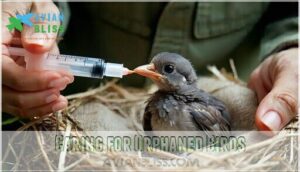
When you find orphaned birds, proper nestling care becomes your immediate priority.
Hatchlings need feeding every 15-20 minutes using species-specific formulas. Warming techniques include maintaining 85-95°F temperatures with proper humidity.
Safe handling prevents stress while supporting the fledgling stage. Monitor weight daily and provide sterile housing.
Consider using a specialized bird formula for ideal nutrition. Avoid overfeeding to prevent aspiration pneumonia during bird rehabilitation efforts.
Releasing Rehabilitated Birds

Successful bird release depends on meeting strict release criteria that guarantee each animal’s readiness for independence.
Rehabilitators assess survival skills through careful evaluation before determining habitat suitability for reintroduction.
Essential release requirements include:
- Complete physical recovery from injuries or illness
- Natural flight abilities and species-appropriate behaviors
- Self-feeding capabilities without human assistance
- Proper fear responses to predators and humans
- Seasonal timing aligned with migration patterns
Post-release monitoring tracks success rates, while reintroduction challenges require ongoing avian conservation efforts to save endangered birds effectively.
Wildlife Rehabilitation Services
When birds face extinction, you need professional wildlife rehabilitation services to give them a fighting chance.
Licensed rehabilitators work with dedicated volunteers to provide specialized care that transforms injured and orphaned birds into healthy wildlife ready for release.
Licensed Rehabilitators and Volunteers
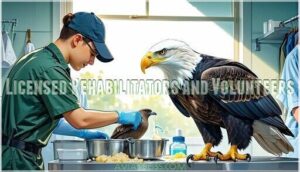
Wildlife rehabilitators undergo rigorous Rehabilitator Licensing through state and federal agencies, requiring 100+ hours of apprenticeship and passing written exams.
You’ll find that wildlife rehabilitation centers rely heavily on volunteers who complete specialized Volunteer Training programs. These dedicated individuals handle bird rescue operations, daily care, and facility maintenance under expert supervision.
Team Collaboration between licensed rehabilitators and volunteers creates an effective wildlife rescue network. Expertise Sharing through mentorship programs guarantees proper avian conservation techniques are passed down.
This partnership addresses Ethical Considerations in wildlife rehabilitators’ work, maintaining the highest standards while managing 75-200 birds annually per facility through coordinated efforts. Recognizing signs of shock is vital for initial care, and prompt action can substantially improve a bird’s chances of survival; hence, prompt action is key.
Community Support and Donations

Dedicated supporters fuel bird rescue operations through various donation channels.
You can contribute through online stores offering animal-themed gifts, with proceeds supporting rehabilitation efforts.
Amazon and Chewy Wish Lists let you donate specific supplies like medical equipment and food.
Volunteer roles range from transportation teams to helpline operators, creating a network of nearly 40 local rehabilitators.
Membership benefits include regular updates through newsletters and acknowledgment on social media platforms.
Fundraising events bring communities together while generating critical funding.
Wildlife donations directly impact rescue capacity, enabling centers to expand services and build new facilities.
These collaborative efforts increase reintroduction success rates substantially compared to isolated conservation attempts, and are a key part of conservation efforts that rely on donation channels and fundraising events to support rehabilitation efforts.
Bird Conservation Laws

You’ll need to understand the legal framework protecting endangered birds if you want to help with rescue efforts effectively.
These laws regulate everything from wildlife trade to rehabilitation permits, ensuring that conservation work follows proper protocols and contributes to genuine species recovery.
Regulations on Wildlife Trade
Understanding CITES Regulations becomes essential when you’re dealing with endangered bird rescue.
These international agreements protect over 1,000 bird species by controlling their trade through strict permits.
Illegal trafficking remains a $7-23 billion crime sector, making trade enforcement essential.
The Migratory Bird Treaty Act and similar laws provide species protection, though conservation funding meets only 30% of global needs for effective bird protection laws, highlighting the need for better trade enforcement.
Permits for Bird Rehabilitation
You’ll need both state and federal permits before rehabilitating birds legally.
State requirements vary, but most demand training, facility inspections, and annual renewals.
Federal regulations cover migratory species under strict licensing rules.
The permit application process involves background checks and proving your rehabilitation knowledge.
Permit violations carry hefty fines, so understanding bird legality protects both you and wildlife.
International Cooperation for Conservation
Across continents, nations unite to protect endangered birds through coordinated conservation efforts.
CITES Regulations control wildlife trade among 184 countries, while Global Monitoring networks track species movements.
Flyway Protection agreements safeguard migration routes, though Funding Shortfalls limit progress.
With nearly half of all species in decline, conservation strategies are more essential than ever.
International bird conservation efforts include:
- Cross-border Reintroduction Success programs sharing genetic data between countries
- Joint monitoring of 650 migratory species under global agreements
- Shared funding pools from governments and NGOs for bird rescue operations
- Coordinated anti-poaching training across 50+ nations
- Wetland protection covering 2,400 critical bird habitats worldwide, which are vital for bird conservation and species preservation.
Supporting Endangered Bird Rescue
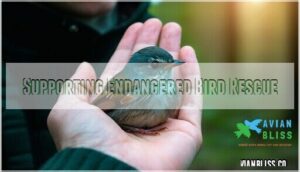
You can make a real difference in bird conservation through direct support of rehabilitation efforts.
Whether through donations, volunteering your time, or raising awareness in your community, every action helps save endangered species from extinction.
Donation and Membership Options
Beyond regulatory frameworks, your support can directly fund bird rescue operations through multiple giving channels.
Wildlife 501c3 organizations like WRL depend on community backing to maintain their bird protection missions.
| Support Type | Donation Impact |
|---|---|
| Monthly Membership | Provides steady funding needs coverage |
| One-time Donations | Supports immediate bird preservation efforts |
| In-kind Gifts | Supplies rehabilitation equipment and food |
| Legacy Giving | Guarantees long-term wildlife nonprofit sustainability |
| Amazon Wish Lists | Delivers specific items for bird rescue centers |
Membership benefits include regular updates on rescued birds and exclusive access to rehabilitation success stories, creating a meaningful connection to your bird protection contributions.
Volunteering for Wildlife Rehabilitation
Wildlife rehabilitation volunteering offers meaningful volunteer roles that match your schedule and interests.
You can transport injured birds, assist with feeding protocols, or help maintain enclosures. Most centers provide thorough training and skill development opportunities, from basic animal handling to specialized bird rescue techniques.
Time commitment varies from weekend shifts to regular weekly hours. Many volunteers also find it helpful to purchase specialized rescue products to aid their efforts.
Your efforts directly contribute to measurable conservation impact, helping rehabilitated birds return to their natural habitats successfully, which is a direct result of the volunteers’ hard work and dedication.
Spreading Awareness for Bird Conservation
Community outreach programs transform bird conservation awareness into powerful action.
Educational programs in schools teach children about endangered species while social media campaigns reach millions instantly.
Citizen science projects let you contribute real data to bird conservation organizations.
Fundraising events support essential bird conservation initiatives and projects, creating lasting impact for vulnerable populations.
You can also help by supporting local sanctuaries through donations or volunteer work.
Frequently Asked Questions (FAQs)
Who do I call for an injured bird in Texas?
Like a pocket bird guide tucked close to your heart, Texas Parks and Wildlife’s information line at 1-800-792-1112 serves as your first lifeline.
You’ll also find local wildlife rehabilitators through their county directory online.
Can I keep a rescued bird?
No, you can’t legally keep a rescued bird.
Raising wild birds without state and federal permits is illegal.
Hand-reared birds also can’t learn essential survival skills for migration and mating, making captivity harmful for their wellbeing.
What climate changes affect bird migration patterns?
Rising temperatures shift migration timing earlier, while altered precipitation patterns affect food sources. Extreme weather disrupts traditional routes, forcing birds to find new pathways and stopover sites for survival.
How do you identify endangered bird species?
Absolutely mind-blowing field guides and apps can help you spot endangered species!
You’ll need specialized bird identification resources, range maps, and conservation status databases.
Look for distinctive markings, habitat preferences, and behavioral patterns that separate threatened species from common birds, using complete concepts to guide your identification.
Can rescued birds survive habitat restoration projects?
Yes, rescued birds can thrive in restored habitats. You’ll see higher survival rates when rehabilitation pairs with habitat restoration, as birds get both proper care and suitable environments for release.
What equipment do professional rescuers typically use?
You’ll need capture nets, transport carriers, protective gloves, towels for handling, first aid supplies, and portable examination equipment. Professional rescuers also carry specialized tools for different species sizes.
Do urban environments help or harm rescue?
Urban environments present mixed outcomes for bird rescue efforts.
You’ll find faster access to veterinary care and more trained volunteers, but also increased window strikes, pollution exposure, and habitat fragmentation that complicates rehabilitation and release success.
Conclusion
Like modern-day Noah’s arks, rehabilitation centers stand as beacons of hope for endangered species worldwide.
Your support makes endangered bird rescue possible through donations, volunteering, or simply spreading awareness about conservation efforts.
These facilities depend on community involvement to continue their essential work of treating injured birds and returning them to their natural habitats.
Every rescued bird represents a victory against extinction, proving that collective action can preserve our planet’s remarkable avian diversity for future generations.