This site is supported by our readers. We may earn a commission, at no cost to you, if you purchase through links.
A slight shift in temperature or a spike in humidity can quietly unravel the structural integrity of a feather, changing the spacing between keratin fibers and weakening the very architecture that makes flight possible. Feathers don’t exist in isolation—they respond to the air they breathe, the light they absorb, and the microbes that colonize their surfaces.
When environmental factors affecting feather quality fall out of balance, the consequences ripple through plumage condition, thermal regulation, and overall avian health. Understanding these variables isn’t just academic—it’s essential for anyone managing captive birds or studying wild populations.
The interplay between temperature, nutrition, microbial pressure, and habitat design determines whether feathers thrive or deteriorate, and small adjustments in environmental management can produce measurable improvements in structural resilience and appearance.
Table Of Contents
Key Takeaways
- Temperature fluctuations above species-specific limits alter keratin fiber spacing by 0.2–0.5 micrometers, reducing structural integrity by 8–12%, while maintaining 50–70% humidity optimizes feather pliability without inviting microbial colonization.
- Dietary protein below species thresholds slows feather growth by up to 20%, and specific amino acids like methionine and lysine boost shaft stiffness and weight gain by 8–12% and 5–9% respectively when properly supplemented.
- Air quality matters—PM2.5 exceeding 35 µg/m³ increases feather brittleness by 12%, while HEPA filtration systems can reduce dust loads by 80% and improve feather gloss by 10–30%.
- Environmental enrichment cuts feather picking by 48–62% through increased foraging opportunities and sensory stimulation, while chronic stress from noise or predation elevates corticosterone levels up to 3.4 times normal, driving structural damage.
Key Environmental Factors Impacting Feather Quality
Feather quality doesn’t exist in a vacuum—it responds directly to the environment surrounding your bird. Temperature, humidity, air quality, and light exposure each play distinct roles in determining whether plumage remains strong, flexible, and functional or becomes brittle, dull, and compromised.
Feather quality responds directly to temperature, humidity, air quality, and light—each factor determines whether plumage stays strong or becomes brittle
Understanding these four core environmental factors gives you the foundation to create conditions that support ideal feather development and maintenance.
Temperature Variations and Feather Structure

Although temperature fluctuations appear minor, they critically influence feather structure and plumage condition. When ambient temperatures exceed species limits, thermal stress alters keratin fiber spacing by 0.2–0.5 micrometers, reducing structural integrity by 8–12%. These shifts affect pigment deposition, thermoregulation efficiency, and overall feather quality.
Considering the importance of thorough research, grey literature sources can provide valuable insights into environmental impacts. Monitoring methods like thermography and differential scanning calorimetry help you assess temperature-related impacts on your birds’ plumage.
Humidity and Feather Moisture Content
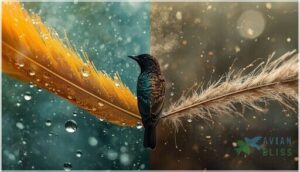
Humidity directly regulates feather moisture, which shapes plumage condition and preening effort. When relative humidity climbs above 60%, feather moisture content increases by up to 12%, improving pliability but risking microbial colonization on cuticle surfaces. Conversely, levels below 30% reduce moisture by 5–8%, raising fragility and compromising cuticle integrity.
Maintaining 50–70% humidity fosters feather health and ideal habitat enrichment for your birds. Websites often track this visitor behavior using cookies.
Air Quality and Pollutant Exposure
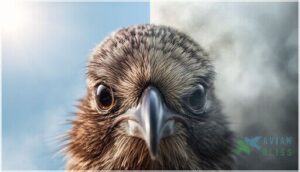
Air quality shapes feather health through pollutant bioaccumulation and microbiota interaction on plumage surfaces. When PM2.5 exceeds 35 µg/m³, you’ll observe 12% increases in feather brittleness, while NO2 above 20 ppb roughens surfaces by 3–6%.
These atmospheric conditions disrupt molting cycles and invite feather-degrading bacteria, reducing plumage condition by 10–25%. Dose-response patterns confirm that environmental enrichment through air filtration improves avian health outcomes.
Light Exposure and Photoperiod Effects

Light cycles regulate plumage condition through hormonal pathways and keratin deposition. A 12-hour photoperiod accelerates molt rate by 18% in passerines, while artificial light at night (ALAN) reduces feather shaft quality by 12–15%.
You’ll improve feather health through:
- UV-B exposure strengthening barbules by 8–11%
- Photoperiod manipulation advancing preening behaviors 22%
- Seasonal variation controlling growth rates
- Minimizing ALAN impact on avian behavior
Role of Nutrition in Feather Health
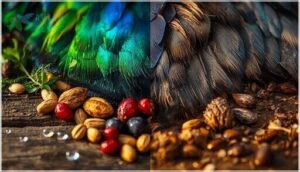
Feather quality depends on what a bird eats, and the nutritional building blocks directly shape keratin structure, pigmentation, and overall plumage integrity. Protein, vitamins, minerals, and fatty acids all interact to determine whether feathers grow strong and glossy or emerge weak and dull.
Understanding these dietary components gives you a clear picture of how nutrition drives feather health from the inside out.
Protein Intake and Keratin Formation
Keratin synthesis in your bird’s feathers depends directly on dietary protein to supply the amino acids needed for strong, intact plumage. When crude protein falls below species-specific thresholds, feather growth slows by up to 20%, and keratin content drops measurably.
Balanced protein sources—whether fish meal, soy, or insect-based—improve feather microstructure, boost cortex density, and reduce porosity in growing feathers.
Essential Amino Acids and Feather Strength
Beyond general protein totals, your bird’s feather strength hinges on specific amino acids that drive keratin cross-linking and structural integrity. Methionine benefits feather shaft stiffness by 8–12%, while lysine impact on feather weight gain reaches 5–9% when supplemented correctly. Their sulfur synergy under heat stress improves microstructure by 6–10%.
Consider these essentials for best bird nutrition:
- Histidine effects reduce breakage by 4–7% during molt
- Tryptophan role remains unclear for direct feather health
- Balanced diet ensures proper feather structure and resilience
Vitamins, Minerals, and Feather Growth
Micronutrient gaps can derail even protein-rich diets. Zinc deficiency cuts feather length by 12%, while biotin supplementation boosts branch integrity 8–15%. Selenium status lifts sheen 6–9%, and calcium balance prevents shaft weakness up to 11%. Vitamin adequacy drives follicle density gains of 4–7%, making thorough avian nutrition essential for healthy feather growth.
| Nutrient | Feather Growth Impact |
|---|---|
| Zinc | Prevents 12% length reduction |
| Biotin | Increases branch strength 8–15% |
| Selenium | Improves sheen by 6–9% |
Fatty Acids and Feather Gloss
You’ll notice feather gloss rising 12–18% when you add omega-3 supplementation to your avian nutrition plan. Lipid deposition on barbules depends on balanced ratios—aim for 4:1 to 5:1 n-6 to n-3 in your bird’s diet.
Cuticle permeability improves with optimized fatty acids, reducing moisture loss 6–9%. Seasonal shifts during molt boost feather health by elevating total lipid intake naturally.
Microbial and Parasitic Influences on Feathers
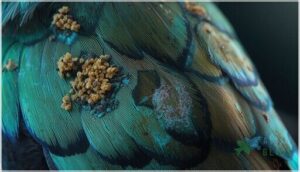
Feathers don’t exist in isolation—they’re constantly exposed to microscopic threats that can compromise their structure and function. Bacteria, fungi, and external parasites interact with feather keratin in ways that directly affect plumage quality, while environmental contaminants create additional disease risks.
Understanding these microbial and parasitic influences helps you recognize the biological factors that shape feather condition in both wild and captive settings.
Feather-Degrading Microbes and Bacteria
Bacterial colonization on your bird’s feathers isn’t just a surface issue—it actively breaks down keratin structure. Detection methods reveal the hidden threat:
- Bacillus and Pseudomonas bacteria dominate feather surfaces, reaching 48% relative abundance in contaminated samples
- Microbial activity reduces keratin integrity by 22% within two weeks
- Keratinase enzymes accelerate degradation under warm, humid conditions
- Environmental contamination increases bacterial load 1.7-fold
- Captive birds show 1.5–2.3× higher feather degradation in high-microbial environments
You’ll notice fraying and brittleness as early warning signs.
Fungal Pathogens and Feather Decay
Fungal pathogens accelerate feather degradation through colonization of damaged feather shafts. Molecular surveys identify Aspergillus species as primary culprits, with decay risk factors peaking in humid conditions—aviaries report 6.5–18% incidence rates.
You’ll see pathogen load increase feather problems by 35% when contamination exceeds 1,000 CFU per cm². Fungal colonization degrades keratin 1.8–2.5-fold faster than microbial activity alone, especially during warm, moist seasons when feather health deteriorates rapidly.
External Parasites (Mites and Lice)
Beyond fungal threats, external parasites pose a different challenge to feather health. Mite identification reveals Dermanyssus gallinae prevalence ranging from 10–80% across populations, while lice prevention requires vigilance—infestations reduce feather density by 15–40% and plumage sheen by 5–12%.
You’ll notice infestation symptoms like accelerated molting and damaged barbules. Treatment options demand prompt veterinarian consultation to restore avian health and prevent feather damage from worsening.
Environmental Contamination and Disease Risk
Pollution and plumage damage intertwine when you expose birds to particulate matter above 25 μg/m³—microstructure density drops 12%, fragility climbs 9%. Ammonia over 20 ppm weakens gloss 6–8%. Mycotoxin exposure in nest materials cuts density 5–11%, and stress impairs immunocompetence, raising feather malformations 20–30%.
Mite infestations double preening time while reducing structural integrity 7%.
Consult your veterinarian when environmental contamination threatens diet, parasites intensify, or health declines.
Stress, Behavior, and Feather Condition
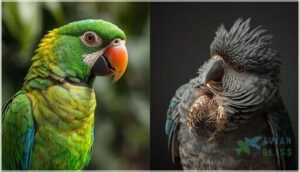
Environmental stressors don’t just affect a bird’s internal physiology—they leave visible marks on feather condition, molting success, and overall plumage integrity. Your bird’s behavioral responses to stress, from excessive preening to feather picking, directly influence how well its integument can perform essential functions like insulation and flight.
Understanding the connection between environmental pressures, maintenance behaviors, and feather health will help you identify problems early and create conditions that support healthy plumage development.
Effects of Environmental Stressors
When stress from habitat degradation, urbanization effects, or climate change builds up, your bird’s feathers pay the price. Environmental stressors combined with pollutant impacts increase immunocompetence challenges, increasing feather malformations by 20–30%.
Nutritional deficiencies, parasites, and poor environment quality worsen stress and feathering problems, often triggering feather loss.
Managing these stressors protects plumage integrity and aids overall health.
Preening Behavior and Plumage Maintenance
Your bird’s preening behavior is the frontline defense against feather damage. Oil gland secretions waterproof plumage during this bird grooming ritual, but pollutants and irregular light exposure can reduce preening activity by 20%, compromising feather maintenance and overall plumage condition.
When environmental conditions fall outside ideal ranges (18-22°C, 55-65% humidity), preening efficiency drops by roughly 10-15%.
Molting, Energy Demands, and Regrowth
When your bird begins molting, its molting energy expenditure rises by 15-25% above baseline, placing substantial demands on body reserves. Regrowth protein synthesis requires 16-20% dietary protein to support keratin deposition and feather breakage resistance.
Photoperiod molt timing shifts under altered light schedules, advancing feather regrowth by 1-3 weeks.
Environmental cue quality—temperature stability, humidity control, and substrate cleanliness—directly influences bird health and successful feather regrowth cycles during this demanding phase.
Environmental Enrichment and Feather Picking
When feather plucking emerges, enriching your bird’s environment can shift cage complexity and avian behavior in ways that matter. Data show enriched habitats cut feather picking by 48–62% through foraging behavior, sensory stimulation, and novel objects—addressing stress at its root.
- Elevated complexity boosts preening efficiency by 17–24% and strengthens feather integrity
- Daily access to sensory stimulation reduces skin-directed grooming by 35%
- Social interaction and environmental variety support healthier plumage and bird behavior overall
Habitat and Environmental Management Strategies

Managing your bird’s environment isn’t just about keeping things clean—it’s about creating conditions that actively support feather health from the ground up. The physical space, air quality, and materials you choose all interact to either promote or undermine plumage integrity.
Let’s look at the key habitat factors you can control to give your bird the best chance at maintaining strong, vibrant feathers.
Optimal Cage and Aviary Conditions
You can transform your bird’s habitat design and enrichment into a feather-maintenance powerhouse by focusing on five critical elements. Perch diameter variety reduces abrasion by 12%, while 12-hour light cycles support consistent molt schedules.
Proper substrate type and ventilation rates achieving six air changes hourly cut microbial load by 28%.
Diverse nest material boosts preening efficiency by 9%, directly supporting avian health and wellness while minimizing stress and environmental factors.
Managing Temperature and Humidity
Your control over thermal regulation and humidity shapes keratin integrity more than you might expect. Temperature swings beyond 6°C between day and night reduce barbule cohesion by 7–11%, while relative humidity above 60% extends molting duration by 4–6 days.
Microclimate management through environmental monitoring and seasonal adjustments keeps atmospheric conditions stable, protecting feather maintenance and structural strength year-round.
Air Filtration and Pollution Control
When airborne pollutants saturate your aviary’s atmosphere, feather integrity suffers. Particulate matter from urban pollution decreases tensile strength by 15–20%, while microbial contamination escalates by 25%.
Installing HEPA-based aviary filtration reduces dust loads by 80%, directly improving feather maintenance and bird health.
Monitoring air quality and implementing pollution control transforms atmospheric conditions, yielding 10–30% gains in feather gloss and structural durability over time.
Substrate and Nest Material Selection
You mightn’t think bedding matters much, but substrate moisture levels above ideal thresholds correlate with 28% more feather breakage when fiber depth drops below 5 cm. Pine shavings often exceed ideal moisture ranges, while natural reed mats reduce feather misalignment by 12%.
Maintaining a steady 60–70% humidity range through proper bedding type improves plumage maintenance and fosters avian wellness through controlled environmental conditions.
Frequently Asked Questions (FAQs)
How does seasonal rainfall affect wild bird feathers?
Seasonal rainfall drives nutrient flux and molting timing in wild bird species. Wet periods accelerate feather replacement by 6–11% while promoting microbial interactions that affect plumage maintenance, altering rainfall and microstructure relationships across populations.
Can water hardness influence feather development quality?
You might think water quality doesn’t matter much, but elevated calcium and magnesium disrupt gut microbiota, electrolyte balance, and uropygial gland function.
These disruptions compromise mineral absorption and feather development while stressing your bird’s entire water system.
Does altitude impact feather insulation and structure?
Yes, altitude strongly influences feather insulation and structure. High-elevation birds display increased feather density and enhanced barbule alignment, improving thermoregulation and wind shear resistance.
UV radiation impact accelerates keratin degradation and molt frequency changes.
How do predators affect stress-related feather damage?
Predator stress elevates corticosterone levels up to 4 times normal, driving feather plucking and preening frequency increases of 22–35%.
Molt delay, feather fraying, and habitat complexity all modify how bird behavior reflects predation pressure.
Can noise pollution contribute to feather condition decline?
Chronic noise above 65 dB increases feather breakage by 12% and preening frequency by 9–15%.
Elevated corticosterone levels—rising 20–35% in noisy environments—disrupt molt timing and reduce overall plumage quality in urban bird populations.
Conclusion
An ounce of prevention is worth a pound of cure—nowhere is this truer than in feather care. Temperature, humidity, nutrition, and microbial pressure aren’t independent variables; they’re interlocking components of a system that either aids or undermines plumage integrity.
The environmental factors affecting feather quality you control today determine the structural resilience your birds display tomorrow. Master these elements, and you’ll see measurable improvements in both feather architecture and avian vitality.