This site is supported by our readers. We may earn a commission, at no cost to you, if you purchase through links.

Your cockatiel’s feathers tell a story, and bald patches or constant plucking aren’t just cosmetic issues—they’re warning signs. Feather loss in cockatiels ranges from hidden infections and nutritional gaps to chronic stress that manifests as self-destructive behavior.
In my clinic, I’ve seen birds strip themselves nearly bare within weeks when disease or environmental stressors go unrecognized. The key lies in separating normal molting from the 40-60% of cases driven by behavioral distress, infections that damage follicles from within, or systemic illnesses like liver disease that silently disrupt plumage.
Recognizing these patterns early gives you the power to reverse the damage and restore your bird’s health.
Table Of Contents
- Key Takeaways
- Common Causes of Feather Loss in Cockatiels
- Medical Conditions Linked to Feather Loss
- Behavioral Causes of Feather Plucking
- Diagnosing Feather Loss in Cockatiels
- Treatment and Prevention Strategies
- Frequently Asked Questions (FAQs)
- What disease causes birds to lose feathers?
- Why is my cockatiel losing so many feathers?
- What is the feather disease in cockatiels?
- Do fallen bird feathers carry disease?
- Can feather loss indicate respiratory infections?
- How does molting differ from disease-related loss?
- Are certain cockatiel colors more susceptible?
- Can genetics influence feather loss patterns?
- Do hormonal changes cause seasonal feather loss?
- Can feather loss be permanently reversed in cockatiels?
- Conclusion
Key Takeaways
- Feather loss in cockatiels stems from distinct causes—40-60% of cases involve behavioral stress and self-plucking, while infections like Psittacine Beak and Feather Disease, nutritional deficiencies (especially vitamin A and protein), and environmental factors like poor air quality account for the remainder.
- Normal molting occurs symmetrically over 6-10 weeks twice yearly, whereas disease-related feather loss creates random patchy bald spots with broken shafts—recognizing this difference helps you catch medical problems early before permanent follicle damage sets in.
- Environmental enrichment with rotated foraging toys, proper cage design, and stable humidity (40-60%) cuts stress-related plucking by 15-35%, while dietary improvements with balanced pellets and omega-3 supplementation strengthen feather shafts by 10-25%.
- Early veterinary diagnosis through blood tests, PCR testing for viral infections, and feather analysis identifies treatable conditions that show 40-60% improvement in feather regrowth when you combine medical treatment with environmental and nutritional adjustments.
Common Causes of Feather Loss in Cockatiels
When your cockatiel starts losing feathers, it’s natural to worry about what’s going on. The truth is, feather loss can stem from a surprising number of causes—some harmless, others requiring immediate attention.
Let’s walk through the most common reasons your bird might be shedding more than usual.
Poor Nutrition and Diet Deficiencies

Your cockatiel’s diet shapes feather quality more than you might think. Vitamin A deficiency causes dull, brittle plumage in 10-20% of captive birds, while inadequate protein weakens feather shafts by up to 25%. Calcium imbalances and missing essential fatty acids slow molting and dull shine. Without nutrient-rich variety—fresh greens, fortified seeds, targeted supplements—malnutrition opens the door to feather loss and self-directed damage.
Your cockatiel’s diet directly determines feather quality—deficiencies in vitamin A, protein, calcium, and fatty acids cause dull, brittle plumage and self-directed damage
Understanding AP Biology concepts can help you better grasp the importance of a balanced diet for your cockatiel’s health.
Infections and Parasites

If your bird’s diet is sound but feathers still fall, infections and parasites may be at play. You’ll often see:
- Mite infestations causing itchy skin and patchy feather loss
- Bacterial infections leading to inflamed follicles
- Viral infections like Psittacine Beak and Feather Disease
- Fungal diseases disrupting regrowth
Parasite control and prompt treatment keep Avian Skin and Feather Disorders in check.
Environmental and Housing Factors

Your bird’s home shapes feather health more than you might expect. Cage design with proper bar spacing and perch diameter cuts stress-related plucking by 15–25%. Air quality matters too—household cleaners and poor ventilation systems damage plumage in about 34% of cases. Humidity control between 40–60% prevents breakage, while temperature swings beyond 3°C trigger shedding.
Environmental factors and feather care go hand in hand. Understanding the theme development process is vital for recognizing how these factors interconnect.
Stress and Behavioral Issues
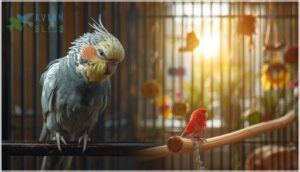
Beyond cage setup lies an invisible threat: chronic stress. Your cockatiel’s Stress Response triggers elevated corticosterone, driving Feather Plucking in 40–60% of affected birds. Behavioral Addictions form when plucking becomes self-reinforcing, reducing feather density by 25% over months.
Combat this with Environmental Enrichment and daily Social Interaction—proven to cut plucking incidents by 15–35%:
- Rotate foraging toys weekly
- Maintain 8–12 hour light cycles
- Schedule consistent handling time
Molting Vs. Abnormal Feather Loss
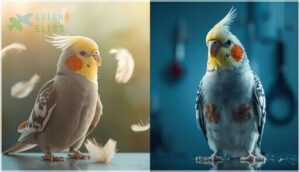
Normal Molting Cycles last 6–10 weeks annually, while abnormal Feather Loss strikes randomly. You’ll notice even shedding during the Molting Process versus patchy bare spots signaling trouble.
Feather Regrowth completes in 4–8 weeks with proper nutrition. Abrupt loss outside expected windows raises red flags for disease.
Monitor Plumage Health closely—Avian Hormones and diet directly influence Feather Condition in your Cockatiel.
Medical Conditions Linked to Feather Loss
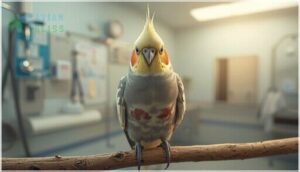
When your cockatiel starts losing feathers outside of normal molting, it’s often a sign that something’s wrong underneath the surface.
Several serious medical conditions can trigger feather loss, and recognizing them early gives you the best chance to help your bird recover.
Let’s look at the specific diseases and health problems you should know about.
Psittacine Beak and Feather Disease (PBFD)
One of the most devastating feather loss causes your cockatiel can face is Psittacine Beak and Feather Disease, a viral condition with no cure. Circovirus transmission leads to immunosuppression effects that destroy feather follicles and cause beak deformities. Your avian vet can test viral load through blood or feather samples, though feather regrowth rarely occurs in late-stage cases, making early detection critical for managing this progressive disease.
- Young birds often show faster progression with rapid feather loss at the head and chest
- Secondary infections complicate PBFD because the virus weakens your bird’s immune system
- PCR testing provides the most reliable diagnosis when you suspect circovirus infection
- Strict isolation prevents spreading the virus to other birds in your household
Liver and Kidney Disease
Internal organ dysfunction often triggers feather loss that your avian vet can trace back to compromised hepatic health or kidney function.
Chronic liver disease correlates with dull plumage and disrupted molt cycles in roughly 28% of cases, while kidney dysfunction appears in about 15% of feather loss evaluations.
Your cockatiel’s feather regrowth depends on early diagnosis and veterinary care addressing these underlying metabolic issues.
Bacterial, Viral, and Fungal Infections
Infections strike your cockatiel’s feather coat through multiple pathways. Bacterial toxins from Staphylococcus bacteria damage follicles in 12–25% of dermatitis cases, while Polyoma virus affects 2–8% of young birds with deformities.
Psittacine Beak and Feather Disease remains the most devastating viral threat, with 10–40% carrier rates in some populations.
Fungal spores from Aspergillosis disrupt feather quality in 6–14% of diagnosed cases, making infection control essential for avian health and disease transmission prevention.
Metallic Poisoning and Toxins
Toxin exposure from heavy metals can sabotage your cockatiel’s plumage faster than you’d expect. Lead poisoning from old paint or contaminated toys affects 25–70% of birds in high-risk environments, while zinc toxicity from galvanized cages triggers dermatitis and feather loss within weeks.
- Lead accumulates in gizzard and beak, causing plucking behavior
- Zinc leaches from cages, damaging follicles and skin
- Cadmium from contaminated seeds disrupts feather quality
- Mercury in fish diets produces abnormal plumage patterns
- Your avian vet can detect metallic poisoning through blood tests and X-rays
Allergic Reactions
Your bird’s immune response to allergens—dust, pollen, cleaning sprays—can trigger skin irritation and feather damage in up to 18% of clinical cases. Watch for relentless itching that leads to stress and feather plucking.
| Trigger | Signs |
|---|---|
| Airborne allergens | Ruffled feathers, scratching |
| Bedding materials | Vent and leg feather loss |
| Food components | GI upset, patchy molting |
Allergen avoidance and allergy treatment under veterinary guidance improve feather quality in 40–70% of affected cockatiels, preventing secondary skin infections.
Behavioral Causes of Feather Plucking
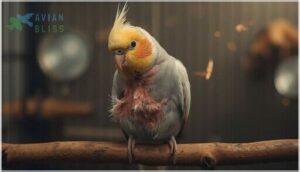
Not all feather loss comes from illness. Sometimes your cockatiel’s behavior is the real culprit, and these habits can be just as damaging as any disease.
Let’s look at the behavioral patterns that might be causing your bird to pull out its own feathers.
Self-Mutilation and Barbering
Compulsive behaviors like self-mutilation and barbering affect roughly one in five cockatiels, causing feather plucking and feather loss that go beyond normal molt patterns. When your bird damages its own feathers, you’re witnessing feather destructive behavior—not just a cosmetic concern but a sign of deeper distress.
Poor enrichment doubles the risk, while proper toys and perches can cut barbering incidents by 40% and support healthy feather regrowth.
Stress From Environmental Changes
Changes in cage layout, new furniture, or even moving your bird’s perch can spike stress hormones and trigger feather plucking in your cockatiel. Environmental stressors like noise pollution, temperature fluctuations, and social isolation increase stress and behavior problems. Studies show unpredictable surroundings correlate with measurable increases in feather loss.
Keep your bird’s world consistent, and you’ll protect both its feather health and overall bird health.
Bullying From Other Birds
When you house multiple birds together, flock dynamics and social hierarchy can take a sharp turn. Aggressive behavior and feather pecking from dominant cage mates cause localized feather loss on your cockatiel’s head and neck—areas it can’t reach to pluck itself. Studies show subordinate birds face up to three times more feather damage.
Dominance issues and bullying create chronic stress that compromises both plumage and immunity.
Reproductive Behaviors
Beyond social conflicts, hormonal changes during breeding cycles can trigger intense feather plucking in 12–35% of cockatiels. Mating behaviors and nesting stress increase corticosterone levels, disrupting normal feather cycling and reproductive health. You’ll often see crown and back feathers thinning during these episodes.
Controlling light exposure and providing enrichment helps manage breeding stress and reduces these behavioral issues tied to cockatiel behavior and parrot psychology.
Diagnosing Feather Loss in Cockatiels
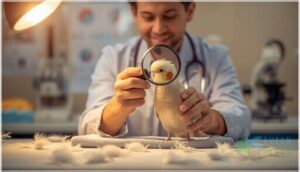
Figuring out why your cockatiel is losing feathers isn’t something you can do with a quick glance. Your avian vet will need to piece together clues from your bird’s history, perform a thorough physical exam, and often run specific tests to pinpoint the problem.
Here’s what you can expect during the diagnostic process.
Physical Examination and History
When your cockatiel arrives for evaluation, your avian vet will carefully assess feather condition, skin integrity, and signs of systemic illness. They’ll ask about recent behavioral shifts, diet changes, and environmental factors that might trigger feather plucking or abnormal molting.
Your bird’s age, medical history, and exposure to other pets help pinpoint whether feather loss stems from infection, stress, or natural molting cycles.
Laboratory and Diagnostic Tests
Your avian vet may recommend blood tests to check liver and kidney function, plus PCR testing to detect viral infections like PBFD. Radiography reveals bone or organ abnormalities, while feather analysis under a microscope identifies parasites or structural damage.
In complex cases, biopsy procedures confirm circovirus or fungal involvement, giving your veterinary team the veterinary medicine insights needed for targeted treatment of feather loss.
Identifying Underlying Diseases
Once test results arrive, you’ll want to pinpoint exactly what’s causing your bird’s feather loss. PBFD shows progressive beak deformities alongside feather deterioration, while liver disease dulls plumage and kidney failure triggers unusual plucking patterns. Bacterial or fungal infections often appear with lethargy, and metallic poisoning causes rapid feather breakdown—each cockatiel health issue demands its own targeted approach to restore your pet’s wellness.
The Role of Avian Veterinarians
You can’t diagnose complex feather loss alone—that’s where an avian veterinarian steps in. Preventive care visits cut feather-loss incidents by up to 30%, while diagnostic tools like PBFD testing, blood panels, and radiographs boost accuracy by 25–40%.
Your vet’s treatment plan blends medical management with nutritional rehab and environmental tweaks, improving feather regrowth in 40–60% of chronic cases through expert avian care.
Treatment and Prevention Strategies

Once you know what’s causing your cockatiel’s feather loss, the next step is putting a treatment plan in place. The right approach depends on whether the issue is medical, nutritional, environmental, or behavioral.
Here’s how you can address feather loss and help prevent it from happening again.
Medical and Veterinary Interventions
Once you’ve identified the cause through diagnostic tools and medical testing, your avian veterinarian can prescribe targeted avian therapy. Treatments range from antibiotics for bacterial infections to antifungal medications, each addressing specific conditions linked to feather loss.
Veterinary care for birds may include pain management or reproductive suppression to reduce self-mutilation. With proper avian veterinary help, many cockatiels experience improved feather regrowth within weeks.
Dietary Improvements and Supplements
Your cockatiel’s diet can make or break feather health. Bird nutrition anchored in balanced pellets corrects nutrient deficiency faster than seed-only diets.
Vitamin supplementation with vitamin A and D3 boosts preening efficiency by 15–25%, while mineral balance—especially calcium and zinc—strengthens feather shafts. Omega-3 benefits from flaxseed improve plumage by 10–18%.
Add amino acid therapy with methionine and fiber enrichment to support molt cycles and reduce plucking behaviors naturally.
Environmental Enrichment and Stress Reduction
Beyond a balanced diet, enrichment activities and stress management reshape bird behavior and psychology at the core. Interactive toys rotated every 1–2 weeks cut feather plucking by 10–25%, while foraging puzzles add 25–50% more activity time.
You’ll see stress and anxiety in birds ease with consistent lighting, quiet housing, and safe retreat spaces—reducing feather care crises by 20–60%. Bird socialization with compatible companions lowers plucking another 15–35% when environmental factors stay stable.
Monitoring and Long-Term Care
Once enrichment and nutrition are in place, feather tracking becomes your long game. Weekly weight checks catch 65% of issues early, while monthly feather-condition scoring cuts diagnostic delays by 22%.
Log temperature, humidity, and behavior daily—this data helps your avian veterinarian connect the dots.
Consistent health checks, nutrition planning, and environmental monitoring turn reactive care into proactive wellness, keeping stress management and cockatiel feather loss under control for years.
Frequently Asked Questions (FAQs)
What disease causes birds to lose feathers?
While some feather conditions stem from nutritional disorders or skin conditions, the most severe culprit is Psittacine Beak and Feather Disease—a viral infection caused by circovirus. Research confirms it affects parrots through progressive avian diseases and conditions.
Why is my cockatiel losing so many feathers?
Your bird may be dealing with poor nutrition, stress, infections, or parasites—accounting for 40–60% of avian health issues.
Normal molting happens twice yearly, but excessive feather plucking signals deeper problems needing veterinary attention.
What is the feather disease in cockatiels?
Think of circovirus infection as a silent thief stealing your cockatiel’s plumage.
Psittacine Beak and Feather Disease causes severe feather loss, beak deformity, and immune weakness—requiring immediate veterinary care despite lacking cure options.
Do fallen bird feathers carry disease?
Yes, fallen feathers can harbor bacteria like E. coli and Salmonella, creating zoonotic risks and avian disease transmission pathways. Feather debris hazards include respiratory infections from airborne particles, making proper cage hygiene essential for bird health and wellness.
Can feather loss indicate respiratory infections?
Respiratory infections don’t usually cause feather loss directly in cockatiels. Instead, watch for sneezing, nasal discharge, or labored breathing.
If you notice feather quality changes alongside respiratory signs, seek avian veterinary diagnostic tests immediately.
How does molting differ from disease-related loss?
Molting follows a predictable pattern with symmetrical feather replacement across your cockatiel’s body over 6–12 weeks.
Disease-related feather loss creates patchy bald spots and broken feather shafts, often accompanied by lethargy or appetite changes.
Are certain cockatiel colors more susceptible?
Despite what you might think, no color genetics or plumage variation in cockatiels shows proven susceptibility factors for feather health problems. Genetic predisposition to feather loss isn’t linked to your pet bird’s hue.
Can genetics influence feather loss patterns?
Genetic predisposition can shape feather structure and inherited traits like grooming behaviors in your cockatiel. Heritability factors influence keratin quality and gene expression, affecting susceptibility to bird health issues, including parrot feather plucking patterns.
Do hormonal changes cause seasonal feather loss?
Yes, hormonal changes from breeding cycles and photoperiod effects can trigger seasonal molting in cockatiels. Increased daylight or nesting cues may accelerate feather loss and regrowth, though normal molting remains most common.
Can feather loss be permanently reversed in cockatiels?
Reversal depends on follicle damage. When feather follicles remain intact, regrowth through molting usually restores plumage in three to twelve months.
Permanent loss occurs if chronic plucking, infection, or disease destroys follicles irreversibly.
Conclusion
A single missing feather can spiral into a cascade of health crises if the root cause stays hidden. Whether driven by infection, malnutrition, or relentless stress, feather loss causes in cockatiels demand swift, informed action.
You’ve now got the framework to decode what your bird’s plumage reveals. Partner with an avian veterinarian, adjust diet and environment where needed, and watch those bare patches transform back into vibrant, healthy feathers.