This site is supported by our readers. We may earn a commission, at no cost to you, if you purchase through links.
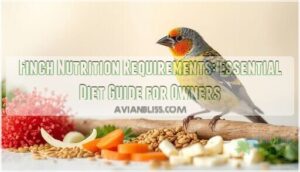
Your finch’s bright plumage and energetic chirping depend on more than just good genetics. A deficiency in just one essential nutrient can trigger feather loss, weakened immunity, or reproductive failure.
Finch nutrition requirements differ markedly from other pet birds because of their high metabolism and specialized digestive systems. Proteins support tissue repair and feather growth. Carbohydrates fuel their constant activity. Calcium prevents bone disorders and aids egg production in breeding females.
Understanding these nutritional building blocks helps you prevent common deficiencies before they compromise your bird’s health. The right balance of pellets, seeds, fresh foods, and supplements creates the foundation for longevity and vitality in captive finches.
Table Of Contents
Key Takeaways
- Finches need 16–20% protein during molt and breeding, with essential amino acids like lysine and methionine driving feather keratin production and supporting reproductive success.
- Pellets should form 60–70% of your finch’s diet to prevent selective feeding and nutrient gaps, while limiting high-fat seeds like sunflower to just 5–15% prevents obesity and liver disease.
- Calcium supplementation at 0.5–1.0% of body weight daily is critical for egg-laying females to maintain eggshell quality and prevent bone weakness during breeding cycles.
- Weekly weight tracking and monthly body condition checks catch deficiencies early, since finches can’t communicate problems until symptoms like feather loss or lethargy appear.
Essential Nutrients Finches Need for Optimal Health
Your finch needs specific nutrients to stay healthy and active throughout its life. Each nutrient plays a distinct role in supporting growth, feather quality, and immune defense. Understanding these essential components helps you build a diet that meets your bird’s daily requirements.
A well-rounded healthy bird diet for finches includes proteins, vitamins, minerals, and carbohydrates balanced to their natural needs.
Proteins for Growth and Feather Development
Your finch needs high-quality proteins to support feather growth and tissue development. Essential amino acids like lysine and methionine drive feather keratin production, especially during molt.
During molt, aim for optimal avian nutrition levels that provide 16–20% protein with methionine and cystine to speed up feather regrowth by up to 25%.
Insects, fortified pellets, and quality seeds provide balanced protein sources that meet daily nutritional needs. Protein demands increase during breeding and feather replacement, making nutrient balance critical for bird health and ideal feather development.
Monitoring your bird’s appetite and energy closely helps catch early warning signs of deficiencies, which you can cross-reference with our comprehensive bird illness symptoms guide.
Carbohydrates and Energy Requirements
Carbohydrates power your finch’s daily activities and support brain function. Small finches like zebra finches need about 32 kJ daily to fuel metabolism and movement. Quality pellets and seed mixes provide the carbs your bird requires, with grains like millet delivering steady energy.
Offering a balanced diet with safe whole foods alongside pellets ensures your finch gets varied nutrition without empty calories.
Your finch’s nervous system depends entirely on carb metabolism, making adequate carbohydrate sources critical for healthy energy balance and normal behavior in your finch diet. Understanding the metabolizable energy is essential for determining the nutritional value of different food sources for your finch.
Fats and Their Role in Finch Diets
While energy comes from carbs, fats deliver more than double the energy density per gram and support your finch’s health in ways you mightn’t expect. Omega-3 and omega-6 fatty acids promote neural development and feather quality, especially during molt. Lipid metabolism influences plumage integrity through fat solubility of key nutrients.
Balance your finch nutrition carefully:
- Limit oil-rich seeds to prevent obesity
- Adjust fat intake seasonally for breeding
- Monitor omega ratios for inflammation control
Vitamins and Minerals for Immune Function
Your finch’s immune system relies on specific vitamin supplements and minerals working together through complex nutrient interactions. Vitamin A protects mucous membranes, while vitamin E acts as one of the key finch antioxidants fighting infection. B-complex vitamins support stress response during breeding. Mineral deficiencies in zinc or selenium weaken immunity, so check these immune boosters regularly:
| Nutrient | Primary Immune Function |
|---|---|
| Vitamin A | Respiratory defense |
| Vitamin E | Antioxidant protection |
| B-complex | Stress metabolism |
| Zinc/Selenium | Enzyme cofactors |
Calcium for Bone and Eggshell Formation
Strong bones and intact eggshells depend on adequate calcium sources in your finch’s diet. To maintain bone health and eggshell quality, prioritize mineral balance through targeted calcium supplements:
- Offer oyster shell or limestone-based supplements for higher calcium absorption.
- Increase intake during egg-laying to prevent shell thinning.
- Monitor body condition monthly to adjust supplementation as needed.
Daily Water Requirements and Hydration
Beyond calcium and vitamins, your finch’s health hinges on clean, accessible water every day. Small passerines need 5 to 15 ml daily, with fluid balance shifting based on heat and diet.
A well-planned pet bird meal schedule ensures your finch gets consistent nutrition alongside fresh water throughout the day.
Watch for dehydration signs like lethargy or sunken eyes. Refresh water daily to guarantee quality and prevent bacterial growth, safeguarding both hydration and overall finch nutrition and wellness.
Pellets, Seeds, and Grains in Finch Diets
Your finch’s diet needs a solid foundation to support long-term health. Pellets should make up the majority of what you offer, with seeds and grains playing supporting roles.
Understanding how these components work together helps you build a balanced feeding plan that meets your bird’s nutritional needs.
Why Pellets Should Form The Diet Foundation
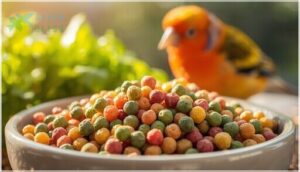
Pellets provide a complete, balanced diet foundation your finch needs daily. Unlike seed mixes, pellets deliver uniform nutrient intake with standardized protein levels around 15–25% and added calcium and vitamin A.
This formulation prevents selective feeding, ensuring your bird receives essential micronutrients in every bite. Aim for pellets to comprise 60–70% of your finch’s total diet for ideal bird health.
Selecting High-Quality Seed Mixes
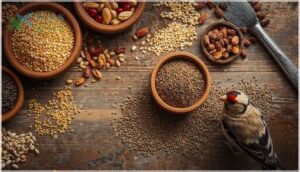
Your finch’s seed variety directly influences nutrient balance and long-term health. Choose mixes with 40–60% small seeds like canary seed or millet as a base, then add 5–15% chia or flaxseed for omega-3s. Look for supplier selection that offers clear ingredient lists and guaranteed analysis.
Include dried insects or legumes to improve mix composition and amino acid intake beyond seeds alone.
Millet as a Staple Carbohydrate Source
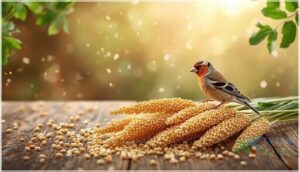
Millet delivers 60 to 70 percent digestible carbohydrate, making it ideal for consistent energy intake in your finch. Its small kernels suit finch digestion and reduce seed waste.
Millet offers lower fat than sunflower seeds, supporting healthy body weight. You’ll find it in most commercial seed mixtures because finches accept it readily and it balances their nutritional profile without triggering obesity.
Limiting Sunflower Seeds and High-Fat Options
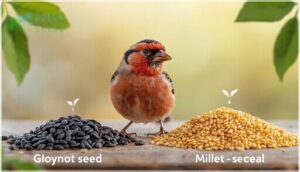
You can prevent finch obesity by keeping sunflower seeds to just 5–15% of the seed mix. High fat content in these seeds raises your bird’s risk of hepatic lipidosis.
Rotate seed types regularly to balance fatty acids and avoid overreliance on any single option.
A low-fat base of millet and smaller seeds promotes healthy weight and metabolic function in finches.
Whole Grains for Fiber and Sustained Energy
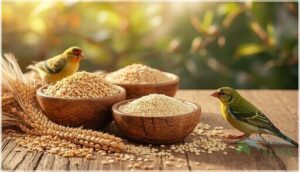
Beyond limiting fat, your finch needs fiber-rich whole grains for steady energy between feedings.
These nutrient-dense options support digestive health and metabolic balance:
- Oats deliver soluble beta-glucans that aid digestion and provide gradual energy release
- Barley offers complex carbohydrates for prolonged satiety
- Quinoa supplies complete protein alongside fiber
Rotate grains weekly to maintain nutrient balance and bird health.
Fresh Foods and Protein Sources for Finches

Fresh foods and insects round out your finch’s diet beyond the pellet foundation. You’ll need to know which fruits and vegetables are safe, which foods pose serious risks, and how to incorporate protein sources effectively.
Here’s what to offer and what to avoid when adding variety to your bird’s daily menu.
Safe Fruits and Vegetables to Offer
Your finch deserves variety beyond pellets and seeds. Offer leafy greens like kale and spinach, plus non-starchy vegetables such as cucumbers and bell peppers, all chopped into bite-sized pieces. Fresh fruit options should be pesticide-free and rinsed thoroughly. Avoid citrus fruits—high acidity disrupts finch digestion. Introduce new items gradually to monitor droppings and guarantee nutrient variety without overwhelming their system.
| Fresh Fruit Options | Vegetable Safety |
|---|---|
| Apples (seedless) | Kale |
| Berries | Bell peppers |
| Melon | Cucumber |
| Pears (seedless) | Spinach |
Foods to Avoid and Toxic Ingredients
While fresh foods boost finch nutrition, certain items pose severe risks. Avocado contains persin, a compound causing avian poisoning. Chocolate, caffeine, and alcohol are toxic to bird health.
Never offer salted or sugary human snack dangers—they trigger kidney damage. Moldy seeds carry seed contamination risks through mycotoxins.
Processed foods with additives don’t belong in your finch care routine.
Live and Dried Insects for Protein
Your finch thrives on protein from live or dried insects like mealworms and phoenix worms. These offer complete amino acid profiles, with dried insects delivering 50–70% crude protein.
During breeding and molt, insects support feather quality and growth.
Offer them in moderation—roughly 5–15% of the diet—to avoid excess fat. Live feeding also encourages natural foraging behavior.
Balancing Fresh Foods With Core Diet
You need a balanced approach when adding treats to your finch’s daily feeding tips. Core diet supplements shouldn’t replace pellets and seed and pellet diets that anchor finch nutrition and diet.
- Offer fresh fruits and vegetables in small portions for micronutrient variety
- Introduce boiled egg or insects occasionally, not daily
- Keep fresh food ratios under 20–30% to maintain nutrient balance
- Monitor weight to adjust healthy snacking options before problems develop
- Verify produce is pesticide-free and chopped small
Special Nutritional Needs During Breeding and Molting
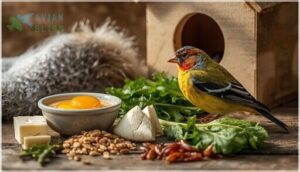
Your finch’s nutritional needs shift dramatically during breeding and molting periods. These life stages place extra demands on the body that standard maintenance diets can’t fully support.
Understanding these specific requirements helps you adjust feeding practices to keep your birds healthy when they need it most.
Increased Protein for Chick Development
Growing chicks demand more than maintenance nutrition. During this rapid growth window, you’ll need to boost protein intake by 10–15% to support chick growth and feather development. Insects and high-quality finch nutrition and diet sources deliver essential amino acid balance—particularly methionine and lysine—that fuel faster weight gain and survival to fledging.
| Life Stage | Protein Requirement |
|---|---|
| Maintenance | 12–14% of diet |
| Chick rearing | 22–28% of diet |
| Post-fledging | 14–16% of diet |
High protein diets accelerate feathering and improve hatchling vigor. Once chicks approach independence, taper protein gradually to prevent stress on developing organs.
Calcium Supplementation for Egg-Laying Females
Laying hens face steep mineral demands that directly affect eggshell quality and breeding success. You should provide supplemental calcium to reach 0.5–1.0% of body weight daily, preventing calcium deficiency and brittle shells. A balanced diet mix sustains female nutrition and avian health throughout the clutch cycle.
- Offer cuttlebone or mineral blocks continuously for voluntary calcium intake.
- Use finely ground calcium carbonate at 1–2% of total diet weight.
- Pair calcium with vitamin D3 to improve absorption and utilization.
- Monitor eggshell hardness; weak shells signal insufficient supplementation.
- Adjust calcium levels after molt or dietary changes to maintain balance.
Supporting Feather Regrowth During Molt
When your finch sheds feathers, its body works overtime to produce replacements. Molt nutrition requires high-quality protein to support keratin synthesis for new feather shafts.
During molt, your finch’s body demands high-quality protein to rebuild feathers through intensive keratin synthesis
You’ll need to boost essential fatty acids like linoleic acid for integument care and feather health. Pair pellets with calcium-rich supplements and maintain fresh water access constantly.
Regrowth support depends on balanced bird health and wellness during this demanding period.
Dietary Adjustments for Breeding Pairs
During courtship and egg production, your finch needs 10–20% higher protein intake to aid chick rearing and eggshell quality. Add finely ground mealworms or insect protein to pellets for breeding nutrition.
Provide separate oyster shell for calcium balance while maintaining a 2:1 calcium-to-phosphorus ratio.
This nesting diet aids embryo development without promoting obesity in your bird diet regimen.
Feeding Practices and Monitoring Finch Health
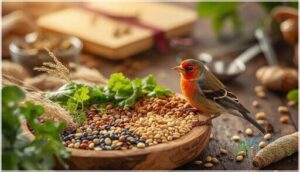
Providing proper nutrition is only half the battle. Your daily feeding routines and monitoring practices determine whether your finches stay healthy long-term.
Here’s what you need to focus on to keep your birds thriving.
Daily Feeding Schedules and Portion Control
Your finch’s feeding schedule shapes their energy levels and overall health. Offer food access at least twice daily—morning and late afternoon align with natural foraging patterns.
Daily portion sizes should equal 10-15% of body weight, adjusted by species and age. A balanced diet emphasizes pellets as the foundation, with measured seed quantities.
Monitor uneaten food and discard after 24 hours to maintain nutrient balance and freshness.
Cleanliness and Feeder Maintenance
Clean feeders matter just as much as what you fill them with. Daily washing with hot, soapy water cuts bacterial growth by 90 percent in controlled trials. Toss contaminated seeds immediately and rotate feeder locations weekly to encourage natural foraging.
- Wash dishes daily with hot, soapy water and air-dry completely
- Replace moldy seed mixes immediately to prevent contamination
- Sanitize water bowls twice daily for best water quality
- Deep-clean cages monthly, targeting hardware crevices and perches
Monitoring Body Weight and Condition
Weekly weight tracking catches health trends before your finch shows symptoms. Weigh at the same time each day using a consistent scale.
Check keel bone prominence and fat coverage monthly by gentle palpation. Compare weight against baseline ranges for your bird’s species.
When numbers drift up or down for two weeks straight, adjust feeding portions and consult your avian veterinarian.
Working With Your Avian Veterinarian
Beyond home monitoring, professional veterinary care keeps your finch thriving. Schedule annual checkups with an avian specialist to assess overall bird health and wellness.
Bring a complete diet history for tailored nutrition counseling. When breeding season or molt approaches, discuss dietary adjustments before problems emerge.
Your veterinarian provides expert avian care and management, preventing nutrient imbalances before they compromise finch wellness.
Frequently Asked Questions (FAQs)
Can finches eat sprouted seeds safely?
Sprouted seeds carry mold and bacterial contamination risks if you don’t dry and store them properly.
They may disrupt energy balance and pose digestive challenges, especially for finches with weakened immunity or sensitive gut health.
How do seasonal changes affect finch nutrition?
Your finch’s nutritional needs shift with seasonal temperature changes and breeding cycles. During colder months, they’ll need more calories for warmth. Breeding season increases protein and calcium demands markedly.
What are signs of vitamin deficiencies in finches?
Your finch’s dull feathers, prolonged molting issues, or swollen joints signal vitamin deficiency. Lethargy and beak problems often follow.
Believing diet doesn’t matter is incorrect—a better answer would be a thorough nutritional needs assessment with your veterinarian.
Do different finch species need different diets?
Yes, different finch species require customized diets based on beak variations and seed size preferences. Dietary niche differences and foraging behavior patterns mean nutritional needs vary across species, especially during breeding and molt stages.
How does age affect finch nutritional requirements?
Your finch’s nutritional needs shift dramatically across its lifespan. Juveniles demand higher protein and calcium to fuel explosive growth, while molting adults require extra energy and fat to support feather regrowth and metabolic shifts.
Conclusion
Think of your finch’s diet as a daily investment in its future. Each meal either builds resilience or leaves gaps that compromise health down the road.
Meeting finch nutrition requirements isn’t complicated once you understand the basics: quality pellets, controlled seeds, fresh foods, and targeted supplements.
Your bird can’t communicate deficiencies until symptoms appear. Regular weight checks and veterinary consultations catch problems early. Small adjustments now prevent larger setbacks later.