This site is supported by our readers. We may earn a commission, at no cost to you, if you purchase through links.
You don’t need rare species to make a birding trip worthwhile—sometimes the best spots are hiding in plain sight. A marsh at the edge of town can host as many waterfowl as a distant refuge, and that unassuming woodlot near your commute might be a songbird migration superhighway.
The trick isn’t finding perfect habitat; it’s knowing where to look and what clues to follow. Digital tools like eBird have turned nearly half a million birders into a living map of bird activity, while local parks and refuges offer reliable habitats you can visit year-round.
Once you tap into the right resources and connect with your regional birding community, finding local bird watching habitats becomes less about luck and more about strategy.
Table Of Contents
Key Takeaways
- You don’t need exotic locations to find great birding—local marshes, woodlots, and urban parks often host remarkable diversity if you know what habitat features attract specific species like waterfowl, raptors, or songbirds.
- Digital tools like eBird transform bird watching from guesswork into strategy by providing real-time sighting data, interactive maps, and access to nearly half a million birders’ observations across 300,500 hotspots worldwide.
- National wildlife refuges offer some of the most reliable bird watching experiences with strategically managed habitats, auto tour routes, and seasonal migration patterns you can time your visits around for peak activity.
- Connecting with local birding communities through ornithological societies, citizen science projects, and bird counts turns solo outings into collaborative conservation work while sharpening your identification skills through shared knowledge.
Understanding Bird Habitat Types and Features
Different birds call different places home, and knowing what habitat to look for can turn a slow morning into a morning full of sightings. Each environment—from wetlands to open grasslands—attracts its own mix of species based on food availability, nesting needs, and cover.
Let’s walk through the main habitat types you’ll encounter and what kinds of birds you can expect to find there.
Wetlands and Marshes for Waterfowl
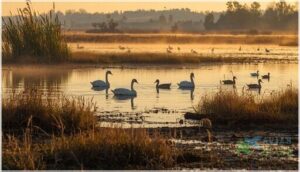
Wetlands and marshes are magnets for waterfowl migration, hosting up to 5 billion birds during breeding season. You’ll find these habitats shelter 40 percent of all species while storing more carbon than many forests.
Despite losing half their historic coverage, conservation efforts through wetland restoration and wildlife refuges keep these birding trails productive. Look for mallards, gadwalls, and tundra swans where marsh ecology thrives—especially at protected areas supporting essential bird habitat for shorebirds and waterfowl alike.
Conservation of waterfowl habitats is essential for maintaining healthy ecosystems.
Coastal Areas and Shorebird Habitats

Coastal beaches and tidal flats draw striking shorebird migrations—think Red Knots traveling 9,300 miles from Tierra del Fuego to Arctic nesting grounds. You’ll spot these species where habitat restoration counters coastal erosion, especially near estuaries supporting waterfowl and shorebirds alike.
Wildlife refuges along birding trails offer prime viewing during spring peaks, though shorebird conservation faces challenges from development and climate pressures affecting wetland management throughout migration corridors. Understanding shorebird conservation efforts is vital for protecting these species.
Forests and Woodlands for Songbirds

Move inland from shorelines, and you’ll find songbird migration hubs in mature forests—where canopy structure drives avian diversity. Woodland conservation matters: North America lost over 1 billion forest birds since 1970, with 72% of species declining. Habitat restoration focusing on mixed-age stands boosts breeding success.
Mature forests shelter songbird migration hubs, yet North America has lost over a billion forest birds since 1970
Your best birdwatching spots feature:
- Canopy heights averaging 55 feet with patchy overstory
- Ground-story diversity (14+ native understory species)
- Mixed tree species in multi-layered stands
- Birding trails through shelterwood harvest areas
- Habitat preservation zones protecting legacy structures
Bird species identification improves when you understand forest ecology—Wood Thrushes prefer dense understory, while Scarlet Tanagers seek high canopies along established birding trails.
Open Grasslands and Raptor Territory

Beyond the trees, open grasslands become raptor territory—where habitat preservation directly shapes hawk populations. Lowland grasslands covering 35.4% of monitored plots support Northern Harriers and American Kestrels, with up to 82% of sightings in these zones.
Grassland ecology matters for bird conservation: raptor declines hit 54% outside protected areas versus 19% inside. Wildlife refuges with prescribed burns maintain prey-rich ecosystems, making them prime hawk watch destinations along any birding trail studying bird migration patterns.
Using Digital Tools to Locate Birding Sites

Gone are the days of relying solely on worn field guides and word-of-mouth to find productive birding spots. Today’s digital tools put real-time data, extensive species lists, and interactive maps right in your pocket.
Let’s explore the platforms that’ll help you pinpoint where the birds are—and when they’re most likely to show up.
EBird Hotspot Maps and Species Data
If you’re ready to tap into some serious data, eBird hotspots are where bird migration tracking meets real conservation efforts. This platform aggregates observations from nearly half a million birders worldwide, mapping over 10,400 bird species across 300,500 hotspots.
- Hotspot analysis reveals exactly which species visit specific locations and when
- Species tracking updates abundance maps annually using satellite imagery and millions of checklists
- Data visualization shows population trends at 27 x 27 km resolution with confidence intervals
- Birdwatching contributions from the eBirding community help protect 98.8% of documented bird species globally
Mobile Apps for Real-Time Sightings
You can pull out your phone mid-hike and identify that mystery warbler instantly with apps like Merlin Bird ID, which now boasts over 1.5 million active U.S. users.
Real-time alerts through eBird Mobile and species mapping tools like GoBird keep you connected to rare sightings nearby.
These birdwatching tools and apps transform every outing into citizen science, letting you contribute to eBirding data analysis while sharpening your bird ID skills with each observation.
Online Bird Checklists by Region
Regional checklists narrow your search to exactly what’s flying through your backyard or favorite birdwatching spot. These species databases let you tap into avian research from millions of eBirding observations.
- Avibase catalogs over 55 million records spanning 10,000 species worldwide
- ABA Checklist documents 1,158 species across North America as of September 2025
- Partners in Flight tracks seasonal populations and conservation tools for declining birds
- State eBird data feeds directly into wildlife action plans and targeted habitat management
You’re not just checking boxes—you’re joining a network that shapes conservation.
Interactive Birding Trail Guides
Trail navigation just got smarter—interactive birding trails now blend GPS coordinates, live eBird sightings, and seasonal migration data into one simplified platform. With over 50 official digital mapping guides across the U.S., you can search by species, habitat type, or difficulty level.
These tools don’t just point you toward bird trails; they link conservation efforts, ecotourism impact, and real-time user engagement to every outing you plan.
National Wildlife Refuges and Protected Areas
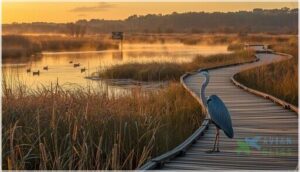
National wildlife refuges are some of the best-kept secrets for serious bird watching, offering protected habitats where species thrive without heavy disturbance. These areas aren’t just random patches of land—they’re strategically managed to support seasonal populations, nesting sites, and migration routes that you won’t find in typical parks.
Here’s how to make the most of these birding havens, from finding one near you to timing your visits right.
Finding Refuges in Your State
If you’re wondering where to start, the United States has 588 National Wildlife Refuges scattered across every state except the District of Columbia. Your state likely holds several gems—California alone boasts over 35 refuges, while Colorado has at least 8.
Check state maps and birding trails online to pinpoint refuge locations near you. Many refuges offer local guides and visitor centers that highlight ongoing wildlife conservation efforts, making your exploration both rewarding and educational.
Seasonal Migration Patterns at Refuges
Timing your refuge visits around migratory birds can feel like catching nature’s greatest show. You’ll spot peak spring diversity in early May, when warblers and vireos flood through National Wildlife Refuges. Late March brings staging cranes, while autumn concentrations cluster along coasts. Climate impact is shifting these patterns—spring now arrives earlier at 76% of refuges.
Here’s what influences migration timing at your local refuge:
- Seasonal species turnover – About a quarter of bird species differ between summer and winter visits
- Vegetation greenness – Food availability directly affects how long migratory birds linger
- Protected area coverage – Refuge management shapes population trends and stopover success
Visitor Centers and Guided Tours
Once you’ve pinpointed your refuge timing, swing by the visitor center—it’s where guided tours and conservation efforts really come alive. About 46% of refuge visitors report birdwatching, and these centers fuel $3.2 billion in annual ecotourism impact. You’ll find birding workshops, trail maps, and knowledgeable staff who’ll boost your field skills.
| Visitor Center Resources | What You’ll Gain |
|---|---|
| Educational exhibits | Species identification tips |
| Guided tours | Expert-led birding trails access |
| Conservation programs | Citizen science opportunities |
| Field equipment loans | Binoculars and field guides |
| Seasonal event calendars | Migration festival schedules |
Auto Tour Routes and Observation Points
Beyond visitor centers, over 200 National Wildlife Refuges offer auto tour routes—5 to 35 miles of birding road trips with strategic observation decks and pullouts. You’ll cruise through wetlands, grasslands, and forest edges where 330-plus species congregate.
These auto trails deliver safe, accessible birdwatching at birding hotspots, with 70% featuring dedicated parking near prime viewing zones—perfect for all mobility levels.
Local Parks and Community Birding Spaces

You don’t always need to travel far to find great birding spots. Many of the best habitats are hiding in plain sight—right in your own community.
Let’s look at the types of local spaces where birds gather and how you can make the most of what’s nearby.
State and County Park Systems
State parks and county wildlife areas offer some of the most reliable birdwatching close to home. Thanks to habitat restoration and conservation efforts backed by millions in funding, these sites now protect over 2,000 acres of diverse terrain where you’ll find raptors, waterfowl, and songbirds year-round.
- Breeding bird surveys confirm over 90 local species
- Trail development prioritizes accessible observation points
- Park management focuses on migration corridor protection
Urban Green Spaces and City Parks
City parks aren’t just patches of grass—they’re functional ecosystems where bird diversity jumps when greenspace expands even slightly. An 18-year study in New York showed that total park area directly drives species richness, so you’ll spot more native birds in larger spaces with tree cover and heterogeneous habitats.
Even compact urban green spaces boost connectivity for migratory birds traversing concrete jungles.
Nature Preserves and Conservation Lands
Nature preserves and conservation lands protect core habitat for birds while delivering ecosystem services like water filtration and climate stability. The U.S. now safeguards over 1.2 million square kilometers through federal, state, and private land management—spaces where species richness runs 10.6% higher than unprotected sites.
These conservation efforts create wildlife corridors that link fragmented habitats, supporting both resident populations and migrants while fueling ecotourism economies.
Accessibility and Trail Information
When you’re scouting birding trails in Utah or birdwatching destinations across Delaware’s wildlife refuge management areas, check trail surfaces and accessible routes first. Around 73% of birding locations now offer compacted gravel or pavement—inclusive design that aids disability support without sacrificing habitat access.
Look for birding infrastructure like 36-inch-wide paths and nature tourism facilities with ADA-compliant restrooms at key observation points.
Connecting With Local Birding Communities

Bird watching becomes a lot more rewarding when you’re part of a group that shares your curiosity. Local birding communities offer chances to learn from experienced birders, discover new spots, and contribute to meaningful conservation work.
Here’s how you can connect with fellow enthusiasts and make your birding adventures even richer.
Joining Regional Ornithological Societies
Joining an ornithological society connects you with a birding community that shares your passion for avian conservation. Regional groups offer membership benefits like monthly meetings, expert-led talks, and access to conservation grants that support habitat protection. With societies ranging from small local clubs to organizations with over 1,300 members, you’ll find opportunities for skill-building and community outreach.
- Membership Benefits include educational workshops, field guides, and networking opportunities
- Society Events feature monthly meetings from September through May with guest speakers
- Birding Workshops teach identification techniques, migration patterns, and field technology use
- Conservation Grants fund research and bird conservation projects, with annual award cycles
- Community Outreach welcomes diverse participants through inclusive programs and accessible membership dues
Participating in Bird Counts and Surveys
Bird counts transform your morning walks into meaningful conservation work. The 2025 Great Backyard Bird Count engaged over 838,000 participants worldwide, documenting 8,078 species through platforms like eBird.
You’ll use standardized survey techniques to track migration patterns and population trends, contributing data analysis that shapes bird conservation strategies.
These community engagement events—from Christmas Bird Counts to regional surveys—welcome birdwatchers at every skill level.
Citizen Science and Data Contribution
Your bird observations become powerful conservation research when you submit them through eBird’s realtime bird sighting submissions platform. Over 96 million Americans now contribute to data analysis that tracks migration shifts and population declines.
These interactive bird maps compile birding statistics and totals from citizen engagement efforts, helping scientists monitor climate impacts while connecting you to a passionate birding community through bird surveys and community outreach initiatives.
Frequently Asked Questions (FAQs)
What time of day is best for bird watching?
You’ll catch the most action during early morning birds’ peak hours—think dawn chorus right after sunrise.
Late afternoon sightings also shine, especially during migration season when activity peaks happen twice daily.
Do I need a permit to visit birding sites?
Most public birding locations like national wildlife refuges and state parks don’t require federal permits for casual observation—you’ll just pay entry fees at some sites. Special activities need advance permits, though.
What binoculars should beginners buy for bird watching?
Look for 8×42 models from Nikon, Celestron, or Vortex in the $130–$300 range—they offer excellent optical quality without breaking your budget, plus solid warranties that protect your investment as you develop your birding skills.
How do weather conditions affect bird activity?
Rain, wind, and shifting temperatures act as invisible conductors of the avian symphony. You’ll notice fewer birds during storms, altered migration timing in warming regions, and changes in vocal activity—climate change amplifies these weather-driven patterns markedly.
Are there bird watching etiquette rules I should follow?
Yes—responsible birding means keeping your distance, staying on trails, minimizing noise, and avoiding playback overuse.
These bird-friendly tips protect wildlife while strengthening the birding community through ethical birdwatching and conservation practices.
Conclusion
Picture yourself standing at the forest edge at dawn, binoculars ready, knowing exactly where the warblers will land. That’s what finding local bird watching habitats gives you—confidence born from community knowledge, digital tools, and habitat awareness.
You’ve already got half a million birders mapping the skies through eBird, refuges documenting migration waves, and local groups leading the way. The birds are there. Now you know how to find them.
- https://www.fws.gov/story/2024-12/birdwatching-america
- https://www.fs.usda.gov/psw/publications/4902/psw_2004_4902_071_chi.pdf
- https://www.visitmaryland.org/sites/default/files/2023-11/2635_Maryland_Digital_Birdwatching_2023.pdf
- https://www.fxva.com/explore/outdoors/birding-bird-watching/
- https://www.nature.scot/birds-increase-urban-areas