This site is supported by our readers. We may earn a commission, at no cost to you, if you purchase through links.
When migratory songbird populations declined 29% across North America between 1970 and 2019—representing nearly three billion individual birds lost—conservation biologists recognized that reversing this trend would require substantial financial resources directed toward habitat protection, wetland restoration, and corridor connectivity across multiple jurisdictions.
You face a landscape where funding bird habitat preservation demands strategic navigation of federal grant cycles, corporate partnership agreements, private foundation priorities, and increasingly intricate conservation finance mechanisms that blend philanthropic capital with measurable ecological outcomes.
The financial architecture supporting habitat work has evolved beyond traditional government appropriations to include crowdfunding platforms generating small-dollar donations, impact investors seeking quantifiable biodiversity returns, and public-private collaborations that leverage matching contributions across sectors—creating opportunities for projects ranging from ten-thousand-dollar revegetation initiatives to multi-million-dollar landscape-scale restoration efforts.
Table Of Contents
- Key Takeaways
- Key Funding Sources for Bird Habitat Preservation
- Grant Programs Supporting Bird Habitats
- Innovative Fundraising Approaches
- Maximizing Funding Impact on Bird Habitats
- Strategies for Sustainable Conservation Funding
- Frequently Asked Questions (FAQs)
- How do international conservation treaties affect funding?
- What tax incentives exist for habitat donors?
- Can carbon credit sales fund bird preservation?
- How do climate change risks impact investments?
- What insurance options protect preservation project investments?
- How do international bird treaties affect habitat funding?
- What tax benefits exist for conservation land donors?
- Can birdwatching tourism revenue fund habitat projects?
- How do climate adaptation costs impact conservation budgets?
- What role do Indigenous communities play in funding?
- Conclusion
Key Takeaways
- Bird habitat funding now flows through four main channels—government grants (like the North American Wetlands Conservation Act offering multi-million-dollar awards), corporate partnerships with matching contribution models, private philanthropy from donor-advised funds, and conservation organization initiatives spanning three-to-five-year restoration cycles across migratory corridors.
- Strategic diversification transforms isolated projects into landscape-scale success, with federal dollars historically leveraging 2.5 times more in nonfederal match (as seen in $1.45 billion federal investment drawing $3.6 billion in partner contributions), demonstrating that blending funding streams—grants, crowdfunding, impact investing, and ecotourism revenue—protects conservation work from budget cuts and economic uncertainty.
- Innovative conservation finance mechanisms are emerging beyond traditional appropriations, including carbon offset credits from restored wetlands, habitat banking systems that monetize species recovery, pay-for-performance contracts rewarding documented population increases, and impact investing structures that accept below-market returns while tracking measurable ecological outcomes through bird population metrics and restored acreage data.
- Maximizing conservation impact requires simultaneous investment in physical habitat restoration (native plantings, invasive removal, hydrologic work), rigorous population monitoring using standardized surveys that document species richness and nest success rates, and community engagement programs that build local stewardship capacity—ensuring projects deliver accountability to funders while creating lasting environmental benefits beyond initial funding cycles.
Key Funding Sources for Bird Habitat Preservation
If you’re working to protect bird habitats, you’ll find funding comes from four main channels—each with its own strengths, requirements, and application processes. Government programs and corporate partnerships usually offer the largest grants, while private donors and conservation organizations provide more flexible support that can fill critical gaps.
Understanding where different bird species naturally live helps conservation groups target funding toward the ecosystems that matter most.
Understanding how these sources operate will help you build a diversified funding strategy that keeps your habitat restoration projects moving forward through changing economic conditions and shifting conservation priorities.
Many bird conservation organizations rely on donations as a cornerstone of their funding mix, making individual supporters essential to their work.
Government Grants and Public Funding

You’ll find federal funding through several key channels that support bird habitat work across North America. The North American Wetlands Conservation Act stands out as a primary source, delivering grant funds from tens of thousands to multi-million-dollar awards annually. When you’re exploring these funding opportunities, focus on three essentials:
You can also explore targeted bird species protection plans that align with federal grant priorities and strengthen your project’s competitive edge.
- Review agency solicitations posted 6–12 months before decisions
- Develop detailed work plans showing conservation value and measurable outcomes
- Establish non-profit or governmental partnerships meeting eligibility criteria
Budget allocation follows predictable cycles, and successful grant writing requires technical precision—specifying acreage, target species (including neotropical migrants), restoration methods like revegetation, and post-project monitoring protocols that demonstrate accountability to public policy goals supporting imperiled bird populations.
Corporate Sponsorships and Partnerships

Beyond government channels, you can tap into corporate conservation programs—like ConocoPhillips’ SPIRIT of Conservation initiative, which partners with the National Fish and Wildlife Foundation and U.S. Fish and Wildlife Service to fund habitat connectivity projects across multiple states within the Central Flyway.
Additionally, conservation efforts are supported by migratory bird initiatives that provide critical funding for habitat preservation.
These strategic alliances demonstrate how corporate giving creates funding collaborations that leverage matching contributions—transforming initial grants into larger conservation impacts through partnership models connecting land trusts, agencies, and donors toward shared objectives of protecting imperiled species and restoring critical stopover habitats along migration routes.
Private Donations and Philanthropy

While corporate partnerships provide substantial support, you’ll also encounter private funding through individual philanthropic grants—ranging from tens of thousands to several million dollars annually—that create endowment strategies sustaining long-term restoration work.
Charitable giving from donor-advised funds and private foundations offers critical land trust funding opportunities, with donors increasingly demanding transparency on biodiversity outcomes, acres protected per grant, and measurable community involvement across habitat networks.
Organizations can strengthen their funding proposals by showcasing bird habitat conservation tips that demonstrate measurable restoration outcomes and active community engagement.
Conservation Organization Initiatives

You’ll find that established conservation organizations allocate multi-year grants—often spanning three to five years—to habitat restoration and ecosystem management projects led by local land trust funding opportunities, utilizing matching contributions that double your conservation impact through:
Local volunteers often jumpstart these initiatives by restoring native plantings and removing invasive species, following proven strategies outlined in bird habitat conservation best practices.
- Landscape-scale planning reducing habitat fragmentation across migratory corridors
- Biodiversity protection initiatives with quantitative monitoring metrics published annually
- Community engagement fostering long-term environmental stewardship and local capacity
- Transparent financial statements showing fundraising for conservation versus overhead allocation
- Collaborative wildlife conservation programs emphasizing connectivity between protected areas
Grant Programs Supporting Bird Habitats

You’ll find a range of grant programs designed to channel resources directly into bird habitat conservation—from federal programs like the North American Wetlands Conservation Act to regional initiatives that support specific flyways and ecosystems.
These funding mechanisms operate at national, state, and local levels, each with distinct application processes, eligibility requirements, and conservation priorities.
Understanding which programs align with your project goals (whether you’re restoring coastal wetlands in Texas or enhancing riparian corridors in the Davis Mountains) helps you target the right opportunities and craft competitive proposals.
National and State Conservation Grants
You’ll discover that national programs administered by the US Fish and Wildlife Service and the National Fish and Wildlife Foundation offer substantial funding opportunities for habitat restoration, with grant awards ranging from tens of thousands to several million dollars depending on project scope and matching requirements.
State-level conservation grants complement these federal resources, frequently emphasizing wetlands and migratory corridors while requiring cost-sharing ratios of 1:1 or higher to optimize conservation strategies across critical bird habitats.
Notable Grant Recipients and Projects
You can learn from successful grant recipients who’ve transformed landscapes through strategic funding. The National Audubon Society secured over $12 million between 2018 and 2023, restoring wetland and grassland habitat across 25,000 acres—demonstrating measurable conservation impact through donor engagement and habitat preservation initiatives.
- The Henry Foundation awarded $8 million for riverine enhancements benefiting shorebird species during 2019–2021
- National Fish and Wildlife Foundation grants increased wetland area and documented bird population gains across Midwest partner landscapes
- BirdLife International supported six tropical forest projects, protecting 2,500 square kilometers with documented species recovery by 2022
Application and Selection Criteria
Managing the grant application process requires you to meet specific eligibility requirements, demonstrate measurable conservation outcomes, and align your project with funders’ strategic priorities—typically including detailed habitat assessments, partnership letters, budget justifications, and timelines spanning 12-36 months.
To increase the chances of approval, applicants should research and understand the wildlife grant programs that support their conservation goals.
Review criteria emphasize species conservation and protection metrics, habitat connectivity improvements, community engagement plans, and cost-effectiveness ratios—with selection committees prioritizing projects demonstrating collaborative partnerships, expandable methodologies, and quantifiable bird population benefits that align with regional funding priorities and conservation strategies.
Innovative Fundraising Approaches

Traditional funding models—government grants, corporate sponsorships, and private donations—have long anchored bird habitat preservation efforts, but conservation organizations are increasingly turning to newer mechanisms that engage broader audiences and access previously untapped capital.
These creative approaches leverage digital platforms, strategic partnerships, and market-based financial instruments to generate resources while simultaneously building public awareness and participation in conservation work.
Understanding how crowdfunding campaigns, public-private collaborations, and impact investing function within the conservation finance landscape can help you identify opportunities to support or implement these strategies for habitat protection projects across diverse ecosystems and geographies.
Crowdfunding and Social Media Campaigns
You don’t need a million-dollar donor to make a real difference in bird conservation—sometimes, all it takes is a hundred people chipping in ten bucks each through a well-crafted social media campaign.
Crowdfunding platforms paired with digital engagement strategies allow conservation groups to raise small donations efficiently, with 100% of project funds supporting habitat restoration, monitoring efforts, and applied research across critical stopover sites and breeding grounds.
Public-Private Partnerships
Collaborative funding arrangements between government agencies and private landowners have restored more than 7 million acres of wetland, grassland, and riparian habitat across North America since 1987. Participating ranchers, corporations, and land trusts receive technical assistance and conservation grants while retaining ownership.
These partnership models demonstrate that joint conservation initiatives—combining public regulation with private sector capacity—can secure bird habitat at scales neither sector achieves alone. They maximize matching contributions that multiply initial fundraising investments across critical flyway stopover sites and breeding grounds.
Social Impact Investing in Conservation
Impact investors are now directing capital toward conservation projects that generate measurable ecological returns—tracked through bird population metrics, restored acreage, and carbon sequestration data—while accepting below-market financial returns or structuring repayment through ecosystem service credits.
You can explore conservation finance mechanisms that blend grants and funding with revenue-generating sustainability initiatives, including:
- Carbon offset credits from restored wetlands supporting neotropical migrants
- Water quality improvement bonds tied to riparian buffer establishment
- Habitat banking systems monetizing species recovery outcomes
- Pay-for-performance contracts rewarding documented population increases
- Blended capital structures combining impact investing with traditional conservation grants
These environmental conservation initiatives demonstrate that sustainable conservation can attract diverse funding streams beyond philanthropy, engaging investors committed to environmental stewardship while delivering quantifiable ecological benefits across critical habitats.
Maximizing Funding Impact on Bird Habitats
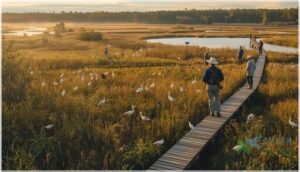
Securing funding represents only the first step in effective bird habitat conservation—the real challenge lies in deploying those dollars to create measurable, lasting ecological outcomes.
Your conservation investments should target three interconnected priorities: physical habitat improvements, scientific monitoring of avian population responses, and community-based stewardship programs that extend your project’s reach beyond its initial funding cycle.
Each dollar you allocate must serve multiple conservation functions simultaneously, maximizing both immediate habitat gains and long-term sustainability.
Habitat Restoration and Expansion
Restoration grants transform degraded landscapes into functional wildlife corridors. Neotropical migrants and grassland obligates recolonize sites where native plantings, invasive removal, and hydrologic restoration create suitable breeding habitat.
Since 2002, the Neotropical Migratory Bird Conservation Act has funded 747 projects affecting over 6 million acres through protection, enhancement, and ecological restoration activities. These efforts deliver measurable biodiversity conservation outcomes and ecosystem services, including pollination, seed dispersal, and nutrient cycling.
Monitoring Bird Population Outcomes
After restoring acres of habitat, you’ll want to know whether your conservation grants actually bring the birds back. Standardized bird surveys reveal population trends and habitat quality improvements—wetland projects have documented waterbird increases between 62 and 315 percent.
Conservation metrics like species richness, nest success, and breeding density help you measure ecological impact, proving your wildlife conservation efforts deliver real, accountable results that justify ongoing bird conservation funding.
Community Engagement and Education Initiatives
You can boost your conservation project’s impact by turning local residents into informed stewards. Education programs that teach bird identification, habitat needs, and citizen science protocols create communities that actively protect the species your grants aim to recover.
Volunteer training workshops, community events at restored sites, and public outreach campaigns build environmental literacy while demonstrating to funders that grant funding for conservation projects generates lasting community engagement beyond initial habitat work.
Strategies for Sustainable Conservation Funding
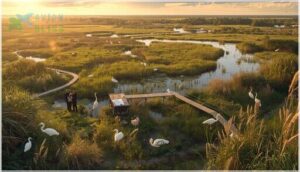
Securing funding for bird habitat conservation isn’t just about finding money—it’s about building a financial foundation that can weather budget cuts, shifting priorities, and economic uncertainty. The most successful conservation projects don’t rely on a single grant or donor; instead, they create multiple revenue streams, forge partnerships that extend beyond individual funding cycles, and strategically use matching opportunities to maximize every dollar.
Here’s how you can build a funding strategy that protects bird habitats for decades, not just seasons.
Diversifying Funding Streams
Strong conservation programs don’t put all their eggs in one basket—diversifying funding streams protects your bird habitat projects from unpredictable grant cycles and economic shifts. Successful organizations blend multiple revenue sources to maintain steady operations:
- Blended finance combining government grants with private donations and impact investing
- Crowdfunding models engaging small donors through social media campaigns
- Ecotourism revenue from guided tours and visitor programs
- Conservation grants from federal programs and corporate partnerships
- Fundraising events generating both funds and community awareness
This diversified approach stabilizes your financial foundation while expanding your reach to new supporters and funding opportunities.
Building Long-Term Partnerships
Effective bird conservation partnerships flourish when Joint Ventures connect federal agencies, Land Trust organizations, and Community Outreach networks into lasting alliances. The North American Bird Conservation Initiative has coordinated more than 5,700 Stakeholder Engagement relationships across sectors since its inception.
These Collaborative Conservation frameworks provide sustained technical assistance, shared monitoring protocols, and pooled Conservation Grants. They strengthen Partnership Models while maintaining a multi-decade commitment to habitat priorities through Strategic planning and coordinated Fundraising efforts involving government entities, NGOs, and private Donors.
Leveraging Matching and Challenge Grants
Match Requirements multiply conservation impact when agencies demand dollar-for-dollar contributions. As seen in North American Wetlands Conservation Act projects, 1.45 billion dollars in federal Grant Funding drew 3.6 billion dollars in nonfederal match—a 2.5-to-1 Grant Leverage ratio supporting Habitat Preservation and Restoration across migratory flyways.
Matching grant requirements can multiply conservation impact, with federal dollars leveraging up to 2.5 times more in nonfederal contributions for habitat restoration
These Funding Models and Donor Incentives strengthen Wildlife Preservation Strategies while ensuring a shared commitment to long-term Conservation Impact. This is achieved through coordinated Conservation Grants and Small Grants.
Frequently Asked Questions (FAQs)
How do international conservation treaties affect funding?
International treaties catalyze conservation finance by establishing biodiversity investments through mechanisms like the Global Environment Facility, which channels resources to wildlife preservation strategies.
Yet voluntary contributions create funding instability for global conservation projects.
What tax incentives exist for habitat donors?
Federal deductions for conservation easements let you claim up to 50 percent of adjusted gross income annually, while estate taxes drop markedly when land trusts hold perpetual easements protecting critical bird habitats.
Can carbon credit sales fund bird preservation?
Yes, carbon credit sales can fund bird preservation by channeling Conservation Finance into Habitat Restoration and Ecosystem Preservation, especially when Biodiversity Credits and Carbon Markets are integrated to support Climate Mitigation, Environmental Sustainability, and Sustainable Development and Conservation Efforts.
How do climate change risks impact investments?
Climate change threatens your conservation investments like never before—unpredictable weather patterns, habitat loss, and species decline demand adaptive investment strategies.
Prioritizing green financing, environmental sustainability, and resilient ecosystem preservation is essential to protect long-term conservation efforts.
What insurance options protect preservation project investments?
You’ll want specialized conservation insurance programs that bundle environmental liability, builders risk, performance bonds, and parametric coverage—protecting ecological conservation investments from construction mishaps, regulatory obligations, and climate-related surprises threatening wildlife habitat preservation.
How do international bird treaties affect habitat funding?
Treaty obligations create funding mechanisms that channel resources toward habitat protection. International cooperation agreements like AEWA and CMS establish shared priorities for migratory birds, unlocking government grants and co-financing for threatened species protection across flyways.
What tax benefits exist for conservation land donors?
Like leaving a legacy in stone, conservation easement donations release powerful federal deductions—up to 50% of your adjusted gross income annually—while reducing estate tax burdens and capital gains through ecological credits supporting habitat restoration.
Can birdwatching tourism revenue fund habitat projects?
Ecotourism benefits flow directly to bird habitat conservation finance when nature tourism operations—including the annual Birding Classic coordinated with Wildlife Department partners—channel entrance fees, guiding revenues, and sustainable tourism receipts into habitat restoration funding models.
How do climate adaptation costs impact conservation budgets?
You’re facing rising expenses as adaptation infrastructure—sea-level defenses, climate monitoring, and flexible planning—diverts funds from habitat restoration.
This forces conservation professionals to balance immediate wildlife preservation needs against long-term species preservation under shifting climate realities.
What role do Indigenous communities play in funding?
Indigenous communities don’t just receive conservation grants—they increasingly govern how funds flow, directing tribal conservation dollars toward habitat restoration and wildlife preservation.
Through native partnerships, they blend cultural stewardship with environmental conservation objectives, ensuring that their unique perspectives and priorities shape the use of these resources.
Conclusion
The financial current supporting funding for bird habitat preservation flows through multiple channels—federal appropriations, foundation endowments, corporate partnerships, impact investments.
You’ll optimize conservation outcomes by assembling portfolios that draw from several streams simultaneously, securing matching funds where available, and demonstrating measurable ecological returns. These returns must satisfy both philanthropic donors seeking biodiversity impact and public agencies managing taxpayer resources.
Strategic diversification transforms isolated projects into sustained landscape-scale restoration efforts that reverse decades of avian population decline.