This site is supported by our readers. We may earn a commission, at no cost to you, if you purchase through links.
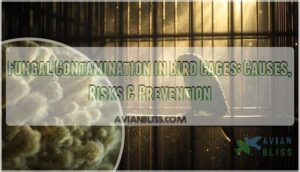
Your bird’s cage harbors invisible killers. Right now, microscopic fungal spores float through the bars, settling on perches, water dishes, and food bowls. These aren’t just unsightly patches of mold—they’re Aspergillus, Candida, and Cryptococcus fungi that attack your bird’s lungs and digestive system.
One study found that 60 percent of poorly maintained cages contain dangerous fungal levels. The worst part? Most bird owners don’t notice the problem until their pet starts wheezing or losing weight.
Understanding what triggers fungal contamination in bird cages and how to stop it can save your bird’s life.
Table Of Contents
Key Takeaways
- Fungal contamination in bird cages comes from three main sources: high humidity above 60%, poor ventilation that traps moisture, and droppings that feed dangerous fungi like Aspergillus, Candida, and Cryptococcus.
- Early warning signs include visible mold patches, musty odors, and respiratory symptoms in your bird like wheezing, open-mouth breathing, or behavioral changes like lethargy and weight loss.
- Prevention requires weekly cage sanitizing with bird-safe disinfectants, maintaining 40-60% humidity with proper ventilation, and choosing stainless steel cages with removable trays for thorough cleaning.
- Treatment demands veterinary-prescribed antifungal medications combined with supportive care, dietary adjustments emphasizing fresh vegetables, and strict environmental controls to prevent reinfection.
What Causes Fungal Contamination in Bird Cages
Fungal contamination doesn’t just appear out of nowhere. Your bird’s cage creates the perfect breeding ground when certain conditions come together.
High humidity, poor ventilation, and leftover food scraps all contribute to fungal growth in bird cages that can threaten your pet’s health.
Let’s look at the three main culprits that turn a clean cage into a fungal health hazard.
Common Fungal Species in Bird Cages
Your bird’s cage harbors dangerous fungi right now. Aspergillus fumigatus lurks in droppings and bedding, releasing deadly spores into the air your pet breathes.
Your bird’s cage already harbors deadly Aspergillus fumigatus, releasing fatal spores into the air your pet breathes
Candida albicans thrives on damp perches and can trigger serious digestive problems. Cryptococcus neoformans hides in accumulated waste, threatening both you and your bird.
- Aspergillus species cause fatal respiratory infections in birds
- Candida yeasts overgrow in moist cages, weakening immunity
- Cryptococcus fungi spread from droppings to humans
Learn more about identifying and managing common fungal diseases in birds.
Environmental Conditions Promoting Fungal Growth
Humidity Management above 60 percent sets the stage for fungal growth in your cage. Temperature Control between 68 and 86 degrees Fahrenheit creates a perfect breeding ground for molds.
Poor Ventilation Systems trap moisture and ammonia buildup, letting spores multiply. Air Quality Monitoring reveals how stagnant conditions worsen cage hygiene.
Even Lighting Effects matter—dark corners harbor dangerous fungi that threaten your bird’s health. Understanding how environmental factors affect fungal growth can help you make more informed decisions about preventing contamination.
How Bird Droppings Contribute to Fungal Spread
Your bird’s waste acts like fertilizer for dangerous fungi. Droppings deliver nitrogen and phosphorus that speed up mold colonization on perches and bedding. Within days, moisture from poop creates a cage microclimate where spores thrive.
Three critical dropping composition risks you can’t ignore:
- Organic matter feeds fungal reservoirs on bars and trays
- Fungal spore dispersal happens when you disturb dried waste during cage cleaning
- Ammonia buildup weakens bird health and immunity
Health Risks of Fungal Contamination for Birds
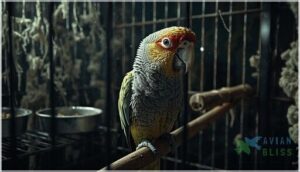
Fungal contamination doesn’t just dirty your bird’s cage—it can make your bird seriously sick. These infections attack your bird’s body in different ways, from the lungs to the digestive system. Here’s what you need to watch for.
One of the most dangerous is aspergillosis, a respiratory infection that spreads through airborne spores—and you can learn more about whether avian aspergillosis is contagious to understand your bird’s risk.
Respiratory Infections and Aspergillosis
When mold takes hold in your bird’s cage, the lungs pay the price first. Aspergillosis, caused by Aspergillus fumigatus spores, attacks respiratory tissue and can be deadly without prompt treatment. Young, old, or stressed birds face the highest risk from these airborne pathogens.
| Warning Sign | What You’ll Notice | Urgency Level |
|---|---|---|
| Breathing trouble | Open-mouth breathing, wheezing | Immediate vet visit |
| Nasal discharge | Runny nostrils, sneezing | Within 24 hours |
| Weight loss | Reduced appetite, lethargy | Schedule exam soon |
| Coughing fits | Repeated respiratory sounds | Same-day attention |
| Sudden collapse | Severe respiratory distress | Emergency care |
Aspergillosis treatment demands veterinary-prescribed antifungal medication combined with respiratory therapy. Environmental decontamination stops fungal spore control issues while your bird heals. Supportive care—oxygen, proper nutrition, stress reduction—strengthens bird lung health during recovery. Early intervention dramatically improves survival rates, so don’t wait when respiratory symptoms appear.
Avian Gastric Yeast and Digestive Issues
Disruption in avian digestion starts when gastric yeast colonizes your bird’s proventriculus. Macrorhabdus ornithogaster, the culprit behind these avian fungal infections, thrives in dirty environments where cage cleaning lapses.
You’ll notice vomiting, weight loss, and undigested seeds in droppings as gut health deteriorates. Poor bird hygiene accelerates fungal growth, compromising bird nutrition and proventriculus care.
This fungal infection demands immediate veterinary attention to prevent fatal complications.
Impact on Bird Immunity and Behavior
Persistent fungal exposure forces your bird’s immune system into overdrive, weakening defenses against other threats. You’ll see white blood cells spike while baseline antibodies drop under constant inflammatory stress.
Watch for these warning signs:
- Reduced activity and social withdrawal from flock mates
- Irregular sleep patterns and appetite fluctuations
- Selective feeding, favoring easily digestible foods
Chronic stress and anxiety from poor avian respiratory health slow recovery until you improve cage hygiene.
Recognizing Signs of Fungal Contamination
You can’t fight what you can’t see. Fungal contamination sneaks into your bird’s cage through visible signs and hidden symptoms that demand your immediate attention.
Here’s what you need to watch for to catch this dangerous threat before it harms your bird.
Visible Mold and Odors in The Cage
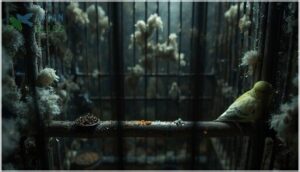
You’ll often spot fuzzy green, black, or white patches clustered on perches or cage corners where droppings and water collect. These visible signs of mold growth appear within 24 to 72 hours under damp conditions.
A musty, rotten smell signals poor cage hygiene and active fungal spores.
Effective odor control and ventilation systems help you detect avian fungal infections early, before serious harm occurs.
Symptoms of Fungal Illness in Birds
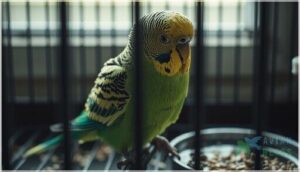
When your bird starts coughing, wheezing, or breathing with an open mouth, fungal infections may already be attacking its airways. Respiratory issues and avian diseases demand immediate veterinary care.
Watch for these dangerous warning signs:
- Labored breathing with tail bobbing – lower airway irritation from fungal growth
- White crusty patches inside the beak – oral candidiasis spreading through mucous membranes
- Lethargy with weight loss – systemic fungal illness weakening overall bird health and wellness
Health monitoring saves lives.
Changes in Bird Droppings and Behavior
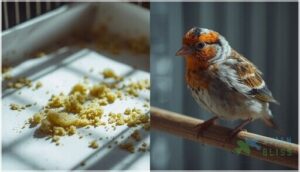
Your bird’s droppings tell you when fungal growth is taking over. Watch for unusual droppings color shifts—greenish or yellowish feces signal digestive distress. Fecal consistency changes from firm to watery reveal infection spreading through the gut. Poop volume spikes without more food intake point to bird anxiety and illness.
Behavioral signs like lethargy or feather plucking confirm declining bird health.
Cage cleaning and maintenance prevent avian disease, protecting bird behavior from fungal threats.
Preventing Fungal Growth in Bird Cages
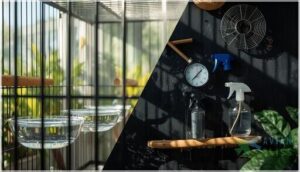
You can’t afford to wait until you see mold growing in your bird’s cage. Prevention starts with understanding the three key areas that stop fungal growth before it becomes a health threat.
Let’s break down the practical steps you need to take right now.
Effective Cleaning and Disinfection Routines
You can’t protect your bird from fungal threats without a solid cleaning routine. Pre-clean all cage surfaces with detergent and water to remove droppings before applying any bird-safe disinfectant. Follow the product’s contact time, then rinse and dry thoroughly.
Weekly cage sanitizing cuts visible fungal growth by 60 percent. Stick to fixed cleaning schedules and focus on high-touch areas like feeders and perches.
Managing Humidity and Ventilation
Cleaning alone won’t save your bird if moisture levels spiral out of control. Keep indoor humidity between 40 and 60 percent using a dehumidifier and digital hygrometer. Position the cage away from kitchens and bathrooms, ensuring at least one meter of clearance on all sides.
Install a HEPA air purifier and aim for 4–6 air changes per hour to dilute deadly fungal spores.
Choosing Mold-Resistant Cage Materials and Accessories
Beyond moisture control, your bird’s survival depends on the right cage material selection. Stainless steel resists corrosion when cleaned weekly with non-abrasive detergents. Mold-resistant coatings with silver or copper ions provide ongoing protection. Choose bird-friendly accessories that are smooth and removable for thorough cage cleaning and disinfection.
Your setup checklist for sanitary designs:
- Stainless steel cages with baked-on epoxy finishes that resist fungal adhesion
- Removable trays allowing full access for hot water disinfection and cage maintenance
- Antimicrobial coatings containing fungicidal additives safe for pet environments
- Flat surfaces with sealed seams preventing moisture traps and biofilm formation
- Integrated ventilation systems with corrosion-resistant grills for ideal cage hygiene and maintenance
Powder-coated steel offers rust resistance lasting two years with proper cage ventilation and routine care.
Treating and Managing Fungal Contamination
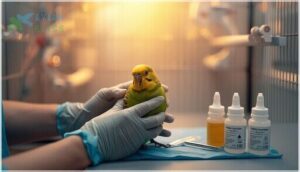
If your bird’s already dealing with a fungal infection, you need to act fast. Treatment isn’t just about medication—it’s about creating the right recovery environment and knowing when professional help is critical.
Here’s what actually works when fungal contamination has taken hold.
Safe Antifungal Treatments for Birds
When your bird develops fungal infections, you need antifungal medications prescribed by your vet. Treatment duration usually runs two to eight weeks depending on severity.
Common options include fluconazole at 5-15 mg per kg twice daily or itraconazole at 5-10 mg per kg once daily. These treatment strategies for bird fungal diseases require veterinary guidance because dosing varies between species, and improper use risks fungal resistance or toxicity.
Supportive Care and Veterinary Intervention
Antifungal medications work best when paired with emergency care and veterinary support. Your vet monitors breathing, administers oxygen therapy, and provides IV fluids if your bird’s infection turns severe. Critical cases need isolation rooms to prevent cross-contamination.
You’ll receive clear recovery planning instructions covering medication timing, cage sanitation, and follow-up appointments to track your bird’s progress through medical therapy.
Adjusting Diet and Environment for Recovery
Recovery strategies start with nutrition therapy. You’ll need to emphasize fresh vegetables and whole grains to rebuild your bird’s immune system after avian fungal infections.
Keep humidity between 40 and 60 percent through environmental adjustments. Replace substrate daily and provide clean water to support healing.
Dietary supplements and stress management through consistent routines accelerate recovery while proper cage maintenance prevents reinfection.
Frequently Asked Questions (FAQs)
Can fungal spores spread to other household pets?
Picture your cat napping near your bird’s cage as invisible fungal spores drift through the air.
Yes, these spores can spread to other pets, creating serious pet exposure risks throughout your home.
How often should cage accessories be replaced completely?
You’ll need to swap out cage accessories on different schedules for bird health maintenance.
Replace brushes every three months, perches every six to twelve months, and water bottles twice yearly to prevent dangerous fungal buildup.
Are certain bird species more susceptible to fungi?
Yes—genetic predisposition plays a role. Parrots show higher aspergillosis rates than finches in captivity.
Weakened bird immunity from stress or poor diet increases avian fungal infections. Species susceptibility varies; environmental factors and fungal resistance matter too.
What air purifiers work best for bird rooms?
Choose HEPA filter units rated for bird environments with quiet operation modes under 30 decibels.
Position purifiers across the room—not beside the cage—to improve air quality without stressing your bird.
Can UV light help eliminate fungal contamination?
UV light therapy can inactivate fungal spores on nonporous surfaces when you remove your bird first. However, it won’t replace proper cage cleaning and maintenance—you must wipe away debris before any light intensity effects work.
Conclusion
Like the canary in the coal mine, your bird signals danger long before disaster strikes. Don’t wait for labored breathing or listless behavior to take action.
Fungal contamination in bird cages isn’t inevitable—it’s preventable through vigilant cleaning, humidity control, and regular health monitoring. Your feathered companion depends entirely on the environment you create.
Check that water dish today. Inspect those perches tonight. Because prevention isn’t just easier than treatment—it’s the difference between thriving and surviving.