This site is supported by our readers. We may earn a commission, at no cost to you, if you purchase through links.
 You’ll find exceptional grassland birding locations across North America’s tallgrass prairies, where bobolinks perform their signature flight displays and meadowlarks fill the air with liquid songs.
The Tallgrass Prairie Preserve in Oklahoma and Nebraska’s Sandhills offer prime viewing for grassland specialists like dicksissels and sedge wrens.
Don’t overlook the Konza Prairie in Kansas, where you can spot burrowing owls and greater prairie-chickens during their elaborate mating dances.
International destinations include Argentina’s pampas and Australia’s temperate grasslands, each hosting unique species adapted to wide-open spaces.
The key to successful grassland birding lies in timing, technique, and knowing exactly where these elusive birds gather.
Table Of Contents
Key Takeaways
- You’ll find exceptional grassland birding opportunities across North America’s prairies like Oklahoma’s Tallgrass Prairie Preserve and Kansas’s Konza Prairie, where species like bobolinks, meadowlarks, and greater prairie-chickens thrive in their natural habitats.
- You can explore diverse international grassland destinations including Argentina’s pampas, Australia’s temperate grasslands, and Europe’s protected meadowlands, each hosting unique species adapted to wide-open spaces and offering distinct birding experiences.
- You’ll maximize your success by mastering specific techniques like dawn and dusk visits when birds are most active, scanning the skies for raptors, listening for distinctive grassland birdsongs, and observing ground-level movement where many species forage and nest.
- You’ll need essential equipment including quality 8×42 binoculars for clear observation, weather-appropriate rain gear, reliable field identification guides, and telephoto camera equipment with tripods for capturing distant species without disturbance.
Grassland Birding Overview
Grasslands are essential ecosystems that support diverse bird species while playing a key role in carbon storage and climate regulation.
By exploring these habitats, you’re not just birdwatching—you’re contributing to their conservation and understanding their ecological importance.
Importance of Grasslands
Grasslands are nature’s multitaskers, offering carbon sequestration, water conservation, and habitat diversity for countless grassland species.
These vibrant ecosystems provide essential ecosystem services, from supporting grassland birding to sustaining agriculture.
Their role in grassland ecology is unmatched, hosting unique grassland habitats that maintain biodiversity.
Grassland conservation isn’t just urgent—it’s imperative for a healthy planet, ensuring a thriving future for wildlife and people alike.
Alarmingly, populations have declined substantially since 1970, highlighting the need for immediate action.
Threats to Grassland Ecosystems
You might think wide-open grasslands are safe, but they face serious threats.
These vast ecosystems are disappearing faster than we can protect them.
Habitat loss from agricultural expansion and urban development shrinks these ecosystems. Invasive species outcompete native plants, disrupting food chains. Overgrazing by livestock weakens soil health, increasing erosion. Add climate change to the mix, and it’s a recipe for disaster.
- Native plants vanish, reducing biodiversity.
- Birds lose nesting grounds.
- Soil erosion worsens water quality.
Role of Birding in Conservation
Protecting grasslands isn’t just about saving plants—it’s about birds, too.
Birding connects people to conservation, turning passion into action. By visiting grassland birding locations, you support habitat preservation and conservation funding. Plus, citizen science projects let you log sightings, aiding research.
| Action | Impact | Why It Matters |
|---|---|---|
| Birding Advocacy | Raises awareness | Encourages habitat protection |
| Economic Incentives | Boosts local economies | Funds grassland conservation |
| Citizen Science | Informs conservation efforts | Tracks bird population trends |
North American Locations
If you’re exploring North America, its grasslands offer some of the most diverse birding opportunities on the planet.
From the sweeping prairies of Kansas to the migration hubs of New Mexico, these habitats are a haven for species like Grasshopper Sparrows and Sandhill Cranes.
Grand River National Grassland
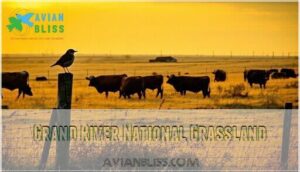
The Grand River National Grassland is a prime birding location, hosting grassland bird species like Sprague’s Pipits and Baird’s Sparrows.
Its well-managed habitats balance grazing impact and bird conservation, making it ideal for birdwatching. With accessible spots like Blacktail Picnic Area, this site supports millions of migratory birds annually, showcasing diverse grassland bird habitats and unforgettable birding experiences.
Conservation efforts in this region aim to protect over 80,000 acres of protected prairie.
Tallgrass Prairie Preserve
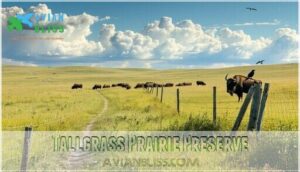
At Tallgrass Prairie Preserve, the largest protected tallgrass prairie on Earth, you’ll encounter over 300 bird species, including Grasshopper Sparrows and Loggerhead Shrikes.
Controlled burns and bison grazing support prairie restoration, benefiting grassland birds and native flora.
This birding location also offers a 10-mile auto loop, blending bird migration views with sightings of free-ranging bison. The preserve, a key area for conservation, was named to honor Joseph H. Williams.
Central Flyway Birding Sites
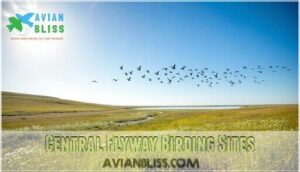
The Central Flyway is a birding paradise, stretching across 14 U.S. states with incredible migration patterns.
Key spots like Nebraska’s Platte River showcase waterfowl diversity and vibrant grassland ecosystems.
Explore these birding hotspots for unforgettable experiences:
- Quivira National Wildlife Refuge, Kansas
- North Dakota’s Prairie Potholes
- South Dakota’s grassland preserves
- Texas Gulf Coast wetlands
- Nebraska Birding trails
Bosque Del Apache National Wildlife Refuge
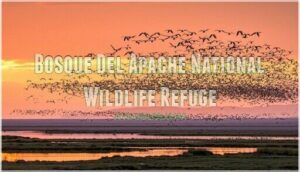
New Mexico’s crown jewel attracts thousands of sandhill cranes during migration patterns, creating spectacular wildlife refuge experiences.
You’ll discover diverse refuge bird species thriving thanks to expert habitat management across wetlands and grasslands.
This birding hotspot faces conservation challenges from drought, yet remains among premier bird watching destinations.
Visit October through February when grassland birding reaches peak activity at this renowned wildlife refuge.
The conservation of this area is crucial for the thousands of sandhill cranes and other bird species that call it home during their migration patterns, making it a unique birding hotspot.
Global Grassland Sites
You’ll find exceptional grassland birding opportunities across every continent, from Romania’s Danube Delta hosting Great Bustards to Australia’s Hattah-Kulkyne National Park sheltering Painted Button-quails.
These global sites offer unique species combinations that can’t be found anywhere else, making them essential destinations for serious grassland birding enthusiasts.
European Grassland Birding
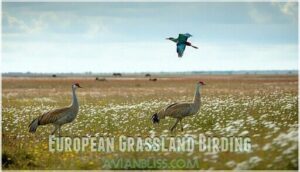
Europe offers exceptional grassland birding experiences across diverse landscapes.
You’ll discover remarkable species in habitats ranging from wetlands to dry steppes, where conservation efforts protect threatened birds. Given that agriculture substantially impacts bird populations, sustainable farming practices are vital for their recovery.
Agriculture affects 73% of threatened species.
- Danube Delta, Romania – UNESCO site hosting Great Bustards and European Rollers in pristine wetland-grassland mosaics
- Glender Wiesen, Germany – Prime habitat where Common Snipe thrive in carefully managed meadowlands
- Falsterbo Peninsula, Sweden – Rare Corn Crakes and Little Owls reward patient birdwatching enthusiasts
- Kiskunság Park, Hungary – Black-winged Stilts create unforgettable birding memories in protected grasslands
Australian Grassland Birding Spots
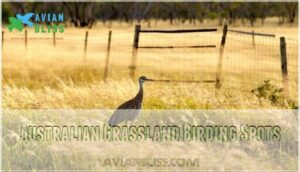
Australia’s vast grasslands offer exceptional birding opportunities across diverse landscapes.
You’ll find threatened species like the Plains-wanderer at Hattah-Kulkyne National Park, while Mungo National Park showcases habitat restoration efforts supporting native grassland species.
These grassland birding locations blend ecotourism impact with conservation challenges, where indigenous knowledge guides sustainable bird habitats management.
Dawn visits reveal ground-dwelling specialists in their natural environments.
South American Grassland Locations
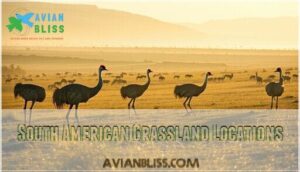
Across South America’s vast landscapes, you’ll discover incredible birding locations that showcase diverse grassland ecosystems.
The Argentine Pampas birdlife includes tinamous and rheas, while Colombia’s Llanos avifauna features over 1,500 species.
Andean grasslands host condors and raptors, Patagonian birds thrive in windswept steppes, and Gran Chaco supports unique endemic species across multiple countries.
African Grassland Birding Sites

Africa’s vast savannas offer unparalleled savanna birdlife experiences, where endemic species thrive alongside seasonal visitors following ancient migration patterns.
Despite conservation challenges from habitat loss, these regions remain premier birding hotspots attracting global birding tourism through specialized birding tours and expert birding guide services.
Here are Africa’s top grassland birding destinations:
- Serengeti National Park, Tanzania – Over 500 recorded species including raptors and grassland specialists
- Kruger National Park, South Africa – Features Secretarybirds, Lilac-breasted Rollers, and diverse hornbills
- Okavango Delta, Botswana – Wetland-grassland mix supporting African Fish Eagles and kingfishers
- Hwange National Park, Zimbabwe – Open grasslands home to Crested Francolins and various bustards
- Amboseli National Park, Kenya – Famous for Kori Bustards and Yellow-billed Storks
These locations offer detailed birding trails and extensive birding maps, making navigation simple for both novice and experienced birdwatchers seeking Africa’s incredible grassland avian diversity.
Birding Techniques and Tips

Successful grassland birding requires specific techniques that maximize your chances of spotting elusive species in these open habitats.
You’ll need to master sky scanning for raptors, ground-level observation for foraging birds, and strategic timing during dawn and dusk when grassland species are most active.
Scanning The Skies for Birds
Raptors rule the grassland skies, so you’ll want to master binocular techniques for spotting these magnificent hunters.
Weather conditions affect their flight patterns – they soar on thermals during warm afternoons.
Practice raptor identification by studying wing shapes and soaring techniques from your favorite grassland birdwatching spots.
Hawks, eagles, and harriers patrol these open spaces, making grassland bird behavior fascinating to observe.
Listening for Birdsongs
Your ears can be as powerful as your eyes when grassland birdwatching. Learn to identify birdsongs by focusing on pitch, rhythm, and song complexity.
Many grassland species use vocal mimicry, copying other birds’ calls. The dawn chorus offers peak acoustic monitoring opportunities when birds are most vocal.
Practice distinguishing between meadowlark melodies and sparrow chips to improve your bird identification skills through sound alone.
Visiting at Dawn or Dusk
Timing transforms your grassland birding experience.
Dawn and dusk offer the golden hour when temperatures cool and bird activity peaks.
You’ll spot more species during these magical windows as birds emerge to feed and vocalize.
Sunrise birding reveals territorial songs echoing across open spaces, while sunset birding showcases dramatic silhouettes against colorful skies at premier birdwatching locations.
Binoculars are essential, as this birdwatching guide explains.
Observing Ground-Level Movement
Keep your eyes glued to the grassland floor where the real action happens.
Groundnesting birds like sparrows and larks reveal fascinating foraging behaviors as they hunt insects among grass stems.
Watch for subtle movements that signal nesting habits or predator avoidance strategies.
These ground-level observations enhance your grassland bird identification skills and deepen your understanding of complex bird behavior patterns.
Essential Birding Equipment

You’ll need the right gear to make your grassland birding adventures successful and comfortable.
Quality binoculars, weather protection, field guides, and camera equipment transform a simple walk into a rewarding wildlife observation experience.
Binoculars for Birdwatching
Quality binoculars transform your grassland birding experience from squinting at distant specks to clearly observing feather details.
Magnification Explained: 8×42 binoculars offer the sweet spot between zoom and stability for birdwatching.
Lens Coatings reduce glare, while wider Field of View helps track fast-moving birds.
Consider Ergonomics and Budget Options – comfortable birding equipment prevents neck strain during long sessions.
Many birders find that 8×42 binoculars excel in the field.
Rain Gear for Birding
Rain gear transforms uncomfortable birding into memorable adventures.
Weather won’t dampen your spirit when you’re properly equipped.
Choose jackets with waterproof breathability to stay dry without overheating.
Packability considerations matter—lightweight options fold small in your backpack.
Layering strategies work best with adjustable ventilation.
Budget options exist for quality birdwatching gear.
Consider purchasing birding rain gear for superior comfort.
Regular gear maintenance keeps your birding equipment performing through countless expeditions.
Bird Identification Guides
Several trustworthy field guides will become your grassland birding companion.
Digital resources and ID apps offer real-time updates, while traditional guidebooks provide detailed field marks and regional variations.
Choose guides specific to your birdwatching location since bird species vary dramatically across continents.
Guidebook accuracy matters when identifying similar grassland birds, so invest in reputable publications that highlight distinguishing features clearly.
Many birders find specialized books invaluable for accurate species identification.
This is crucial for making the most out of your birdwatching experience.
Camera Equipment for Bird Photography
Beyond field guides, capturing those fleeting grassland moments requires the right camera equipment for bird photography.
Long telephoto camera lenses help you photograph distant species without disturbing them.
A sturdy tripod stability system prevents camera shake during extended birdwatching sessions.
Look for cameras with image stabilization, weather sealing, and remote shutter capabilities to handle challenging grassland conditions while maintaining sharp focus.
Frequently Asked Questions (FAQs)
What is the best season for grassland birding?
Spring and early summer offer you the best grassland birding experiences.
You’ll catch migrating species, active breeding behaviors, and dawn chorus performances.
Cooler temperatures and longer daylight hours make outdoor adventures more comfortable too.
How do grassland birds adapt to climate change?
You’ll notice grassland birds shifting their migration patterns, altering nesting schedules, and moving to higher elevations as temperatures rise.
They’re also changing diets and breeding behaviors to survive increasingly unpredictable weather patterns, which is a key factor in their ability to adapt to new environments.
Which grassland birds are easiest for beginners to identify?
Like spotting landmarks on a familiar road, you’ll easily recognize Red-winged Blackbirds with their bright shoulder patches.
Eastern Meadowlarks singing from fence posts, and American Goldfinches flashing yellow wings across open fields are also easily recognizable.
What permits are required for grassland birding areas?
Most grassland birding areas don’t require special permits for casual birdwatching.
You’ll just need park entrance fees at national parks or wildlife refuges.
Check specific location websites beforehand, as some sensitive areas may restrict access during breeding seasons to protect the birds, and this is an important consideration for casual birdwatching.
How far should you travel between grassland birding spots?
Don’t put all your eggs in one basket – you’ll want to space grassland birding locations 15-30 miles apart for ideal species diversity and habitat variation.
Allowing enough travel time between spots.
Conclusion
Your smartphone might capture stunning sunset photos, but it’ll never replicate the thrill of witnessing a bobolink’s aerial courtship display.
These grassland birding locations offer experiences that transcend digital screens, connecting you with ecosystems that desperately need our attention.
Whether you’re exploring Nebraska’s Sandhills or Argentina’s vast pampas, you’re participating in conservation through observation.
Pack your binoculars, embrace the early morning chill, and discover why grassland birds have captivated ornithologists for generations across continents.