This site is supported by our readers. We may earn a commission, at no cost to you, if you purchase through links.
Your bird’s seed bowl might be hiding a nutritional landmine. Many popular seed mixes contain fillers, dust, and even toxic ingredients that do more harm than good. I’ve seen countless pet birds develop health issues from poor-quality diets—fatty liver disease, malnutrition, and weakened immune systems all trace back to what lands in their feeder.
The good news? Once you know which seeds truly nourish your feathered friend and which ones to avoid, you can transform their health from the inside out. Understanding healthy bird seed options for pets means looking beyond colorful packaging and focusing on nutrients that support strong feathers, stable energy, and long-term vitality.
Table Of Contents
- Key Takeaways
- Healthy Seed Varieties for Pet Birds
- Seeds to Avoid for Bird Health
- Choosing Quality Bird Seed
- Top 10 Healthy Bird Seed Products
- 1. Wild Bird Greatest Variety Blend
- 2. High Energy Wild Bird Seed Mix
- 3. Black Oil Sunflower Bird Seed
- 4. High Quality Safflower Bird Seed
- 5. Nyjer Seed Wild Bird Food
- 6. White Proso Millet Bird Seed
- 7. Natural Bird Spray Millet Treats
- 8. Wild Bird Cracked Corn Food
- 9. Wild Bird Peanut Food Delight
- 10. Wild Bird Ground Feeding Seed Mix
- Feeding Guidelines for Balanced Bird Diets
- Frequently Asked Questions (FAQs)
- Conclusion
Key Takeaways
- Choose nutrient-dense seeds like millet, safflower, and hemp hearts while keeping seeds to just 30-40% of your bird’s total diet to prevent obesity and vitamin deficiencies.
- Always avoid toxic seeds like apple seeds, fruit pits, raw beans, and avocado seeds, which contain compounds that can cause liver damage, heart failure, or death in birds.
- Store bird seed in airtight containers in cool, dry places and inspect regularly for mold, dust, or pests—aflatoxin contamination from moldy seed can be fatal.
- Balance seeds with 50-60% pellets and 20-25% fresh produce, feeding twice daily with measured portions to support healthy feathers, strong immunity, and long-term wellness.
Healthy Seed Varieties for Pet Birds
Choosing the right seeds for your bird can feel overwhelming, but a little guidance goes a long way. Here are some healthy options that support your bird’s well-being.
Let’s take a closer look at what makes each one special.
Millet Seeds – Nutritional Benefits
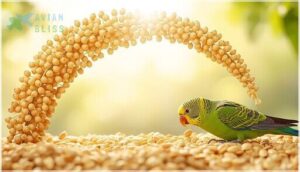
Millet is a powerhouse regarding nutritious seeds for birds. Its balanced mix of protein, fiber, and minerals aids avian metabolism and feather growth, while also helping bird digestion. Millet nutrition keeps your pet energized, yet it’s gentle on the stomach.
For best results, practice proper seed storage to preserve freshness and healthy seeds for pet birds. Providing a diet with balanced nutrient sources is essential for maintaining peak bird health.
Safflower Seeds – a Nutritious Alternative
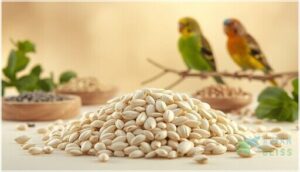
Safflower seeds offer a smart alternative to sunflower seeds, packing 38% fat and 16% protein for solid energy without attracting squirrels. Their hard shells and bitter taste help deter pests while supporting bird wellness through balanced nutrient density.
Your bird gets trace minerals like magnesium and zinc, plus vitamins A and B. Keep safflower to 5–10% of daily intake—just a few times weekly as a treat.
For peak bird health, consider consulting pet care guides to create a well-rounded diet.
Nyjer Seeds – High-Energy for Finches
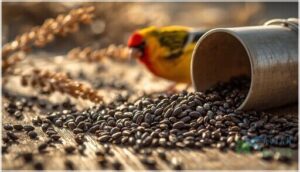
Another powerhouse option for finch nutrition? Nyjer seed. This tiny black seed packs over 35% fat and 18–20% protein—perfect for high-energy needs during cold snaps or migration.
Why finches love it:
- Small size fits tiny beaks perfectly
- 70% linoleic acid aids metabolism
- Rich oil content boosts feather health
- Specialized bird feeder ports reduce waste
- Less attractive to squirrels
Store in airtight containers and replace every few weeks to keep seed nutrition fresh.
Pumpkin Seeds – Immune System Support
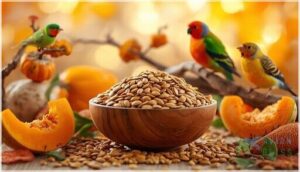
Looking for a real immune booster in your bird’s diet? Pumpkin seeds deserve a spot in your feeder. Research shows 81% of birds supplemented with these nutrient-rich seeds show improved immune responses. They’re packed with vitamin E, zinc, and healthy fats that protect cells and fight off infections.
Immune Benefits at a Glance:
| Nutrient Component | Health Impact |
|---|---|
| Vitamin E & Antioxidants | Cellular protection, enhanced immunity |
| Zinc & Magnesium | Immune cell function, disease resistance |
| Omega Fatty Acids | Reduced inflammation, tissue repair |
Feed 2–10g daily (cracked for smaller birds) to support year-round avian health and resilience.
Hemp Hearts – Omega Fatty Acids
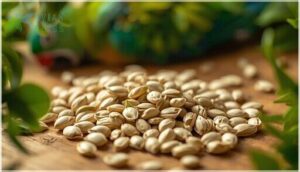
Think of hemp hearts as nature’s multivitamin for your feathered friend. These omega-rich seeds deliver an ideal 3:1 ratio of omega-6 to omega-3 fatty acids—a breakthrough for avian nutrition and bird health supplements.
The healthy fats support vibrant feathers, reduce inflammation, and strengthen immunity. For balanced diets, feed small birds just ¼ teaspoon daily.
This seed nutrition powerhouse offers complete protein and essential amino acids your bird needs.
Black Oil Sunflower Seeds – Protein & Vitamins
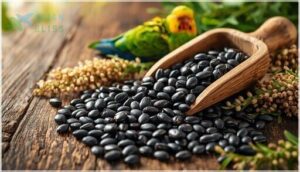
Your bird needs the powerhouse nutrition of Black Oil Sunflower Seeds. These tiny gems pack 16-20% protein for strong muscles and gorgeous feathers during molting.
They’re loaded with vitamin E to boost immunity, plus essential B vitamins, calcium, and iron. The 40-45% fat content fuels active birds beautifully.
Just remember—offer them as part of a balanced mix, not the whole meal.
Seeds to Avoid for Bird Health
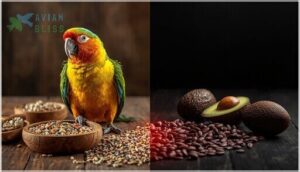
Not all seeds are safe for your feathered friend. Some contain natural toxins that can make birds seriously ill or even lead to death.
Let’s look at the seeds you should always keep away from your pet bird.
Apple Seeds and Fruit Pits – Toxic Risks
You might be surprised to learn that something as harmless as an apple seed contains a toxic compound called amygdalin, which releases cyanide when your bird chews it. While a single seed won’t harm most birds, fruit pits from cherries, peaches, and apricots pack much higher concentrations and pose serious fruit pit risks.
For avian safety, always remove these toxic seeds before offering fruit to your feathered friend.
Moldy or Spoiled Seeds – Aflatoxins Danger
Moldy seeds produce aflatoxins—deadly toxins that can cause liver failure in your bird. Studies show up to 25% of bird feed samples contain dangerous levels, especially corn-based mixes.
Store seed in airtight containers in cool, dry spots for proper mold prevention. Toss any seed that looks clumped, smells off, or shows visible mold.
These simple seed storage tips provide essential aflatoxin prevention and protect your feathered companion.
Raw Beans – Harmful Lectins
Raw legumes hiding in seed mixes pose a silent threat to your feathered friend. Just four to five raw kidney, navy, or lima beans can trigger severe bean poisoning due to lectin toxicity. These compounds damage the liver and heart, causing death within 1-2 weeks.
Always cook beans for at least 10 minutes to protect avian nutrition and guarantee seed safety for pet birds.
Avocado Seeds – Persin Toxicity
Keep every part of the avocado away from your pet bird—especially the seed. Persin, a fungicidal toxin in avocado seeds, causes fatal heart damage in birds. Just 3.5 grams can kill a budgerigar, while 2 grams proves lethal to canaries.
Avocado seeds contain persin, a fungicidal toxin that causes fatal heart damage in birds—just 2–3.5 grams can kill budgies and canaries
This isn’t about moldy seeds or general seed safety—avocado poisoning attacks the heart directly, causing respiratory distress and death within 24-48 hours.
Chocolate-Containing Seeds – Theobromine Poisoning
Never let chocolate or cacao-based ingredients anywhere near your bird’s seed mix. Theobromine toxicity from chocolate poisoning causes seizures, heart arrhythmias, and often death—even trace amounts prove fatal. Dark chocolate poses the highest risk, with just 1 gram potentially killing small birds.
This bird emergency demands immediate veterinary attention. Always check ingredient labels and source seed from facilities that guarantee no chocolate contamination.
Choosing Quality Bird Seed
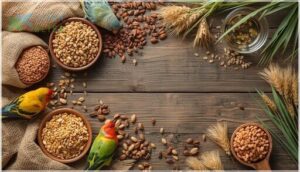
Not all bird seed is created equal, and the quality you choose directly affects your pet’s health. Fresh, properly stored seed can support wellbeing, while poor-quality options may harbor hidden dangers.
Let’s look at five key factors that will help you select the best seed for your feathered friend.
Spotting Fresh, Clean Seed Mixes
Seed freshness starts with visual inspection. Look for bright, plump seeds that flow freely through your fingers. Fresh seed mixes smell mildly nutty, not sour or musty. You’re checking for signs of moisture control problems—clumping, stickiness, or sprouting means trouble.
Quick quality checklist:
- Appearance – Shiny seeds without excessive hulls or powder
- Aroma check – Fresh, not rancid or chemical
- Texture – Dry and free-flowing, indicating proper seed storage
Avoiding Fillers and Dust
Not all bird seed mixes deliver what they promise. Up to 80% of cheap blends consist of filler ingredients like milo, wheat, and red millet that your bird won’t eat. These fillers create hull waste beneath cages and harbor dangerous dust.
Dust reduction methods matter—clean feeding practices protect your bird’s respiratory system. Choose high-quality ingredients without excessive powder. Proper seed quality control means fewer fillers and healthier birds.
Sourcing From Reputable Suppliers
Once you’ve identified quality seed without fillers, you need to know where it came from. Reputable suppliers of bird seed conduct regular supplier audits and maintain full seed traceability from farm to bag.
Look for brands with proven quality control and regulatory compliance records. Companies like Kaytee and Central Garden & Pet lead in sustainable sourcing practices, ensuring balanced pet bird nutrition for your feathered friend.
Proper Packaging and Storage Practices
To keep your bird seed fresh, you’ll need airtight containers stored in a cool, dry place. Proper seed storage starts with moisture control—watertight lids prevent spoilage and keep pests out.
When storing bird seed or storing extra bird feed, use metal or heavy plastic bins. Practice seed rotation by using older supplies first.
These storage tips help your feathered friend get the best nutrition possible.
Checking for Mold and Pests
Before you fill your feeder, take a close look at the seed. Visual inspection catches discoloration and clumping with 95% accuracy. Olfactory detection helps too—moldy seeds smell musty or rancid. Check for webs or larvae indicating pests.
Store seed in a cool dry place using airtight containers to reduce contamination by 80%. These preventative measures keep mold prevention simple and your bird safe.
Top 10 Healthy Bird Seed Products
Choosing the right seed products can feel overwhelming with so many options on the market. I’ve evaluated the most popular bird seed brands and blends to help you make informed decisions for your feathered friends.
Here are ten quality products that provide balanced nutrition and meet safety standards for pet birds.
1. Wild Bird Greatest Variety Blend
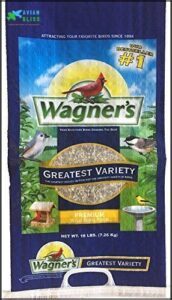
Wagner’s Greatest Variety Blend brings twelve distinct seed varieties to your feeder, creating a nutritious buffet for pet birds and backyard visitors alike. This seed mix features 40% sunflower content plus safflower, nyjer, and millet—ingredients that support pet bird nutrition across species.
The blend ingredient analysis shows cardinals, chickadees, and finches consistently visit feeders stocked with this variety.
However, consumer satisfaction trends from 2023–2025 reveal quality concerns. Recent ingredient quality control issues include increased filler content and occasional insect problems, prompting nutritional composition facts scrutiny among long-term users.
Best For: Backyard bird enthusiasts who want to attract the widest variety of songbirds—including cardinals, finches, and chickadees—with a single multi-ingredient blend.
- Contains 12 different seed types with 40% sunflower content, offering high protein and energy to attract diverse species like nuthatches, sparrows, and woodpeckers.
- Works in multiple feeder styles (tube, hopper, or platform), giving you flexibility in how you set up your bird-feeding station.
- Made in the USA with natural ingredients and no artificial preservatives, supporting quality standards for backyard wildlife.
- Recent batches show quality control issues, with some customers reporting increased filler content, sticks, and debris—up to 15% by volume in certain shipments.
- The bag isn’t resealable, which can lead to freshness problems and potential insect infestations if not stored properly.
- Consumer satisfaction has dropped from 4.5 stars to 2–3 stars between 2023–2025 due to reported ingredient changes and occasional mold or ammonia odors.
2. High Energy Wild Bird Seed Mix
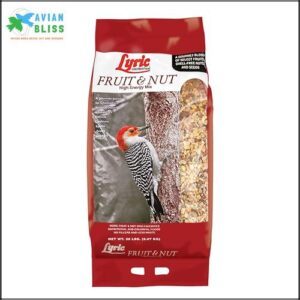
High energy wild bird seed mixes deliver superior nutrition when your pet birds need it most. These blends contain over 45% sunflower hearts, plus peanuts, pecans, and pumpkin seeds—ingredients that provide 10-12% protein and 8-9% fat.
Market trends show these nutritious seeds for birds support activity levels during cold weather and molting periods. Species attraction studies confirm chickadees, nuthatches, and jays prefer energy-dense seed varieties.
Following feeding recommendations, you’ll offer these healthy seeds for pet birds alongside fresh produce and pellets for balanced seed nutrition.
Best For: Backyard birders who want to attract a wide variety of species year-round, especially during winter months when birds need extra calories to stay warm and active.
- Contains 13 premium, shell-free ingredients including nuts, fruits, and sunflower kernels that provide high protein (10-12%) and fat (8-9%) content for maximum energy.
- Attracts diverse bird species like chickadees, blue jays, nuthatches, cardinals, and woodpeckers with its gourmet blend of ingredients.
- No fillers or hulls mean less waste and mess under feeders, plus easier consumption for small-beaked birds.
- High price point at around $40-50 for 20 pounds may not fit all budgets, especially for regular year-round feeding.
- Some customers report quality control issues including bug infestations and inconsistent formulation with more corn and shell-on seeds than advertised.
- Larger pieces may be difficult for smaller bird species to handle, and changing ingredient ratios have disappointed long-time users.
3. Black Oil Sunflower Bird Seed
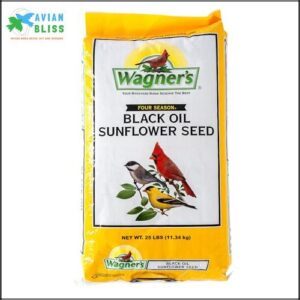
Black oil sunflower seeds earn their reputation as the cornerstone of seed nutrition for pet birds. These small powerhouses deliver 15% protein, 25% healthy fats, and vitamin E to support feather condition and energy levels. Seed preferences vary by species, but cardinals, finches, and chickadees consistently favor these nutritious seeds.
Following feeding guidelines, offer them alongside pellets and produce. Store seeds properly to minimize aflatoxin risks from mold. Expect hull debris beneath feeders, but the nutritional benefits outweigh this minor cleanup task for most bird owners.
Best For: Bird enthusiasts who want to attract a wide variety of wild birds like cardinals, finches, and chickadees while providing high-energy nutrition through cost-effective feeding.
- High nutritional value with 25% fat and 15% protein supports healthy feathers, energy levels, and breeding success across 62 bird species.
- Thin shells make seeds accessible to small-beaked birds, and the seeds attract more species than any other single seed type.
- Made in the USA with cost-effective 25-pound bags that work well in most feeder types.
- Some bags contain debris like twigs and dirt, and the lack of resealable closure can lead to spills and freshness issues.
- Hull waste creates cleanup beneath feeders since shells make up 35-40% of seed weight and aren’t digestible.
- Potential aflatoxin contamination risk if seeds aren’t stored properly in dry conditions, and squirrels often compete with birds for access.
4. High Quality Safflower Bird Seed
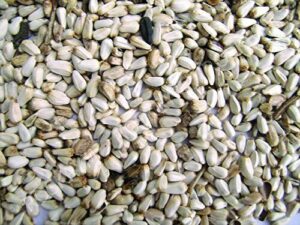
Safflower seed offers a smart solution when you want to attract cardinals and finches while keeping squirrels at bay. Its bitter taste works as a natural squirrel deterrent, reducing competition at your feeders.
This nutritious seed for birds delivers 16% protein and 38% fat, supporting feather health and energy needs.
Seed purity matters—look for clean, consistent kernels from trusted suppliers. Feeding trends show safflower’s growing popularity among bird owners seeking healthy seeds for pet birds that balance nutritional value with selective appeal.
Best For: Backyard birders who want to attract cardinals, finches, and other songbirds while naturally deterring squirrels and invasive species like starlings and grackles.
- High nutritional value with 16% protein and 38% fat supports healthy feathers, energy levels, and overall bird wellness.
- Bitter taste naturally repels squirrels, grackles, and starlings, reducing competition and waste at feeders.
- Clean, all-natural seeds with no artificial additives provide a pure food source that selective species readily accept.
- Premium pricing compared to sunflower seeds makes it a more expensive feeding option for budget-conscious bird lovers.
- Attracts a limited range of bird species, so it won’t bring the same variety as mixed seed blends.
- Packaging quality can be inconsistent, with some customers reporting flimsy bags that don’t hold up during shipping.
5. Nyjer Seed Wild Bird Food
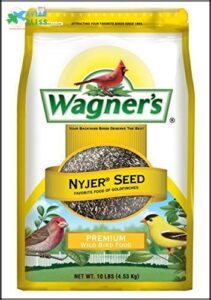
Nyjer seeds are finch favorites, offering 35% fat and 20% protein for tiny songbirds. Global sourcing from India and Ethiopia ensures availability, though seed sterilization adds to the cost. This premium option is essential for proper pet bird diet planning, especially when attracting goldfinches.
Proper storage keeps nyjer fresh—use airtight containers in cool spots and replace uneaten seed after four weeks. Market trends show nyjer ranks among the top three choices for seed feeding, reflecting its first-rate seed nutrition despite higher prices.
Best For: Backyard birders who want to attract goldfinches, purple finches, and other small songbirds with a high-energy, nutritious seed that minimizes waste at the feeder.
- Packed with 35% fat and 20% protein, giving finches the energy they need, especially during migration and winter months.
- Attracts a dedicated crowd of beautiful finches and siskins with minimal spillage, since the small seeds work perfectly in specialized tube and sock feeders.
- Stays fresh longer when stored properly in airtight containers, and the high oil content keeps birds coming back throughout the season.
- More expensive than standard birdseed mixes due to the specialized import process and required sterilization from overseas suppliers.
- Shells can create a mess below the feeder, so you’ll need to think carefully about placement or plan for regular cleanup.
- Requires closer attention to freshness—seed left in feeders beyond four weeks can spoil, and packaging quality issues like leaking bags occasionally pop up.
6. White Proso Millet Bird Seed
Ground-feeding birds like sparrows and doves prefer white proso millet over most other seed varieties. This USA-grown option delivers 11% protein and essential B vitamins, fuels your pet bird’s energy needs without excess fat. The nutritional profile includes magnesium and iron, fostering heart health and steady metabolism.
Proper feeding safety matters—scatter only what your bird can eat in one day to prevent mold growth. Quality seed should smell fresh and look clean. Mix proso millet with sunflower or safflower seeds for balanced seed nutrition that aids species preferences naturally.
Best For: Backyard bird enthusiasts who want to attract ground-feeding species like sparrows, doves, and juncos with a nutritious, USA-grown seed that’s high in protein and low in waste.
- Preferred by over 40% of North American feeder birds, especially ground feeders, making it more effective than filler seeds like red milo.
- Delivers 11% protein, essential B vitamins, and minerals like magnesium and iron to support your birds’ energy, heart health, and overall wellness.
- Versatile enough to use alone or mixed with sunflower and safflower seeds for a balanced, custom feeding approach.
- Can attract unwanted pests like rats if not stored properly or if too much seed is left out overnight.
- Requires careful daily portioning since leftover seed exposed to moisture can germinate or develop mold and bacteria.
- The 50-pound bag is sewn shut and may need scissors to open, and loose seed can create mess around feeding areas.
7. Natural Bird Spray Millet Treats
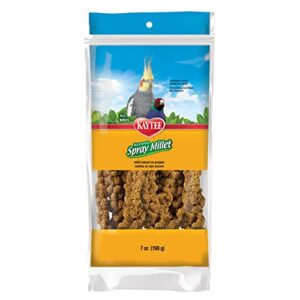
Your budgie or finch will love nibbling on spray millet—a natural, low-fat treat that encourages foraging and bonding time. This all-natural option offers 8% protein and minerals like magnesium and calcium for strong bones and steady metabolism.
During weaning or molting, spray millet aids recovery with extra calories your bird needs.
Keep portions small—just one teaspoon per bird daily—to prevent weight gain. Store sealed containers in cool, dry spots to avoid mold. Choose organic spray millet when possible to minimize pesticide exposure and support avian wellness naturally.
Best For: Bird owners who want a healthy, natural treat to strengthen their bond with budgies, finches, or canaries while encouraging foraging behavior and supporting nutrition during weaning or molting.
- Natural and low in fat, making it a healthier treat option that provides essential minerals like magnesium and calcium for bone health and metabolism.
- Encourages natural foraging and mental stimulation, which helps keep birds active and engaged during playtime and bonding sessions.
- Especially helpful during weaning, molting, or recovery periods when birds need extra calories and protein to support growth and healing.
- Quality can be inconsistent, with some customers reporting dried-out or stale millet sprays that may have seeds falling off easily.
- Should be limited to small portions (about one teaspoon per bird daily) to avoid weight gain, as it’s high in carbohydrates.
- More expensive than similar products from other brands, and potential pesticide residues mean you should opt for organic options when possible.
8. Wild Bird Cracked Corn Food
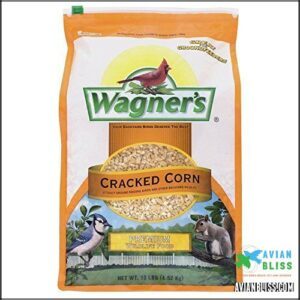
Cracked corn offers an affordable option for attracting ground-feeding wild birds like doves and jays, but pet birds need caution. This corn storage tips matter: seal bags tightly in cool, dry spots to prevent aflatoxin contamination from mold—a serious cracked corn risk.
While cracked corn benefits include quick energy from carbohydrates, it lacks essential amino acids and vitamins. Use it sparingly as a supplement, never as your bird’s main diet. For pet birds especially, limit cracked corn to avoid nutritional gaps and watch for spoilage carefully.
Best For: Backyard birders looking to attract ground-feeding wild birds like doves, jays, and cardinals on a budget, or anyone wanting to divert squirrels away from other feeders.
- Affordable energy source that attracts a wide variety of ground-feeding birds and wildlife like rabbits and chipmunks.
- Versatile feeding option—use it alone, mix with other seeds, or sprinkle on the ground for waterfowl.
- Provides quick carbohydrate energy for birds during colder months when they need extra calories.
- Lacks essential nutrients like amino acids and vitamins, so it shouldn’t be the main food source for any bird.
- High risk of mold and aflatoxin contamination if not stored properly in sealed, dry containers.
- Non-resealable bag design leads to spills, mess, and potential waste, plus attracts unwanted pests like rodents.
9. Wild Bird Peanut Food Delight
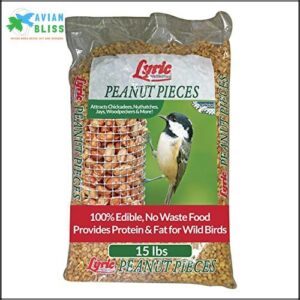
High-protein peanuts draw cardinals, woodpeckers, and chickadees to your bird feeder with minimal waste. With 25% crude protein and 40% fat, this wild bird seed meets energy needs—especially during winter.
For pet birds, unsalted, shelled peanuts offer bird nutrition benefits, but aflatoxin risks demand careful peanut storage in cool, dry containers. Check regularly for mold, as contaminated peanuts threaten liver health.
While peanuts attract wild birds beautifully, limit them in your pet bird’s diet to avoid imbalance, always choosing premium, tested products.
Best For: Backyard birders who want to attract energetic species like woodpeckers, jays, and chickadees with a high-energy, protein-rich food that works year-round but especially shines in winter.
- High protein (25%) and fat (40%) content gives birds the energy they need, especially during cold months when calories matter most.
- Attracts a wide variety of songbirds and wildlife, from cardinals and nuthatches to the occasional chipmunk or squirrel.
- Zero waste formula means birds eat everything, so you’re not sweeping up shells or dealing with mess under the feeder.
- Peanuts can develop mold and harmful aflatoxins if they get wet, so you’ll need to check and refresh the feeder regularly.
- May attract unwanted visitors like raccoons or opossums if your feeder setup isn’t managed carefully.
- Some smaller birds struggle with larger peanut pieces and need them broken up before they can eat comfortably.
10. Wild Bird Ground Feeding Seed Mix
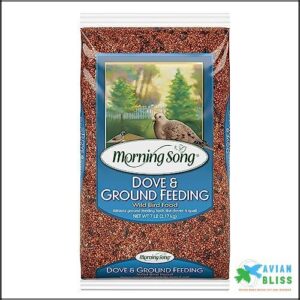
Ground feeding seed mixtures attract doves, quail, sparrows, and juncos right to your yard with white proso millet, cracked corn, and black oil sunflower. These blends support wild bird nutrition during winter, increasing both abundance and diversity.
For pet birds, avoid high-filler mixes exceeding 70% red milo or wheat—they waste money and offer poor nutrition. Choose quality blends listing sunflower and safflower first, checking for freshness and mold.
While wild bird seed options work outdoors, your parakeet needs balanced feeding strategies: limit seeds to 25% of diet, pairing with pellets and produce.
Best For: Birdwatchers wanting to attract ground-feeding species like doves, quail, sparrows, and juncos with a budget-friendly seed mix.
- Contains black oil sunflower and white proso millet, which are highly preferred by over 50 bird species and provide good nutritional value with 20-25% protein and 20-40% fat.
- Attracts a diverse range of ground-feeding birds, helping increase both bird abundance and species diversity in your yard, especially during winter months.
- Offers solid value at 7 pounds for the price, making it an affordable option for regular feeding without breaking the bank.
- May contain filler seeds like red milo or wheat that many birds reject, leading to wasted seed and mess under feeders.
- Some customers report their local birds show little interest in the mix, with results varying significantly based on regional bird populations and preferences.
- Smallest seeds can fall through mesh platform feeders, resulting in waste and requiring ground feeding or solid-surface feeders instead.
Feeding Guidelines for Balanced Bird Diets
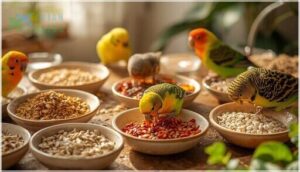
Feeding your bird the right way matters just as much as choosing quality seeds. A balanced diet includes proper portions, variety, and careful attention to your bird’s changing needs.
Let’s walk through the key guidelines that’ll help you create a healthy feeding routine your feathered friend will thrive on.
Portion Control and Feeding Frequency
Think of seed feeding like treating your child to dessert—portion control matters. Small birds need 1–2 tablespoons daily, while larger parrots require more based on body weight.
Feed your bird twice daily, ideally morning and early evening, using feeding windows to prevent overeating. Daily seed allowance should stay within 30–40% of total intake.
Monitor portion sizes with measuring spoons and watch your bird’s weight regularly.
Mixing Seeds With Pellets and Produce
Your bird’s diet works best when you combine pellets, seeds, and fresh produce rather than relying on seed selection alone. Aim for 50–60% pellets, 20–25% produce, and 18–25% seed-based bird food. This approach improves nutrient balance and dietary variety while supporting bird wellness.
Rotate vegetables like leafy greens and carrots to encourage dietary balance. These feeding strategies help prevent selective eating and maintain peak health through proper pellet ratios and seed mixing.
Limiting Seed Content for Optimal Nutrition
Why do so many pet birds struggle with obesity and vitamin deficiencies? Seed-heavy diets are often the culprit. You should limit seed content to 30–40% of your bird’s daily intake to prevent diet-related health issues.
Follow these seed feeding guidelines for nutrient balance:
- Keep seeds to one-third of meals to reduce bird obesity risk
- Offer seeds during morning feeding only as training treats
- Watch for dull feathers or lethargy signaling dietary imbalance
- Increase pellets if seed intake exceeds 40% for diet variety
Providing Fresh Water and Supplements
Your bird’s water dish isn’t just a detail—it’s essential. Replace fresh hydration daily to support bird health and prevent bacterial growth. Clean containers thoroughly each morning.
Add vitamin supplements like vitamin D3 and calcium supplements to promote electrolyte balance. Water quality matters, so use filtered sources when possible.
Mineral supplements strengthen bones and feathers, ensuring your bird’s balanced diet fosters long-term wellness.
Monitoring Bird Health and Adjusting Diet
Keeping track of your bird’s weight weekly helps catch nutrition problems early. Use a gram scale and watch for these signs:
- Weight loss exceeding 1–2% per week signals trouble
- Changes in feather quality or energy levels
- Selective eating or food refusal
- Unusual behaviors like feather plucking
Record baseline weight before diet adjustments. Your avian vet can guide nutrition planning and health monitoring for peak bird wellness.
Frequently Asked Questions (FAQs)
How long can bird seed be stored safely?
Proper seed storage makes all the difference. You can safely store bird seed for six to twelve months when kept in airtight containers in cool, dry places below 60°F with low humidity.
Can different bird species share the same seed?
While different birds can technically eat from the same feeder, nutritional needs vary greatly between species. Shared seed risks include selective eating and deficiency issues. Specialized seed mixes better support each bird’s unique dietary requirements for peak health.
What are signs of seed allergies in birds?
Skin irritation, feather plucking, and respiratory distress—like sneezing or wheezing—often signal seed allergies in birds. You might also notice gastrointestinal issues, behavioral changes, or systemic effects like lethargy.
Contact avian veterinarians if symptoms appear.
Should seeds be soaked before feeding pet birds?
Soaking seeds is a double-edged sword for your bird’s health. While it boosts nutrient bioavailability and digestibility improvements, improper safe soaking practices create pathogen risks like Salmonella—especially dangerous in seed-heavy diets for pet bird diet safety.
How do I transition my bird from seeds?
Gradually decrease seed portions while increasing pellets over 30-60 days. Mix foods to overcome neophobia.
Offer pellets when your bird’s hungriest—mornings work best.
Patience helps dietary acceptance since some birds need weeks to adjust comfortably.
Conclusion
Selecting seeds sensibly separates thriving birds from struggling ones. You’ve now got the knowledge to spot quality blends, dodge dangerous ingredients, and build a feeding routine that truly benefits your feathered companion.
Start with one or two healthy bird seed options for pets from this list, watch how your bird responds, and adjust as needed. Your attention to their diet today means brighter feathers, stronger immunity, and more joyful chirps tomorrow.
- https://www.kaytee.com/learn-care/wild-bird/value-of-wild-bird-ingredients
- https://www.merckvetmanual.com/exotic-and-laboratory-animals/pet-birds/nutritional-diseases-of-pet-birds
- https://www.harrisonsbirdfoods.com/product/new-jumpstart-omega/
- https://www.facebook.com/groups/77122125069/posts/10158346957980070/
- https://edis.ifas.ufl.edu/publication/VM067