This site is supported by our readers. We may earn a commission, at no cost to you, if you purchase through links.
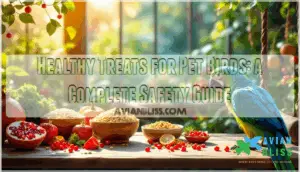 Your parrot eyes that chocolate chip cookie in your hand with laser focus, head tilted and pupils flashing. But what seems like a harmless shared moment could land your feathered friend in the emergency vet—chocolate contains theobromine, which triggers seizures and heart failure in birds.
The treats you choose matter more than you might think. They’re not just snacks; they deliver essential vitamins, prevent boredom, and keep your bird’s body functioning at its best.
From antioxidant-rich pomegranates to protein-packed quinoa, the right healthy treats for pet birds transform routine feeding into targeted nutrition that bolsters everything from gleaming feathers to strong bones.
Table Of Contents
Key Takeaways
- Treats should make up only 10% of your bird’s diet (with 60% pellets and 30% fresh produce), serving as targeted nutrition that fills gaps in vitamins, minerals, and fiber while preventing boredom-related behavioral issues.
- Chocolate, avocado, fruit pits, onions, and xylitol are extremely toxic to birds and can cause seizures, heart failure, respiratory distress, or death—even in small amounts.
- Safe treat options include antioxidant-rich fruits like pomegranates and mangoes, dark leafy greens, cooked whole grains like quinoa, and legumes, all of which should be thoroughly washed and served fresh without salt or added fats.
- Nuts and seeds are nutrient-dense but high in fat and must be strictly limited to one or two pieces daily to prevent obesity, fatty liver disease, and other serious health problems that are the leading cause of early death in pet birds.
Nutritional Benefits of Healthy Bird Treats
Your bird’s diet works best when it includes a mix of commercial pellets, fresh produce, and treats that pack real nutritional value.
The treats you choose aren’t just about keeping your feathered friend entertained—they’re an important source of vitamins, minerals, and other nutrients that support overall health and wellness.
Let’s look at some of the best treat options that’ll help your bird thrive while keeping things interesting and delicious.
Essential Vitamins and Minerals for Birds
Your bird’s health hinges on the right nutritional foundation. Essential vitamins and minerals work together like a team—vitamin A aids immune function and eye health, while vitamin D3 and calcium keep bones strong. Here’s what matters most:
- Vitamin A prevents immune problems and poor feather quality in seed-based diets
- Vitamin D3 and calcium work together; deficiency risks bone disease and fractures
- B-complex vitamins break down food and aid growth daily
- Calcium and phosphorus imbalances cause serious developmental issues
- Trace minerals like zinc and selenium build strong feathers and bones
Most pet birds don’t get enough of these nutrients, which is why healthy treats packed with fruits, vegetables, and whole grains are so important for filling those gaps. Understanding bird vitamin needs is vital for providing a balanced diet.
Role of Treats in Balanced Avian Diets
Now here’s the thing—treats aren’t just about keeping your bird entertained, though that’s definitely part of it. A balanced avian diet needs structure. Your bird should get 60% pellets, 30% fruits and vegetables, and just 10% treats.
That ratio matters because treats fill nutritional gaps—delivering vitamins, minerals, and fiber your bird might miss otherwise. Think of treats as targeted nutrition that fosters healthy snacking while preventing boredom-related conduct issues. Proper treat portion control keeps your bird thriving.
Impact of Healthy Treats on Bird Behavior and Wellness
When your feathered friend gets a tasty treat, you’re not just handing over a snack—you’re actually shaping their conduct and overall wellness. Treats combat boredom and prevent destructive behaviors by providing cognitive stimulation and emotional enrichment.
Birds thrive with variety, and healthy treats support bird socialization during training sessions. This conduct enrichment reduces stress, promotes pet bird care, and strengthens your bond while supporting avian nutrition and long-term bird wellness.
Safe Fruits and Vegetables for Pet Birds
Fruits and vegetables are like nature’s multivitamins for your bird—they’re packed with the vitamins, minerals, and fiber your feathered friend needs to thrive. The good news is that many common fruits and veggies are safe and nutritious treats that your bird will genuinely enjoy.
Let’s look at which ones work best and how to serve them properly.
Recommended Fruits and Their Nutrients
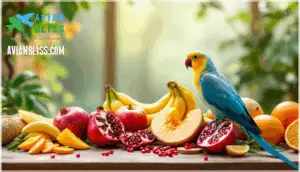
Your bird’s fruit intake shapes their overall wellness more than you might realize. Mangoes, pomegranates, bananas, and apples deliver essential vitamins and minerals that support healthy feathers, immune function, and cognitive sharpness. Oranges and cantaloupe add hydration and nutritional variety to your pet bird’s diet.
These fruits should comprise about 30 percent of daily calories—the ideal balance for avian nutrition without overdoing natural sugars. Understanding daily nutrition needs is vital for maintaining a balanced diet.
Bird-safe Vegetables and Preparation Tips
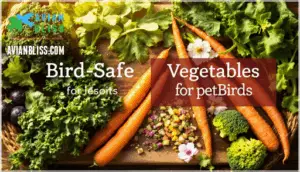
Vegetables are like nature’s medicine cabinet for your bird—packed with nutrients but requiring some know-how to serve them safely. Leafy greens such as kale and spinach support bird crop health, while steaming softer vegetables breaks down tough fibers. Dark leafy greens, carrots, and broccoli offer excellent nutrition for bird health.
Rinse all raw food thoroughly to remove pesticide residue. Fresh veggie storage in sealed containers keeps nutrients intact.
Portion Control and Frequency Guidelines
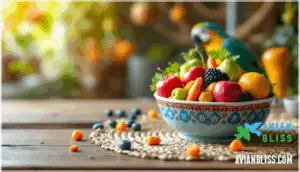
Here’s where the math gets real: vegetables and fruits should make up about 30 percent of your bird’s daily diet, while treats stay capped at 10 percent. That means if your parrot eats a cup of pellets daily, you’re looking at roughly a tablespoon of veggies and just a teaspoon or two of fruit treats combined.
Serve fresh produce once daily, and rotate varieties to keep your bird interested without overdoing calories. Watch your bird’s weight—if your feathered friend is gaining too quickly, dial back portions.
Think of it like managing your own snack intake: consistency and moderation keep everything balanced.
Whole Grains and Legumes as Bird Treats
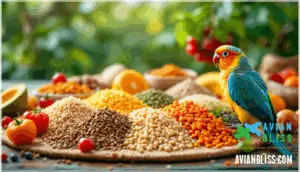
If you’re looking to round out your bird’s diet with something beyond pellets and fresh produce, whole grains and legumes are excellent options. These foods pack a nutritional punch with fiber, protein, and essential nutrients that keep your feathered friend healthy and engaged.
Let’s explore which grains and beans are safe for your bird and how to prepare them the right way.
Nutritious Grains for Companion Birds
Here’s the thing—grains are like nature’s little energy bars for your feathered friends, packed with fiber and nutrients that keep them healthy and satisfied. When you’re thinking about whole grains for your avian diet, these cereal options really shine:
- Quinoa – A protein powerhouse that birds absolutely love
- Oats – Easy to digest and full of heart-healthy fiber
- Corn – A natural favorite that provides essential energy
- Brown rice – Gentle on digestion while delivering lasting nutrition
Cook them plain without salt or butter, and you’ll have treats that support your bird’s wellness naturally.
Safe Legumes and Beans for Birds
Beans and legumes aren’t just protein-packed powerhouses for people—your bird can benefit from these nutritious treats too. Cooked lentils, chickpeas, and kidney beans offer excellent protein sources and fiber that support avian diet wellness.
Always cook them thoroughly—raw or undercooked legumes contain harmful compounds that can make your bird sick. Skip canned varieties loaded with sodium, and rinse beans well before serving.
These seed alternatives provide legume benefits that diversify bird nutrition while keeping your feathered companion healthy and engaged.
Cooking and Serving Methods for Grains and Legumes
Preparing these treats the right way makes all the difference between a nutritious snack and a potential health hazard. Cook grains like quinoa, oats, and brown rice until tender—no added salt or butter. For legumes, boil them thoroughly until soft to eliminate toxins.
Let everything cool completely before serving. You can mix cooked grains with chopped vegetables for variety.
Store leftovers in the fridge for up to three days, and toss anything that smells off to keep your bird safe.
Seeds and Nuts: Moderation and Selection
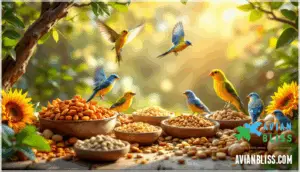
Seeds and nuts are powerhouse snacks that birds absolutely love, but they come with a catch—they’re packed with fat and calories.
Choosing the right varieties and keeping portions in check makes all the difference between a healthy treat and an unhealthy habit.
Let’s look at how to offer these favorites safely.
Healthy Nut and Seed Options for Treats
Think of nuts and seeds as nature’s vitamin-packed energy capsules—your bird can benefit from these nutrient-dense treats when you choose the right varieties and keep portions small. Almonds, walnuts, and pistachios deliver healthy fats and protein, while pumpkin, sunflower, and flax seeds offer essential minerals.
Just remember that seed variety matters—rotate different options to prevent boredom and guarantee balanced nutrition. Always serve nuts and seeds unsalted and unsweetened, and store them in airtight containers to maintain freshness and prevent mold.
Risks of Excess Fat and Salt
While nuts and seeds pack valuable nutrients, too much fat or salt can seriously harm your feathered friend. Sodium Toxicity occurs when salt intake exceeds safe levels—even a single chip can trigger kidney problems and excessive thirst in small birds. Fat accumulation from high-fat content treats leads to Avian Obesity, the leading cause of early death in pet birds. Here’s what to watch for:
- Fatty liver disease develops from chronic consumption of butter, meat, or oil-rich seeds
- Salt concentrations above 0.2% cause dehydration and neurological issues
- Amazon and Quaker parrots face higher risks of high cholesterol and heart disease
- Excessive fat disrupts dietary balance, forcing birds to overeat for adequate protein
- One salty pretzel can throw off electrolyte levels in smaller species
Maintaining healthy eating habits through proper bird nutrition and following these nutrition tips protects your companion from preventable diseases while supporting their dietary supplements needs.
Proper Serving Sizes and Storage Advice
Knowing how to measure portions and store treats properly turns those nutrition tips into a practical feeding routine that keeps your bird healthy. Limit nuts and seeds to one or two pieces daily—think of it as a small handful for larger parrots, just a single almond slice for budgies.
Store treats in airtight containers in cool, dry spots to prevent mold and rancidity, which can poison your pet within days of spoilage.
Treat Safety and Toxic Foods to Avoid
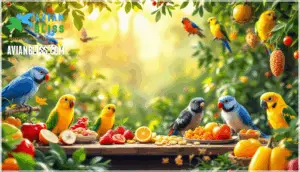
Not all treats are created equal, and some foods can be downright dangerous for your feathered friend. Knowing what to avoid and how to keep treats safe is just as important as choosing the right snacks.
Let’s walk through the must-know safety guidelines to protect your bird’s health.
Common Toxic Foods for Pet Birds
Your bird’s safety depends on knowing which foods spell trouble. Avocado toxicity tops the danger list—persin in all parts of the plant can cause respiratory distress and cardiac failure within hours. Chocolate hazards stem from theobromine, triggering seizures and heart problems. Remove fruit pit risks like apple seeds and cherry pits, which release deadly cyanide.
Avocado, chocolate, and fruit pits containing cyanide rank among the deadliest foods that can kill your bird within hours
Onion poisoning damages red blood cells, causing anemia in all forms—fresh, cooked, or powdered. Xylitol dangers lurk in sugar-free products, potentially causing liver damage.
Keep these toxic foods for birds far from your feathered friend.
Preparing and Storing Treats Safely
Once you know what’s off-limits, the next step is making sure the safe foods you offer stay that way from prep to storage. Proper food management and hygiene practices protect your bird from contamination and spoilage.
- Wash thoroughly – Rinse all fruits and vegetables under cool water to remove pesticide residues before serving.
- Serve fresh daily – Discard uneaten treats within 2-4 hours to prevent bacterial growth.
- Store correctly – Keep dried treats in airtight containers in cool, dry places; refrigerate fresh items separately.
Recognizing Signs of Dietary Problems in Birds
Even subtle changes can signal trouble brewing. Weight fluctuations beyond 10% of baseline, feather abnormalities like dullness or breakage, and respiratory issues such as wheezing often point to nutritional gaps.
Watch for malnutrition symptoms including listlessness, fluffed feathers, or changes in droppings. Behavioral changes—like reduced energy or sitting at the cage bottom—shouldn’t be ignored.
These warning signs affect bird health and wellness, so schedule a vet visit if you notice anything off with your bird’s dietary needs or avian health and wellness.
Frequently Asked Questions (FAQs)
Can birds eat homemade treats or baked goods?
A parrot owner once added chocolate chips to a "bird-safe" muffin recipe—nearly causing a tragedy. Yes, birds can enjoy homemade treats or baked goods, but only when recipes avoid toxic ingredients like chocolate, sugar, salt, and xylitol, focusing instead on bird-safe whole grains, fruits, and vegetables.
How do I introduce new treats safely?
Start by offering just a tiny piece—about the size of your pinky nail—and watch closely for any signs of upset stomach or changes in droppings.
Wait a day or two before increasing portions, making a gradual shift to promote healthy treats for birds and safe feeding practices.
What treats help with beak health maintenance?
Here’s the thing: you can’t beat hard work regarding beak maintenance. Crunchy treats like whole almonds and mineral blocks naturally wear down overgrown beaks while delivering calcium supplements for beak strengthening.
Nutritionally complete pellets also provide that satisfying resistance your bird needs for beak health.
Are dried fruits safe for pet birds?
Yes, dried fruits are safe for pet birds when offered in moderation. However, watch for added sugars in commercial products—natural dehydration effects concentrate sugars, making fresh fruits and vegetables healthier daily choices. Use dried fruit as occasional bird treats only.
Can treats replace fresh food in emergencies?
In a true emergency, treats absolutely can’t replace fresh food—your bird’s health depends on it.
Use Emergency Food like pellets as the foundation, supplementing with any Fresh Alternatives available.
Treat Limits still apply during Crisis Feeding to maintain proper Bird Nutrition.
Conclusion
Think of healthy treats for pet birds as stepping stones across a stream—each one carefully placed to help your companion reach vibrant health without slipping into harm. You’ve learned which fruits energize, which vegetables fortify, and which foods trigger catastrophe.
Now you can confidently choose treats that nourish rather than endanger. Every pomegranate seed and quinoa bite becomes intentional fuel, not a gamble.
Your bird deserves more than leftovers from your plate—they deserve choices rooted in science, served with care, and measured with purpose that keeps them thriving.
- https://veteriankey.com/avian-nutrition/
- https://www.revivalanimal.com/learning-center/important-vitamins-and-minerals-for-pet-birds
- https://www.harrisonsbirdfoods.com/wp-content/uploads/2024/03/ae27.pdf
- http://littlefeatheredbuddies.com/info/nutrition-calcium.html
- https://www.merckvetmanual.com/exotic-and-laboratory-animals/pet-birds/nutritional-diseases-of-pet-birds