This site is supported by our readers. We may earn a commission, at no cost to you, if you purchase through links.
Your bird’s feathers tell a story—and right now, they might be telling you something’s missing from their diet. Dull plumage, slow molting, or unusual lethargy often point to one culprit: insufficient protein. While seeds form the backbone of many bird diets, they won’t deliver the amino acids your feathered companion needs to thrive during breeding season, molting, or rapid growth phases.
The good news? You have more high protein bird food options than you might think, from gut-loaded mealworms packing 53% crude protein to strategically prepared legumes and eggs.
Whether you’re caring for a chatty parrot, a delicate finch, or visiting wild birds, understanding which proteins work best—and how to serve them safely—can transform your bird’s health from the inside out.
Table Of Contents
- Key Takeaways
- Top High Protein Foods for Birds
- Protein Needs by Bird Species
- Best Commercial High Protein Bird Foods
- Homemade High Protein Bird Food Ideas
- How to Safely Prepare Protein Foods
- Plant-Based Protein Sources for Birds
- Signs Your Bird Needs More Protein
- Protein Content in Popular Bird Foods
- Tips for Transitioning to High Protein Diets
- Seasonal Protein Supplementation for Birds
- Frequently Asked Questions (FAQs)
- Conclusion
Key Takeaways
- Birds experiencing dull feathers, slow molting, or lethargy often need more protein in their diet, especially during breeding, molting, or growth phases when requirements can spike to 20-35% compared to the typical 10-15% maintenance level.
- Mealworms pack 53% crude protein when dried and deliver complete amino acids, making them one of the most protein-dense options available alongside cooked eggs, legumes, and high-protein pellets that simplify balanced nutrition.
- Protein needs vary dramatically by species and season—parakeets thrive on 13.5% daily but need 20% during molting, while wild birds consume 10-20% more calories than pet birds due to migration and natural activity demands.
- Transitioning to high-protein diets requires gradual changes (replacing 25% of food every week or two) to protect digestive health, and preparation matters critically—cook eggs to 165°F, gut-load insects for 24-48 hours, and store seeds properly to avoid mold and mycotoxins.
Top High Protein Foods for Birds
If you want your birds thriving, getting their protein right is non-negotiable. There are several foods that pack a punch regarding supporting feather health and energy. Here’s what you’ll want to have on your radar.
Mealworms and Insects
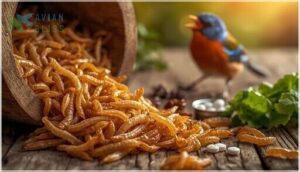
Mealworms are protein powerhouses for your birds, packing around 53% crude protein when dried—far outpacing most seeds. These insect nutrition superstars deliver complete amino acids plus iron and zinc, making them ideal bird supplements during molting or migration.
You can offer them dried for convenience or live for enrichment. Many bird keepers use insect gutload feeding to boost nutritional value even further, though you’ll want to add calcium separately since mealworms run low on that front.
Understanding the bird nutritional benefits is essential for creating a well-rounded diet.
Cooked Eggs
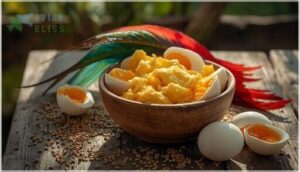
If you want a protein source that’s pure gold for bird nutrition, cooked eggs are your ticket. Egg nutrition delivers all the amino acids your birds crave, plus vitamins A and D for feather and bone health. Stick to simple cooking methods—boiled or scrambled, no seasoning.
Feeding guidelines? Once or twice weekly, alongside highquality pellets, keeps protein requirements balanced. For more information on bird health, consider consulting bird health experts to guarantee a well-rounded diet.
Legumes and Pulses

Let’s talk legumes and pulses—true protein powerhouses that go beyond eggs. Cooked lentils, chickpeas, and even quinoa pack serious Legume Nutrition, offering birds muscle-building protein, fiber, and essential minerals.
These Seed Alternatives also support Avian Digestion and energy. Serve them cooked or sprouted, unsalted, and unseasoned, alongside high-quality pellets for a balanced boost that keeps your flock thriving.
Nuts and Seeds

Nuts and seeds bring variety and concentrated protein—think black oil sunflower at 20–25%, safflower seed rich in calcium, or flax seed loaded with healthy fats. Proper seed storage prevents mold, and raw, unsalted nuts avoid nut allergies or toxicity.
You’ll notice bird preferences shift: some species crack sunflower shells, while finches go for nyjer. Mix seed varieties like red millet and white millet for balanced oil content and nutrition.
High-Protein Pellets
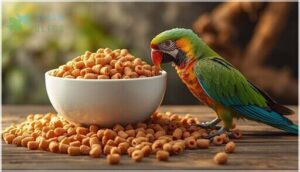
Pellets simplify bird wellness with balanced dietary formulation—high-potency blends deliver 18–21.5% crude protein alongside essential amino acid profiles, vitamins, and minerals in every bite. You skip the guesswork of mixing protein sources and requirements.
- Extruded pellets boost nutrient bioavailability through high-temperature cooking
- Birds eat 33% less by volume while meeting protein needs
- Calcium-to-phosphorus ratios improve over seed-based diets
- No artificial colors or sugars compromise long-term health
- Gradual shift ensures acceptance and pellet nutrition success
Protein Needs by Bird Species
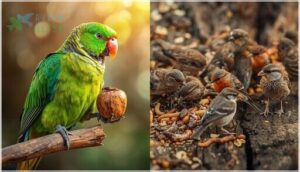
Not all birds eat the same way, and their protein needs can swing wildly depending on whether you’re feeding a chatty parrot or a wild sparrow passing through your yard.
Understanding these differences helps you avoid guesswork and gives your bird exactly what it needs to thrive.
Here’s a breakdown of protein requirements across the most common species you’ll encounter.
Parrots and Parakeets
Parrots and parakeets thrive when you hit that sweet spot in protein requirements: 13.5% keeps most parakeets humming along nicely, while parrots need 10-15% daily, jumping to 20% during molting or breeding. Without proper protein sources for birds, you’ll notice feather care problems fast—dull plumage, ragged tips, even protein deficiency affecting beak health and social interaction.
| Life Stage | Protein Need |
|---|---|
| Daily maintenance | 10-15% of diet |
| Molting season | 20% of diet |
| Breeding/growth | 20% of diet |
| Young parakeets | 13.5% or higher |
| Feather production | Increased intake |
Good protein sources for birds include sprouted chickpeas, cooked eggs twice weekly, and high-protein pellets at 21.5% crude protein. Your bird nutrition strategy should make pellets 70-80% of their diet for nutritional balance, supporting everything from avian enrichment to parrot behavior.
Finches and Canaries
Adult canaries need about 10% protein for maintenance, but your finches and canaries demand higher protein—12-15% from pellets—during molting cycles and breeding.
Boiled eggs, germinating seeds, and mealworms deliver essential amino acids that support feather care, beak health, and bird socialization.
High-protein diets strengthen immune function, speed molting, and improve nesting habits, giving your birds the nutritional edge they need.
Pigeons and Doves
Your pigeons and doves thrive on 13-16% protein for maintenance, but bump that to 16.5-18% when you’re focused on breeding strategies and squab development. This isn’t negotiable if you want strong feather care and dove health.
Here’s what adequate protein requirements enable:
- Faster laying intervals and better hatchability rates
- Strong immune defense against disease
- Quality plumage that signals peak pigeon nutrition
- Heavier, healthier squabs with enhanced breast yield
- Protection from protein deficiency symptoms like delayed molting
Legumes, peas, and high-protein pellets deliver good protein sources for birds without breaking your budget—essential for any serious bird diet.
Wild Birds Vs. Pet Birds
Wildlife conservation teaches us something wild: your backyard visitors and caged companions share similar protein requirements per day, but wild birds consume 10–20% more calories due to migration and natural avian socialization demands. This shifts everything about bird nutrition and protein requirements.
| Factor | Wild Birds | Pet Birds |
|---|---|---|
| Daily Protein Intake | 6–35% (seasonal flux) | 10–15% (steady) |
| Protein Sources | Insects, varied seeds | Pellets, controlled diet |
| Diet Variety | High (natural selection) | Limited (owner-dependent) |
Wild bird food must account for molting and breeding cycles, while pet bird nutrition focuses on concentration—your captive friends need denser protein per gram since they eat less overall. Poor bird diet choices compromise feather development and beak health in both populations.
Best Commercial High Protein Bird Foods
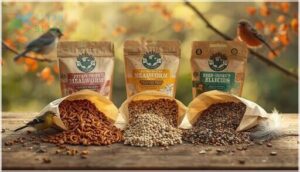
If you’re not into DIY bird food prep, you’re in luck—there are some excellent commercial options that deliver real protein without the guesswork. These products range from insect-packed mixes to complete pelleted diets, each designed to meet specific nutritional needs.
Let’s look at three solid choices that actually live up to their high-protein claims.
Protein Punch Wild Bird Food
If you’re looking to upgrade your wild bird feeding game, Protein Punch Wild Bird Food delivers serious nutritional balance with its safflower and flax seed composition.
This 10-lb mix bolsters bird health benefits through protein needs during molting and breeding, attracting cardinals, goldfinches, and chickadees to your feeder.
It offers excellent feeder compatibility across tube, platform, and hopper styles—making wild bird attraction seamless.
Duncraft High Protein Trail Mix
For insect-eating favorites like bluebirds and robins, Duncraft High Protein Trail Mix takes wild bird feeding up a notch. This 6-oz blend packs roasted mealworms, waxworms, and insect suet pellets—no filler—supporting avian health during molting and breeding. Here’s what makes it solid for protein supplements:
- Approximately 15% minimum protein content
- Complete amino acid profile from real insects
- High-energy fat content (20%+) for demanding seasons
- Year-round use in platform or covered feeders
- One-year satisfaction guarantee at $17.95
Your protein needs are covered with trail mix benefits built for serious bird nutrition.
High-Protein Pelleted Diets
If you’re feeding pet birds daily, high-protein pelleted diets deliver consistent nutrition that insects and trail mixes can’t match alone. Maintenance pellets offer 11-15% protein, while breeding formulas jump to 18-20%—levels that support better feed conversion and nutrient absorption.
Pellet size matters too; birds reject fine particles, wasting food. Combining pellets with targeted protein needs keeps your flock healthy year-round without the guesswork of seed-only diets.
Homemade High Protein Bird Food Ideas
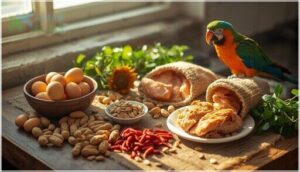
You don’t need fancy store-bought mixes to give your bird the protein boost it needs. Your own kitchen can turn into a nutritional powerhouse with just a few simple ingredients and some basic prep work.
Here are three homemade recipes that’ll keep your feathered friend healthy, energized, and ready to show off those vibrant feathers.
DIY Egg and Veggie Mix
You can create a powerful egg and veggie mix that covers your bird’s protein needs and dietary diversity beautifully. Hardboil an egg—it packs 5-8 grams of quality protein—then mash it with the shell for calcium. Blend in these fresh ingredients for balanced nutrition:
- Finely chopped kale or chard for vitamins and antioxidants
- Shredded carrots to support feather health
- A pinch of bird supplements if recommended by your vet
This homemade recipe delivers real nutrient intake your bird will love.
Legume-Based Bird Mash
Beyond eggs, legume-based bird mash offers powerful protein balance for avian wellness. Cook lentils or chickpeas thoroughly—boiling for 10 minutes neutralizes toxins harmful to bird digestion—then mash with peas for a nutrient-rich blend.
This legume nutrition delivers 8-9 grams of protein per 100 grams, plus essential fiber and minerals your bird’s diet craves, supporting healthy feather growth and energy levels naturally.
Safe Cooked Meat Options
Lean cooked poultry transforms into complete amino acids your bird can actually absorb—turkey and chicken breast deliver over 90% protein on a dry matter basis, crushing protein deficiency risks.
Here’s your meat handling playbook:
- Cook chicken or turkey to 165°F internally—no shortcuts on poultry nutrition
- Skip all seasonings and skin for balanced diets that won’t harm delicate systems
- Limit portions to 10% of daily intake, supporting protein needs without overload
How to Safely Prepare Protein Foods

You can’t just toss protein-rich foods into your bird’s dish and call it a day—preparation matters more than you might think. The way you cook, clean, and store these foods directly affects their nutritional value and safety for your feathered friend.
Let’s walk through the essentials so you can confidently prepare eggs, insects, nuts, and seeds without second-guessing yourself.
Cooking and Serving Eggs
Hard-boiled eggs are your safest bet—cook them for 15–20 minutes to destroy pathogens like salmonella and lock in boiled egg nutrition. Scrambled works too, but skip the oil and seasoning.
These egg cooking methods deliver protein without the risk, and cooked eggs actually boost nutrient availability compared to raw.
Cool them down, serve plain, and remove leftovers within 12 hours to keep your bird’s high protein diet both safe and healthy.
Preparing Insects for Birds
Freeze-dried crickets pack 50.7% protein, while live crickets deliver just 21.3%—that moisture gap matters for bird nutrition.
Before offering mealworms or crickets, gut-load them for 24–48 hours with calcium-rich foods to boost vitamin A and E by over 40%.
Store insects below 65°F in metal containers, use HACCP hygiene protocols, and never reuse substrates—pest control methods start with clean cricket farming practices.
Proper Nut and Seed Handling
Think of nuts and seeds as protein-rich investments in your bird’s health—but they demand smart handling to avoid mold control disasters.
Here’s your nut safety checklist:
- Store in airtight, rodent-proof containers in cool, dry spots away from sunlight
- Stock only two weeks’ worth during warm weather to prevent aflatoxin buildup
- Never mix old and fresh batches—contamination spreads fast
- Choose unsalted, shelled options (skip peanut shells entirely)
- Discard anything with off odors or visible mold immediately
Proper seed storage tips protect that essential protein content while keeping mycotoxins at bay.
Plant-Based Protein Sources for Birds

You don’t have to rely on animal-based foods to boost your bird’s protein intake. Plants pack a surprising punch in terms of amino acids, and they’re often easier on your wallet and your bird’s digestive system.
Here are three solid plant-based options that’ll keep your feathered friend healthy and thriving.
Lentils and Chickpeas
Cooked lentils and chickpeas pack around 18 grams of protein per cup, giving your bird’s diet a serious boost without animal products. You’ll want to cook them thoroughly—raw legumes contain lectins that can harm your bird’s gut health.
These legume nutrition powerhouses offer excellent protein digestibility (around 82% for chickpeas) and support avian gut health while serving as smart seed alternatives with enhanced nutrient bioavailability.
Tofu and Soy Products
Tofu delivers about 8 grams of protein per 100 grams, but here’s the catch—soy protein risks in bird nutrition are real. Those isoflavones act like estrogen mimics, potentially wreaking havoc on your bird’s hormones and reproductive health.
The phytoestrogen impact has sparked serious debate among avian vets, with many recommending you skip tofu entirely. Safer high-protein alternatives exist that won’t mess with your bird’s endocrine system.
Protein-Rich Leafy Greens
If soy worries you, kale’s got your back—packing 4.3 grams of protein per 100 grams. Leafy green benefits extend beyond protein, though. Kale and collards deliver beta carotene for immunity, calcium that beats milk, and magnesium to calm stressed birds.
Your bird nutrition tips? Rotate spinach, amaranth, and broccoli leaves to cover the green feeding guide essentials for that avian health boost.
Signs Your Bird Needs More Protein

Your bird’s body will send clear signals when protein levels drop too low, and catching these early can prevent serious health problems down the line. Feathers, energy, and molting patterns are your best indicators that something’s off with their diet.
Here’s what to watch for so you can adjust their nutrition before small deficiencies turn into bigger issues.
Poor Feather Quality
Your bird’s feathers tell you a lot about their protein intake. If you’re seeing ragged tips, incomplete molting, or dull, brittle plumage, that’s feather damage screaming protein deficiency.
Young birds especially need adequate protein—below 16% crude protein, and chicks develop poor feathering within two weeks.
Remember, feathers are mostly keratin, and keratin synthesis depends entirely on proper nutrition and sufficient dietary protein.
Lethargy and Weakness
Beyond feather troubles, lethargy and weakness often signal protein deficiency your bird can’t hide. When protein drops below 10-12%, you’ll notice stunted growth, muscle wasting, and reduced activity—classic lethargy signs tied to nutrient imbalance.
Watch for these weakness causes:
- Sitting more than usual with poor muscle tone
- Reduced response to stimuli or play
- Decreased appetite following initial overeating attempts
- Visible weight loss despite eating
- Limping or postural abnormalities
Protein needs vary, but inadequate intake tanks energy levels fast, creating serious health consequences requiring immediate attention.
Slow Molting or Ragged Feathers
Protein shortages don’t just sap energy—they stall molting cycles and leave feathers ragged at the edges. When amino acid balance is off, feather regrowth slows dramatically, and you’ll spot dull, brittle plumage with frayed tips.
Bird health monitoring during molt is critical: inadequate protein (under 16%) prolongs the process and invites nutrient deficiencies.
Protein supplements restore feather health fast, especially methionine-rich options that support keratin synthesis and proper nutrition and feather health.
Protein Content in Popular Bird Foods
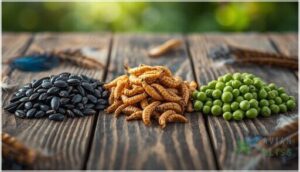
Not all bird foods pack the same protein punch, and knowing what you’re actually feeding matters more than you might think. Some seeds and insects surpass others in protein content, while others are mostly filler with fancy marketing.
Let’s break down the real numbers behind three of the most popular high-protein options so you can make smarter choices for your birds.
Black Oil Sunflower Seeds
When you’re looking to pack serious nutrition into wild bird feeding, you can’t beat black oil sunflower seeds.
- They deliver 21 grams of protein per 100 grams—that’s concentrated fuel for feather growth and muscle maintenance
- Their 25% fat content provides essential energy reserves
- At 15% crude protein, they outperform most seed storage options
Birds know what’s good—sunflower benefits extend across dozens of species, making them your best bet for attracting diverse visitors while supporting excellent bird nutrition.
Nyjer (Thistle) Seed
For tiny powerhouses like finches, nyjer packs a punch you can trust.
| Nutrient | Value | Benefit |
|---|---|---|
| Crude Protein | 20% | Promotes finch nutrition and muscle development |
| Fat Content | 35% | High-energy fuel for small passerines |
| Crude Fiber | 35% | Aids digestion in seed-eating species |
| Moisture | Up to 15% | Maintains seed quality during storage |
| Primary Consumers | Finches, Siskins | Drives bird attraction with ideal size |
Thistle benefits extend beyond protein—the 35% fat content provides serious energy for wild bird feeding success.
Dried Mealworms and Crickets
When you’re after the heavyweight champion of insect nutrition, dried mealworms deliver 46% to 52% crude protein—double what most seeds offer. Crickets follow close behind at 20-25 grams per 100 grams fresh weight.
Both make outstanding wild bird supplements during molting and breeding, when protein enrichment matters most. That fat content (25-35% in mealworms) fuels energy-hungry species through demanding seasons.
Tips for Transitioning to High Protein Diets

Switching your bird to a high-protein diet isn’t something you rush—doing it slowly protects their digestive system and keeps stress levels down.
You’ll want to watch how they respond to new foods, since every bird has their own preferences and quirks.
Getting guidance from an avian vet makes the whole process safer and customized to your bird’s specific needs.
Gradual Dietary Changes
You can’t just flip your bird’s diet overnight—think of it like adjusting to a new time zone. Replace 25% of the old food with high-protein options every week or two, letting your bird’s digestive system adapt naturally.
This gradual dietary shift protects nutrient balance and prevents gut upset, keeping your feathered friend healthy while their body learns to process the protein-rich diet efficiently.
Monitoring Bird Behavior
When you start upping the protein, your bird’s behavior tells you everything you need to know about how the shift’s going. Watch these behavioral observations closely:
- Feeding patterns shift—you’ll notice increased visits to protein-rich foods, sometimes by significant margins
- Social interactions change—energy levels often bounce back, sparking more vocalization and play
- Health indicators improve—droppings become more consistent, and feather preening intensifies
- Environmental factors matter—stress or competition at feeders can mask dietary benefits
Track these avian health signals daily during your diet switch.
Consulting an Avian Vet
Before you make big dietary moves, book that avian vet consultation. Annual wellness exams run about $65–95 and catch nutritional gaps you’d miss at home.
Your vet will assess digestive health and nutrition, tailor emergency care guidance based on your bird’s species, and offer bird nutrition and diet strategies grounded in real science.
Those bird health checks? They’re your safety net during transitions.
Seasonal Protein Supplementation for Birds
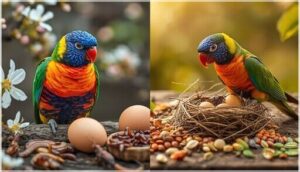
Your bird’s protein needs aren’t the same year-round—they shift with the seasons and life stages. During molting, breeding, and migration, those requirements can spike dramatically, and missing the mark can leave your bird struggling.
Let’s walk through when and how to boost protein intake so your bird thrives through every season.
Protein Needs During Molting
During molting, your bird’s protein metabolism skyrockets—sometimes up to 35% higher than normal—as feathers consume roughly 25% of total body protein.
During molting, your bird’s protein needs can spike up to 35% higher as feathers consume a quarter of total body protein
You’ll need to support keratin synthesis with amino acid-rich foods like eggs, dried mealworms, or High Protein Trail Mix.
Most adults thrive on 16-20% crude protein diets, ensuring healthy feather growth without overtaxing digestive health and nutrition.
Breeding and Growth Phases
Breeding nutrition demands even more intensity—your birds need 20% protein to fuel egg production and chick development, compared to the typical 8–12% maintenance diet. Roughly 57% of that intake fuels egg mass, so bump protein balance with complete amino acids from cooked eggs, insects, or fortified pellets.
Dietary diversity and balance through growth stages ensures healthy chicks and prevents nest abandonment.
Winter and Migration Periods
Beyond reproduction, cold weather and migration patterns demand serious protein supplementation. Small passerines need 18–25% protein in winter for feather regeneration and thermoregulation—that’s where specialized high protein trail mixes shine.
During migration, your birds burn lean muscle mass early in flight, losing up to 15% within hours. Support them with:
- Mealworms and suet blends (40% protein boost)
- Peanuts at stopover sites for faster tissue repair
- Consistent winter feeding to maintain energy stores and immunity
Frequently Asked Questions (FAQs)
Can birds eat raw meat safely?
Raw meat carries serious pathogen risks—think of it as a Trojan horse for disease. Campylobacter, Salmonella, and even avian flu can lurk inside, threatening your bird’s health and yours through cross-contamination.
How much protein do baby birds need?
Baby birds need 18% to 23% protein to fuel rapid growth and feather development. Young chicks thrive on complete amino acids that support everything from muscle building to strong, flight-ready plumage.
Are there risks of too much protein?
Yes—excess protein can trigger kidney damage and liver disease in birds. Too much also sparks hormonal surges, aggression, and nutrient imbalances.
Balance your bird’s diet to avoid protein toxicity and safeguard digestive health long-term.
What protein sources help feather color vibrancy?
Like an artist needs the right palette, your bird’s feathers depend on amino acid-rich mealworms, cooked eggs, and legumes to boost pigment vibrancy.
Protein interactions with carotenoid sources create those stunning colors through proper nutrient balance.
Conclusion
Like a master chef tailoring dishes to each diner’s needs, you now have the blueprint for matching high protein bird food options to your bird’s species, life stage, and health demands. Whether you’re scrambling eggs for a molting macaw or gut-loading mealworms for breeding finches, you’re no longer guessing—you’re strategizing.
Watch those feathers regain their luster, energy levels climb, and molting cycles normalize. Your bird’s transformation starts with your next feeding decision.
- https://www.techgearlab.com/topics/home/best-bird-seed
- https://pmc.ncbi.nlm.nih.gov/articles/PMC10670618/
- https://fulbrightreview.uark.edu/study-finds-high-protein-diet-improves-birds-ability-to-tolerate-infection/
- https://www.biorxiv.org/content/10.1101/2025.04.10.648226v1.full-text
- https://www.harrisonsbirdfoods.com/wp-content/uploads/2024/11/HBF_24004_Research_PDFs_v2.pdf