This site is supported by our readers. We may earn a commission, at no cost to you, if you purchase through links.
 Last winter, a friend spent $80 on a fancy bird feeder that squirrels destroyed in three weeks. Meanwhile, my scrappy homemade version—built from scrap cedar and an afternoon’s work—has been feeding cardinals and chickadees for two years straight.
The secret isn’t complicated carpentry or expensive materials. Building your own feeder means you control everything: the wood quality, the seed capacity, and whether local wildlife can turn it into an all-you-can-eat buffet.
With basic tools and the right homemade bird feeder plans, you’ll create something more durable and bird-friendly than most store-bought options. Plus, there’s something deeply satisfying about watching a blue jay land on something you built with your own hands.
Table Of Contents
Key Takeaways
- Building your own bird feeder from untreated cedar or recycled materials costs less than store-bought versions and lasts longer—often 2+ years versus weeks—while giving you complete control over durability and squirrel resistance.
- Strategic feeder placement 10-12 feet from shelter at 4-6 feet height attracts 40% more bird species, while metal baffles and positioning feeders 10+ feet from jump-off points effectively prevents squirrel raids.
- Weekly cleaning in winter and bi-weekly in summer cuts disease risk by 75%, and choosing black oil sunflower seed over cheap filler mixes reduces waste while attracting 72% of common feeder birds.
- Basic DIY construction requires only simple tools (drill, saw, tape measure) and weather-resistant fasteners, with essential features like drainage holes, roof overhangs, and non-toxic finishes ensuring your feeder survives multiple seasons.
Essential Materials and Tools for Easy Bird Feeders
Building your own bird feeder doesn’t require a workshop full of fancy equipment or expensive materials. In fact, you can create a sturdy and attractive feeder with basic supplies you might already have around the house.
Let’s look at the essential materials and tools you’ll need to get started on your backyard bird feeding project.
Recommended Types of Wood and Recycled Materials
You’ll want materials that last without harming your feathered visitors. Cedar wood leads the pack in DIY projects because it naturally resists decay and insects. Here’s your smart shopping list:
- Cedar or redwood – Both resist rot for up to 10 years and won’t poison birds with chemical treatments.
- Reclaimed wood – Salvaged barn boards or pallet wood attract 25% more bird species than plastic.
- Bamboo – This eco-champion produces 55% less CO₂ during cultivation than traditional lumber.
- Recycled plastics – Milk cartons and bottles cost half as much and outlast single-use wood by 30%.
- Untreated maple – A hardwood favorite that’s completely safe and holds up for 8+ years.
Skip pressure-treated lumber entirely. Avian specialists warn that chemicals in treated wood cause developmental problems in young birds. You can also construct a bird feeder from recycled milk cartons.
Stick with untreated options, and you’ll eliminate toxicity risks while your feeder weathers the seasons beautifully.
Fasteners, Adhesives, and Waterproofing Options
Your wood choice won’t matter if rust and rot take over. Galvanized or stainless steel screws bring the screw rust resistance you need—especially for outdoor exposure. Pair those with waterproof polyurethane glue (Titebond III passes water resistance tests beautifully). As the guide mentions, selecting the optimum wood adhesive is key for project success.
Seal every seam with bird-safe silicone for sealant flexibility that lasts 10+ years. Two coats of non-toxic polyurethane finish the job, giving you weatherproofing lifespan that actually protects your woodworking project.
Basic Tools Needed for Beginners
You’ll need just a handful of essential hand tools to get started. Over 85% of easy bird feeder construction projects call for a drill, tape measure, and saw—nothing fancy.
Grab 120-grit sandpaper for finishing touches, a hammer for assembly techniques, and always wear safety glasses (power tool safety matters).
These beginner-friendly plans keep it simple so you can focus on the fun part—watching birds enjoy your work.
Choosing The Right Bird Feeder Design
Before you grab your tools and start building, you need to pick a design that matches both your skill level and the birds you want to attract.
Different feeder styles cater to different species, and some are easier to construct than others.
Let’s look at the most popular types and what makes each one worth considering for your backyard.
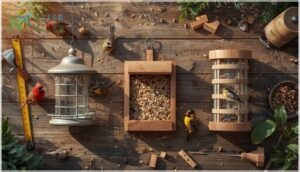
Hopper, Platform, Tube, and Suet Feeders Explained
Choosing the right feeder can feel like picking the perfect restaurant—each attracts different guests. Here’s how feeder diversity shapes your backyard:
- Hopper bird feeders hold 6-8 quarts of seed and draw the widest range of species, from finches to jays.
- Platform bird feeder plans accommodate ground-feeders, boosting yard diversity by 40%.
- Tube bird feeders minimize waste with small ports, perfect for compact urban spaces.
- Suet feeders provide high-energy nutrition for woodpeckers during winter months.
- Market trends show eco-friendly materials now dominate nearly half of new feeder purchases.
Understanding material impact and seed variety helps you match placement strategies to your local birds’ needs.
Simple Plans for Window and Hanging Feeders
You can build a simple window bird feeder in under 30 minutes using a recycled plastic bottle and suction cups. Hanging feeder styles take about three hours with basic tools like scissors and a drill. These DIY bird feeder plans attract chickadees and finches within a week.
For bird feeder safety, place your window feeder designs at second-story height to prevent squirrel raids while attracting birds to your viewing spot.
Features of Eco-Friendly and Modern Designs
Modern eco-friendly feeders combine sustainability with state-of-the-art technology to serve today’s conservation-minded birders. You’ll find three standout features in the best designs:
- Recycled materials like reclaimed plastics resist rot while reducing environmental impact
- Smart feeders with AI cameras identify visiting species and send notifications to your phone
- Urban designs fit balconies and small spaces with anti-spill trays and quick-mount systems
These weather-resistant homemade bird feeder innovations support conservation while attracting more birds to your yard.
Step-by-Step Guide to Building a Homemade Bird Feeder
Now that you’ve picked your feeder style, it’s time to roll up your sleeves and start building. The construction process breaks down into four manageable stages that anyone can follow with basic tools and a little patience.
Let’s walk through each step so you can have your feeder ready for your backyard visitors.
Measuring and Cutting Wood Accurately
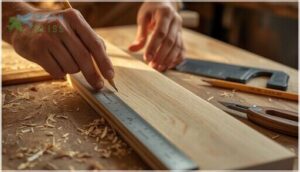
Think of your woodworking measurements like a recipe—get them wrong and you’ll regret it. Tool calibration matters because even minor discrepancies can throw off your cutting list. Use sharp marking methods and verify dimensions three times for error reduction.
Wood properties like moisture affect dimensions, so let lumber acclimate first. Follow step-by-step instructions with accurate techniques, and those pieces will fit perfectly every time.
Assembling The Feeder Base, Roof, and Frame
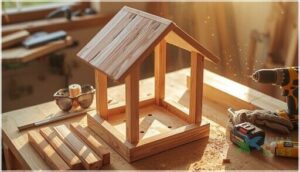
Bringing together your precisely cut pieces is where your feeder transforms from scattered lumber into a welcoming bird haven. You’ll work through three main assemblies—base, roof, and frame—each requiring attention to detail and patience.
- Base Drainage: Drill three quarter-inch holes so rainwater won’t turn seeds into moldy mush
- Roof Overhang: Extend panels one inch past edges for weather protection that actually works
- Frame Stability: Secure four vertical posts with wood glue plus screws at every joint
- Joint Fasteners: Drill pilot holes first to prevent splitting—your feeder will thank you
- Assembly Safety: Wear gloves and safety glasses because splinters and sawdust aren’t souvenirs you want
Adding Feed Trays, Screens, and Hanging Hooks
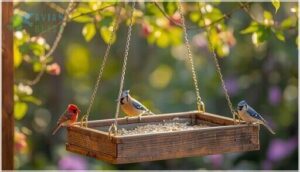
Your feeder’s platform is where the real magic happens. Attach a tray with screen materials like galvanized mesh for tray drainage—this prevents 55% more mold than solid bottoms. Position hanging hooks near corners to distribute load capacity evenly, supporting up to 5 kg safely.
This thoughtful feeder design welcomes avian diversity, letting you follow DIY bird feeder plans that actually work for step-by-step instructions in easy bird feeder construction.
Finishing Touches for Weather Protection
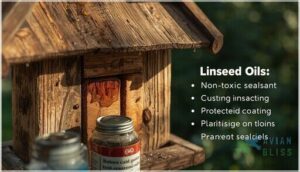
Your feeder won’t last a season without proper weather protection. Start by sealing gaps with wildlife-safe caulk, then coat all wood with non-toxic oils like linseed or tung.
Safe paints with UV protection keep colors vibrant for three years. Apply rust-resistant epoxy to metal protection points, and extend that roof overhang to shield from rain.
These DIY bird feeder plans make sure your creation survives the elements beautifully.
Placing Your Bird Feeder for Maximum Attraction
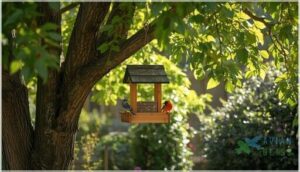
You’ve built your feeder and now it’s time to find the perfect spot for it. Where you place your feeder can make all the difference in which birds show up and how safe they feel visiting your yard.
Let’s look at the key factors that’ll help you create an inviting setup that keeps your feathered friends happy and coming back for more.
Optimal Locations to Attract a Variety of Birds
Beyond just hanging your feeder and hoping for the best, strategic bird feeder placement makes all the difference in attracting backyard birds and enhancing your bird-watching experience. Proper positioning considering weather exposure, predator proximity, and feeder height creates the perfect environment for feeding birds while keeping them safe.
- Near shelter but not too close: Position feeders 10–12 feet from shrubs or trees to boost visits by nearly half while minimizing predation risks
- Height matters for diversity: Mount feeders 4–6 feet high to welcome the widest variety of species, from finches to chickadees
- Urban placement strategy: Choose spots where lawns meet wooded borders to increase species counts by over 40%
Preventing Window Collisions and Squirrel Intrusion
Two concerns often frustrate feeder owners: preventing bird window collisions and squirrelproofing bird feeders.
For collision deterrents, place your feeder within three feet of windows or beyond 30 feet—the middle zone poses the greatest risk. Apply high-contrast decals following the two-inch rule on exterior glass.
Protecting bird feeders from squirrels requires metal baffles at least six inches wide on poles, plus positioning feeders ten feet from jump-off points. Weight-activated perches and capsaicin-treated seed provide additional squirrel proofing.
Enhancing Your Yard for Bird Watching
Your homemade bird feeder designs work best when you transform the surrounding landscape. Native plantings supporting 530 caterpillar species become natural bird magnets—try substituting lawn with plant beds to attract up to 90 species.
Water features increase visits by 45%, while habitat structure like varied-height perches boosts overnight presence.
Create viewing areas with clear sightlines for garden bird watching, and strengthen landscape connectivity through green corridors linking your DIY bird feeder plans to thriving ecosystems.
Maintaining and Protecting Your Homemade Feeder
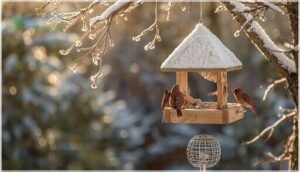
You’ve built your feeder and watched the first birds arrive—now the real work begins. Keeping your feeder clean and well-stocked ensures your backyard visitors stay healthy and keep coming back.
Let’s cover the essentials of maintenance, seed selection, and protecting your feeder from weather and unwanted guests.
Cleaning and Refilling Tips
Think of cleaning as your secret weapon for disease control and attracting wild birds safely. Scheduled cleaning every two weeks—weekly in winter—keeps mold prevention on track.
Scrub with soap and water, then soak in diluted bleach for ten minutes. Rinse thoroughly and air dry completely.
For safe refilling, fill your bird feeder daily during peak feeding times, only adding fresh bird seed after it’s bone dry.
Choosing The Best Bird Seed for Local Species
To best attract various bird species, start with black oil sunflower seed—it’s the preferred option that draws 72% of feeder visitors thanks to its seed nutritional value.
Understanding species seed preferences matters: goldfinches love nyjer, cardinals favor safflower, and ground-feeders prefer white millet.
Avoid cheap mixes loaded with red milo; reducing seed waste and deterring unwanted guests starts with choosing bird food thoughtfully based on seed variety your local birds actually eat.
Seasonal Maintenance and Pest Prevention
As seasons shift, your feeder’s cleaning frequency should too. Weekly scrub-downs in winter and bi-weekly in summer cut disease control risks by up to 75%.
Keep pests at bay with these proven strategies:
- Remove spilled bird seed within 24 hours to reduce rodent activity by 40%
- Use squirrel proofing like pole baffles for 60% fewer intrusions
- Increase winter feeding checks when visits spike 30–40%
Seasonal impact demands vigilance year-round.
Frequently Asked Questions (FAQs)
How often should I repaint my bird feeder?
Your wooden bird feeder needs fresh paint every 2-3 years. UV exposure and moisture accelerate wear, so watch for peeling, fading, or cracking—visual indicators that tell you it’s time to refresh your outdoor project.
Whats the ideal feeder height above ground?
You’ll practically guarantee success by placing your DIY bird feeder around five feet high.
This sweet spot balances predator deterrence and accessibility needs while maximizing visitation impact for diverse species preferences across your yard.
How do I winterize a homemade bird feeder?
Start by choosing durable materials like cedar or recycled plastic for weather protection. Add drainage holes and extend your roof overhang to shield bird seed. Clean weekly and stock high-energy options for feeding wild birds.
Conclusion
That first chickadee landing on your fresh-built feeder feels like winning the backyard lottery. You’ve just turned scrap wood and an afternoon into years of wildlife entertainment—without spending a fortune or settling for flimsy store junk.
These homemade bird feeder plans easy build approaches prove you don’t need carpentry mastery to attract nature’s best visitors. Now grab your tools, pick a design, and get building. Your feathered neighbors are already circling overhead, waiting for the grand opening.
- https://www.thisoldhouse.com/yards/21016361/how-to-build-a-bird-feeder
- https://www.truevalue.com/diy-projects/patio-and-garden/landscaping/build-a-bird-feeder/
- https://www.facebook.com/groups/1113731255368861/posts/25518705224444791/
- https://debraleebaldwin.com/birds/creative-bird-feeder-materials-how-to/
- https://dwr.virginia.gov/wildlife/safe-bird-feeding/