This site is supported by our readers. We may earn a commission, at no cost to you, if you purchase through links.

Most bird owners don’t realize their feathered companion’s perch health is slowly becoming a health hazard — and the timeline is shorter than you’d expect. Bacteria, mold, and microscopic splinters accumulate long before anything looks wrong to the naked eye, quietly threatening your bird’s foot health and respiratory system.
Knowing how often to replace bird perches isn’t about being overly cautious; it’s about understanding what your bird can’t tell you. The right replacement schedule depends on perch material, your bird’s size, and specific warning signs that most owners miss entirely.
Once you know what to look for, maintaining a safe environment becomes straightforward.
Table Of Contents
- Key Takeaways
- Why Regular Perch Replacement is Essential
- Recommended Replacement Timeline by Perch Material
- Key Factors That Affect Replacement Frequency
- Warning Signs Your Perch Needs Immediate Replacement
- How to Properly Clean and Inspect Perches
- Choosing The Right Replacement Perches
- Step-by-Step Guide to Replacing Bird Perches
- Frequently Asked Questions (FAQs)
- How often should I clean my bird’s perches?
- Do birds like their cages covered at night?
- Are wooden perches good for birds?
- Can birds get bored with the same perch?
- Do baby birds need different perch sizes?
- How do I introduce new perches safely?
- Are store-bought perches safer than natural ones?
- Can perch placement affect my birds sleep?
- Conclusion
Key Takeaways
- Natural wood perches should be replaced every 6–12 months, plastic every 6 months, and metal the moment any rust or flaking appears, because each material degrades on its own timeline and harbors bacteria differently.
- Biofilm formation on porous surfaces resists routine cleaning, so visible cleanliness doesn’t mean your bird’s perch is actually safe — weekly scrubbing and monthly deep inspections are both non-negotiable.
- Humidity above 60% silently accelerates mold growth and wood decay, meaning your indoor environment directly controls how fast your perches become a health risk.
- Offering perches in varied diameters, textures, and shapes isn’t just about comfort — it actively supports foot muscle development, grip strength, and mental stimulation that keep your bird healthy long-term.
Why Regular Perch Replacement is Essential
Your bird’s perches aren’t just places to rest—they’re critical components of daily health and well-being that deteriorate faster than most owners realize.
Understanding the different types of bird perches and what each one offers is the first step toward keeping your bird’s feet—and overall health—in great shape.
Without regular replacement, even well-maintained perches can harbor harmful bacteria, cause painful foot injuries, and contribute to behavioral problems that affect your bird’s quality of life.
Understanding why timely perch replacement matters will help you create a safer, healthier environment for your feathered companion.
Bacterial Buildup and Health Risks
Bacteria and dirt accumulate on perches faster than you might expect, forming biofilms that resist routine cleaning and threaten your bird’s health. Proper perch sanitation protects against avian infections, respiratory issues, and potential zoonotic diseases that can affect your family.
Consider these critical bacterial resistance concerns:
- Biofilm formation creates protective barriers on porous wood surfaces
- Contaminated perches spread bacteria to food, water, and cage surfaces
- Chronic exposure inflames your bird’s respiratory system and cloaca
- Poor bird hygiene habits increase infection risk across multiple birds
Preventing Foot Injuries and Discomfort
Beyond infection risk, worn bird perches directly compromise your bird’s foot health and hygiene. Think of perch maintenance like footwear selection for your bird—proper toe alignment, arch stability, and heel protection all depend on surface condition.
Cracked or flattened perches disrupt ankle support, causing grip strain and long-term foot injuries. Timely perch replacement keeps your bird’s feet safe and comfortable.
Maintaining Mental Stimulation for Your Bird
Healthy feet matter, but so does a healthy mind. Fresh bird perches serve as more than resting spots—they’re tools for environmental enrichment and bird socialization.
Birds exposed to perch variety and foraging techniques near their perches show fewer stress behaviors, staying alert and active.
Routine perch maintenance and replacement promotes avian enrichment and stimulation, keeping your bird’s mental stimulation strong and their natural bird behavior engaged.
For more insight into enrichment and welfare, see key components of avian enrichment.
Recommended Replacement Timeline by Perch Material
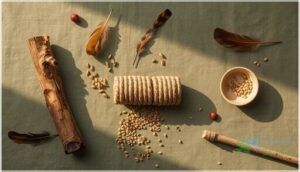
Not every perch material ages the same way, and your replacement schedule should reflect that.
The type you choose directly shapes how often you’ll need to swap it out, and why. Here’s what to expect for each of the three most common options.
Natural Wood Perches (6-12 Months)
Natural wood perches offer genuine texture benefits for bird foot health, but their porous nature means replacement every 6 to 12 months is non-negotiable for avian health. Wood grain variations across species like manzanita provide grip, yet micro cracks develop over time, compromising wood perch durability.
- Inspect every two weeks for splinters or deep bite marks
- Sand surfaces monthly to restore natural texture benefits
- Choose dense woods for slower wear and longer perch maintenance and replacement cycles
- Bake any outdoor branches at 200°F for 30 minutes before use
When choosing perches, referencing a guide to safe wood selection and preparation will help you identify non-toxic options and proper cleaning methods.
Plastic Perches (Every 6 Months)
Plastic perches, despite their convenience, tend to degrade quietly beneath the surface, making a six-month replacement cycle essential for proper perch sanitation and material safety. Micro-cracks from daily chewing compromise plastic durability and harbor bacteria, while worn perch texture reduces grip, threatening bird footcare.
Choosing the right diameter for your bird’s species is just as critical, and proper perch sizing guidelines can help you nail that balance alongside texture and material.
Pair this perch maintenance and replacement schedule with weekly cage maintenance and cleaning to keep your bird safe and comfortable.
Metal Perches (Replace When Rusted)
Metal perches generally last longer than wood or plastic, but rust changes everything. Any visible flaking or penetration through the plating demands immediate perch replacement — rusted surfaces create sharp edges that injure feet and shed particles your bird may ingest.
For rust prevention and corrosion control, inspect weekly, dry thoroughly after cleaning, and consider stainless steel or powder-coated options in humid environments.
Key Factors That Affect Replacement Frequency
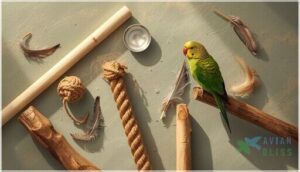
Not every perch wears out on the same schedule, and knowing why can save you from replacing them too early or waiting too long.
The timeline shifts depending on a few specific factors tied to your bird, the perch’s location, and the environment it sits in. Here’s what to keep in mind as you figure out the right cadence for your setup.
Bird Size and Chewing Behavior
Your bird’s size and chewing patterns directly shape how quickly a perch wears down. Larger birds exert greater beak strength, carving visible bite marks into softer perch materials within weeks.
Younger parrots chew more aggressively as their jaw exercise routines build muscle. Matching perch diameter to your bird species ensures even wear, which is critical for planning timely perch replacement.
Perch Location and Usage Patterns
Where you place a perch location matters just as much as what it’s made of. High-traffic perch locations along common flight paths wear down faster, demanding more frequent perch maintenance and replacement.
A thoughtful cage layout distributes bird traffic evenly across multiple perch heights, reducing uneven wear. Regular perch inspection at each location helps you catch deterioration early, keeping your bird safe and comfortable.
Environmental Conditions and Humidity
Humidity is the silent enemy of perch longevity, quietly breaking down materials you can’t always see. When relative humidity climbs above 60 percent, condensation forms on cage surfaces, accelerating mold growth and wood decay, which directly shortens your perch replacement timeline.
Humidity silently breaks down perch materials, and once it climbs past 60 percent, mold and decay cut your replacement timeline short
Proper environmental control protects both your perch investment and your bird’s health:
- Humidity Control above 60% promotes mold and bacterial growth on wood perches, demanding earlier replacement
- Ventilation Systems improve air exchange, stabilizing moisture levels and slowing perch deterioration
- Temperature Regulation combined with moisture management prevents condensation on cage surfaces and fittings
- Air Quality monitoring helps you detect humidity fluctuations that silently compromise perch integrity
- Avian Health and Wellness depends on maintaining 40–60% relative humidity for healthy mucous membranes and feather condition
Consistent environmental factors reduce unnecessary perch maintenance cycles, supporting long-term bird health and cage maintenance planning.
Warning Signs Your Perch Needs Immediate Replacement
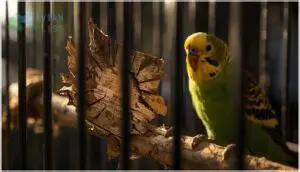
Sometimes the biggest threats to your bird’s safety aren’t dramatic—they’re the quiet signs you might overlook during a busy week.
Knowing what to watch for, however, can save your bird from injury or infection before things get serious.
Here are the key warning signs that call for an immediate replacement.
Visible Cracks, Splinters, or Bite Marks
Cracks, splinters, and bite marks are among the most telling signs that a perch has reached the end of its useful life. During routine perch inspection, look closely at wooden perches for crack formation along the grain — these splits harbor bacteria and weaken structural integrity.
Bite mark analysis reveals chewing patterns that accelerate wood deterioration, and splinter prevention demands immediate perch replacement before sharp edges injure your bird’s feet.
Discoloration, Mold, or Foul Odors
Beyond cracks and splinters, Mold Growth Patterns and discoloration, as well as foul odors, signal deeper problems that demand immediate perch replacement.
Odor Source Identification often reveals bacterial decay or fungal colonies hiding in wood pores, directly impacting the Health Impact on your bird’s respiratory system.
For effective Bird Perch Maintenance, combine regular perch cleaning with proper Cage Maintenance and Cleaning, and apply Prevention Measures to protect Bird Health and Hygiene.
Excessive Smoothness or Rough Patches
While mold and odor point to internal decay, Perch Texture shifts—becoming too slick or rough—can quietly damage your bird’s Foot Health. Surface Inspection matters here, because both extremes threaten Bird Grip and overall Bird Health and Hygiene.
Watch for these warning signs that call for immediate perch replacement:
- Polished or glossy patches reduce grip, increasing slipping and risk of bumblefoot
- Splinters or abrasive spots can cause cuts, lacerations, or even internal Injury Prevention concerns if ingested
- Visible wear patterns signal uneven stress on your bird’s feet and joints
- Your bird stumbling or repositioning frequently suggests the current perch materials aren’t supporting natural gripping behavior
Consistent Bird Perch Maintenance and routine perch cleaning keep these issues from developing silently.
Loose or Wobbly Attachments
Texture isn’t the only silent threat—Perch Stability matters just as much. Wobbly signs like rattling or shifting during normal activity point to failing attachment types, whether from corrosion, bird pecking, or improper secure fastening.
These loose connections increase fall risks and foot injuries, so your safety checks during routine cage maintenance and cleaning should always include a firm tug test. Don’t delay perch replacement here.
How to Properly Clean and Inspect Perches

Keeping your perches clean and in good shape is one of the simplest ways to protect your bird’s health over time. It doesn’t have to be complicated, but it does need to be consistent, because small buildup can become a real problem if it goes unchecked.
Here’s what you need to know about cleaning, inspecting, and choosing the right products for the job.
Weekly Cleaning Best Practices
Think of your bird’s perch as the one surface your pet never leaves untouched — which is exactly why routine cleaning becomes a cornerstone of avian hygiene.
As part of your weekly cage maintenance and cleaning, scrub each perch with a bird-safe cleaner, rinse thoroughly, and allow it to air dry completely.
Consistent perch sanitation directly bolsters bird health through reliable cleaning schedules.
Monthly Inspection Checklist
Once a month, step beyond routine cleaning and conduct a thorough inspection to protect bird safety. Check perch condition for splinters, looseness, and contamination buildup, and compare perch size against your species’ recommendations.
These inspection tips, when paired with consistent cleaning schedules, inform smarter replacement plans. Solid perch maintenance and thoughtful bird perch selection keep your bird cage accessories in prime shape year-round.
Bird-Safe Cleaning Solutions and Methods
Choosing the right cleaners matters just as much as how often you clean. A simple white vinegar and water solution at a 1-to-9 ratio works beautifully as a natural disinfectant for perch sterilization, and diluted hydrogen peroxide at that same ratio manages tougher buildup safely.
Always rinse thoroughly, dry completely, and verify your bird isn’t present during the process.
Choosing The Right Replacement Perches
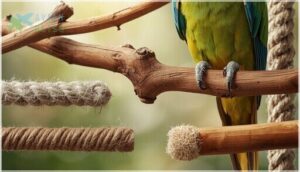
Once you’ve cleared out the old perch, picking the right replacement matters more than you might think. The size, material, and texture you choose can directly affect your bird’s comfort, grip, and long-term foot health.
Here’s what to keep in mind as you weigh your options.
Selecting Appropriate Size and Diameter
Getting the right perch diameter is one of the most overlooked factors in your bird’s foot comfort. For small birds, aim for 0.4–0.6 inches; medium birds need 0.75–1.0 inches.
When selecting wooden perches or rope perches, make certain bird toe size guides your choice. Offering size variation across perches encourages healthy grip development and keeps feet strong.
Best Materials for Your Bird Species
Not every material suits every species—this is where a proper material comparison becomes essential for bird safety. Natural wood remains the benchmark, as cedar and untreated hardwoods offer excellent perch durability without splinter risks.
For parrots, a sturdy parrot perch in dense hardwood withstands heavy chewing. Lighter species do well with rope perches, while species compatibility should always guide your selection.
Providing Variety in Texture and Shape
Think of your bird’s environment as more than just a cage—it’s a physical therapy suite. Texture Options like split bamboo, cork, and burlap-wrapped sections distribute chewing forces across different material surfaces, reducing repetitive beak wear.
Shape Diversity through curved, tapered, and irregular perch variations encourages balance training and prevents sole fatigue.
Mixing Installation Styles with rope perches and wooden perches ensures foot muscle engagement, so you can confidently replace perch setups knowing variety itself becomes the safest choice.
Step-by-Step Guide to Replacing Bird Perches
Knowing when to replace a perch is only half the battle — doing it safely matters just as much. A few missteps during removal or installation can stress your bird or even create new hazards in the process.
Here’s exactly how to handle each step the right way.
Safe Removal of Old Perches
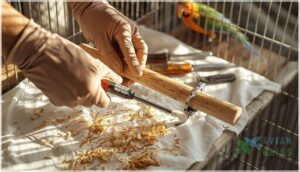
Removing a perch correctly is where safety precautions truly matter most. Rushed removal can splinter wood, scatter debris, and raise bird stress levels unnecessarily. For smooth perch detachment, follow these steps:
- Unplug all cage accessories first to prevent sudden movement.
- Use the correct screwdriver size to loosen hardware gently.
- Conduct a hardware inspection on mounting points before proceeding.
- Remove the wood perch or rope perch in one piece.
- Handle debris disposal promptly—loose fibers are a swallowing hazard.
Essential for parrot care and maintenance and overall bird health and wellness.
Proper Installation and Positioning
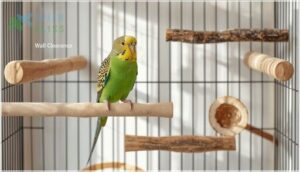
Once your old perch is safely out, positioning the new one correctly makes all the difference. Perch Height Adjustment and Mounting Techniques work together to support your bird’s comfort and safety.
| Placement Factor | Indoor Perches | Outdoor Perches |
|---|---|---|
| Optimal Height | Eye level for small birds | 6–18 inches below eye level for larger birds |
| Wall Clearance | 2–3 inches minimum | 3–4 inches for wing movement |
| Diameter Range | 0.5–1.25 inches varied | Match species grip needs |
| Texture Arrangement | Alternate smooth and rough | Prioritize natural wood textures |
| Vertical Spacing | 1–2 inches apart | Allow wind-resistance clearance |
Good Cage Layout Design and Space Optimization guarantee your bird perches, whether wooden perches or metal perches, encourage natural Bird Traffic Flow without cramping movement or causing stress.
Avoiding Placement Over Food and Water
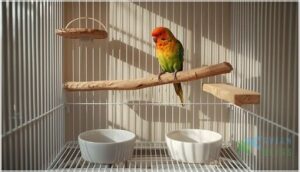
With your new bird perches mounted, one final detail protects your pet bird’s health: Perch Placement relative to food and water. Droppings falling into dishes compromise Cage Hygiene and create serious Food Contamination risks, directly threatening Bird Safety and animal welfare.
Keep these guidelines in mind:
- Position bird perches at least 12 inches from any dish
- Never place bird accessories directly above water containers
- Verify no horizontal surface sits over feeders
- Arrange perches so your bird climbs toward food instead
- Regularly check that Water Proximity hasn’t shifted during rearrangements
Frequently Asked Questions (FAQs)
How often should I clean my bird’s perches?
Your bird perches should be cleaned at least once a week as a baseline for proper perch sanitation.
Adjusting your cleaning schedules based on perch materials and your bird’s behavior keeps routine cleaning effective and promotes overall bird hygiene.
Do birds like their cages covered at night?
Think of nighttime as your bird’s sanctuary. Most pet birds thrive with cage covering, enjoying 10–12 hours of darkness.
A breathable cover material fosters healthy bird sleep patterns, reducing stress and promoting restful, uninterrupted rest for your feathered companion.
Are wooden perches good for birds?
Yes, wooden perches offer significant Wooden Perch Benefits for Bird Foot Health. They mimic Natural Habitat conditions, supporting Avian Enrichment and Perch Material Safety—making them a cornerstone of responsible Avian Care and Welfare in Pet Bird Care.
Can birds get bored with the same perch?
Much like a restless explorer craving new terrain, your feathered companion craves novelty too. Rotating perches fosters mental stimulation, foot comfort, and healthy bird behavior and psychology — making perch variety essential for genuine bird enrichment and pet bird care.
Do baby birds need different perch sizes?
Absolutely — young birds benefit greatly from perch size variance, as it directly promotes healthy foot development.
Rotating diameters from 3/8 to 1 inch encourages grip strength, balance, and natural chewing behavior throughout each growth stage.
How do I introduce new perches safely?
Introduce one new perch at a time, placing it near familiar bird perches at a similar height.
Offer a treat to encourage exploration, and keep original perches available so your bird feels secure during the adjustment.
Are store-bought perches safer than natural ones?
Neither is inherently safer. Store-bought perches offer uniformity, but may contain chemical coatings harmful to birds.
Natural perches mimic wild habitats yet harbor hidden contaminants. Responsible pet bird ownership means inspecting both regularly for your bird’s safety.
Can perch placement affect my birds sleep?
Yes, perch placement directly influences your bird’s sleep patterns.
Higher perches support natural roosting behavior, while proper positioning away from light and noise enhances nighttime routine, ensuring lasting bird comfort and overall bird welfare.
Conclusion
Your bird can’t file a complaint about a cracked perch, so you’re its only line of defense. Knowing how often to replace bird perches transforms routine cage maintenance into genuine care — the kind that protects foot health, prevents respiratory issues, and keeps your companion comfortable long-term.
Follow the timelines, trust the warning signs, and inspect regularly. A small, consistent habit now quietly builds a safer life for the bird counting on you.
- https://zupreem.com/how-to-provide-enrichment-and-exercise-for-pet-birds/
- https://www.aav.org/blogpost/1778905/AAV-Enrichment-Tips?tag=foraging
- https://www.littlecrittersvet.com/avian-foraging.pml
- https://zoologica.wordpress.com/2011/07/07/1186/
- https://sites.uw.edu/oawrss/iacuc/environmental-enrichment-sops/environmental-enrichment-for-birds/