This site is supported by our readers. We may earn a commission, at no cost to you, if you purchase through links.
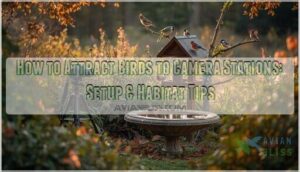
Most wildlife photographers spend hundreds of hours waiting for birds that never show up, but the problem isn’t patience—it’s strategy. Birds won’t visit a camera station just because you’ve set one up. They need the right combination of food, water, shelter, and safety before they’ll trust a new spot enough to linger.
The difference between an empty frame and a thriving bird station comes down to understanding what birds actually look for in their environment. When you position feeders at the right distance, plant native cover that offers protection, and maintain a consistent presence that doesn’t spook your subjects, you create a space where birds feel comfortable enough to return daily.
Success means thinking less like a photographer hunting for shots and more like a bird searching for reliable resources in a landscape full of risks.
Table Of Contents
- Key Takeaways
- Choosing The Best Location for Camera Stations
- Selecting The Right Food and Water Sources
- Creating a Bird-Friendly Habitat
- Optimizing Camera Setup for Bird Attraction
- Strategies to Encourage Regular Bird Visits
- Frequently Asked Questions (FAQs)
- How to attract birds to a camera feeder?
- Why aren’t birds coming to my camera feeder?
- What time of day are birds most active?
- How long before birds discover a new feeder?
- Which bird species are easiest to attract first?
- Can weather conditions affect bird feeder activity?
- Do certain colors attract more birds than others?
- Conclusion
Key Takeaways
- Birds will not visit camera stations randomly—they need the right combination of food, water, shelter within 12 feet, and consistent safety from predators before they will trust a spot enough to return daily.
- Success comes from positioning feeders 5-6 feet high and 10-12 feet from cover, rotating fresh seed weekly, and using moving water features that catch attention better than still basins.
- Your camera setup needs to blend in with matte wraps and blinds positioned 6-15 feet from perches at eye level, because even great gear will not capture natural behavior if birds spot you behind it.
- Most new feeders attract their first visitors within 3-14 days, but building reliable daily traffic means adjusting seed types seasonally and watching behavioral cues to fine-tune placement and timing.
Choosing The Best Location for Camera Stations
Location is everything in terms of getting birds to show up on camera. The right spot balances safety and visibility, and provides access to food while keeping stress low for your feathered subjects.
Here’s what you need to think about before setting up your station.
Ensuring Bird Safety and Comfort
Bird safety starts with thoughtful station design that mirrors natural refuge. Your camera setup won’t attract many visitors if birds sense danger lurking nearby.
To reduce stress and support bird conservation through smart feeder placement, follow these bird-friendly landscaping principles:
If you discover an injured bird near your feeder, knowing proper bird injury care and handling methods can help minimize stress and improve its chances of recovery.
- Position feeders within 12 feet of sheltering shrubs for quick escapes
- Keep hygienic feeders by scrubbing weekly with hot, soapy water
- Install varied perches near stations to prevent foot strain
- Add bird collision prevention decals on nearby windows
Consistent maintenance, especially following disinfecting bird feeders guidelines, helps prevent disease outbreaks in your backyard visitors.
Minimizing Human and Predator Disturbance
Safety and comfort alone won’t keep birds around if they’re constantly spooked by noise or predators. You’ll need predator deterrents like pole baffles and smart safe feeder placement—mount stations 5 to 6 feet high and at least 10 feet from dense cover where cats hide.
Visual concealment helps too; cover shiny tripods with matte tape, and schedule quick visits during midday lulls to build trust through human disturbance minimization. For more information on effective predator-proofing strategies for yards, consider regular safety checks to keep your camera stations welcoming.
Window Collision Prevention Strategies
Glass patterns and window decals can save lives. Studies show between 365 million and 1 billion backyard birds die from window collisions annually, so mark windows near your bird feeder with exterior dots or stripes spaced no more than 2 inches apart for feather protection.
Mark windows near feeders with dots or stripes spaced under 2 inches apart to prevent the million bird deaths from glass collisions each year
Keep the safe area within 3 feet of glass or beyond 30 feet to reduce bird safety and collision risks during bird watching sessions.
Strategic camera positioning in your yard helps you capture stunning footage while keeping birds safe from window strikes.
Selecting The Right Food and Water Sources
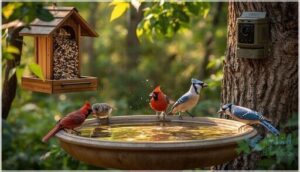
If you want birds showing up at your camera station on a regular basis, you need to give them a reason to stick around.
The right combination of food and water turns a random fly-by into a daily visit, and that’s where your best shots happen. Here’s what actually works to keep feeders full and birds coming back.
Bird Feeder Types and Placement
When you’re setting up bird feeders for your camera station, you can’t just toss them anywhere and hope for the best. Each feeder type needs its own sweet spot to pull in backyard birds while keeping them safe and comfortable:
Setting up feeders strategically not only attracts more species but also helps you document and support local bird populations through thoughtful observation.
- Hopper feeders work best mounted on poles 5 to 6 feet high, about 10 to 12 feet from shrubs so birds can escape quickly without giving cats a perfect ambush point
- Tube feeders should hang with 18 to 24 inches of open space around them at heights of 5 to 6 feet, placed in partial shade to slow seed spoilage
- Platform feeders belong 4 to 5 feet above ground in central open areas where they’re visible from the air, drawing cardinals and doves to your camera bird feeder setup
- Suet feeders hang 6 to 8 feet high near tree trunks or large branches, giving woodpeckers and nuthatches vertical surfaces that match how they naturally cling and feed
- Feeder spacing matters because placing hoppers several feet away from delicate tube feeders reduces crowding and bullying among different species
Pole placement and feeder height aren’t just random numbers, they’re the difference between a camera station that captures relaxed, natural behavior and one where birds feel too exposed to stick around.
Offering Diverse Seed and Suet Options
You’ll want to stock different seeds and suet if you’re serious about drawing a wide mix of species to your bird feeder.
Black oil sunflower seed pulls in cardinals, chickadees, and finches with its high fat and protein, while nyjer brings goldfinches close.
Suet cakes with peanuts and berries attract woodpeckers and nuthatches, balancing nutrient needs across seasons and bird preferences.
Providing Clean, Moving Water Features
Beyond food, fresh water draws more species than any other feature at your camera station.
Moving water catches attention from distances still basins can’t match—drippers and small fountains mimic natural streams, making cautious birds comfortable.
Keep your bird bath shallow with gentle slopes, scrub it every day or two to maintain water quality, and add a solar fountain or winter heating element so the feature stays usable year-round.
Creating a Bird-Friendly Habitat
Your camera station will only work if birds actually want to be there. The secret isn’t just about feeders and water—it’s about building a space where birds feel at home, protected, and ready to stick around.
Let’s look at three key ways to transform your yard into a habitat that keeps them coming back.
Planting Native Shrubs and Flowers
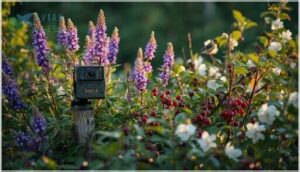
Building habitat around your camera starts with choosing native shrubs and flowers that actually feed local birds. In the mid-Atlantic, viburnums and winterberry offer berries when insects vanish, while coneflowers hold seeds goldfinches can’t resist.
Plant shrubs in clusters four to eight feet wide rather than scattering singles—birds move more naturally between grouped cover and feeding spots you’re filming.
Adding Perches and Natural Cover
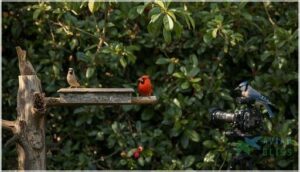
Birds hesitate at exposed feeders, so perch placement two to six feet out gives them a comfortable staging post before they commit.
Use weathered branches about pencil-thick for songbirds, mounted at feeder height or slightly above, and position them ten to fifteen feet from your camera lens.
Natural cover—shrubs or hedges within twenty feet—offers quick escape routes, making skittish species linger longer for bird photography while your camera stays concealed behind simple feeder accessories.
Installing Nest Boxes and Predator Guards
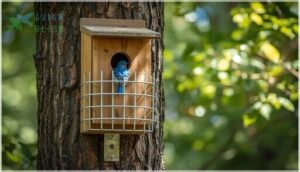
Nest box placement at six to twelve feet, paired with aluminum guards or polyethylene predator guards mounted below the entrance, turns your setup into a fortress for cavity-nesting species while keeping raccoons and squirrels out.
These guards, secured with two bolts on each side, protect nesting materials and hatchlings without blocking airflow—a simple move that deepens your role in wildlife conservation and habitat creation.
Optimizing Camera Setup for Bird Attraction
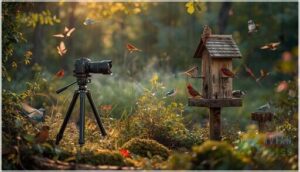
Getting birds close enough for sharp photos takes more than just showing up with a camera. You need the right gear, smart positioning, and a setup that doesn’t spook your subjects the moment they arrive.
Here’s how to configure your camera station so birds feel comfortable enough to stick around while you capture their best angles.
Camera Placement and Angle Tips
Getting your camera placement right makes the difference between empty frames and intimate portraits. Start with these outdoor camera installation fundamentals to nail bird perspective and frame composition every time:
- Mount at eye level, 3 to 5 feet high, for natural-looking shots that feel close and personal
- Position 6 to 15 feet from perches so small birds fill your frame without crowding
- Angle toward morning light for warm tones and soft shadows across feathers
- Leave space in front where birds naturally face to avoid cramped compositions
Recommended Lenses and Accessories
Once your camera is positioned, the right glass makes all the difference. A telephoto lens in the 100 to 400 millimeter range covers most feeder distances, giving you tight portraits without spooking birds.
Pair it with a sturdy tripod and gimbal head for stability, especially with heavier prime lenses at 400 or 600 millimeters, and add lens stabilization for sharp handheld shots.
Using Concealment Techniques for Natural Behavior
Even great glass won’t capture natural behavior if birds spot you behind it. Camouflage methods like matte wraps on your camera body and tripod legs keep reflections from flashing in the sun, while a pop-up blind lets you sit close without alarming skittish species.
Three concealment essentials for birdwatching success:
- Wrap your gear in neutral tones – dark green or bark-pattern tape breaks up hard edges and hides logos that catch light.
- Set up blinds days ahead – birds adapt to new structures when they appear still, making natural screening part of the scenery.
- Move only when the wind does – slow shifts during gusts mask motion, keeping jays and finches relaxed at your feeder.
Noise reduction matters just as much. Enable silent shutter mode to avoid that loud click, and pad tripod legs with foam sleeves so accidental bumps don’t send vibrations through your deck. You’ll notice the difference in bird behavior almost immediately.
Strategies to Encourage Regular Bird Visits
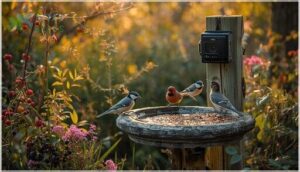
Getting birds to show up once is easy, but turning your camera station into their go-to spot takes a bit more strategy.
You’ll need to think about timing, stay consistent with what you’re offering, and pay attention to what the birds are actually doing. Here’s how to build routines and habits that keep them coming back, season after season.
Consistent Feeding and Maintenance Routines
Consistent bird feeding schedules create trust and routine, so set your camera bird feeder to dispense seeds at the same times daily, ideally during morning and late afternoon peaks.
Rotate seed stock weekly to keep food fresh, refresh water sources every 1–2 days, and clean bird feeders monthly to prevent disease. Remove spillage within two hours to deter pests and keep backyard bird feeders inviting.
Seasonal Adjustments for Bird Preferences
Birds shift their diets as seasons change, so adjust your bird feeder offerings to match their needs. In winter, load up on high-fat black oil sunflower seeds when temperatures drop. Spring brings migrants craving nectar and berries, while autumn calls for grain-based mixes as natural seed crops mature.
- Winter: Increase sunflower and nyjer seed for finches and sparrows seeking energy-dense food.
- Spring: Add nectar sources and berry-producing plants to support arriving migrants.
- Summer: Offer safflower and suet blends to reduce competition during nesting season.
- Autumn: Switch to grain-based mixes as tree crops mature and insect activity declines.
- Year-round: Keep water sources unfrozen in cold months and shaded during warm spells.
Monitor bird feeder placement and food availability as weather patterns shift, because bird migration patterns and habitat adaptation depend on consistent, seasonally appropriate resources that reflect natural food cycles.
Observing and Adapting to Bird Behavior
Watch how your visitors move and you’ll discover the rhythm of their world. Fluffed feathers signal rest, while head-down pecking reveals active foraging patterns. Alarm calls scatter flocks instantly, teaching you which perches feel safest for wildlife conservation efforts.
| Behavioral Cues | What It Means | Your Next Move |
|---|---|---|
| Repeated perch-to-feeder chases | Territorial defense in bird social dynamics | Add a second station 15 feet away |
| Synchronized pair visits | Mate bonding and species interaction | Position cameras for dual subjects |
| Morning fruit tree clusters | Predictable foraging patterns | Schedule shooting for early hours |
Track visit times over two weeks, noting habitat adaptation shifts that reveal individual preferences in bird behavior observation for sharper bird photography and deeper bird watching insights.
Frequently Asked Questions (FAQs)
How to attract birds to a camera feeder?
What’s the secret to turning your backyard into a bustling avian hub?
Position your camera feeder 3 to 10 feet from natural cover, stock it with black oil sunflower seeds, and provide fresh water nearby.
Why aren’t birds coming to my camera feeder?
Your camera feeder might lack nearby cover, use stale seed, or sit too close to windows.
Check placement, freshen food sources, add native shrubs for shelter, and reduce disturbances to improve bird attraction methods.
What time of day are birds most active?
The golden hours reveal nature’s rhythm: dawn chorus erupts within 15 minutes of sunrise, morning foraging peaks next, then midday rest hits.
Late afternoon resumes activity, followed by dusk’s final feeding push before darkness.
How long before birds discover a new feeder?
Most bird feeders get their first visitors within 3 to 14 days, though feeders near active bird traffic or existing backyard bird feeders often attract birds faster, sometimes within 24 to 48 hours.
Which bird species are easiest to attract first?
House sparrows, American goldfinches, and northern cardinals are your best bets when you’re starting out with backyard birding.
They adapt quickly to feeders stocked with black oil sunflower seeds and Niger thistle.
Can weather conditions affect bird feeder activity?
Like a barometer, measuring shifts in the natural world, weather controls when birds visit your outdoor cameras.
Temperature swings, rainfall patterns, wind impact, and seasonal changes all shape feeder traffic and birdwatching success.
Do certain colors attract more birds than others?
Yes, color preferences matter. Red strongly attracts cardinals and hummingbirds, while yellow draws finches. Blue catches attention from jays, and white feeders offer high visibility.
Use color contrast as visual cues to boost bird photography success.
Conclusion
The theory that birds are drawn purely by accident doesn’t hold up when you watch the same cardinals return to a well-placed feeder for weeks. They’re mapping resources, testing safety, deciding if your station earns their trust.
When you learn how to attract birds to camera stations by thinking like they do—offering food, water, cover, and predictability—you’re not just setting traps for images. You’re building relationships that reveal behavior most photographers never witness.
- https://journals.plos.org/plosone/article?id=10.1371/journal.pone.0306362
- https://www.jobu-design.com/Jobu-Jr3_p_9.html
- https://www.rspb.org.uk/birds-and-wildlife/advice/how-you-can-help-birds/nestboxes/nestboxes-for-small-birds/making-and-placing-a-bird-box/
- https://www.madroneaudubon.org/conservation-bird-safety-bird-feeding-guidelines.php
- https://www.wildlifedepartment.com/outdoorok/ooj/bird-feeding-tips