This site is supported by our readers. We may earn a commission, at no cost to you, if you purchase through links.
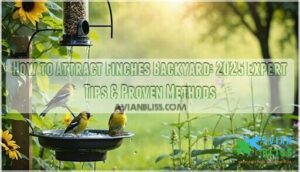 To attract finches to your backyard, focus on three key elements: the right food, proper feeders, and fresh water.
Offer nyjer seed and black oil sunflower seeds in tube or sock feeders—finches can’t resist these oil-rich treats.
Place a shallow bird bath with 1-2 inches of water near shrubs for quick escapes.
Fresh seeds are essential since finches won’t touch stale ones.
Add native plants like coneflowers for natural food sources and nesting materials.
Moving water features like drippers create irresistible sounds that draw these colorful visitors.
The secret lies in understanding what specific feeder designs work best for different finch species.
Table Of Contents
- Key Takeaways
- Attracting Finches Basics
- Attract Finches Backyard
- Creating Finch Friendly Habitat
- Finch Feeding Strategies
- Enhancing Finch Attraction
- Frequently Asked Questions (FAQs)
- How can I attract Finches to my yard?
- How do you attract a goldfinch to your yard?
- How to attract finches in a bird feeder?
- Do goldfinches attract birds?
- How do you keep finches away from your yard?
- How can I keep finches coming back to my yard?
- What is the best time to attract finches?
- How long do finches find a feeder?
- What time of year do finches come out?
- Should I feed finches in the winter?
- Conclusion
Key Takeaways
- Stock feeders with nyjer and black oil sunflower seeds – These oil-rich seeds are finches’ favorites, but you’ll need to keep them fresh since finches won’t touch stale offerings
- Use tube or sock feeders designed for finches – These specialized feeders with small ports and clinging surfaces work best for goldfinches and other finch species while reducing waste
- Provide shallow water sources with moving features – Set up bird baths with 1-2 inches of water near shrubs, and add drippers or fountains since moving water creates irresistible sounds that draw finches
- Plant native seed-producing flowers and maintain shelter – Grow coneflowers, sunflowers, and other native plants for natural food sources, while keeping dense shrubs nearby for nesting materials and quick escape routes
Attracting Finches Basics
You’ll find attracting finches requires understanding their specific dietary needs and feeding habits first.
These colorful songbirds prefer oil-rich seeds like nyjer and black sunflower, making targeted feeder selection essential for backyard success.
Finches crave high-energy nyjer and sunflower seeds—match their diet to guarantee backyard visits.
Create a finch paradise with nyjer feeders, fresh water, and colorful plants—they’ll flock to your yard instantly
Finch Species and Characteristics
You’ll encounter over 200 finch species worldwide, with House Finch, American Goldfinch, Purple Finch, and Pine Siskin being common backyard visitors.
These small birds range from 3-10 inches in Finch Size, displaying vibrant Bird Plumage during breeding season.
Males showcase colorful feathers and distinctive songs, while females maintain subdued coloring for safety.
Most species exhibit Finch Migration patterns, with careful Feather Care essential for flight readiness and Nesting Habits varying by location.
Understanding finch migration patterns can help attract these birds to your backyard.
Finch Diet and Feeding Preferences
Understanding finch nutrition reveals the secret to drawing these colorful songbirds to your yard.
Seed Preferences drive finch feeding habits, with Nyjer seed and sunflower seeds topping their wishlist for high-energy nutrition.
To maximize attraction, creating a finch friendly environment is vital for backyard birders.
- Nyjer seed delivers the oil-rich fuel goldfinches crave most
- Black oil sunflower seeds provide essential fats for vibrant plumage
- Fresh seeds only – finches reject stale, brown offerings instantly
- Natural food sources like thistle and coneflower seeds attract wild visitors
- Protein needs increase during breeding season with insects supplementing diets
Finch Feeders and Feeding Strategies
Several feeder types maximize finch attraction through strategic design differences.
Sock feeders offer soft clinging surfaces that goldfinches prefer, while tube designs with narrow ports minimize waste.
Platform feeders accommodate larger finch species effectively.
| Feeder Type | Best Seeds | Key Benefits |
|---|---|---|
| Mesh Sock | Nyjer seed | Cling-friendly surface, goldfinch favorite |
| Tube Design | Fine sunflower chips | Waste reduction, multiple perches |
| Platform Style | Seed blends | Stability, accommodates large finch species |
Attract Finches Backyard
Finches bring vibrant colors and cheerful songs to your backyard, making them among the most rewarding birds to attract.
You’ll discover several common species like American Goldfinches, House Finches, and Purple Finches that offer year-round entertainment with their acrobatic feeding habits and social behavior.
Why Are Finches Special
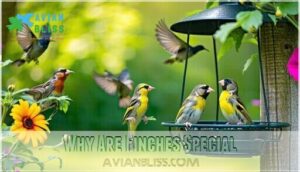
Finches bring pure joy to your backyard with their acrobatic feeding antics and melodic bird songs.
These social creatures form tight social bonds, creating lively flocks that dance between feeders and branches.
Their vibrant feather colors—from goldfinch yellow to purple finch crimson—create a living kaleidoscope.
You’ll witness fascinating mating rituals as males perform aerial displays while singing distinctive melodies to attract mates, making every moment spent watching these charming birds absolutely enchanting.
Which Types of Finches Can I See
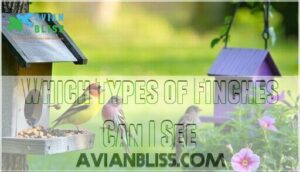
Across North America, you’ll discover five main finch species that regularly visit backyard feeders.
The American Goldfinch displays bright yellow plumage during breeding season, while House Finch males show rosy-red coloring.
Purple Finch males feature raspberry-red tones with distinct feather patterns.
Pine Siskin and Redpoll complete the common species list, each following specific migration routes that bring them through different regions seasonally.
To attract these finches, consider installing a birdhouse with proper ventilation systems to guarantee their comfort and safety and provide a suitable environment for them to thrive, making it an ideal spot for backyard feeders.
Why We Love Finches
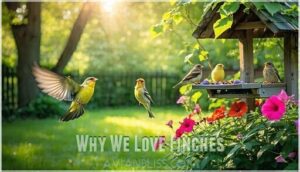
These vibrant backyard visitors bring joy through their acrobatic feeding displays and melodic bird songs.
You’ll love watching their colorful plumage change seasonally while males show off during courtship.
Their social nesting habits create lively activity around finch bird feeders.
Once you master finch species identification, you’ll appreciate their unique feather care routines and discover which finch friendly plants support their natural behaviors year-round.
Creating Finch Friendly Habitat
Building a finch-friendly habitat requires three essential elements that work together to create an irresistible backyard oasis.
You’ll need to focus on water sources, diverse food options, and proper shelter to transform your outdoor space into a finch magnet.
Include a Water Source for Drinking and Bathing
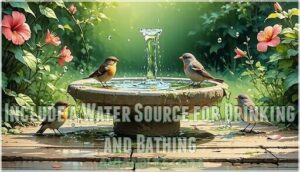
Beyond basic bird feeders, water features transform your yard into a finch haven.
House finches need daily water intake up to 20% of their body weight, making reliable water sources essential for attraction and health.
To maximize finch attraction, understanding the best finch feeder options is vital for creating an inviting environment with the right finch feeding strategies.
- Shallow bird baths (1-2 inches deep) with rough surfaces provide safe drinking and bathing spots
- Moving water features like drippers or fountains create irresistible sights and sounds that draw finches from distances
- Strategic placement 10-15 feet from shrubs offers quick escape routes while maintaining easy access
Provide Varying Types of Food
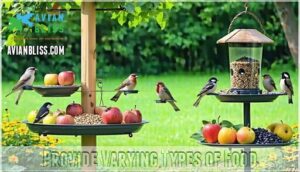
Diversifying your menu is like opening a gourmet restaurant for finches.
Nyjer seed remains king, but mixing in black oil sunflower seeds creates irresistible feeding options.
Add fresh fruits like apple slices and nutrient-rich sprouted seeds to boost oil content.
This seed variety approach matches natural finch seed preferences, turning your yard into their favorite dining spot.
Understanding the best Nyjer seed sources is vital for creating an ideal finch feeding environment.
Create an Attractive Habitat With Shelter
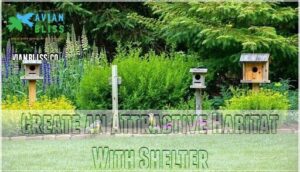
Finches need safe spaces to call home.
Dense shrubs and evergreen plantings provide year-round shelter options while native plants like milkweed offer nesting materials.
Position finch nesting boxes near your feeders but maintain garden layout that includes escape routes.
Wildlife friendly landscaping with finch friendly plants creates the perfect finch backyard habitat where these colorful visitors feel secure enough to stay.
Finch Feeding Strategies
You’ll get the best results when you match your feeding strategy to finches’ natural preferences and feeding behaviors.
The right combination of feeder type, seed selection, and placement creates an irresistible dining experience that keeps these colorful birds coming back throughout the season, which is a result of understanding their natural preferences.
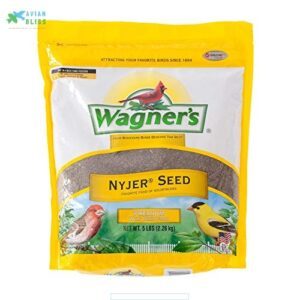
1. Nyjer Seed Wild Bird Food
 View On Amazon
Dubbed "black gold" by bird enthusiasts, Nyjer Seed delivers unmatched Bird Nutrition that’ll transform your yard into a finch magnet.
This premium Finch Food contains 150,000 seeds per pound, ensuring constant visits while its high fat and protein content provides essential energy.
Fresh Seed Quality matters—finches won’t touch stale offerings, making proper storage vital for successful finch feeding tips, and understanding the importance of high fat is crucial.
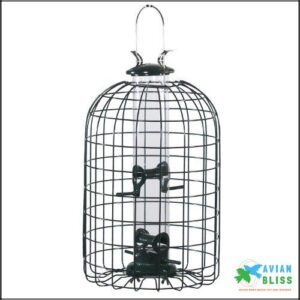
2. Squirrel Proof Bird Feeder Tube
 View On Amazon
Squirrel guards transform your bird feeder into a fortress that protects precious nyjer seed from crafty intruders.
These tube feeders feature protective cages that allow finches easy access while blocking larger birds and squirrels.
A squirrelproof feeder with proper tube designs guarantees your seed protection stays intact.
Unlike basic thistle sock feeders, these robust systems include squirrel baffles and reinforced construction for long-term reliability.
3. Green and Black Finch Feeder
Occasionally, you’ll discover a finch feeder that perfectly balances functionality and aesthetics.
This green and black finch feeder offers metal mesh construction that handles weather while attracting goldfinches and siskins effectively.
Key advantages of this design:
- Durable construction – Metal components resist squirrels and weather damage better than plastic alternatives
- Large capacity – Holds 1.75 pounds of nyjer seed, reducing refill frequency
- Multi-bird feeding – Accommodates 10-15 birds simultaneously with open mesh design
The patented baffle system guarantees even seed distribution while drainage holes prevent mold formation.
Enhancing Finch Attraction
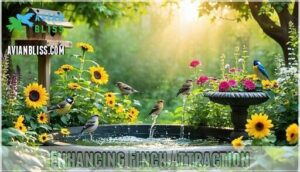
You can substantially boost your finch attraction success by implementing advanced techniques that go beyond basic feeding.
These proven methods combine water features, strategic landscaping, and visual enhancements to create an irresistible backyard environment for finches.
Method 2: Water Features That Wow
Moving water sources work like magnets for finches.
Install misting systems or add fountains to create irresistible attractions. Maintain bird bath depth at 1-3 inches for safe bathing.
Winter water sources prevent freezing issues. Clean fountains weekly to avoid bacterial buildup.
Misters provide shower-like experiences that goldfinches absolutely love, meeting their essential finch water requirements year-round, and creating irresistible attractions.
Method 7: Landscape Features That Make a Difference
Your landscape layout creates the foundation for finch success.
Native plantings like coneflowers and sunflowers provide natural seed sources, while yard shrubs offer essential nesting sites.
Strategic tree placement creates vertical elements and sheltered areas that finches crave.
Dense hedgerows and evergreens supply year-round cover, and bird-friendly gardens with varied heights mimic finches’ preferred field-edge habitats perfectly.
Adding Bright Colored Ribbons to Feeders
Yellow ribbon colors create powerful visual signals that catch finches’ attention from remarkable distances.
Tie bright ribbons near your feeder placement to enhance bird attraction through wind movement that signals safety.
This simple finch feeding tip transforms ordinary bird feeder design into a beacon for backyard birdwatching, especially when combined with nyjer seed offerings.
The use of bird ribbon products can further increase the attractiveness of your feeder to finches, making it a great way to promote backyard birdwatching and create a bird feeder design that stands out.
Frequently Asked Questions (FAQs)
How can I attract Finches to my yard?
Place finch-specific feeders with fresh nyjer and black oil sunflower seeds near shrubs. Add shallow water sources and plant native seed-producing flowers like sunflowers and coneflowers.
How do you attract a goldfinch to your yard?
Goldfinches love nyjer seeds in mesh feeders, fresh water sources, and native plants like sunflowers. You’ll also want to provide shelter with shrubs nearby for safety.
How to attract finches in a bird feeder?
Sarah discovered that her standard bird feeder attracted zero finches until she switched to Nyjer seed in a tube feeder with small ports.
You’ll need thistle or black-oil sunflower seeds in specialized finch feeders positioned near shrubs for safety.
Do goldfinches attract birds?
Goldfinches don’t directly attract other birds, but they’re excellent indicator species.
When you spot goldfinches at feeders, it signals you’ve created a bird-friendly environment that’ll naturally draw various finch species and seed-eating songbirds to your yard.
How do you keep finches away from your yard?
Remove food sources by storing birdseed indoors, cleaning up fallen seeds regularly, and avoiding finch-friendly plants like sunflowers and thistles.
Install barriers around vulnerable crops and use deterrent sprays on garden areas you want to protect.
How can I keep finches coming back to my yard?
When Mike consistently refilled his nyjer sock feeder weekly with fresh thistle seeds, goldfinches returned daily for months.
You’ll maintain finch loyalty by providing fresh seeds regularly, clean water sources, and strategic feeder placement near protective shrubs to ensure the goldfinches return.
What is the best time to attract finches?
Late spring through early fall offers peak finch attraction, especially May through September. You’ll see most activity during morning and late afternoon feeding times when they’re naturally foraging for seeds.
How long do finches find a feeder?
Finches typically discover new feeders within a few days to two weeks, depending on local bird populations and feeder placement.
You’ll see faster results with proper seed selection and strategic positioning.
What time of year do finches come out?
Like clockwork announcing dawn’s arrival, you’ll spot finches year-round, though spring through fall brings peak activity. They’re most active during breeding season (May-September) when abundant seeds fuel their energy needs.
Should I feed finches in the winter?
Yes, you should feed finches during winter months.
They’ll appreciate the reliable food source when natural seeds become scarce.
Keep feeders stocked with fresh nyjer and sunflower seeds, and maintain unfrozen water sources for their survival and comfort.
Conclusion
Transforming your yard into a finch paradise isn’t rocket science—it’s practically guaranteed success when you follow proven methods.
By combining nyjer seed feeders, fresh water sources, and native plants, you’ll create an irresistible habitat that finches can’t ignore.
Remember, consistency matters more than complexity when learning how to attract finches backyard, and keeping feeders clean, water fresh, and seeds stocked is crucial for success.
Your patience will reward you with colorful visitors year-round.
- https://a-z-animals.com/blog/what-do-house-finches-eat/
- https://barrie.wbu.com/finch-feeders
- https://www.birdsandblooms.com/birding/attracting-birds/feeding-birds/best-finch-feeders/
- https://zerowastehomestead.com/growing-a-goldfinch-habitat-garden-how-to-attract-finches-to-your-backyard/
- http://www.wildbirdsgpw.com/goldfinches-plant-will-come/