This site is supported by our readers. We may earn a commission, at no cost to you, if you purchase through links.
 A backyard bird aviary isn’t just a cage—it’s a commitment to your birds’ physical and mental health. Birds in properly designed aviaries live longer, show fewer stress behaviors, and maintain stronger immune systems compared to those in standard cages. The difference comes down to flight space, natural light exposure, and environmental enrichment that mimics their wild habitat.
Building your own aviary gives you control over every safety feature, from predator-proofing to material selection, while creating a space designed for your specific bird species.
Whether you’re housing finches, parrots, or doves, understanding the construction fundamentals guarantees your birds thrive in a secure, stimulating environment that meets their biological needs.
Table Of Contents
Key Takeaways
- Properly designed aviaries significantly improve bird health and longevity by providing flight space, natural light exposure, and environmental enrichment that mimics wild habitats, while reducing stress behaviors and strengthening immune systems compared to standard cages.
- Construction safety requires predator-proof wire mesh with species-appropriate spacing (1/2 inch for small birds, wider for large species), stainless steel materials to prevent rust and toxicity, buried mesh foundations at least 30 cm deep, and double-door entry systems to prevent escapes.
- Aviary size must accommodate each bird’s wingspan—not just body size—with minimum dimensions varying by species (finches need 18"x18"x30", large parrots require 36"x48"x60"), and space should increase by 1.5 times for each additional bird to support natural social behaviors.
- Regular maintenance prevents disease through daily dropping removal and water changes, weekly toy cleaning with bird-safe disinfectants, monthly deep cleaning of all surfaces, and seasonal adjustments like added insulation for winter or increased ventilation and shade for summer heat.
How to Plan Your Bird Aviary Project
Before you get started, it helps to know what options are out there. Planning your aviary means thinking about your birds’ needs, your space, and what fits your lifestyle.
Let’s take a look at the types of enclosures you can consider next.
Benefits of Aviaries for Birds
Giving your birds room to stretch their wings in an aviary opens the door to a richer, healthier life than a cage ever could. You’ll notice:
An aviary gives birds a richer, healthier life than any cage, with lower stress, natural behaviors, and enhanced wellbeing
- Lower stress and more natural behaviors—watch for joyful flights and playful calls.
- Increased mental stimulation, thanks to variety and bird entertainment.
- Enhanced wellbeing, as the environment matches their species needs—truly creating a bird paradise.
Indoor Vs. Outdoor Aviaries
Once you’ve seen the mental lift aviaries give, consider if an indoor aviary or an outdoor aviary best suits your flock. Indoor aviary ideas often center on climate regulation and easy cleaning, while outdoor aviary considerations bring direct natural light, flocking, and predator protection—yet require careful attention to disease risks and maintenance needs. To prevent conflicts, consider species compatibility when introducing new birds to an aviary.
| Feature | Indoor Aviary |
|---|---|
| Climate Regulation | Easy |
| Predator Protection | High |
| Natural Light | Lower |
| Disease Risks | Lower |
| Maintenance Needs | Less |
Choosing The Best Location
Finding the right spot for your aviary means thinking about more than just where it fits—your birds need a place where sunlight, fresh air, and your daily routine comfortably meet.
Aim for:
- Steady Sunlight Exposure
- Strong Wind Protection
- Reliable Drainage Needs
- Convenient Home Proximity
- Straightforward Safety Concerns
Choosing the perfect location for your outdoor aviary makes every day better for everyone.
Climate and Weather Protection
Once you’ve picked your aviary’s spot, it’s time to think about how your birds will fare with everything from blazing sunshine to chilly rainstorms. Use a sturdy aviary roof for UV protection, and add shade solutions or wind protection on exposed sides.
For rain shelters and winterizing aviaries, try clear panels or insulation. Good climate control keeps your flock safe year-round.
Local Regulations and Permits
How do zoning restrictions or permit applications trip up folks building a bird aviary? Whether you’re putting up an outdoor aviary or adding to your flock, rules matter. Make sure you:
- Check zoning restrictions
- Submit permit applications
- Follow building codes
- Confirm species regulations
- Use approved building materials
If located near an airport, be aware that proposed construction may require a variance to comply with airport obstruction regulations. Stay ahead—safety considerations count in every aviary construction guide.
How to Choose The Right Aviary Size
Choosing the right size for your aviary matters more than you might think. Every bird needs enough room to stretch, explore, and feel secure.
Let’s look at what you’ll need for different types and numbers of birds.
Minimum Size by Bird Species
Did you know a bird’s wingspan—not just its size—should guide your aviary plans? For small species, like finches, think deeper about Finch Dimensions and cage height. Parrot Enclosures demand extra space for stretching and climbing. Raptors require longer, wider aviaries for flight.
The chart below helps you match aviary size to bird species:
| Species | Minimum Aviary Dimensions |
|---|---|
| Finch | 18" x 18" x 30" |
| Small Parrot | 24" x 24" x 48" |
| Large Parrot | 36" x 48" x 60" |
| Raptor | 12′ x 10′ x 9′ |
| Grass Parakeet | 2 meters in length minimum |
Calculating Space for Multiple Birds
If you’re planning to house more than one bird, you’ll need to multiply your space—not just shuffle a few perches—so everyone has room to thrive.
Increase aviary size by 1.5 times for each additional bird. Account for species needs, social dynamics, and vertical clearance to guarantee everyone enjoys ample flight space and ideal cage dimensions.
Sizing for Future Expansion
Think of your aviary as a living home—giving yourself extra space now means you won’t have to break out the toolbox every time you welcome a new bird.
With adaptable aviary design and modular construction, you make long-term planning easy.
When choosing aviary dimensions, plan for future bird additions or a multi-species aviary. Sizing an aviary with growth in mind saves hassle later.
Space Requirements for Walk-in Aviaries
There’s nothing quite like stepping into your aviary and watching your birds spread their wings in a space designed for both freedom and safety. To meet every need, carefully consider:
- wide flight space for exercise
- ample vertical clearance for bird comfort
- room to socialize, perch, and play
- WalkIn Aviary size based on bird size, aviary shape, and species social needs
What Materials and Tools Will You Need?
Before you start building, you’ll want to gather the right supplies for a strong, safe aviary. Choosing the proper materials makes all the difference for your birds’ health and happiness.
Here’s what you’ll need to get started.
Frame Materials: Wood Vs. Metal
Choosing between wood and metal for your aviary frame is a bit like picking the foundation for a house—your choice sets the tone for everything else you’ll build. Wood offers warmth and easy customization, but check its durability. Metal withstands weather and predators, though corrosion can be a concern.
Consider cost, weight, and aesthetic appeal for your frame construction.
Selecting Safe Wire Mesh
Once your frame is ready, the wire mesh you pick becomes your birds’ main line of defense against predators and escape. Match mesh spacing and wire diameter to your bird’s size—small birds need 1/2 inch spacing with 0.0787 inch diameter, while larger species require wider gaps and thicker wire.
Stainless steel wire mesh resists rust and chewing better than galvanized options, keeping your aviary bird-safe for years.
Roofing and Flooring Options
Your roof and floor will shield your birds from rain, predators, and the elements, so selecting materials that balance durability with drainage matters just as much as your mesh choice. Here’s what works best:
- Aviary roof: Corrugated metal or plastic sheets provide weather protection and slope for water runoff.
- Concrete floors: Easy cleaning and predator-proof, but add drainage grooves.
- Gravel: Place over wire mesh for natural drainage solutions.
- Wood flooring: Sealed tiles simplify daily sweeping but need regular sealing.
Recommended Tools and Supplies
Before you start hammering nails and stretching mesh, gathering the right tools upfront will save you hours of frustration and trips to the hardware store. You’ll need essential hand tools like a drill, screwdriver, and wire cutters for trimming mesh. Grab fastening equipment including exterior-grade screws and corner connectors.
Don’t forget safety gear—gloves protect against sharp wire, and goggles shield your eyes. Measuring instruments make certain your lumber and wire mesh fit perfectly.
Safe, Non-Toxic Materials for Birds
Having the right tools matters, but safe materials protect your birds’ health.
For safe metal choices, stick with stainless steel mesh—grades 304 or 316 resist rust and contain no toxic coatings. Avoid galvanized wire mesh safety risks, as zinc is toxic if chewed.
When selecting wood preparation, choose untreated lumber like acacia, ash, or apple, and clean natural branches with hydrogen peroxide.
Use non-toxic sealants such as food-grade tung oil on concrete or metal.
For plastic alternatives, only use food-grade PVC wrapped in natural fiber rope.
Step-by-Step Aviary Construction Guide
Now that you’ve gathered your materials and tools, it’s time to roll up your sleeves and start building.
This section walks you through each construction phase, from laying a solid foundation to securing the final weatherproofing touches. Follow these steps carefully to create a safe, sturdy home for your birds.
Building The Aviary Foundation

A solid foundation isn’t just important for your aviary—it’s the difference between a structure that lasts decades and one that sinks, shifts, or becomes a safety hazard within months.
For outdoor aviaries, you’ll choose between hard aviary foundations like a concrete base or soft aviary foundations using gravel and drainage solutions. A concrete slab provides stability for larger structures, while a mesh bottom with proper foundation depth prevents predators from digging underneath.
Guarantee good drainage to keep your birds healthy and dry.
Cutting and Assembling Frame Panels
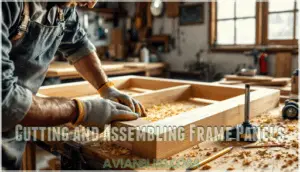
Measure twice, cut once—this old carpenter’s rule will save you time, money, and frustration when building your aviary’s frame panels. Your wood selection matters for durability, so use exterior-grade lumber like cedar or pine.
Here’s your cutting and assembling wood checklist:
- Cut four 2 by 2 inch pieces for each frame piece using accurate cuts
- Mark screw placement points before drilling to prevent splitting
- Use 4 inch exterior-grade screws for joinery methods that hold
- Assemble rectangular frame pieces to identical dimensions
- Check frame assembly for squareness before moving to the next panel
Building aviary panel frames requires patience, but your wood frame will support your birds for years.
Attaching Wire Mesh Securely
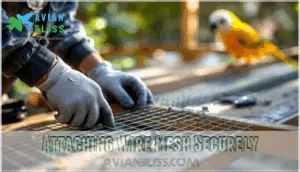
Securing wire mesh properly keeps your birds safe inside and predators locked out—no second chances here. Use corrosion-resistant hardware like stainless steel staples or U-nails to attach wire mesh to your frame.
Space fasteners every 2-3 inches along each frame piece to prevent mesh sagging. A staple gun makes quick work of attaching wire mesh, but check wire spacing matches your bird size requirements.
Pull the mesh taut using wire tensioning techniques before securing—loose mesh creates escape gaps in aviary cages.
Constructing and Installing Doors
Think of your aviary door as the gatekeeper between freedom and safety—one weak latch could mean disaster.
Door frame construction requires reinforced 2 by 2 inch wood secured with exterior-grade screws. Install access doors large enough for you to walk through comfortably—at least 30 inches wide. Double-latch mechanisms prevent clever birds from escaping.
Position the aviary door away from prevailing winds for weatherproofing doors effectively.
Adding The Roof and Weatherproofing
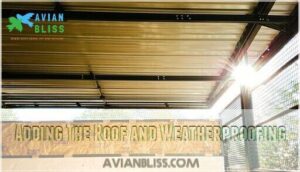
Without proper weatherproofing roofing, rain will turn your beautiful aviary into a muddy disaster zone that stresses your birds and destroys your hard work. Choose roofing materials like corrugated metal or UV-resistant plastic sheets for weather protection. Secure them with plumbers tape to maintain structural integrity.
Leave ventilation gaps along the eaves—your birds need fresh air circulation.
For cold climates, add insulation between the aviary roof and covering to regulate temperature year-round.
Essential Design and Safety Features
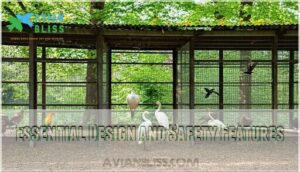
Now that your aviary structure is complete, it’s time to focus on the features that keep your birds safe and thriving.
The right design choices protect against predators, prevent escapes, and create an environment where your birds can express natural behaviors.
Let’s look at the essential safety measures and enrichment elements your aviary needs.
Predator-Proofing Techniques
Your birds face real threats from predators, so predator-proofing isn’t optional. Start with mesh selection: use 14-gauge, 1" × 1" wire mesh for parrots, and 4–5 mm apertures to block rodents.
Install aerial netting overhead to stop hawks and climbing mammals. Add predator guards like cone baffles to nest boxes for 6.7% better survival rates.
Bury wire mesh 30 cm deep as ground deterrents against diggers. Run daily security checks to catch any breaches before they become disasters.
Escape Prevention Measures
Even with predator guards in place, your birds can still slip out through poorly designed doors or weak mesh joints. Reinforce mesh security by overlapping panels 2 inches and fastening every 4 inches. Install double-spring door latches that lock automatically. Add a safety porch with double doors to create an airlock buffer zone. Check roof integrity monthly for gaps or rust. Run regular inspections of welds and corners where escape routes form.
- Double-door entry systems reduce escape risk by 78% compared to single doors
- Overlap wire mesh joints by minimum 2 inches with galvanized fasteners every 4 inches
- Spring-loaded latches prevent accidental door openings from wind or curious birds
Multiple Flight Levels and Perches
Once your aviary is locked down tight, your birds need more than just walls—they need a flight path that lets them stretch their wings and explore from top to bottom. Install multiple flight levels using perches at upper, middle, and lower zones. Your Perch Placement Strategy should stagger heights every 12–18 inches. Mix Natural Branch Variety with different diameters to exercise feet. Add Ladder and Ramps between platforms for ground foragers.
Proper Flight Level Design encourages natural movement patterns and reduces territorial aggression by 40%.
| Perch Material Safety | Diameter Range | Best For |
|---|---|---|
| Manzanita branches | 0.5–2 inches | Medium to large parrots |
| Natural hardwood dowels | 0.25–1 inch | Finches, canaries, budgies |
| Rope perches (cotton) | 0.75–1.5 inches | Climbing enrichment |
| Java wood | 1–3 inches | Macaws, cockatoos |
Natural Landscaping and Bird-Friendly Plants
Your perches give birds room to move, but live greenery transforms an aviary into something closer to their natural world. Choose nontoxic plant species like hibiscus, spider plants, or bottlebrush to create bird-friendly environments with natural pest control and foraging opportunities.
Avoid toxic plant dangers such as oleander, azalea, or ivy. Natural landscaping and plant integration deliver habitat enrichment that keeps your bird safe while encouraging instinctive behaviors.
Food, Water, and Enrichment Stations
Plants set the stage, but food and water stations keep your birds thriving every single day. Position feeding stations at multiple heights to encourage natural foraging and reduce competition. Maintain water hygiene by placing dispensers away from perches to prevent contamination.
Rotate toys and accessories for the inside of your aviary weekly for enrichment variety, mixing foraging puzzles with climbing structures to keep your birds mentally engaged.
How to Maintain and Enhance Your Aviary

Building your aviary is just the beginning—keeping it clean, safe, and enriching makes all the difference for your birds’ long-term health. Regular maintenance prevents disease, while thoughtful enhancements keep your birds mentally and physically active.
Here’s what you need to know about daily care, seasonal adjustments, and avoiding common pitfalls.
Daily and Monthly Cleaning Routines
Keeping your aviary clean isn’t just about appearances—it’s a cornerstone of preventing disease and ensuring your birds thrive in their space. Start each day with dropping removal using a broom or vacuum, and change food and water daily for proper food hygiene and water sanitation.
Weekly maintenance includes toy cleaning with bird-safe disinfectant.
Monthly deep cleaning involves scrubbing perches, floors, and mesh thoroughly—these cleaning routines form your essential strategy for maintaining your bird aviary and disease prevention.
Accessory and Toy Recommendations
A well-equipped aviary isn’t complete without the right mix of perches, toys, and enrichment items that keep your birds active, curious, and mentally sharp. Focus on these aviary accessories:
- Natural wood perches in varied diameters to exercise feet
- Foraging toy ideas like puzzle feeders with safe toy materials
- Bathing station options such as shallow dishes or misters
- Bird-friendly plants and nesting boxes for natural enrichment
Rotate enrichment toys weekly to maintain interest.
Seasonal Care and Climate Adjustments
When temperatures swing from summer heat to winter chill, your aviary needs seasonal tweaks to keep your birds comfortable and thriving year-round. Install insulation and weather protection for winterizing aviaries, while ventilation and misters provide summer cooling. Adjust humidity control and seasonal diet as needed.
| Season | Key Adjustments |
|---|---|
| Winter | Add insulation, heaters, windbreaks for temperature regulation |
| Summer | Increase ventilation, provide shade, install misters for climate control |
| Year-Round | Monitor humidity levels and adjust airflow accordingly |
Monitoring Bird Health and Behavior
Regular health surveillance helps you catch behavioral issues and disease early-warning signs before they become serious problems. Watch for changes in eating, droppings, feather condition, and activity levels—physiological metrics that reveal avian health status.
Behavioral observation of social interactions and foraging patterns also signals when something’s off.
Technological innovations like thermal imaging and vocalization monitoring can detect illness within 24-48 hours, but daily visual checks remain your most practical tool for solid avian care and veterinary care decisions.
Common Mistakes to Avoid
Most aviary failures don’t happen overnight—they’re the result of small oversights that compound into bigger problems over time. Toxic materials, poor ventilation, and inadequate space top the list of common bird aviary mistakes.
Don’t skip predator-proofing or escape prevention—these safety considerations aren’t optional. Ignoring regulations can cost you later.
Always verify plants are safe and choose non-toxic materials from the start.
Frequently Asked Questions (FAQs)
How do I introduce new birds safely?
Slow and steady wins the race when bringing new birds into your flock. Start with a 30-day quarantine period to protect bird health, then gradually introduce them through supervised interactions to monitor behavior and reduce aggression.
What permits are needed for endangered species?
Federal regulations under species protection laws require permits before housing endangered birds. State requirements vary, so contact wildlife agencies early.
Permit applications involve compliance costs and detailed care plans demonstrating bird safe, predator protection, and escape proof measures.
Can aviaries be built on apartment balconies?
Like a puzzle piece that needs to fit just right, balcony aviary construction demands careful planning.
Yes, you can build outdoor aviaries on balconies if apartment regulations allow it, weight limits support the structure, and your aviary design includes secure wire mesh and wind resistance features.
How do I winterize an aviary properly?
To protect your birds through winter, start with insulation methods like clear plastic sheeting around outdoor aviary walls while maintaining airflow.
Add aviary heating sources—heat lamps or ceramic heaters—for temperature regulation below 40°F, and increase winter lighting to 12-14 hours daily for your birds’ wellbeing.
Whats the best way to transport birds?
Moving birds safely isn’t something to wing—stress can spiral fast. Use proper bird carriers or travel cages with secure ventilation. Cover them partially to reduce anxiety.
Keep temperatures stable, avoid drafts, and never use flight crates meant for cargo unless absolutely necessary for your bird species.
Conclusion
Building a bird aviary is like planting a tree—you’re investing in years of natural, thriving life. When you follow proper construction methods, you create a sanctuary that nurtures your birds’ instincts and longevity.
Your effort in learning how to build a bird aviary correctly pays off every time you see confident flight, healthy plumage, and engaged behavior. The space you’ve designed becomes more than shelter—it’s where your birds truly live, not just exist.
- https://freerangeparrots.com/2019/08/13/aviary-2-0/
- http://www.bogdanberg.com/2019/06/21/custom-built-aviary/
- https://www.pearlparrots.com/post/building-the-aviary
- https://johnstonandjeff.co.uk/indoor-and-outdoor-bird-aviaries-all-you-need-to-know/
- https://agriculture.vic.gov.au/livestock-and-animals/animal-welfare-victoria/other-pets/pet-birds/petcare-practices-research-results