This site is supported by our readers. We may earn a commission, at no cost to you, if you purchase through links.
A warbler flits through dense undergrowth thirty feet away, your binoculars are raised, and suddenly the bird vanishes—spooked by the rustle of your stiff nylon jacket or perhaps the flash of your white t-shirt catching morning light. Experienced birders know that what you wear in the field isn’t just about personal comfort, though that matters too; your clothing choices directly influence how close you can get to your subjects, how long you can stay comfortable in challenging conditions, and whether you’ll spend your day photographing rarities or nursing blisters and weather-related misery.
The right combination of colors, layers, and functional gear creates an invisible advantage, allowing you to move quietly through habitats, regulate your body temperature across shifting weather, and keep your focus on the birds rather than your discomfort.
Table Of Contents
- Key Takeaways
- Key Factors in Bird Watching Clothing
- Choosing Birding Clothing Colors
- Layering Strategies for Birdwatchers
- Footwear Essentials for Birding
- Practical Accessories and Storage
- Seasonal Clothing Considerations
- Top Bird Watching Clothing and Gear
- Frequently Asked Questions (FAQs)
- What clothes to wear for bird watching?
- What are the 5 S’s of bird watching?
- Why should you wear a birdwatching outfit?
- What should a bird watcher wear?
- Should you dress for a bird watching outing?
- Should you wear a jacket when birding?
- What should I wear if I’m scared of birds?
- What should a birder carry in a back pack?
- What is the best clothing for bird watching?
- What colors not to wear when birding?
- Conclusion
Key Takeaways
- Choose earth-toned clothing in browns, olives, and tans to blend naturally into birding habitats while avoiding bright colors and reflective materials that spook birds and disrupt observation opportunities.
- Layer strategically with moisture-wicking base layers, insulating middle pieces like fleece or down, and weatherproof outer shells that provide temperature regulation and weather protection without restricting your movement during extended field sessions.
- Invest in terrain-appropriate footwear, such as waterproof boots with ankle support and aggressive tread for wet areas, sturdy hiking boots for rough terrain, and quality merino wool socks that prevent blisters during hours of observation.
- Organize essential gear with functional accessories like wide-brimmed hats for sun protection, multi-pocket vests that keep field guides and binoculars within easy reach, and insect repellent paired with breathable fabrics for all-day comfort.
Key Factors in Bird Watching Clothing
Before you head out into the field with your binoculars and field guide, you’ll want to think about what you’re wearing and why it matters.
Your clothing choices can affect how close birds let you get, which is why understanding what eye relief means in binoculars becomes crucial once you’re dressed and ready to observe.
The right clothing choices can mean the difference between a rewarding day watching warblers and an uncomfortable trudge back to your car.
The right clothing can transform your birding day from uncomfortable failure to successful observation
Let’s look at three essential factors that’ll help you stay comfortable, protected, and ready for whatever the trail throws your way.
Comfort and Mobility
You’ll spend hours in the field, so your clothing needs to move with you, not against you. Look for stretchable fabrics with four to ten percent elastane that give you full range of motion when you crouch, climb, or scan the horizon with binoculars.
Breathable materials with moisture-wicking base layers keep you dry and comfortable, while articulated knees, gusseted seams, and precurved sleeves prevent restriction during active wear.
Weather Appropriateness
Beyond mobility, your outdoor clothing must respond to the weather you’ll encounter. Rain gear with waterproof shells and sealed seams keeps you dry during downpours, while wind protection through adjustable hems and tight cuffs blocks chilly gusts.
Climate adaptation requires:
- Thermal layers for cold mornings
- Moisture-wicking base fabrics that manage sweat
- Breathable membranes like Gore-Tex
- Packable emergency rain layers
- UV-resistant materials for sunny intervals
As you prepare, to stay aware of is vital for comfort and protection in changing outdoor conditions.
Durability and Maintenance
Your birding equipment and outdoor clothing need regular care to perform reliably in the field. Waterproof clothing maintains water resistance for up to 60 minutes in light rain, and you’ll want to reapply treatment every 6 months, while layer maintenance through air drying preserves fabric elasticity after washing. Gear inspection catches worn zippers before they fail, equipment storage prevents mildew, and proper fabric care extends the life of camouflage clothing substantially.
Choosing clothing with helps birders stay comfortable and less conspicuous in changing weather.
| Maintenance Task | Frequency |
|---|---|
| Clean gear after muddy outings | Within 24 hours |
| Reapply water repellent | Every 6 months |
| Replace boot insoles | After 300 miles |
Choosing Birding Clothing Colors
Your clothing color choices can make or break your birdwatching experience, determining whether you’ll observe birds up close or watch them flee before you get a good look.
The right color palette helps you blend seamlessly into natural surroundings, allowing birds to behave naturally while you’re in the field. Let’s explore the color strategies that’ll keep you concealed and your target species comfortable.
Earth Tones for Blending

When you’re choosing clothes for birding, think of earth tone selection as your first line of defense in habitat blending—colors derived from natural pigments like ochre, umber, and sienna create the neutral palettes that allow for effective nature mimicry.
Warm browns, olive greens, and muted tans form the foundation of camouflage clothing, especially when layered clothing uses matte fabrics that absorb light rather than reflect it, keeping you seamlessly integrated into woodlands, grasslands, or wetland edges.
Avoiding Bright and Reflective Colors

Neon yellow, electric blue, and other vivid hues work against color neutrality, drawing avian eyes to your presence rather than letting you fade into the landscape. Reflective materials on zippers, buckles, or shiny fabric selections create unwanted glare in sunlight, which is why matte finishes on your birding attire help maintain camouflage while earthy tones support the birdwatching essentials of stealth and observation.
Camouflage Strategies for Habitats
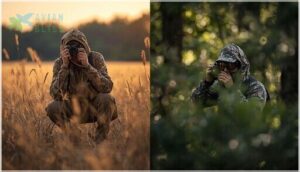
Different ecosystems demand specific camouflage strategies for effective wildlife observation. Ground concealment with texture matching works best in grasslands, where browns and tans mirror soil and seed heads, while shadow camouflage using dark greens excels in forested areas with dappled light.
Disruptive patterns break up your silhouette in mixed terrain, and multispectral hiding considerations guarantee your birdwatching clothing remains inconspicuous across varying light conditions and habitat types.
Layering Strategies for Birdwatchers
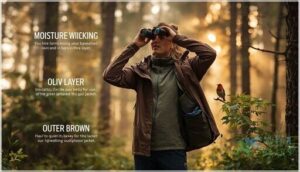
You can’t predict what the weather will throw at you during a day in the field, so building your outfit in layers gives you the flexibility to adapt as conditions shift.
The key is choosing fabrics and garments that work together, allowing you to add or shed protection without overheating or getting caught unprepared. Let’s break down the three essential layers every birdwatcher should consider.
Moisture-Wicking Base Layers
Your base layer acts as the foundation of thermal regulation, managing perspiration throughout your hours in the field.
Polyester base layers wick moisture rapidly to the fabric surface for quick evaporation, while merino wool baselayer tops naturally manage moisture and stay warm when damp.
Nylon-based materials offer durable moisture management, and polypropylene wicks exceptionally well, drying faster than cotton even during intense activity.
Insulating Middle Layers
Your mid layer traps warmth while allowing moisture to escape, so you’ll stay comfortable when temperatures drop or dawn birding turns chilly. Fleece provides soft, breathable insulation that dries quickly, synthetic fills maintain loft even in damp conditions, and down offers outstanding warmth-to-weight ratios with 550-fill common in lightweight options.
Consider these factors when selecting your insulator:
- Lightweight synthetic materials retain heat when wet and compress easily for packing
- Merino wool blends regulate temperature naturally while resisting odors during extended outings
- Hybrid designs combine breathable fabrics with strategic insulation zones for active birding
- Box-baffled quilting prevents cold spots by distributing fill evenly across your torso
Weatherproof Outer Layers
Your shell defends against wind and rain while letting perspiration vapor escape, so waterproof fabrics like Gore-Tex with breathable membranes rated 10,000 mm or higher guarantee dry comfort during downpours. Wind resistance blocks heat loss on exposed ridges, and proper outer layer care—gentle washing with specialized detergents, air drying, and DWR reproofing—preserves your outdoor gear’s performance across seasons.
| Shell Feature | Birding Benefit |
|---|---|
| Taped seams | Prevents leakage at stitch lines |
| Pit zips | Controls temperature during active hikes |
| Compressible fabric | Packs easily in your birding vest |
| Adjustable cuffs | Seals out drafts and moisture |
| Camouflage-friendly tones | Maintains low profile in the field |
Footwear Essentials for Birding
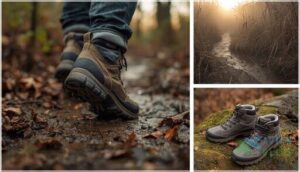
Your feet carry you through miles of trails, wetlands, and uneven ground, so choosing the right footwear isn’t just about comfort—it’s about keeping you safe and steady while you focus on the birds above.
The terrain you’ll encounter determines whether you need rugged hiking boots, waterproof protection, or specialized socks that prevent blisters during long observation sessions. Let’s look at the footwear essentials that will keep you moving confidently through any birding environment.
Sturdy Shoes for Rough Terrain
When traversing uneven trails and rocky terrain, your hiking boots become your most critical outdoor gear investment, delivering the traction control, ankkle support, and foot protection you need to stay safe and focused on the birds overhead.
Look for waterproof footwear with reinforced toe caps, deep lugs for grip on loose soil, and a stiff midsole that reduces fatigue during long hikes while ensuring terrain adaptation and hiking safety.
Waterproof Boots for Wet Areas
When marshes, mudflats, and streamside habitats call, standard hiking boots won’t cut it—you need waterproof footwear built for wet terrain. Look for boots with Gore-Tex or similar waterproof materials, sealed seams that block moisture, and deep tread patterns that grip slippery banks. Ankle support prevents rolled joints on uneven ground, while insulated models keep your feet warm during cold-weather expeditions, ensuring comfortable footwear that performs when conditions turn soggy.
- Sealed Construction: Taped seams prevent water from seeping through stitching points
- Breathable Membranes: Gore-Tex layers keep feet dry while releasing perspiration
- Aggressive Outsoles: Deep lugs provide traction on muddy, slick surfaces
- High Collars: Ankle-height designs reduce splash entry and debris infiltration
Choosing Quality Socks
Quality socks complete your birdwatching outfit by protecting foot health during hours of standing and hiking. Merino wool and synthetic blends offer exceptional moisture management and thermal regulation compared to cotton, which traps sweat and invites blisters. Prioritize cushioned heels, arch support, and reinforced toes for sock durability on rugged terrain.
| Feature | Benefit |
|---|---|
| Merino wool fibers | Natural odor resistance and temperature control |
| Cushioned zones | Reduced impact fatigue during long walks |
| Welded toes | Prevents friction and hot spots |
Practical Accessories and Storage
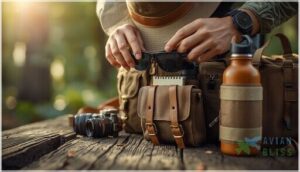
Once you’ve sorted out your layers and footwear, the right accessories can make or break your time in the field, keeping you comfortable, organized, and focused on the birds rather than fumbling through your pockets.
From sun protection that won’t spook your subjects to storage solutions that put your gear within easy reach, these practical additions improve both your safety and your observational success. Let’s look at the essential accessories that’ll keep you prepared for whatever conditions you encounter.
Hats and Sun Protection
A quality sun hat becomes your first line of defense against UV exposure during long birding sessions, especially when you choose designs with wide brims (3 to 4 inches), UPF 50+ fabric ratings, and neck flap coverage.
Look for breathable materials with hat ventilation to prevent overheating, and pair your headwear with sunscreen, sunglasses, and lip balm for thorough face protection throughout the day.
Pockets and Vests for Gear
Once you’ve protected yourself from the sun, organize your birding gear with strategically designed vests and cargo pants that keep field guides, notebooks, and compact binoculars within easy reach. Birding vests with front zippered chest pockets, adjustable side compartments, and modular pocket layouts distribute weight evenly, while water-resistant fabrics and quick-dry materials withstand early morning dew and light rain during extended birdwatching sessions.
- Front chest pockets secure small items like notepads and binocular straps with reliable zippers
- Adjustable side pockets help distribute weight when you load heavier gear throughout the day
- Water-resistant fabrics protect field guides and electronics from light rain and morning dew
- Modular pocket designs let you customize your vest setup based on daily birding needs
- Reinforced stitch points at pocket corners prevent tearing with frequent use in dense vegetation
Insect and UV Protection
Protection from biting insects and ultraviolet radiation defines your comfort during extended field observation, so invest in insect repellents, UV blocking fabrics with UPF 40+ ratings, and protective gear such as head nets with 0.6 mm mesh.
Apply sunscreen, wear sunglasses with polarized lenses, and pack lip balm alongside bug spray in waterproof clothing pockets equipped with bug shields for thorough defense.
Seasonal Clothing Considerations

Birdwatching across different seasons requires you to adapt your clothing choices to temperature extremes, precipitation patterns, and shifting daylight conditions that define each time of year.
What works perfectly during a crisp autumn morning won’t serve you well on a sweltering July afternoon or a frigid January trek through snow-covered fields.
Understanding how to dress for summer heat, winter cold, and unpredictable transitional weather ensures you’ll stay comfortable and focused on the birds rather than battling the elements.
Summer Birdwatching Attire
When summer heat turns your birding outing into an endurance test, you’ll need lightweight gear that works as hard as you do. Here’s how to stay comfortable from dawn until dusk:
- Choose breathable fabrics with moisture-wicking base layers that pull sweat away from your skin and dry quickly, preventing chill when you move between sun-drenched clearings and shaded forest trails.
- Pack thin outer shells and wind shirts for early morning starts when temperatures haven’t climbed yet, then stow them in your daypack as conditions warm throughout the day.
- Select birding hats with wide brims and UPF-rated long sleeves to shield yourself from relentless UV rays while maintaining outdoor safety during extended observation periods.
Winter and Cold-Weather Gear
When frigid temperatures test your resolve, stacking technical layers keeps you in the field longer and helps you observe more effectively. Start with a moisture-wicking baselayer top that prevents sweat from turning ice-cold against your skin, then add insulating fleece or down that traps warmth without adding bulk.
| Core Clothing | Purpose & Features |
|---|---|
| Thermal clothing with synthetic fill | Maintains core warmth at warmth-to-weight ratios that outperform cotton while staying breathable during active hiking |
| Waterproof jackets with sealed seams | Block wind and resist precipitation, reducing convective heat loss by 60 percent in exposed conditions |
| Insulated gloves with layered construction | Preserve dexterity for binocular adjustments while protecting fingers from frostbite during extended observation sessions |
| Cold weather hats and balaclavas | Cover ears and cheeks against biting wind, preventing heat loss from your head and neck without obscuring vision |
Don’t forget waterproof boots with aggressive tread soles that grip icy terrain, thermal socks in merino wool to regulate temperature, and snow gaiters that seal out slush when you’re tracking species through deep drifts.
Adapting to Changing Conditions
Weather adaptation begins the moment you step onto unfamiliar terrain, and your layering systems need to shift as quickly as the conditions around you do. Pack clothing that lets you adjust on the fly, ensuring climate control without heading back to the trailhead.
- A lightweight, waterproof shell stows in your pack and deploys in seconds when rain sweeps across open meadows
- Moisture-wicking base layers regulate body heat during steep climbs and cool rapidly during valley descents
- Zippered vents release excess warmth without forcing you to strip off your outdoor jacket mid-observation
- Convertible pants change from full-length coverage to shorts when you move from shaded forest into sun-drenched clearings
Environmental awareness guides every choice you make in the field.
Top Bird Watching Clothing and Gear
Now that you understand the fundamentals of birdwatching attire, you’ll want to know which specific products deliver the performance, comfort, and functionality you need in the field.
The right gear can transform a frustrating outing into a successful observation session, protecting you from the elements while keeping you concealed and mobile. Here are five essential pieces of clothing and gear that experienced birders consistently recommend for their reliability and practical design.
1. Time May Tell Merino Wool Hiking Socks
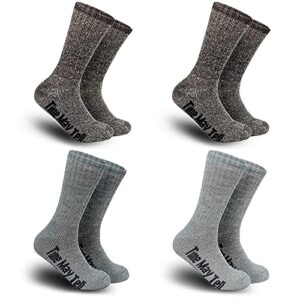
When you’re logging hours in the field, your feet need reliable support from the ground up, and that’s where Time May Tell Merino Wool Hiking Socks deliver consistent performance. The 80 percent merino wool blend wicks moisture efficiently while maintaining temperature regulation across varied terrain, whether you’re traversing damp marsh edges at dawn or climbing exposed hillsides by midday.
Reinforced toe and heel construction extends durability through repeated use, the cushioned sole provides comfort without excess bulk, and the flat-knit seams minimize friction that leads to blisters during extended observation sessions.
| Best For | Hikers and outdoor enthusiasts who need reliable moisture-wicking socks for long treks in variable weather conditions. |
|---|---|
| Primary Material | Merino Wool Blend |
| Care Method | Machine Wash |
| Use Case | Hiking/Outdoor Walking |
| Fit Type | Regular |
| Weather Protection | Moisture Absorption |
| Target User | Outdoor Enthusiasts |
| Additional Features |
|
- 80% merino wool blend keeps feet dry and regulates temperature across different terrains and weather
- Reinforced construction with flat-knit seams reduces blisters and extends durability through repeated use
- Can be worn multiple times without odor, making them ideal for multi-day trips
- Top band may feel too tight on the calf for some users
- Not thick enough for extreme cold conditions
- Long drying time of 16-24 hours can be inconvenient on extended trips
2. Columbia Saturday Trail Convertible Pants
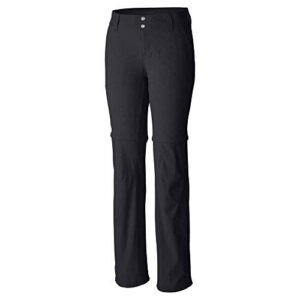
Converting pants to shorts mid-trail without removing your boots changes the game when temperatures shift during long observation sessions. Columbia’s Saturday Trail Convertible Pants feature Omni-Shield Summiteer Lite fabric that repels water and resists stains, zip-off legs that transform to 10-inch shorts, and UPF 50 sun protection that blocks harmful rays across exposed ridgelines.
The 96 percent nylon and 4 percent elastane blend offers two-way stretch with articulated knees and a gusseted crotch for unrestricted movement, while multiple zip-closed pockets secure your field notes and lens caps during active birding.
| Best For | Hikers and outdoor enthusiasts who need versatile pants that adapt to changing weather conditions during day-long adventures. |
|---|---|
| Primary Material | Nylon Stretch |
| Care Method | Machine Wash |
| Use Case | Hiking/Camping/Travel |
| Fit Type | Adjustable Waist |
| Weather Protection | Water Repellent |
| Target User | Women Hikers |
| Additional Features |
|
- Zip-off legs let you switch between pants and shorts without removing your boots, perfect for fluctuating temperatures on the trail
- Omni-Shield fabric repels water and resists stains while offering UPF 50 sun protection for all-day wear
- Stretchy fabric with articulated knees and multiple secure pockets gives you comfortable movement and practical storage
- Runs small in sizing, so you’ll likely need to order up for a comfortable fit
- Fabric can pill or degrade over time with heavy use
- Not warm enough for cold weather conditions due to the thin, lightweight material
3. Mens Slim Fit Camping Vest
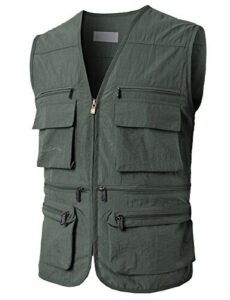
When rapid weather swings demand a layering piece that won’t weigh you down or hinder your reach toward overhead warblers, a slim fit camping vest delivers. This lightweight vest features a fitted cut that hugs your torso without restricting shoulder movement, multiple interior and exterior pockets for field notes and lens caps, and a front zipper that lets you adjust ventilation during active birding.
The water-resistant nylon blend sheds light rain and dew while remaining breathable, and it’s machine washable for quick turnaround between muddy outings.
| Best For | Birders and outdoor enthusiasts who need a lightweight, fitted layer for unpredictable weather during active pursuits like birdwatching or camping. |
|---|---|
| Primary Material | Nylon |
| Care Method | Machine/Hand Wash |
| Use Case | Camping/Outdoor |
| Fit Type | Slim Fit |
| Weather Protection | Wind Protection |
| Target User | Men Campers |
| Additional Features |
|
- Slim fit allows full range of motion without bulk, perfect for raising binoculars or reaching overhead
- Multiple pockets keep field gear organized and accessible during birding sessions
- Water-resistant and breathable fabric handles light rain while preventing overheating on the trail
- Hand wash or machine wash only may require more careful maintenance than other outdoor gear
- Slim cut is designed specifically for men, excluding other potential users
- Not dressy enough for anything beyond casual outdoor settings
4. Waterproof Active Outdoor Rain Jacket
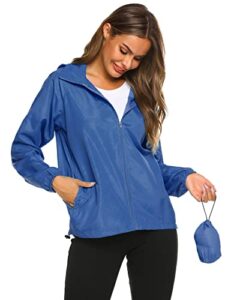
Once you’ve added that vest to your pack, you’ll need a shell that won’t let you down when clouds open up mid-migration. A fully waterproof rain jacket with taped seams keeps you dry during downpours, while breathable membranes allow sweat vapor to escape so you won’t feel clammy after a steep climb.
Look for waterproof zippers, an adjustable helmet-compatible hood that rolls away, and durable outer fabric that shrugs off branches and brush along overgrown trails.
| Best For | Hikers and travelers who need a budget-friendly, packable rain layer for light showers and windy conditions. |
|---|---|
| Primary Material | Nylon |
| Care Method | Machine Wash |
| Use Case | Hiking/Travel/Outdoor |
| Fit Type | Relaxed Fit |
| Weather Protection | Waterproof/Windproof |
| Target User | General Outdoor |
| Additional Features |
|
- Lightweight and compresses down easily, making it perfect for stuffing into a backpack
- Hooded design with adjustable drawstrings helps seal out wind and rain
- Available in multiple colors and sizes from S to XXL
- Not fully waterproof in heavy rain, despite marketing claims
- Zipper durability issues reported, with some users experiencing failures
- Sizing runs inconsistent, so measurements may not match the size chart
5. Columbia Bora Bora Fishing Hat
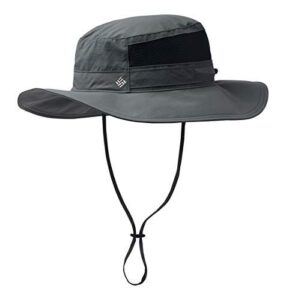
A wide-brimmed hat protects your face and neck from sun damage during long hours in the field, and the Columbia Bora Bora model delivers UPF 50 protection along with Omni-Wick moisture management in its headband.
Its 3-inch brim shields your eyes from glare when you’re scanning wetlands or coastal flats, while mesh vent panels on the crown keep air flowing during hot sessions. The adjustable chin strap secures the hat against prairie gusts, and the lightweight nylon folds compactly into your pack.
| Best For | Anglers and birders who need serious sun protection during long outdoor sessions without sacrificing breathability. |
|---|---|
| Primary Material | Nylon |
| Care Method | Machine Wash |
| Use Case | Hiking/Fishing/Outdoor |
| Fit Type | Adjustable |
| Weather Protection | UPF 50 Sun |
| Target User | Sun-Sensitive Users |
| Additional Features |
|
- UPF 50 protection and 3-inch brim shield your face and neck from harmful rays during all-day exposure
- Omni-Wick headband and mesh vents keep you cool and dry even in hot, humid conditions
- Adjustable chin strap and lightweight design make it practical for windy environments and easy packing
- The floppy brim can snag on branches or gear in tight spaces
- Doesn’t fully protect your lower face and chin from sun exposure
- Priced higher than some comparable sun hats at $29.99
Frequently Asked Questions (FAQs)
What clothes to wear for bird watching?
Picture yourself blending into dawn’s quiet woods, wearing earth-toned layers that move with you, breathable fabrics that wick moisture, sturdy boots gripping uneven trails, and neutral colors that won’t startle your feathered subjects.
What are the 5 S’s of bird watching?
The five S’s help you identify birds in the field: Shape, Size, Shade, Sound, and Space.
Each one narrows down possibilities, guiding you toward a confident ID when species look similar.
Why should you wear a birdwatching outfit?
You’ll stay comfortable during long field sessions, blend seamlessly into natural habitats without spooking birds, and protect yourself from weather extremes, insects, and rough terrain that could otherwise cut your outing short.
What should a bird watcher wear?
You’ll want breathable, stretchy pants, a long-sleeved shirt in earth tones, sturdy waterproof boots, and a wide-brimmed hat, all chosen for comfort during hours of patient observation in varied terrain.
Should you dress for a bird watching outing?
Absolutely—your gear can make or break a morning in the field. Strategic clothing choices keep you comfortable, camouflaged, and focused on observing birds rather than battling discomfort, weather, or unnecessary distractions.
Should you wear a jacket when birding?
You should wear a jacket when birding because it regulates body temperature, shields against wind and rain, blends with habitats through neutral colors, and stores gear quietly without restricting movement or sightlines.
What should I wear if I’m scared of birds?
Choose a lightweight shirt, neutral-toned long-sleeved shirt, sturdy pants, and a wide-brimmed hat to provide full-body coverage, creating a physical and psychological barrier that helps reduce anxiety while maintaining distance from birds.
What should a birder carry in a back pack?
Like a field naturalist’s toolkit, your backpack should balance essentials with mobility—binoculars, field guide, water reservoir, energy bars, waterproof notebook, first-aid kit, lens cloth, and weather protection without weighing you down unnecessarily.
What is the best clothing for bird watching?
The best clothing blends comfort with function: earth-toned layers that move easily, waterproof shells for rain, breathable fabrics to wick sweat, and durable materials that withstand hours kneeling in brush.
What colors not to wear when birding?
Bright, bold hues—neon pink, fluorescent yellow, electric green, white, and red—stand out sharply against natural backdrops, alerting birds to your presence and disrupting their foraging or nesting behaviors before you can observe them.
Conclusion
Think of your field clothing as a birder’s second skin, one that whispers rather than shouts, adapts rather than resists, and carries what you need without weighing you down.
When you understand how to choose bird watching clothing—balancing earth-toned colors with strategic layering, selecting terrain-appropriate footwear, and organizing essential gear within easy reach—you transform every outing from a battle against the elements into an immersive experience where the only thing between you and your next lifer is patient observation.