This site is supported by our readers. We may earn a commission, at no cost to you, if you purchase through links.
Your bird’s favorite perch collects more than droppings. Within 48 hours, bacterial colonies can multiply to dangerous levels on unwashed perches, putting your feathered companion at risk for infections that affect everything from foot health to respiratory function.
Most bird owners don’t realize that E. coli and Salmonella thrive on perch surfaces, transferring to beaks during normal preening and potentially triggering serious illness. The good news is that proper perch maintenance takes just minutes per week and can reduce disease risk by up to 90 percent.
Learning how to clean and maintain bird perches correctly protects your bird’s health while keeping their living space fresh and comfortable.
Table Of Contents
- Key Takeaways
- Why Clean and Maintain Bird Perches?
- Choosing The Right Perch Materials
- Tools and Supplies Needed for Cleaning
- Step-by-Step Guide to Cleaning Bird Perches
- How Often Should You Clean Bird Perches?
- Frequently Asked Questions (FAQs)
- What is the best way to clean bird perches?
- Is Dawn dish soap safe for bird cages?
- How often should I clean my bird’s perches?
- How to disinfect wood for birds?
- Can I use bleach to disinfect bird perches?
- How do I remove stubborn stains from perches?
- Should I replace perches or just clean them?
- What are signs a perch needs immediate replacement?
- Can dirty perches affect my birds behavior?
- Conclusion
Key Takeaways
- Dirty bird perches quickly collect harmful bacteria like E. coli and Salmonella, which can cause serious infections and respiratory issues.
- Regular cleaning and disinfecting of perches—daily spot wipes and weekly deep cleans—can reduce disease risk by up to 90 percent.
- The material of your perch affects both cleaning methods and bird foot health, so choose easy-to-clean options and inspect for cracks or wear often.
- Use bird-safe cleaning solutions and proper brushes, and always dry perches completely before returning them to the cage to prevent mold and rust.
Why Clean and Maintain Bird Perches?
Your bird’s perches collect droppings and food debris, and moisture every day. These conditions create a breeding ground for harmful bacteria, fungi, and parasites that can make your bird sick.
Keeping perches clean is essential, but strategic perch placement in your bird’s cage helps prevent contamination from the start.
Cleaning perches regularly protects your bird from infections and keeps them comfortable.
Health Risks of Dirty Perches
Neglecting perch hygiene invites serious health problems for your bird. Bacterial infections like E. coli and Salmonella can spread from dirty surfaces during preening.
Dirty perches spread bacterial infections like E. coli and Salmonella to birds during preening
Fungal growth and biofilms harbor germs that trigger respiratory issues. Accumulated droppings expose your bird to parasite infestations including mites.
Rough, contaminated perches also cause foot diseases like bumblefoot, leading to painful swelling and infection that threaten avian health.
Routine cleaning prevents the accumulation of droppings and bacteria, which are discussed in detail in this comprehensive cleaning guide.
Benefits for Avian Hygiene and Comfort
Regular perch sanitation delivers clear benefits for avian wellness beyond just removing droppings. Clean surfaces protect beak health and feather care by reducing bacteria transfer during preening.
Your bird enjoys better nesting comfort on surfaces free from grime and odor. Following bird perch cleaning tips through consistent cleaning and disinfecting routines promotes overall bird health and avian hygiene, keeping your companion happier and healthier.
For more about the importance of avian cleaning, see how these habits contribute to disease prevention and feather vitality.
Preventing Disease and Infections
Dirty perches harbor Salmonella, E. coli, and Aspergillus fungal spores that cause bacterial infections and respiratory illness. Sanitizing methods using proper disinfection reduce these health risks by up to 90 percent when you clean regularly.
Effective infection control through bird perch cleaning tips protects avian health and hygiene. Weekly deep cleaning combined with daily spot checks gives you reliable disease prevention, keeping your bird safe from preventable illness.
Choosing The Right Perch Materials
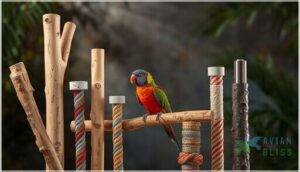
The type of perch material you choose affects how you clean it and how well it promotes your bird’s health.
Natural wood perches, for example, provide varied textures that help maintain healthy feet, while choosing the right perch setup supports your bird’s overall wellness and comfort.
Each material has different strengths and weaknesses in terms of hygiene and maintenance. Here’s what you need to know about the most common perch materials.
Types of Bird Perches and Their Properties
Your bird’s perch material directly affects bird foot health and comfort. Natural wood perches offer varied perch texture that exercises feet and helps trim nails naturally.
Plastic perches resist moisture and clean easily but lack grip. Metal perches provide excellent perch durability and sanitation. Bamboo perches combine natural texture with antibacterial properties.
Each perch material caters to different needs, so rotating perch materials keeps your bird’s feet healthy and strong.
Cleaning Considerations for Each Material
Each perch material demands its own cleaning approach to protect material durability and guarantee material safety. You’ll need to match your cleaning solutions to the perch surface texture when cleaning bird perches.
- Metal perches: Use mild detergent with stainless steel, but dry aluminum immediately to prevent water spots when perch sanitizing.
- Natural wood perches: Apply gentle soap briefly, then dry completely to prevent mold in raw wood.
- Plastic and acrylic: Clean with non-abrasive brushes to avoid micro-scratches that harbor bacteria.
- Rubber and silicone: Use bird-safe disinfectant solution, avoiding bleach that causes cracking.
- Natural fiber: Spot clean cork and rope perches without soaking to prevent deformation during bird perch maintenance.
Selecting Easy-to-Clean Perches
When shopping for new perches, prioritize materials that simplify your maintenance routine. Stainless steel and high-quality plastic resist staining and rinse clean with bird-safe disinfectants, while smooth ceramic surfaces wipe down in seconds.
Choose perch designs with rounded shapes and quick-release mounts so you can swap them out fast, keeping sanitizing techniques efficient and your bird’s environment consistently hygienic.
Tools and Supplies Needed for Cleaning
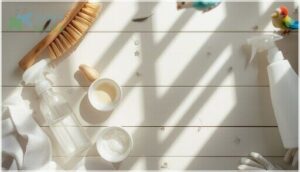
You don’t need fancy equipment to keep your bird’s perches clean and safe. A few basic supplies will help you remove droppings, bacteria, and buildup without harming your feathered friend.
Here’s what you should have on hand before you start.
Bird-Safe Cleaning Solutions
You need cleaning products that won’t harm your bird’s delicate respiratory system. Harsh chemicals can cause serious health problems, so stick to gentle options that still kill germs effectively.
Here are five safe choices:
- Equal parts vinegar and water – a natural disinfectant with no toxic fumes
- 3% hydrogen peroxide – let it sit five minutes before rinsing
- Grapefruit seed extract diluted in water – antimicrobial without residue
- Mild unscented dish soap – removes grime when thoroughly rinsed
- Bird-safe commercial disinfectants – low VOC products labeled pet-safe
Recommended Brushes and Scrubbers
The right perch cleaning tools make all the difference between a quick scrub and a frustrating battle with stuck-on droppings. You’ll want sponge brushes for gentle scrubbing, old toothbrushes to reach tight corners, and non-abrasive scrubbing pads for stubborn spots. Soft bristle brushes protect delicate surfaces while still lifting grime effectively.
| Tool Type | Best For | Key Feature |
|---|---|---|
| Sponge brushes | General cleaning | Gentle on all materials |
| Toothbrushes | Crevices and joints | Reaches tight spaces |
| Soft brush | Smooth surfaces | Minimizes scratching |
| Scrubbing pad | Tough stains | Non-abrasive texture |
Choose bristle material based on your perch type—nylon resists wear, while natural fibers work better on wood. Replace any scrub brush showing frayed bristles every three to six months. Brush ergonomics matter too; comfortable grips reduce hand fatigue during weekly cleanings.
Protective Gear and Safety Tips
Your hands aren’t the only things at risk when cleaning bird perches—your eyes, skin, and lungs need protection too. Smart safety measures prevent exposure to droppings, dust, and cleaning agents that can irritate or harm you.
- Eye protection and face shields block splashes from disinfection methods and airborne particles
- Hand gloves (nitrile or leather gloves work well) resist chemicals and prevent cuts
- Respiratory masks filter fine dust when scrubbing perches
Safety aprons guard your clothing during thorough cleaning sessions, keeping bird safety and your health both protected.
Step-by-Step Guide to Cleaning Bird Perches
Cleaning your bird’s perches doesn’t have to be complicated. Once you have your supplies ready, you can tackle the job in three straightforward stages.
Here’s how to remove, clean, and return perches to the cage safely and effectively.
Removing and Inspecting Perches

Before you start cleaning bird perches, you need to detach them from the cage to protect cage components from moisture. Check fasteners like screws or bolts for rust or looseness and replace if needed.
Inspect each perch for cracks, splits, or deep grooves that harbor bacteria. Test stability by applying gentle pressure, and note areas needing extra attention during your cleaning procedures for bird perches.
Cleaning Methods by Perch Type
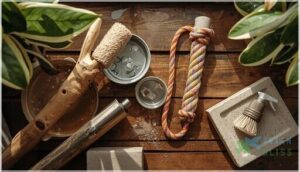
Different perch materials demand specific sanitizing techniques to keep your bird safe. Wood perches need a soft brush to clean grooves without damaging bark, then a five-minute soak in warm water with bird-safe soap.
Metal perches respond well to vinegar-water solution for descaling. Rope perches require gentle washing and thorough rinsing, while concrete perches tolerate more scrubbing with bird-safe disinfectants for effective perch maintenance.
Rinsing, Drying, and Reassembly
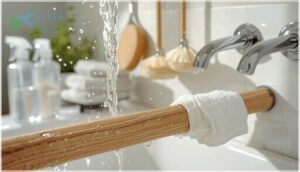
After scrubbing away debris, rinsing residue becomes your next priority. Run plain water over every surface until no suds remain, checking joints and attachment screws for trapped soap.
Complete drying prevents mold and rust. Follow these steps:
- Air dry wood perches at room temperature
- Use a blower for faster moisture removal
- Check crevices for dampness
- Inspect for cracks before reinstalling
- Confirm material compatibility with your drying method
Reassembly safety demands bone-dry perches and sanitized hardware.
How Often Should You Clean Bird Perches?
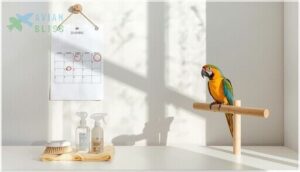
You can’t just clean perches whenever you remember. Your bird’s health depends on a consistent schedule that matches their habits and environment.
The right cleaning frequency balances daily maintenance with deeper disinfection to keep your bird safe and comfortable.
Daily, Weekly, and Monthly Maintenance
You’ll keep your bird healthy with a smart cleaning schedule. Daily spot cleaning takes seconds—wipe off fresh droppings with a damp cloth. Weekly deep cleaning means soaking detachable perches in bird-safe solution for 5-10 minutes, then scrubbing and air-drying them completely.
Monthly perch sanitizing involves a 15-minute vinegar soak (1:10 ratio) for wooden perches and full disinfection of all perch materials.
| Frequency | Maintenance Tips |
|---|---|
| Daily | Remove droppings; inspect for damage |
| Weekly | Soak, scrub, rinse; dry thoroughly |
| Monthly | Deep clean; check for wear and replace |
Adjusting Frequency for Bird Type and Cage Size
Your bird’s species and cage size shape how often you’ll tackle perch cleaning. Larger parrots produce more droppings than finches, so you’ll clean their perches twice as often. In small cages, check perches twice daily since waste accumulates faster.
Rotate perches in multi-perch setups to let each dry completely. High humidity demands daily cleaning to stop mold growth.
Establishing a Perch Cleaning Routine
Set your perch sanitation schedule on Sundays for a weekly deep clean that keeps bird hygiene consistent. Track each cleaning routine on a small chalkboard near the cage so you won’t forget.
Daily quick wipes handle fresh droppings, while routine inspection during each session catches cracks early. This bird perch maintenance guide approach prevents disease before it starts.
Frequently Asked Questions (FAQs)
What is the best way to clean bird perches?
Remove your perch and scrub it with warm, soapy water using a soft brush. Rinse thoroughly, then disinfect with diluted vinegar.
Dry completely before returning it to prevent mold and bacterial growth.
Is Dawn dish soap safe for bird cages?
Dawn dish soap isn’t recommended for routine cage cleaning. While it’s used in wildlife rescue when fully rinsed, plain water or bird-safe cleaners reduce soap residue risks that can irritate feathers and skin.
How often should I clean my bird’s perches?
You’d think perch cleaning schedules are complicated, but they’re not.
Wipe your bird’s perches daily with a damp cloth, deep clean weekly with warm soapy water, and adjust cleaning frequency based on droppings.
How to disinfect wood for birds?
You can safely disinfect wood for birds using a one-to-one white vinegar and water solution or three percent hydrogen peroxide. Apply it evenly, let it sit, rinse thoroughly, and air dry completely.
Can I use bleach to disinfect bird perches?
You can use bleach to disinfect bird perches, but dilute it properly—one cup per gallon of water.
Rinse thoroughly multiple times and dry completely before returning perches to your bird’s cage.
How do I remove stubborn stains from perches?
Stubborn stains on perches carry hidden threats like bacteria buildup.
Soak the perch in warm water with bird-safe disinfectants or vinegar solution, then scrub gently with a brush, rinse thoroughly, and dry completely.
Should I replace perches or just clean them?
Replace perches when you spot cracks, splinters, persistent odor, or fraying that cleaning can’t fix.
For minor dirt, thorough sanitizing methods work. Regular wear detection and cleaning frequency help balance perch replacement with material durability.
What are signs a perch needs immediate replacement?
When bird perches show deep cracks, fraying rope threads, persistent mold spots, or cause foot redness and swelling, immediate replacement protects bird health and prevents serious injury or infection.
Can dirty perches affect my birds behavior?
Absolutely—dirty perches trigger bird stress and behavioral changes like feather plucking or restlessness. Poor perch hygiene reduces avian comfort, discourages normal perching, and disrupts rest.
Regular cleaning bird perches protects bird health and maintains stable bird behavior.
Conclusion
Studies show that consistent perch hygiene reduces bacterial loads by 85 to 95 percent, making the difference between a thriving bird and one fighting preventable illness.
You now have everything you need to know about how to clean and maintain bird perches effectively. Set your cleaning schedule, gather your supplies, and commit to this simple routine. Your bird’s immune system will thank you, and you’ll notice the difference in their energy and vitality within weeks.
- https://clydesanimalclinic.com/2019/10/01/mattoon-il-vet-choosing-bird-perches/
- https://evergladesbirdsupply.com/blogs/resources/how-often-should-i-change-out-perches
- https://www.dialavet.com/blog/the-problem-with-sand-and-concrete-bird-perches
- https://budgiehub.com/natural-vs-concrete-perches-7-essential-insights-for-foot-health-guide/
- https://nwparrotrescue.org/parrot-education/signs-of-illness-and-injury