This site is supported by our readers. We may earn a commission, at no cost to you, if you purchase through links.
 One dirty bird feeder can send ripples of illness through an entire neighborhood, turning a place of refuge into a hidden hazard. Moldy seed, sticky residue, and rain-soaked hulls work quietly, building a playground for bacteria that puts visiting songbirds at risk.
Learning how to clean bird feeders safely isn’t just about tidiness—it’s about protecting the wild guests who trust your backyard for food and shelter. Sweeping away debris, scrubbing under the watchful eyes of chickadees, you’re also keeping feeders spotless, you’re safeguarding a small but essential piece of your local ecosystem.
Table Of Contents
Key Takeaways
- Regularly cleaning bird feeders with soap and a diluted bleach solution stops the spread of disease among birds.
- Moldy or spoiled seed can poison birds and quickly turn feeders into health hazards, so inspecting and refreshing food is essential.
- Cleaning schedules should adjust for wet weather, heavy use, or if sick birds are seen, with some feeders needing attention as often as every few days.
- Using proper cleaning tools, gentle disinfectants, and safe handling practices protects both birds and people maintaining the feeders.
Why Cleaning Bird Feeders Matters for Bird Health
Your bird feeder can become a gathering spot for more than just hungry songbirds—it can also harbor bacteria, fungi, and pathogens that spread disease through your backyard flock.
Keeping feeders clean isn’t just about tidiness, it’s a practical step that protects the birds you’re trying to help. Here’s why regular feeder maintenance matters and what the experts recommend.
Preventing The Spread of Infectious Diseases
When birds gather at feeders, the risk of disease transmission increases dramatically—just like any gathering spot where animals share food and space. Infectious diseases like salmonella spread quickly through contaminated food and droppings. Proper feeder sanitation protects bird health and reduces wildlife health risks in your backyard.
Cleaning your seed feeders is essential for keeping disease at bay:
- Bacteria multiplies rapidly on dirty surfaces, creating infectious hotspots that threaten entire populations
- A dilute bleach solution effectively kills pathogens during bird feeder maintenance, stopping disease cycles
- Regular infectious control practices preserve local bird communities, especially vulnerable species
Risks of Moldy or Spoiled Seed
Beyond bacteria, moldy or decomposing seeds create their own toxic hazards that can poison the birds you’re trying to help. Wet weather accelerates mold prevention challenges, turning seed contamination into a serious threat. Fungal toxins from spoilage effects harm respiratory systems, while bacterial growth breeds salmonella and other pathogens.
| Contamination Type | Health Impact |
|---|---|
| Aspergillus mold | Respiratory infection, fatal aspergillosis |
| Decomposing hulls | Bacterial growth hotspots, digestive illness |
| Wet, clumped seed | Fungal toxins, immune system damage |
| Spoiled suet/nectar | Salmonella transmission, dehydration |
| Droppings on feed | Disease spread, population decline |
Cleaning seed feeders regularly keeps your backyard disease-free.
Protecting Backyard Bird Populations
Your feeder’s cleanliness doesn’t just affect individual birds—it shapes the health of entire local populations that depend on your backyard as a reliable food source. When you clean and sanitize regularly, you’re practicing wildlife conservation that protects avian health across your bird habitat:
- Prevents disease outbreaks that crash population trends in backyard birding communities
- Aids feather care and nesting safety by reducing pathogen exposure
- Strengthens avian conservation efforts for vulnerable species
- Creates safer bird feeder environments that sustain healthy flocks year-round
Recommendations From Wildlife Organizations
Leading conservation agencies have built their Wildlife Guidelines on clear evidence. The U.S. Fish & Wildlife Service and Cornell Lab of Ornithology recommend cleaning feeders at least every two weeks to protect Bird Health through proper Feeder Sanitation. Disease Prevention becomes even more urgent during outbreaks—Michigan Audubon and Iowa DNR advise removing feeders for one to two weeks if sick birds are spotted, allowing flocks to disperse safely. Regular maintenance is vital for bird feeder safety to prevent disease spread.
| Organization | Cleaning Frequency | Key Focus |
|---|---|---|
| U.S. Fish & Wildlife Service | Every two weeks | Wildlife Health and Safety through thorough disinfection |
| Iowa DNR | Every 3 days (wet weather) | High-traffic Bird Feeder Maintenance Tips |
| National Wildlife Health Center | Weekly with 10% bleach | Wildlife Disease Prevention protocols |
| Cornell Lab of Ornithology | Biweekly minimum | Bird Health and Conservation research standards |
Think of these conservation tips as practical tools that really make a difference—by cleaning and sanitizing your feeders regularly, you help keep harmful germs at bay and protect your backyard birds.
How Often to Clean Different Bird Feeders
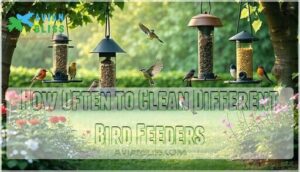
Knowing when to clean your feeders makes all the difference for the birds in your yard. Different types call for different routines, and a few extra factors come into play, too.
Here’s what you need to know before you start.
Seed Feeder Cleaning Frequency
Ever wonder how often birds return to a dirty table? They don’t—so keeping seed feeders clean is the key to giving them a safe, welcoming spot to eat.
To keep your backyard birds healthy, stick to these simple cleaning and maintenance tips for your feeders:
- Clean every two weeks.
- Increase frequency in wet weather.
- Scrub with soap and water.
- Sanitize with bleach.
- Rotate seed often.
Hummingbird Feeder Cleaning Guidelines
If you’ve watched hummingbirds dart from blossom to feeder, you know how quickly these tiny visitors can turn a fresh sugar solution into something cloudy. It’s important to keep their feeders sparkling clean.
Stick to a cleaning schedule: rinse nectar feeders with hot water every few days and sanitize weekly with a dilute bleach solution, ensuring Hummingbird Health and reliable Nectar Quality.
Adjusting Schedule for Weather and Usage
Quick shifts in the weather or bursts of bird activity call for a flexible approach to Cleaning Frequency. Adapting your routine—especially during rain or peak feeding times—boosts Disease Prevention and Feeder Maintenance. Thoughtful adjustments guarantee your backyard stays welcoming and safe.
- Increase cleaning after storms or heavy use
- Check for spoilage frequently
- Respond quickly to signs of illness
Regular cleaning is vital for maintaining a healthy bird environment to prevent the spread of disease.
Supplies Needed for Safe Feeder Cleaning
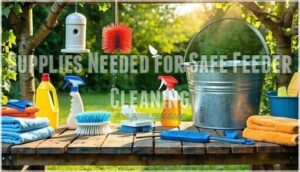
Before you get started, it helps to have the right supplies on hand.
Safe and effective cleaning depends on a few simple items. Here’s what you’ll need for the job ahead.
Essential Cleaning Tools and Materials
Having the right tools on hand turns cleaning your bird feeder from a messy chore into a quick, satisfying routine. You’ll want sturdy feeder brushes, gloves, and a tub for soaking.
Keep essentials like dish soap, distilled vinegar, and protective gloves close by. For stubborn grime, reach for standbys like a diluted bleach solution or hydrogen peroxide to disinfect safely.
Choosing Safe Cleaning Solutions
Not all cleaners are created equal for keeping both birds and your backyard safe. Go for simple, reliable options and always use them as directed:
- Dilute bleach solution—classic for disinfect methods, just one part bleach to nine parts water.
- Dish soap—mild, safe, easy to rinse.
- Hydrogen peroxide—an eco friendly sanitizer option.
- Distilled vinegar—a gentle soap alternative.
Protective Gear for Handling Feeders
Pulling on a sturdy pair of gloves before you clean your bird feeders is like shaking hands with safety—protecting you from germs, sharp edges, and stubborn grime all at once. Proper glove selection prevents accidents, while hand sanitizers, face masks, and protective eyewear offer extra layers of assurance when using cleaning tools, bleach solution, or dish soap during outdoor maintenance.
Step-by-Step Guide to Cleaning Bird Feeders
Tackling your bird feeder may seem a bit daunting at first, but breaking it down into simple steps makes the whole process much easier.
Each part of the process has its own purpose for keeping your birds healthy and your space safe.
Here’s how you can tackle each step along the way.
Preparing Feeders and Cleaning Area
Before you get started, a little prep goes a long way to make cleaning your bird feeders safer and less messy. Gather your Cleaning Tools, put on gloves, and set up outdoors to keep hazardous germs away from indoor spaces.
Clear the area below each Bird Feeder for effective Feeder Sanitation and Area Cleanup—a quick step supporting true Feeder Hygiene and healthy birds.
Washing and Scrubbing Feeders Properly
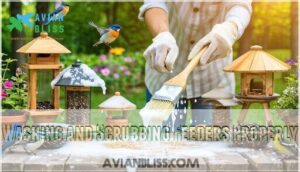
Once your gloves are on and everything’s set up outside, it’s time to give your bird feeders a good scrub and wash to clear away any old seed or grime.
Use a stiff brush—a must for proper Brush Selection—and scrub all surfaces with hot water and soap. Pay extra attention to corners and crevices, where seed hulls linger and compromise Feeder Sanitation.
Disinfecting With a Bleach Solution
After a thorough scrub, the next step is to soak your feeder in a mild bleach solution to make sure every last germ and fungus is washed away. Mix one part bleach with nine parts water for the proper Disinfectant Ratio—a benchmark for Outdoor Cleaning and Sanitation. This Bleach Safety step aids in:
- true germ removal for clean feeders
- vigorous Sanitizing Methods, not just rinsing
- smart Cleaning Frequency habits
- diseasefree birds and safe backyards
Rinsing, Drying, and Refilling Feeders
When you’ve finished soaking everything clean, a careful rinse and thorough drying get your feeder ready for fresh seed and hungry visitors. Rinse each Bird Feeder well in clean water to protect Water Quality and promote disease-free feeding. Air dry completely—moisture can spoil seed.
Refill strategies are simple: use clean feeders, store seed properly, and keep your Tube Feeder dry.
Safe Disposal of Old Seed and Debris
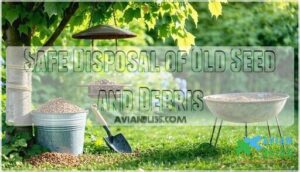
Every handful of old seed and broken shells you toss out is one more step toward keeping your backyard birds healthy and your feeder area safe. Careful Seed Removal and smart Debris Disposal are forms of Waste Management.
Consider these practices:
- Compost Methods for non-moldy seed and hulls
- Bag moldy Old Seed with trash
- Blend Sanitation Practices with routine Bird Bath Cleaning
Preventing Contamination and Maintaining Feeder Hygiene
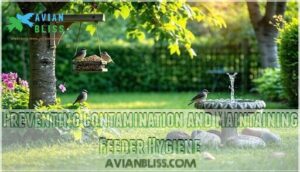
Keeping your bird feeders clean goes beyond just washing them out now and then. For birds to stay healthy, the whole area around your feeders matters.
Here’s what you should watch for as you set up a safe and welcoming feeding spot.
Cleaning The Ground Below Feeders
Have you ever noticed how quickly fallen seeds and shells can pile up under your bird feeders, turning a sunny patch of grass into a crowded lunchroom for more than just birds?
Regular yard cleanup—removing ground debris, seed hulls, and bird waste—also helps with maintenance and sanitation practices but also keeps feeder placement safe for birds through responsible outdoor cleaning.
Spacing and Rotating Feeders
By shifting your feeders around and spreading them out, you’ll give each bird a little more elbow room and help keep disease at bay. Smart feeder placement reduces crowding, breaks up bird traffic patterns, and makes mold or bacteria less likely to spread.
Regular feeder rotation and thoughtful yard layout also encourage healthier seed distribution, supporting good maintenance and Backyard Birding Tips you can trust.
Deterring Pests and Unwanted Animals
If squirrels run circles around your patience, you’re not alone. Smart Pest Control Methods, from sturdy Feeder Guards and Squirrel Baffles to choosing Bird Friendly Designs, keep unwelcome guests at bay.
Placing bird feeders and hummingbird feeders carefully, cleaning up spills, and following common-sense gardening tips foster a sanctuary—for birds, not rodents—through compassionate Wildlife Care and Conservation.
Tips for Long-Term Maintenance and Bird Safety
Keeping your feeders clean and your backyard welcoming takes just a few simple habits that will keep your local birds healthy for seasons to come.
- Swap in fresh seed with each refill
- Rotate feeder locations using gardening tips
- Practice Safe Management and wash hands after each cleaning
- Remove debris under bird feeders regularly
- Embrace Feeder Sanitation for long term care—protecting bird health and Wildlife Conservation
Frequently Asked Questions (FAQs)
Can I clean bird feeders in the dishwasher?
Some bird feeders, especially Tube Feeders made of plastic or metal, are labeled dishwasher safe. Always check feeder materials and manufacturer instructions—dishwashers sanitize well, but Outdoor Cleaning remains best for wood feeders and hummingbird or nectar feeders.
How do I store feeders when not in use?
Would a dry location really keep feeders in top shape? Absolutely. Store hummingbird feeders, nectar feeders, and wooden or tube feeders in sealed storage containers—use Cleaning Supplies first.
Feeder Storage Tips include pest control and choosing Outdoor Storage wisely.
Are homemade cleaning solutions effective for feeders?
Natural Disinfectants like Hydrogen Peroxide or some Homemade Sanitizers can help, but they’re less proven than a bleach solution.
For hummingbird feeders and copper feeder styles, always use effective rinsing methods to protect avian health from mold.
What are signs of feeder material damage or wear?
Like a story written on weathered wood, feeder material wear signs include cracks, loose parts, rust on a copper feeder, splintering in wooden feeders, or surface mold—each revealing damage detection needs and essential inspection for disease risks.
Is it safe to clean wooden feeders differently?
Wooden feeder sanitizing calls for gentle disinfecting techniques, using eco-friendly cleaning methods and avoiding harsh chemicals. Because wood absorbs moisture, focus on thorough drying to prevent mold.
Balance Avian Health and promote wildlife-friendly gardening and outdoor care.
Conclusion
Ironically, the wild world outside your window depends on you for cleanliness. Scrubbing and rinsing, not the songs or plumage, become your quiet acts of care.
When you master how to clean bird feeders safely, you do more than banish grime—you set the table for health and hope. A tidy feeder might seem insignificant, yet it shields entire flocks.
Cleaning bird feeders protects not just one bird, but the health and hope of your entire backyard flock
Your efforts ripple outward, creating a haven where every feathered guest finds refuge, season after season.