This site is supported by our readers. We may earn a commission, at no cost to you, if you purchase through links.
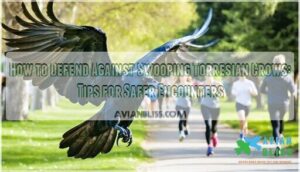 Last spring, a jogger in Brisbane’s suburbs changed her entire running route after a Torresian crow struck the back of her head three times in one week. She’s not alone.
During breeding season—August to January—these intelligent birds defend their nests with startling precision, targeting anyone who wanders too close. Their swooping isn’t random aggression; it’s calculated protection of their young, and they’ll remember your face if you’ve crossed into their territory. The attacks peak when you least expect them, but understanding crow behavior and using simple defensive strategies can help you navigate their territories without becoming a target.
Once you recognize the warning signs and adjust your approach, coexisting with these protective parents becomes straightforward.
Table Of Contents
- Key Takeaways
- Why Do Torresian Crows Swoop?
- How to Avoid Swooping Attacks
- Best Protective Measures to Use
- Safe Property and Community Practices
- What to Do if Attacks Persist
- Frequently Asked Questions (FAQs)
- How to stop crows from swooping?
- How to defend from a crow attack?
- How to deal with aggressive crows?
- How to stop birds from swooping you?
- How do Torresian Crows adapt to urban environments?
- What are the legal restrictions on harming Torresian Crows?
- How do Torresian Crows communicate with each other?
- What are the benefits of Torresian Crows in the ecosystem?
- Can Torresian Crows remember individual human faces?
- How long does swooping behavior typically last?
- Conclusion
Key Takeaways
- Torresian crows swoop between August and January to protect their nests, using calculated attacks rather than random aggression, and they’ll remember individual human faces for years after territorial encounters.
- The most effective prevention combines route adjustments to avoid nesting areas, walking in groups to reduce targeting, and maintaining direct eye contact to signal awareness and deter attacks.
- Simple protective measures like wide-brimmed hats, umbrellas held overhead, and helmet-mounted eyespots create physical and visual deterrents that exploit crows’ natural wariness of perceived threats.
- Community-wide practices including proper waste management, avoiding feeding crows, posting warning signs near active nests, and contacting licensed wildlife professionals for persistent problems reduce conflict while respecting these legally protected native birds.
Why Do Torresian Crows Swoop?
Crows don’t swoop out of nowhere—there’s always a reason. If you’ve ever wondered why these birds act so boldly, you’re not alone.
Let’s walk through what drives their behavior.
Breeding Season and Parental Instincts
During their breeding season—August to January—Torresian Crows show intense parental instinct and defensive behavior. Driven by strong Nesting Site Fidelity, they defend 2–5 egg clutches with sharp Parental Aggression Levels.
Urban Adaptation Impact grows as pairs return yearly. As intelligent birds, they adapt to various environments.
Recognizing Swooping Behavior
When Torresian Crows defend their nests, you’ll notice distinct Swooping Vocalizations—sharp bursts of “caws” layered with rapid wing beats and puffed-up feathers. These Visual Cues signal a crow preparing for action.
Crows also use a wide range of sounds, including rattles and growls, to communicate. Aggressive behavior peaks when you enter their territory, so understanding these Behavioral Context and Environmental Indicators helps you spot a looming swoop and plan your next move.
Identifying Crow Territories
If you want to sidestep a crow’s warning swoop, it helps to know where their turf begins and ends. Torresian Crow territories shift with the seasons and resource availability, so look for:
- Trees favored for nesting cycles
- Consistent swooping or aggressive behavior in certain spots
- Boundary Markers, like posted notes or signs
- Shifts linked to seasonal changes or rising native bird activity
How to Avoid Swooping Attacks
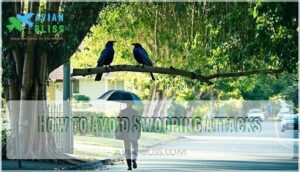
Keeping your distance from Torresian crows isn’t always straightforward, especially during breeding season.
There are a few key habits that can make these encounters a lot safer. Here’s what to keep in mind as you move through areas where crows might be protective.
Steering Clear of Nesting Areas
Ever notice how one sidestep can save you a world of trouble? During the nesting cycle, Torresian crows show strong territorial behavior.
By mapping nesting areas in advance and noting key signs—like agitated birds or noisy calls—you can choose alternate routes. Avoiding provocation is the easiest defensive strategy, helping you prevent attacks during peak nesting seasonality.
Walking in Groups
There’s real strength in numbers when you’re sharing the path—crows are far less likely to bother a group than a lone walker. Group Awareness boosts your odds:
- Shared Protection: everyone’s looking out
- Collective Deterrence: larger groups seem intimidating to birds
- Increased Visibility: crows notice you
- Safety Numbers: reduces your risk of a bird attack
Smart, safe practices for swooping animal defense.
Maintaining Eye Contact With Crows
Locking eyes with a Torresian Crow as you walk can be a surprisingly powerful signal that you’re alert and not an easy target. Eye contact benefits you—crow gaze aversion often follows.
In predator-prey dynamics, clear stares suggest perceived threat reduction. By interpreting crow behavior and using this defensive strategy, you’ll lower your risk of swooping or unexpected bird attacks.
Best Protective Measures to Use
If you find yourself sharing space with Torresian crows, a little preparation goes a long way.
There are practical ways to shield yourself and make each walk or ride less stressful.
Here’s what you can do to stay safer around these clever birds.
Wearing Hats and Protective Eyewear
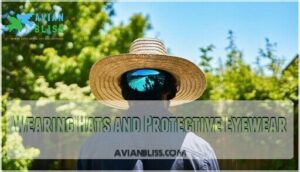
Sometimes, the simple act of popping on a hat or slipping on sunglasses is all it takes to keep a curious crow from getting too close. Sturdy, wide-brimmed hats block sudden dives, while dark or mirrored lenses make eye contact easier—a simple defensive strategy. Choose materials and styles wisely to balance comfort, combined protection, and visibility.
- Hat Material Matters for blocking aggressive swoops
- Eyewear Effectiveness improves visibility factors and deters harassment
- Style Considerations make certain combined protection without sacrificing awareness
Using Umbrellas and Objects Overhead
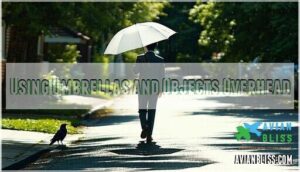
Think of your umbrella as a portable shield—lifting it overhead can turn an ordinary stroll into a much safer passage through swooping crow territory.
The larger the object, the more effective your umbrella or improvised shield becomes at preventing attacks. Reflective surfaces can add another layer of deterrence, making crows think twice, thanks to their sharp eyes and habitual defensive strategies.
Attaching Eyespots to Helmets
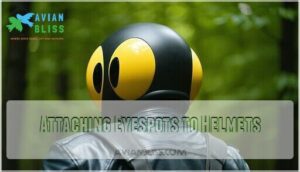
Ever wondered why a pair of fake eyes on your helmet can turn you into a crow’s least favorite target? Eyespot placement plays a key role in visual deception, with large, durable designs startling Torresian Crows.
Choose helmet-compatible options to prevent attacks, respecting bird protection laws. These defensive strategies protect native birds while giving you peace of mind.
Making Noise to Deter Crows

A little noise can go a long way in convincing a Torresian Crow that you’re not worth the trouble. Sound deterrent effectiveness depends on your approach—clapping, spoken warnings, or metallic rattling often helps defend against swooping attacks.
Remember, noise type matters. Avoid amplified sound dangers that could harm native birds or breach legal noise limits; always consider the broader community noise impact.
Safe Property and Community Practices
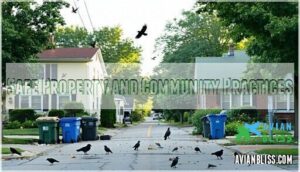
Protecting your property and working with your neighbors can make a real difference during crow breeding season. A few simple habits around food storage and community awareness go a long way in reducing conflict.
Here’s what you can do to keep both people and birds safer in your area.
Securing Food and Waste
Your garbage bins and outdoor dining spots can draw crows in like magnets, so keeping those areas locked down is your first line of defense against turning your property into a regular feeding ground.
Use tight-fitting lids on all open bins and secure compost containers to defend against attack. Don’t leave pet food outside, and clean up fallen seeds from bird feeders promptly—solid waste management practices protect your property while reducing the need for pest control interventions down the line.
Avoiding Feeding or Disturbing Crows
Feeding crows—even once—teaches them that humans equal food, and that lesson turns a passing bird into a persistent problem that defends its newfound territory with increasing aggression. To defend yourself and promote responsible coexistence:
- Never leave table scraps outdoors
- Avoid hand-feeding or approaching nests
- Resist photographing nesting sites up close
- Keep natural crow diet intact—no human food
- Respect habitat disturbance impacts on Torresian Crow behavior
Nest protection instincts intensify when you interfere, so ethical interactions mean keeping your distance and letting the ecosystem function without disruption—that’s smart pest management.
Informing Neighbors and Installing Signs
When one person knows where the problem nests are, everyone on your street benefits from the same awareness—and a simple sign or quick conversation can prevent surprise swoops that catch neighbors off guard. Post clear warning signage near active nests, notify your local council about high-risk zones, and share Torresian Crow behavior patterns with nearby residents.
Community awareness transforms individual caution into shared responsibility, protecting vulnerable groups while respecting these protected species under Australian law.
What to Do if Attacks Persist
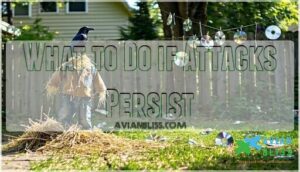
Sometimes the usual deterrents just don’t cut it, and those crows keep coming back. If you’ve tried everything and the swooping hasn’t let up, there are a few more serious steps you can take.
Here’s what to think about when the problem won’t go away on its own.
Contacting Licensed Wildlife Professionals
If swooping persists despite your best efforts, it’s time to call in professionals who are actually certified to manage these territorial birds. Only those holding EPA Certification through the Environmental Protection Agency can legally provide relocation assistance for these protected species.
These experts understand crow behavior expertise and specialist trapping methods while minimizing environmental impact—avoiding serious legal ramifications you’d face attempting removal yourself.
Understanding Legal and Ethical Relocation
Though crows are protected native species under state legislation like the Nature Conservation Act 1992, relocation assistance isn’t a free pass to defend your property. The Environmental Protection Agency strictly regulates permit requirements, demanding proven expertise before authorizing any action.
Relocation legality hinges on ethical considerations—welfare protocols guarantee minimal stress during capture and transport, while community impact assessments evaluate how released birds affect existing territories. This isn’t just paperwork; it’s about respecting the rights of intelligent creatures while balancing human safety needs.
Emergency Response and Medical Care
Even the smallest scratch from a crow’s talon can spell infection if you don’t act fast, so knowing when to seek medical attention matters as much as prevention itself. Clean any injury immediately with soap and water—basic Crow Bite First-Aid that protects your immune system from potential disease.
While rabies risk assessment rarely applies to birds, bacterial infections pose real threats. Don’t dismiss psychological trauma support after repeated attacks, and always report swooping incidents to local wildlife authorities for community protection.
Frequently Asked Questions (FAQs)
How to stop crows from swooping?
To ward off swooping attacks, steer clear of nesting areas during breeding season, maintain eye contact with crows, walk in groups, and use protective gear like hats or umbrellas.
Community crow management and behavioral crow modification through consistent deterrent devices offer long-term solutions for defending against these territorial birds.
How to defend from a crow attack?
Crow attacks feel like aerial ambushes—sudden, startling, relentless. Defending yourself means staying calm and protecting your head with raised arms or an object.
Back away slowly while maintaining eye contact. These defensive postures help you retreat safely without provoking further aggression.
How to deal with aggressive crows?
Aggressive crows react to perceived threats near their nests. To protect yourself and promote coexistence strategies, maintain a safe interaction distance of at least 50 meters during breeding season, understand crow behavior triggers, and implement long-term solutions like avoiding known territories when defending against attack.
How to stop birds from swooping you?
You can’t completely stop swooping, but you can defend yourself with anti-swooping techniques.
Walk away calmly, maintain eye contact, wear protective gear like hats or sunglasses, and use umbrellas as swooping deterrent devices to protect against attack.
How do Torresian Crows adapt to urban environments?
These birds thrive by exploiting urban food sources like rubbish and adapting nesting site selection to parks and tall trees.
Human interaction impact increases their defensive swooping behavior, while noise pollution effects seem minimal to their adaptation strategies.
What are the legal restrictions on harming Torresian Crows?
Native bird species like Torresian Crows enjoy legal protection under the Nature Conservation Act 1992, making it a serious offense to harm them.
Australian law treats these birds as protected, deeming attempts to harm or kill them illegal —defending their rights means respecting nest disturbance prohibitions and avoiding bird cruelty entirely.
How do Torresian Crows communicate with each other?
Understanding crow vocalizations and body language helps you recognize their alarm calls and social signals.
When protecting against attack, these birds use sharp caws to defend territories and ward off threats through coordinated group responses.
What are the benefits of Torresian Crows in the ecosystem?
Why safeguard something that seems threatening? These birds serve key ecological roles as predators and scavengers, supporting pest control and carrion removal.
Their scavenging helps maintain ecosystem balance, defending nature’s interests through seed dispersal and protecting environmental health.
Can Torresian Crows remember individual human faces?
Yes—research confirms crows possess considerable cognitive abilities and facial recognition skills. They can remember human faces linked to stressful encounters for up to five years, using this memory capacity for threat assessment to defend against perceived dangers and protect themselves.
How long does swooping behavior typically last?
Like seasons marked on nature’s calendar, swooping generally spans each six-week nesting cycle during the breeding period from July to December.
The behavior gradually fades once chicks fledge and gain independence, though environmental factors and regional variations can influence timing.
Conclusion
One Brisbane woman mapped her crow encounters on her phone—twelve swoops over three months, all within a hundred-meter radius of a single gum tree. Once she rerouted just slightly, the attacks stopped.
That’s the thing about learning how to defend against swooping Torresian crows: the solutions are surprisingly simple once you understand the pattern. Avoid their nests, wear protection, and respect their space. These birds aren’t out to terrorize you—they’re just fiercely devoted parents doing what instinct demands. Adjust your path, and you’ll both carry on unscathed.
- https://dictionary.cambridge.org/dictionary/english/air-defence?topic=defending-and-protecting
- https://blog.collinsdictionary.com/cefr-labels-explained/
- https://animalia.bio/torresian-crow
- https://www.sci.news/biology/extended-parenting-juvenile-siberian-jays-new-caledonian-crows-08494.html
- https://kids.kiddle.co/Torresian_crow