This site is supported by our readers. We may earn a commission, at no cost to you, if you purchase through links.
You notice tiny specks crawling across your pillow at night, and by morning, your arms are covered in itchy red welts. The culprit might not be bedbugs—it could be bird mites, parasites so small they’re nearly invisible to the naked eye. These eight-legged invaders abandon their feathered hosts when nests are disturbed or birds leave, then migrate indoors searching for their next meal.
Learning how to identify bird mites quickly can spare you weeks of misery and prevent a minor problem from becoming a full-blown infestation. The good news is that once you know what to look for—from their pinhead size and translucent bodies to their distinctive feeding patterns—you can take swift action to reclaim your home.
Table Of Contents
- Key Takeaways
- What Are Bird Mites?
- Where Do Bird Mites Come From?
- What Do Bird Mites Look Like?
- How to Spot Bird Mites in Your Home
- How to Identify Bird Mite Bites
- How to Confirm Bird Mite Presence
- Differentiating Bird Mites From Other Mites
- What Attracts Bird Mites to Homes?
- Preventing Bird Mite Infestations
- When to Seek Professional Help
- Frequently Asked Questions (FAQs)
- Conclusion
Key Takeaways
- Bird mites are pinhead-sized parasites (0.3–0.5 mm) that turn from translucent gray to bright red after feeding on blood, completing their life cycle in just 5–12 days under warm conditions—meaning infestations can explode quickly if you don’t catch them early.
- You’ll find these mites migrating indoors from abandoned bird nests in attics, chimneys, or eaves during spring and summer, leaving behind itchy red welts that appear rapidly (within hours) and cluster where clothing presses against skin, unlike bed bug bites that show up in lines after 24–48 hours.
- Confirming an infestation requires magnification tools to spot their eight legs and hairy backs, sticky traps placed near suspected areas for 48 hours, and checking for dark fecal pellets or reddish-brown stains on bedding and furniture where mites gather in seams and cracks.
- The fastest way to stop bird mites is immediate nest removal while wearing protective gear, followed by daily vacuuming (which captures up to 70% of mites), hot water laundering above 131°F, and sealing all entry points with screens and caps to prevent reinfestation.
What Are Bird Mites?
Bird mites are tiny parasites that feed on the blood of birds, but they don’t hesitate to bite humans when their usual hosts aren’t around. These creatures are so small you can barely see them, yet they can cause surprisingly intense itching and discomfort.
To understand what you’re dealing with, let’s look at their basic biology, the most common species you’ll encounter, and how they live and reproduce.
Definition and Basic Biology
Bird mites are avian parasites—tiny, blood-feeding creatures that live on poultry and wild birds. Understanding these pests starts with their basic biology:
- Mite anatomy: Adults measure about 0.5 millimeters with eight legs and round, hairy bodies
- Feeding habits: They bite bird hosts for blood meals lasting roughly one hour
- Life cycles: Development from egg to adult takes just 5–12 days
- Mite behavior: They can’t reproduce on human blood, though mite bites still occur
To effectively manage infestations, it’s essential to understand the bird mite behavior and take preventative measures.
Common Bird Mite Species
You’ll encounter several bird mite species, but three dominate infestations. The poultry red mite (Dermanyssus gallinae) infests over 80% of commercial operations worldwide. Northern fowl mites (Ornithonyssus sylviarum) plague up to 74% of North American flocks. Feather mites inhabit wild birds, with prevalence reaching 100% in some seabird populations. Understanding the parasite control methods is vital for effective management of these infestations.
| Mite Species | Primary Hosts | Prevalence Rate |
|---|---|---|
| Poultry Red Mite | Chickens, poultry | 80–94% (Europe) |
| Northern Fowl Mite | Laying hens, wild birds | Up to 74% (North America) |
| Feather Mites | Seabirds, songbirds | 45–100% (varies by host) |
Understanding mite species identification helps you target the right bird parasite control methods.
Life Cycle and Habits
Knowing these species helps you understand their rapid life stages. Bird mites complete their reproductive cycles in 5–12 days under warm conditions, progressing through four distinct phases:
- Egg stage – hatches in 1–2 days on host birds
- Larva stage – lasts 8 hours without feeding patterns
- Nymph stage – requires blood meals for mite development
- Adult stage – reproduces only with bird blood access
- Environmental impact – populations can exceed 50,000 per nest during peak seasons
This accelerated cycle explains why bird mite identification matters for effective bird parasite management.
Where Do Bird Mites Come From?

Bird mites don’t just appear out of nowhere—they follow the birds. These tiny parasites hitchhike into your space when birds nest on or near your home, bringing unwanted guests along for the ride.
Understanding where they come from helps you spot the problem before it gets out of hand.
Bird Nests on Buildings
Have you ever noticed nests tucked under your roof eaves or inside gutters? Urban nesting trends show that over 20% of city birds now build homes on buildings.
These structures become mite migration patterns waiting to happen. Once bird nests are abandoned, mites lose their food source and move indoors through cracks, causing building infestation. That’s when mite bites start appearing.
When abandoned bird nests lose their hosts, hungry mites migrate indoors through cracks to find new victims—and that’s when the biting begins
Wild Birds Vs. Domestic Fowl
You’ll find mite migration differs sharply between wild birds and domestic fowl. Wild birds like starlings and robins carry mites seasonally, while layer hens face chronic infestations—up to 85% of flocks worldwide.
That’s because fowl health depends on crowded conditions where bird behavior spreads parasites rapidly. Wild bird nests near poultry houses create perfect infestation control challenges, letting mite bites jump between both populations.
Seasonal Activity Patterns
Bird mites surge dramatically during spring and early summer—peak season for bird nests on your home. Mite population peaks align with breeding cycles, when temperatures rise and nesting activity intensifies.
Summer activity patterns continue as abandoned nests drive mites indoors seeking new hosts. Climate influences like humidity and warmth fuel seasonal infestations, making May through July critical months for pest control vigilance against mite bites.
What Do Bird Mites Look Like?
Spotting a bird mite isn’t always easy since they’re tiny, but knowing what to look for makes all the difference. These little parasites have some telltale features that set them apart from other household pests.
Let’s break down their size, color, and physical traits so you can identify them with confidence.
Size and Shape Details
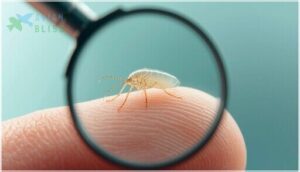
You’ll barely see bird mites without a magnifying glass—these parasites measure just 0.3 to 0.5 mm in body length, roughly the size of a pinhead. Their oval or pear-shaped idiosoma and eight-leg structure define adult mite morphology. During a mite infestation, you can spot microscopic features like extended front legs.
Effective bird pest management starts with recognizing these tiny details for proper mite control and removal.
Color Changes After Feeding
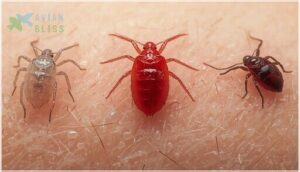
When you spot a mite that’s bright red or dark reddish-brown, you’re likely looking at one that just finished a blood meal. These color shifts reveal active feeding cycles and help you track bird mite infestations in real time.
- Unfed mites appear translucent gray or whitish—barely noticeable on light surfaces
- Fresh feeding transforms them into vivid red dots within an hour of their blood meal
- Post-feeding changes progress from red to brown as mite digestion occurs over 2–6 days
Distinguishing Features (Legs, Hairy Back)
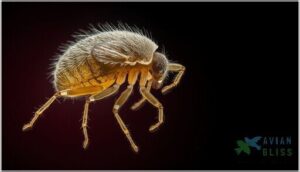
You’ll notice adult bird mites sport eight legs—four pairs neatly arranged along their tiny oval bodies. Under magnification, their hairy back stands out, covered in fine bristles called setae that help them sense movement and heat. Unlike smoother parasites, this fuzzy coating makes identification easier.
The body segments into distinct plates, with sensory organs clustered near the mouthparts to detect carbon dioxide from potential hosts.
How to Spot Bird Mites in Your Home
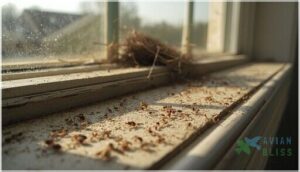
Finding bird mites in your home isn’t always easy since they’re so tiny, but you can spot them if you know where to look.
These pests tend to gather in predictable places, especially near where birds have been nesting or roosting. Let’s walk through the best ways to check your space and catch an infestation early.
Visual Inspection Techniques
Looking for these tiny invaders takes patience and the right approach. You’ll want to focus on careful, systematic observation to catch bird mites before they multiply. Here are five proven inspection strategies:
- Examine surfaces near bird nests using good lighting and a magnifying glass
- Place sticky traps along baseboards and windowsills for 7–10 minutes
- Check crevices 1–3 mm wide where mites hide
- Look for moving “pepper flakes” on light-colored surfaces
- Inspect during daylight hours when mite activity peaks
Common Infestation Sites
Once you’ve spotted movement, you need to know where mites actually hide. Over 90% of bird mite infestations start near bird nests in attics, wall voids, and eaves. When birds abandon these nests, mites migrate into your living spaces—especially bedrooms, which account for 50% of positive samples.
Check upholstered furniture over ten years old, as 84.6% of infested homes share this pattern.
Using Magnifying Glasses and Sticky Traps
After you’ve checked furniture, you’ll need proper tools to confirm what you’re seeing. A 10x magnifying glass reveals eight legs and hairy backs on adult bird mites, though 40x magnification shows finer details. For infestation monitoring, place sticky traps near suspected nesting areas for 48 hours—they outperform visual inspection by detecting mites at very low densities.
- Position traps along walls, near baseboards, and beside upholstered furniture
- Check traps every two days for tiny moving dots or stationary bodies
- Use your magnifying glass to examine captured specimens closely
- Replace traps weekly during active pest control efforts
How to Identify Bird Mite Bites
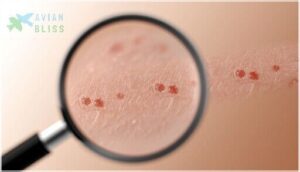
Bird mite bites can be tricky to identify since they often look similar to other insect bites. Knowing what to watch for on your skin helps you figure out if bird mites are the real culprit.
Let’s look at the typical reactions, how they compare to other bites, and who’s most likely to experience them.
Typical Skin Reactions
When bird mites bite, you’ll likely see small red bumps—pruritic lesions—that resemble itching mosquito bites or other insect bites. These spots can trigger intense skin irritation and urticaria symptoms, appearing anywhere but often clustering where clothing presses against your skin.
The dermatitis treatment starts with recognizing these allergic reactions early. Over 95% of people experience severe itching within one to three days, making itch management vital for comfort.
Symptoms Vs. Other Insect Bites
Understanding mite bite symptoms helps you pinpoint the culprit. Unlike bed bug bites that show up in lines on exposed skin 24–48 hours later, bird mite bites appear rapidly with intense itching and a crawling sensation—hitting your trunk, underarms, or groin within hours.
Here’s your bite comparison checklist:
- Bird mites: Rapid itch, 3–4 mm red bumps, crawling feeling
- Fleas: Ankle clusters, immediate sting, 2–4 mm bumps
- Scabies: Thread-like burrows, nighttime itch, finger webs
High-Risk Individuals and Environments
Certain people face amplified risks from bird mites. If you’re immunocompromised, your odds of mite-related dermatitis jump 4.5 times higher in homes with active nests. Elderly residents show a 2.3x increased risk when exposed weekly over six weeks. During April–July, 6–12% of households with attic nests report human exposure—peak season for skin infestations.
| Vulnerable Populations | Environmental Risks | Prevention Strategies |
|---|---|---|
| Immunocompromised individuals | Attic bird nests | Remove empty nests immediately |
| Elderly residents | Chimney nesting activity | Seal structural entry points |
| Poultry farmers | Untreated infestations (8–12 weeks clearance) | Schedule professional wildlife pest control |
How to Confirm Bird Mite Presence
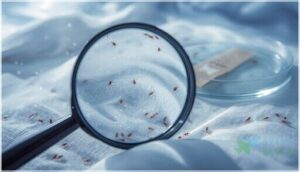
If you’ve noticed bite-like symptoms or suspect mites in your home, you’ll want solid proof before taking action. Visual clues can help, but sometimes you need confirmation through sampling or testing.
Here are three reliable methods to verify you’re dealing with bird mites.
Tape and Skin Scrape Sampling
You can confirm bird mites using two proven diagnostic tools: clear tape and skin scrape sampling. Press adhesive tape firmly onto suspected surfaces—corners, cracks, near nests—then examine under magnification.
For skin infestations, gently scrape affected areas with a dulled blade onto a glass slide. Sampling 4–5 sites boosts detection rates to 90%. These mite detection methods pinpoint infestation signs fast.
Laboratory and Molecular Identification
When tape and scrapes aren’t conclusive, laboratories use mite DNA analysis and molecular markers for species verification. Entomological research relies on proven laboratory protocols to pinpoint exactly what you’re dealing with:
- PCR amplification targets ITS2 and COI gene regions, achieving 90–100% identification accuracy
- DNA metabarcoding quantifies mite abundance in pooled samples
- Genetic surveillance screens for avian pathogens across infested populations
- Microscopy at 400–2000x documents exoskeleton features for ornithological studies
These entomology techniques support effective avian parasite management and parasite control strategies.
Signs of Infestation on Surfaces
You’ll often spot dark fecal pellets on bedding and furniture—these tiny black specks, 0.3 to 1 millimeter across, signal active Bird Mite Infestations. Surface Mite Clusters gather in mattress seams and window frames, while reddish-brown stains from crushed mites appear on pillows and walls.
Sticky Trap Methods capture dozens daily, confirming Infestation Patterns. These visible signs help pest control services target insecticides effectively before mite bites worsen.
Differentiating Bird Mites From Other Mites
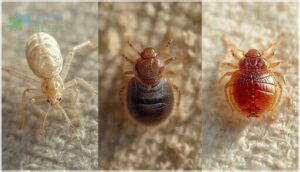
You won’t always be dealing with bird mites—other tiny pests can look similar and cause confusion. Knowing what sets bird mites apart from their cousins helps you target the right problem and skip unnecessary treatments.
Here’s what to watch for when you’re trying to pin down exactly what’s crawling around.
Key Visual Differences
When you’re trying to tell bird mites apart from other household pests, a few details make all the difference. Focus on these key visual markers:
- Mite Body Shape: Bird mites show an oval, pill-like form, while dust mites appear more blob-like and irregular.
- Leg Structure: Eight jointed legs that are noticeably long relative to body size distinguish bird mites from dust mites.
- Color Patterns: Unfed bird mites are translucent white; after feeding, they turn reddish-brown—dust mites stay creamy white.
- Visual Inspection: Bird mites are just visible to the naked eye as moving dots on light surfaces; dust mites aren’t.
- Microscopic Analysis: Under magnification, bird mites display short bristle-like hairs and distinct body regions, unlike the grainy texture of dust mites.
Understanding these differences helps you identify bird mite infestations early and choose the right mite bite treatment approach.
Behavioral and Habitat Clues
Beyond what you can see under a magnifying glass, bird mites reveal themselves through movement patterns and habitat preferences that set them apart from other household pests.
Mite Migration and Nesting Habits
Bird mites follow predictable paths from their original hosts to your home. Late spring through early summer—especially May—marks the peak period when wild birds abandon nests and mites seek new blood sources. Unlike dust mites that live year-round in bedding, bird mites migrate aggressively when nests empty.
| Characteristic | Bird Mites | Dust Mites |
|---|---|---|
| Activity Period | Spring/summer peak | Year-round |
| Movement Pattern | Active crawling, fast | Stationary, slow |
| Preferred Location | Near bird nests, entry points | Bedding, upholstery |
| Response to Light | Attracted to warmth | Avoids light |
Environmental Cues and Feather Preferences
Watch for clustering near attics, chimneys, and roof cavities—areas where avian pests build nests. Bird mites respond to airflow changes and temperature shifts, often gathering around recessed lighting or solar panel gaps. These environmental cues drive infestation patterns that differ sharply from the moisture-seeking behavior of dust or storage mites.
Tracking Infestation Patterns
You’ll notice bird mites moving purposefully toward warmth and carbon dioxide—your body’s signals. They’re most active at night, crawling across walls and ceilings near former nest sites. This directional movement toward hosts distinguishes them from random pest activity. Effective wildlife control starts with bird nest removal and disposal, cutting off the mite population at its source before they establish indoor colonies.
Commonly Confused Pests
Even experienced pest control professionals misidentify bird mites—they’re often confused with bed bugs (which are larger at 4-7mm), clover mites (plant feeders that don’t bite), and rodent mites from attic infestations.
The confusion delays effective treatment since chicken mites and northern fowl mites require different control strategies than dust-dwelling species. When you can’t confirm avian pests through visual checks alone, collect specimens for lab identification.
What Attracts Bird Mites to Homes?

Bird mites don’t just show up in homes by accident. They arrive for specific reasons, usually following their food source or hitching a ride on infested materials.
Understanding what draws them in helps you spot vulnerabilities before an infestation takes hold.
Bird Nests in Attics or Chimneys
Your attic or chimney may feel like a safe haven, but for birds—and their mites—it’s prime real estate. Up to 75% of bird mite infestations trace back to nests tucked into these hidden spots.
Once chicks leave, hungry mites migrate indoors through cracks and vents. Nest removal tips and chimney cleaning are vital, as costs can climb past $2,500 when bird deterrents and pest control measures arrive too late.
Infested Furniture and Materials
Secondhand sofas, mattresses, and carpets can harbor bird mites long after you bring them home. In fact, 24% of infestations stem from pre-owned furniture acquired in the past year.
These wildlife parasites survive up to three weeks on textiles, hitchhiking through rooms via clothing and pets.
Regular furniture inspection, combined with household remedies like steam cleaning and insecticide treatment, stops mite migration before pest management becomes necessary.
Environmental and Structural Factors
Your home’s layout matters as much as what’s inside it. Building design flaws—unsealed cracks, gaps around windows, and aging vents—invite mites in when outdoor birds abandon nests.
Climate impact is real: year-round mild weather and high humidity let mites thrive indoors. Temperature control becomes essential public health practice.
- Older buildings with dark corners encourage breeding
- Open windows bypass pest control measures
- Humidity above 70% accelerates reproduction
- Steady indoor warmth facilitates infestation routes
Preventing Bird Mite Infestations

Keeping bird mites out of your home comes down to one thing: cutting off their access to your space. The good news is that prevention isn’t complicated—it’s about staying ahead of the problem before it starts.
Here are three straightforward strategies that work.
Nest Removal and Exclusion
The fastest way to stop bird mites is getting rid of their source—the nest itself. Once birds leave, remove nests from your attic, chimney, or eaves immediately. Wear gloves and a mask during mite removal to protect yourself.
After nest sanitation, seal entry points with vent screens and chimney caps. These exclusion methods and bird proofing measures cut repeat infestations by nearly 90%.
Cleaning and Vacuuming Strategies
Once you’ve cleared out nests, deep cleaning locks in your progress. Daily vacuuming of carpets, baseboards, and furniture captures up to 70% of visible mites—just seal and toss those vacuum bags immediately to prevent reinfestation. Pair this with hot water laundering above 131°F for linens and clothing, killing 99% of mites on contact.
- Surface sanitizing: Wipe hard surfaces nightly with a 50/50 vinegar-rubbing alcohol solution to slash mite counts by 88%.
- Mite trapping: Place sticky traps near suspected zones for early detection and pest management feedback.
- Infestation prevention: Vacuum hidden spots like closets and behind furniture to remove 65% more mites than surface-only efforts.
Protective Measures for Bird Owners
When you keep birds, layering defenses stops mite bites before they start. Quarantine new arrivals for at least two weeks—this cuts transmission risk by 86%. Full PPE (HEPA respirators, neoprene gloves, coveralls) blocks 98% of exposure during nest cleaning, while wire mesh barriers with 5 × 10 cm openings push survival rates near 99%.
| Bird Mite Barriers | Protective Gear |
|---|---|
| Wire mesh enclosures | HEPA respirators |
| Sealed entry points | Neoprene gloves |
| Diatomaceous earth dust | Protective coveralls |
Pair physical barriers with DEET-based mite repellents (83% bite reduction) and dust baths containing ash or diatomaceous earth—81% fewer feather mite infestations in poultry studies. Add fragrant herbs like mint or thyme to bedding for a 58% drop in mite activity.
Seal aviaries, rotate nesting materials, and disinfect roosts weekly—sanitation practices lower populations by 72% when combined with environmental management. Cover cuts before handling birds to slash secondary infection risk by 94%.
When to Seek Professional Help

Sometimes a bird mite problem is more than you can handle on your own. Whether it’s an infestation that won’t quit or a physical reaction that’s getting worse, knowing when to call for backup can save you time, discomfort, and stress. Here are three key situations where professional help makes sense.
Persistent or Severe Infestations
When you’re battling persistent bird mites for weeks—or the bites won’t stop—it’s time to call in pest management professionals. Severe infestations can reach hundreds of thousands of mites, making household disinfection and DIY mite eradication nearly impossible.
Experts use specialized pest management strategies targeting bird nests, entry points, and hidden colonies. Without professional intervention, public health concerns like secondary infection and ongoing discomfort can persist indefinitely.
Medical Attention for Bite Reactions
Most bird mite bites clear up with simple home care, but you’ll need Medical Guidance if itching lasts beyond two weeks or infection sets in. Watch for spreading redness, warmth, or fever—signs that warrant urgent evaluation.
Dermatology experts can diagnose Bite Reactions accurately and prescribe Treatment Options like topical steroids or antibiotics. Managing Symptom Management early reduces Infection Risk and gets you back to normal faster.
Hiring Pest Control Experts
When infestations spiral beyond your control, professionals bring tools you simply can’t match. Look for Wildlife Control experts holding Expert Certifications like Certified Bird Control Specialist or NWCOA credentials—proof they understand Wildlife Pest Management and Public Health Risks.
- Service Delivery: Teams assess nests, apply Treatment Options, and seal entry points
- Pest Control Costs: Expect $100–$500 for residential jobs; severe cases reach $2,000
- Professional Guidance: Ongoing monitoring prevents rebound infestations and safeguards your home
Frequently Asked Questions (FAQs)
Can bird mites transmit diseases to humans?
Better safe than sorry” applies here—but relax. Bird mites don’t transmit diseases to humans. Public health records show zero documented cases of infection.
Mite bites cause skin irritation, not zoonotic risks, making parasite control straightforward entomology practice.
How long do bird mites survive indoors?
Without a host, these parasites usually last one to three weeks in your home. Environmental factors like humidity and temperature directly influence mite longevity—dry indoor air shortens their infestation duration considerably.
What temperature kills bird mites effectively?
High heat manages these avian parasites best—temperatures above 60°C achieve rapid mite mortality rates in controlled settings.
Thermal control methods targeting lethal heat levels offer effective parasite control, though practical heat treatment efficacy varies by environment.
Are bird mites active at night or daytime?
Bird mites are primarily nocturnal, emerging at night to feed when hosts rest. Their circadian rhythms drive nighttime activity and feeding patterns, while they hide during daytime in cracks, fabrics, or nest materials.
Conclusion
Think of bird mites as uninvited house guests who’ll leave once their welcome runs out—but only if you act fast. Now that you know how to identify bird mites by their size, behavior, and bite patterns, you hold the upper hand.
Remove nests promptly, vacuum thoroughly, and seal entry points to cut off their path indoors. With vigilance and quick action, you can protect your home and reclaim peaceful, bite-free nights for good.