This site is supported by our readers. We may earn a commission, at no cost to you, if you purchase through links.

A bird that freezes, puffs up, or scrambles to the far side of the cage the moment something new appears isn’t being dramatic—it’s responding to a genuine hormonal stress spike. Within minutes of spotting an unfamiliar object, a bird’s body floods with corticosterone, the same stress hormone that kicks in during real threats. To your shy bird, that colorful new toy might as well be a predator.
Knowing this changes everything about how you introduce new toys to shy birds. Move at their pace, respect their biology, and trust builds faster than you’d expect.
Table Of Contents
Key Takeaways
- shy bird’s fear of new toys isn’t stubbornness — it’s a real hormonal stress response, so slowing down your approach isn’t optional, it’s the whole strategy.
- Always start toy introductions outside the cage at a safe distance, then inch closer only when your bird shows calm body language like relaxed feathers or easy perching.
- Choose toys made from familiar materials and matched to your bird’s size, since the wrong texture or scale can undo trust you’ve already built.
- Rotate no more than one new toy at a time, keep a few anchor toys for security, and let your bird explore at its own pace with treats and quiet praise to reward brave moments.
Why Are Shy Birds Afraid of New Toys?
Shy birds aren’t being difficult — they’re just wired to treat anything new as a potential threat. That instinct kept their wild ancestors alive, and your bird still carries it today.
It’s the same reason cockatiel mating and social behavior is so deeply rooted in caution — trust has to be earned, not assumed.
Here’s what’s really going on beneath the surface, and why a gentle approach makes all the difference.
Understanding Bird Anxiety and Fear
When your bird freezes, backs away, or fans its feathers at a new toy, that’s not stubbornness — it’s survival instinct at work.
Bird psychology and behavior shows us that novelty triggers a real hormonal stress response, flooding the body with corticosterone within minutes. Watch your bird’s body language for these anxiety signs:
- Crouching low or flattening against the perch
- Rapid eye pinning paired with backing away
- Hissing or turning their back toward the new object
Predictable routines help keep baseline anxiety low, making desensitization techniques far more effective over time. Research shows that dietary specialization predicts neophobia(https://www.aru.ac.uk/news/chickening-out-why-some-birds-fear-novelty.
The Importance of a Gentle Approach
shy or nervous bird is wired for caution changes everything about how you approach introducing new toys to birds. Slow pacing isn’t optional — it’s the whole strategy.
A calm environment, soft handling, and patience building work together like a desensitization technique that quietly rewires fear into confidence and curiosity. Trust development happens one small, unhurried moment at a time.
Calm handling and patience quietly rewire a shy bird’s fear into confidence, one unhurried moment at a time
rotating toys regularly helps maintain interest and reduces stress.
How to Choose The Right Toy for Shy Birds

Picking the right toy for a shy bird isn’t just about what looks fun — it’s about what feels safe to them.
The wrong choice can set back your progress, while the right one builds trust faster than you’d expect.
Here’s what to keep in mind before you shop.
Selecting Familiar Materials and Textures
Starting with materials your bird already enjoys is the smartest move you can make. Familiar textures lower anxiety and spark confidence and curiosity naturally. Choose from these four categories based on your bird’s known preferences:
If you’re still weighing your options, this guide to choosing the right bird cage breaks down exactly how materials affect safety, comfort, and daily upkeep.
- Soft Wood Textures like balsa or pine
- Natural Fiber Ropes such as hemp or cotton
- Shreddable Paper Products like cardboard or crinkle paper
- Wild Mimic Branches or Everyday Familiar Items like seagrass or pine cones
Matching Toy Size and Complexity to Your Bird
Once you’ve nailed material choices, size-complexity matching becomes your next tool for success.
A toy that’s too big or too stimulating can undo all that progress.
| Bird Type | Right Toy Size | Complexity Level |
|---|---|---|
| Finch / Canary | X-small, a few inches | Single strand or paper strip |
| Cockatiel / Parakeet | Small, up to 6 inches | Lightweight swing or thin block |
| Conure / Caique | Medium, 5–10 inches | Two-part puzzle or dangling strip |
Species-specific toys matched to gradual complexity steps make introducing new toys to birds feel natural — not stressful.
Ensuring Safety and Durability
Safe toys don’t just protect your bird — they build the trust you’re working so hard to earn.
When choosing the right toy, look for non-toxic materials like stainless steel or untreated wood, sturdy construction that won’t splinter, and secure attachments that won’t loosen.
Check for entanglement prevention, too — no loose strings or small gaps.
Regular inspections keep everything safe as you continue gradual introduction and toy rotation.
Step-by-Step Guide to Introducing New Toys
Introducing a new toy doesn’t have to be a stressful event for your bird. The key is moving at your bird’s pace, not yours.
Here’s how to do it, one step at a time.
Presenting Toys Outside The Cage First

The first step in building trust with shy birds is keeping new toys outside the cage — about six feet away. Use a safety stand setup to hold the toy securely at the best distance, where your bird can see it without panicking.
Watch for body language cues like calm posture or relaxed feathers. Environmental distractions can help shift focus naturally during this gradual introduction technique.
Allowing Observation at The Bird’s Own Pace
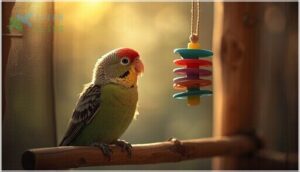
Watching quietly is where the real progress happens. Let your bird observe the toy in dim lighting, at eye level, without any pressure.
Behavioral cues like relaxed feathers or calm perching tell you they’re adjusting.
Some birds, especially timid species, need one to four weeks of quiet observation before showing curiosity.
Patience timing isn’t wasted time — it’s bird training and socialization working naturally.
Gradually Moving Toys Closer Over Time
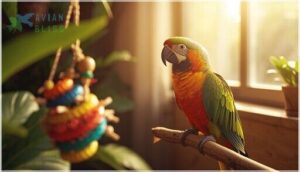
Once your bird seems unbothered, start closing the gap — slowly. Move the toy one to two feet closer every few days, only when you notice calm cues like relaxed posture or reduced staring.
This stepwise positioning keeps anxiety low. Think of each move as a small vote of confidence.
Steady adjustment pacing, paired with positive reinforcement, makes the whole gradual introduction feel safe and natural.
Encouraging Exploration Through Positive Reinforcement

Once your bird has had a chance to observe the new toy from a safe distance, the next step is making that first interaction feel worth it.
Positive reinforcement gives your bird a reason to be curious instead of cautious.
Here are a few simple techniques that can help build that confidence.
Using Treats and Praise to Build Confidence
Treats are one of your most powerful tools for building trust with shy birds. The secret is reward timing — offer praise or a high-value treat within seconds of any brave moment near the toy.
- Watch what your bird eats first; those foods become your best rewards.
- Keep tiny treat size small so you can repeat shaping steps often.
- Use calm voice praise alongside treats to reduce bird anxiety naturally.
- Apply positive reinforcement consistently to encourage bird play over time.
Interactive Play and Demonstration Techniques
Your bird is always watching you. That’s why Owner Modeling works so well — pick up the toy, play with it yourself, and let curiosity do the rest.
Combine this with Target Sticks for Behavior Shaping, guiding your bird closer through small, rewarded steps.
Visual Teasing and Small Part Intros round out your Gradual Introduction Techniques, making Interactive Playtime feel safe and fun.
Avoiding Forced Interaction
Gradual Introduction Techniques work best when you step back and let your bird lead. Watch for body-language cues like fluffed feathers or trembling — those signal it’s time to give respectful distance.
Self-paced play and owner non-interference are the heart of desensitisation. Treat-free introduction can be just as powerful.
Reducing bird anxiety and building parrot confidence means trusting the process, not rushing it.
Managing Toy Rotation to Prevent Overwhelm

Too many new toys at once can stress a shy bird out fast.
The good news is that a little structure goes a long way in keeping things calm and manageable.
Here are three simple strategies to help you rotate toys in a way that builds confidence without overwhelming your bird.
Introducing One Toy at a Time
Regarding toy introduction, less is always more. Stick to one new toy at a time and keep your total cage count between three and six items — visual clutter quietly fuels reducing bird anxiety.
Consistent routine matters too. Owner calm modeling signals safety. Place the toy away from favorite perches, and let gradual desensitization through limited toy count and visual perch placement do the work.
Rotating Toys to Maintain Interest
Once bird accepts one toy, it’s time to think about rotation. Swap 30–50% of toys weekly — not all at once.
Try this simple Weekly Rotation Schedule:
- Keep 1–2 anchor toys for security
- Use Partial Toy Swaps with Toy Category Variety — alternate shredding, foraging, and noise toys
- Apply Position Shifting Methods, moving toys progressively closer to favorite perches
Interest Tracking Journals help you spot what’s actually working.
Creating Familiar Zones for Safe Exploration
Zone Mapping turns your bird’s cage into a safe roadmap. Divide it into two to five zones, keeping the favorite perch untouched. Start Toy Distance far — opposite the main roost — then use Gradual Progression, shifting toys six to twelve inches closer weekly.
| Zone | Purpose |
|---|---|
| Favorite Perch | Comfort anchor, never changed |
| Mid Cage | Observation Zones for cautious watching |
| Far End | New toy introduction spot |
| Play Area | Active exploration with positive reinforcement |
Frequently Asked Questions (FAQs)
How to introduce toys to birds?
Start slow and let your bird lead. Use positive reinforcement, smart toy selection, and habitat integration to ease the process.
Social modeling and sensory enrichment make each new toy feel safe, not scary.
How often should I replace worn-out bird toys?
Check toys weekly — that’s the sweet spot. Replace rope or frayed pieces right away.
Swap cracked plastic or rusted metal immediately. One worn toy at a time keeps shy birds calm.
Can birds share toys safely with other birds?
Birds can share toys, but it takes planning. Follow hygiene protocols, practice aggression management, use toy duplication, and keep supervised play sessions short to protect flock health and peace.
What signs show my bird enjoys a toy?
vocal chirping, tail wagging, and energetic flapping during playtime — these bird behavior cues signal joy.
Playful chewing, feather preening near the toy, and repeated returns all confirm your bird genuinely enjoys it.
Should I clean new toys before offering them?
Yes, always clean new toys before offering them. Manufacturing residues, dyes, and bacteria are real risks.
A quick rinse or vinegar soak takes care of residue removal and bacterial elimination, keeping your bird safe from day one.
Conclusion
Patience with a shy bird isn’t a waiting game—it’s a conversation without words.
Every small step you take tells your bird the world is safe.
When you learn how to introduce new toys to shy birds the right way, you’re not just adding enrichment to their cage.
You’re building a bond rooted in trust.
Stay consistent, follow their lead, and one day that once‑fearful bird will surprise you first.
- https://lilmonstersbirdtoys.com/blogs/articles/how-to-introduce-toys-to-a-fearful-bird
- https://shopcheekybeaks.com/blogs/bird-parenting-tips/introducing-a-new-toy-to-your-pet-bird-tips-and-techniques
- https://www.northernparrots.com/blog/how-to-get-your-parrot-to-play-with-toys/
- https://alexsbirdkingdom.com/blogs/news/how-to-familiarize-your-bird-with-new-toys-gradually
- https://goodbirdinc.blogspot.com/