This site is supported by our readers. We may earn a commission, at no cost to you, if you purchase through links.
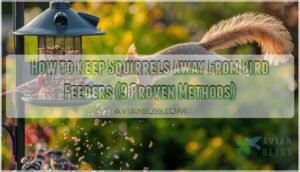
Your bird feeder looks like an all-you-can-eat buffet to the neighborhood squirrels, and they’re treating it exactly that way. These acrobatic bandits can leap eight feet horizontally, climb almost anything, and chew through flimsy plastic like it’s tissue paper.
You fill the feeder for cardinals and chickadees, but by lunchtime, a bushy-tailed freeloader has cleaned out the entire supply. The frustration builds every time you watch them hang upside down, outsmart your latest defense, and scatter seed everywhere.
But squirrels aren’t unbeatable—they’re just persistent and clever. With the right combination of feeder design, strategic placement, and a few natural deterrents, you can reclaim your bird feeder and actually enjoy watching the species you intended to feed.
Table Of Contents
- Key Takeaways
- Effective Squirrel-Proof Bird Feeder Designs
- Strategic Placement to Deter Squirrels
- Natural and Bird-Safe Squirrel Deterrents
- Top 9 Squirrel-Proofing Products for Feeders
- 1. Squirrel Stopper Bird Feeder Pole
- 2. Audubon Torpedo Squirrel Baffle
- 3. Woodlink Squirrel Baffle Protector
- 4. Woodlink Absolute II Squirrel Resistant Bird Feeder
- 5. Audubon Squirrel Proof Bird Feeder
- 6. Kaytee Nyjer Bird Seed
- 7. Cole’s Hot Meats Bird Seed
- 8. Woodlink Platform Bird Feeder
- 9. Woodlink Squirrel Feeder
- Maintenance Tips to Prevent Squirrel Intrusion
- Frequently Asked Questions (FAQs)
- Conclusion
Key Takeaways
- Squirrels can leap eight feet horizontally and chew through weak materials, so you’ll need weight-activated feeders with metal construction and strategic placement at least five feet high and ten feet from jump points.
- Natural deterrents like safflower seeds, Nyjer seeds, and capsaicin-treated birdseed exploit squirrels’ taste preferences while remaining completely safe for birds who can’t detect the heat.
- Combining multiple defense layers—protective cages, pole baffles, proper feeder height, and squirrel-repelling seed blends—creates the most effective long-term protection against persistent raiders.
- Regular maintenance including weekly cleaning, immediate spill removal, and seasonal adjustments to your deterrent strategy prevents squirrels from adapting to your defenses and keeps your bird feeders functioning properly.
Effective Squirrel-Proof Bird Feeder Designs
The right feeder design can stop squirrels before they ever reach your birdseed. Some feeders use physical barriers like cages or mesh, while others rely on weight-activated mechanisms that close when anything heavier than a songbird lands.
If you’re looking for the most effective option, weight-activated squirrel proof feeders consistently outperform other designs by shutting out even the most determined raiders.
Let’s look at three proven feeder styles that keep squirrels out without harming your backyard birds.
Cage and Mesh-Style Feeders
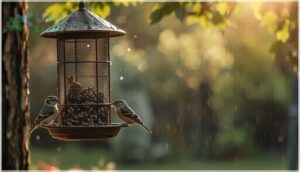
Cage and mesh feeders work like a protective shield around your birdseed. You’ll find these squirrel-proof designs use perforated metal mesh, usually 3mm to 5mm, to keep bushy-tailed bandits out while birds feast inside. Here’s what makes them effective:
- Round powder-coated cages resist chewing and corrosion
- Small mesh openings control seed flow and prevent whole-seed theft
- Perforations provide proper feeder aeration during wet weather
- Removable inserts simplify refilling without dismantling everything
Durable Materials to Resist Chewing
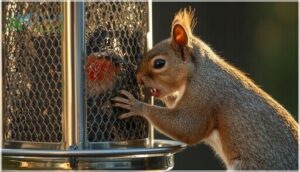
Beyond the protective barrier itself, the real staying power comes down to what your feeder’s made of. Squirrels can chew through flimsy plastic in minutes, so you’ll want squirrel-proof feeders built from hard plastics or, better yet, metal coatings that laugh off those sharp teeth.
Look for squirrel-proof bird feeders with reinforced alloys or titanium-strength components—they’ll outlast budget options by years.
| Material Type | Why It Works |
|---|---|
| Stainless steel | Nearly indestructible for persistent chewers |
| Hardened chrome-plated steel | Resists bite marks and gouging attacks |
| Titanium-strength components | Prevents deformation under strong jaw pressure |
| Reinforced alloys with ceramic layers | Enhances chew resistance without extra weight |
| Hard anodized aluminum | Increases wear resistance while staying lightweight |
Tube and Platform Feeder Options
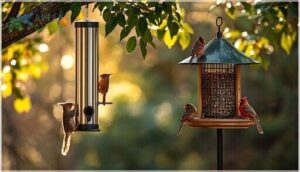
Regarding squirrel-proof feeder designs, tube feeders shine because their narrow feeding ports—usually just 1/4 to 5/16 inches—limit seed accessibility for bushy-tailed raiders. Many tube models use metal mesh sleeves and weight-activated perches that collapse under squirrel pressure.
Platform feeders pair well with squirrel baffles and anti-spill lips, though their open trays need careful placement for effective pest control.
Strategic Placement to Deter Squirrels
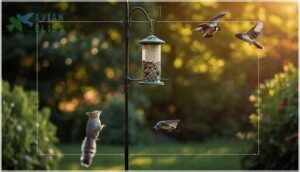
Where you put your feeder matters just as much as what kind you buy. Squirrels are Olympic-level athletes, but they can’t defy physics—and that’s your advantage.
Feeder placement is as critical as feeder type—squirrels are Olympic-level athletes, but physics is your advantage
A few simple adjustments to height, distance, and surrounding obstacles can turn your feeding station into a squirrel-free zone.
Optimal Feeder Height and Distance
Getting feeder height and distance placement right can make or break your squirrel proofing bird feeders efforts. You’ll want your bird feeder placement and installation around five to seven feet off the ground with pole positioning at least ten feet from trees or structures.
That setup works because most squirrel jump attempts max out around nine feet, so this simple barrier installation creates a gap those acrobats can’t bridge.
Avoiding Overhanging Branches and Structures
Trimming branches within eight to ten feet of your feeder height stops squirrels from dropping in like tiny furry paratroopers. Keep six feet of roof proximity clearance and avoid utility line routes squirrels use as highways.
Regular yard maintenance and smart bird feeder placement and installation with squirrel baffles protect against these aerial approaches. Branch clearance and fence distance matter more than most wildlife control methods because squirrels launch themselves from anywhere.
Using Shrubs for Bird Protection
Dense native shrubs near your feeder offer songbirds quick escape routes from hawks and cats while discouraging squirrel behavior and control. Evergreen varieties like holly provide year-round bird habitat and support wildlife conservation. Thorny species act as natural squirrel repellents and create barriers for garden pest control.
Smart garden design involves placing shrubs three to six feet from feeders to balance squirrel-proof protection with native plants that enhance broader wildlife control methods.
Slinky and Obstacle Techniques
A metal Slinky slipped over your feeder pole creates a surprisingly effective squirrel baffle through simple coil management.
Here’s how to set up this obstacle course:
- Stretch the Slinky slightly before sliding it onto a smooth metal pole
- Secure the top just below your squirrelproof bird feeders
- Leave the bottom free to bounce and shift when squirrels climb
- Combine with other squirrel deterrents for maximum effectiveness
- Check weekly that coils haven’t compressed or tangled
The fringe techniques of step navigation make climbing impossible as squirrels trigger the Slinky’s collapse with each attempt.
Natural and Bird-Safe Squirrel Deterrents
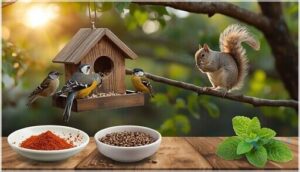
You don’t need harsh chemicals or complicated tricks to keep squirrels at bay. A few natural ingredients can make your feeder less appealing to squirrels while keeping it perfectly safe for birds.
Here are some proven options that work without putting your feathered friends at risk.
Safflower, Thistle, and Nyjer Seeds
Switching to safflower seeds or Nyjer seed can be a game changer for your feeder. Most squirrels reject safflower’s hard, bitter shell, while cardinals and chickadees peck right through to the nutty kernel inside. Nyjer, often labeled as thistle seeds, works wonders for finches but barely registers on a squirrel’s radar.
| Seed Type | Why Squirrels Avoid It |
|---|---|
| Safflower Seeds | Hard outer shell, bitter taste squirrels dislike |
| Nyjer Seed | Too small and low appeal for squirrels |
| Thistle Seeds | Limited nutritional interest to squirrels |
Both options keep your bird seed squirrel proof without harming wildlife.
Capsaicin and Hot Pepper Additives
Adding capsaicin to your seed mix exploits a quirk of nature—birds can’t taste the heat, but squirrels sure can. Hot pepper sprays or pre-spiced blends coat seed with enough spice to discourage squirrels without harming feathered visitors.
- Mix cayenne with water and spray seed lightly before filling feeders
- Buy commercial bird seed treated with capsaicin for consistent coverage
- Reapply homemade pepper solutions after heavy rain or weekly
- Choose food-grade capsaicin additives to guarantee bird feeder safety
Safe Use of Cinnamon and Peppermint Sprays
Cinnamon spray and peppermint oil offer gentler squirrel deterrents when used correctly. Spray around feeder poles rather than directly on perches to avoid bird contact, and let surfaces dry before refilling. Choose bird-friendly formulas with low concentrations of natural oils, and reapply after rain to maintain effectiveness.
These scent deterrent strategies work best alongside squirrel baffles and smart bird feeder maintenance for layered protection against determined garden pests.
Ingredients to Avoid for Bird Safety
While scents and spices help, never use salt, chocolate, avocado, onions, garlic, caffeine, or alcohol near your bird feeder. These items on the toxic food list cause serious harm to songbirds. Skip Vaseline and coffee grounds too—they damage feathers and digestion. Stick with safflower seeds and hot pepper instead.
Mold prevention matters as well, so toss spoiled bird seed immediately to protect your backyard visitors.
Top 9 Squirrel-Proofing Products for Feeders
Sometimes the best defense is the right gear. After trying all the sprays and placement tricks, you might need to invest in products built to outsmart squirrels.
Here are nine tools that actually work to keep your feeder safe and your birds well-fed.
1. Squirrel Stopper Bird Feeder Pole
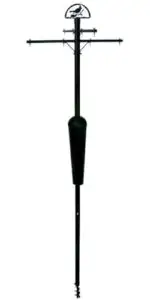
The Squirrel Stopper Pole System offers serious protection with its patented floating baffle that rocks and tilts as squirrels attempt to climb.
Its heavy-duty steel construction features a powder-coated black finish that resists rust. The system accommodates up to eight feeders, each supported by arms extending 36 inches from the center pole, capable of holding 30 pounds per arm.
Included is a ground auger for stability, and tool-free assembly ensures easy setup. Standing at around eight feet tall, it keeps feeders safely out of squirrel reach.
| Best For | Homeowners with persistent squirrel problems who want a premium, multi-feeder setup that actually works. |
|---|---|
| Primary Material | Alloy Steel |
| Squirrel Protection | Patented baffle system |
| Weight | 11 pounds |
| Color | Black/Bronze |
| Installation Method | Ground stake |
| Capacity | Holds 8 feeders |
| Additional Features |
|
- Patented baffle system genuinely keeps squirrels and raccoons away from feeders
- Holds up to 8 feeders with strong 30-pound capacity per arm
- Tool-free assembly and durable rust-resistant steel construction
- Expensive at $254.73 compared to basic feeder poles
- Can be tricky to install in hard soil like red clay
- Internal springs may come loose if the pole is dropped during setup
2. Audubon Torpedo Squirrel Baffle
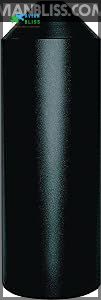
The Audubon Torpedo Baffle mounts directly onto poles between 1/2 inch and 1 3/8 inches in diameter. Its textured powder-coated steel construction resists chewing and weathering, while the torpedo shape prevents squirrels from gripping the edges or climbing around it.
At about 6 inches wide and 15.75 inches tall, it creates a solid barrier below your feeder. You’ll slide it on without removing your setup, and the design allows birds to pass underneath freely. The steel won’t crack or fade like plastic versions.
| Best For | Anyone with a bird feeder on a pole who’s tired of squirrels stealing the seed and wants a sturdy, weather-resistant solution that actually works. |
|---|---|
| Primary Material | Steel |
| Squirrel Protection | Torpedo baffle |
| Weight | 2.75 pounds |
| Color | Black |
| Installation Method | Pole mount |
| Capacity | N/A (baffle only) |
| Additional Features |
|
- Heavy-duty steel construction won’t crack, fade, or get chewed through like plastic baffles
- Simple slide-on installation fits most standard poles without taking down your feeder
- Torpedo shape creates a barrier squirrels can’t grip or climb around
- Won’t stop determined raccoons, which can reach around or climb over it
- Needs to be mounted high enough or squirrels will jump over from nearby structures
- The product label can be a pain to peel off cleanly
3. Woodlink Squirrel Baffle Protector
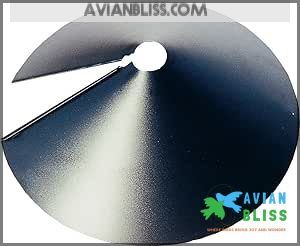
For 4×4 posts, the Woodlink wrap-around shield offers 22 inches of diameter coverage and stands 8 to 10 inches tall. You’ll secure it with included wood screws without taking down your feeder first.
The powder-coated steel won’t rust or give squirrels a foothold, and it blocks raccoons too. It fits poles from 1/2 inch to 1 3/8 inches in diameter.
The curved green shield blends into your yard while stopping climbers from gaining momentum to reach the top.
| Best For | Homeowners with 4×4 posts or standard poles who want a durable, rust-proof barrier that keeps squirrels and raccoons off their bird feeders without the hassle of disassembly. |
|---|---|
| Primary Material | Steel |
| Squirrel Protection | 18-inch dome baffle |
| Weight | 2.75 pounds |
| Color | Black |
| Installation Method | Pole mount |
| Capacity | N/A (baffle only) |
| Additional Features |
|
- Powder-coated steel construction resists rust and provides no grip for climbing animals
- Easy installation with included screws—no need to remove your feeder first
- Fits a wide range of pole sizes (1/2 inch to 1 3/8 inches) and covers up to 22 inches in diameter
- Won’t work with poles thinner than 1/2 inch diameter
- Some users report the mounting hardware could be better designed
- Squirrels may still jump from nearby trees or structures to bypass the baffle
4. Woodlink Absolute II Squirrel Resistant Bird Feeder
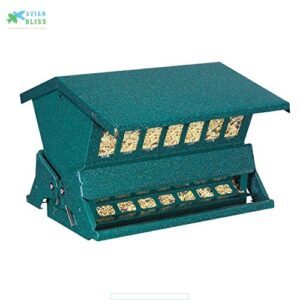
The Woodlink Absolute II uses weight-triggered perches that slam shut when a squirrel lands on them. The metal shield automatically blocks seed access the moment squirrel weight hits the perch.
You’ll get dual feeding areas that adjust to three settings for birds of different sizes. The powder-coated steel body resists chewing, and the 12-pound capacity means you won’t refill constantly.
It comes with a 5-foot pole kit and weatherproof hanging hardware, and the seed saver baffle keeps your yard tidy.
| Best For | People who want a high-capacity feeder that keeps squirrels out without constant refilling, especially if you’re dealing with persistent squirrel problems in your yard. |
|---|---|
| Primary Material | Alloy Steel/Polycarbonate |
| Squirrel Protection | Weight-activated perches |
| Weight | Not specified |
| Color | Not specified |
| Installation Method | Pole/hanging |
| Capacity | 12 lbs seed |
| Additional Features |
|
- Weight-activated perches automatically close off seed access when squirrels land, giving you reliable protection without batteries or complicated mechanisms
- Holds 12 pounds of seed so you can go longer between refills, saving time and hassle
- Comes with everything you need to set up—pole kit, hanging hardware, and a seed saver baffle to keep your yard clean
- Not 100% squirrel-proof and may need extra baffles or guards if you have particularly determined squirrels
- Some users found the included pole feels flimsy or too short for their setup
- Can be heavy and awkward to lift when fully loaded, and a few people reported sharp edges that might hurt birds
5. Audubon Squirrel Proof Bird Feeder
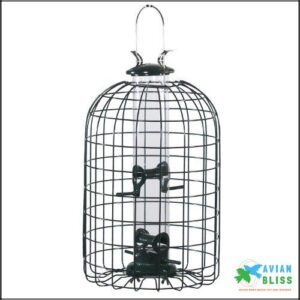
A sturdy steel cage surrounds this clear plastic tube feeder, keeping squirrels from reaching the four seed ports inside. Powder-coated metal won’t rust or give in to gnawing attempts, and the one-quart capacity accommodates mixed seed perfectly.
Small birds like chickadees and goldfinches slip through the 1.5-inch cage openings easily. The forest green finish blends into your yard, and the twist-lock lid keeps weather out. You’ll clean and refill it without hassle since the tube is lightweight and removable.
| Best For | Backyard birders who want to attract small songbirds like chickadees and goldfinches while keeping out squirrels and larger pest birds. |
|---|---|
| Primary Material | Plastic/Wire |
| Squirrel Protection | Cage design |
| Weight | 2.13 pounds |
| Color | Beige/Forest Green |
| Installation Method | Hanging |
| Capacity | 1 quart seed |
| Additional Features |
|
- Steel cage design effectively blocks squirrels and large birds while letting small birds feed in peace
- Powder-coated metal construction resists rust and can’t be chewed through by persistent squirrels
- Easy to fill and clean with a removable tube and twist-lock lid that keeps seed dry
- Smaller squirrels and baby squirrels may still squeeze through the 1.5-inch cage openings
- Narrow tube design makes filling slightly more challenging than wider feeders
- Higher price point compared to basic tube feeders without protective caging
6. Kaytee Nyjer Bird Seed
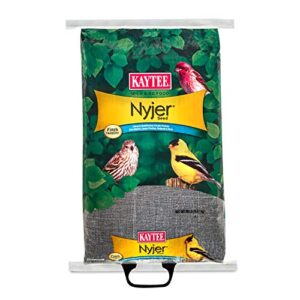
This tiny black seed gives you a reliable way to feed finches without inviting squirrels to the party. Kaytee’s 20-pound bag contains pure nyjer seed with 35 percent fat content, perfect for goldfinches and buntings. Squirrels ignore it completely while small songbirds devour it from tube feeders or mesh socks.
The hullless design means no mess under your feeder, and the high oil content keeps birds energized through cold snaps. Store it in an airtight container to maintain freshness.
| Best For | Backyard birders who want to attract finches and small songbirds without dealing with squirrels raiding their feeders. |
|---|---|
| Primary Material | N/A (Seed) |
| Squirrel Protection | Ignored by squirrels |
| Weight | 20 pounds |
| Color | N/A |
| Installation Method | N/A |
| Capacity | 20 lbs seed |
| Additional Features |
|
- High oil content (35% fat) provides excellent energy for birds, especially during winter
- Squirrels won’t touch it, so your seed goes to the birds you actually want to feed
- No hulls means zero mess under your feeder
- Some buyers receive bags with damaged packaging from shipping
- Higher price point compared to generic birdseed options
- Needs airtight storage or it can spoil and lose freshness quickly
7. Cole’s Hot Meats Bird Seed
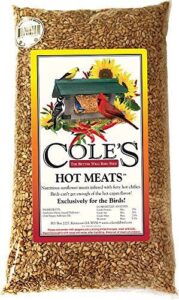
Habanero pepper coating transforms ordinary sunflower meats into a squirrel-blocking feast for your feathered visitors. Cole’s Hot Meats packs whole kernel sunflower hearts with food-grade liquid habanero, creating heat that mammals avoid but birds can’t even taste.
The 20-pound bag attracts cardinals, bluebirds, and finches while keeping squirrels at bay. It works in any feeder type and leaves no waste on the ground.
You’ll pay more than standard seed, but the all-natural formula produces outcomes without chemicals or fillers.
| Best For | Bird lovers who want to attract cardinals, bluebirds, and finches without dealing with squirrels raiding their feeders. |
|---|---|
| Primary Material | N/A (Seed) |
| Squirrel Protection | Hot pepper deterrent |
| Weight | 20 pounds |
| Color | N/A |
| Installation Method | N/A |
| Capacity | 20 lbs seed |
| Additional Features |
|
- Habanero coating keeps squirrels away while staying completely safe for birds
- Works in any feeder and leaves zero mess or waste on the ground
- All-natural ingredients with whole kernel sunflower meats and no chemical fillers
- Higher price point compared to standard bird seed options
- Bears might still be attracted to the feeder despite the hot pepper
- The cost may be a dealbreaker if you’re feeding birds on a tight budget
8. Woodlink Platform Bird Feeder
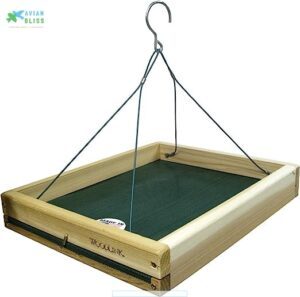
Open platform feeders attract finches, titmice, and cardinals by offering a clear feeding area with zero barriers. The Woodlink Platform uses inland red cedar construction with a powder-coated metal screen bottom that drains rain and simplifies cleanup.
You can hang it, mount it on a pole, or place it on the ground. It holds 3 pounds of mixed seed and works with safflower blends that squirrels dislike.
Pair it with a baffle or raise it five feet off the ground to block unwanted visitors.
| Best For | Backyard birders who want to attract a variety of species like finches, cardinals, and titmice with an easy-to-clean feeder that can be positioned multiple ways. |
|---|---|
| Primary Material | Wood (Cedar) |
| Squirrel Protection | None (platform feeder) |
| Weight | 3.29 pounds |
| Color | Brown/Green |
| Installation Method | Post/hanging/ground |
| Capacity | 3 lbs seed |
| Additional Features |
|
- Durable inland red cedar construction with a metal screen bottom that drains water and makes cleaning simple
- Versatile mounting options—hang it, pole-mount it, or set it directly on the ground
- Holds 3 pounds of seed and works well with safflower blends that deter squirrels
- Open design means seed gets wet during rain, requiring more frequent cleaning and refilling
- Some users report quality control issues like loose wood pieces or flimsy construction
- Doesn’t come with mounting hardware, and squirrels can still access it without additional baffles or elevation
9. Woodlink Squirrel Feeder
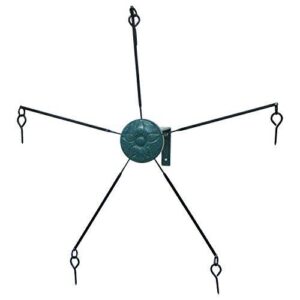
Sometimes the easiest fix is giving squirrels their own buffet. The Woodlink Squirrel-Go-Round feeder holds five corn cobs on threaded metal skewers and turns when squirrels grab the corn. This spinning motion keeps them busy and pulls their focus away from your bird seed.
You can mount it on a tree, post, or deck using the included hardware. It costs around $37 and supports up to 5 pounds of corn. Most squirrels treat it like a backyard carnival ride.
| Best For | Homeowners who want to keep squirrels entertained and away from bird feeders without harming them. |
|---|---|
| Primary Material | Plastic/Aluminum |
| Squirrel Protection | Diversionary feeder |
| Weight | Not specified |
| Color | Not specified |
| Installation Method | Tree/post/deck mount |
| Capacity | 5 corn cobs |
| Additional Features |
|
- Holds up to 5 corn cobs, so you won’t need to refill constantly
- The spinning motion keeps squirrels busy and doubles as backyard entertainment
- Easy to mount on trees, posts, or decks with included hardware
- Squirrels may eventually figure out how to beat the spinning mechanism
- The screws and metal pins can be low quality and difficult to work with
- May not hold up well with larger or more aggressive squirrels
Maintenance Tips to Prevent Squirrel Intrusion
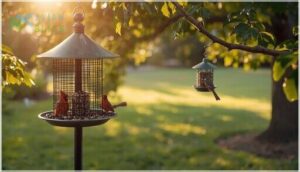
Keeping squirrels away isn’t a set-it-and-forget-it deal. You need to stay on top of your feeder setup and adjust your tactics as needed.
Here’s what you should do regularly to keep those furry acrobats from taking over your bird buffet.
Regular Feeder Cleaning and Seed Management
You’ll want to clean your bird feeders every one to two weeks during peak feeding season to prevent mold and maintain bird health. Use warm water with mild unscented soap, rinse thoroughly, and air dry completely before refilling.
Store bird seed in airtight containers and rotate stock regularly—fresh seed keeps squirrels from rummaging through spoiled offerings while protecting your feathered visitors.
Removing Spilled Seeds and Debris
Clean up fallen seed within ten minutes to keep squirrels from setting up camp below your feeder. Use a stiff-bristled brush or leaf blower on low to sweep debris into a collection bin.
Replace mulch or ground cover every two to four weeks during heavy feeding seasons, and rake weekly to remove leftover shells that attract garden pests.
Monitoring and Adjusting Deterrent Methods
After tidying up spilled seed, keep your squirrelproof feeder working by tracking deterrent effectiveness and adjusting as needed. Use a simple scorecard each week to rate squirrel incursions and feeder maintenance.
For Deterrent Tracking, try:
- Log squirrel visits daily
- Rotate animal deterrents every few weeks
- Adjust feeder height and placement
- Switch seed blends
- Monitor bird activity for stress
Seasonal Changes in Squirrel Behavior
Beyond weekly tracking, squirrel behavior shifts with the seasons—so your squirrel-proof feeder strategy needs to adapt too. Winter foraging drops by about thirty percent during deep cold, while autumn preparations drive aggressive caching near your feeders.
Here’s how seasonal changes affect wildlife management tactics:
| Season | Behavioral Adaptation | Adjust Your Deterrents |
|---|---|---|
| Winter | Torpor episodes reduce activity | Check baffle integrity less often |
| Spring | Mating boosts territorial disputes | Increase capsaicin reapplication |
| Summer | Seasonal diet adds insects and greens | Rotate safflower seed blends |
| Autumn | Hoarding intensifies near feeders | Add decoy squirrel feeder stations |
| Year-Round | Environmental impact varies | Monitor spill zones for attraction patterns |
That’s why squirrel deterrents work better when you match them to current squirrel migration and foraging cycles.
Frequently Asked Questions (FAQs)
Do squirrels damage bird feeders permanently?
Yes, squirrels can permanently damage feeders through persistent chewing, which weakens plastic housing and creates cracks. Their weight bends perches and loosens hardware, often requiring replacement rather than simple repairs.
Can squirrels remember feeder locations over time?
Squirrels can remember feeder locations for months using spatial learning and reference point navigation. Their cache strategies and long-term recall help them track food sources, making squirrel deterrents and squirrel-proofing essential for bird feeders.
Research demonstrates that squirrels possess impressive, which help them adapt and recall techniques for accessing difficult food sources.
Are certain bird species more squirrel-tolerant?
Like telegraph operators adapting to new technology, chickadees and nuthatches adjust their feeding habits around squirrels. They use vocal alarms and choose higher perches, showing greater squirrel tolerance than flighty warblers at bird feeders.
Resource competition between birds and squirrels is influenced by habitat overlap and coexistence.
What time of day are squirrels most active?
Most foraging happens in two waves: within the first few hours after sunrise and again during the late afternoon before dusk. That’s when you’ll see the busiest feeder raids.
Will relocating feeders confuse returning squirrels?
Think of their mental map like a GPS that needs recalibrating.
Feeder relocation can briefly puzzle squirrels, but these agile foragers adapt quickly, often resuming visits within hours once they reorient their routes.
Conclusion
The myth that squirrels always win? Consider it busted. You’ve now got the blueprint to keep squirrels away from bird feeders without giving up your backyard sanctuary.
Combine the right feeder design with smart placement, add a few natural deterrents, and stay consistent with maintenance. Your patience will pay off when you finally watch cardinals and finches dine undisturbed. The squirrels might still be watching, but they won’t be eating your birdseed anymore.