This site is supported by our readers. We may earn a commission, at no cost to you, if you purchase through links.
A single infected bird at a crowded live market can shed enough influenza virus in its droppings to contaminate hundreds of cages, boots, and hands within hours—transforming a routine transaction into a public health emergency. Type A orthomyxoviruses don’t respect species boundaries, which explains why avian pathogens have repeatedly jumped from domestic poultry and wild waterfowl into human populations, sometimes triggering mortality rates exceeding 50% among confirmed cases.
Your risk of exposure escalates dramatically if you raise backyard chickens, work with commercial flocks, or frequent environments where birds congregate, making targeted prevention strategies essential rather than optional.
Understanding how these viruses circulate through direct contact, aerosol transmission, and environmental reservoirs enables you to implement evidence-based biosecurity protocols that protect both avian populations and human health.
Table Of Contents
- Key Takeaways
- What Are Avian Viruses?
- How Do Avian Viruses Spread?
- Recognizing Risk Factors for Infection
- Essential Biosecurity Measures for Bird Owners
- Vaccination and Disease Surveillance Strategies
- Personal Protective Measures to Prevent Exposure
- Supporting Public Health and Community Prevention
- Frequently Asked Questions (FAQs)
- Is there any way to prevent avian flu?
- How to prevent viral infections in birds?
- How do farmers stop bird flu?
- Can avian viruses survive in frozen poultry meat?
- Are backyard chickens safer than commercial flocks?
- How long does the virus live on surfaces?
- Can pet birds transmit avian flu to humans?
- Should I avoid feeding wild birds during outbreaks?
- Conclusion
Key Takeaways
- Avian influenza viruses cross species barriers through direct contact with infected birds, contaminated surfaces, and aerosol transmission, making strict biosecurity protocols—including dedicated clothing zones, boot wash stations, and visitor logs—essential for protecting both commercial and backyard flocks from pathogens that can kill 75-100% of poultry within days.
- High-risk environments like live markets, wetlands shared with wild waterfowl, and on-site slaughter areas create intense viral exposure zones where contamination rates can reach 40% on surfaces, demanding rigorous personal protective equipment use, systematic disinfection with EPA-approved products, and mandatory 30-day quarantine periods for all new bird arrivals.
- Environmental reservoirs extend viral survival for weeks in contaminated litter and up to 12 days in shared water sources, while frozen poultry meat preserves infectious particles for months, requiring cooking to 165°F throughout to inactivate the virus and prevent human transmission through food handling.
- Effective disease surveillance combining clinical monitoring, laboratory confirmation, and rapid reporting within 24 hours of detecting respiratory distress or mortality spikes enables public health systems to activate outbreak response protocols before infections spread beyond individual operations into wider poultry populations or human communities.
What Are Avian Viruses?
Avian viruses are type A orthomyxoviruses that primarily infect domestic poultry and wild bird populations. However, these pathogens can also cross species barriers to infect mammals, including humans, pigs, and cattle.
These infections pose significant public health and agricultural challenges, making effective avian viral disease control essential for preventing outbreaks in both bird and mammal populations.
The clinical presentation and epidemiological significance of these viruses vary substantially depending on their pathogenicity classification, the specific viral strain involved, and the host species affected.
To fully grasp the scope of this threat, you need to understand the common viral types that affect birds, their impact on both domestic and wild populations, and the zoonotic risks they pose to humans and other animal species.
Early detection is critical, which is why understanding how to diagnose bird diseases early can help prevent widespread outbreaks in your flock.
Common Types Affecting Birds
You’ll encounter several distinct viral threats when working with poultry and wild birds, each demanding specific biosecurity attention:
For a deeper understanding of how wild birds contribute to disease spread, check out this guide on.
- Avian Influenza (Bird Flu) – particularly HPAI H5N1 strains that kill over 90 percent of infected chickens within days
- Newcastle Disease – a paramyxovirus causing respiratory distress, neurologic signs, and high flock mortality
- Infectious Bronchitis – a coronavirus reducing egg production and quality in layers
- Avian Paramyxoviruses – diverse strains circulating in wild birds and pigeons
For a wider overview of avian threats, see the range of viral diseases of pet birds.
How Avian Viruses Impact Poultry and Wild Birds
Understanding the virus types is one thing—seeing their real-world effects is another.
HPAI can wipe out 75 to 100 percent of your chickens or turkeys within days, often with little warning beyond sudden death or swollen heads and purple combs. Wild birds face different challenges: infected waterfowl along migration routes carry low-pathogenicity strains across continents, sometimes sparking die-offs involving thousands of seabirds when highly pathogenic variants emerge.
Backyard flock owners can reduce their risk significantly by following proven biosecurity measures and early detection protocols before an outbreak reaches their area.
HPAI kills up to 100 percent of infected poultry within days, while wild waterfowl spread lower-pathogenicity strains across continents until deadly variants emerge
Disease outbreaks have notable consequences, such as trade restrictions and food security impacts worldwide.
Risks to Humans and Other Animals
Zoonotic transmission doesn’t stop at bird losses—avian influenza poses real human health risks through direct contact with infected poultry, contaminated surfaces, or raw products. Farm workers, veterinarians, and backyard flock keepers face the greatest exposure, occasionally developing respiratory symptoms or pneumonia.
Cross-species jumps also threaten your pets and livestock, creating animal health risks that demand vigilant biosecurity to protect both human and animal populations from this persistent zoonosis.
How Do Avian Viruses Spread?

Understanding how avian viruses spread is the cornerstone of effective prevention, whether you’re managing a commercial operation, tending backyard flocks, or simply concerned about wildlife interactions near your property.
These pathogens don’t respect boundaries—they move through multiple pathways involving direct contact between birds, environmental reservoirs that can harbor infectious particles for extended periods, and cross-species transmission events that occasionally bridge the gap to mammals, including humans.
The following sections examine each major transmission route in detail, providing you with the technical knowledge necessary to identify vulnerabilities and implement targeted biosecurity interventions.
Bird-to-Bird Transmission Routes
Avian influenza spreads through multiple bird-to-bird pathways that demand your attention. Direct contact during social interactions, breeding congregations, and flocking behavior allows respiratory droplets and oral secretions to transfer viruses between individuals.
Infected birds can also spread avian respiratory infections through contaminated surfaces like feeders, perches, and water dishes that multiple birds share.
Aerosol spread occurs when infected birds cough or sneeze in enclosed roosts, while fecal shedding contaminates shared water sources where wild birds drink and forage together.
Environmental Contamination
Beyond direct bird contact, contaminated environments become viral reservoirs you must address. Five critical contamination pathways threaten your flock’s health:
- Infected Litter harbors virus in droppings, feathers, and moisture-soaked shavings for weeks, especially at cool temperatures.
- Contaminated Water from wild waterfowl remains infectious 12 days or longer in ponds.
- Fomite Transmission occurs through equipment, boots, and vehicle tires carrying virus between sites.
- Airborne Viruses attach to dust particles and spread via ventilation systems.
- Pest vectors like rodents and wild birds mechanically transport pathogens on fur and feet.
Rigorous Biosecurity Protocols prevent these environmental threats.
Transmission to Humans and Mammals
When avian influenza crosses species barriers, human infection risk escalates through direct contact with infected poultry, inhalation of aerosolized viral particles, or ingestion of contaminated products.
Mammal transmission extends beyond humans to livestock and pets, creating complex zoonotic disease pathways.
Viral mutation within these hosts heightens pandemic prevention concerns, as cross-species adaptation can increase transmissibility and virulence in populations lacking immunity to avian zoonosis.
Recognizing Risk Factors for Infection

Identifying environments and behaviors that increase your exposure to avian influenza viruses is the foundation of effective disease prevention. Your risk level depends on where you work, how you interact with birds, and whether you encounter wild or domestic flocks.
Understanding these key risk factors allows you to implement targeted biosecurity measures and protect yourself, your animals, and your community from infection.
High-Risk Environments and Activities
Certain locations and activities create perfect conditions for avian influenza to circulate, multiply, and jump between birds. You need to recognize these environments and understand why they carry elevated risk so you can adjust your biosecurity measures accordingly and protect both your flock and yourself.
- Live markets with crowded cages and mixed bird species show contamination rates near 40 percent on surfaces like chopping boards and shared drinking water, creating intense exposure zones for workers and birds alike.
- Bird shows and exhibitions house multiple breeds in one hall, letting viruses jump between species through shared equipment, judging stands, and contaminated litter that visitors carry out on clothing.
- Wild waterfowl contact sites like wetlands, farm ponds, and uncovered feed areas attract ducks and geese that shed virus into water and soil, which then reaches your poultry through boots, tools, or runoff.
- On-site slaughter areas without proper zoning generate virus-laden droplets during defeathering and evisceration, spreading contamination across floors, walls, and equipment when workers skip Personal Protective Equipment.
Occupational and Backyard Flock Risks
If you raise backyard poultry or work on commercial farms, your daily routines put you at the frontline of avian influenza transmission. Handling birds during depopulation events, cleaning contaminated litter, and breathing in dust laden with viral particles create direct exposure pathways that bypass most biosecurity measures.
Farm worker safety demands consistent PPE use, strict flock management tips, and strong vaccination programs to shield both you and your birds from high-pathogenicity strains circulating in domestic poultry populations.
Wildlife and Migratory Bird Interactions
Migratory patterns turn wetlands and staging areas into viral crossroads, where wild birds converge, shed virus particles, and heighten transmission risks across species. You’ll encounter increased exposure when your property overlaps with these seasonal pathways, making wild bird surveillance and stringent biosecurity essential for protecting avian health.
- Shared water sources between wildlife and domestic flocks increase avian influenza spillover.
- Nesting colonies concentrate virus transmission within and between species.
- Habitat fragmentation alters movement, creating unpredictable exposure networks in avian ecology.
Essential Biosecurity Measures for Bird Owners
Preventing avian virus incursion into your flock requires implementing thorough biosecurity protocols that address pathogen exclusion, environmental management, and systematic risk mitigation at every point of potential viral introduction. Whether you maintain a commercial operation with thousands of birds or a small backyard flock of a dozen hens, the fundamental principles of biosecurity remain consistent: limit exposure pathways, maintain strict hygiene standards, and establish controlled procedures for all bird-related activities.
The following measures represent evidence-based strategies that, when applied consistently and rigorously, substantially reduce your flock’s vulnerability to avian influenza and other viral pathogens.
Farm and Backyard Biosecurity Protocols

You can think of effective biosecurity as creating invisible barriers that stop disease before it reaches your flock. Start by dividing your property into three distinct Biosecurity Zones: public access, clean work areas, and poultry housing. Within each zone, use dedicated clothing and footwear that never cross boundaries, install boot wash stations at every entrance, and maintain a daily visitor log documenting names, dates, and purposes for complete Disease Monitoring and Flock Management traceability.
| Biosecurity Zone | Required Actions |
|---|---|
| Outer Perimeter | Clear signage, restricted vehicle access, dedicated entry point |
| Clean Work Areas | Zone-specific clothing, hand washing facilities, equipment staging |
| Poultry Housing | Isolated footwear, minimal traffic, sealed boot baths between pens |
Cleaning and Disinfection Practices
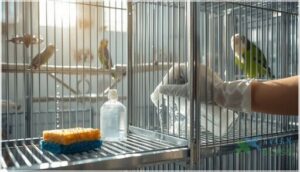
Your biosecurity protocols only work if you back them up with rigorous Surface Sanitizing and Enclosure Cleaning routines that eliminate viral reservoirs before they spread. Remove organic matter from perches, feeders, and water dispensers using neutral detergent, then apply EPA-approved Disinfectant Types with proven efficacy against Avian Influenza—allowing full contact time specified on labels.
Focus daily infection control efforts on high-touch surfaces like cage bars and doorknobs, maintaining detailed cleaning logs to document your disease prevention schedule and guarantee consistent biosecurity measures across all housing areas.
Managing New and Sick Birds

Even spotless housing won’t protect your flock if you bypass Bird Quarantine when introducing new arrivals—isolate them for at least 30 days in a dedicated area with separate equipment to intercept subclinical Avian Influenza carriers before Disease Transmission begins.
When illness strikes, implement strict Sick Bird Care protocols by moving affected individuals immediately, disinfecting shared surfaces, and monitoring daily for respiratory signs that demand veterinary consultation and updated Biosecurity Protocols.
Vaccination and Disease Surveillance Strategies

Vaccination and active disease surveillance represent two critical pillars in your thorough avian influenza prevention strategy, particularly when biosecurity measures alone can’t eliminate all exposure risks.
While vaccines don’t provide absolute protection, antigenically matched formulations administered according to approved protocols can markedly reduce clinical disease, mortality, and viral shedding in exposed flocks.
Understanding which vaccines are available, how to implement systematic monitoring programs, and why surveillance data matters will help you make informed decisions about protecting your birds and preventing wider outbreaks.
Approved Avian Virus Vaccines
Vaccine development for Avian Influenza hinges on choosing the right Vaccine Platforms to address Virus Mutation and optimize Vaccine Efficacy. Your immunization strategies for disease prevention may involve:
- Inactivated vaccines for broad protection
- Live attenuated vaccines for sturdy immunity
- Subunit or hemagglutinin-based vaccines for targeted response
- Recombinant vector vaccines for rapid, expandable vaccination and immunization
Monitoring and Reporting Infections
Once your flock receives the right vaccines, you’ll need consistent infection tracking systems to catch early warning signs. Disease surveillance using laboratory confirmation, clinical reporting, and electronic dashboards lets you spot unusual patterns—respiratory signs, sudden deaths, or reduced egg production—before they escalate into full outbreak response scenarios, protecting both your birds and public health alert networks.
| Surveillance Component | What to Monitor | Reporting Timeline |
|---|---|---|
| Clinical signs | Respiratory distress, mortality spikes | Within 24 hours of detection |
| Laboratory results | Viral RNA, antibody titers | 24–48 hours post-confirmation |
| Environmental samples | Contaminated surfaces, water sources | Weekly or as needed |
Role of Surveillance in Prevention
Data analysis from surveillance systems transforms raw disease surveillance information into actionable early detection protocols. You can track avian influenza prevention trends, spot geographic hotspots, and enhance biosecurity measures before outbreaks spiral.
Risk monitoring networks feed public health preparedness teams with real-time alerts, enabling rapid disease outbreak response and smarter prevention strategies that protect your operation and the broader community.
Personal Protective Measures to Prevent Exposure

When direct exposure to potentially infected birds, contaminated environments, or infectious materials is unavoidable, implementing rigorous personal protective measures becomes your primary defense against avian influenza transmission.
These strategies encompass proper handling techniques that minimize viral contact, appropriate barrier protections to prevent inhalation or mucosal exposure, and systematic hygiene protocols designed to eliminate pathogen transfer from contaminated surfaces to susceptible hosts.
The following evidence-based interventions, when applied consistently and correctly, markedly reduce your risk of contracting avian viruses during high-risk activities.
Safe Handling of Birds and Bird Products
Handling birds isn’t something you can do casually—avian influenza and other pathogens spread easily through direct contact with poultry, contaminated surfaces, and bird products.
You’ll need disposable or washable gloves when touching birds, and it’s critical to wash your hands with soap and warm water for at least 20 seconds afterward. Never eat, drink, or apply cosmetics in handling areas to prevent accidental ingestion of pathogens.
Use of Personal Protective Equipment (PPE)
Protecting yourself from avian influenza requires strategic PPE selection that tackles multiple exposure routes simultaneously. You’ll need respiratory protection such as N95 respirators or surgical masks to prevent inhalation of infectious particles, combined with eye protection like goggles or face shields that guard against aerosol splashes.
Glove safety and full-body coveralls form the foundation of infection control biosecurity, keeping contaminated materials away from your skin.
Hygiene and Handwashing Best Practices
Think of handwash techniques as your last line of defense—even the best personal protective equipment can’t compensate for contaminated hands transferring pathogens from biosecurity zones to personal spaces. Proper hygiene compliance demands thorough infection control practices that integrate seamlessly with laboratory safety protocols.
- Scrub for at least 20 seconds with soap selection favoring antimicrobial formulations, covering all hand surfaces including subungual regions
- Apply alcohol-based sanitizer use (minimum 60% concentration) when soap and water aren’t immediately accessible in field settings
- Follow strict dry practices using single-use disposable towels to prevent recontamination after completing handwashing procedures
Supporting Public Health and Community Prevention

Preventing avian influenza requires a coordinated effort beyond individual biosecurity measures, as disease control depends on collective vigilance and cooperation with public health infrastructure. You play a critical role in surveillance systems by adhering to official protocols, promptly reporting unusual mortality events or clinical signs in domestic or wild birds, and participating in community education initiatives that strengthen regional disease prevention networks.
The following sections outline your specific responsibilities in supporting broader public health objectives and contributing to evidence-based community prevention strategies.
Following Health Authority Guidelines
Health advisories aren’t suggestions—they’re your roadmap for staying ahead of avian influenza outbreaks. You’ll find official guidelines outlining biosecurity standards, disease reporting protocols, and vaccination recommendations customized to current infectious disease control efforts.
By staying current with regulatory compliance requirements and public health updates, you’re not just protecting your flock; you’re supporting broader public awareness campaigns that keep entire communities safe from this rapidly evolving threat.
Reporting Suspected Cases
Spotting unusual deaths in your flock triggers a critical chain of events. Contact your state animal health office or the USDA Healthy Birds Hotline at 866-536-7593 immediately.
These case reporting guidelines feed disease surveillance systems that track avian influenza outbreaks nationwide. Public health officials rely on your quick action to activate biosecurity protocols and outbreak response planning before infections spread.
Raising Awareness and Community Education
Beyond reporting cases, you can boost protection by joining education programs that strengthen health literacy across your community.
Public outreach initiatives—like town halls with epidemiologists, multilingual fact sheets at feed stores, and awareness campaigns in schools—transform neighbors into informed allies.
Support vaccination drives, share biosecurity tips at farmers markets, and collaborate with local animal health networks. Community engagement turns avian influenza prevention into a shared responsibility, safeguarding both public health and livelihoods.
Frequently Asked Questions (FAQs)
Is there any way to prevent avian flu?
Yes, you can prevent avian flu through rigorous biosecurity measures, vaccination programs where approved, disease surveillance, limiting wild bird contact with poultry, proper disinfection protocols, and adherence to public health guidelines.
How to prevent viral infections in birds?
You’ll protect your flock through strict biosecurity—limiting visitor access, maintaining rodent control, and keeping wild birds away from poultry.
Vaccination against avian influenza and Newcastle disease reduces viral infection risk when authorized.
How do farmers stop bird flu?
Farmers stop bird flu by implementing strict biosecurity protocols. These measures include maintaining dedicated clothing, limiting visitor access, and separating new arrivals.
Additionally, they focus on disinfecting equipment and monitoring flock health daily. Coordination with veterinarians for vaccination is also crucial, but only when regionally approved.
Can avian viruses survive in frozen poultry meat?
Surprisingly, frozen storage won’t kill avian influenza—virus particles remain infectious in frozen poultry for months.
You’ll need proper cooking to 165°F throughout to inactivate bird flu and guarantee frozen meat safety.
Are backyard chickens safer than commercial flocks?
Neither flock type offers inherent safety from avian influenza—backyard chickens face greater wild bird exposure and weaker biosecurity, while commercial poultry density accelerates disease transmission once viruses breach farm biosecurity protocols.
How long does the virus live on surfaces?
Like fingerprints left on glass, avian viruses cling to surfaces with varying tenacity—persisting up to 72 hours on plastics under cool conditions, though copper and heat drastically shorten viral infection timelines through rigorous biosafety protocols.
Can pet birds transmit avian flu to humans?
Yes, pet birds can transmit avian flu to humans through direct contact with their saliva, feces, or nasal secretions, making bird handling safety and zoonotic disease control essential for preventing human infection from viral transmission.
Should I avoid feeding wild birds during outbreaks?
When bird flu surges, you should temporarily stop feeding wild birds—crowded feeders accelerate disease transmission, compromise biosecurity, and endanger both wild populations and nearby poultry through contaminated surfaces and concentrated bird behavior.
Conclusion
The belief that avian viruses respect geographic boundaries collapses under epidemiological scrutiny—these pathogens exploit every gap in biosecurity, waiting for your vigilance to lapse.
You’ve now acquired the technical framework, disinfection protocols, and surveillance strategies necessary to prevent avian viruses from decimating flocks and threatening public health. Implementation separates theoretical knowledge from measurable protection; your consistent application of these evidence-based interventions determines whether the next outbreak stops at your biosecurity perimeter or breaches it entirely.
- https://www.woah.org/en/home/
- https://www.msdmanuals.com/professional/infectious-diseases/respiratory-viruses/avian-influenza
- https://www.uchicagomedicine.org/find-a-physician/physician/emily-landon
- https://www.cdc.gov/bird-flu/situation-summary/index.html
- https://tephi.texas.gov/training/selected-outbreaks/avianinfluenza