This site is supported by our readers. We may earn a commission, at no cost to you, if you purchase through links.
Every year, roughly 600 million birds die from window collisions in the United States alone—more than from cats, pesticides, or power lines combined. What makes this tragedy particularly cruel is that it’s almost entirely preventable.
Most birds can’t distinguish between reflections and open sky, so a window that mirrors trees and clouds looks like a clear flight path until impact.
The good news: whether you live in a city apartment or a sprawling house, you have practical tools at your fingertips to transform your windows from deadly hazards into safe passages. Understanding why collisions happen and how to stop them puts you in a position to protect the birds visiting your yard and beyond.
Table Of Contents
Key Takeaways
- Window collisions kill roughly 600 million birds annually in the US—more than cats, pesticides, or power lines combined—but you can prevent most of these deaths with practical, affordable solutions like external screens, decals spaced 2 inches apart, or UV-reflective films that reduce strikes by 64-95%.
- Birds can’t distinguish glass from open sky, so reflections of trees and clouds, transparent corners, and indoor plants near windows create deadly illusions; positioning plants more than one meter away from glass and understanding why collisions happen is your first line of defense.
- During spring and fall migration when collision risk doubles, turning off unnecessary lights after 11 p.m., using free tools like BirdCast to track migration patterns, and combining exterior window treatments with strategic landscaping dramatically cuts fatalities in your area.
- If you find an injured bird, place it in a ventilated box with soft cloth, warm it to body temperature within 30 minutes, keep it quiet and dark, then contact a licensed wildlife rehabilitator within 24 hours—about 71% of admitted birds are eventually released successfully.
Why Birds Collide With Windows and Glass
Birds collide with windows because they can’t recognize glass as a solid barrier. Reflections of sky and trees, transparent corners, and even the plants you keep indoors can trick birds into flying straight toward danger.
Glass reflects sky and trees, tricking birds into perceiving open space where a solid barrier exists
Understanding these hazards is the first step toward making your windows safer for the birds that pass through your yard.
Reflection Creates The Illusion of Open Space
When sunlight hits reflective surfaces just right, glass mirrors the sky and trees around your home. Birds can’t tell the difference between what’s real and what’s bounced back at them—they perceive an illusion of open space where a solid barrier exists.
Studies show mirrored windows raise collision risk nearly six times compared to plain glass. Larger surface area and strong lighting influence how convincing this deadly trick becomes, making window collisions tragically common.
In fact, building collisions are a major threat.
Transparent Glass and See-Through Corners
Transparent glass poses an even deadlier hazard than reflective glass. When you can see straight through corners or glass facades into courtyards or opposite windows, birds perceive a clear flight path.
Research shows see-through corners and alcove-shaped glass surfaces produce up to 90% of collisions at high-risk structures. These transparent tunnels funnel migrating birds directly into danger, especially where vegetation is visible on both sides.
Sadly, collisions with windows cause a billion deaths annually.
Indoor Plants Attract Birds to Windows
Internal plants near windows double your collision risk—birds can’t tell where real foliage ends and reflection begins. When houseplants sit close to glass, you’re unintentionally creating a 42% increase in perceived habitat. Density matters: clusters across multiple windows can increase bird strikes by 80%.
Species vulnerability varies, too—Cedar Waxwings account for over 60% of collisions near fruiting plants. Plant proximity drives these tragedies, but mitigation strategies work.
Migration Periods Increase Collision Risk
Your windows become deadliest during spring and fall migration patterns, when avian populations surge through urban corridors. Fall migration produces collision rates twice as high as spring—September and October claim disproportionate migrant vulnerability among naïve first-time travelers.
Peak collision times concentrate on clear mornings with favorable weather influence, especially when building proximity to vegetation attracts exhausted migrating birds seeking shelter during these critical regional variations.
Window Treatments That Save Birds
Once you understand why birds collide with glass, the next step is figuring out how to make your windows visible to them.
The good news is that you don’t need expensive renovations or complicated installations to protect birds. Several straightforward window treatments can dramatically reduce collision risk while fitting a range of budgets and building types.
External Screens and Netting Solutions
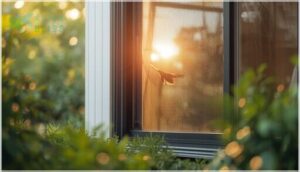
Installing external screens or netting is one of the most effective methods for preventing bird window collisions. Scientific findings show that specialized exterior markers reduced collisions by 64% at treated sites, with measurable improvements in bird avoidance behavior.
These bird-friendly window solutions offer excellent netting durability with UV-resistant coatings, and cost analysis reveals they prevent property damage while supporting industry adoption of proven collision prevention strategies.
Decals, Dots, and Tape Patterns

When you apply decals, dots, or tape patterns to your windows, proper spacing and external placement make all the difference. Research shows 2-inch pattern spacing reduces window collisions by up to 95%, while UV reflectivity creates barriers visible to birds but not humans.
DIY applications using durable window film or glass marking are affordable and effective window treatments when properly maintained.
Blinds, Curtains, and Internal Shading

While closing blinds or curtains during daylight can reduce window collisions by 20–50%, shading effectiveness depends on coverage and color considerations. Light-colored curtains perform better than dark ones, cutting reflectivity by an extra 15–30%.
However, practical limitations exist—gaps between slats still allow visibility, and automated shading during migration peaks works best when combined solutions include exterior treatments for best collision prevention.
Window Films and UV-Reflective Options
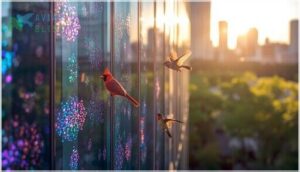
UV-reflective window film exploits birds’ ability to see ultraviolet patterns invisible to you, making glass visible while preserving your view. Studies document 75–90% reductions in window strikes when properly applied.
Installation costs vary—residential retrofits run hundreds of dollars, large buildings over a million—but integrating bird-friendly window solutions into new construction reduces expenses considerably.
Many building codes now mandate these treatments, reflecting proven effectiveness across species sensitivity ranges and migration periods.
Bird-Friendly Landscaping and Feeder Placement

Your yard can become a refuge for birds, but only if you’re mindful about where you place feeders, plants, and water sources. Strategic landscaping doesn’t just attract birds—it keeps them safe from collisions and predators while supporting their natural behaviors.
Here are four practical ways to make your outdoor space safer and more welcoming for the birds that visit.
Positioning Plants Away From Glass
You might be surprised to learn that indoor plants near windows can increase bird collisions by over 300%. To reduce this risk, position plants more than one meter away from glass so birds outside won’t mistake them for real habitat. This simple adjustment breaks the illusion of habitat continuity, especially during seasonal variation when migration peaks.
Regular monitoring protocols help you track improvements in preventing bird collisions effectively.
Strategic Bird Feeder Locations
Feeder proximity to windows directly affects whether birds survive strikes. Placing your feeder within one to two meters of glass dramatically cuts fatal collisions—only 5% mortality at two meters versus 69% at ten meters.
Consider height preferences: cardinals thrive at 5-6 feet, woodpeckers prefer 6-10 feet. Position feeders near shrubs for cover benefits and quick escape routes from predators. Adjust seasonal changes during migration to protect visiting species.
Native Plants for Safer Habitats
Native plant selection transforms your yard into habitat preservation in action. Carolina chickadees need landscapes with at least 70% native vegetation to successfully raise young—those nine thousand caterpillars in sixteen days don’t come from ornamental shrubs.
Native oaks host over 530 caterpillar species versus just one on butterfly bush. Following bird-friendly landscaping principles, you’ll support both insect food abundance and the biodiversity trends reversing North America’s 30% bird population decline since 1970.
Water Features and Predator Deterrence
Water feature placement makes or breaks your bird-safe yard. Position ponds and fountains at least 30 feet from reflective glass to cut collision risk by up to 40%. Integrated programs—pairing vertical plantings with predator exclusion fencing—boost nesting success 38% higher than single tactics, proving cost-effective strategies work.
Protecting birds from predators through bird-friendly landscaping:
- Install motion-activated sprinklers near water sources to deter mammals by 85%
- Use exclusion fencing around ground-nesting zones, raising hatching success 30–40%
- Broadcast heron distress calls at water features, reducing predator density 48%
- Border bird baths with dense native shrubs, cutting window injuries 59%
Reducing Light Pollution During Migration
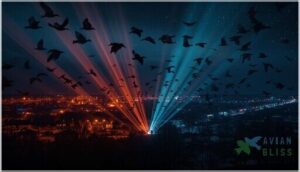
Artificial light at night can disorient migrating birds, drawing them off course and increasing collision risk when they’re already flying in unfamiliar territory. During spring and fall migration periods, reducing unnecessary outdoor and indoor lighting can make a real difference in bird safety.
Here’s how you can adjust your lighting practices to help birds navigate safely during these critical windows.
Turning Off Unnecessary Lights at Night
During peak migration seasons—spring from March to June and fall from August through November—turning off nonessential lighting after 11 pm dramatically reduces bird fatalities. Studies show Lights Out efficacy reaches 60% to 80% reductions in collision deaths when communities coordinate program coordination efforts. Chicago’s McCormick Place saw sustained declines after adopting nighttime shutdowns, and the impact of artificial light on disoriented migrants proves that simple lighting risk management delivers substantial energy benefits while protecting billions of vulnerable songbirds traversing our cities.
| Migration Season | Lights Out Hours | Reduction in Collisions |
|---|---|---|
| Spring (Mar–Jun) | 11 pm–6 am | 60–80% decrease |
| Fall (Aug–Nov) | 11 pm–6 am | 60–80% decrease |
| Year-round urban | Nightly curfews | Sustained mortality drop |
| High-risk weather | Extended shutdowns | Up to 11-fold reduction |
Using BirdCast to Track Migration Patterns
You can access free, real-time data through BirdCast to pinpoint nights when migrating birds flood your region—sometimes over one billion in a single evening. This predictive accuracy tool helps you protect migratory birds by timing light reductions precisely when they’re overhead.
Here’s how to use BirdCast’s conservation tools effectively:
- Subscribe to migration alerts for your county
- Check live dashboards showing bird migration patterns and volume tracking
- Review three-day forecasts to plan Lights Out nights
Seasonal Adjustments for Peak Migration Times
During mid-April through May and early September into October, you’ll need to fine-tune your bird protection efforts. These migration peak timing windows demand targeted treatments—install external screens, apply decals spaced 2–4 inches apart, and draw blinds at night. Light reduction cuts collisions by 60% in urban areas.
Combine these with landscaping changes and monitoring practices to protect migrating birds when seasonal changes increase collision risks.
Community-Wide Lights Out Programs
When entire neighborhoods join Lights Out initiatives, you create safer skies for migrating birds while achieving energy savings and building environmental awareness.
Cities like Chicago documented 80% fewer collisions through program participation, combining migration tracking with policy enforcement and data collection.
Turning off non-essential lights from 11 p.m. to 6 a.m. during spring and fall helps millions of birds navigate urban hazards successfully.
Making Buildings and Homes Bird-Safe
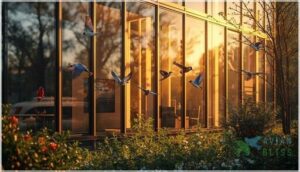
Whether you’re building from the ground up or updating an existing structure, the right choices can make all the difference for birds. Design features and retrofitting options don’t have to be complicated or expensive to be effective.
Here are practical ways to transform buildings and homes into safer spaces for our feathered neighbors.
Architectural Design Considerations
When you’re planning a new building or home addition, designing for bird safety from the start saves lives and money. Aim for a glass surface ratio below 40%, use patterned glass with visible markers spaced every two inches, and incorporate shading features like overhangs or external screens. Avoid hazardous passageways and transparent corners.
Check local building regulations—many cities now require bird-friendly building design and sustainable building practices that protect wildlife while reducing energy costs.
Retrofitting Existing Structures
You don’t need to tear down and rebuild to protect birds—retrofitting your current windows works. Whether you’re tackling DIY home improvement projects or planning a larger upgrade, bird-friendly window solutions can dramatically cut window collisions. Here’s what you need to know about effective window strike prevention methods:
- Material options: Adhesive markers like Feather Friendly reduce strikes by 95%, lasting 5–10 years with minimal upkeep.
- Retrofit cost analysis: Budget $5–$12 per square foot for quality window treatment solutions, less than new construction.
- Installation methods: External films and screens offer the best results when professionally applied.
- Aesthetic impact: Modern products maintain views while keeping birds safe.
- Policy incentives: Many cities now offer financial support for retrofit projects—check your local regulations.
Retrofit material longevity depends on climate and maintenance, but most solutions remain effective for years before needing replacement.
Glass Spacing and Pattern Guidelines
Here’s the technical standard that actually works: markers on glass need to be spaced no more than 2 inches horizontally and 4 inches vertically—the “2×4 Rule.” Each marker should measure at least 0.25 inches in diameter with strong pattern contrast to disrupt reflection. Apply treatments to the exterior surface (Surface 1) for maximum effectiveness.
These spacing guidelines reduce collisions by up to 90% because they eliminate the illusion of open flyways, preventing bird strikes on window treatment solutions across bird-friendly building design.
Sustainable Building Certifications
When you’re building or renovating, certification systems like LEED now reward bird-safe choices. Since 2022, LEED credits specifically address bird collision deterrence, requiring materials with a Threat Factor of 30 or less.
Cities like New York have gone further with legislative mandates—requiring bird-friendly facades on 90% of new structures up to 75 feet. These building codes aren’t just sustainability goals; they’re conservation action.
Your project can prevent thousands of bird deaths while earning recognition as an environmental leader.
What to Do if You Find an Injured Bird
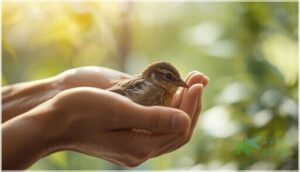
Finding an injured bird at your window can be unsettling, but knowing how to respond makes all the difference. The first few minutes after a collision are critical—your quick action can help determine whether the bird survives.
Below, we’ll walk you through recognizing injuries, caring for the bird safely, and finding the professional help it needs.
Recognizing Signs of Window Strike Injuries
Finding a stunned bird after a window strike requires knowing what to look for. Immediate symptoms vary widely—some birds show obvious injury, while others mask serious trauma. Watch for these early injury signs:
- Panting or open-mouth breathing
- Incoordination and loss of balance
- Head tilt or apparent confusion
- Swelling or discharge near the eyes
- Immobility at the impact site
Up to 95% of window strikes cause concussion. Critically, 50% of internal injuries leave no visible marks. Neurological signs like torticollis may emerge days later. Even birds that fly away often succumb to hidden damage within 72 hours. Your careful observation can mean the difference between recovery and delayed mortality.
Safe Handling and Temporary Care
Once you’ve spotted an injured bird, your next step is careful handling. Limit direct contact to under two minutes—birds stress easily, which worsens shock. Use a lightweight cloth to gently restrain the bird, then place it in a ventilated cardboard box lined with soft cloth.
This containment protocol minimizes secondary injury. Warm the bird on a heating pad at body temperature (35–37°C) within 30 minutes of rescue. Keep it quiet and dark. Monitor every 30 minutes for breathing changes or persistent stumbling. Avoid food and water for the first six hours post-collision.
Contacting Wildlife Rehabilitators
Once the bird is stable and warm, contact a licensed wildlife rehabilitator immediately. Most maintain dedicated hotlines and accept appointments seven days a week. Your state wildlife agency provides a directory of permitted professionals.
Emergency bird care works best within 24 hours of injury. Rehabilitators follow strict licensing protocols and can legally house the bird during recovery. Most survival rates exceed 85% when professional avian emergencies response occurs promptly.
Simply transport the bird; don’t attempt rehabilitation yourself.
Monitoring Your Property for Collision Patterns
After helping one injured bird, watch your property closely over the coming weeks. Document where collisions occur—ground-level windows, reflective corners, areas near plants. Note timing and weather patterns.
This data reveals your collision hotspots and guides targeted prevention efforts. Early morning surveys during migration seasons catch most incidents.
By tracking these patterns, you’ll identify which windows need screens, decals, or repositioned plants first, making your mitigation work more effective.
Frequently Asked Questions (FAQs)
How long does it take for an injured bird to recover?
Recovery time varies greatly depending on injury severity. Most injured birds spend a median of 7 days in rehabilitation, though some require several weeks.
About 71% of admitted birds are eventually released, with roughly 85% surviving successfully beyond six weeks post-release.
Can bird collisions be completely eliminated from my property?
Complete elimination remains elusive. Even with retrofitting, residual collisions persist—studies show up to 95% risk reduction, but not zero.
Persistent risks from migration, landscaping, and incomplete coverage mean sustainable barriers require ongoing monitoring and maintenance.
Which prevention method is most cost-effective for renters?
Paracord curtains offer the lowest cost at roughly $11 per square foot. Tempera paint solutions cost under $1 per window.
Both are fully removable, require no professional installation, and won’t damage rental properties—ideal for renters seeking affordable, temporary bird-safe solutions.
Do birds learn to avoid windows over time?
Birds don’t reliably learn to avoid windows over time. Urban populations show slight adaptation, yet Cedar Waxwings and migrants still collide repeatedly.
Window size doesn’t matter—all glass poses hazards. Visual deterrents work better than behavioral learning alone.
Conclusion
Every decal you apply, every light you dim, every feeder you reposition—each action multiplies across your neighborhood and beyond. You now possess the knowledge to prevent bird accidents. You hold the tools.
You have the power to transform your home from a collision hazard into a sanctuary. The 600 million birds we lose annually aren’t inevitable casualties; they’re preventable tragedies waiting for your intervention.
Start today. Your windows will reflect not danger, but hope.
- https://wildgoosechasers.com/bird-pigeon-control-geese-removal-blog/bird-window-collision-reduction-case-study/
- https://nycbirdalliance.org/our-work/conservation/project-safe-flight/bird-friendly-building-design
- https://pmc.ncbi.nlm.nih.gov/articles/PMC9899435/
- https://www.fws.gov/story/threats-birds-collisions-buildings-glass
- https://www.audubon.org/news/bird-safe-buildings-movement-continues-grow