This site is supported by our readers. We may earn a commission, at no cost to you, if you purchase through links.
Your bird’s cage isn’t just a container—it’s their entire world. While you move freely through your home, your feathered companion spends most of their life within those bars, making proper setup critical for their physical and mental health.
Unfortunately, many well-meaning bird owners unknowingly create stressful or even dangerous environments by choosing the wrong cage size, placing perches incorrectly, or selecting unsafe accessories. Setting up a bird cage properly requires more than tossing in a few perches and food bowls.
You need to take into account cage dimensions based on wingspan, bar spacing for your specific species, strategic placement away from hazards, and accessories that promote natural behaviors. Getting these fundamentals right from the start prevents common health issues like feather plucking, obesity, and stress-related behaviors while giving your bird the foundation for a long, healthy life.
Table Of Contents
- Key Takeaways
- How to Choose The Right Bird Cage
- Selecting The Best Cage Location
- Essential Cage Accessories and Furnishings
- Adding Toys and Enrichment Safely
- Setting Up a Clean and Hygienic Cage
- Ensuring Bird Health and Safety
- Common Bird Cage Setup Mistakes
- Transitioning Your Bird to a New Cage
- Maintaining The Ideal Cage Environment
- Frequently Asked Questions (FAQs)
- Conclusion
Key Takeaways
- Choose a cage that’s at least 2.5 times your bird’s wingspan in width with proper bar spacing for your species—too small restricts movement and causes muscle atrophy, while wrong spacing creates escape or injury risks.
- Position the cage in a draft-free area with natural indirect light, away from kitchens and high-traffic zones, since temperature extremes and noise pollution directly harm respiratory health and increase stress hormones.
- Install varied natural wood perches at different heights and rotate toys every 2-4 weeks to prevent boredom-related behaviors like feather plucking while supporting foot health and mental stimulation.
- Change cage liners every other day and disinfect accessories weekly with bird-safe solutions to prevent bacterial growth and respiratory infections that compromise your bird’s immune system.
How to Choose The Right Bird Cage
Your bird’s cage is more than just a container—it’s their home, sanctuary, and activity center rolled into one. Getting the size, spacing, and materials right from the start protects your bird’s health and gives them room to thrive.
Understanding the difference between bird cage types helps you choose materials that are safe, durable, and easy to clean for your specific bird.
Your bird’s cage isn’t just a container—it’s their home, sanctuary, and activity center that protects their health when sized and furnished correctly
Let’s break down the key features you need to look for when selecting the perfect cage.
Cage Size and Dimensions
Cage size matters more than you might think. Your bird needs room to stretch, hop, and explore without feeling cramped. Proper cage dimensions should include interior space that measures at least 2.5 times your bird’s wingspan in width, with wing clearance of 1.5 wingspans vertically. Cage depth improves perch height variety and tail movement.
Proper setup also benefits from referencing for ideal comfort and safety. Here’s what proper cage dimensions include:
- Floor area of 1.5 square feet minimum for small species
- Width of 20+ inches for medium to large birds
- Height of 24+ inches to support natural movement
- Depth of 18+ inches for larger parrots
Bar Spacing for Bird Species
Once you’ve nailed down cage size, Bar Thickness and bar spacing deserve your full attention.
For finches and canaries, aim for 1/4 to 3/8 inch spacing. Budgies and cockatiels do well with 3/8 to 5/8 inch gaps, while conures and Amazons need 1/2 to 1 inch. Large macaws require 1 to 1.5 inch spacing to prevent Escape Prevention issues and support Beak Strength without bending bars.
For more detailed guidance, see these bar spacing and safety guidelines.
Safe and Durable Cage Materials
Stainless steel tops the list for cage durability and material safety. It resists corrosion for 10 to 20 years and won’t expose your bird to metal toxicity from zinc or lead.
Powder-coated stainless steel adds color while protecting the frame for 5 to 10 years. Skip cages with nickel or chrome finishes. Always choose nontoxic materials that tolerate repeated cleaning without flaking or releasing harmful chemicals.
Cage Shape and Design Features
Once you’ve settled on safe cage materials, focus on the cage design itself. Rectangular shapes utilize usable interior space better than round cages, which create awkward dead zones.
Look for door mechanisms with secure latches—thumb turns work well—and adequate ventilation systems to maintain air flow. Bar thickness and frame materials affect long-term durability, so prioritize sturdy welded joints over threaded screws for better stability.
Selecting The Best Cage Location
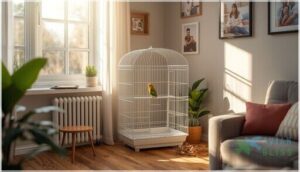
Where you place your bird’s cage can make or break their comfort and health. Your bird needs a spot that shields them from temperature swings, loud noises, and household hazards while still letting them feel part of the family.
Let’s walk through the key factors that’ll help you find the perfect location.
Avoiding Drafts and Temperature Extremes
Draft Free Zones start with smart cage placement—position your bird’s home at least 3 feet from exterior doors and away from direct air vents.
Keep the cage off the floor to avoid cold drafts that compromise bird health.
Install a digital thermometer within 2 feet to monitor temperature control, targeting 65 to 80 degrees Fahrenheit for ideal bird safety and thermal regulation.
Choosing Safe, Quiet Spaces
Your bird’s quiet hours begin with smart cage placement in low-traffic zones far from kitchens and busy streets. Noise reduction matters for bird health—soft furnishings like carpets absorb sound and create a serene atmosphere.
A door or partition adds calm environments when needed. Post clear signs requesting peaceful settings nearby. This cage location protects your bird’s well-being while maintaining bird safety through reduced stress.
Providing Natural Light and Views
Indirect natural lighting near windows promotes UVB benefits for vitamin D3 production and feather vibrancy. Position your cage where filtered sunlight reaches without overheating risks.
View stimulation from outdoor scenes prevents boredom and encourages natural behaviors. Avoid direct sun during peak hours—it causes heatstroke.
Light cycles matching day-night patterns regulate your bird’s hormones and sleep. This cage placement balances bird safety with environmental enrichment needs.
Flooring Considerations for Cleanup
Choose sealed floors like vinyl or tile—they resist water and clean fast with mild detergent. Place absorbent mats under your cage to trap spills and prevent puddles.
Quick cleanup within five minutes stops odor control problems and staining. These flooring materials support easy cage maintenance and mess management features.
Your cleaning schedule stays simple when spill containment works right, keeping cage hygiene hassle-free for proper bird cage setup.
Essential Cage Accessories and Furnishings
Your bird’s cage needs more than just four walls and a door. The right accessories create a safe space where your bird can eat, drink, perch, and play throughout the day.
Let’s cover the essentials you’ll need to set up a healthy environment.
Food and Water Dishes Placement
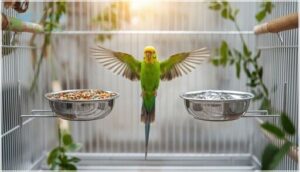
Proper bowl placement keeps your bird healthy and your cage maintenance simple. Position food bowls and water bowls on opposite sides to encourage movement and prevent cross-contamination.
Follow these dish height and feeding station guidelines:
- Place bowls 1 to 2 inches above the cage floor to reduce waste contamination.
- Use stainless steel for water quality and easy cleaning.
- Refresh hydration systems daily to prevent bacterial growth.
Perches: Types and Placement
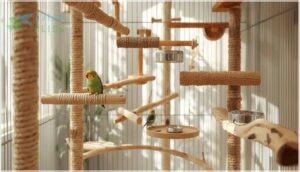
Your bird’s feet spend every resting moment on perches, so choosing the right ones matters for long-term health. Natural wood types offer varied diameters that exercise foot muscles and prevent pressure sores. Install at least four distinct sizes—covering about 70 percent grip contact—to build dexterity.
| Perch Materials | Benefits | Placement Tips |
|---|---|---|
| Natural wood | Mimics branches, exercises feet | Mount at different heights |
| Textured rope | Warm, varied grip | Secure to prevent fraying |
| Cork or silicone | Soft, prevents splinters | Rotate regularly for interest |
| Grooved wood | Trims claws naturally | Position away from food dishes |
Position perches throughout your cage layout to encourage climbing. Place them away from food and water to reduce contamination risk. Reserve one dedicated sleeping perch with a calm, comfortable diameter. Avoid mounting directly above feeding areas to prevent droppings exposure. Secure all mounts firmly—wobble creates stress and injury risk. Rotate free-standing options weekly to create new routes and maintain engagement.
Bird Baths and Bathing Options
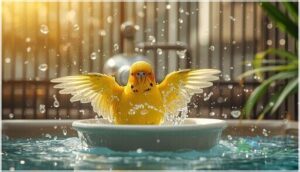
Clean feathers keep your bird cool and comfortable, so bathing options deserve careful thought.
Ground baths with shallow bowls—just one to two inches deep—let smaller species splash safely.
Heated baths prevent winter freezing, while recirculating water attracts more activity and discourages mosquitoes.
Hang models near perches or use simple water bowls you can remove for daily scrubbing.
Cage Lining Materials and Setup
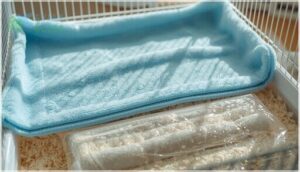
After bathing comes the floor. Liner materials protect your bird from waste buildup and keep cage hygiene manageable.
Fleece paired with a waterproof vinyl layer traps moisture while absorbent layers—cotton towels or cellulose pads—wick spills away from your bird’s feet. Cut liners two to three centimeters beyond cage edges, securing them with safe ties to prevent shifting during cage maintenance.
Adding Toys and Enrichment Safely
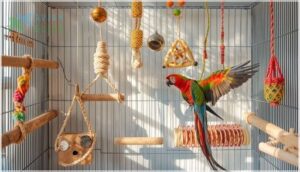
Toys and enrichment items aren’t just decorations—they’re essential for your bird’s mental and physical health.
The right toys prevent boredom, reduce stress, and give your bird opportunities to express natural behaviors like chewing, climbing, and foraging.
Here’s what you need to know to choose, rotate, and maintain toys that keep your bird safe and engaged.
Types of Bird-Safe Toys
Safe toys keep your bird mentally sharp and physically active. Natural wood toys work well when untreated and free of paint or varnish.
Foraging toys and bird puzzle toys hide treats inside, encouraging problem-solving behavior.
For metal toy safety, choose stainless steel components to avoid zinc or lead exposure. Acrylic chew toy options should be at least 3/16 inches thick without small detachable parts that risk choking.
Rotating and Cleaning Toys
Toy rotation tips keep your bird engaged without overwhelming them. Switch toys every two to four weeks using a simple system.
Clean each toy with mild soap and warm water before reintroducing it. Inspect for wear during every rotation and replace broken parts immediately.
Track changes with a quick checklist to maintain variety and support bird health and wellness through consistent cage maintenance.
Mental Stimulation and Foraging Items
Enrichment activities tap into your bird’s natural intelligence and prevent boredom-related behaviors. Foraging toys and puzzle boxes challenge your pet to work for treats, mimicking wild instincts while providing essential sensory stimulation.
- Hide small fruit pieces or seeds in a foraging box filled with safe paper or straw
- Rotate interactive games every few weeks to maintain interest and bird behavior
- Use puzzle boxes sized for your species—medium parrots need at least 6 by 8 inches with proper depth
Avoiding Unsafe Toy Materials
Toxic material risks start with small parts—magnets and loose beads cause intestinal blockages if swallowed. Choose safe plastic options that are BPA-free, avoiding PVC with harmful phthalates.
Metal toy safety requires stainless steel components, never galvanized zinc that poisons birds. Natural fiber toys and chemical-free toys with untreated wood prevent lead exposure, supporting bird health and wellness through proper avian care and bird safety and security.
Setting Up a Clean and Hygienic Cage
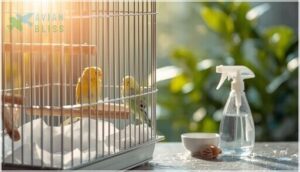
A clean cage isn’t just about appearances—it’s the foundation of your bird’s health. Poor hygiene can lead to respiratory infections, bacterial growth, and stress that weakens your bird’s immune system.
Let’s walk through the essential cleaning practices that keep your feathered friend safe and thriving.
Lining and Changing Cage Bottoms
Proper cage liners protect your bird’s health and simplify waste management. You can use paper liners, newspaper, or absorbent pads on the cage bottom—all non-toxic and easy to replace.
Change liners every other day to maintain cage hygiene and prevent bacterial growth. Avoid cat litter, sand, or wood shavings, as these cage materials trap moisture and harbor pathogens that compromise bird health and wellness.
Daily and Weekly Cleaning Routines
A cleaning schedule keeps your bird healthy and simplifies cage maintenance. Daily, refresh water dishes, wipe perches, and change cage liners to control waste management.
Weekly, disassemble removable components for thorough bird cage maintenance and cleaning. Vacuum bars and corners, inspect for damage, and guarantee proper ventilation systems.
Regular cage sanitizing prevents bacterial buildup while supporting bird health, feather cleaning, and beak care through a hygienic environment.
Disinfecting Accessories and Surfaces
Disinfection methods protect your bird from harmful bacteria while maintaining cage design and maintenance standards. Wipe plastic toys and metal cages with 70 percent isopropyl alcohol, allowing one minute to air dry.
For deeper accessory sanitizing, mix one part bleach to nine parts water for surface cleaning. Always rinse wooden perches after disinfection to prevent finish damage. These hygiene practices support bird safety through effective cage material care and a consistent cleaning schedule.
Ensuring Bird Health and Safety
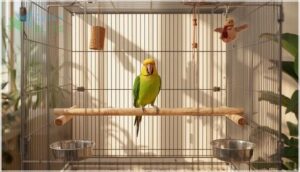
Your bird’s cage should be more than just a container—it needs to be a safe haven that protects them from harm while supporting their physical and mental health.
Even with the cleanest setup, certain risks can threaten your bird’s wellbeing if you’re not careful. Let’s walk through the key safety measures that’ll keep your feathered friend healthy, secure, and thriving.
Preventing Escape and Injury
Your bird is an escape artist, and one unlocked door means freedom—and danger. Start with secure latches that need two actions to open. Match bar spacing to your bird’s size to prevent entrapment. Seal gaps around doors with foam or weather stripping. Place perches away from cage doors.
Here’s your safety checklist:
- Inspect clips weekly for wear
- Check all latch systems function properly
- Verify cage size allows safe movement
- Replace damaged components immediately
Bird safety depends on vigilance.
Monitoring for Stress and Boredom
Locks and latches aren’t the only things to watch. Your bird’s behavior tells you when something’s wrong. Look for panting, sudden screeching, or feather plucking—all stress signs that demand action. Boredom indicators like pacing or excessive sleeping mean your bird needs more mental stimulation.
| Stress Signs | Boredom Indicators |
|---|---|
| Open-mouth breathing | Pacing along bars |
| Feather fluffing | Over-preening |
| Tail bobbing | Excessive daytime sleep |
| Appetite changes | Repetitive screaming |
Track behavioral trends daily. If problems persist beyond two weeks, consult your vet. Environmental enrichment protects bird welfare and promotes overall bird health and safety through proper pet bird care.
Providing Fresh Food and Water
Beyond watching behavior, your bird’s nutrition balance demands daily attention. Change water bowls and water dishes every 24 hours to prevent bacterial growth.
Provide fresh bird food—pellets, seeds, fruits, and leafy greens—to meet dietary needs and maintain nutrition balance. Remove uneaten produce after four hours. Position food and water on opposite sides to encourage movement and support feeding schedules that protect pet bird care standards.
Avoiding Hazardous Cage Items
Just as fresh food protects birds’ health, removing hazardous items prevents injury. Check for sharp edges on bars and trays that can cut feet.
Inspect toys for entanglement risk from frayed rope or choking hazards like loose beads. Keep electrical dangers—cords and wires—away from the cage.
Avoid toxic material in coatings, adhesives, and cleaning supplies to maintain bird cage safety considerations that support birds’ safety and health.
Common Bird Cage Setup Mistakes
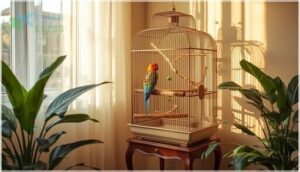
Even experienced bird owners can make setup mistakes that affect their bird’s health and happiness. Small errors in cage selection, placement, or furnishings can lead to stress, injury, or behavioral problems.
Here are the most common mistakes you’ll want to avoid when setting up your bird’s cage.
Choosing The Wrong Cage Size
You might think any cage will do, but cage size errors are one of the biggest mistakes you’ll make. When you choose a cage that’s too small, your bird can’t fully extend its wings or enjoy natural flight. This creates serious health consequences over time.
- Muscle atrophy from restricted movement and exercise
- Feather damage when rubbing against cramped perches
- Mental stress from inability to express natural behaviors
- Toe injuries from overcrowded accessory placement
Your bird needs horizontal space—at least twice its wingspan—to thrive, not just survive.
Improper Bar Spacing
Spacing guidelines aren’t optional—wrong bar spacing puts your bird in immediate danger. Gaps wider than 3/8 inches let small birds escape or trap their heads, while tight bars damage feathers.
Escape prevention starts with checking spacing against your species’ requirements. Conduct cage safety checks every two weeks for bent bars that increase bird trauma causes and bar injury risks.
Poor Cage Placement
Draft placement near windows creates hazards you can’t ignore—temperature control fails when cages face direct sunlight exposure or cold drafts. Noise pollution from busy hallways raises stress hormones, while kitchen fumes damage airways.
Bird cage placement and environment directly affect bird safety: position your cage against a quiet wall with indirect light. Regular bird cage maintenance and cleaning becomes easier when you choose flooring that accommodates mess, protecting bird safety features you’ve already installed.
Insufficient Accessories or Stimulation
Boredom sets in fast when your cage lacks enrichment activities—birds show disinterest within days without variety. You need multiple perches at different heights, foraging techniques like hidden treats, and bird enrichment through puzzles that require problem solving.
Rotate toys every one to two weeks to maintain mental stimulation. Include bird bath options and cage activities that encourage natural bird behavior and stimulation through exploration.
Transitioning Your Bird to a New Cage
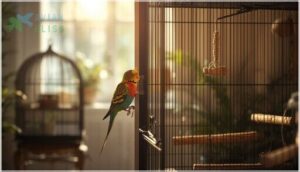
Moving your bird to a new cage can feel overwhelming for both of you, but the right approach makes all the difference. Your bird’s comfort depends on how carefully you handle the move and how closely you watch their response.
Here’s what you need to know to make the move as smooth and stress-free as possible.
Reducing Stress During The Move
Moving your bird to a new cage can feel like uprooting its entire world. Your bird’s comfort and stress levels depend on how you handle this relocation, so approach it with patience and clear strategy.
These relocation tips help minimize anxiety and stress and keep your feathered friend secure during what can be an overwhelming change.
- Place a familiar perch or toy from the old cage into the new setup to provide emotional support and continuity
- Move the cage during daylight hours when your bird is naturally alert and less disoriented
- Keep the new cage in the same room for several days before relocating it to help your bird adjust gradually
- Maintain your usual feeding schedule and use the same dishes to reduce decision fatigue and confusion
- Speak calmly and spend extra time near the cage to reassure your bird through the relocation process
Use these moving strategies and bird calming techniques to support birds’ stress management while protecting bird cage safety considerations throughout the relocation.
Monitoring Adjustment and Behavior
After your bird moves in, watch how it reacts—those first few days tell you everything. Record baseline behavior over 3 to 7 days to spot stress signals like feather ruffling or unusual droppings. Track activity peaks, feeding patterns, and vocalization changes to guide environmental adjustments.
| Behavioral Signals | What to Monitor | Action Needed |
|---|---|---|
| Eating patterns | Time spent feeding, amounts consumed | Adjust dish placement if bird avoids certain areas |
| Vocalization | Chirping frequency, screaming episodes | Increase bird socialization if anxiety persists beyond 72 hours |
| Feather condition | Ruffling, plucking, soilage on bars | Consult veterinarian if health indicators worsen after 24 hours |
| Activity levels | Perch use, play behavior, nighttime wakefulness | Make environmental adjustments to cage setup for bird behavior and stimulation |
This stress monitoring approach fosters bird health and wellness while optimizing your bird cage setup for long-term comfort and enrichment.
Maintaining The Ideal Cage Environment
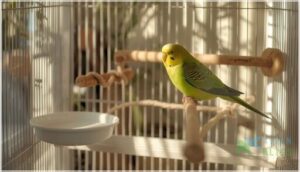
Your bird’s cage isn’t a one-and-done setup. Over time, wear happens, needs shift, and what worked last month mightn’t cut it today.
Staying on top of these changes keeps your bird safe, healthy, and comfortable for the long haul.
Regular Inspection for Wear and Damage
Even a well-chosen cage protection won’t protect your bird if rust or cracks develop unnoticed. Set up a monthly inspection log to track wear detection and damage assessment on cage materials, latches, and perches.
Check for paint chips, frayed rope, or wobbly doors during your cage maintenance routine. Safety checks catch problems early, preventing injury and keeping your bird’s environment secure.
Updating Accessories as Needed
After spotting cracks or rust, it’s time for cage refresh action. Replace worn dishes with shatter-resistant porcelain or stainless steel to prevent chip hazards.
Swap aging perches for natural wood options that support variable grip and reduce pressure points.
Toy rotation every 2 to 4 weeks keeps bird enrichment fresh and prevents frayed parts. Move your bird bath 6 inches from food to avoid contamination—these cage upgrades protect health.
Adapting Setup for Changing Bird Needs
As your bird ages, bird growth demands cage adaptation. Increase cage size and dimensions by 10 percent when activity rises or multiple birds join. Adjust choosing bird cage bar spacing from 1.0 to 2.5 cm to prevent injuries.
Toy rotation every two weeks aids health monitoring. Moving a bird to a new cage means updating perches for foot health—these environmental adjustments match bird personality and cage features throughout life stages.
Scheduling Routine Veterinary Check-Ups
After you’ve updated accessories and cage setup, your pet bird needs consistent veterinary care. Schedule annual check-ups with an avian veterinarian to monitor bird health—older or ill birds require visits every six months.
Bring medical records to each appointment so your vet can review vaccination plans and track changes. These exams catch early signs of illness and keep your bird care routine on track.
Frequently Asked Questions (FAQs)
How should a bird cage be set up?
Start with the right cage size and bar spacing for your species.
Add natural perches at different heights, secure food dishes, and position the cage in a draft-free spot with natural light.
What should I put in the bottom of a bird cage?
Like a fresh canvas for your bird’s daily life, the cage bottom needs plain newspaper or unscented paper towels.
Change these bird-safe cage liners daily to prevent bacterial buildup and maintain hygiene.
How often should I replace cage perches?
Inspect perches weekly for cracks or wear. Replace natural wood perches every 6 to 12 months, rope perches every 6 months.
Replace any perch showing sharp edges, fraying, or flaking paint immediately to protect your bird’s feet and health.
Can multiple bird species share one cage?
Generally, you shouldn’t house different bird species together. Species tolerance varies widely, and cage sharing increases health risks, territorial conflicts, and stress.
Proper habitat design with separate spaces protects pet birds from injury and disease.
What humidity level is best for birds?
Most pet birds thrive when you maintain humidity levels between 40 and 60 percent, supporting feather health and respiratory care.
Monitor air quality with a hygrometer to guarantee birds’ comfort and overall avian care needs.
Should I cover the cage at night?
Covering your bird cage at night can reduce night frights and support healthy bird sleep.
Use breathable cover materials to maintain cage ventilation while providing darkness benefits that align with natural pet bird behavior and enrichment needs.
How do I introduce new birds safely?
Start with a quarantine process—keep your new bird separate for two to four weeks.
Schedule avian health checks for both birds, then use gradual introduction techniques like visual exposure before attempting safe integration methods together.
Conclusion
Your bird will spend thousands of hours inside that cage, so every detail matters. Learning how to set up a bird cage properly transforms bare metal into a thriving sanctuary where your companion can stretch, play, and rest safely.
Check bar spacing weekly, rotate toys monthly, and watch your bird’s behavior closely. When you get the setup right, you’re not just arranging accessories—you’re building a foundation for years of vibrant health and contentment.
- https://www.aav.org/blogpost/1778905/322568/Minimum-Cage-Size-Recommendations
- https://www.avma.org/pages/home.aspx
- https://www.revivalanimal.com/learning-center/full-spectrum-lighting-for-birds
- https://bestfriends.org/pet-care-resources/light-birds-sunlight-vs-full-spectrum-bulbs
- https://www.meadowsah.com/the-importance-of-avian-lighting