This site is supported by our readers. We may earn a commission, at no cost to you, if you purchase through links.
Most bird owners don’t realize their pet is malnourished until the damage is already done. A seed dish that’s never empty can create a false sense of security—but a full bowl doesn’t mean a nourished bird. Seeds alone lack the vitamins, amino acids, and minerals a bird needs to stay healthy.
Malnutrition in pet birds develops slowly. Feathers lose their sheen. Muscles waste quietly beneath the plumage. By the time behavioral changes appear, deficiencies have often been building for months. Knowing how to tell if your bird is malnourished—before a crisis hits—can make the difference between a full recovery and irreversible decline.
The signs are readable, once you know what to look for.
Table Of Contents
- Key Takeaways
- Key Signs Your Bird is Malnourished
- Physical Differences: Malnourished Vs. Healthy Birds
- Common Causes of Bird Malnutrition
- How to Assess Your Bird’s Nutritional Status
- Steps to Take if You Suspect Malnutrition
- Preventing Malnutrition in Pet Birds
- Essential Supplements and Dietary Strategies
- Frequently Asked Questions (FAQs)
- How long can birds survive without eating?
- How to nurse a sick bird back to health?
- Can malnutrition affect a birds lifespan?
- Do malnourished birds recover fully with treatment?
- How does stress contribute to poor nutrition?
- Are some bird species more malnutrition-prone?
- Can malnutrition cause behavioral or personality changes?
- Conclusion
Key Takeaways
- full seed bowl is one of the most misleading signs of health — seeds alone can’t provide the vitamins, amino acids, and minerals your bird needs to thrive.
- Malnutrition shows up in the body before it shows up in behavior, so watch feathers, keel bone sharpness, and droppings weekly for early warning signs.
- Species-specific dietary needs matter — what works for a macaw can leave a finch deficient, and ignoring that gap is one of the fastest routes to serious health decline.
- earlier you act, the better the outcome — birds caught in early malnutrition can recover fully, but waiting until crisis hits risks irreversible organ and tissue damage.
Key Signs Your Bird is Malnourished
Your bird can’t tell you something’s wrong — but their body will. Most signs of malnutrition show up gradually, which makes them easy to miss if you’re not sure what to look for.
Knowing which nutrients your bird actually needs can help you spot deficiencies early — natural sources of avian vitamins are a good place to start building that foundation.
Here are the key warning signs that deserve your attention.
Dull or Brittle Feathers
Feathers are your bird’s most visible health report. When nutrition breaks down, feathers show it first.
- Stress bar formation appears as dark horizontal lines — a direct sign of methionine deficiency during growth
- Zinc deficiency produces frayed, weak shafts prone to snapping
- Essential fatty acid shortage leaves plumage dry and dull
- Keratin synthesis issues from protein gaps create brittle, easily broken feathers
- Feather discoloration — vibrant colors fading to gray — signals a diet missing carotenoids and key vitamins
An avian veterinarian can pinpoint which deficiency you’re dealing with. A balanced diet fixes most of these feather changes before they worsen. Regular veterinary check‑ups can catch early vitamin A deficiency signs.
Feather Plucking and Excessive Preening
Poor nutrition doesn’t just dull feathers — it irritates the skin beneath them. Vitamin A deficiency dries out feather follicles, triggering the itch that starts excessive preening. What looks like feather care can quietly become self‑destruction. A lack of essential amino acids can weaken feathers and prompt plucking.
| Behavior | What It Signals |
|---|---|
| Focused chest plucking | Malnutrition symptoms, skin irritation |
| Extended shaft‑chewing | Enrichment deficiency or hormonal imbalance |
Environmental stress and behavioral therapy needs often overlap with dietary gaps — your vet can untangle which is driving the feather changes.
Lethargy and Weight Loss
When feathers signal distress, the body often follows. Lethargy and weight loss are two of the most telling bird malnutrition symptoms — and easy to miss until they’re serious. A bird losing just 5% of its body weight needs attention now.
Watch closely for:
- Sitting fluffed on the cage floor for hours
- Dropping below normal activity monitoring benchmarks
- Visible keel bone sharpness during handling
Weight trend analysis using a gram-accurate scale weekly gives you Early Intervention Triggers before decline accelerates. Your bird’s metabolic rate and energy conservation responses don’t lie — consult an avian veterinarian if bird weight monitoring shows sudden drops.
Changes in Droppings
Your bird’s droppings tell a story.
Color Shifts matter—dark green or reddish feces signal digestive distress or internal bleeding from vitamin deficiencies.
Watch for Consistency Variations like watery or sticky stools, and Frequency Fluctuations below 10 droppings daily.
Undigested Particles and Odor Changes point to absorption failure.
Bird droppings analysis is one of the clearest malnutrition signs your avian veterinarian will ask about first.
Respiratory Issues and Squinted Eyes
When malnutrition takes hold, your bird’s airways feel it first. Open-beak breathing at rest and visible tail bobbing mean the chest muscles are working overtime just to pull in air.
Nasal discharge, quiet wheezing, and eye swelling often follow — especially on seed-heavy diets that strip vitamin A. Choanal plaques can narrow the airway fast. Don’t wait. See an avian veterinarian today.
Physical Differences: Malnourished Vs. Healthy Birds
Once you know the warning signs, the next step is learning what a healthy bird actually looks like — so you can spot the difference clearly. Malnourishment leaves real, visible marks on a bird’s body.
Catching these signs early matters, and knowing how stress affects bird health can help you connect the dots between behavior and physical decline.
three physical indicators are the ones worth examining first.
Breast Muscle Atrophy
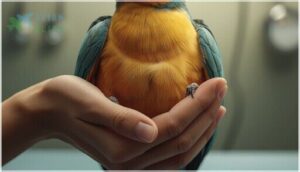
Run your fingers along both sides of the keel bone — this simple palpation technique tells you a lot. In a healthy bird, breast muscle forms a rounded, convex shape over the keel. With protein deficiency and bird weight loss, those muscles waste away, leaving a flat or concave depression.
| Condition | What You Feel |
|---|---|
| Healthy | Rounded, convex muscle over keel |
| Mild atrophy | Flat muscle, keel edge noticeable |
| Moderate atrophy | Slight concavity, sharp keel edges |
| Severe malnutrition | Razor-sharp keel, no muscle padding |
Muscle shape scoring this way catches decline early. Flight muscle weakness follows quickly — don’t wait.
Feather Color Fading
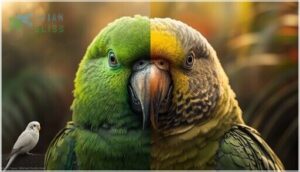
Color is your bird’s health report card. Vitamin A deficiency fades vibrant greens to dull yellowish hues — you’ll notice it first in Amazons. Lysine shortages compromise Keratin Integrity, shifting feathers toward yellow. Without UV Light Influence, Pigment Metabolism slows, dulling saturation. Poor Carotenoid Sources worsen feather discoloration fast.
| Species | Healthy Color | Malnourished Color |
|---|---|---|
| Amazon Parrot | Deep green | Yellowish-green |
| African Grey | Slate grey | Pink-tinged patches |
| Budgerigar | Bright yellow-green | Washed-out pale yellow |
These bird malnutrition symptoms signal urgent dietary gaps.
Eye and Beak Health Indicators
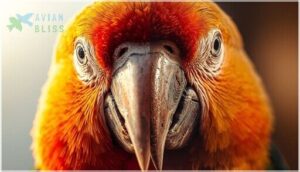
Your bird’s eyes and beak don’t lie. Periorbital edema — that telltale puffiness around the eyes — often signals vitamin A deficiency in seed-fed birds. Conjunctivitis signs like red membranes and crusty discharge follow quickly. White plaque formation near the mouth confirms squamous metaplasia. Dry eye symptoms and beak overgrowth round out the picture.
| Indicator | Healthy Bird | Malnourished Bird |
|---|---|---|
| Eye appearance | Clear, bright, alert | Sunken eyes, swelling |
| Discharge | None | Thick white crusting |
| Beak condition | Smooth, symmetrical | Overgrown, asymmetrical |
| Plaques | Absent | White patches present |
| Conjunctiva | Flat, pink | Inflamed, protruding |
Beak and nail problems signal calcium or D3 gaps needing correction. These bird malnutrition symptoms demand prompt veterinary attention.
Common Causes of Bird Malnutrition
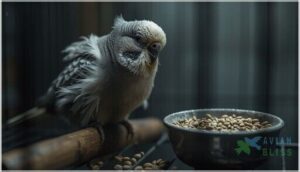
bird health problems don’t appear out of nowhere — they trace back to what’s in the food bowl.
A few dietary mistakes can quietly drain your bird’s health over months before you notice anything wrong.
Here’s what usually drives malnutrition in pet birds.
Seed-Only Diets and Poor Food Choices
Seeds look like a complete meal — they’re not. A seed‑only diet is one of the most common causes of bird malnutrition, and it’s easy to fall into. Here’s what that bowl of sunflower seeds is quietly doing:
- Pushes fat intake to 40–50%, driving Fatty Liver Risk
- Triggers Obesity Cardiovascular Issues, including right‑sided heart failure
- Causes Feather Greasiness and brittle plumage from fat overload
- Fuels Behavioral Aggression and lethargy from nutritional deficiencies
- Creates Seed Contamination Hazards — mold, pesticides, and fungal spores
Your bird needs more than seeds can offer.
Vitamin and Mineral Deficiencies
Each deficiency tells its own story.
Vitamin A deficiency causes white plaques in the mouth and sinuses. Calcium deficiency leads to soft bones and seizures. Vitamin D deficiency warps the beak and weakens immunity. Selenium deficiency damages heart muscle. Iodine deficiency swells the thyroid, compressing the airway.
Every deficiency leaves its mark: from plaques and soft bones to a failing heart and a strangled airway
These aren’t rare — predictable consequences of ignoring avian nutrition’s core minerals and vitamin requirements.
Inadequate Fresh Food Variety
Even a varied seed bowl doesn’t replace real fresh food selection. Your bird needs fiber diversity, leafy green benefits, and fruit antioxidant variety daily. Without them, feathers fade and digestion suffers.
Watch for these warning signs:
- Loose, dark stools from missing vegetable fiber
- Dull feathers without Vitamin C sources
- Labored breathing from no herb enrichment
- Weight gain despite a full bowl
A balanced diet built around bird fresh food prevents these nutritional deficiencies before they take hold.
Species-Specific Dietary Needs
Fresh food variety matters, but so does matching the diet to your specific bird.
A macaw’s needs look nothing like a finch’s. Parrot calcium requirements differ from raptor bone density needs. Lory fruit diets, finch nectar blends, and insectivore protein ratios all vary widely.
Ignoring species-specific nutritional requirements is one of the fastest routes to bird nutritional deficiencies — and solutions start with knowing your bird’s biology.
How to Assess Your Bird’s Nutritional Status
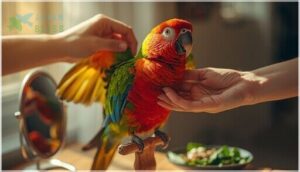
Knowing the signs is one thing — but reading your bird’s overall condition takes a bit more practice.
A few simple checks can tell you a lot about what’s going on nutritionally. Here’s where to focus your attention.
Monitoring Weight and Body Condition
Weighing your bird weekly is one of the simplest ways to catch malnutrition early. A digital scale with 1-gram resolution makes weekly tracking reliable and consistent.
- Weigh at the same time each week for a true baseline weight
- Graph weight trends to spot slow, creeping loss
- Feel the keel bone during your early muscle check
- Flag any 5–10% drop immediately
- Log date, grams, and observations every session
Observing Behavior and Activity Levels
Numbers on a scale tell part of the story. Behavior fills in the rest.
Watch for bird behavior changes like dropping Climbing Frequency, avoiding Exploratory Flights, or losing interest in Toy Interaction — these signal declining bird energy levels fast. Reduced Vocal Play and shifting Perch Preference away from higher spots are quieter signs of lethargy. Bird appetite loss often follows.
Tracking Dropping Changes
Droppings don’t lie. A simple Paper Lining System — plain white paper on the cage floor — turns daily cleanup into bird dropping analysis. Watch for these warning signs through Color Chart Logging and Frequency Timing:
- Dark green or watery droppings suggesting the bird isn’t eating enough
- Undigested Food Identification: visible seeds or pellets passing whole
- Sudden drops in frequency signaling dangerous weight loss
- Discoloration lasting beyond one day
Use the Sample Preservation Method — fresh dropping in a clean container — for your vet visit.
Steps to Take if You Suspect Malnutrition
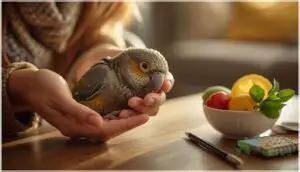
If you think your bird might be malnourished, acting quickly makes a real difference. The steps you take in the next few days can shift things from concerning to manageable.
Here’s what you should do first.
Consulting an Avian Veterinarian
Don’t wait until things get critical — consulting avian veterinarians early makes a real difference.
Your vet will start with a Diet History Review, then move to a Physical Examination and Blood Work Analysis to confirm bird nutritional deficiencies.
| What Happens | Why It Matters |
|---|---|
| Diet History Review | Spots seed-heavy patterns fast |
| Blood Work Analysis | Confirms deficiencies accurately |
| Nutrition Counseling | Builds a practical recovery plan |
Follow-up Appointments keep your bird on track.
Emergency Actions for Emaciated Birds
If your bird has crossed into true emaciation, act fast — but stay calm. Start with a Warm Box Setup: a quiet, ventilated container at 24–30 °C. Gentle Handling matters here; fragile muscles bruise easily.
Your Rehydration Protocol comes before food — a dehydrated gut can’t absorb calories safely. Then begin Controlled Refeeding in small amounts. Keep monitoring critical signs closely throughout bird emergency care.
Transitioning to a Balanced Diet
Think of diet shift as a slow river crossing — rushing it risks a stumble. Start with 75% old food and 25% pellets, then shift gradually as your bird accepts the change.
Pellet Introduction Timing matters: offer new food first thing in the morning.
Use Foraging Enrichment and Owner Monitoring Tools like a gram scale to catch weight dips early and correct nutritional deficiencies before they deepen.
Preventing Malnutrition in Pet Birds
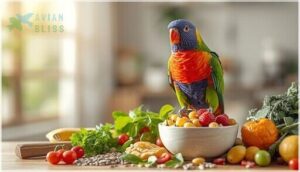
Prevention is always easier than recovery, and your bird’s diet is the best place to start.
A few consistent habits can make a real difference in their long-term health. Here’s what you can do to keep malnutrition from taking hold in the first place.
Balanced Diet Recommendations
balanced diet is your bird’s first line of defense. Most companion birds thrive on 60–80% high-quality pellets — choose species-specific pellet formulas matched to your bird’s size and type.
Fill the rest with varied vegetables rich in vitamin A, like leafy greens and carrots. Following pellet ratio guidelines keeps bird nutrition consistent and removes the guesswork from daily bird balanced diet strategies.
Fresh Food and Supplement Selection
Fresh food selection makes a real difference.
Rotate leafy greens variety — kale, romaine, and spinach — as reliable Vitamin A sources.
Add calcium-rich snacks like cuttlebone or cooked sweet potato regularly.
For Low-Toxic Fruit Picks, stick to berries, mango, and seedless apple.
Sprouted seed benefits include better nutrient absorption and hydration.
Pair bird fresh food choices with quality supplements to truly anchor a balanced bird supplement selection routine.
Importance of Annual Wellness Checks
Annual bird wellness checks do more than confirm your bird looks fine. They catch problems you can’t see yet.
- Early disease detection: Blood panels reveal liver or kidney strain before symptoms appear.
- Baseline health trends: A gram-by-gram weight history flags slow decline early.
- Nutrient blood panels: Targeted tests identify deficiencies in vitamins A, calcium, or protein.
- Owner education: Vets demonstrate home weighing and teach you what dropping changes mean.
- Preventive diet adjustments: Annual bird veterinary care lets you adjust feeding before malnutrition takes hold.
Adjusting Diet for Life Stages and Seasons
Your bird’s needs shift with every life stage and season. A chick isn’t a breeding hen, and a molting adult isn’t a winter bird conserving heat.
| Life Stage / Season | Key Need | Food Source |
|---|---|---|
| Juvenile Protein Needs | 20–25% protein | Sprouted seeds, soaked pellets |
| Breeding Calcium Boost | 2.5–3% calcium | Cuttlebone, egg food |
| Molting Omega‑3 | Reduce inflammation | Flaxseeds, quinoa |
| Winter Fat Intake | Thermoregulation | Sunflower hearts, nuts |
| Summer Hydration Foods | Prevent dehydration | Cucumber, watermelon |
Seasonal dietary adjustments for birds and species-specific nutritional requirements aren’t optional extras — they’re core to a balanced bird diet. Use supplementation strategies and smart bird diet shift planning to stay ahead of deficiencies before they appear.
Essential Supplements and Dietary Strategies
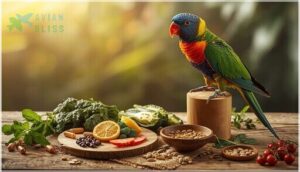
Getting your bird’s diet right isn’t just about food — it’s about making sure every nutrient actually lands where it needs to.
The right supplements and smart food choices can close the gaps that even a good diet sometimes leaves behind.
Here’s what you need to know to get it right.
Choosing Quality Vitamins and Minerals
Not all supplements are created equal — choosing quality supplements starts with label reading tips. Look for chelated minerals like zinc and copper for better nutrient bioavailability. Confirm vitamin A lists 5,000–8,000 IU per kg.
Third-party testing seals like NSF or USP verify purity. Always run expiration date checks — opened liquids lose stability within 90 days. Don’t let vitamin deficiencies persist from a poorly labeled bottle.
Safe Use of Pellets, Seeds, and Fresh Foods
Once you’ve got quality supplements sorted, what you pair them with matters just as much.
Pellet storage tips start with cool, dry spaces — below 80°F in airtight containers.
Keep seed portion control under 10% of the total diet.
Fresh food preparation means washing everything and avoiding toxic food avoidance offenders like onions and garlic.
Change timing and balanced bird diet adjustments take patience, but they work.
Supplementation Guidelines for Common Deficiencies
Each deficiency calls for a different fix.
For vitamin A, spirulina sprinkled daily over food gives safe precursors without toxicity risk.
Dosage timing matters — calcium powder twice weekly works for non‑breeding parrots, while UVB lighting at 290–315 nm enhances vitamin D3 synthesis better than oral supplements alone. Kelp iodine added to morning meals corrects thyroid issues from seed‑heavy diets.
Match your supplementation strategies to the specific gap.
Frequently Asked Questions (FAQs)
How long can birds survive without eating?
It depends on body size, fat reserve duration, and temperature impact. Water dependency and species metabolic rate matter just as much.
A canary may last under 24 hours. A macaw can survive roughly 3 days.
How to nurse a sick bird back to health?
recovery of tending a small flame — protect it, feed it gently, and don’t rush it.
Hydration Techniques, Warming Strategies, Assisted Feeding, Medication Administration, and Stress Reduction are your tools.
Can malnutrition affect a birds lifespan?
Yes, bird malnutrition directly shortens lifespan.
Organ damage, immune decline, and early nutrition impact compound over time.
Longevity studies confirm nutritional deficiencies cut avian health and survival — sometimes by 25% or more.
Do malnourished birds recover fully with treatment?
Many malnourished birds recover fully — but timing matters.
Feather regrowth speed, liver function rebound, and bone healing timeline all depend on how early you act.
Your avian vet is the key.
How does stress contribute to poor nutrition?
Stress triggers corticosterone release, which slows gut motility and disrupts your bird’s microbiome. Poor digestion follows, blocking nutrient absorption even on a good diet.
Environmental noise stress and feeding competition make things worse fast.
Are some bird species more malnutrition-prone?
Absolutely — some species practically win the malnutrition lottery.
African Grey calcium crashes, Lory iron overload, Mynah storage disease, Cockatoo vitamin-A gaps, and Finch protein shortfalls all reflect species-specific nutritional requirements you can’t ignore.
Can malnutrition cause behavioral or personality changes?
Mood swings, bird lethargy, and self‑preening habits can all signal bird malnutrition signs. Cognitive decline and neurologic tremors may follow.
Nutrient gaps quietly reshape bird behavior — activity lethargy and personality shifts included.
Conclusion
your bird telling you that you haven’t noticed yet?
Learning how to tell if your bird is malnourished isn’t just about spotting a problem—it’s about staying close enough to catch it early.
Feathers, droppings, weight, behavior: they’re all data points your bird offers every day.
A seed bowl that’s always full isn’t reassurance.
Real nourishment shows up in bright eyes, strong muscles, and steady energy.
That’s the standard worth protecting.
- https://lafeber.com/vet/body-condition-scoring/
- https://www.merckvetmanual.com/exotic-and-laboratory-animals/pet-birds/nutritional-diseases-of-pet-birds
- https://birdsupplies.com/blogs/news/signs-of-bird-malnutrition-and-how-to-save-your-bird-now
- https://theaviaryparrotfood.com/blogs/parrot-diet-and-nutrition/symptoms-of-vitamin-a-deficiency-in-parrots
- https://www.petindiaonline.com/story-details.php