This site is supported by our readers. We may earn a commission, at no cost to you, if you purchase through links.
A chickadee doesn’t care about your weekend plans—but it does care about the weather.
Watch your feeder long enough and you’ll notice the pattern: birds pile in before a storm, disappear when temperatures spike, and flood back the morning after a cold night like they haven’t eaten in days.
That’s not coincidence.
How weather affects wild bird feeder activity follows real biological logic, driven by energy demands, migration timing, and survival instincts shaped over millions of years.
Understanding those patterns changes how you manage your feeder—and what you’ll witness when you do.
Table Of Contents
- Key Takeaways
- Weather’s Impact on Bird Feeder Activity
- How Rain and Moisture Affect Feeders
- Sun and Heat: Challenges for Feeders
- Feeder Placement and Maintenance in All Weather
- Climate Change and Extreme Weather Effects
- Frequently Asked Questions (FAQs)
- How does the weather affect birds?
- Why do birds Hunker when it rains?
- How does weather affect animals?
- How do you feed birds in winter?
- Why should you sprinkle coffee grounds around your bird feeder?
- Do birds migrate early due to unusual weather?
- Which bird species are most weather-sensitive?
- Can wind alone deter birds from feeders?
- How does fog or humidity affect bird activity?
- Conclusion
Key Takeaways
- Birds flood your feeder before storms and after cold nights because their bodies are burning extra calories just to stay warm — your feeder isn’t a luxury, it’s a lifeline.
- wet seeds clump: mold fast, and can sicken birds within days, so a weekly clean and a rain guard aren’t optional extras.
- full sun turns seed rancid fast and drives birds away at midday, so feeder placement in shade genuinely matters.
- weatherproof setup and consistent maintenance now matter year‑round, not just in winter.
Weather’s Impact on Bird Feeder Activity
Weather doesn’t just change what birds do — it changes how often they show up at your feeder. A cold snap, a rainstorm, or a week of scorching heat can shift their whole routine.
Knowing which backyard birds visit wild feeders helps you spot exactly who’s missing when the weather turns.
Here’s how three key weather patterns shape feeder activity.
Seasonal Changes in Feeder Visitation
Seasons quietly reshape everything about your feeder — including who shows up and when.
- Winter Day Length shortens feeding windows, with visits clustering near midday
- Spring Migration Timing drives traffic spikes as birds fuel up for nesting
- Seasonal Seed Preference shifts with photoperiod influence and energy demands
- Summer’s long days extend feeder visits well beyond spring totals
Watch for Morning Peak Shifts — bird behavior follows the sun. Providing a high-protein summer diet helps nesting birds.
Effects of Temperature Fluctuations on Bird Feeding
Temperature swings hit your feeder harder than you’d think. When a cold snap arrives, energy intake spikes quickly — birds need extra calories just to stay warm.
That’s why morning visitation peaks are so reliable after chilly nights.
Seed moisture dynamics shift too; warm afternoons followed by cold mornings can crust seeds over.
Thermal feeder insulation and temperature-driven flocking both shape what Bird Feeding Strategies actually work day to day.
Research shows that temperature has little impact on species presence at feeders.
Influence of Precipitation and Storms on Bird Behavior
Rain changes everything at your feeder. Storm-driven migration pauses, push birds into sheltered spots, and rainy foraging shifts mean insect-eaters start pecking at seeds instead.
Wind shelter seeking pulls small songbirds to protected stations.
Then the storm breaks — and post-storm feeding spikes are real.
After the calm returns, birds flock to feeders fast — just make sure yours is clean, since moldy seed and rancid fat can quietly sicken hungry birds.
Wet feathers drain energy fast, so birds hit feeders hard to recover.
How Rain and Moisture Affect Feeders
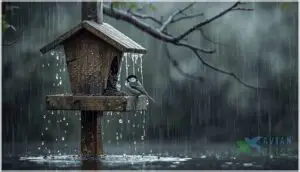
Rain is a feeder’s quiet nemesis — and it works fast.
Moisture sneaks into seed, soaks wood, and turns a perfectly good setup into a mess, birds won’t touch.
Here’s what’s actually happening when the weather turns wet.
Seed Spoilage and Clumping From Rain
A rainy week can quietly ruin your feeder before you notice anything’s wrong. When seeds stay wet, moisture-induced germination kicks in — seed coat swelling breaks down the outer layer, turning fresh seed into a soggy, clumped mess. Adhesion chemistry makes things worse, binding seeds together and to feeder surfaces.
A rainy week can silently ruin your feeder before you notice anything’s wrong
Here’s what’s actually happening:
- Sprouting waste — partial germination renders seeds nutritionally hollow through nutrient leaching
- Clumping — moisture-fused seeds block feeding ports entirely
- Seed spoilage — degraded seeds smell off, and birds notice
Rain guards and weatherproof bird feeders dramatically reduce weather exposure. Consistent feeder maintenance keeps things fresh.
Mold, Fungus, and Bacteria Risks
Wet feeders don’t just spoil seed — they become a health hazard. Biofilm formation coats plastic and wood surfaces with bacteria that resist rinsing. Fungal spore transmission spreads invisibly between visits. Mycotoxin exposure can harm birds eating contaminated seed.
| Risk | Cause | Solution |
|---|---|---|
| Mold growth | Damp conditions | Clean weekly |
| Bacterial slime | Stagnant moisture | Sanitize trays |
| Mycotoxins | Spoiled seed | Replace seed often |
Rain guards and consistent feeder maintenance protect avian health.
Feeder Structure Damage: Wood Rot, Rust, and Maintenance
Moisture doesn’t just spoil seed — it quietly dismantles your feeder. Wood feeders develop rot within a season if left unsealed, while metal feeders rust at bolts and hinges first.
Rot-resistant materials like cedar, stainless fasteners, protective coatings, and smart drainage design all extend feeder life considerably. Regular sealant application every year or two keeps weather impact on bird feeders manageable — and your bird feeder maintenance routine simple.
Sun and Heat: Challenges for Feeders
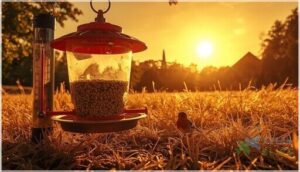
Rain isn’t the only thing working against your feeder.
Too much sun and heat can quietly spoil seed, warp plastic, and keep birds away during the hottest parts of the day.
Here’s what heat actually does to your setup.
Seed Overheating and Spoilage
Think of your feeder in full sun as a tiny oven. Temperatures above 35°C trigger thermal respiration acceleration and fat oxidation rates that turn fresh seed rancid surprisingly fast — sometimes within a week or two.
That heat also drives seed moisture migration, creating microbial heat feedback loops inside clumped seed piles. UV-induced rancidity quietly degrades nutritional value, threatening bird health before you even notice anything’s wrong.
Feeder placement in shade genuinely matters.
Plastic Warping and Material Durability
Cheap plastic feeders don’t stand a chance against a full summer. Without proper UV stabilizers, prolonged sun exposure breaks down the polymer structure — you’ll see warping, cracking, and discoloration within a season.
Better feeder design matters here: consistent wall thickness and additive reinforcement keep shapes stable through heat cycling. When shopping, look for polycarbonate or PETG materials — they’re built for genuine weather resistance.
Reduced Feeder Visits During Extreme Heat
When the thermometer climbs past 90°F, your feeder basically becomes a ghost town. Birds shift their feeding to dawn and dusk, cutting midday visits by up to 25 %.
Shade utilization becomes instinct— they’re managing stress, not laziness.
Watch for slowed pecking and quieter behavior as bird stress signals.
Smart feeder placement, seed type selection favoring high-energy options, water provision nearby, and feeder cooling through shade all support bird health during heat waves.
Feeder Placement and Maintenance in All Weather
good feeder setup isn’t just about where you hang it — it’s also about what it’s made of and how often you tend to it.
right choices here make a real difference in how well your feeder holds up through rain, heat, and everything in between.
Here’s what to focus on.
Choosing Weather-resistant Feeder Materials
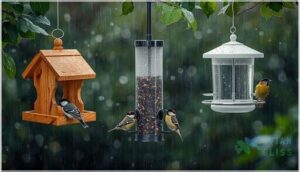
Your feeder’s lifespan starts with what it’s made of. Cedar durability comes from natural oils that quietly repel moisture and warping — no extra treatment needed.
Stainless steel corrosion resistance makes metal feeders worth the investment, especially in humid climates. UV-stabilized polycarbonate won’t crack or yellow over time, and composite moisture barrier designs handle wet winters without falling apart.
Always choose rust-proof fasteners — small detail, big difference.
Strategic Feeder Placement for Weather Protection
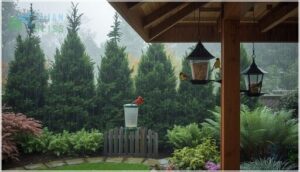
Good materials only go so far — placement does the rest.
Eave Shielding keeps seed dry by tucking feeders under overhangs, while Windbreak Positioning behind walls or evergreens cuts wind‑driven rain impact. Elevated Mounting at 4–5 feet reduces mud splash and feeder contamination. Smart Shelter Orientation and Microclimate Creation — grouping feeders in a sheltered pocket — quietly defend against sun damage and shifting weather patterns.
Cleaning and Maintenance Best Practices

Even the best placement can’t replace a solid cleaning routine.
Wet weather speeds up feeder contamination fast — damp seed turns moldy within days.
Stick to a weekly cleaning schedule: disassemble parts, scrub with warm soapy water, and sanitize monthly with a diluted bleach rinse.
Keep your tools organized, log each session, and inspect every component for rust or cracks before refilling.
Climate Change and Extreme Weather Effects
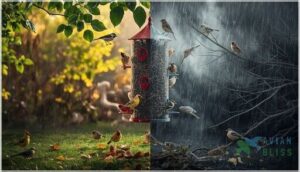
Climate change is making wild weather the new normal — and birds are feeling it.
Stronger storms, unpredictable temperatures, and habitat disruptions are shifting how and when birds show up at your feeder.
Here’s what’s happening and how you can help.
Increasing Frequency of Severe Storms
Storms aren’t just getting stronger — they’re showing up in places and seasons that used to be mostly quiet. Wind gusts are trending 20–40% more intense in some regions, hail frequency is rising, and nighttime storm risk is climbing too.
Storm timing shifts mean your weatherproof bird feeders face pressure year-round now.
Heavy rainfall and regional storm expansion are reshaping weather impact on wildlife in real, ongoing ways.
Impacts on Local Bird Populations and Feeding Patterns
All those storms aren’t just inconvenient — they’re reshaping bird behavior and habitat in ways you can actually see at your feeder.
Migration timing shifts throw off arrival windows, and species diversity changes when habitat fragmentation effects push birds into unfamiliar zones.
Rain impact on bird behavior, predator-prey dynamics, and dropping breeding success rates all reduce feeder visits and quietly signal wider avian health stress.
Conservation Strategies to Support Wild Birds
Small actions add up — and wild birds need them now more than ever.
- Prioritize Habitat Restoration and Native Planting to rebuild lost food and shelter networks
- Practice Predator Management to protect vulnerable nesting sites
- Offer Water Provision and Weatherproof Bird Feeders to support Avian Health and Nutrition year-round
- Join Community Engagement programs that drive Wildlife Conservation and smart Habitat Management
Fighting Climate Change Effects starts in your backyard.
Frequently Asked Questions (FAQs)
How does the weather affect birds?
Think of birds as tiny, feathered weather stations. Rain impact on bird behavior, temperature swings, and wind all shape their migration timing, molting cycles, breeding success, and territory shifts daily.
Why do birds Hunker when it rains?
When rain hits, birds shift into a hunkering posture — bills angled into the rain, feathers flat, body upright — so water runs right off.
It’s pure energy conservation, backed by water-repellent feathers and smart shelter-seeking behavior.
How does weather affect animals?
Weather shapes nearly every move animals make.
Cold snaps spike energy demands, heat drives shade-seeking, and storms trigger shelter instincts.
From Animal Migration to Weather Adaptation, wildlife constantly adjusts — a quiet example of Climate Resilience and Ecosystem Balance.
How do you feed birds in winter?
Like a warm hearth in a snowstorm, your feeder becomes a lifeline. Offer high-energy seeds, guarantee daily refilling, and provide fresh water. Species-specific diets keep winter bird health strong.
Why should you sprinkle coffee grounds around your bird feeder?
Sprinkling used coffee grounds around your bird feeder promotes soil enrichment, pest deterrence, and moisture retention.
They attract invertebrates nearby, giving birds a natural food source — a quiet microbial boost hiding right beneath your feet.
Do birds migrate early due to unusual weather?
Yes, birds do migrate early due to unusual weather. Warm spring triggers earlier insect hatches, pulling birds north ahead of schedule.
Storm‑induced fatigue, wind‑driven route shifts, and daylength mismatch all push migration timing off its natural rhythm.
Which bird species are most weather-sensitive?
Small-bodied birds and tropical migrants like prothonotary warblers feel weather shifts first. Boreal warblers, insectivores after rain, and elevational specialists also react strongly to temperature swings.
Can wind alone deter birds from feeders?
Wind alone won’t reliably keep birds away from feeders. Most species tolerate moderate gusts and ignore feeder sway if seed’s available. Wind perception matters less to them than hunger does.
How does fog or humidity affect bird activity?
Fog wraps your yard like frosted glass.
Birds struggle to spot feeders through reduced visibility, leaning on auditory cues instead.
Humidity raises flight costs and causes seed clumping, making every visit feel like extra work.
Conclusion
Think of your feeder as a weather station with wings—every visit, absence, and feeding frenzy tells you something real about what’s happening outside. Once you understand how weather affects wild bird feeder activity, you stop guessing and start responding.
Keep seeds dry, placement smart, and maintenance steady. The birds will do the rest. They’ve been reading the sky far longer than any forecast app—you’re just learning to read it with them.