This site is supported by our readers. We may earn a commission, at no cost to you, if you purchase through links.
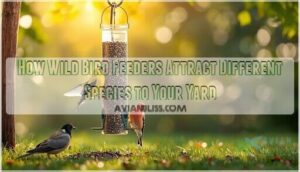
A single tube feeder filled with black oil sunflower seeds can draw over a dozen species to your yard within a week—without any special landscaping or expensive equipment.
Birds aren’t random visitors. They navigate by habit, anatomy, and instinct, and the right feeder speaks directly to those instincts.
A goldfinch (Spinus tristis) won’t compete at a platform feeder when a nyjer-filled tube suits its small beak perfectly. Understanding how wild bird feeders attract different species comes down to matching feeder design, seed type, and placement to the birds already moving through your area.
Table Of Contents
- Key Takeaways
- How Bird Feeders Attract Different Species
- Types of Bird Feeders and Their Visitors
- Choosing The Right Bird Food for Species
- Feeder Placement and Maintenance Tips
- Top 6 Bird Feeders for Attracting Species
- Frequently Asked Questions (FAQs)
- How do you attract birds to a bird feeder?
- How do I attract birds to my garden?
- What type of bird feeder do you use?
- How do I choose a bird feeder?
- Why put a potato in the bird feeder?
- Do bird feeders attract other animals?
- Why should you sprinkle coffee grounds around your bird feeder?
- Do bird feeders affect natural foraging behaviors?
- Which birds are active at feeders during night?
- How do feeders impact bird migration patterns?
- Conclusion
Key Takeaways
- Matching feeder design to bird anatomy—tube feeders for finches, platform feeders for cardinals, suet cages for woodpeckers—is the single biggest factor in which species show up in your yard.
- Black oil sunflower seeds are your best all-around choice because their thin shells and high fat content appeal to the widest range of backyard birds, from Cardinalis cardinalis to Poecile atricapillus.
- Where you hang your feeder matters as much as what’s in it—placing it 5–10 feet from shrubs gives shy species the cover they need to feel safe enough to visit.
- Bird feeder traffic shifts with the seasons, so rotating your seed types (suet in winter, mealworms in spring, nyjer in summer) keeps your yard relevant to both resident and migratory species year‑round.
How Bird Feeders Attract Different Species
Not every bird shows up at just any feeder — they’re pickier than you’d think.
Different feeders genuinely attract different species, so brushing up on bird feeding food tips and feeder selection can make a real difference in who stops by your yard.
type of feeder you hang, the seed you fill it with, and even where you place it all shape which species actually stop by.
Here’s a closer look at what drives those choices.
The Role of Feeder Types in Species Diversity
Think of your yard as a neighborhood diner — feeder shape influence and port size effects determine who pulls up a chair.
Tube feeders draw finches and chickadees through narrow openings, while platform feeders welcome cardinals and doves. Suet feeders and hopper feeders round out the mix, and multi-feeder synergy can pull in 30‑plus species by attracting specific bird species to each station.
For example, window feeders attract finches are especially effective for small songbirds.
How Seed Selection Influences Visiting Birds
Just as feeder type sets the table, seed selection decides who actually shows up. Black oil sunflower seeds pull in cardinals and chickadees thanks to their rich seed nutrient profiles — thin shells, high fat. Nyjer attracts goldfinches year-round, while safflower works as a squirrel-resistant seed that cardinals love.
Matching seed size preference to your target bird species is one of the smartest bird feeding strategies you can use. high-quality seed mixes reduce waste and attract a broader range of birds.
Impact of Feeder Placement on Species Attracted
Where you put your feeder matters just as much as what’s inside it. Cover proximity draws shy backyard birds like chickadees and cardinals — keep feeders 5 to 10 feet from shrubs.
Height variation attracts different bird species, while window distance under 3 feet reduces collisions. Good feeder spacing and yard habitat together go a long way toward creating a bird‑friendly habitat.
Seasonal Changes in Bird Feeder Visitors
Your yard’s cast of characters shifts with the calendar. Winter visitor spikes bring chickadees and nuthatches crowding in — feeder visits can jump tenfold during heavy snowfall.
Spring migration influx drops, with orioles and warblers briefly refueling.
Summer breeding dips traffic as insects return.
Then autumn species turnover reshuffles everything again. Daylength feeding patterns shape when birds show up, so adjust your seasonal bird feeding strategies accordingly.
Types of Bird Feeders and Their Visitors
Not all bird feeders are created equal — and that’s actually a good thing.
The style of feeder you hang outside matters just as much as the seed you put in it, because different birds are built to feed in different ways.
Here are the main feeder types and the birds you can expect to see at each one.
Tube Feeders for Finches and Chickadees
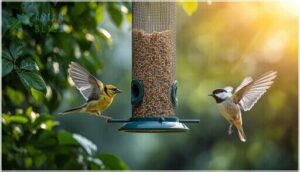
finch and chickadee magnet — and it’s mostly about design. Their small-hole design and snug perch bar spacing match how these birds naturally cling and hang. Fill yours with nyjer seeds, and goldfinches and house finches will find it fast.
mid-height placement, around 4–6 feet near shrubs, keeps the right visitors coming. A seasonal seed switch and regular bird feeder maintenance keep things fresh.
Platform Feeders for Cardinals, Jays, and Doves
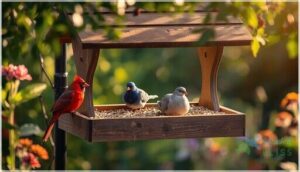
Cardinals, jays, and doves are built for open space — and platform feeders speak their language. Their wide, flat surface lets these larger birds stand comfortably and feed without competing for a perch.
- Seed size preference: sunflower seeds and mixed blends work best
- Feeder height: 3–5 feet suits ground-leaning species like doves
- Shade vs sun: partial shade keeps seed fresh longer
- Seasonal seed swaps: safflower in summer deters squirrels naturally
A roofed design also acts as a predator deterrent, keeping food dry and visits frequent.
Hopper Feeders for a Wide Range of Birds
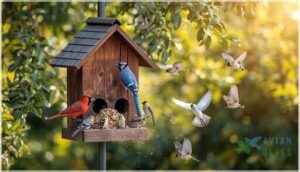
Hopper feeders are the neighborhood gathering spot of backyard birding. Their roofed moisture retention keeps mixed seed blends fresh, drawing finches, cardinals, grosbeaks, and jays in one busy hub.
Place yours near trees — tree adjacency brings in chickadees and titmice too. Side seed windows slow heavy feeders, and seasonal seed rotation keeps attracting diverse bird species throughout the year.
Suet and Tail-prop Feeders for Woodpeckers
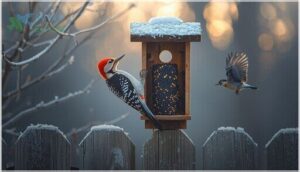
Woodpeckers need something to push against.
That’s where the tail-prop design comes in — a small ledge beneath the suet cake that lets birds like downy and red-bellied woodpeckers brace their stiff tail feathers while feeding.
Suet cake variations packed with nuts or insects boost winter fat demand appeal.
Upside-down suet feeders double as predator protection, keeping starlings away while your woodpecker species feed comfortably.
Nectar Feeders for Hummingbirds and Orioles
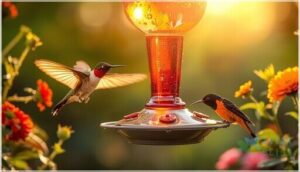
Hummingbirds and orioles are basically tiny helicopters chasing sugar — and the right feeder makes all the difference.
- Bottle vs Saucer: Saucer feeders spill less and stay cleaner
- Sugar Concentration: Mix 1 part sugar to 4 parts water
- Color Preference: Red attracts hummingbirds; orange draws orioles
- Ant Moats: Block crawling insects without harming birds
- Seasonal Bloom: Refresh nectar every 3–5 days in heat
Choosing The Right Bird Food for Species
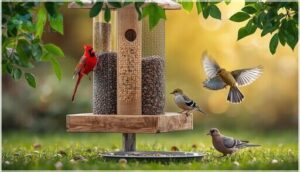
What you put in your feeder matters just as much as the feeder itself. Different birds have strong preferences, and matching the right food to the right species makes a real difference in who shows up.
Here’s a look at the best food options for attracting specific birds to your yard.
Black Oil Sunflower Seeds for Cardinals and Chickadees
If you stock just one seed, make it black oil sunflower.
The energy density alone — nearly 50% oil by weight — is why both Cardinalis cardinalis and Poecile atricapillus (chickadees) return daily.
Cardinals crack them at platform feeders; chickadees practice seasonal caching nearby.
Smartly attracting birds to feeders starts here.
| Feature | Cardinals | Chickadees |
|---|---|---|
| Preferred Feeder | Platform/hopper | Tube/mesh cage |
| Nutrient Benefits | Protein for molt | Fat for cold survival |
| Behavior | Tail-feeding behavior, perched | Grab-and-cache |
| Predator Avoidance | Feeds near shrubs | Retreats quickly to cover |
| Season Priority | Winter & nesting | Year-round |
Nyjer Seeds for Finches and Goldfinches
While cardinals crave sunflower seeds, goldfinches (Spinus tristis) have a different preference — Nyjer seeds. These tiny, oil‑rich seeds pack 25% crude fat, delivering serious nutritional benefits during molting and cold months.
For specialized feeder design, use tube feeders with small ports or mesh sock feeders. Peak seasonal timing runs July through fall.
Your thoughtful seed selection keeps finches returning all winter.
Safflower Seeds for Grosbeaks and Cardinals
Goldfinches love Nyjer, but if you want to draw in Cardinalis cardinalis and grosbeaks, safflower seeds are your best bet. Their nutritional benefits — 38% fat and 16% protein — make them ideal for seasonal feeding patterns and migration support tactics. Plus, squirrels hate the bitter taste, so your pest deterrence strategies basically run themselves.
Safflower seeds attract cardinals and grosbeaks while naturally repelling squirrels — pest control built into every bite
- Feeder design preferences: hopper or platform feeders work best
- Cardinals visit year-round, especially in winter
- Grosbeaks stop by during migration for protein-rich fuel
- Bird feeder tip: mix 30% safflower with sunflower for smooth bird species adaptation
Mealworms for Bluebirds and Robins
While safflower works beautifully for cardinals, Sialia sialis (Eastern Bluebirds) and robins need something different — mealworms.
live mealworms pack 19.5% protein and offer real hydration support. For feeding frequency, around 15 worms per bluebird daily. Use smooth-sided ceramic dishes as your container design.
Seasonal supplementation during cold snaps below 40°F keeps them coming back reliably.
Seed Blends for Attracting Mixed Species
Once you’ve sorted mealworms for bluebirds, think bigger — a well-mixed blend brings the whole neighborhood flock at once.
Energy-dense mixes built around sunflower seeds, nyjer seeds, and safflower seeds cover most backyard visitors.
Shell-free blends cut mess by 80 percent.
Add protein-rich additions like chopped peanuts for breeding season, and rotate your seed types seasonally to keep things fresh and squirrel-deterring components doing their job.
Feeder Placement and Maintenance Tips
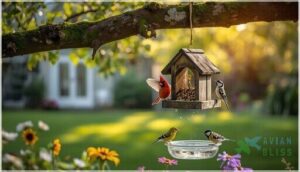
Getting birds to show up is one thing — getting them to stay is another. Where you place your feeder and how well you keep it up make a bigger difference than most people realize.
Here are a few simple tips to help you get the most out of your setup.
Optimal Locations to Maximize Bird Diversity
where you place your feeders matters more than most people realize. Hang them 5 to 6 feet high for chickadees and finches, and 6 to 10 feet for woodpeckers — height variation alone boosts bird diversity.
Keep feeders within 10 feet of cover, near water, and in quiet zones away from foot traffic. For window safety, stay under 3 feet or beyond 30 feet.
Keeping Feeders Clean to Attract Healthy Birds
A dirty feeder is basically a disease trap.
For solid bird feeder maintenance, clean seed feeders every two weeks — weekly during wet weather.
Bleach disinfection is simple: mix one part bleach to nine parts water, soak the feeders for 10 minutes, then rinse thoroughly.
Grab a bottle brush and old toothbrush as tool essentials.
Mold prevention and seasonal sanitizing keep your bird population genuinely healthy.
Preventing Pests and Predators
Keeping pests away takes a bit of planning, but it’s worth it for your birds.
- Mount squirrel baffles 4–5 feet up on raccoon-proof poles to block climbers.
- Position feeders 10 feet from trees for cat-safe placement.
- Hang ant moats above nectar feeders to stop crawling insects.
- Use hawk dome baffles to disrupt aerial attacks.
- These steps support bird health, wildlife conservation, and a truly bird-friendly yard design.
Ensuring Consistent Food Supply Year-round
Birds don’t take breaks — and neither should your feeder routine. Seasonal Stocking Schedule keeps things steady: swap seed types by season, add Weather‑Resistant Feed in winter, and use mealworms in spring when parents are feeding chicks.
Backup Food Sources like native berry shrubs fill the gaps naturally.
| Season | Bird Seed Selection | Feeding Priority |
|---|---|---|
| Winter | Black oil sunflower, suet | High — natural food scarce |
| Spring | Mealworms, mixed blends | High — migration + nesting |
| Summer | Nyjer, nectar | Moderate — insects abundant |
| Fall | Safflower, seed blends | High — pre-migration fueling |
Nutrient Rotation Plan paired with Automated Dispenser Timing means you’re never caught with an empty feeder. These Year-round Feeding Strategies support maintaining a Healthy Bird Population while honoring Sustainable Gardening for birds — practical seasonal bird feeding tips your backyard visitors will reward with return visits.
Top 6 Bird Feeders for Attracting Species
Picking the right feeder makes a real difference in which birds show up — and how often. There are a lot of options out there, but a handful stand out for their design, durability, and ability to draw in a wide variety of species.
Here are six worth considering.
1. More Birds Abundance Bird Feeder
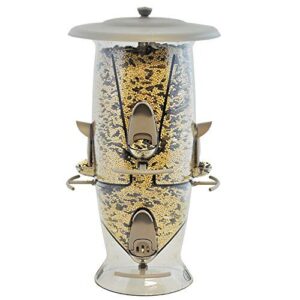
The More Birds Abundance Bird Feeder is a solid choice if you want variety at your feeder.
It holds 3.5 pounds of seed and has six adjustable ports, so multiple birds can eat at once.
The perches adjust too, welcoming both small finches and larger visitors like chickadees and wrens.
Swapping in the thistle inserts converts it into a finch feeder instantly.
Cleaning is simple — the base unbuckles and the whole thing opens up flat.
| Best For | Backyard bird watchers who want to attract a variety of species without fussing over complicated setups. |
|---|---|
| Feeding Ports | 6 adjustable ports |
| Bird Species | Finches, wrens, chickadees, woodpeckers |
| Material | Plastic |
| Squirrel Resistance | Not squirrel-proof |
| Year-Round Use | Yes |
| Easy Refill | Wide-opening tube top |
| Additional Features |
|
- Six adjustable ports mean several birds can feed at once, and the Stay Full system keeps seed flowing even when levels drop
- Perches adjust for both tiny finches and bigger birds, so you’re not turning anyone away
- Cleaning is genuinely easy — the base unlatches and lays flat, no tools needed
- Squirrels can lift the lid and help themselves, so you may need a baffle or squirrel-resistant seed
- A few buyers have received damaged units or found parts missing right out of the box
- Refilling can get a little messy if you rush it — the seed spills easily around the ports
2. iBorn Metal 6 Port Bird Feeder
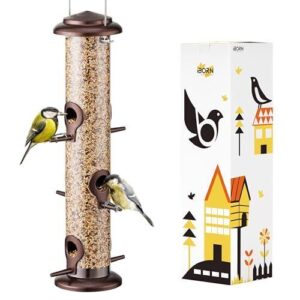
If durability is what you’re after, the iBorn Metal 6 Port Bird Feeder is hard to beat.
It’s built entirely from aluminum with a brushed copper finish that holds up against rain and rust.
Six evenly spaced ports let several birds feed at once, cutting down on the usual backyard squabbling.
Short perches give finches and sparrows a steady spot to land.
The flip-top lid makes refilling quick and clean.
It’s a no‑fuss feeder that just works, season after season.
| Best For | Backyard bird enthusiasts who want a sturdy, low-maintenance feeder that can handle multiple birds and all-weather conditions year-round. |
|---|---|
| Feeding Ports | 6 metal ports |
| Bird Species | Woodpeckers, finches, sparrows |
| Material | Aluminum/Metal |
| Squirrel Resistance | Not fully squirrel-proof |
| Year-Round Use | Yes |
| Easy Refill | Flip-top lid |
| Additional Features |
|
- Built from aluminum with a rust-resistant finish, so it holds up through rain, snow, and everything in between
- Six feeding ports mean less fighting at the feeder and more birds enjoying a meal at once
- The flip-top lid makes refilling and cleaning genuinely quick and easy
- Squirrels can still find their way to the seeds, so it’s not a fully squirrel-proof solution
- Larger birds may struggle with the smaller perches
- Popular seed mixes can run out fast, so expect to refill it pretty regularly
3. Kaytee Wild Bird Seed Blend
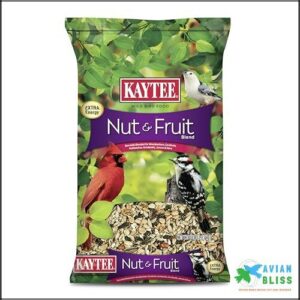
A good feeder only does half the job — what you put in it matters just as much. Kaytee’s Wild Bird Seed Blend fills the other half nicely.
It packs black oil sunflower seeds, peanuts, raisins, and cherries into one 5‑pound bag, hitting the preferences of Cardinals, Chickadees, Nuthatches, and Woodpeckers all at once. The blend guarantees at least 8% crude protein, so birds are actually getting fuel, not just filler.
It works in tube, hopper, or tray feeders without any fuss.
| Best For | Backyard bird enthusiasts who want to attract a wide variety of colorful songbirds with one high-quality, nutrient-rich blend. |
|---|---|
| Feeding Ports | N/A – bird food |
| Bird Species | Cardinals, chickadees, nuthatches, woodpeckers |
| Material | N/A – bird food |
| Squirrel Resistance | Attracts squirrels |
| Year-Round Use | Yes |
| Easy Refill | Standard bag packaging |
| Additional Features |
|
- Pulls in a great mix of birds — Cardinals, Woodpeckers, Chickadees, and more — all from a single bag
- Packed with real ingredients like sunflower seeds, peanuts, raisins, and cherries, so birds are getting actual nutrition
- Works with tube, hopper, and tray feeders, so no need to swap setups
- May draw in unwanted guests like squirrels or raccoons along with the birds
- A 5 lb bag goes fast when you’ve got hungry birds visiting regularly
- Pricier than basic seed mixes, which can add up if you’re refilling often
4. Pennington Pride Songbird Nut Fruit Seed
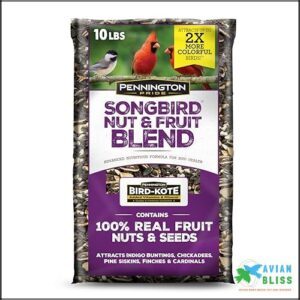
If Kaytee covers the basics, Pennington Pride Songbird Nut Fruit Seed takes things a step further. This 10-pound blend combines black oil sunflower, safflower, peanuts, and real dried cherries — and that variety shows in your yard. Indigo buntings, cardinals, and chickadees all respond well to it.
The BIRD-KOTE technology adds vitamins directly to the seeds, so birds get more than just calories. It works in hopper, gazebo, and tray feeders without any adjustments needed.
| Best For | Bird enthusiasts who want to attract a wider variety of colorful songbirds and don’t mind paying a little more for a nutrient-enriched, real-ingredient blend. |
|---|---|
| Feeding Ports | N/A – bird food |
| Bird Species | Indigo buntings, chickadees, cardinals |
| Material | N/A – bird food |
| Squirrel Resistance | May attract squirrels |
| Year-Round Use | Yes |
| Easy Refill | Standard bag packaging |
| Additional Features |
|
- Real fruit, nuts, and seeds (including dried cherries) make it stand out from basic mixes
- BIRD-KOTE technology adds vitamins straight to the seeds for better bird health
- Works across multiple feeder types and attracts a solid range of species like cardinals and indigo buntings
- The 10-lb bag feels pricey compared to similarly sized options
- Heavy on sunflower seeds, so expect some spillage on the ground
- Results can vary depending on your region and the time of year
5. Morning Song Shell Free Wild Bird Seed
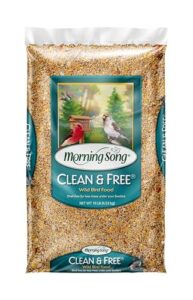
Mess under your feeder matters as much as what’s in it. Morning Song Shell Free Wild Bird Seed solves that problem neatly.
Every ingredient — chipped sunflower, peanuts, white proso millet, and canary seed — comes without shells, so birds eat every piece. No shells pile up on your deck. The 10‑pound bag packs a minimum of 18% fat, which is solid nutrition for chickadees, cardinals, nuthatches, and finches. It fits tube, hopper, and platform feeders without any fuss.
| Best For | Bird lovers who want a clean, no-mess feeding experience on patios, decks, or anywhere shells and waste are a real annoyance. |
|---|---|
| Feeding Ports | N/A – bird food |
| Bird Species | Finches, chickadees, titmice, cardinals, nuthatches |
| Material | N/A – bird food |
| Squirrel Resistance | No specific deterrent |
| Year-Round Use | Yes |
| Easy Refill | Standard bag packaging |
| Additional Features |
|
- Zero shell waste means nothing piles up under your feeder — cleanup is basically nonexistent.
- Attracts a solid mix of birds like cardinals, finches, chickadees, and nuthatches all in one bag.
- Works with almost any feeder style — tube, hopper, tray, platform, you name it.
- It’s pricier than standard seed mixes, so the cost can add up fast if you’re refilling often.
- Some buyers have found the mix heavy on corn, which a lot of birds tend to leave behind.
- Packaging can be flimsy — a few users have gotten bags that arrived damaged with seed spilled inside the box.
6. EverBloom Metal Squirrel Proof Hanging Bird Feeder
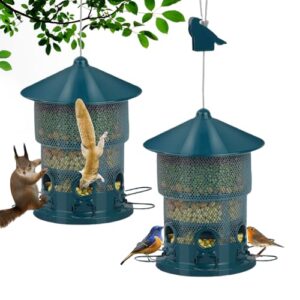
Squirrels stealing seed is one of the most frustrating parts of backyard feeding — and the EverBloom Metal Squirrel Proof Hanging Bird Feeder addresses that head‑on.
Its 360° chew‑proof metal guard and weight‑sensitive perches snap shut when anything heavier than a songbird lands. Six feeding ports invite finches, chickadees, and cardinals (Cardinalis cardinalis) simultaneously.
The flip‑top lid makes refilling its 2‑pound capacity simple. Hang it 5–10 feet up in your garden or balcony, and your target species feed in peace.
| Best For | Bird lovers who are tired of squirrels raiding their feeders and want a durable, low-maintenance option for their garden, balcony, or courtyard. |
|---|---|
| Feeding Ports | 6 metal ports |
| Bird Species | Finches, sparrows, cardinals, chickadees |
| Material | Metal |
| Squirrel Resistance | 360° chew-proof metal guard |
| Year-Round Use | Yes |
| Easy Refill | Flip-top lid |
| Additional Features |
|
- 360° chew-proof metal guard keeps squirrels and larger pests away from the seed
- Flip-top lid makes refilling and cleaning quick and easy
- Six feeding ports let multiple birds — finches, cardinals, chickadees — feed at the same time
- Not totally squirrel-proof — determined squirrels may still find a way in
- Small seeds can slip through the mesh siding, which means some waste
- The feeder can be tricky to refill, and some users have found it collapses under pressure
Frequently Asked Questions (FAQs)
How do you attract birds to a bird feeder?
Think of it like setting a good table — the right food in the right spot brings the guests. Use black-oil sunflower seeds, place feeders near shrubs, and keep them clean.
How do I attract birds to my garden?
Start simple: hang a feeder, add fresh water, and plant native shrubs nearby.
Birds need food, shelter, and safety.
Give them all three, and they’ll find your garden on their own.
What type of bird feeder do you use?
Different strokes for different folks — and the same goes for feeders.
Your best pick depends on the birds you want. A tube feeder suits finches, while a platform feeder welcomes cardinals and jays.
How do I choose a bird feeder?
Match the feeder to the birds you want. Tube feeders suit finches, platform feeders welcome cardinals and doves, and suet feeders bring in woodpeckers. Your yard, your choice.
Why put a potato in the bird feeder?
Plain cooked potato gives birds a quick energy boost, especially in cold weather.
It’s starchy, calorie-dense, and easy to digest.
Just keep it unseasoned and fully cooked before adding it to your feeder.
Do bird feeders attract other animals?
bird feeders attract more than just birds.
Squirrels raid them daily, raccoons visit at night, and deer graze on spilled seed below.
Even hawks show up — hunting the songbirds you’re trying to attract.
Why should you sprinkle coffee grounds around your bird feeder?
Sprinkling used coffee grounds around your feeder keeps squirrels and crawling pests away without harming them. The strong scent simply sends them elsewhere, giving birds a calmer, safer place to eat.
Do bird feeders affect natural foraging behaviors?
Bird feeders do shift natural foraging.
Chickadees shrink their home ranges, finches skip wild patches, and some species grow dependent on feeders year‑round — quietly trading exploration for the easy meal waiting in your yard.
Which birds are active at feeders during night?
Most seed-eating birds call it a night at dark. Owls and nightjars may lurk nearby, but they’re hunting the mice drawn to spilled seed — not the feeder itself.
How do feeders impact bird migration patterns?
Every little bit helps. Feeders don’t trigger migration, but they fuel it.
Birds follow daylight cues to depart — your feeder just gives them the energy boost they need to make the journey safely.
Conclusion
Think of your yard as a dinner table. Set it with the wrong dishes, and guests won’t stay long.
But match the right feeder to the right seed—tube feeders for finches, suet cages for woodpeckers, nectar ports for hummingbirds—and word spreads fast in the bird world.
That’s exactly how wild bird feeders attract different species: not by accident, but by design.
Start simple, stay consistent, and your yard becomes a place birds return to by habit.
- https://www.allaboutbirds.org/news/how-to-choose-the-right-kind-of-bird-feeder/
- https://birdseedandbinoculars.com/wordpress/which-feeders-attract-which-birds/
- https://www.johnson.k-state.edu/programs/natural-resources/agent-articles/wildlife/attracting-birds-to-your-backyard-bird-feeder-basics.html
- https://avianreport.com/food-feeders-wild-birds-prefer/
- https://www.harvestwildlife.com/choose-the-right-bird-feeder/