This site is supported by our readers. We may earn a commission, at no cost to you, if you purchase through links.
When you hang a bird feeder outside your window, you’re quietly changing the odds for the birds that visit. A steady source of seed or suet can mean the difference between a thin, exhausted chickadee and one that faces a winter storm with reserves to spare.
In a world of shrinking habitats and unpredictable weather, how wild bird feeders support bird health matters more than ever. The right food, placed safely and kept clean, can strengthen bodies, ease stress, and even boost survival and breeding success, turning your backyard into a small but powerful refuge.
Table Of Contents
- Key Takeaways
- How Bird Feeders Improve Wild Bird Health
- Boosting Immunity and Reducing Stress in Birds
- Supporting Breeding and Population Growth
- Preventing Nutritional Deficiencies in Wild Birds
- Risks of Disease Transmission at Feeders
- Predators and Hazards Associated With Bird Feeders
- Best Practices for Safe Bird Feeding
- Impact of Feeders on Local Bird Diversity
- Role of Feeders in Community Science and Conservation
- Balancing Bird Feeders With Natural Habitats
- Frequently Asked Questions (FAQs)
- Is feeding birds helping or harming birds?
- Why do you need a bird feeder?
- Should we feed wild birds?
- Why do hawks stay at feeders?
- Will wild birds starve if I stop feeding them?
- Why should you sprinkle coffee grounds around your bird feeder?
- Do wild birds become dependent on backyard feeders?
- How do feeders affect natural foraging and behavior?
- Are there seasons when feeders help birds most?
- Which feeder types are safest for small songbirds?
- Conclusion
Key Takeaways
- Well-placed, well-stocked bird feeders give wild birds a reliable boost of calories and nutrients, helping them maintain body condition, survive harsh weather, and enter the breeding season stronger.
- Clean feeders, smart spacing, and safer designs reduce the spread of disease, cut down on predator ambushes and window strikes, and keep the “feeding station” from turning into a danger zone.
- Feeders work best as a backup, not a replacement, for nature, so pairing them with native plants and varied habitat supports more species, softens the impact on natural foraging, and keeps local ecosystems in a better balance.
- By tracking which birds visit and sharing your sightings through community science projects, your simple backyard feeding routine feeds into real research and conservation decisions across a much wider landscape.
How Bird Feeders Improve Wild Bird Health
Bird feeders do more than bring color and life to your backyard — they can make a real difference in the health of the birds that visit them. Research shows that access to supplemental food helps birds stay stronger, handle harsh conditions better, and survive the winter at much higher rates.
For more ways to support healthier, hardier backyard visitors year-round, see this guide to nutritious wild bird diets.
Here’s a closer look at three key ways feeders directly support wild bird health.
Enhanced Nutrition and Body Condition
Watch a feeder long enough and you’ll see Bird Nutrition in action. With steady Bird Seed like Sunflower hearts and Suet, birds gain a real Fat Reserve Boost, restoring lost energy daily.
Protein‑Rich Seeds support Feather Growth, stronger Antioxidant Levels, and a higher Body Condition Index, all clear signs of improved Avian Health right outside your window, day after day. daily high‑fat intake is essential for birds to maintain strength and survive winter conditions.
Support During Extreme Weather
During extreme weather, thoughtful Bird Feeding stabilizes Bird Health when wild food disappears almost overnight for local flocks.
- Heat‑Resistant Feeders protect nectar during long summer heatwaves.
- Cold‑Weather Seed plus Snow‑Melt Prevention keep calories accessible.
- Storm‑Proof Placement under eaves shields seed from driving rain.
- Wind‑Shielded Design, shrubs match Bird Behavior and Habitat.
- Wild Feeding Practices shape Ecological Impact of Bird Feeders.
Implementing an Advanced Pole System can further stabilize feeders during severe conditions.
Increased Overwinter Survival Rates
Harsh winters test survival. When storms lock down food, Bird Feeding boosts odds for Wild Birds.
Survival Gap Metrics from chickadee studies show 69% versus 37% survival with feeders, driven by Fat Reserve Accumulation, stronger nutrition, and easier cold‑weather foraging.
Where Feeder Density Effects remain thoughtful, benefits of bird feeders support Avian Health and disease resilience, species range expansion.
Boosting Immunity and Reducing Stress in Birds
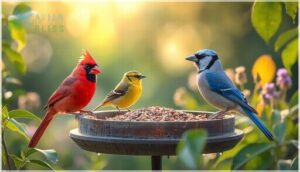
Bird feeders don’t just fill bellies; they can quietly strengthen a bird’s immune system and help it stay calm in a stressful world.
When food is reliable, birds spend less energy scrambling for survival, and more on staying healthy.
In the options below, you’ll see stronger immunity and lower stress for the birds that visit.
Effects of Supplemental Feeding on Immunity
Think of a feeder as a tiny outdoor clinic for Bird Health.
Consistent Bird Feeding Practices with Protein‑rich diets, Micronutrient fortification, and Fat‑based energy give birds the fuel to build stronger innate defenses and maintain better Avian Health and Disease resistance. Clean feeders support Immune training exposure and smarter Pathogen load balancing, lowering risks of Salmonella and severe Disease Outbreaks.
Lower Physiological Stress in Feeder Birds
Because a predictable feeder is predictable, you give birds time to relax between alarms.
Bird Feeding Practices shape Bird Behavior and Habitat to reduce strain:
- Corticosterone Reduction enhances Cardiovascular Stability.
- Winter Energy Balance enhances survival.
- Oxidative Stress Mitigation protects cells.
- Predator Vigilance Reduction boosts Avian Health and Disease, improving Ecological Impact of Bird Feeders and Wildlife Conservation.
Supporting Breeding and Population Growth

Bird feeders do more than just keep birds fed through winter — they can actually shape how populations grow and where birds choose to settle.
Tracking which species visit your feeders and recording your sightings accurately helps scientists understand exactly how feeding stations influence bird movement and population trends over time.
The extra food source gives breeding birds a real leg up when it matters most. Here’s a closer look at two ways feeders make a difference.
Improved Breeding Success With Feeders
When you keep a feeder stocked through winter, wild birds enter spring in genuinely better shape. Improved parental condition means earlier laying, larger broods, and higher fledging rates — some fed populations lay nearly three weeks sooner than unfed ones.
Reliable bird seed also facilitates multiple broods per season. That kind of boost to avian health quietly strengthens species diversity right in your backyard.
Expansion of Bird Ranges Due to Feeding
Your feeders do more than fill hungry beaks — they quietly redraw the map.
Winter range shifts have pushed species like northern cardinals and Carolina wrens into southern Canada, with urban corridor formation linking suburbs into travel routes for expanding populations.
Climate‑feeding synergy accelerates short‑stopping migration, while non‑native spread reminds us that bird feeding shapes ecological balance in ways that ripple across wild bird populations and species diversity and management alike.
Preventing Nutritional Deficiencies in Wild Birds
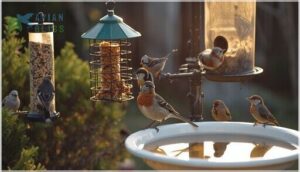
wild birds don’t always get every vitamin, mineral, or protein they need from natural food alone. Thoughtful use of feeders can fill some of those gaps, offering more balanced, reliable nutrition through the seasons.
Below, you’ll see specific feeder and enclosure options that help you support nearby birds in a healthier way.
Common Deficiencies in Wild Diets
Wild bird diets look abundant, yet nutrients for your birds run short, shaping avian health and survival across wild bird populations.
- Vitamin A is scarce in seeds.
- Calcium lacking in grains weakens bones and eggshells.
- Vitamin E and Fatty Acids drop in scraps.
- Thiamine shortages upset nerves, causing weakness.
- Nutrition from Food Sources shapes bird feeding strategies.
How Feeders Provide Essential Nutrients
Think of your feeder as a natural pharmacy.
Fat-rich seeds like sunflower hearts skip the shell entirely, delivering oils, protein, and a solid vitamin E boost quickly.
Nyjer fuels small finches with concentrated fats, while suet packs serious carbohydrate quick energy for cold mornings.
Add mealworms for insect protein, and calcium sources like Calciworms round out the nutrition your birds genuinely struggle to find on their own.
Risks of Disease Transmission at Feeders
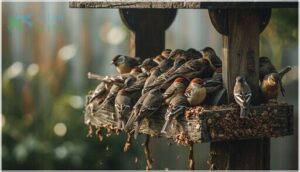
Bird feeders do a lot of good, but they also come with a real downside worth knowing about.
When birds crowd together in one spot, illness can spread faster than you’d expect.
Here’s a closer look at the diseases most commonly linked to feeders, the conditions that make things worse, and the warning signs to watch for in your backyard visitors.
Common Avian Diseases Spread by Feeders
You might not expect it, but your bird feeders can host serious disease outbreaks that quietly chip away at avian health.
Salmonella Outbreaks from contaminated seed, Conjunctivitis Transmission in finches, Avian Pox Spread on shared perches, Trichomonosis Risks from wet food, and Aspergillosis Growth on moldy seed all link directly to bird feeding with crowded Salmonella hotspots in your yard.
Factors Increasing Disease Risk
Those same diseases often flare fastest when simple habits work against you.
- Feeder density packs birds unnaturally close, driving disease outbreaks.
- Hygiene lapses increase the risk of bird feeding when leaving dirty perches.
- Cramped design contacts at ports spread germs and damage bird health.
- Weather moisture keeps seed wet, helping Salmonella persist.
- Placement clustering squeezes stations together, reshaping wild bird populations.
Signs of Illness in Feeder Birds
Knowing what to look for makes all the difference during your feeder watch sessions.
Behavioral changes are often the first clue — a bird sitting still while others scatter is worth a second look.
Feather abnormalities like puffed or matted plumage, eye problems with crusty discharge, respiratory signs such as open-mouth breathing, and digestive symptoms like loose droppings all signal that a bird species may need attention.
Predators and Hazards Associated With Bird Feeders
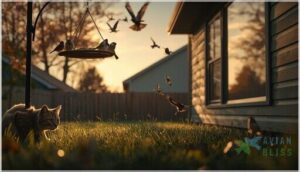
When you hang a feeder, you’re not just inviting songbirds—you may also be drawing in predators and other hazards around your home. Cats, hawks, and even your windows can turn a good intention into a real risk if you’re not prepared.
Next, we’ll look at specific enclosure options that help keep feeder visitors safer.
Attraction of Cats, Hawks, and Other Predators
When you put out a feeder, you’re not just feeding birds — you’re also sending an open invitation to their predators. Cats treat feeders as reliable Cat Ambush Zones, hiding near shrubs within 10–20 feet for easy strikes.
Cooper’s and Sharp-shinned Hawks use nearby trees as Hawk Launch Points, accounting for nearly half of all recorded feeder predation events. Understanding Seasonal Predator Activity and smart Predator Deterrent Strategies, like keeping cats indoors and trimming dense cover, genuinely helps.
Bird-window Collisions and Prevention
Window collisions quietly claim up to a billion birds annually in the U.S., with Seasonal Migration Peaks in spring and fall pushing numbers even higher. Feeder Distance Rules matter here — feeders placed 3 to 30 feet from glass create the greatest danger. Follow these bird‑friendly practices for better wildlife management and conservation efforts:
- Apply Window Decal Strategies using exterior Feather Friendly markers, which cut strikes by 71 percent
- Explore UV Film Benefits — UV‑reflective coatings reduce collisions by up to 90 percent
- Follow Glass Placement Guidelines by positioning feeders within 3 feet or beyond 30 feet of windows
- Study bird behavior near glass and remove vegetation that mimics open habitat
Best Practices for Safe Bird Feeding
Feeding birds can do a lot of good, but only if you set things up in a way that keeps them healthy and out of harm’s way. simple habits—how you clean, where you place feeders, and what food you offer—make all the difference for their safety.
In the next sections, you’ll see clear, practical options you can use in your own space.
Cleaning and Disinfecting Feeders
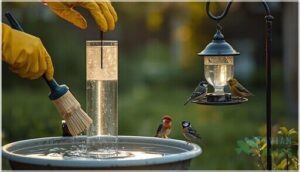
Think of your feeder as a shared water fountain — it needs regular cleaning or it becomes a health hazard.
Stick to a cleaning schedule of every two weeks for seed feeders, weekly in winter, and every three to five days for nectar feeders to stop mold.
A diluted bleach solution manages disinfectant choices well, while stiff brushes and bottle brushes cover tool selection for every corner.
Placement and Design for Bird Safety
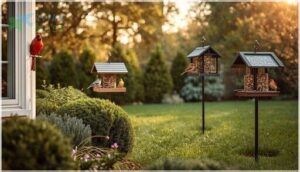
Although every yard is different, your Bird Feeders can quietly double as safety equipment today.
- Window Distance: under three feet or beyond thirty feet.
- Cat‑Free Zones placing feeders 10–12 feet from cover.
- Predator Baffles and Roofed Feeders to block predators.
- Vegetation Buffer placement slightly lowers risks of bird feeding.
- Bird Behavior, supporting habitat creation through bird‑friendly practices.
Choosing The Right Bird Food
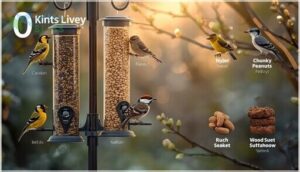
When you choose bird seed, start with Protein‑rich seeds like sunflower seeds and nyjer for everyday nutrition and good body condition.
Fat‑dense suet provides winter energy needs, while peanuts or insect‑based food sources boost protein during breeding.
Pay attention to Species‑specific preferences and seasonal diet shifts, and favor Low‑filler mixes so less seed is wasted and more birds truly benefit.
Impact of Feeders on Local Bird Diversity
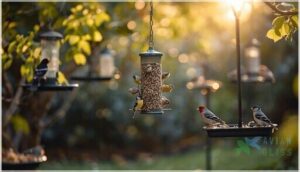
Bird feeders don’t attract all species equally; they tend to favor some birds while leaving others in the background. Over time, that can subtly shift which native and non-native species dominate your yard.
Next, you’ll see how different feeder choices can shape local bird diversity, so you can support a healthier, more balanced mix of visitors.
Influence on Species Composition
Bird feeders quietly rewrite which bird species visit, shifting species diversity rather than just adding birds.
Seed Mix Effects favor omnivores and granivores, while Nyjer Preference channels visits toward small finches. Suet Influence boosts woodpeckers.
Urban vs Rural yards differ: city feeders attract gulls and corvids; subtle invasive species shift, habitat creation, and wildlife conservation efforts shape local community patterns.
Effects on Native and Invasive Species
At your feeders, a quiet battle decides local Species Diversity. Sparrow Aggression, Starling Nest Displacement, and other Invasive Species pressures can improve Bird Health and Nutrition for a few, while stressing others.
- Invasive Seed Preference drives Competitive Exclusion Dynamics.
- Native Insectivore Decline follows crowded grain-focused feeding.
- Native Habitats nearby soften the Impact of Bird Feeders on Ecosystems.
- Balance matters most.
Role of Feeders in Community Science and Conservation
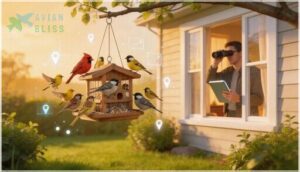
Your backyard feeder does more than feed birds — it connects you to something much bigger.
Your backyard bird feeder quietly links your daily routine to a much larger conservation story
Feeder-watchers across the country contribute real data that scientists use to track bird populations, spot disease outbreaks, and understand how species are shifting over time.
Here’s how that simple act of watching plays into conservation in two meaningful ways.
How Feeder-watching Aids Bird Research
Every checklist you submit becomes a data point that drives real science.
Programs like Project FeederWatch and eBird turn your backyard observations into continent‑wide maps tracking Population Trend Mapping, Irruption Timing, and Foraging Behavior.
Researchers use these records for Disease Surveillance, Habitat Use studies, and Avian Health and Nutrition insights — fields central to modern Ornithology and Bird Research that no small lab team could cover alone.
Inspiring Conservation Through Bird Feeding
Those same Citizen Data Platforms also nudge you toward action: regular Bird Feeding deepens your concern for Avian Health and Nutrition, Wildlife Conservation, and Conservation and Sustainability at home.
School Feeder Projects and Youth Stewardship Programs turn kids into local advocates, while Social Media Advocacy and Neighborhood Habitat Corridors grow that care into real gains for Species Diversity over time.
Balancing Bird Feeders With Natural Habitats
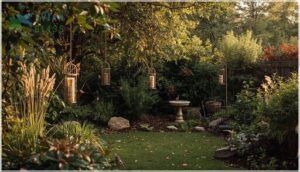
Bird feeders do their best work when they support, not replace natural food and shelter.
By pairing your feeders with native plants and thoughtful habitat features, you create a safer, more balanced space for birds.
Here are some enclosure options that can help you protect visitors at your feeder while keeping things close to wild conditions.
Feeders as Supplements, Not Replacements
While you may fill Bird Feeders daily, wild birds still rely on Natural Foraging Balance for most calories, with Bird Feeding covering Seasonal Food Gaps.
That supplement protects Nutrient Diversity, Behavioral Flexibility, and Species Diversity without replacing wild foraging.
Thinking about Impact of Bird Feeders on Ecosystems keeps Habitat Integration and Importance of Native Habitats central in your daily choices.
Importance of Native Plants and Habitats
Your yard can do more than hold a feeder. Native plants work alongside Bird Feeding to create real Habitat Creation that promotes Biodiversity year-round through Seasonal Food Availability, Native Nesting Sites, and natural Caterpillar Food Sources.
- Native oaks alone host 500+ caterpillar species — prime Caterpillar Food Sources for nesting Bird Species.
- Dense native shrubs provide concealed Native Nesting Sites for catbirds and sparrows.
- Habitat Connectivity Corridors let birds move safely across fragmented neighborhoods.
- Diverse plantings produce a Disease Dilution Effect by spreading bird populations out.
- Layered native gardens extend Seasonal Food Availability well into winter.
That’s the Importance of Native Habitats in action.
Frequently Asked Questions (FAQs)
Is feeding birds helping or harming birds?
Whether responsibly Bird Feeding helps or harms birds depends on Seasonal Food Availability, Human‑Wildlife Conflict, Urban Heat Island, Economic Incentives, Species Diversity, Genetic Adaptation, Ecological Impact, Impact of Bird Feeders on Ecosystems, and Wildlife Conservation.
Why do you need a bird feeder?
A bird feeder isn’t just a snack bar—it’s a bridge between you and nature.
You offer a Seasonal Energy Boost, Urban Habitat Support, and Birdwatching Education, while gaining Mental Wellness Benefits and helping build Climate Resilience and Species Diversity right outside your window.
Should we feed wild birds?
We should feed birds when weighing Ethical considerations, Human‑wildlife interaction, Economic costs, Legal regulations, and Cultural traditions.
Treating Bird Feeding as Wildlife Conservation, Species Diversity, Backyard Ecosystem support.
Why do hawks stay at feeders?
Concentrated prey, convenient perches, and consistent hunting efficiency keep hawks coming back.
Feeders basically create a reliable seasonal food supply, turning your backyard into prime hawk territory with minimal effort required on their part.
Will wild birds starve if I stop feeding them?
Healthy wild birds won’t starve; they rely on Natural Seed Banks and Food Sources, using Seasonal Food Shifts and Foraging Adaptation.
Bird Feeding and Bird Feeders support Stress Recovery, Wildlife Management, Species Diversity, Community Observation.
Why should you sprinkle coffee grounds around your bird feeder?
Sprinkling coffee grounds around Bird Feeders offers Squirrel deterrence, Cat repellent, and Ant control while promoting Soil enrichment and Earthworm attraction, so your Bird Feeding meaningfully promotes Environmental Health, Environmental Diversity, and Environmental Considerations overall.
Do wild birds become dependent on backyard feeders?
Chickadee illustrates Bird Behavior and Foraging Flexibility.
Despite Bird Feeding and Seasonal Reliance, Energy Budget, Behavioral Adaptation, Population Resilience, Species Diversity, Wildlife Conservation, and the Role of Bird Feeders in wildlife management indicate support, not dependence.
How do feeders affect natural foraging and behavior?
Bird Feeders change Bird Behavior by increasing Patch fidelity, reducing Foraging distance, and encouraging Temporal feeding and Social aggregation around Food Sources, driving Dietary niche shift, Habitat Creation, and shifts in Species Diversity across neighborhoods.
Are there seasons when feeders help birds most?
Like safety nets, feeders answer Winter energy needs, Spring insect scarcity, Autumn fat accumulation, Summer molting support, and Extreme weather survival,
while Migration Patterns, Species Diversity of Backyard Birds track Food Sources and Bird Feeding.
Which feeder types are safest for small songbirds?
Feeder Designs—small-port Bird Feeders, Nyjer feeders, caged styles, and low-profile hoppers—prioritize Small Bird Safety for Backyard Birds with Seed Quality, Predator Deterrents, and Feeder Maintenance, supporting species diversity and natural bird behavior during Bird Feeding.
Conclusion
first chickadee that lands each morning as a tiny test of your choices, wings powered by what you’ve offered. clean feeders, placed with care and filled with varied, high-quality foods, don’t just attract birds; they shape who thrives nearby.
When you understand how wild bird feeders support bird health, each refill becomes part of a larger conservation story at your window. planting natives and watching closely, you offer refuge, not reliance instead.
- https://pmc.ncbi.nlm.nih.gov/articles/PMC4778448/
- https://www.hummingbirdsplus.org/nature-blog-network/the-benefits-of-feeding-birds-with-black-oil-sunflower-seeds/
- https://avianreport.com/food-for-backyard-birds/
- https://www.kaytee.com/learn-care/wild-bird/value-of-wild-bird-ingredients
- https://academic.oup.com/conphys/article/3/1/cov058/2571277?login=false