This site is supported by our readers. We may earn a commission, at no cost to you, if you purchase through links.

The first clue to a songbird’s identity often hides in plain sight—a flash of yellow on the wing, a faint streak across the breast, a bold stripe running over the eye. These markings aren’t decoration; they’re a code nature wrote into feathers. Once you learn to read it, every bird reveals its story at a glance.
Identifying songbirds by markings turns chaos into pattern, helping your eyes pick out detail before your mind even names it. With a few field habits and a trained sense for color, shape, and place, those quick flits of motion start to make perfect sense.
Table Of Contents
Key Takeaways
- Learning to read a bird’s field marks—color blocks, wing bars, breast streaks, and facial stripes—turns a confusing flutter into a clear ID almost instantly.
- Size, bill shape, and body posture are just as telling as color, especially when two species look nearly identical at first glance.
- Where a bird hangs out narrows your options fast—woodland edges, backyard feeders, and open meadows each pull in their own cast of regulars.
- Tools like Merlin Bird ID and a weatherproof notebook don’t replace your eye, but they lock in what you saw before memory fades.
Key Markings for Songbird Identification
Every songbird carries a set of markings that tell its story. Once you know what to look for, these small details jump out fast.
If you want to sharpen your eye for those field marks, the guide to small songbird identification walks you through the most telling details.
Every songbird wears its story in markings that reveal themselves once you learn to see
Here are the key features that help you tell one species from another.
Plumage Color Patterns

Plumage color patterns are your first rebellion against confusion in the field. You’re not just seeing “a brown bird.”
These color cues complement essential bird field marks such as head, wing, and tail regions that ornithologists use to map a bird’s body. You’re reading Feather Pigments, Molt Patterns, and Plumage Variation as clear Field Marks for Bird Identification. Melanin, carotenoids, and structural Feather Coloration create distinct Color Patterns, Color Morphs, and even subtle Beak Colors that separate look‑alikes fast.
- Notice darker backs and paler underparts as a baseline Plumage pattern.
- Scan for bold blocks of red, yellow, or blue driven by different Feather Pigments.
- Watch for duller juvenile Plumage and sharper adult Color Patterns after molt.
- Compare individuals to spot regional Color Morphs and Molt Patterns over seasons.
Wing Bars and Eye Stripes
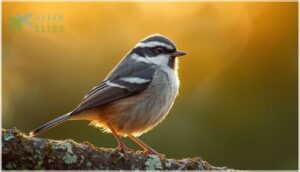
Once you’ve tuned your eyes to color, start watching for Wing Bar Structure and Eye Stripe Patterns. These small Field Marks turn chaos into clarity. Wing bars slice the folded wing like bright bands of Feather Coloration.
Songbird Facial Marks—supercilium, eyeline, cheek tones—form Head Plumage Variations that anchor Bird Identification Techniques when Identifying Songbirds in motion. As you practice, focusing on key field markings such as the head, wings, and underside will sharpen your ability to describe and identify each bird.
Breast, Belly, and Flank Streaks
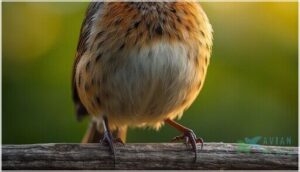
After mastering wings and eyes, shift your gaze to the underparts. Streak Patterns tell stories of species and age. Heavy Breast Markings or faint Flank Colors shape quick Underpart Identification. You’ll notice:
- Dense streaks gather into central spots on some sparrows.
- Light Streak Variations fade along the belly.
- Fine pencil lines signal delicate bird field marks in action.
Notable Head Markings (Supercilium, Eyelines)
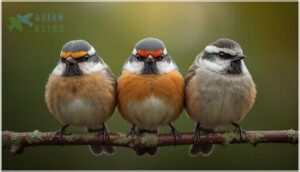
Once you’ve read the underparts, lift your gaze to the face. Here, Facial Pattern Recognition becomes one of your sharpest bird identification markers.
For a deeper look at how subtle face markings distinguish similar species, explore this practical guide to bird identification patterns.
Notice Supercilium Shapes above the eye and Eyeline Variations cutting through it; these Head Stripe Combinations form reliable visual cues.
Add Beak Coloration, and you’re Identifying Common Backyard Songbirds with precise Field Marks and quiet confidence.
Comparing Songbird Shapes and Sizes

When markings aren’t enough, a bird’s shape and size can tell you a lot. Subtle differences in build or posture often separate lookalike species.
Here’s how to notice the key traits that matter most.
Relative Size to Common Birds
Size tells its own story in bird identification. Start with Sparrow Metrics—your built-in ruler for small songbirds. Then move up: robins mark the middle, crows the upper end.
During Feeder Observations, note these Size Comparisons. Field guides list Bird Measurements by reference birds, helping you place any bird species by clear, practical Crow References.
Body Shape (Chunky Vs. Sleek)
Body shape unlocks songbird identification like a rebel’s key to freedom. Chunky birds show short necks, deep chests, and rounded bellies—think football profiles. Sleek ones stretch long with tapered bodies and pointed wings. Use Body Proportions and Silhouette Comparison for quick Bird ID.
- Spot upright Posture Analysis in chunky avian species.
- Note horizontal stances for sleek songbird identification.
- Compare wing-tail balance to separate Bird Species.
- Apply these Birdwatching Tips to boost your avian species information.
Bill Shape and Function
Bill shape cracks open songbird secrets like a bold key to wild freedom. You’ll spot seed-cracking bills on finches—short, conical powerhouses for husking tough seeds. Insect-probing bills, thin and pointed, suit warblers grabbing bugs.
Note bill coloration too; it sharpens bird ID in Bird Identification Guides. These Bill Anatomy and Beak Functions offer prime Birdwatching Tips for avian species information in ornithology.
Distinguishing Songbirds by Habitat

Where a bird lives can tell you almost as much as how it looks. Each habitat draws in its own mix of colors, songs, and movement.
Let’s look at where different songbirds spend their days.
Woodland and Forest Edge Species
Ever notice how the quiet woodland hums with hidden voices? Woodland Songsters reveal themselves through color and movement. Spot Tree Canopy Dwellers in shifting light or watch Edge Species Behavior near trails. Forest Edge Habitats host those that blend and flash—perfect test zones for your bird identification skills.
- Look for contrasting wing bars.
- Watch for Forest Floor Foraging habits.
- Note soft calls filtering through dense cover.
Backyard and Urban Songbirds
Cities hum with wings if you know where to look. Backyard Birding turns alleys and gardens into wild sanctuaries.
Learn Species Recognition through Feather Coloration—blackbirds’ yellow bills, sparrows’ brown streaks, starlings’ glossy sheen.
Observe Urban Songbird Behavior at feeders, City Nesting under tiles, and seasonal Songbird Migration guiding Urban Habitat Creation through mindful Backyard Feeding.
Meadow, Wetland, and Field Dwellers
Meadow Birds like Savannah sparrows show fine breast streaking and yellow eye patches for Sparrow Identification. Wetland Species such as swamp sparrows reveal chestnut wings with white wing bars amid marshes. Field Markings on vesper sparrows include flashing white tail feathers.
Use Habitat Selection—open fields or wet edges—to nail songbirds in bird watching. That’s your edge in species identification and ornithology.
Step-by-Step Songbird Identification Process

Spotting a songbird starts with slowing down and noticing what stands out. Each small detail can help you narrow down what you’re seeing.
Here’s a simple process to guide your next observation.
Observing Markings and Patterns
Observation starts with Plumage Patterns and Color Placement. Scan the head first: note supercilium, eyeline, eyering, lore tone, and any scaling along Feather Edges that change feather coloration into distinct color patterns and Marking Variations that work like built‑in bird identification tools.
Then compare physical traits such as wing bars, spots, streaks, and Beak Shapes across the whole plumage.
Combining Behavior and Habitat Clues
You already watched plumage and markings; now layer in Avian Behavior as your next filter. Use Foraging Styles and flight as Behavioral Cues: sparrows scratch ground, finches show bouncy flight, warblers flit through foliage.
Note singing height and Territorial Displays. Add Migration Patterns and Habitat Analysis, then ask how Habitat Preservation and Bird Identification by Sound enhance your Species Recognition in that exact place.
Using Field Guides and Mobile Apps
You stacked behavior and habitat; now let your tools carry some weight. Use Field Guide Navigation first to match songbird characteristics, then do quick Guidebook Comparison on similar plates.
Next, lean on Merlin Bird ID and other Birding Software for Digital Identification, mobile bird identification, and interactive bird learning through Mobile App Features inside a flexible mobile application.
Practice Tips for Accurate Songbird ID
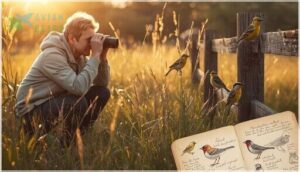
Good identification takes practice, not just a sharp eye. The more time you spend observing, the better your instincts get.
Here are two ways to sharpen your skills and make each outing count.
Field Note Taking and Photography
Your notebook is your field marks memory bank—don’t leave home without it. Jot down the date, location, weather, and light conditions every time. Pair your field observation notes with photo metadata from your camera to match images to exact moments. Birding apps log GPS and timestamps automatically.
- Carry a weatherproof notebook
- Record light direction and cloud cover
- Note file numbers alongside written descriptions
- Use binoculars before reaching for your camera
- Review habitat analysis notes after each outing
Improving Skills With Local Birdwatching
Revisiting the same local patch daily rewires how you see songbirds—patterns and bird behavior start jumping out naturally. Morning bird walks sharpen your eye faster than any book.
| Habit | Tool | Benefit |
|---|---|---|
| Daily bird lists | eBird | Tracks skill growth |
| Local patch birding | Merlin/Birding apps | Confirms species ID |
| Citizen science counts | Great Backyard Bird Count | Builds identifying birds instinct |
Frequently Asked Questions (FAQs)
What is the best free bird song identifier?
Merlin Bird ID is the best free AI bird identifier for song recognition.
Its Sound Recognition and Audio Analysis tools outmatch the BirdNET App or Song Sleuth when identifying bird songs and calls using technology for bird identification.
What is the website that identifies bird songs?
If you want a website that identifies bird songs, start with Merlin Bird at merlin.allaboutbirds.org, then explore the BirdNET App site, Xeno Canto’s global library, and tools like Song Sleuth for bird identification by songs and calls powered by the Macaulay Library and related online courses.
How can lighting affect identifying bird markings?
Lighting Conditions change how you read plumage and other physical traits, so your Color Perception can swing fast during birdwatching and bird identification. Backlighting and Shadow Effects can erase fine markings, while better Ambient Illumination and Glare Reduction reveal detail for serious avian species cataloging.
What seasonal changes alter a songbird’s appearance?
Seasonal color shifts in songbirds happen through molting patterns and feather wear. Breeding plumage grows brighter each spring, while fading pigments and seasonal camouflage dull tones later, reshaping species identification and reflecting bird behavior through yearly cycles.
How do juveniles differ from adult songbirds visually?
Juvenile Plumage on Songbirds usually looks dull, mottled, and heavily streaked, with loose Feather Texture, pale Bill Gape, and darker Eye Coloration.
Shifting Molt Patterns slowly reveal cleaner adult tones for sharper avian identification and Learning Bird Field Marks.
Which markings fade or molt during migration seasons?
Picture a Yellow-rumped Warbler in late fall: once-bold wing bars now frayed, tail patches dull, breast streaks thin, and the pale supercilium blurred.
These Wing Bar Changes, Feather Wear Patterns, Breast Streak Fading, Supercilium Degradation, plus Tertial Molting all track intense migration and fuel-hungry flights in Avian Ecology and Behavior.
They’re central to Learning Bird Field Marks, Wildlife Identification, and how you read Bird Behavior and Habitat within broader Species Diversity and Conservation.
Conclusion
Let each field mark stand like a tiny banner, flying a bird’s name above the noise of leaves and traffic. When you stop chasing color and start reading pattern, the flock turns from chaos into clear pages.
You watch shape, habitat, and behavior fall into place like lines in a map. With practice, your quick sketches and photos become proof: you don’t just see birds anymore, you understand who’s passing through—identifying songbirds by markings.